• Link to X
  • Link to Facebook
  • Link to Instagram
  • Link to TikTok
  • Link to Youtube
  • About
    • About Us
      • President
      • Board of Directors
      • Board of Advisors
      • Financials
      • Our Methodology
      • Success Tracker
      • Contact
  • Act Now
    • 30 Ways to Help
      • Email Congress
      • Call Congress
      • Volunteer
      • Courses & Certificates
      • Be a Donor
    • Internships
      • In-Office Internships
      • Remote Internships
    • Legislation
      • Politics 101
  • The Blog
  • The Podcast
  • Magazine
  • Donate
  • Click to open the search input field Click to open the search input field Search
  • Menu Menu

Archive for category: Water Quality

Nonprofit Organizations and NGOs, Water, Water Quality, Women and Female Empowerment

The Water Project: How Poor Water Quality Impacts Kenyan Girls

The Water Project
The average American family uses roughly 552 gallons of water each day, while the average African family uses about five gallons of water per day. Girls in the sub-Saharan country of Kenya are robbed of their right to receive an education due to water scarcity.

Education Delayed Due to Water Scarcity

The literacy rate of females over the age of 15 in Kenya was 74 percent in 2016. The Education Policy and Data Center reported that 88 percent of children between the ages of six and 13 attend primary school; however, the report notes that many of the children attending primary school are outside of the official age range, meaning they are not attending school often enough to stay on schedule with the curriculum.

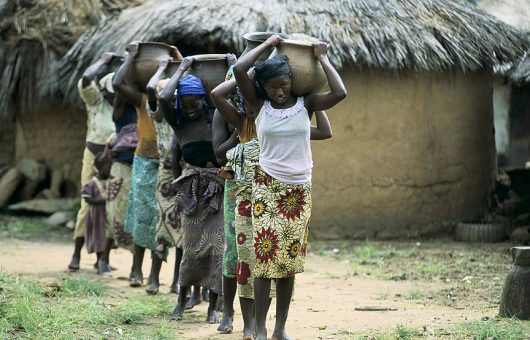
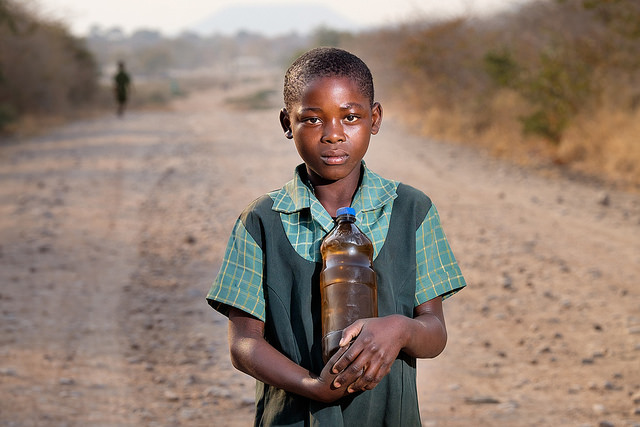
Instead of attending school, many girls spend their time carrying a 40-pound water can full of dirty water from sources miles away from their homes. This exhausting task leaves many girls unable to receive a formal education. Even if a girl is not burdened by the responsibility of journeying for hours to fetch water for her family, if schools cannot provide water, they are unable to run their programs.

How Does The Water Project Make a Difference?

The Borgen Project spoke with Lisa Sullivan, the director of marketing and communications at The Water Project, who provided insight into just how monumental of a difference it makes when clean water is readily accessible to girls.

The Water Project is a nonprofit organization located in Concord, New Hampshire that provides reliable water projects to communities in sub-Saharan Africa. In western Kenya, The Water Project sponsors a community-led organization that is represented by a powerful, strong Kenyan woman named Catherine Chepkemoi. This woman works for empowerment in Kenya, specifically for younger girls, by teaching them about hygiene and water sanitation.

Sullivan stated, “These women are essentially cultivating future women leaders. When they are not gathering water, they are able to stay in class and compete with the boys.”

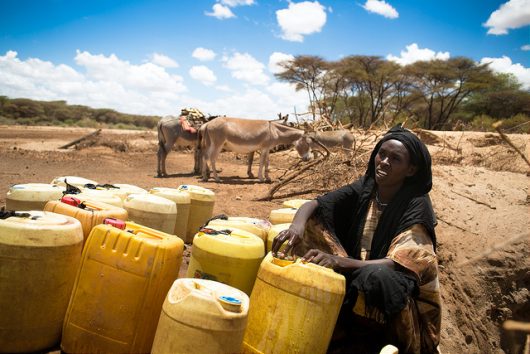
The organization spends time in western Kenya, addressing water quality by installing rain tanks at schools and protecting springs. Eastern Kenya is constantly in a drought; the region once had four rainy seasons a year, but is now down to one. With such limited rainfall, the organization provides water for people to use for bathing and sanitation.

Improvements in Water and Education Have Wide-Ranging Effects

The Water Project website reports that “for every 10 percent increase in women’s literacy, a country’s whole economy can grow by up to 0.3 percent.” Women can increase economic growth because they tend to invest in their own communities. Women will invest in their children’s education because they aspire to send them to schools and college.

Sullivan points out that “once you bring in water, now not only are they eating healthy, they are not spending their money on medical bills, which allows them to save their money and place it back into their communities.”

If a community in Kenya invests in an irrigation pump, it will allow them to sell more goods, generate more income and expand the opportunity for families to send their children to college–all because of access to clean water.

The Water Project is supporting an agent of change for Kenyan women and girls. It continues to reinforce female empowerment and furnish clean water. Kenyan girls now have a better chance to gain an education and participate in the development of their country.

– Angelina Gillispie

Photo: Flickr
May 19, 2018
https://borgenproject.org/wp-content/uploads/borgen-project-logo.svg 0 0 Borgen Project https://borgenproject.org/wp-content/uploads/borgen-project-logo.svg Borgen Project2018-05-19 01:30:242019-11-28 14:50:28The Water Project: How Poor Water Quality Impacts Kenyan Girls
Global Poverty, Sanitation, Sustainable Development Goals, Water, Water Quality, Water Sanitation

Clean Water and Sanitation: Evaluating Sustainable Development Goals

Clean Water and Sanitation
The Sustainable Development Goals, better known as the SDGs, are the United Nations’ pride and joy. The SDGs are a continuation of the previous Millennium Development Goals (the MDGs), but are more inclusive in scope and size.

In 2015, the United Nations came up with “17 goals to transform our world.” The goals cover a lot of ground and aim to reduce poverty and hunger, address inequality, protect the environment and encourage peace among a variety of other things. The United Nations hopes to achieve its goals and this sustainable development agenda by the year 2030.

There is one goal in particular that proves essential to the success of nations with impoverished citizens — SDG #6, ensuring access to water and sanitation for all.

Clean Water and Sanitation

Ensuring access to clean water and sanitation for all is a lofty goal, but a great deal is being done to achieve it. Since the 1990s, strides have been made to improve the quality of drinking water around the world, but 663 million people are still without access.

Additionally, at least 1.8 billion people around the world use a source for drinking water that is in some way fecally contaminated, and 2.4 billion people do not have access to basic sanitation facilities. These numbers are extremely high and represent a larger portion of the population than those living in extreme poverty.

In the first set of U.N. goals — the MDGs — this goal was not included, thus making it difficult to target aid and progress made in ensuring clean water and sanitation. By including this goal in the SDGs, much more progress has been made since 2015, and creative ways to solve the problem are being developed and implemented around the world.

Very recently, on March 22nd, the United Nations launched the International Decade for Action: Water for Sustainable Development 2018-2028. This initiative calls for increased cooperation, partnership and capacity development to achieve all water-related SDGs by the set target year, 2030. This agenda focuses on the importance of water-related goals and will further their progress and solution implementation.

WASH

WASH United is an organization dedicated to solving issues of water and sanitation. The acronym WASH stands for Water, Sanitation and Good Hygiene. The organization and its partners works with primarily children in Sub-Saharan Africa and South Asia to promote proper WASH behaviors.

The organization also focuses heavily on educating girls about proper menstrual hygiene. The organization initiated menstrual hygiene day, which now takes place every 28th of May.

WASH focuses on changing personal attitudes and behaviors related to sanitation for the people it serves. The organization puts an emphasis on working with people and their passions so as to best connect with its advisees emotionally and pass on their message. WASH also does a lot of advocacy work and has helped facilitate national policy changes related to sanitation.

WASH works in tandem with SDG #6, and hopes to achieve clean water and sanitation for all by the year 2030. With WASH and other organizations dedicated to achieving the goal, success seems to be imminent.

– Sonja Flancher

Photo: Flickr

April 10, 2018
https://borgenproject.org/wp-content/uploads/borgen-project-logo.svg 0 0 Borgen Project https://borgenproject.org/wp-content/uploads/borgen-project-logo.svg Borgen Project2018-04-10 01:30:172019-11-10 10:44:01Clean Water and Sanitation: Evaluating Sustainable Development Goals
Global Poverty, Water, Water Quality

Water Pollution in the Philippines

Water Pollution in the Philippines

Water is often equated with life itself. But for an archipelagic region in Southeast Asia sandwiched between the Philippine Sea and the South China Sea, water pollution in the Philippines has caused this precious resource to be anything but life’s sustenance. According to a report released by the Asian Development Bank, “heavy inorganic pollutants have made water increasingly a threat to life.”

A Threat to Life

The Philippines is a developing country that is also undergoing rapid urbanization and industrialization. Out of more than one hundred million Filipinos, nine million rely on unsafe water supplies. In fact, water pollution in the Philippines and a lack of proper sewage kills 55 people every day.

Katrina Arianne Ebora, part of UNICEF’s Water, Sanitation and Hygiene program in the Philippines, notes that access to adequate sanitation facilities is a problem for more than 30 million Filipinos.

This portion of the population is forced to spend considerable time, effort and energy in procuring water. Families without a sanitary toilet often face the embarrassment of venturing outside to relieve themselves. Some resort to asking their neighbors to utilize their sanitary toilet facilities.

Environmental group Greenpeace has previously warned that Filipinos in key agricultural areas are drinking water contaminated with nitrates. After conducting a study on important farming areas, Greenpeace warned that nitrate levels were alarmingly above the safety limits set by the World Health Organization (WHO). The group also noted that “drinking water from 30 percent of all groundwater wells sampled in [the Philippines and Thailand] showed nitrates levels above the WHO safety limit of 50 mg l-1 of nitrate.”


Water Shortage

Due to water pollution in the Philippines, the country is likely to face a shortage of water for sanitation, drinking, agriculture and industrial purposes in the next ten years.

In an Asia Development Bank report, the Philippines’ regional group – which includes Cambodia, Indonesia, Laos, Malaysia, Myanmar, Thailand and Vietnam – has made gains in improving water security. However, the region is home to a sixth of the global population and the poorest people in the world. With agriculture consuming a staggering 80 percent of the region’s water, the region is a global hotspot for water insecurity.

Water conservation efforts in the Philippines by many local and international companies have protected the water supplies for future use. Coca-Cola has pledged nearly $1.4 million for a five-year project with the World Wildlife Fund to protect the capital’s drinking water source, the Ipo Watershed. The Cement Manufacturers’ Association of the Philippines, an industry that heavily uses water, has started initiatives to capture and utilize rainwater for many production needs.

Investing in Clean Water

In 2014, Water.org began providing philanthropic and technical support to offset water pollution in the Philippines by expanding its WaterCredit program. Water.org’s statistics show that 75 percent of Filipinos are willing to invest in water and sanitation loans. Between 2015 to 2017, the organization and its partners worked with eight different microfinance institutions to conduct research and training in fulfilling the high demand for clean water and sanitation access.

Experts have a consensus on the water improvement efforts in the country: the Philippines government, environmental action groups, industries and locals need to work together on more initiatives to avert the impending water crisis that may beset the region in the not-so-distant future.

– Mohammed Khalid

Photo: Flickr

April 8, 2018
https://borgenproject.org/wp-content/uploads/borgen-project-logo.svg 0 0 Borgen Project https://borgenproject.org/wp-content/uploads/borgen-project-logo.svg Borgen Project2018-04-08 01:30:032024-12-13 17:58:40Water Pollution in the Philippines
Water, Water Quality

Driven by Industry: Water Pollution in Russia from Coast to Coast

Water Pollution in Russia from Coast to Coast

A quarter of the world’s fresh water supply is in Russia, but a large portion of the resource has been tainted by industrial waste. Water pollution in Russia is problematic for Moscow, considering the city is 70 percent dependent on surface water.

With estimates of 35 to 60 percent of total drinking water reserves not meeting sanitary standards, water pollution in Russia effects all corners of the country. In fact, a report from Russia’s Ministry of Natural Resources in April of 2017 stated that 74 percent of Russians live in environmental deterioration, and that 40 percent of them consumed water unhealthy to drink.

Incidents of Environmental Abuse

Prosecutors recently charged that Russia’s Natural Resources Ministry neglected to collect environmental fines across Russia. Back in 2016, an industrial company named Norilsk Nickel was fined a mere $530 for contaminating an entire Siberian river with heavy metals.

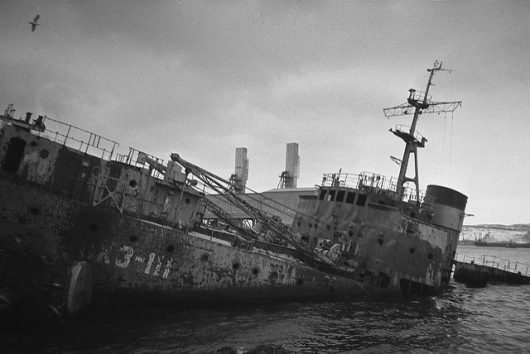
In the northwest of Russia near Finland is a region known as Murmansk. In the past, this area suffered nuclear hazards and acted as the dumping ground of ship skeletons. The Kola Bay fishing community, a port town in Russia’s Murmansk region, is now under stress due to the polluted water.

In a progressive move, Russia’s federal budget allocated 50 million rubles ($880,000) towards cleaning the unauthorized ship dumps out of Kola Bay.

Karabsh

To the east of Moscow and just north of Kazakhstan lies the town of Karabsh in Russia’s Ural Mountains. There, a copper smelting plant dominates the environment and has been polluting the ground and water since the beginning of the last century.

When the town was young, it’s population reached 50,000, but Karabash now has a very high mortality rate from cancer and respiratory disease due to the plant; in consequence, the current population is 11,000.

“I’ve long since given up drinking the tap water,” said Vladimir Kartashov, a lifelong resident of Karabash.

The copper plant in Karabash has turned the town into an environmental disaster zone with water concentrations of arsenic 279 times, copper 600 times and lead is 300 times the permitted level.

Siberia

In Siberia, the large part of Russia east of the Urals, the deepest lake in the world lies just north of Mongolia. Lake Baikal hold’s one-fifth of the world’s unfrozen fresh water and is of exceptional value to evolutionary science; unfortuantely, the body of water can no longer absorb human pollution without consequence.

The lake’s ecosystem experienced an explosion of algal blooms, which deplete the water of dissolved oxygen and practically suffocate fish.

“I am 150 percent sure that the reason is the wastewater runoff from towns without proper sewage treatment,” said Oleg Timoshkin, biologist at the Russian Academy of Science’s Limnological Institute in Irkutsk.

Improve the Industry, Improve Water Pollution in Russia

In an effort of good faith, the Russian government is putting 26 billion rubles ($452 million) into a cleanup program, but water pollution in Russia is driven predominantly by industry.

Corporations do not have much incentive to practice eco-friendly habits due to the ineffective, unenforced fines. All across the country, rivers and lakes have been flooded with waste runoff from factories. Russia has the means to enforce its own environmental regulations, but Russia’s Natural Resource Ministry has neglected to collect on 132,075 instances of entire-river poisoning.

Hopefully the restoration efforts of Russia will become the nation’s norm, but for now, the world must wait and see what becomes of water pollution in Russia.

– Sam Bramlett

Photo: Flickr

March 13, 2018
https://borgenproject.org/wp-content/uploads/borgen-project-logo.svg 0 0 Borgen Project https://borgenproject.org/wp-content/uploads/borgen-project-logo.svg Borgen Project2018-03-13 01:30:412019-12-16 12:43:26Driven by Industry: Water Pollution in Russia from Coast to Coast
Global Poverty, Water, Water Quality

Water Pollution in China is the Country’s Worst Environmental Issue

Water Pollution in China is the Country's Largest Environmental Issue
Half of China’s population cannot access water that is safe for human consumption and two-thirds of China’s rural population relies on tainted water. Water pollution in China is such a problem that there could be “catastrophic consequences for future generations,” according to the World Bank.

China’s water supply has been contaminated by the dumping of toxic human and industrial waste. Pollution-induced algae blooms cause the surface of China’s lakes to turn a bright green, but greater problems may lurk beneath the surface; groundwater in 90 percent of China’s cities is contaminated.

China’s coastal manufacturing belt faces the most pollution. Despite the closure of thousands of pollutant sources, a third of the waterway remains well below the government’s modest standards for water quality. Most of China’s rural areas lack a system to treat wastewater.

Water pollution in China has doubled from what the government originally predicted because the impact of agricultural waste was ignored. Farm fertilizer has largely contributed to water contamination. China’s water sources contain toxic of levels of arsenic, fluorine and sulfates, and pollution has been linked to China’s high rates of liver, stomach and esophageal cancer.

Dabo Guan, a professor at the University of East Anglia in Britain, has been studying scarcity and water pollution in China for years. He believes water pollution to be the biggest environmental issue in China, but the public may be unaware of its impact. Air pollution creates pressure from the public on the government because it is visible every day, but underground water pollution is not visible in the cities, causing it to virtually be forgotten.

Water pollution in China stems from the demand for cheap goods; multinational companies ignore their suppliers’ environmental practices. Although China’s development has lifted many out of poverty, it has also sent many others into disease.

Factories are able to freely discharge their wastewater into lakes and rivers due to poor environmental regulations, weak enforcement and local corruption. Rural villages located near factory complexes rely on the contaminated water for drinking, washing and cooking. These villages have become known as “cancer villages” because of their high rates of cancer and death.

In 2011, Greenpeace launched the Detox campaign to publicize the relationship between multinational companies, their suppliers and water pollution in China. The Detox campaign challenges multinational companies to work with their suppliers to eliminate all instances of hazardous chemicals into water sources. Although combating water pollution in China will require much more work, continued efforts from organizations like the Detox campaign provide a beacon of hope for the future of China’s people and environment.

– Carolyn Gibson

Photo: Flickr

March 10, 2018
https://borgenproject.org/wp-content/uploads/borgen-project-logo.svg 0 0 Borgen Project https://borgenproject.org/wp-content/uploads/borgen-project-logo.svg Borgen Project2018-03-10 01:30:042024-05-29 22:39:40Water Pollution in China is the Country’s Worst Environmental Issue
Global Poverty, Water, Water Quality

Water Pollution in Brazil a Serious Issue with Some Improvements

Water Pollution in Brazil

The 2016 Summer Olympics in Rio de Janeiro brought glaring international attention to the issue of water pollution in Brazil. Untreated sewage flows into coastal waters, particularly around Rio de Janeiro and São Paulo, the two largest cities in the country. Beaches are coated in trash, sand is reduced to a greasy sludge and the water is black and noxious.

In the weeks approaching the 2016 Games, the United Nations advised athletes to spend as little time in the water as possible, avoid swallowing water, cover cuts with waterproof bandages and shower as soon as possible after exposure.

The reason for these extreme precautions was due to the massive amounts of raw, untreated sewage that is allowed to flow through the channels and into the Atlantic. The worst affected areas in Rio de Janeiro are in the northern part of the city, where the low-income favela communities are concentrated. In these neighborhoods, the government has invested inadequate resources into water systems and sewage treatment.

Foreigners are not the only ones wary of the water in Rio de Janeiro’s Guanabara Bay. Locals know to not even dip their toes in, aware that they will likely get a disease from the sickening waters. It has been reported to contain high levels of bacteria and viruses that could likely lead to stomach and respiratory illnesses.

Water pollution in Brazil is not only a major health issue, but an environmental concern as well. Fishermen have seen major decreases in fish and wildlife populations in coastal regions. Where they used to catch six fish in an hour, they may now only catch one.

In response to international criticism, the Brazilian government erected “eco-barriers” across streams and rivers to keep trash from floating into Guanabara Bay. However, not only are they ineffective, the eco-barriers inconvenienced the poor and disenfranchised local fishing communities, cutting off the water routes fishermen used to get to Guanabara Bay.

For many poor communities in Rio de Janeiro, fish are a vital resource for both food and income. Fish are used to feed families and are sold at the local market to buy essential goods like rice and beans. Guanabara Bay is a lifeline for many desperately poor families and the eco-barriers disturbed their access to that lifeline.

What is worse is that the eco-barriers did little to stem the flow of trash into Guanabara Bay, only collecting about 7.5 percent of the rubbish. The inefficiency of government initiatives like this only exacerbates and prolongs the crisis of water pollution in Brazil.

However, one initiative looks promising. Under the umbrella of the Clean Urban Delta Initiative is a proposed solution to help litter pickers get more value from plastic waste by providing a low-cost plastic shredder and molding machine that can make plastic statues or trinkets that could then be sold to tourists at iconic sites in Rio. Local people would be given the opportunity to earn significantly more money, and the government may find some relief from the problem of water pollution in Brazil.

– Sydney Lacey

Photo: Flickr

March 8, 2018
https://borgenproject.org/wp-content/uploads/borgen-project-logo.svg 0 0 Borgen Project https://borgenproject.org/wp-content/uploads/borgen-project-logo.svg Borgen Project2018-03-08 07:30:492019-12-16 12:43:50Water Pollution in Brazil a Serious Issue with Some Improvements
Global Poverty, Health, Water Quality

The State of Water Quality in Nigeria

water quality in NigeriaIn Nigeria, one of the foremost necessities for survival has become a luxury reserved for a fortunate few. Clean water quality in Nigeria is essential, but for many, it is elusive if not outright unobtainable. Seventy million Nigerians lack access to safe drinking water, according to the Pulitzer Center. This means that more than 35 percent of people in the continent’s most populous nation face the daily deprivation of their basic needs.

A confluence of geographic, climatic and institutional factors contribute to their plight. Because much of Nigeria’s drinking water is unpurified groundwater, it usually contains pollutants and chemical contaminants like heavy metals responsible for debilitating diseases like dysentery, typhoid and cholera. Estimates suggest that these diseases – preventable with clean water and basic sanitation – claim the lives of about 60,000 Nigerian children under five each year.

The Nigerian government is tasked with reducing these numbers and providing potable water to their people. So far, they have been largely unsuccessful. Despite annual budgets of around $500 million for water sanitation programs, the country was unable to meet its goals for clean water access by 2015.

This is due to pervasive government corruption and ineffectual mechanisms to hold them accountable. Typically, funds are dispersed from the national government to the 36 states, which have discretion in spending and giving some of the money to localities.

According to a senior official, “There is no clear tracking for budgeted funds or expenditures…Most of the states don’t have water policies; there is no state in the federation that has a regulatory agency for water”.

To mitigate this corruption, the Pan Africa Chemistry Network suggests a national water strategy with clear roles for all institutions involved, as well as instruments to ensure better accountability. With such a framework in place, the government would be better equipped to meet the challenges of water quality in Nigeria.

Despite these setbacks, there are significant opportunities for improvement. Amid government dysfunction, optimism emanates from ingenuity. Technological innovation is enabling the purification of water across the continent.

One such invention to improve water quality in Nigeria is the EPA Compact Water Plant, which uses a process called hydraulic flocculation to clean contaminated water. One model uses a solar panel to provide the energy for the process, which can be performed by an individual. Tested in four African communities, this technology has performed well, and its proliferation across Nigeria could be an enormous improvement to current methods.

Janet Daniels, a resident of the capital city of Abuja, has an acute understanding of the impact such technology could have. Currently, she is forced to collect her water from a local borehole.

“We cannot wait for the government to do anything” she laments. “I have to boil the water [because] it has little particles of stuff in it”.

For people like Janet Daniels, gaining access to potable water is a daily toil. By emphasizing accountability and providing new technologies like the EPA Compact Water Plant, Nigeria can ensure that clean water is no longer mistaken for a luxury.

– Brendan Wade

Photo: Flickr

February 5, 2018
https://borgenproject.org/wp-content/uploads/borgen-project-logo.svg 0 0 Borgen Project https://borgenproject.org/wp-content/uploads/borgen-project-logo.svg Borgen Project2018-02-05 07:30:012024-05-29 22:39:07The State of Water Quality in Nigeria
Global Poverty, Water, Water Quality, Water Sanitation

The Water Crisis and the Top 10 Clean Water Solutions

top 10 clean water solutionsWorldwide, 844 million people do not have access to clean water, meaning that one in nine people are living with water unsafe for human consumption. This is referred to as The Water Crisis.
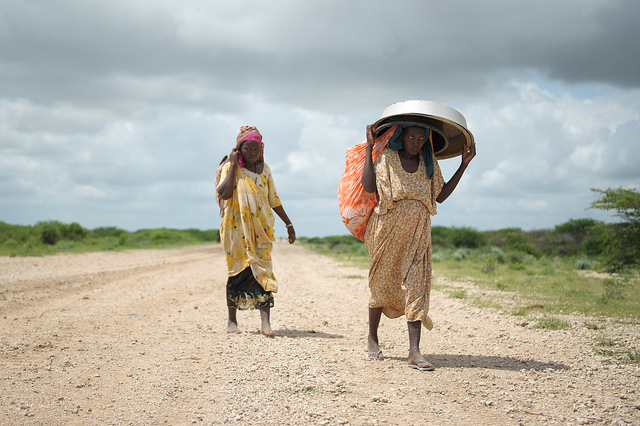
The Water Crisis surpasses its effect on global health by affecting children, education, economics and women. Every 90 seconds, a child dies from a water-related disease. Children are often tasked with collecting water for their families, taking time away from education opportunities. School attendance increases with increased access to clean water.

Globally, there is a $260 billion deficit each year due to lack of basic water and sanitation. With the provision of clean water, time and effort previously spent collecting water can refocus on other opportunities. Universal access to basic water and sanitation could result in a $32 billion reduction in healthcare costs.

Women are disproportionately affected by The Water Crisis, as they spend an estimated six hours collecting water every day; this time could be spent on education, family life and work.

The water crisis and its detrimental effects can be resolved with the provision of basic water and sanitation; this resolution can be reached with the top 10 clean water solutions.

Top 10 Clean Water Solutions:

  1. Educate: Educate the population to change consumption and lifestyle habits.
  2. Innovate and Conserve: Water sources, such as aquifers and rainwater, are prone to evaporation and unpredictability. The invention of new water conservation techniques will counteract this issue.
  3. Recycle: Recycling wastewater decreases water imports and encourages self-sufficiency in developing countries.
  4. Agriculture and Irrigation: Approximately 70 percent of the world’s fresh water is used for agriculture. Improving agriculture and irrigation practices can appropriately distribute clean water for human consumption.
  5. Water Catchment and Harvesting: Areas without clean water rely on water catchment systems. Efforts to establish water harvesting systems provide independent control of resources.
  6. Infrastructure: Poorly managed infrastructure devastates the economy by wasting resources, increasing costs, diminishing quality of life and facilitating the spread of water-related diseases. Improved infrastructure conserves resources and enhances quality of life.
  7. Water Credit: The Water Credit Initiative utilizes microfinancing to provide affordable loans to those who require additional help in establishing clean water solutions.
  8. Water Equity: Water Equity relies on social impact investing to increase funds for water and sanitization loans.
  9. New Ventures: New Ventures funds research and development of new approaches to The Water Crisis.
  10. Global Engagement: Global Engagement is the foundation for lasting change on local and international levels

Although these are the top 10 clean water solutions, they are not the only solutions to The Water Crisis. Clean water access improves health, education and work opportunities for families across the world.

– Carolyn Gibson

Photo: Flickr

January 17, 2018
https://borgenproject.org/wp-content/uploads/borgen-project-logo.svg 0 0 Borgen Project https://borgenproject.org/wp-content/uploads/borgen-project-logo.svg Borgen Project2018-01-17 01:30:562019-11-11 22:25:12The Water Crisis and the Top 10 Clean Water Solutions
Global Poverty, Water Quality

Drought Affecting Water Quality in Somalia

water quality in SomaliaFor a country whose entire eastern border is an ocean, water quality in Somalia is a longstanding worry for the nation’s citizens. According to UNICEF Somalia’s Water, Sanitation and Hygiene (WASH) studies, of the nearly 15 million people living in Somalia, only 45 percent of them have access to clean water. Only one in four people have access to adequate sanitation facilities within a reasonable distance of their homes.
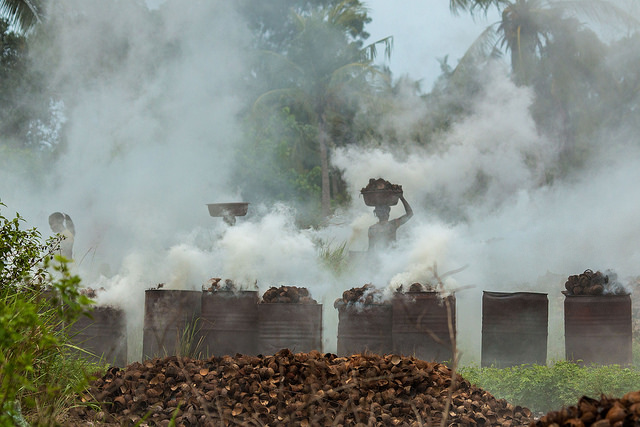
WASH has linked the lack of clean water and sanitation facilities to the rising disease rates in Somalia, most notably, the widespread prevalence of widespread waterborne diseases such as diarrhea that account for more than 20 percent of deaths of children under five. Additionally, the lack of clean water is heavily correlated to malnourishment, which over 300,000 children in Somalia are currently suffering from.

While having clean drinking water is imperative to survival, the disposal of wastewater (water used for cooking, bathing, sewage and other uses) is nearly as important to providing a safe and clean environment for Somalians to live in. Considering that the infrastructure to dispose of wastewater is severely lacking in Somalia, and the fact that most Somalians rely on rivers and rainwater for water (natural sources which are highly prone to contamination by wastewater), it is little surprise that so many Somalians lack adequate drinking water.

Estimates indicate that it would cost $1.5 billion to provide clean water to all Somalians that would not be dependent on weather patterns, droughts or possible contamination by wastewater. While by no means a small sum, it is also not an outrageous one, and one that is being decreased by efforts to improve Somalian irrigation techniques, harvesting and storing cleaner rainwater, as well as other methods to help Somalia use less water more efficiently.

These efforts, however, are only made tougher due to the twofold threat of the terrorist organization al-Shabaab, which controls much of rural Somalia, where the lack of clean water is felt most severely, and the harsh drought and famine that is currently sweeping the country. While food and water supplies are already running low, al-Shabaab puts up blockades and refuses to let aid workers assist the starving and thirsty people. In March, the Somali prime minister reported that over a hundred people had died as a result of the drought, and that number has likely only continued to worsen as concerns over the water quality in Somalia continue to linger.

Organizations such as UNICEF have stepped up to combat the water shortages by providing medical services and other necessities. Most pressingly, UNICEF was providing over 400,000 people with daily water as of early 2017. Members of the group hope and plan to increase that number fourfold and provide water vouches to well over a million people.

USAID has already committed more than $300 million towards humanitarian assistance in Somalia for 2017. Much of that money is devoted to assisting the UNICEF WASH programs and activities already underway; however, the Office of Foreign Disaster Assistance has involved itself in an attempt to address the emergency caused by the drought through other initiatives. This assistance is key to helping those affected survive the droughts and allow time for more sustainable solutions to be put in place to improve the water quality in Somalia.

– Erik Halberg

Photo: Flickr

November 30, 2017
https://borgenproject.org/wp-content/uploads/borgen-project-logo.svg 0 0 Borgen Project https://borgenproject.org/wp-content/uploads/borgen-project-logo.svg Borgen Project2017-11-30 01:30:572024-06-07 05:07:50Drought Affecting Water Quality in Somalia
Global Poverty, Water Quality

Five Important Facts About Water Quality in Cote d’Ivoire

A large number of the issues regarding sanitation and water quality in Cote d’Ivoire can be attributed to the domestic conflict that ended in 2007. The conflict damaged crucial water supply infrastructure, especially in the north, and post-conflict reconstruction has overshadowed the maintenance and repair of these systems. Over eight million people in Cote d’Ivoire lack access to adequate sanitation facilities, which increases the risk of water-related diseases. Over four million people lack access to safe drinking water. These numbers increase in rural areas, where 46 percent of the rural population lacks access to clean water and 87 percent lacks access to sufficient sanitation.

Here are five facts about water quality in Cote d’Ivoire:

  1. The crisis of water quality in Cote d’Ivoire is characterized by two key problems. First, many communities, especially rural ones, face difficulties not only accessing safe drinking water, but also accessing enough of it. Second, there are many difficulties in accessing sewage infrastructure and proper bathrooms, especially in urban areas. The issue is multi-faceted, and impacts both urban and rural communities in different ways.
  2. The above issues increase the risk of transmission of water-borne diseases, such as cholera. Guinea worm was also common, though it was eradicated in 2007. Unsafe drinking water increases child mortality rates. Currently, many children die from diarrhea and similar diseases.
  3. Urbanization is one of the main causes of the current water crisis. After the civil war, the capital city of Yamoussoukro experienced a massive influx of internally displaced people. The city doesn’t have enough wells or adequate sewage and sanitation facilities to support this increase in the population, exacerbating existing issues in the city.
  4. The water crisis also has an impact on education. According to USAID, “as a result of having to collect water to drink and shower before going to school, all the children in the neighborhood were constantly tired and sick, and their academic performance suffered.” This particularly disadvantages girls, who mainly carry the burden of fetching water for their families. Even when they are able to attend school, they often don’t have access to separate sanitation facilities.
  5. Many organizations are addressing the crisis of low water quality in Cote d’Ivoire. Charity Water has funded 190 separate projects in the country and has invested $1,146,687 dollars as of November 2017. UNICEF Water and Sanitation takes a multi-pronged approach, supplying clean drinking water straight to communities, schools and hospitals, promoting sanitation and hygiene and surveying the epidemiological impacts of the low water quality to prevent water-related diseases. The Urban Water Supply Project aims to improve water quality and access to water (especially in overcrowded urban areas) and to strengthen the financial management and financial planning capacity of the National Water Agency in its urban water supply sector.

With continued support from organizations like these, water quality in Cote d’Ivoire is sure to improve in the coming years, thus improving the quality of life for the nation’s citizens.

– Olivia Bradley

Photo: Flickr

November 27, 2017
https://borgenproject.org/wp-content/uploads/borgen-project-logo.svg 0 0 Borgen Project https://borgenproject.org/wp-content/uploads/borgen-project-logo.svg Borgen Project2017-11-27 07:30:522024-05-27 23:59:44Five Important Facts About Water Quality in Cote d’Ivoire
Page 10 of 16«‹89101112›»

Get Smarter

  • Global Poverty 101
  • Global Poverty… The Good News
  • Global Poverty & U.S. Jobs
  • Global Poverty and National Security
  • Innovative Solutions to Poverty
  • Global Poverty & Aid FAQ’s
Search Search

Take Action

  • Call Congress
  • Email Congress
  • Donate
  • 30 Ways to Help
  • Volunteer Ops
  • Internships
  • Courses & Certificates
  • The Podcast
Borgen Project

“The Borgen Project is an incredible nonprofit organization that is addressing poverty and hunger and working towards ending them.”

-The Huffington Post

Inside The Borgen Project

  • Contact
  • About
  • Financials
  • President
  • Board of Directors
  • Board of Advisors

International Links

  • UK Email Parliament
  • UK Donate
  • Canada Email Parliament

Get Smarter

  • Global Poverty 101
  • Global Poverty… The Good News
  • Global Poverty & U.S. Jobs
  • Global Poverty and National Security
  • Innovative Solutions to Poverty
  • Global Poverty & Aid FAQ’s

Ways to Help

  • Call Congress
  • Email Congress
  • Donate
  • 30 Ways to Help
  • Volunteer Ops
  • Internships
  • Courses & Certificates
  • The Podcast
Scroll to top Scroll to top Scroll to top