• Link to X
  • Link to Facebook
  • Link to Instagram
  • Link to TikTok
  • Link to Youtube
  • About
    • About Us
      • President
      • Board of Directors
      • Board of Advisors
      • Financials
      • Our Methodology
      • Success Tracker
      • Contact
  • Act Now
    • 30 Ways to Help
      • Email Congress
      • Call Congress
      • Volunteer
      • Courses & Certificates
      • Be a Donor
    • Internships
      • In-Office Internships
      • Remote Internships
    • Legislation
      • Politics 101
  • The Blog
  • The Podcast
  • Magazine
  • Donate
  • Click to open the search input field Click to open the search input field Search
  • Menu Menu

Archive for category: USAID

Topics covering about USAID

Development, Global Poverty, USAID

How Partnership Drives Development in Agra, Malawi and Tanzania

Partnership Drives Development
Empowering and creating partnerships with local actors is a longstanding tenet of effective development projects. When those in need rely too heavily on outside influences, regardless of their intentions, they risk losing control of the resources and decision-making best left to those closest to the problem. Partnership with local actors gives development projects the best chance of being effective and sustainable. Here are three examples of how partnership drives development.

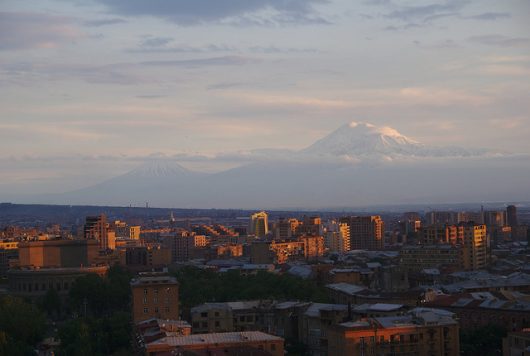
Agra

In 2009, the community of Agra, India — home to the iconic Taj Mahal — suffered from a water sanitation crisis. Waste collection and disposal became nonexistent and a large majority of residents practiced open defecation. As waste flowed into the Yamuna river of which locals relied for irrigation and drinking, residents risked exposure to polio, typhoid, dysentery and cholera.

In partnership with the Center for Urban and Regional Excellence, a USAID-supported non-governmental organization (NGO), Agra’s governing municipality constructed a wastewater treatment plant to protect the water source used by the 2,000 community members living in Agra.

The plant employs natural processes requiring minimal power and maintenance; however, the true indicator of the project’s success came in 2017, when Agra’s municipality took over all operations from outside actors and ensured clean drinking water for the people of Agra for years to come.

Malawi

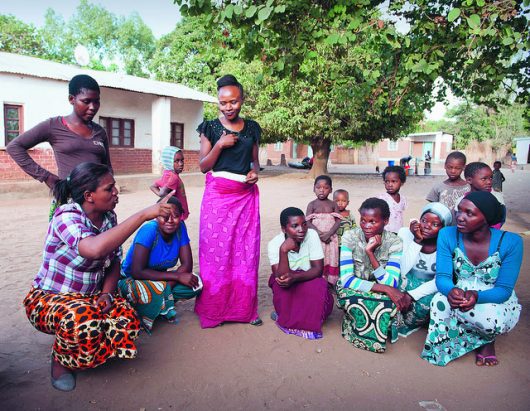
In another example of how partnership drives development, the Human Resources for Health in 2030 (HRH2030) program is partnering with the government of Malawi to recruit and hire 300 medical workers to combat the HIV epidemic. In Malawi, more than 900,000 people currently live with HIV. To add to the problem, the country suffers from a severe shortage of healthcare professionals needed to address this issue.

While the program only started in November 2017, facility managers from the HIV-freighted Lilongwe and Zomba districts have already noted the positive impact of the increase in workers. Furthermore, the local government has signed an agreement to take on financial responsibility for the new workers by 2020, committing to self-reliance and sustainability.

Tanzania

In addition to increasing access to a network of health professionals, the community of Tabora, Tanzania highlights the effectiveness of another way of combating HIV — male circumcision. Studies suggest that male circumcision reduces transmission in heterosexual men by near 60 percent, and is a powerful preventative tool, especially in combination with other approaches.

In an example of how partnership drives development, The USAID-funded Strengthening High-Impact Interventions for an AIDS-free Generation (AIDSFree) project is partnering with the Tabora regional health administration to increase access to voluntary medical male circumcision (VMMC). A standard bearer of the cause, traditional healer Albert Cosmas acts as a VMMC ambassador, encouraging other men to have the procedure and thereby helping reduce the HIV footprint in Tabora.

When development agencies make top-down decisions without partnership with local actors, they risk harming the communities they aim to serve. Indeed, “acting in collaborative partnership” is explicitly included in the United Nations 2030 Agenda for Sustainable Development. These three stories illustrate the powerful impact of a bottom-up approach that empowers local actors with the capacity to carry progress into the future.

– Whiting Tennis
Photo: Flickr

May 22, 2018
https://borgenproject.org/wp-content/uploads/borgen-project-logo.svg 0 0 Borgen Project https://borgenproject.org/wp-content/uploads/borgen-project-logo.svg Borgen Project2018-05-22 01:30:092024-05-29 22:42:20How Partnership Drives Development in Agra, Malawi and Tanzania
Foreign Aid, Global Poverty, USAID

Understanding How the U.S. Benefits from Foreign Aid to Angola

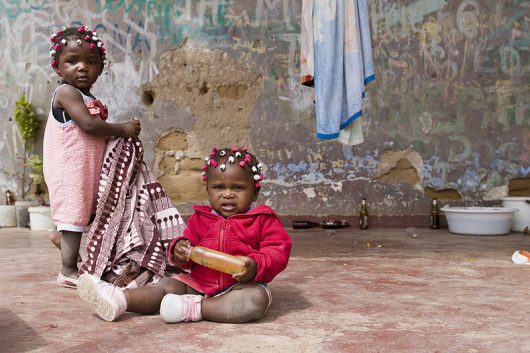
U.S. Benefits from Foreign Aid to AngolaAngola is a country in southern Africa sandwiched between three nations: Namibia, the Congo and Zambia. The United States established diplomatic relations with Angola in 1993, shortly after Angola’s independence from Portugal in 1975. Between 1975 and 1993, Angola witnessed 27 years of violent civil wars among many groups with the backing of various world powers including the United States, the Soviet Union, China and other countries in Africa.
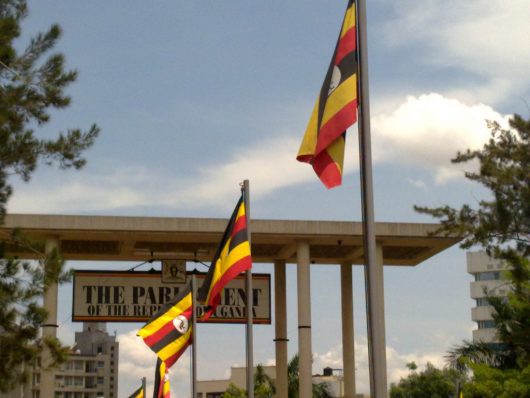
Angola continues to see repercussions from decades of war in the region. Roughly two-thirds of Angola’s citizens live in poverty, and much of Angola’s infrastructure has been destroyed by civil conflicts, war and lack of maintenance. The civil unrest in the region is also exacerbated by Angola’s possession of large oil reserves and a strong military force, creating a strong incentive for power struggles and polarizing forces in the region.

The U.S. benefits from foreign aid to Angola include providing food and food security, promoting democratic practices, providing disaster relief, providing better and more widely available health care and fighting the spread of disease in Angola. As well as these humanitarian efforts, the United States supports Angola in its efforts to utilize its agricultural abilities and sell oil reserves on the open market.

U.S. benefits from foreign aid to Angola have been in place since 1989 when the United States began providing large-scale disaster relief and humanitarian aid in the form of consumable material goods. In 1992, the United States Agency for International Development (USAID) began a relief and assistance program for Angola in the hopes that it would help prevent the region from falling back into the grips of civil conflict.

Unfortunately, the fighting did not stop and aid was suspended until 1995 when U.S. benefits from foreign aid to Angola resumed with millions being dispersed toward the rehabilitation of the agricultural sector and displaced children/orphans in the region. Much of the U.S. foreign aid dispersed during times of conflict in the area was provided in the form of material goods such as medical supplies and food, helping stabilize conditions and promote health and humanitarian causes.

Since the beginning of more peaceful times in Angola, U.S. benefits from foreign aid to Angola have provided over $1 billion in aid to programs directly helping the people of Angola. The year 2011 marked the 15-year anniversary of the full-time presence of USAID assistance programs in Angola, helping citizens rebuild and promote health standards in the country.

While aid dollars for humanitarian efforts have been successful in the region, it is important to remember that the primary U.S. benefits from foreign aid to Angola are to support leaders and governments that wish to take Angola down the road to a peaceful future. These aid dollars fund programs in Angola to increase credit access to citizens and governmental bodies, create fair and healthy economic conditions for trade and business expansion and create land registration systems to help prevent turf wars and property theft.

With the help of U.S. foreign aid dollars, Angola has made progress in installing leaders with a more peaceful vision for the future and a willingness to improve socioeconomic conditions for its citizens. The United States hopes to help Angola in its efforts to become the economic powerhouse it has the potential to be. With the help of programs like USAID, Angola has the potential to improve conditions not only for itself but the rest of Africa. With its agricultural and natural resources, Angola could prove itself to be one of Africa’s largest economic breadwinners.

– Dalton Westfall

Photo: Wikimedia Commons

April 28, 2018
https://borgenproject.org/wp-content/uploads/borgen-project-logo.svg 0 0 Borgen Project https://borgenproject.org/wp-content/uploads/borgen-project-logo.svg Borgen Project2018-04-28 01:30:402019-08-01 11:21:23Understanding How the U.S. Benefits from Foreign Aid to Angola
Aid, Global Poverty, USAID

Three Ways Foreign Aid in Uganda Has Had a Positive Impact


Humanitarians have been working for decades to assist Uganda in times of crisis. From political to social and environmental issues, residents of Uganda have seen foreign aid change the lives of many citizens in the country.

With a steadily increasing population, foreign aid in Uganda allows people in the country — who may otherwise be overlooked — to have better accessibility to the resources they need.

Uganda

Uganda has a steadily increasing population, which is commonly seen in countries affected by poverty. This increase occurs because families tend to have more children to support the family as they get older, and is often an indicator of the amount of foreign aid that is needed. In 1960, according to the World Bank Group, Uganda had a population of 6,788,241 people; between 1960 and 2016, the population rose to 41,487,965.

According to Irish Aid, 38 percent of people in Uganda live on $1.25 per day. In addition, the Human Rights Watch World Report of 2017 explains that Uganda faces many issues as far as freedoms for protesters, media officials and several forms of identity including associations people make between themselves and social organizations.

One way foreign aid in Uganda assists people is by allowing them to gain more autonomy over their lives. Better access to healthcare and improved living conditions results in more power and strength of citizens.

Refugees

USAID has been influential as far as the versatile kinds of aid the organization has offered to Uganda over the last few years. One of the forms of aid offered was assisting refugees during the Northern Uganda War.

According to USAID, 1.8 million people were displaced. Due to the foreign assistance that USAID was able to provide the organization states that, “Since 2007, all internally displaced people have returned home. USAID also assisted war-affected children and unemployed youth with tools and access to training to gain better access to income-generating activities.”

Economic Health

The Department of Foreign Affairs Irish Aid (for Uganda) recognizes the importance of agriculture to the health of economy in Uganda. Although improvements have been made as far as health and economic stability, the organization recognizes that the country could still benefit from improvement, especially as far as equal industrial opportunity:

“Most people live in rural areas and make their living from agriculture. Although Uganda has had consistently high economic growth rates and a strong record in the response to HIV and AIDS, it has struggled to ensure that all its citizens benefit equally.”

USAID has also been influential in improving the health of the economy which, according to the organization, has increased jobs for women who make up the majority of the farming population in Uganda: “USAID helped Uganda diversify their traditional crops from coffee, cotton and tea to non-traditional crops such as flowers.”

The efforts of organizations contributing to foreign aid in Uganda make a difference in improving economic stability and opportunity.

Healthcare

Healthcare is an important component of foreign aid in Uganda in numerous ways. Not only are healthcare officials able to assist refugees, but in times of political crisis, healthcare workers are able to save the lives of people who are affected by brutality and force; in Uganda, brutality is a reality that many people face.

According to the Human Rights Watch 2017 Report, the Lord’s Resistance Army’s leader “is charged with 70 counts of war crimes and crimes against humanity as part of attacks on internally displaced persons’ camps, including murder, enslavement, sexual and gender-based crimes, and the conscription of child soldiers.”

Although the government is working to address these crimes by holding leaders accountable under law, many people were still affected by this leader’s brutality before he was called for trial.

Healthcare workers and access to healthcare gives people a way to combat and bounce back from some of the brutality they fight against every day. USAID has also been influential in improving the healthcare available to people living in Uganda, including providing tools to combat insects, malaria and HIV/AIDS.

– Gabriella Evans

Photo: Flickr

April 13, 2018
https://borgenproject.org/wp-content/uploads/borgen-project-logo.svg 0 0 Borgen Project https://borgenproject.org/wp-content/uploads/borgen-project-logo.svg Borgen Project2018-04-13 01:30:582019-11-10 10:21:30Three Ways Foreign Aid in Uganda Has Had a Positive Impact
Aid, Foreign Aid, Global Poverty, USAID

How the US Benefits From Foreign Aid to the Central African Republic


Relations with the United States and the Central African Republic (CAR) began in 1960 following the nation’s independence from France. While CAR is one of the least developed nations in the world, the United States has enjoyed strong relations with CAR since it began. The U.S. benefits from foreign aid to the Central African Republic by recognizing the steps the country has taken after decades of instability and weak governance.

The United States had suspended embassy operations three times over the past 20 years, most recently in December 2012 in the CAR due to violence and the overthrow of the CAR government. The embassy reopened in September 2014 and remains open today.

Keeping the Peace

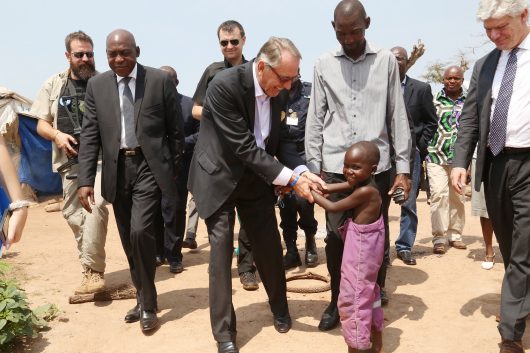
Due to the result of years of weak government and violence, the United Nations (U.N.) installed a multi-dimensional peacekeeping operation with over 10,000 peacekeepers in September 2014 to aid the transition process of a new constitution and election.

In December 2015, the country approved a new constitution and successfully held national elections for the President in February 2016 and for the National Assembly in April 2016. The U.S. benefits from foreign aid to the Central African Republic through a more stable country that enjoys greater security through improved economic growth and development.

While the CAR has a more a stable government, conflict has grown between armed groups across 2017 as have attacks against civilians, humanitarian workers and peacekeeping forces. The Assistant Secretary-General for Humanitarian Affairs and Deputy Relief Coordinator of the U.N., Ursula Mueller, has noted that 637,00 people received emergency food help and 1.4 million people received clean water assistance.

A Strong Ally

In addition to a now more stable government, the CAR does have some natural resources, with timber and diamonds dominating exports; however, transportation and electricity are extremely limited. The CAR is now the United States 187th largest goods trading partner with $37 million in total goods traded during 2015.

The U.S. Department of Commerce estimates that U.S exports of good to Central African Republic supported 100 jobs in 2014. The U.S. benefits from foreign aid to the Central African Republic through top exports, including vehicles ($23 million) and electrical machinery ($3 million).

USAID decided to step up its aid to the people of the CAR as over 60 percent of the CAR lives in poverty, population displacement continues to increase as a result of ongoing violence, and the number of internally displaced persons increased by more than 70 percent since early 2017.

Humanitarian Aid

Both the U.N. and USAID’s partners coordinate to give emergency humanitarian help to affected populations. USAID’s Office of Food for Peace continues to support the U.N. World Food Program’s distribution of food to the most vulnerable people of the CAR — an estimated $14.9 million expenditure to the U.N. agency.

USAID and other humanitarian organizations also established an early warning system that sent or received nearly 130 humanitarian alerts throughout the year, identifying areas for potential relief interventions.

The U.S. has provided over $500 million of humanitarian, development and security assistance in support of the CAR people’s efforts to find long-term stability and peace. It remains to be seen how relations between the Central African Republic and the United States continue, but so far, the two nations are mutually beneficial.

– Zachary Ott

Photo: Flickr

April 13, 2018
https://borgenproject.org/wp-content/uploads/borgen-project-logo.svg 0 0 Borgen Project https://borgenproject.org/wp-content/uploads/borgen-project-logo.svg Borgen Project2018-04-13 01:30:122024-05-29 22:42:01How the US Benefits From Foreign Aid to the Central African Republic
Aid, Aid Effectiveness & Reform, Foreign Aid, Global Poverty, USAID

Understanding the Negative Effects of Budget Cuts to USAID

cuts to USAID
Recently, the Trump administration, in collaboration with congressional leadership on Capitol Hill, has hammered out a deal to prevent a government shutdown while effectively gutting the State Department and agencies like USAID of their funding. This move not only signals a sidelining of diplomacy but marks one of the biggest budget cuts to USAID and the State Department since the early 1990s.

The effects of the budget cuts to USAID are undoubtedly going to hinder diplomatic agencies in eliminating poverty around the globe and increasing diplomatic relations with the countries that depend on us the most. The United States Agency for International Development (USAID) is the State Department’s main tool for dispensing aid to foreign countries and strengthening diplomatic relations.

USAID currently operates in roughly 100 countries, fighting the spread of poverty and disease while working to improve economic conditions worldwide. The proposed budget cuts to USAID weigh in at approximately $9 billion, a staggering defeat to those working toward the end of poverty worldwide.

The President’s proposed budget cuts to USAID amount to nearly one-third of its total budget, in what seems to be a strategic move away from diplomacy and toward military strengthening. Regardless of the President’s agenda, this move away from soft power and diplomacy has been condemned by many members of the military.

A total of 151 retired senior military commanders, including former chiefs of the Navy, Army, Air Force, Marine Corps and Special Operations Command, have warned that a reduction of this magnitude could have detrimental effects around the globe. As threats to the United States’ national security continue to grow, it is a risk to decrease diplomatic ties at such a pivotal moment.

Many civilians and government employees agree with the opinions of their military leaders. Former USAID Administrator Andrew Natsios said, when facing the 1999 budget cuts to foreign aid, that it is likely budget cuts could have detrimental effects toward the technical expertise of USAID and could mark the beginning of a disaster in the long-term.

As well as the statement above, Natsios describes budget cuts toward foreign aid and agencies such as USAID as an “evisceration of the most important tool of American influence in the developing world.” Other staffers from USAID warn of the spread of disease in the United States rising as foreign aid spending is cut. Outbreaks such as the Ebola outbreak may become much larger and harder to contain with a lack of funding to agencies such as USAID. These concerns are still relevant and even more serious today.

Agencies such as USAID are pivotal in diplomatic relations and national security. By providing funds, resources, goods and trade to other countries, the U.S. invests in itself as well as others. By providing healthcare to those in need, USAID prevents the spread of communicable diseases, prevents premature death and builds a market for low-cost medical technologies.

By providing food and farming technologies, the U.S. prevents world hunger and promotes market trading of produce and other consumable goods. By providing foreign aid, the country also helps form more efficiently-run governments and promotes democracy wherever possible. All of these efforts also prevent bigger catastrophes around the globe, such as mass migrations, food shortages and natural disasters.

At the end of March, Congress approved an omnibus appropriations bill for FY18 that will keep the government open through September 30, 2018. When it comes to funding for development and diplomacy, the omnibus overwhelmingly rejects the deep and disproportionate cuts proposed by the Administration in FY18 – highlighting the strong bipartisan support in Congress for these critical programs. Still, there is more work to be done to protect funding for the foreign aid budget in FY19 and beyond. 


Email Congress in Support of the International Affairs Budget

– Dalton Westfall

Photo: Flickr

April 12, 2018
https://borgenproject.org/wp-content/uploads/borgen-project-logo.svg 0 0 Borgen Project https://borgenproject.org/wp-content/uploads/borgen-project-logo.svg Borgen Project2018-04-12 01:30:012019-11-10 10:22:56Understanding the Negative Effects of Budget Cuts to USAID
Aid, Aid Effectiveness & Reform, Foreign Aid, Global Poverty, USAID

U.S. Signals Possible Change in Foreign Assistance Programs

In a recent internal memo titled “America First Foreign Assistance Policy,” U.S. Ambassador to the United Nations Nikki Haley outlines possible aid cuts to nations that vote against U.S. initiatives within the U.N. It is suggested that foreign assistance programs should be partially contingent upon voting with the U.S. at the U.N. The memo comes in the wake of the United States’ motion to move its embassy to Jerusalem, a move that recognizes Jerusalem as the capital of Israel.
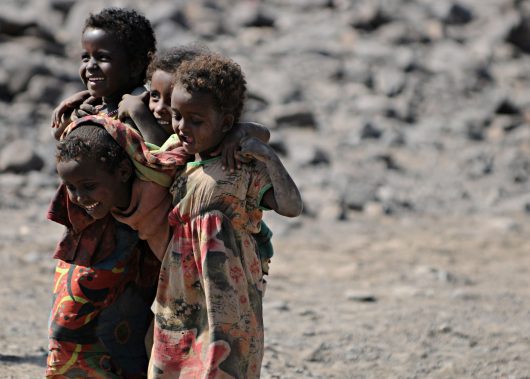
Although the motion passed, it was also met with widespread condemnation; 128 countries in total condemned the move. In response, the United States threatened to cut foreign aid programs. Commenting on the vote at a recent AIPAC conference, Haley stated, “We’re not forgetting that vote. As I said at the time: On that vote, we were taking names.”

As of today, only Palestine has received cuts in foreign aid assistance. This is largely due to the Palestinian Authority’s refusal to enter into peace negotiations with Israel. In the view of the Palestinian government, the United States has lost its position as the neutral-party at the negotiating table.

A major element of Haley’s “America First Foreign Assistance Policy” is the direct link between foreign assistance programs and American security interests. For example, Iraq and Egypt remain exempt from cuts in foreign aid even though both countries have voted against the United States in the past on multiple resolutions. It is argued that continued aid to Iraq and Egypt is vital in protecting U.S. security interests in the Middle East.

Countries not exempted from cuts who offer the U.S. little economic or security benefit could see major shifts in aid assistance. Specifically, American foreign assistance programs in Ghana, Vietnam and Zimbabwe are under fire. $4.9 million to aid in Ghana’s construction of schools, Vietnam’s $6.6 million climate change program and a $3.1 million job training initiative in Zimbabwe are highlighted in the document. Currently, aid programs for roughly 40 countries who have voted against the U.S. in the past are under review.

In addition to the details of the “America First Foreign Assistance Policy” document, the State Department has put more than $100 million on hold in funding for the U.N. Relief and Works Agency (UNRWA). Another $100 million requested by the Bureau of Population, Refugees and Migration has also been denied. It is unclear as to why the funds have been denied or when they may be approved.

With the recent release of U.S. Ambassador Nikki Haley’s proposal for major changes to American foreign assistance programs, there is much concern for countries that receive U.S. aid, most notably for nations viewed as nonessential to U.S. economic and security interests. Furthermore, countries that lack a track record of voting with the U.S. on U.N. resolutions could face serious cuts.

It is unknown whether these policy changes will be formally adopted in Washington, D.C. The proposed changes have seen much backlash from both the Department of Defense and intelligence community. Ultimately, the American mission to eradicate international poverty and obtain global security is at risk.

– Colby McCoy

Photo: Flickr

April 6, 2018
https://borgenproject.org/wp-content/uploads/borgen-project-logo.svg 0 0 Borgen Project https://borgenproject.org/wp-content/uploads/borgen-project-logo.svg Borgen Project2018-04-06 01:30:422019-11-15 19:27:00U.S. Signals Possible Change in Foreign Assistance Programs
Global Poverty, USAID

7 Years of USAID in Djibouti

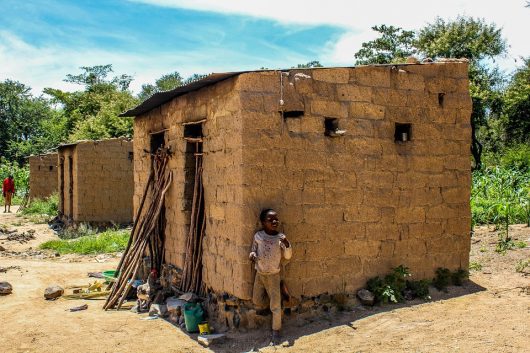
USAID in DjiboutiFrom 2011 to 2018, the U.S. Agency for International Development (USAID) has been working with Djibouti, a country located in sub-Saharan Africa. It operates numerous programs lasting from one to multiple years, and an increase in funding for specific programs has shown how USAID in Djibouti can work.
2011

In 2011, Project Aide, which came out as a four-year plan in 2010 to help increase basic education, was still funded at $1.8 million. Project Aide helped train teachers and revise textbooks. The Commodity Cost of USAID Title II Food Aid received four million dollars to stop hunger, fight disease, support families and help with health, water, nutrition and hygiene. Furthermore, in 2011 USAID in Djibouti also worked with the Combined Joint Task Force/Horn of Africa to construct three new classrooms, upgrade solar panels, renovate latrines and build a security fence.

2012

In 2012, Project AIDE received its all-time highest funding of $2.9 million. The Commodity Cost of USAID Title II Food Aid program was still funded, but only at one million dollars. However, 2012 brought a new program from USAID called Roads to a Healthy Future II (Roads II).  This program received $1.3 million and the purpose was to alleviate HIV/AIDS and other STIs in Djibouti. USAID in Djibouti worked the Roads II program from 2012-2017. Djibouti also first received U.S. President’s Emergency Plan for AIDS Relieve (PEPFAR) funds in 2012, which would help prevent HIV/AIDS starting in early 2013.

2013

2013 brought no new highly funded programs but continued with two USAID programs: Project AIDE and Commodity Cost of USAID II Emergency Program for Humanitarian Assistance. Project AIDE received $2.4 million, and the Commodity Cost program received $1.7 million. USAID in Djibouti, as well as Roads II, helped bring SafeTStop in 2013. The goal of SafeTStop was to help educate individuals about HIV/AIDS and provide condoms and testing.

2014

USAID in Djibouti brought a new program in 2014 funded at $1.5 million. This program was Commodity Cost of USAID Title II Emergency Program for Protection, Assistance and Solutions. It was helped further by the World Food Program to supply protection, assistance and solutions to countries in further need of aid. The World Food Program also helped implement another program called ITSH Freight Cost of USAID Title II Emergency Program for Protection, Assistance and Solutions, which reappears with high funding in 2017. Roads II continued steady funding with $1.3 million.

2015

Both regular aid programs dropped in funding in 2015 to $1.2 million. The two programs are The Commodity Cost of USAID Title II Emergency Program for Protection, Assistance and Solutions and Roads II, but both remained the two highest funded programs of the year.

2016

2016 brought an end to the Roads II program but marked the beginning of two new, highly funded programs. The water, sanitation and hygiene (WASH) sector received the most funding with $1.7 million, and the goal was to increase access to potable water, sanitation and hygiene. WASH also planned to help at least 25,000 poor or vulnerable people enhance their hygiene practices so they can live healthier lives. The other new program was the Workforce Development program (WFD), which aimed to help youth and adults obtain knowledge higher than basic literacy and numeracy to increase job opportunities. 2016 also brought along the Women’s Empowerment and Livelihoods project at Arta’s Regional Council, which is a two-year, one million dollar program to help women in Djibouti.

2017

By 2017, the WFD project was in full effect and funded at $12 million. Now, the project is planned to last roughly five years, taking it all the way to 2021. USAID in Djibouti also funded more than one million dollars each to the ITSH Freight Cost of USAID Title II Emergency Program for Protection, Assistance and Solutions and Commodity Cost of USAID Title II Emergency Program for Protection, Assistance and Solutions.

2018

As of today, there are plans to help with US Food AID for refugees and to continue help with education, such as training another 1,200 primary school teachers and revising textbooks with a gender lens. USAID in Djibouti also plans to support programs to help control diseases such as polio, tuberculous and HIV/AIDS, and also improve nutrition. This year also brings the first public-private partnership to help with HIV/AIDS and building a 1,600 square foot center for health care, counseling, testing and education.

As the past ten years progressed, USAID in Djibouti changed with the needs of the country. Every year, USAID focused on what the country needed to be as successful as possible. With the constant aid and funding, Djibouti was able to increase its overall health and workforce and decrease its diseases rates.

– Amber Duffus

Photo: U.S. Africa Command

March 15, 2018
https://borgenproject.org/wp-content/uploads/borgen-project-logo.svg 0 0 Borgen Project https://borgenproject.org/wp-content/uploads/borgen-project-logo.svg Borgen Project2018-03-15 01:30:462024-06-05 23:57:267 Years of USAID in Djibouti
Global Poverty, Poverty Reduction, USAID

US Working to Reduce Poverty in Mozambique

U.S. working to reduce poverty in MozambiqueThe country of Mozambique, situated in southeast Africa, is ranked as of the world’s poorest nations. Since its independence from Portugal in 1975, this country has struggled to survive as a free nation. However, poverty rates are on the decline, with the U.S. working to reduce poverty in Mozambique.

One of the main causes of Mozambique’s extreme poverty rates is that following its independence in 1975, the country endured a civil war from 1977 to 1992. This war drained the country of its national resources. Shortly after the resolution of the civil war, the United States stepped in, providing much-needed aid to the hurting country. The United States is still Mozambique’s largest bilateral donor, giving an annual $400 million towards relief measures.

The United States and Mozambique both share a commitment to improving health, education and food security for the Mozambican people, which can be seen through the success of U.S.-funded programs.

For example, in 2000, after severe floods occurred in Mozambique, the United States provided assistance to 115,000 families to rebuild their homes. In addition, the PEPFAR program, supported by the United States, also works with the Mozambican government, saving hundreds of thousands of lives from the HIV/AIDS epidemic. The United States also provides for the future of the country through the Feed the Future program, educating farmers on how to develop their land to increase food production and therefore provide for their people, drastically reducing the hunger percentage.

All of these programs demonstrate the positive effects of the U.S. working to reduce poverty in Mozambique; however, there is still much that needs to be done, as the majority of the population still lives in extreme poverty. For every percentage point of economic growth between 1996 and 2009, Mozambique’s poverty rate only decreased by 0.26 percentage points. This is half of what other African countries have achieved in terms of poverty reduction rates.

The reason for this difference in numbers is because there is not an even distribution of funds among the Mozambican people. If Mozambique’s growth had been more equally shared between groups of people living throughout the country, an estimated two million additional people could have been lifted out of poverty.

Rural areas contain a much larger percentage of people living in poverty because of the difficulty in accessing relief methods provided to those in more urban settings. However, even with the uneven distribution of funds and other methods of aid, with the U.S. working to reduce poverty in Mozambique, things are looking up for the country.

Despite all of the struggles Mozambique has had to endure, its future is looking bright. Although it is ranked as having one of the world’s worst healthcare systems, the country has made significant progress in reducing mortality rates. Its economic success has also started to pick up the pace as seen in 2017, when the GDP growth rate increased 2.9 percent from the preceding quarter.

With numbers like these, it can be seen that Mozambique is slowly reducing the number of people living in poverty. However, it still relies on foreign assistance such as that from the United States, and it is vitally important to continue these relief methods.

– Adrienne Tauscheck

Photo: Pixabay

March 11, 2018
https://borgenproject.org/wp-content/uploads/borgen-project-logo.svg 0 0 Borgen Project https://borgenproject.org/wp-content/uploads/borgen-project-logo.svg Borgen Project2018-03-11 07:30:192024-05-27 09:21:12US Working to Reduce Poverty in Mozambique
Education, Global Poverty, USAID

Addressing Work That Supports Education in the Philippines

work that supports education in the PhilippinesThough the Philippines’ schooling system has significantly evolved in past years, many Filipinos still find challenges in receiving a quality education. The World Bank believes that increasing education opportunities could economically benefit the Philippines as well. Here is a list of work that supports education in the Philippines.

  1. PETC Workers Help Repair a Philippine School
    On July 1, 2016, the Lear Philippine Engineering and Technology Center (PETC) reported its work to support the Philippines’ “Brigade Eskwela” (Brigade for Education). Seventy engineers and associates painted a wall and classroom at Maguikay Elementary school. The volunteers also repaired some of the classroom’s amenities. The PETC put up a donation box at the school and received books, four sets of wall fans and $150 in contributions for incoming students’ school supplies.
  2. The Philippines’ Successful K-12 Reform
    In August 2016, the Philippines’ long-running K-12 education reform efforts helped 1.5 million students attend eleventh grade for the first time. The Philippines’ new K-12 law adds two years of senior high school, eleventh and twelfth grade, to the country’s required education system.
    Contrary to the number of students who completed the tenth grade in 2015, almost 50,000 more enrolled in the new eleventh grade for 2016. The change was especially significant since the Philippines was originally one of a few countries with a 10-year basic education system.
  3. UNESCO Helps the Philippines’ Department of Education
    In September 2016, UNESCO met with the Philippines’ Department of Education and thanked it for its continued cooperation in various activities. Dr. Leonor Magtolis, the department’s secretary, thanked UNESCO for its work that supports education in the Philippines. Magtolis also thanked UNESCO for its initiative to start an alternative learning system (ALS) for the Philippines. Magtolis believed that an ALS would be especially helpful for Filipino school children in rehabilitation centers.
  4. The Philippines’ Zero Dropout Education Scheme
    In December 2016, the Ernst and Young (EY) firm revealed its support for the Philippines’ Zero Dropout Education Scheme (ZeDrES). From 2011 to 2016, ZeDrES ensured that 250,000 Filipino children from low-income families could enroll in and complete primary education, providing them with microloans to afford their expenses. EY’s team audits ZeDrES’s financial statements and assesses its delivery and impact.
  5. The Success of USAID’s STRIDE Program
    In September 2013, USAID awarded RTI International a cooperative agreement called Science, Technology, Research and Innovation for Development (STRIDE) that would enhance the Philippines’ economic and educational sector. In April 2017, STRIDE awarded $5 million in technology, collaborative science and research grants to more than 20 million Philippine universities. In addition to awarding 46 scholarships to help Filipinos study in U.S. universities, STRIDE is creating technology offices in 36 Philippine universities.
  6. Free Tuition for 100 Philippine Colleges
    In August 2017, President Rodrigo Duerte signed a bill that grants free tuition for 100 colleges and state universities in the Philippines. Though President Duerte knew that the new law would have heavy short-term costs, he was more focused on its long-term benefits to Philippine students. A senior official said that the new law will benefit the Philippines’ local tertiary schools as well. “Now I can finish my college education. It means hard work,” said Angela Rebato, a student from Quezon City.

Volunteer work, funding and free tuition can continue to help Philippine students break educational barriers. PETC, UNESCO, USAID and other entities continue to inspire more work that supports education in the Philippines as well.

– Rhondjé Singh Tanwar

Photo: Flickr

March 11, 2018
https://borgenproject.org/wp-content/uploads/borgen-project-logo.svg 0 0 Borgen Project https://borgenproject.org/wp-content/uploads/borgen-project-logo.svg Borgen Project2018-03-11 07:30:002024-05-29 22:39:46Addressing Work That Supports Education in the Philippines
Aid, Global Poverty, Humanitarian Aid, USAID

The Many Forms of US Humanitarian Aid to Pakistan

U.S. humanitarian aid to Pakistan
On January 4, 2018, U.S. president Donald Trump’s administration announced that it would cut military aid to Pakistan on the grounds that Pakistan has not been doing enough to combat the more than 14 terrorist organizations operating within its borders. Many of these organizations support international terrorist operations and carry out attacks within the borders of Pakistan.

The United States is concerned with the operations being carried out against its forces in Afghanistan, which borders Pakistan. The mountainous border is porous and is a haven for terrorists. Some regions are officially governed by the Pakistani government but under the de facto control of the terrorists. North and South Waziristan are the most contested territories.

The Pakistan government recently launched a military operation in North Waziristan to liberate the area from the terrorist organizations that controlled it. The continuing success of this operation could hinge on the possible $900 million cut in military and security aid from the United States. However, the Trump administration has made it clear that the cuts would not affect U.S. humanitarian aid to Pakistan.

The United States has been aiding Pakistan for many decades, with a focus on humanitarian aid and economic development. In the 1960s and 1970s, economic aid helped to build two major hydroelectric dams. During the 1980s and the early 1990s, the United States helped to build a large power station and Lahore University for Management Science. These are only a few examples of early and continued non-military aid to Pakistan.

Currently, most of the U.S. humanitarian aid to Pakistan is delivered by USAID. According to USAID, more than $7.7 billion has been spent on non-military aid to Pakistan. The United States government has budgeted $344.5 million in humanitarian aid to Pakistan for 2018. USAID projects in Pakistan focus on six major areas: energy, economic and agricultural growth, democratic and societal resilience, education and gender equality. Examples of USAID work in these areas are:

  • Energy
    USAID energy projects have been successful because they are multifaceted. Not only do they increase the power output of the existing infrastructure, the funds also help repair it. The most important projects are the repairs of the hydroelectric dams. Repairing these dams increases their electrical output and increases the efficient use of water from rivers and reservoirs.
  • Economic and Agricultural Growth
    Agriculture contributes to 24.7 percent of Pakistan’s GDP. Up to 40 percent of the working population is employed by the agricultural sector. USAID has helped improve the agricultural sector by helping small and medium farms gain access to financing. They have also introduced new crops or modified versions of existing crops. A similar approach is used to help the private sector.
  • Reliance
    USAID has worked hard to increase access to common markets, education and government in an attempt to solidify social engagement. They have also worked to rebuild areas destroyed by internal conflict and help displaced families. Helping society function smoothly helps people feel that they are part of something bigger and are not being left behind. This helps to stabilize the fragile democratic government of Pakistan.
  • Education
    USAID has provided more than 18,000 scholarships for higher education over the last eight years, built or repaired over 1,300 schools since 2011 and increased the quality of basic education across the country.
  • Health
    U.S. humanitarian aid to Pakistan has helped to build two new hospitals in the last five years. USAID projects have helped over 9.4 million women and children. Working with the government of Pakistan, USAID plans to increase funding for women’s and children’s healthcare through 2025.
  • Gender Equality
    USAID has helped form a registration of 496,000 women to promote voting rights, awarded 6,000 college scholarships to women and improve the care and representation of gender-based violence.

U.S. humanitarian aid to Pakistan has been effective. Over the last three years, the country’s GDP has grown by an average of 4.6 percent and 2017 saw a 5 percent industrial growth rate. Other social issues such as gender equality will take much more time to show major results. The most important milestone came in 2013, when Mahmoon Hussain was elected president of Pakistan and Asif Ali Zardari stepped down. The role of the president of Pakistan is mostly ceremonial; however, this was the first time that a democratically elected president served a full term in Pakistan. Hopefully, with time Pakistan will begin to transition and will be seen as a pillar of stability and peace in the region rather than a place of instability and violence.

– Nick DeMarco

Photo: Flickr

February 22, 2018
https://borgenproject.org/wp-content/uploads/borgen-project-logo.svg 0 0 Borgen Project https://borgenproject.org/wp-content/uploads/borgen-project-logo.svg Borgen Project2018-02-22 01:30:092024-05-29 22:39:28The Many Forms of US Humanitarian Aid to Pakistan
Page 18 of 33«‹1617181920›»

Get Smarter

  • Global Poverty 101
  • Global Poverty… The Good News
  • Global Poverty & U.S. Jobs
  • Global Poverty and National Security
  • Innovative Solutions to Poverty
  • Global Poverty & Aid FAQ’s
Search Search

Take Action

  • Call Congress
  • Email Congress
  • Donate
  • 30 Ways to Help
  • Volunteer Ops
  • Internships
  • Courses & Certificates
  • The Podcast
Borgen Project

“The Borgen Project is an incredible nonprofit organization that is addressing poverty and hunger and working towards ending them.”

-The Huffington Post

Inside The Borgen Project

  • Contact
  • About
  • Financials
  • President
  • Board of Directors
  • Board of Advisors

International Links

  • UK Email Parliament
  • UK Donate
  • Canada Email Parliament

Get Smarter

  • Global Poverty 101
  • Global Poverty… The Good News
  • Global Poverty & U.S. Jobs
  • Global Poverty and National Security
  • Innovative Solutions to Poverty
  • Global Poverty & Aid FAQ’s

Ways to Help

  • Call Congress
  • Email Congress
  • Donate
  • 30 Ways to Help
  • Volunteer Ops
  • Internships
  • Courses & Certificates
  • The Podcast
Scroll to top Scroll to top Scroll to top