• Link to X
  • Link to Facebook
  • Link to Instagram
  • Link to TikTok
  • Link to Youtube
  • About
    • About Us
      • President
      • Board of Directors
      • Board of Advisors
      • Financials
      • Our Methodology
      • Success Tracker
      • Contact
  • Act Now
    • 30 Ways to Help
      • Email Congress
      • Call Congress
      • Volunteer
      • Courses & Certificates
      • Be a Donor
    • Internships
      • In-Office Internships
      • Remote Internships
    • Legislation
      • Politics 101
  • The Blog
  • The Podcast
  • Magazine
  • Donate
  • Click to open the search input field Click to open the search input field Search
  • Menu Menu

Archive for category: USAID

Topics covering about USAID

Foreign Aid, Foreign Policy, Global Poverty, USAID

9 Cool Facts About the State Department

Department of State
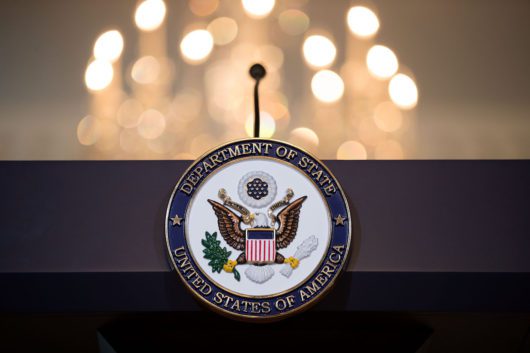
The Department of State (DOS) is an executive office that is responsible for international relations. It serves as an advisory role to the President and represents the United States at the United Nations. But, there’s much more to it than just negotiating foreign treaties and running embassies. Here are 9 cool facts about the State Department.

10 Cool Facts About the State Department

  1. The Department of State is the keeper of the Great Seal of the United States. The seal is kept securely under lock and key in a glass enclosure in the Department’s Exhibit Hall. It can be used only with the permission of the Secretary of State. Over the years, the DOS has placed the Great Seal on display for the public, the first time being in 1955.
  2. The DOS has its own Diplomatic Motor Vehicle Office for foreign missions. This office works under the 1978 Diplomatic Relations Act and can issue registrations for foreign diplomats who have immunity in the United States. It also issues license plates, insurance and driver’s licenses.
  3. The State Department sponsors the Fulbright Program. Fulbright was established in 1946 and has had more than 250,000 participants since. The program’s mission is to create opportunities for better interactions and understanding between Americans and people of other nations. This is achieved by providing scholarships to American scholars who are seeking to study, teach or conduct research abroad and to foreign scholars who want to do the same in the United States.
  4. The Department of State as a top entry-level employer. With 1,000 job openings in 2019, the Department of State also offers remote internships called eInternships through the Virtual Student Federal Service program. The positions are open to part-time and full-time undergraduate and graduate students. All majors and backgrounds are encouraged to apply. In 2019, there have already been more than 125 internships offered through many different departments of the DOS, bringing new projects each year for students to participate in. The jobs vary from data visualization and infographic design to English-Spanish translations for the National Archives. The eInternships run from September through May; they are unpaid, part-time and some offer college credit as well as a variety of other benefits.
  5. The Department of State gives Linguist of the Year awards. The recipient of this award is an employee of the Foreign or Civil Service who has achieved a high level of knowledge of one or more foreign languages and who has demonstrated the ability to use that language to further U.S. diplomacy. The award comes with a $10,000 cash prize.
  6. The Department of State houses the Diplomatic Reception Rooms in Washington, D.C. In those rooms, the Secretary of State receives important guests. One historically important and cool fact is that the John Quincy Adams State Drawing Room is home to the desk upon which the Treaty of Paris 1783 was signed, ending the Revolutionary War. The rooms also contain one of the United States’ most rare collections of fine and decorative arts, which have a value of more than $100 million.
  7. The Department of State employs diplomatic couriers. This job requires nearly constant travel in order to escort and deliver diplomatic pouches with classified material between the Department of State and its foreign missions. Diplomatic couriers are covered under the Vienna Convention as they work under international treaties. They spend more than 75 percent of their work time in international or domestic travel. Peter Parker was the first man to be commissioned as a diplomatic courier in 1776. However, it wasn’t until World War I that the DOS started hiring couriers regularly. Today it employs approximately 100 diplomatic couriers.
  8. The Department of State is leading the Global Connect Initiative. Announced at the United Nations in 2015, the initiative aims to provide 1.5 billion people with internet access by 2020. Global Connect stresses the importance of internet access in economic development because it facilitates investment and creates jobs.
  9. The Department of State provides travel advisories with the possibility to sign up for travel alerts. The Bureau of Consular Affairs monitors safety around the world and issues warnings about security levels. Upon registration, people can receive notifications via e-mail or on an app on their phones. The website offers travel advice for people from all walks of life to ensure safety and well-being.

The State Department is responsible for the United States’ foreign policy and international relations. It operates in the United States and in its missions based in other countries. Despite its serious and global role, the State Department does some cool things. These 10 cool facts about the State Department show that it is about more than just policies; it offers adventurous careers, scholarships and awards and even lessons on the United State’s art history.

– Ewa Devaux


Photo: Google

March 21, 2019
https://borgenproject.org/wp-content/uploads/borgen-project-logo.svg 0 0 Kim Thelwell https://borgenproject.org/wp-content/uploads/borgen-project-logo.svg Kim Thelwell2019-03-21 01:30:232024-05-29 22:58:349 Cool Facts About the State Department
Poverty Reduction, USAID

Living Problems in West Bank and Gaza

The West Bank and Gaza
The West Bank and Gaza are considered Palestinian territories that have struggled with political power since the Six-Day War in 1967. This dispute has been between Israel and Palestine and the end result of the war has left the country in political turmoil. This devastated economic opportunities, local livelihood, sanitation conditions and household food consumption. In 2017, the 50th anniversary of Israeli occupation and the 10th anniversary of the Gaza blockade were marked. This has been affecting all job opportunities and proper food aid from entering the region. All of these factors have only made it more difficult to live in already precarious conditions and more risk for the already struggling population.

Work of USAID

The U.S. government works closely with the authorities in Palestine to address the economic and humanitarian needs of the country. To improve economic growth, USAID has donated roughly $400 billion to improve in-house situations for companies and impoverished families in West Bank and Gaza. Providing basic needs like clean sanitation systems and safe work environments is essential to maximize productivity within the company and keep the workers healthy. Many companies suffer from a lack of resources and expertise for their products, so the project Compete will help business owners learn more about their product, how to maximize value for those products and increase employment within the surrounding areas. The goal is to increase competitiveness and revitalize the private sector, bringing to the table full-time jobs, part-time jobs, seasonal jobs and paid internships.

Food Sovereignty of West Bank and Gaza

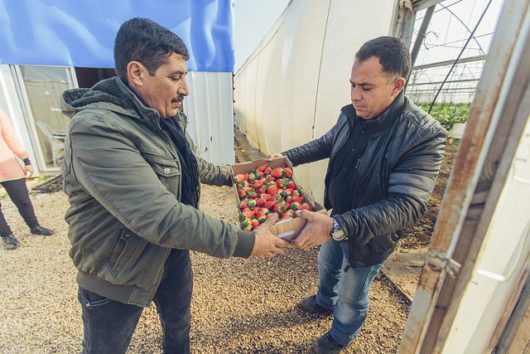
Food insecurity is a huge issue in the West Bank and Gaza territory as over 70 percent of people in this area suffer from lack of food and proper nourishment. Some of the causes for this are also a global phenomenon, environmental degradation, rising food prices and Palestinian food sovereignty. With food sovereignty, a state can control its own food resources, though that state has to have a self-sufficient food source with the help of government-controlled policies.

Since the occupation in 1967, Israel has confiscated thousands of acres of farming land and then separated it with the West Bank wall. With the separation of land, farmers are struggling to keep up the health with crops due to vandalism and destruction from settlers and the military. In Gaza, 25 percent of fertile land has been destroyed by the buffer zone, a zone that borders Israel. Patrol boats in the area only allow fishermen 15 percent of their territorial waters, further reducing the areas self-sufficient food sources. With the limitations on trade, environmental issues, confiscation of land and destruction of land, food sovereignty is unachievable. This has hindered economic growth and social conditions to reduce the levels of food insecurity.

Clean Water Access

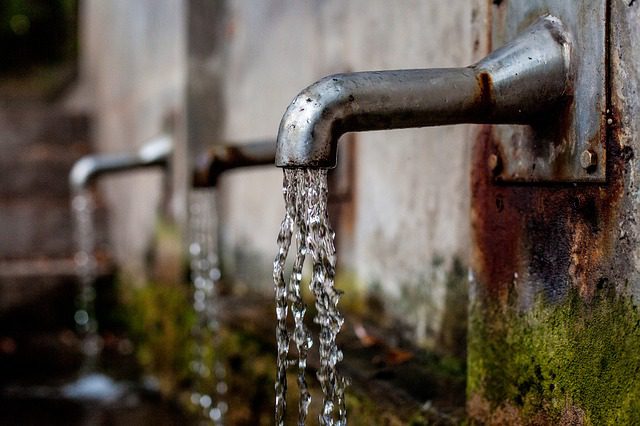
Access to clean, potable water is limited by the wall between the West Bank and Gaza. Beaches, rivers and lakes are polluted and overcrowded refugee camps create health hazards for the sanitation systems. About 26 percent of diseases in West Bank and Gaza are related to filthy water. During the winter months, household septic tanks overflow and mix with rainwater, flooding homes and streets in the area. During the summer, the heat dries the streets from the flood and the smell coming off the streets is so bad that families keep their windows shut. Mothers refuse to let their children out to play because of the rancid smell and infected water.

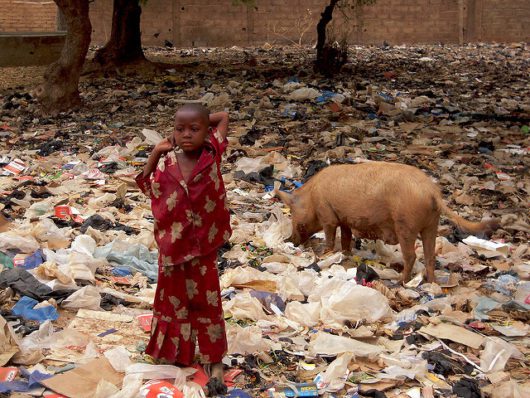
Diseases continue to spread as garbage continues to pile up in refugee camps. The Anera organization is working on building proper waste management systems across Palestine, improving sanitation systems in the process. In 2014, Anera reconstructed sewage lines damaged by bombs. In refugee camps, they are taking an approach where the youth take the lead. Through campaigns designed to clean and recycle, they have developed a staff to train on proper waste management and a new sorting facility. They are creating a cleaner environment for 13,000 members of their community so far and will continue to reach out and help their people.

Health System in West Bank and Gaza

The health system in West Bank and Gaza has been shaped by years of occupation, political stalemate, violence and human rights violations. The barrier placed between the two territories limits access to East Jerusalem, the closest area that has specialized hospitals. The placement of these hospitals is scattered due to the many health care providers in the country. With the blockade in place, Gaza’s health care locations are experiencing unstable power supply and recurring power cuts.

The medical equipment has been deteriorating because of inadequate maintenance and spare parts cannot reach them. The barrier has also made it difficult to transport proper medicines to treat patients. All of these factors are crushing the health care system in West Bank and Gaza, making people seek treatment elsewhere though traveling in and out of Gaza is heavily restricted. Even with these limitations, health care in these areas still thrives. With the help of the World Health Organization, technical support will be provided to health technicians and fund projects created for diseases affecting the population.

Even with all of these issues, West Bank and Gaza still work out solutions to everyday and past problems. If these areas can continue to receive the funding from developed countries and nongovernmental organizations, they can grow back into the self-sufficient economy they once had.
– Kayla Cammarota
Photo: Flickr

March 10, 2019
https://borgenproject.org/wp-content/uploads/borgen-project-logo.svg 0 0 Kim Thelwell https://borgenproject.org/wp-content/uploads/borgen-project-logo.svg Kim Thelwell2019-03-10 19:30:582024-05-29 22:58:06Living Problems in West Bank and Gaza
Global Poverty, USAID

Changes in Transcontinental Trade in Africa

Changes in Transcontinental Trade Look to Lift African Economies
Despite being home to many rapidly growing economies and an abundance of essential natural resources, Africa also contains numerous countries with some of the highest poverty and food insecurity rates in the world. However, new legislation and foreign support hope to ease the flow of domestic trade in Africa, allowing broader access to necessities and helping to build a strong continental economy.

The High Cost of Shipping

While Africa regularly exports goods to places such as the U.S. and Europe, only 13 percent of traded goods remain in Africa. Underdeveloped road and highway systems between neighboring countries translate to high costs in transcontinental shipments, ultimately raising the cost of transported goods to the point of unaffordability for most impoverished Africans.

For example, while the United States Agency for International Development (USAID) estimates that East Africa produces enough food to support everyone living in the region, the high cost of transportation has halted trade in the area, resulting in food insecurity for 27 percent of the people living on the continent. However, recent legislative changes and foreign support signal that trade in Africa is beginning to take on a new shape that allows for transcontinental trade and a collective African economy.

The Transcontinental Trade in Africa

The Continental Free Trade Area (CFTA), which was proposed at a meeting of the African Union in 2012, set forth goals of enhancing trade among the eight Regional Economic Communities (RECs), made up of geographic subdivisions with interconnected economies, and creating a continental trading system that would encourage foreign investment and a competitive marketplace.

While the CFTA has yet to be fully implemented, ongoing discussions, including the December 2017 meeting in Niger of 54 countries in Africa, emphasize that an economic overhaul of this magnitude is a long-term goal with results that will not be immediately apparent despite the progress being made.

In addition to internal policy changes by African governmental leaders, foreign investors seeking to take early advantage of the promising African markets have expedited growth with contributions to urban development. In Ethiopia alone, Chinese investors funded the construction of the African Union’s headquarters in the capital city of Addis Ababa in the amount of $100 million. Road and highway systems, an airport and various energy and rail transportation programs are underway with the intent of modernizing Africa’s infrastructure and turning its economy into a thriving market with a high return rate.

Improving Agriculture and Trade

USAID has been working to improve trade in Africa through the creation of Trade and Investment hubs. Furthermore, through their Feed the Future initiative, USAID is working to educate various African countries on how to improve agricultural production and how to create trading systems that both improve the economy in the trading region’s while giving others access to goods not ordinarily available in their own region.

To complement the interests from investors abroad, foreign government organizations have worked from afar and on the ground to improve trade in Africa to create a flourishing, self-sufficient set of nations and to improve living conditions for the impoverished and the food insecure people throughout the continent.

Due to the large scale of growing trade in Africa to a place of higher economic security, progress may not be readily apparent or may not appear to be moving quickly enough. However, African government officials are hopeful that, by improving trade and economic conditions at the regional level and working outwards toward an efficient continental market, Africa may soon achieve its ultimate goal and find itself in a competitive position in the world market.

– Rob Lee

Photo: Flickr

February 12, 2019
https://borgenproject.org/wp-content/uploads/borgen-project-logo.svg 0 0 Borgen Project https://borgenproject.org/wp-content/uploads/borgen-project-logo.svg Borgen Project2019-02-12 07:30:172019-05-07 13:05:57Changes in Transcontinental Trade in Africa
Foreign Aid, Global Poverty, Government, USAID

The Cost of Government Shutdown on Foreign Aid

government shutdownAs the current government shutdown stretches into day 21, the effects are starting to show. But, the effects of the current shutdown aren’t just being felt at home. The cuts to funding for the State Department and the U.S. Agency for International Development (USAID) have been felt around the world. Here is the cost of the government shutdown on foreign aid.

Who is Affected By the Shutdown?

The partial shutdown began on December 22 when Congress and the President were unable to come to an agreement on funding for Trump’s border wall. Since then, it has affected multiple federal departments including Agriculture, Homeland Security, Interior, State and USAID. More than 800,000 federal employees have been furloughed or forced to work without pay, and the effects have been far-reaching. National parks have been shut down, airline travel has been strained and immigration courts have been backlogged.

USAID, which was created by President Kennedy in the 1960s, began as a way to lead international development and humanitarian services. Due to the cuts from the shutdown, about half of the agency’s employees have been furloughed, making it hard for the agency to continue operations. Previously funded projects and NGOs will continue to operate, but no new funding will be started or given. Furthermore, interaction and oversight from the department have steeply declined, decreasing the effectiveness of all programs.

Foreign Affairs

U.S. foreign development and affairs are not the only areas being impacted. The State Department has been affected by the shutdown as well. The State Department represents the government in foreign affairs, and many of its 75,000 employees work overseas. Since funding to the State Department has been cut off, most of those employees are not working or are working for no pay, meaning that all foreign relations are “running on fumes.” This is a problem because, without proper funding, the department cannot continue to do the tasks assigned to it, like alleviating tensions in the middle east.

In terms of the world’s poor, the loss of activity at both the USAID and the State Department will have a huge impact. Without any new funding or programs that help struggling nations with water and sanitation, health, education and climate change, the Agency for International Development will not be able to continue its work of providing humanitarian assistance to struggling nations.

The current shutdown, which is tied for the longest shutdown in history, has no end in sight. The continued lack of funding for USAID and the State Department means that the cost of the government shutdown on foreign aid will be huge. Since USAID works in more than 100 countries, the cost of the government shutdown will be felt by millions around the world. Without a fully functioning State Department to conduct diplomacy abroad, the situation will only get worse.

– Peter Zimmerman

Photo: Pixabay

January 13, 2019
https://borgenproject.org/wp-content/uploads/borgen-project-logo.svg 0 0 Kim Thelwell https://borgenproject.org/wp-content/uploads/borgen-project-logo.svg Kim Thelwell2019-01-13 01:30:102019-04-23 17:27:42The Cost of Government Shutdown on Foreign Aid
Foreign Aid, Global Poverty, USAID

What is USAID?

What is USAID
The United States Agency for International Development (USAID) is often brought up when people talk about spending bills for foreign aid and in policy reports analyzing the government foreign assistance programs. They do not explain what USAID actually is, what its purpose is, who is in charge of it, or what are its responsibilities as an organization.

The text below will go through the history of USAID, its importance to the United States government, and the organization’s responsibilities in the fiscal year 2019.

History of USAID

In the fall of 1961, U.S. Congress passed the Foreign Assitance Act. This act formally separated military and non-military aid since before this point political and military spending was not differentiated from development spending. The bill also mandated for the creation of an agency that will be responsible for managing the new category of economic and development aid. President John F. Kennedy, shortly after the passing of the bill, created USAID by executive order.

The creation of USAID unified several existing programs and operations, including the Food for Peace Program, loans from the Development Loan Fund and the economic assistance from International Cooperation Agency. By unifying these operations, USAID provided a new focus on aiding other countries.  

Who is in charge of USAID and what is USAID responsible for?

USAID largely follows the policy directions of the President, State Department and the National Security Council. It can be stated with the certainty that it is not a completely interdependent agency. USAID is not responsible for military aid whose responsibility falls primarily to the Department of Defense. Instead, USAID is concerned with humanitarian and development aid.

Since its formation, USAID’s scope of humanitarian aid expanded. USAID’s assistance now includes global health, gender equality, water and sanitation, education and many other categories. It also works in several regions all over the world including Asia, the Middle East and Africa.

A good example of what USAID does as an organization is the program called Promoting Gender Equality in National Priority Programs Project (PROMOTE) in Afghanistan. This program aims to increase female participation in the total workforce by offering women internships to build up their resume and network.

It will also help the economic development of Afghanistan by creating a larger workforce. According to an evaluation made by USAID in 2017, 237 women got a job in the first year of the program’s implementation. Also, 98 percent of the women who were helped into internships by USAID reported that they were working in a women-friendly workplace.

What is USAID planning on doing in 2019?

USAID and the State Department will receive $39 billion from the president’s budget. USAID is responsible for managing $16 billion of this amount that is just below half of all the money allocated to foreign aid. USAID hopes to accomplish several objectives in the fiscal year 2019 including providing leadership in response to national disasters and human crises, improving global health by stopping the spreading of diseases and improving transparency of the organization’s activities and its spendings.

To summarize, what is USAID? USAID is an organization that is the primary executor of foreign aid spending of the United States. It oversees billions of dollars every year with the goal of helping developing nations economically, socially and politically. USAID does this through the creation of government programs to help those who need it most.

– Drew Garbe
Photo: Flickr

November 18, 2018
https://borgenproject.org/wp-content/uploads/borgen-project-logo.svg 0 0 Borgen Project https://borgenproject.org/wp-content/uploads/borgen-project-logo.svg Borgen Project2018-11-18 07:30:322024-06-06 00:15:26What is USAID?
Global Poverty, USAID

Religious Freedom Boosts Economic Growth

Religious Freedoms Boost Economic Growth
The Universal Declaration of Human Rights, adopted by the United Nations General Assembly in 1948, specifically mentions religious freedom in Articles 2, 16 and 18. Article 18 states that “Everyone has the right to freedom of thought, conscience and religion,” explicitly establishing religious freedom as a basic human right.

When working in developing nations, aid organizations often focus their aid toward expanding human rights and freedoms, such as ensuring healthy living conditions or equal education for girls. Since religious freedom is a human right, it is important that aid organizations work against religious persecution and intolerance. There is also a significant link to show that religious freedom boosts economic growth, suggesting that assuring religious freedom will help developing nations prosper overall.

4 Ways Religious Freedom Boosts Economic Growth

  1. Encourages peace – Religious persecution often leads to violence and conflict, disrupting normal economic activities. Conflict especially discourages foreign investment, which is necessary for economic growth, especially in developing nations. For example, many developing nations depend on tourism, which decreases significantly during a conflict. Religious freedom is also a key to stability, which encourages local business.
  2. Reduces corruption – The Pew Research Center has found that nations with laws and policies that restrict religious liberty have higher levels of corruption. In fact, “Nine of the 10 most corrupt countries have high or very high governmental restrictions on religious liberty” according to the World Economic Forum.
  3. Reduces harmful regulation – Certain religious regulations can create legal barriers and directly affect economic activity. For example, restrictions concerning headscarves have been used to discriminate against women in the workplace and anti-blasphemy laws have been used to attack business rivals.
  4. Promotes diversity – Freedom of religion encourages diversity – religious pluralism – in all areas of society, and diversity has been shown to boost economic growth. For example, the inclusion and participation of minorities can boost economic innovation. According to the World Economic Forum, “the world’s 12 most religiously diverse countries each outpaced the world’s economic growth between 2008 and 2012,” showing that religious freedom boosts economic growth.

U.S. Aid and Religious Freedom

Initially passed 20 years ago, the bipartisan International Religious Freedom Act officially made religious freedom a priority in U.S. foreign policy. According to The U.S. Department of State, “Protecting religious freedom and religious minorities is an American ideal” and supporting victims of persecution and repression remains a priority.

Putting policy into practice, The U.S. Agency for International Development (USAID) is assembling new metrics to measure religious intolerance in developing nations. USAID also works extensively with local faith-based organizations to actually deliver assistance and relief. Working with local faith-based organizations helps USAID maintain cultural sensitivity and reach community members, who often uniquely trust their faith-based organizations.

At The Ministerial to Advance Religious Freedom conference, USAID Administrator Mark Greene said, “We believe that religious pluralism, which is part of a cultural mosaic, we believe it is worth preserving as a matter of development.” Religious freedom boosts economic growth and is essential for development, which is ultimately the goal of any foreign aid.

– Kathryn Quelle
Photo: Flickr

October 1, 2018
https://borgenproject.org/wp-content/uploads/borgen-project-logo.svg 0 0 Borgen Project https://borgenproject.org/wp-content/uploads/borgen-project-logo.svg Borgen Project2018-10-01 01:30:262019-07-19 07:59:32Religious Freedom Boosts Economic Growth
Foreign Aid, Global Health, USAID

US Foreign Health Assistance Programs Change Lives

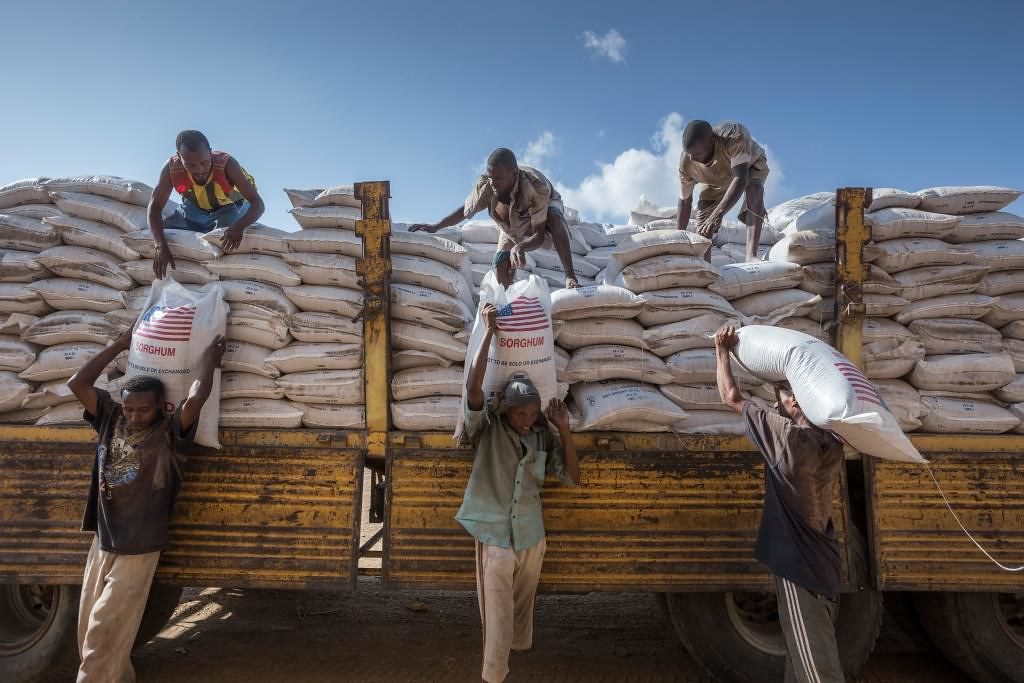
U.S. Foreign Health AssistanceThe beginning of the 20th century saw the United States begin to take its place at the forefront of the international stage. Fast forward to the middle of the century and the end of WWII and the United States took its place as a world superpower. With this newfound responsibility, the government of the United States began to do more to secure the safety and health of citizens of any nation in its sphere of influence.

Key Aspects of U.S. Foreign Health Assistance

  • U.S. foreign health assistance began with the Foreign Assistance Act of 1948, better known as the Marshall Plan. The plan’s goal, which it accomplished successfully, was to economically rebuild a war-torn Europe. This included hospitals and universities to train doctors.
  • The United States Agency for International Development (USAID) was founded in 1961 by President John F. Kennedy as a tool to better aid allied countries and countries teetering on the edge of the West and Communism. The organization also brought all of President Eisenhower’s foreign assistance programs under one agency.
  • U.S. foreign health assistance in the USAID is under the jurisdiction of The Bureau of Global health. For 55 years, the Bureau for Global Health has worked towards strengthening health systems, combating HIV/AIDS, combating other infectious diseases and preventing child and maternal deaths. Past Presidents have each had a hand in improving the operation and mission of the Bureau for Global Health.
  • Between 2000 and 2015, Presidents George W. Bush and Barack Obama both introduced plans to combat malaria and HIV/AIDS. An estimated 6.2 million malaria deaths were prevented around the world.

Global Development Alliances

The USAID Bureau for Global Health is not alone in its fight — Global Health Development Alliances have partnered with USAID since 2001 to provide U.S. foreign health assistance around the world. These partners come from the private sector, and strive to both open new markets and help the local populace in need.

Private medical companies involve themselves in the alliance program — such as “The Utkrisht Impact Bond” led by Merck for Mothers and UBS Optimus — along with other large companies to target infant and maternal mortality in the Rajasthan region of India. Their program currently reaches up to 600,000 people and aims to save 10,000 mothers and children by 2020.

Multilateral and Bilateral Efforts

From 2006 to 2017, the U.S. foreign health assistance programs received a budget increase from $5.4 billion to $10.7 billion. Bilateral efforts comprise 80 percent of the U.S foreign health assistance budget, and one of these efforts is the Family Planning and Reproductive Health Program run by USAID.

The program combats HIV/AIDS, prevents child and maternal deaths and reaches 24 countries on three continents. By 2020, USAID’s goal is to educate 120 million women and girls with family planning information, commodities and services.

Multilateral efforts by the United States government include participation in and funding given to, organizations such as the World Health Organization (WHO) and other multi-government organizations and charities. Unfortunately, the budget request for U.S. health foreign health assistance programs was set at $7.9 billion.

The United States Peace Corps

The United States Peace Corps was founded by President John F. Kennedy in 1960. Its goal then and still today is to help people around the world with the support of the United States government. By helping people in need, Peace Corps Volunteers spread goodwill about the United States and educate people about U.S. citizens and culture. They are probably best known for their English teaching program, but they also specialize in health initiatives.

Such initiatives include participating in programs initiated by Presidents Bush and Obama that reduce people’s exposure to, and number of cases of, malaria and HIV/AIDS. As part of their cooperation with USAID in 2012, the Peace Corps launched the Global Health Service Program to draw the attention of trained health professionals to countries in need.

Members of this program have a one-year service time rather than the usual two years. These volunteers not only help patients in the country, but they also pass on their knowledge and experience to sustainably help these populations in the future.

Center for Disease Control

In 2016, the Center for Disease Control (CDC) was granted $427 million from the United States Congress to participate in combating f HIV/AIDS, malaria and other infectious diseases, as well as promoting immunization and emergency response. The CDC was also granted $10.9 million to participate in recovery efforts in Haiti.

On January 10, 2010, Haiti was hit by a 7 magnitude earthquake. Since then, the CDC has helped the citizens of Haiti in various ways — stopping the spread of infectious diseases through the Haitian health system, educating the Haitian people about the spread and treatment of these diseases and helping the Haitian government reconstruct their health systems. The latter aid is a program first for the CDC.

International Aid Changes Lives

U.S. foreign health assistance has been a major help to many struggling people and countries around the world. Millions of lives have been changed for the better and saved because of the United States’ efforts.

Unfortunately, the budget request for U.S. health foreign health assistance programs was set at $7.9 billion. Although cuts will have to be made in staffing and funding around the world, men and women will not stop trying their best to work with the U.S. government and make a difference.

– Nick DeMarco
Photo: Flickr
July 25, 2018
https://borgenproject.org/wp-content/uploads/borgen-project-logo.svg 0 0 Borgen Project https://borgenproject.org/wp-content/uploads/borgen-project-logo.svg Borgen Project2018-07-25 01:30:472024-05-29 22:52:33US Foreign Health Assistance Programs Change Lives
Children, USAID

Addressing USAID’s Support for Children Around the World

USAID's support for children
Among the groups that the U.S. Agency for International Development (USAID) aims to support, children across the world are a top priority. From health-related aid to education opportunities and protection from violence, USAID’s support for children employs a variety of means to help kids survive and grow despite poverty and other adversities.

USAID Addresses Preventable Child Mortality

An important aspect of USAID’s support for children is access to medical assistance. An overwhelming 75 percent of child deaths under the age of five results from newborn deaths and treatable diseases: pneumonia, diarrhea and malaria. These illnesses could be effectively countered by timely low-technology treatments, which USAID attempts to provide on the local level by bolstering public-private engagement and promoting Integrated Community Case Management (iCCM).

USAID strengthens iCCM programs that train and assist with local community members treating children. Such programs provide vital medical care on the ground in communities that are often hard to reach. USAID helps construct sustainable networks of monitoring and evaluation, clinical referral, supportive supervision and more, which in turn ensure the functioning of iCCM programs.

A USAID-supported iCCM program in Zambia led to a 68 percent early treatment rate of childhood pneumonia. USAID’s efforts to treat malaria have reached millions of children in Tanzania alone, where 70,000 people die from the disease annually. Within a decade, simple preventative action and treatment by community health workers have contributed to a 28 percent decrease of child mortality rate.

USAID’s Support for Children: A Comprehensive Action Plan

USAID’s efforts to help children around the world are not limited to medical care. USAID, together with other U.S. government departments and agencies, launched the ambitious and comprehensive five-year U.S. Government Action Plan on Children in Adversity in 2012. Backing the plan is Public Law (PL) 109-95, signed in 2005 to amend the Foreign Assistance Act of 1961, which asks the U.S. government to effectively respond to vulnerable youths in low and middle-income nations.

USAID’s support for children is wide-ranged and well-coordinated under the Action Plan, focusing on the value of investing in boys and girls in order to achieve long-term economic and social progress. Among those receiving aid are children affected by HIV/AIDS, those living outside of family care, those who have been trafficked, those under sexual violence or exploitation and more.

Interventions employed by the Action Plan are evidence-based, meaning they are both effective and instructive for further action in the future. Such actions include improving the families’ socioeconomic status, rescuing youths suffering from the worst forms of child labor, promoting protective family care and protecting the education of both children and their surrounding communities.

According to the most recent annual report for Congress, the plan has reached millions of young lives since 2012. Understanding the significance of nutrition, especially in the first thousand days of life, USAID and Food for Peace sent food assistance to approximately 20 million children in 61 countries with funds from Fiscal Year 2015. Children separated from their families in 11 countries received help from USAID to return to family care.

Effective Utilization of the Private Sector

Many of USAID’s support for children take place in the private sector, via public-private engagement as well as recent “development impact bonds.” Public-private engagement is manifest in USAID’s Strengthening Health Outcomes through the Private Sector (SHOPS), which increases the ready supply of diagnostic and treatment-related products. The program works with local manufacturers and importers and also informs health workers regarding the appropriate use of medical knowledge and tools.

In December of 2017, USAID launched a new development impact bond for India, the Utkrisht Bond, that mobilizes private capital to make improved healthcare accessible to 600,000 women, aiming to save up to 10,000 mothers and their newborns. With private capital enabling an initial investment, USAID and Merck for Mothers will only follow up with its $4.5 million commitment after the development goals are realized, ensuring the effectiveness of aid.

Innovative, sustainable and replicable efforts such as these are consistent with USAID’s mission to help developing countries so that they eventually grow out of the need for aid. Continued assistance from the U.S. agency will ensure that millions of children around the world are given the help they need for a better future.

– Feng Ye
Photo: Flickr

June 28, 2018
https://borgenproject.org/wp-content/uploads/borgen-project-logo.svg 0 0 Borgen Project https://borgenproject.org/wp-content/uploads/borgen-project-logo.svg Borgen Project2018-06-28 01:30:462024-05-29 22:42:55Addressing USAID’s Support for Children Around the World
Aid, Foreign Aid, USAID

How the US Benefits from Foreign Aid to Dominica

How the U.S. Benefits From Foreign Aid to Dominica
Natural disasters occur globally, and many countries overcome these disasters with the help of foreign aid. Hurricane Maria, a Category 5 storm, hit Dominica on September 18, 2017. USAID has sent assistance to Dominica, which becomes beneficial to the U.S. by building good relations and maintaining a positive reputation by working with other countries in providing foreign assistance to Dominica.

The U.S. Benefits from Foreign Aid to Dominica by Fostering Good Relations

All countries, especially impoverished ones, need help to recover from a natural disaster of Hurricane Maria’s magnitude. The U.S. benefits from foreign aid to Dominica by stepping in and using its power to help, which strengthens relations between the countries. After Hurricane Maria, Samaritan’s Purse, the Pan American Health Organization and the International Federation of the Red Cross, all under USAID, were able to contribute $3.25 million in foreign aid to Dominica.

The U.S. Department of Defense’s Southern Command worked with USAID’s Caribbean Hurricanes Disaster Assistance Response Team (DART) to help repair roofs in Dominica that were damaged by the hurricane. USAID provided plastic sheeting and DART taught a group of local builders how to use the tools provided to fix the damaged roofs properly. Through donations and direct assistance to individuals, the U.S. is building good relations with other countries.

International Collaborations Build a Positive Reputation

The U.S. has worked with other countries to provide water, food and tools to rebuild Dominica immediately after Hurricane Maria hit the island. The U.N. World Food Programme (WFP) contributed about 10 metric tons of food, which fed around 25,000 people in Dominica over three months. By assisting with the WFP’s food distribution, the U.S. benefits from foreign aid to Dominica by using its resources to help impoverished countries, which grows a positive international reputation.

Collaborations with other countries to help provide foreign aid to developing countries do make a difference and help the U.S. maintain a positive reputation. According to Diálogo Digital Military Magazine, the prime minister of Dominica, Roosevelt Skerrit, commented positively on the progress the U.S. and other countries have made. He stated, “We have many allies. Thanks for helping my people, without you, our partner nations, it would not have been possible to get past the first phase of this emergency.”

Countries dealing with poverty and disasters benefit from other countries stepping in to help via foreign aid, and that help allows the affected country to get back on its feet. The U.S. benefits from foreign aid to Dominica through maintaining its positive reputation by doing good for poor countries.

While natural disasters can do great damage to countries dealing with poverty, those countries can also recover promptly with the foreign aid provided by other countries. The U.S. benefits from foreign aid to Dominica by connecting with its people to encourage good relations, as well as ensuring a positive reputation by reaching out to less developed countries in times of need. The U.S. can retain in its positive relationship with the government of Dominica by continuing to support the country, especially when natural disasters hit.

– Kelly Kipfer
Photo: Flickr

June 20, 2018
https://borgenproject.org/wp-content/uploads/borgen-project-logo.svg 0 0 Borgen Project https://borgenproject.org/wp-content/uploads/borgen-project-logo.svg Borgen Project2018-06-20 07:30:242024-05-29 22:42:49How the US Benefits from Foreign Aid to Dominica
Aid, Foreign Aid, USAID

How the US Benefits from Foreign Aid to Armenia

How the U.S. Benefits from Foreign Aid to Armenia
Ever since Armenia gained independence from the Soviet Union in 1991, it has shared a mutually beneficial relationship with the U.S. As a country attempting to recover from widespread poverty and corruption, the benefits Armenia receives from organizations like the United States Agency for International Development (USAID) are clear. Yet, the U.S. benefits from foreign aid to Armenia are significant in their own right.

Some of these benefits include increased stability and independence so that Armenia can resist Russian pressure and have closer ties with the Euro-Atlantic community. Both politically and economically, the U.S. has much to gain from cultivating greater stability and economic growth in Armenia.

Achieving Government Stability

Since Armenian independence in 1991, the government has struggled to maintain a stable democracy the Armenian people can trust. Fortunately, USAID is working with both the government and citizens to build trustworthy institutions that work for the people. By creating stability in the region, the U.S. benefits directly from Armenian foreign aid by gaining a trustworthy political ally in the region that champions U.S. ideals and supports U.S. goals. These are a few ways USAID is helping to achieve this goal:

  1. Media for Engaged Civil Public Project
    One of the backbones of a strong democracy is a trustworthy media that properly informs its public. This program plans to set up a healthy media as well as media watchdogs to prevent excessive bias.
  2. Engaged Citizenry for a Responsible Government Project
    USAID is helping to increase activity in local government and create an engaged public. Many Armenians are uninformed about their government or do not believe they can make a difference. This program aims to change that.
  3. Local Government Reform Activity
    By helping to decentralize the Armenian government, USAID is helping to create natural checks and balances in the system and give power back to local areas.

These are just a few of the ways USAID is helping Armenia achieve a sustainable government. The U.S. plans to give just over $3 million for “Democracy, Human Rights, and Governance” as well as “Peace and Security” in 2019. In return, the U.S. benefits from foreign aid to Armenia through gaining a strong ally in the region that is trustworthy and stable.

The U.S. Benefits from Foreign Aid to Armenia by Developing a Trade Partner

With greater economic stability in Armenia, the country becomes a reliable trade partner for the U.S. While GDP growth in the country has steadily been on the rise in recent years, there is still progress to be made. In 2019, more than $3 million will be allocated through USAID for the express purpose of economic development. Some of the ways USAID plans to use this money to help Armenia are:

  1. The Partnership for Rural Prosperity Program
    Despite consistent GDP growth, Armenia still struggles in the disparity between urban centers and rural areas. This project aims to alleviate this gap by providing economic opportunities to rural regions, improving access to markets and reinforcing infrastructure.
  2. Agribusiness Teaching Center
    This program aims to educate the Armenian public on agriculture and agribusiness while conducting research to help local farmers. As a hub for agricultural knowledge, this center will provide a strong foundation upon which to build an agricultural community.
  3. Tax Reform Project
    This program hopes to create a more accessible dialogue between the lawmakers deciding tax rates and the citizens paying them. It also hopes to reform the tax code in a way that makes it easier for citizens to start small businesses.

Through these programs and others, foreign aid to Armenia is helping to develop a powerful ally that can work with the U.S. as a mutually beneficial trading partner. Programs such as these contribute to a strong trade relationship between the two countries, with the U.S.-Armenia Economic Task Force being an indicator of how well the relationship has developed.

Overall, the U.S. benefits from foreign aid to Armenia are numerous and significant. By investing in the people of this developing country, the U.S. gains a political and economic partner while helping alleviate poverty and corruption.

– Jonathon Ayers
Photo: Flickr

May 28, 2018
https://borgenproject.org/wp-content/uploads/borgen-project-logo.svg 0 0 Borgen Project https://borgenproject.org/wp-content/uploads/borgen-project-logo.svg Borgen Project2018-05-28 01:30:192024-05-29 22:42:32How the US Benefits from Foreign Aid to Armenia
Page 17 of 33«‹1516171819›»

Get Smarter

  • Global Poverty 101
  • Global Poverty… The Good News
  • Global Poverty & U.S. Jobs
  • Global Poverty and National Security
  • Innovative Solutions to Poverty
  • Global Poverty & Aid FAQ’s
Search Search

Take Action

  • Call Congress
  • Email Congress
  • Donate
  • 30 Ways to Help
  • Volunteer Ops
  • Internships
  • Courses & Certificates
  • The Podcast
Borgen Project

“The Borgen Project is an incredible nonprofit organization that is addressing poverty and hunger and working towards ending them.”

-The Huffington Post

Inside The Borgen Project

  • Contact
  • About
  • Financials
  • President
  • Board of Directors
  • Board of Advisors

International Links

  • UK Email Parliament
  • UK Donate
  • Canada Email Parliament

Get Smarter

  • Global Poverty 101
  • Global Poverty… The Good News
  • Global Poverty & U.S. Jobs
  • Global Poverty and National Security
  • Innovative Solutions to Poverty
  • Global Poverty & Aid FAQ’s

Ways to Help

  • Call Congress
  • Email Congress
  • Donate
  • 30 Ways to Help
  • Volunteer Ops
  • Internships
  • Courses & Certificates
  • The Podcast
Scroll to top Scroll to top Scroll to top