• Link to X
  • Link to Facebook
  • Link to Instagram
  • Link to TikTok
  • Link to Youtube
  • About
    • About Us
      • President
      • Board of Directors
      • Board of Advisors
      • Financials
      • Our Methodology
      • Success Tracker
      • Contact
  • Act Now
    • 30 Ways to Help
      • Email Congress
      • Call Congress
      • Volunteer
      • Courses & Certificates
      • Be a Donor
    • Internships
      • In-Office Internships
      • Remote Internships
    • Legislation
      • Politics 101
  • The Blog
  • The Podcast
  • Magazine
  • Donate
  • Click to open the search input field Click to open the search input field Search
  • Menu Menu

Archive for category: USAID

Topics covering about USAID

Aid Effectiveness & Reform, USAID

Death of Hugo Chavez Impacts US Aid

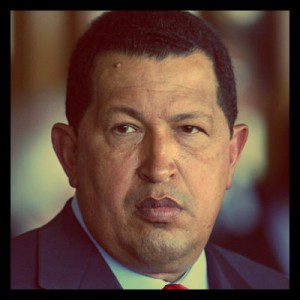
Death of Hugo Chavez Impacts US AidLike it or not, foreign aid usually follows the paths that are set by political relationships. U.S.-Venezuelan relations have been stressed ever since Hugo Chavez came to power, and even before then. How could the death of Hugo Chavez affect the aid relationship between the U.S. and Venezuela?

The first time that Chavez met President Obama, he gave him a copy Eduardo Galeano’s book “Las Venas Abiertas de America Latina”, a history of colonial rule over the Americas that focuses on how the United States became the colonizing power of modern age in Latin America, especially in Central America where American corporations and military interventions created the infamously titled “banana republics.” That first meeting is the perfect anecdote to represent the relationship between the two countries over the last five years. Chavez had always been extraordinarily outspoken against the United States and, because of that tense relationship, the U.S. has given very little to Venezuela with the exception of small amounts of disaster relief assistance. It is important to note that Venezuela, the founding member of OPEC, is one of the wealthiest countries in the Americas, yet nearly 32% of the country’s population lives below the poverty line.

In order to begin building a more amicable relationship, the U.S. may begin giving more to causes that aren’t related to politics and focus more on job creation and training. Providing this type of aid would not only benefit Venezuela, but it may also help build a much less tense relationship with a resource-rich country that has significant pull in international oil markets and price control. A well-executed increase in aid could end up being very beneficial for both parties as Venezuela changes leadership.

– Kevin Sullivan

Sources: The New York Times, CIA World Factbook
Photo: Biography

March 6, 2013
https://borgenproject.org/wp-content/uploads/borgen-project-logo.svg 0 0 Borgen Project https://borgenproject.org/wp-content/uploads/borgen-project-logo.svg Borgen Project2013-03-06 11:02:122024-05-24 23:43:14Death of Hugo Chavez Impacts US Aid
Education, USAID

USAID Fighting Terrorism With Wool

US AID Fighting Terrorism With WoolQuinoa seems to be on everyone’s mind lately, but for the district of Mastung – a district located on the border of Afghanistan and Pakistan– sheep and shepherding account for more than 40% of the economy. Unfortunately, many farmers in Mastung use outdated techniques which limit their production even though demand for wool is high.

To help with this dilemma, USAID has funded an agricultural project in which Australian shepherds, who are among the world’s finest, instruct a best-practices workshop which teaches Mastung farmers current techniques and educate the farmers on how to use current technologies. These new techniques have been combined with direct marketing practices and, with the two disciplines combined, the result is an 80% growth of income for farmers in the communities where these practices have been implemented.

While this type of growth does help border communities in Pakistan, the strengthening of these communities has an unforeseen effect on U.S. national security and global security as a whole. It is no secret that extremist groups target poor communities by offering financial assistance and other forms of aid. In a region that has been plagued with extremist groups such as the Taliban, contributing to the economic growth of communities and helping them remain stable prevents the spread of terrorism and extremist ideology. For the Mastung, fighting terrorism with wool production is a win-win situation.

Not only do these contributions help create a better life for those in the border communities of Afghanistan and Pakistan, but they also help these communities as a means to furthering global security as a whole.

– Pete Grapentien

Source: TheNews.com
Photo: Pakistan Today

March 5, 2013
https://borgenproject.org/wp-content/uploads/borgen-project-logo.svg 0 0 Borgen Project https://borgenproject.org/wp-content/uploads/borgen-project-logo.svg Borgen Project2013-03-05 21:17:252020-05-19 22:04:01USAID Fighting Terrorism With Wool
Aid Effectiveness & Reform, USAID

Accountability and Transparency with U.S. Aid

USAID Claims Further Transparency and Accountability

Financial foreign assistance is one of the most powerful ways that developed nations can help lower-income countries fight their way through poverty. It also provides the most immediate results, given that aid investment is effectively distributed both to short-term direct programs as well as long-term indirect programs. Many in aid-giving communities, including the United States, criticize foreign aid spending because they believe it a wasteful investment, used to line administrator’s pockets or be lackadaisically distributed to corrupt governments.

Futuregov estimates that annually, around $150b is contributed globally to aid and assist socio-economic and social development.

Given the global community’s demands for greater accountability and transparency in funding, the AidData Centre for Development Policy organization was established.  The organization is “a joint venture between the College of William & Mary, Development Gateway, Brigham Young University, the University of Texas at Austin, and Esri.” AidData will be funded $25 million over five years in its conjoined efforts with the United States Agency for International Development.

The program will combine the work of experts in a menagerie of different fields to track and make public the effects of specific foreign aid projects. The purpose of the program assessments is also self-reflective, as programs become more stringently criticized. The aim is to have less money spent will have efficiently maximized impacts.

– Nina Narang

Source: futureGOV
Photo: BIPPS

February 9, 2013
https://borgenproject.org/wp-content/uploads/borgen-project-logo.svg 0 0 Borgen Project https://borgenproject.org/wp-content/uploads/borgen-project-logo.svg Borgen Project2013-02-09 09:58:082024-05-24 23:41:40Accountability and Transparency with U.S. Aid
Page 33 of 33«‹313233

Get Smarter

  • Global Poverty 101
  • Global Poverty… The Good News
  • Global Poverty & U.S. Jobs
  • Global Poverty and National Security
  • Innovative Solutions to Poverty
  • Global Poverty & Aid FAQ’s
Search Search

Take Action

  • Call Congress
  • Email Congress
  • Donate
  • 30 Ways to Help
  • Volunteer Ops
  • Internships
  • Courses & Certificates
  • The Podcast
Borgen Project

“The Borgen Project is an incredible nonprofit organization that is addressing poverty and hunger and working towards ending them.”

-The Huffington Post

Inside The Borgen Project

  • Contact
  • About
  • Financials
  • President
  • Board of Directors
  • Board of Advisors

International Links

  • UK Email Parliament
  • UK Donate
  • Canada Email Parliament

Get Smarter

  • Global Poverty 101
  • Global Poverty… The Good News
  • Global Poverty & U.S. Jobs
  • Global Poverty and National Security
  • Innovative Solutions to Poverty
  • Global Poverty & Aid FAQ’s

Ways to Help

  • Call Congress
  • Email Congress
  • Donate
  • 30 Ways to Help
  • Volunteer Ops
  • Internships
  • Courses & Certificates
  • The Podcast
Scroll to top Scroll to top Scroll to top