• Link to X
  • Link to Facebook
  • Link to Instagram
  • Link to TikTok
  • Link to Youtube
  • About
    • About Us
      • President
      • Board of Directors
      • Board of Advisors
      • Financials
      • Our Methodology
      • Success Tracker
      • Contact
  • Act Now
    • 30 Ways to Help
      • Email Congress
      • Call Congress
      • Volunteer
      • Courses & Certificates
      • Be a Donor
    • Internships
      • In-Office Internships
      • Remote Internships
    • Legislation
      • Politics 101
  • The Blog
  • The Podcast
  • Magazine
  • Donate
  • Click to open the search input field Click to open the search input field Search
  • Menu Menu

Archive for category: Inequality

Economy, Inequality

Unemployment In Spain

In his first speech since his father Juan Carlos abdicated the throne, Spain’s future King, Crown Prince Felipe, addressed his country’s begrudgingly slow economic recovery. He referred to Spain as “united and diverse.” These remarks came a week after a new report noted that 1.26 million Spaniards have been without jobs since 2010. These citizens, unemployed for at least three years, are representatives of the 500 percent increase in Spain’s long-term unemployed population since 2007. They are 23.1 percent of Spain’s unemployed population and their numbers are continuing to grow with each passing year.

In the first quarter of 2014, Spain’s unemployment rate fell to 25.73 percent, down from a record high of 26.94 percent last year. During the same quarter, Spain’s economy grew at a quarterly rate of 0.4 percent, its best period since 2006. These increases have caused politicians and the International Monetary Fund to reassert their confidence in Spain’s recovery prospects, but that confidence has proven divisive within Spain.

Fiscal policies by Prime Minister Mariano Rajoy and his conservative Popular Party have been lukewarmly received by the general public. On June 6, the Spanish government approved a $15 billion stimulus package to spur growth and promote their renewed confidence in the economy. However, 26 percent of Spain’s population remains on government benefits. This figure is second in the EU only to Greece.

As reform efforts begin to take hold throughout Spain, civil unrest has resurfaced. Much of the focus is now geared toward high levels of income inequality. There has recently been a boom in tourism in Barcelona, accounting for a record high of 7.5 million visitors in 2013, but the unemployment rate still looms at 18 percent. Protesters are noting changes in government policies which have only affected the well off and have left the despondent with little to aspire to.

Spain’s corporate tax rate has recently been lowered to 25 percent from 30 percent, but the ability of the country’s educational institutions to produce well-trained students for prospective employers is questionable at best. Two-thirds of Spain’s 38.6 million residents over the age of 16 have only a basic education. Of these residents, 32.5 percent are currently unemployed. The youth unemployment rate is also nearly double that of the national rate. Slow recovery rates have dissuaded international investment and stymied growth in Spain’s financial sector.

Spain recently announced an early 1.3 billion euro repayment of a 41 billion euro EU banking rescue loan. This announcement was positioned as a confidence boosting measure. Whether it proves a catalyst for a Spain bereft of chronic unemployment, only time will tell.

– Taylor Dow

Sources: Digital Journal, Euro Weekly News, Fox News Latino, Latin Post, The Local, RTE News, The Spain Report
Photo: Wall Street CN

June 13, 2014
https://borgenproject.org/wp-content/uploads/borgen-project-logo.svg 0 0 Borgen Project https://borgenproject.org/wp-content/uploads/borgen-project-logo.svg Borgen Project2014-06-13 04:54:442024-05-26 23:43:59Unemployment In Spain
Activism, Gender Equality, Inequality

#YesAllWomen Dominates Twitter

In light of the recent Santa Barbara massacre, Twitter users have taken the web by storm through the #YesAllWomen hashtag. The result has been incredible: voices around the world have given personal (yet all-too universal) recollections of misogyny as it exists in their professional, social and familial lives. An example of social media’s power to do good in the world, the campaign is only growing as more than a million posts (and counting) have been spreading around the web.

Elliot Rodger killed six students from the University of California-Santa Barbara last week, and wounded 13 others. Just before the massacre, Rodger wrote a 140-page “manifesto” crippled with misogynistic remarks, claiming that he would take “retribution” for the crimes against him and would punish the world for those women who refused to sleep with him. The media frenzy that followed proved unique: the massacre and its aftermath was about more than just one mentally disturbed man exacting revenge. It is about a culture of misogyny and the detriment it can cause.

Today, more than 311 million working-age women live in countries where sexual harassment is not outlawed in the workplace. In many less-developed countries, a third of women are married or in a union by only 18. Around 60 percent of women have experienced physical or sexual violence at least once in their lifetime, and 2.6 billion women live in countries where rape within marriage is not outlawed.

These statistics are what the campaign #YesAllWomen stands for: across the world and in varying degrees, women are still treated as lesser citizens. #YesAllWomen works to teach that we have remained all-too blind, and it is doing so in strides.

Accessible to most of the world at any time or place, the campaign has brought a unique, understandable perspective of feminism to the most-reached platform in the world: the Internet. Yet despite the campaign’s current popularity, many wonder if it will do any good to solve the problem in the long run, comparing the campaign to short-lived, social media frenzies like #BringBackOurGirls (which has died down in response to the now popular #YesAllWomen.)

These social media phenomenons, some argue, do little to prevent or change the actual circumstances of the problem. Yet it can be argued that their real success is by infiltrating and educating by providing a much-needed lesson as to why misogyny is a serious problem we must work to fix. #YesAllWomen attempts to bridge this problematic gap.

– Nick Magnati

Sources: CNN, Chicago Tribune, UN Women, Foreign Policy
Photo: The Province

May 30, 2014
https://borgenproject.org/wp-content/uploads/borgen-project-logo.svg 0 0 Borgen Project https://borgenproject.org/wp-content/uploads/borgen-project-logo.svg Borgen Project2014-05-30 04:00:152024-05-26 23:37:40#YesAllWomen Dominates Twitter
Economy, Global Poverty, Inequality

Bolivian Income Gap Causes Extreme Poverty

Bolivian_Income_Gap
Bolivia is the poorest country in South America. It possesses the largest ratio of indigenous people, who make up 62 percent of the population. Most of these indigenous groups suffer from poverty—over 74 percent are poor. The indigenous groups also make up most of the rural areas, where the greatest amount of poverty in the region is found. The unemployment rate remains high, with 8 percent of the population without jobs, increasing poverty in rural areas.

Bolivia’s income distribution is one of the most uneven in the world, ranking second in unequal income distribution. The land is rich in minerals and resources, but the elite Spanish ancestry dominates the economic system. Most Bolivians are low income farmers and traders. There has been long running tension over the rich natural gas resources by exploitation and export, which continues to strengthen the Bolivian income gap.

Social unrest in Bolivia is growing with the tax reform. The inflation rate is controlled by the tax reform and causes more tension within Bolivia’s economy. These issues in the economic system are creating poverty that affects groups like the indigenous people. Poverty can lead to inequality, which limits human rights and mobility through different strata of class, causing a separation of income.

Throughout history, indigenous people have been the poorest and most excluded from social economic growth. Access to basic health care and necessities is limited due to isolation. The high fertility rate among the indigenous people of Bolivia has increased their population to over 5 million people. The increase is so drastic because of the lack of access to education and health care needs.

Bolivia sees the highest rate of child malnutrition, particularly among indigenous cultures. World Vision estimates that over a quarter of the children under the age of five are malnourished and do not have access to proper health care.

Recent organizations, like World Vision, have formed local centers in Bolivia to help monitor the well-being of these children. This includes the implementation of training for local health care workers to bring awareness to kids to stay safe from different forms of child maltreatment.


Causes of poverty.


Most of the women living in rural areas have limited education or training for employment. There is also a lack of health services and education in the health sector for women. This restricts the growth of the economy by preventing these women from bettering their futures and the economy.

The rural areas continue to suffer from poverty. With the deficiency of natural resource management and limited approach to technology in rural areas, infrastructures such as roads will be neglected. Without the proper road system, isolation of indigenous groups will increase, causing lack of job opportunities and access to education.

These regions of Bolivia are facing obstacles in the economic development in many of the indigenous groups. The advancement of these obstacles relies on policies to protect the economic growth in the rural regions, where indigenous groups reside, and to help increase labor productivity.

— Rachel Cannon

Sources: BBC, UNICEF, Georgetown University, World Vision
Photo: Next Starfish

May 24, 2014
https://borgenproject.org/wp-content/uploads/borgen-project-logo.svg 0 0 Borgen Project https://borgenproject.org/wp-content/uploads/borgen-project-logo.svg Borgen Project2014-05-24 04:00:502024-05-26 23:09:14Bolivian Income Gap Causes Extreme Poverty
Activism, Global Poverty, Government, Inequality

Rising Global Inequality

Global_Inequality_sucks
Everywhere one looks in the news media, the word inequality is beamed into television sets, either through the banter between detached pundits or through the bullhorns of activists storming littered streets.

Brought to the forefront of policy debates after the full force of the Great Recession was being felt, the rising, global inequality between the rich and the poor has stoked the powerful emotions of the disenfranchised.

And now, a French professor, Thomas Piketty, is ratcheting up the debate even further with a massive tome designed to showcase just how vast the gulf between rich and poor has become.

The book is called “Capital in the 21st Century” and in it Piketty attempts to address the reasons behind the trend of rising inequality throughout the world during the past decade.

And people’s ears are perking up; the book reached number one on Amazon.com shortly after its release.

Oxfam recently released a report detailing the harm global inequality is inflicting on the lives of the poor, as well as its effect on governance. Oxfam notes that 85 people in the world collectively own the same amount of wealth as the bottom half of the world’s population.

They note that stocks and corporate profits are continuously climbing, while wages have stagnated. And one of the most prominent concerns among the public is the over-representation of the wealthy’s concerns in governments around the world.

But has there been no progress? Has the state of those inhabiting the poorer regions of the world not changed at all? In reality, many things have changed for the better in the past several decades.

Between 1981 and 2008, the amount of people living on one dollar a day fell by 750 million. That is astronomical progress, but if one looks between countries rather than within, the inequality gap is as big as ever.

So what can be done? Many people have lost faith due to a perceived shift in political power away from the average voter and toward the wealthy and politically connected. Despite voters heading to the polls again and again, politicians routinely implement policies that do nothing to truly address rising inequality.

This happens despite the fact that most people agree great inequality is undesirable; most view its alleviation as a good thing, so long as the policies are sensible and do not harm the overall economy.

Many individuals complain of vast oligarchies setting policy against the average man, but fail to show up at the voting booth (a problem in America especially).

It’s more important to show support for policies and politicians that will actually implement effective and sensible policies to reduce inequality than to simply bemoan the current state of affairs.

Policies such as the expansion of the Earned Income Tax Credit in the United States, and increasing social spending in poor countries to actually reach those in need are just a couple things that can alleviate inequality.

The policies are there. It is simply up to the public to remain informed and active within their respective societies.

– Zachary Lindberg

Sources: Oxfam, The New Yorker, The Guardian
Photo: Salon

May 11, 2014
https://borgenproject.org/wp-content/uploads/borgen-project-logo.svg 0 0 Borgen Project https://borgenproject.org/wp-content/uploads/borgen-project-logo.svg Borgen Project2014-05-11 04:00:442017-03-20 14:07:26Rising Global Inequality
Global Poverty, Government, Inequality, Slums

Favelas in Rio

Favelas in Rio
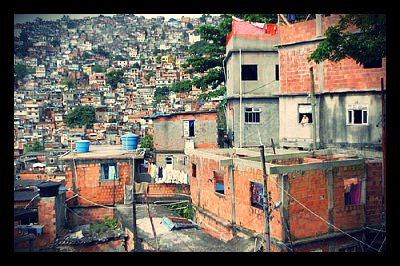
In Brazil, especially in the city of Rio de Janeiro, the wealthy tend to live closest to the sea. Favelas, or shantytowns, are slums in Brazil that are located farther away from the water on hills. They started out as an inexpensive housing option for returning Brazilian soldiers and freed African slaves in the 19th century. In Rio de Janeiro, a city of about six million people, approximately 20 percent live in favelas.

The urban phenomenon of favelas grew during the dictatorship of Gétulio Vargas, who pushed for greater industrialization within Brazil, which brought in more immigrants to Rio de Janeiro and therefore more occupants into the cheaper form of housing.

The 600 favelas in Rio de Janeiro today are mostly known for their high levels of poverty and crime, with numerous drug trafficking groups and street gangs operating within the various favelas that dot the hills of Rio de Janeiro. Favelas are also known for their relative lack of public services and government attention. Brazil is known to be one of the most unequal countries economically, with the top 10 percent of the population earning 50 percent of the national income and 8.5 percent of people living below the poverty line.

The location of favelas makes it difficult for the Brazilian government to provide proper public services, and as such makes it harder for the government to establish a positive presence in the favelas, which only furthers the cycle of violence as gangs are given more or less free reign.

This security issue within the favelas has been addressed by the introduction of a government program in 2008 that aimed to crack down on violence in the slums. Such programs are proving especially important ahead of the upcoming World Cup. The program installs permanent “police pacification units” (PPUs) throughout the favelas to deter crime and rid the favelas of the most serious gangs.

These PPUs are becoming a more widely accepted form of security control on behalf of the government. In Rio de Janeiro alone there are currently around 37 PPUs covering an area of about 1.5 million people, yet these PPUs have been criticized in Brazil for their severe tactics in dealing with local residents. Right now more than 24 policemen are facing charges for allegedly torturing a local resident of a favela.

More positive government policies have been successful in bringing 40 million Brazilians into the middle class over the last decade. Moreover, nationwide statistics indicate that 15.9 percent of Brazilians were impoverished in 2012, down from 18 percent in 2011. But Brazil is a land of contradictions, and despite this impressive decrease in poverty the South American nation remains the 12th most unequal nation in terms of income. Although Brazil should certainly be commended for its substantial decrease in poverty, policies should be implemented to ensure further social inclusion for those living on the margins.

– Jeff Meyer

Sources: IRIN News, G1, BBC News, NPR, BBC News
Photo: Blog Spot


Read The Borgen Project Magazine


April 30, 2014
https://borgenproject.org/wp-content/uploads/borgen-project-logo.svg 0 0 Borgen Project https://borgenproject.org/wp-content/uploads/borgen-project-logo.svg Borgen Project2014-04-30 04:00:032020-07-25 00:49:04Favelas in Rio
Inequality

Violence Against LGBT Community in South Africa

In 1996, South Africa became the first in the world to provide constitutional protection for LGBT people. South Africa is also the only African country on the continent that recognizes same-sex marriage. Unfortunately, there is a rise in the attacks against the LGBT community, especially lesbians. These attacks against lesbians are known as corrective rape, which is when a man rapes a lesbian in thought that the action of rape will turn that person straight. One 26-year-old lesbian living in Cape Town stated that “Men do it because they hate what we are. The feel threatened by us.”

One example of corrective rape in South Africa was a five-hour-long brutal rape that consisted of beatings and strangling of a young lesbian by the name of Millicent Gaika. She survived the attack and her rapist Andile Ngcoza was arrested and found guilty for rape. Although, he was arrested his bail was set at six dollars and he escaped prosecution.

Another example of a LGBT hate crime occurred this year. David Olyn, a 21-year-old gay man was beaten with bricks and burned to death in South Africa, as a group of teens watched. Accordingly, the teens were not shocked at this behavior because this is something that is a weekly occurrence. Therefore, the teens did not tell authorities.

Due to these horrific events the United Nations has launched a program called Free the Equal in 2013. This program is an effort to create an education program aimed at promoting respect for the LGBT community in South Africa.

South Africa does have the best recognition for gay rights on the continent, but these brutal attacks and rapes are still on the rise. However, the South African government is taking steps to combat the hate crimes and violence. These steps include the proper training of officials for the LGBT community’s needs. A young woman in the South African LGBT community stated that “Lots of my friends have been raped for being a lesbian. It is not an unusual thing.” Furthermore, new laws are being implemented to send the message that hate crimes will not be tolerated in South Africa.

How can the United States help with the South African government’s aid in combating LGBT violence? The United States has been working with prosecutors for the past decade in legal protection for LGBT rights. The United States can lend a hand in the South Africa government by showing correct methods used for training and prosecution for the protection of the LGBT community in South Africa and also share the experience from the past in dealing with hate crimes.

– Rachel Cannon

Sources: Human Rights First, Human Rights Campaign
Photo: The Guardian  

April 27, 2014
https://borgenproject.org/wp-content/uploads/borgen-project-logo.svg 0 0 Borgen Project https://borgenproject.org/wp-content/uploads/borgen-project-logo.svg Borgen Project2014-04-27 04:00:282024-05-26 23:28:44Violence Against LGBT Community in South Africa
Global Poverty, Inequality

Michelle Bachelet Gives Inaugural Address

Michelle_Bachelet_Gives_Inaugural_Address
Chilean President-elect Michelle Bachelet was inaugurated on March 11 at the presidential palace in Santiago, Chile. This will be the second time Bachelet is sworn in as president after holding the office from 2006 to 2010. Bachelet, a moderate socialist, will be taking the reins from the current president, billionaire businessman Sebastian Piñera.

In a very symbolic ceremony, the head of the Chilean Senate, Isabel Allende, swore in Bachelet. The two female politicians share a past linked to the 1973 coup of the democratically elected Salvador Allende that carried dictator Augusto Pinochet to power. Bachelet is the daughter of an air force officer who was tortured by the Pinochet regime before dying in custody while Allende is the daughter of former Chilean President Salvador Allende, who committed suicide on the day of the coup.

During her inaugural address, Bachelet made inequality the focus of her speech. She said that although the policies of the Piñera administration had generated economic growth and jobs, Chile could and should be a fairer society.

Other solutions to fight inequality include changing the country’s education system by making it entirely state-funded within the next six years, a response to the student protests of 2011 to 2013 that occurred throughout Chile. Currently, the state funds a paltry percentage, leaving poor households to attend underfunded state universities. Bachelet plans to provide full state funding by increasing the corporate tax rate.

Despite promises to reduce inequality, Bachelet will face difficulty in implementing these proposals. Chile’s economy is slowing down from 5.6 percent growth per year in 2012 to just over 4 percent this past year. Moreover, prices of Chile’s primary product, copper, have fallen, which would dip the country’s economic growth even further.

Piñera leaves with a 50 percent approval rating, while at the end of her first term, Bachelet enjoyed an 84 percent approval rating.

Bachelet will not have any issue pushing her policies through the chambers of Congress, as her New Majority coalition enjoys a healthy majority in both the Senate and Chamber of Deputies. Chileans will also be able to monitor her promises closely since the publishing of a list of 50 proposals she intends to complete within her first 100 days in office spread out across 14 different policy areas.

The widely popular Bachelet has promised to create a more egalitarian society through the promise of free education. Though she has come under fire from critics who say the Chilean economy is losing steam, she remains hopeful that her country can construct a more inclusive environment for its people.

– Jeff Meyer

Sources: ABC News, Miami Herald, Slate, Economist
Photo: Khaleej Times

April 3, 2014
https://borgenproject.org/wp-content/uploads/borgen-project-logo.svg 0 0 Borgen Project https://borgenproject.org/wp-content/uploads/borgen-project-logo.svg Borgen Project2014-04-03 04:00:172024-06-04 03:01:16Michelle Bachelet Gives Inaugural Address
Economy, Global Poverty, Inequality

The Abahlali Movement’s Role in Eradicating South African Poverty

Abahlali
Apartheid in South Africa began in 1948 when the National Party was voted into power, favoring the white minority over the black majority. The African National Congress (ANC) then rose up to lead an opposition to apartheid and many ANC leaders, like Nelson Mandela, were imprisoned for years. Eventually the National Party became willing to negotiate a non-violent transition to a majority black rule after numerous protests. Apartheid came to an end after the first multi-racial elections in 1994, bringing the first black president into power: Nelson Mandela. Since then, the ANC has struggled to make the country equal for all races after all of the imbalances the apartheid created with things like healthcare, education and housing.

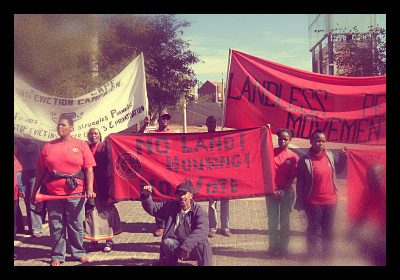
The Abahlali baseMjondolo Movement (also known as the Shack Dwellers Movement) was created to spread equality and help to fully end the long-lasting effects of apartheid. It started in early 2005 in Durban, South Africa and is still largely located in this port city, but it has become the largest organization of militant poor in South Africa in terms of mobilized peoples. The movement originated with a road blockade near the Kennedy Road settlement that was protesting a local industrialist buying the nearby land that these shack dwellers were promised by the new ANC government in order to create better housing.

This movement has grown rapidly to having over 30 settlements with tens of thousands of shack dwellers supporting them. The movement has suffered over a hundred arrests, ongoing death threats, regular police assault and intimidation from local parties in the last couple years alone. However, it has still been able to progress to the point that it has a persistent voice for inhabitants of informal housing settlements. Against the actions that have thrown thousands of people out to the streets, they have marched on and occupied police stations, offices of local councilors, newspaper offices, municipal offices and the City Hall.

Under the slogan “No Land, No House, No Vote,” the group has organized a very controversial, but extremely effective boycott of the local government elections. The Abahlali baseMjondolo Movement is distinctly against all forms of discrimination, corruption, repression and the concentration of land, wealth and power in any one party’s hands. They stand for a fair distribution of this land, wealth and power and for the right of the city’s inhabitation for every citizen.

Amongst other victories, the Abahlali baseMjondolo Movement has won access to schools, stopped the industrial development of the land promised to the Kennedy Road residents, democratized the governance of multiple other settlements, stopped countless evictions and forced multiple government officials and projects to actually focus on the poor. The movement’s main goal was originally to obtain land and housing in the city, but since it started it has successfully politicized and fought for an end to forced removals and for access to education, water, sanitation, health care and electricity. The movement has even set up gardening projects and sewing collectives for people living with AIDS and for orphans with AIDS.

For more information, address the Abahlali baseMjondolo Movement’s webpage at https://abahlali.org/ or watch the documentary about the movement entitled “Dear Mandela,” with the following webpage: https://www.dearmandela.com/.

– Kenneth W. Kliesner

Sources: Dear Mandela, Abahlali (1), Abahlali (2), CIA World Factbook
Photo: Western Cape

March 26, 2014
https://borgenproject.org/wp-content/uploads/borgen-project-logo.svg 0 0 Borgen Project https://borgenproject.org/wp-content/uploads/borgen-project-logo.svg Borgen Project2014-03-26 20:45:152024-12-13 17:50:11The Abahlali Movement’s Role in Eradicating South African Poverty
Global Poverty, Inequality, Slavery, Violence Against Women, Women and Female Empowerment

Women and Modern Day Slavery in Pakistan

Pakistan

According to The Nation, women in Pakistan are forced to make bricks in order to pay off the debt their families have incurred.

“Living without running water, and often trapped by their employers for the rest of their lives, these women are forced to work in brick kilns, agricultural fields and other hard labour industries to clear debts which overshadow their families’ lives,” said the Pakistani news agency.

There is no reliable statistic regarding the number of Pakistanis who are currently enslaved as bonded laborers. However, according to the National Coalition Against Bonded Labour, these individuals exist throughout the country not only in the brick industry, but also the agriculture and carpet industries.

Moreover, the Associated Press estimates that “tens of thousands” of poor Pakistanis work within these industries.

“Bonded labor is the most widely used method of enslaving people around the world,” The Nation said. “The person is then tricked or trapped into working for very little or no pay, often for seven days a week.”

In many instances, the amount of work that debt slaves put throughout their lives far exceeds the amount of money they initially borrowed. But instead of quitting, the victims continue to work because they are constantly threatened with physical violence.


Facts on Modern Slavery


The Pakistani government, along with the world community, prohibits the practice of debt slavery. However, it is highly inefficient when it comes to enforcing the laws and punishing the people who profit from slavery.

Developed countries and humanitarian organizations are highly critical of modern day slavery. Human Rights Watch (HRW) argues that bonded labor is more common in the southern Punjab and Sindh regions of Pakistan.

“Bondage in agrarian regions involves the purchase and sale of peasants among landlords, the maintenance of private jails to discipline and punish peasants, the forcible transference of teachers who train peasants to maintain proper financial accounts and a patter of rape of peasant women by landlords and the police,” said the organization.

HRW also ties this issue into poverty by explaining that bonded laborers either work in the agricultural industry or the “informal economy.”

This is a vicious circle in which the landless poor “are denied access to institutional forms of credit and must therefore rely on landlords, moneylenders and employers.”

To end debt slavery in Pakistan, the government can work harder to enforce the laws already banning the practice. With debt slavery, individuals are fooled into working in horrible conditions for the rest of their lives.

– Juan Campos

Sources: AP, The Nation, Human Rights Watch

March 20, 2014
https://borgenproject.org/wp-content/uploads/borgen-project-logo.svg 0 0 Borgen Project https://borgenproject.org/wp-content/uploads/borgen-project-logo.svg Borgen Project2014-03-20 04:00:022024-06-05 01:57:17Women and Modern Day Slavery in Pakistan
Global Poverty, Human Rights, Inequality, Politics and Political Attention

Paul Ryan’s Fight Against Anti-Poverty Programs

Rep. Paul Ryan published a 204-page report that criticizes the U.S. government’s anti-poverty programs and proposes cuts to welfare expenditures.

Ryan (R-Wis.), who is also the chairman of the House Budget Committee, believes Washington should focus on reforming the welfare program and recommended “a sweeping overhaul of social programs,” according to the Washington Post.

“There are nearly 100 programs at the federal level that are meant to help, but they have actually created a poverty trap,” said Ryan. “There is no coordination with these programs, and new ones are frequently being added without much consideration to how they affect other programs.”

Moreover, he continued, “This document is a precursor not only of our budget but of our larger project to introduce poverty reforms over the course of this year. The president may focus on inequality because he can’t talk about growth. We’re focused on upward mobility, speaking directly to people who have fallen through the cracks.”

The following day, however, President Obama unveiled a $3.9 trillion budget for next year. According to Investopedia, Obama’s budget would expand the Earned Income Tax Credit (EITC) to help a million Americans get out of poverty.

“Under the new plan workers would get 15.3 cents credit for each dollar earned up to $6,570, for a maximum credit of $1,005,” said Investopedia. “That amount would be set until the worker earned $18,070.”

Unfortunately for Ryan, his report was not well received by many economists. Jared Bernstein said that it is misleading to tell the American people that anti-poverty programs result in even more poverty.

“While much of the commentary suggests that federal antipoverty efforts have failed and are fraught by wasteful duplication, the evidence – some of which is in here and much of which is conspicuously missing [sic] – belies that facile claim,” said Bernstein.

In the meantime, it is uncertain which direction Washington will take to address the growing inequality in America’s biggest cities as well as the poverty that is already present throughout the country. However, many economists who have more experience than Ryan believe that his report is inaccurate.

– Juan Campos

Sources: The Washington Post, Media Matters
Photo: Mother Jones

March 14, 2014
https://borgenproject.org/wp-content/uploads/borgen-project-logo.svg 0 0 Borgen Project https://borgenproject.org/wp-content/uploads/borgen-project-logo.svg Borgen Project2014-03-14 04:00:132024-12-13 17:50:10Paul Ryan’s Fight Against Anti-Poverty Programs
Page 14 of 17«‹1213141516›»

Get Smarter

  • Global Poverty 101
  • Global Poverty… The Good News
  • Global Poverty & U.S. Jobs
  • Global Poverty and National Security
  • Innovative Solutions to Poverty
  • Global Poverty & Aid FAQ’s
Search Search

Take Action

  • Call Congress
  • Email Congress
  • Donate
  • 30 Ways to Help
  • Volunteer Ops
  • Internships
  • Courses & Certificates
  • The Podcast
Borgen Project

“The Borgen Project is an incredible nonprofit organization that is addressing poverty and hunger and working towards ending them.”

-The Huffington Post

Inside The Borgen Project

  • Contact
  • About
  • Financials
  • President
  • Board of Directors
  • Board of Advisors

International Links

  • UK Email Parliament
  • UK Donate
  • Canada Email Parliament

Get Smarter

  • Global Poverty 101
  • Global Poverty… The Good News
  • Global Poverty & U.S. Jobs
  • Global Poverty and National Security
  • Innovative Solutions to Poverty
  • Global Poverty & Aid FAQ’s

Ways to Help

  • Call Congress
  • Email Congress
  • Donate
  • 30 Ways to Help
  • Volunteer Ops
  • Internships
  • Courses & Certificates
  • The Podcast
Scroll to top Scroll to top Scroll to top