Genetically_Modified_Crops_Prevent_Food_Shortages
With the world population expected to double by 2050, food security will continue to be an increasingly complicated and important issue. More food will be needed to feed more people and, to preserve vital biodiversity sites, we’ll need to produce this additional food using land already devoted to agriculture. While there are many factors that could improve agricultural efficiency, genetically modified crops hold the most potential. Many scientists now believe that transgenic plants could help prevent or minimize future food shortages.

Transgenic plants are those that possess an inserted portion of DNA either from a different member of their own species or from an entirely different species. The inserted DNA serves some special purpose, such as allowing the plant to produce natural insecticides. Once the genes are transferred, they can be passed on to offspring through simple fertilization, allowing farmers to breed advantageous traits in their plants. Transgenic plants have proven extremely profitable in the developed world, accounting for a 5% to 10% increase in productivity, and reducing the cost of herbicides and insecticides.

Such methods could effectively increase productivity in the developing world, where a surge in food production is sorely needed. Developing countries, especially those in the tropics and subtropics, suffer severe crop losses due to pests, diseases, and poor soil conditions. In addition, a lack of financial capital often prevents farmers from investing in high quality seeds, insecticides, and fertilizers. Poor post-harvest conditions such as inadequate storage facilities and thriving fungi and insect populations also fuel crop loss. Currently, pests destroy over half the world’s crop production. Transgenic plants could provide an innovative solution.

Fortunately, bioengineering solutions can be easily adapted from one species to another, allowing one advancement in plant biotechnology to quickly produce many more. For example, insect-resistant strains of several important plant species have been produced using one specific endotoxin. Commercial production of insect-resistant maize, potato, and cotton has already begun. Plant bioengineers hope to use similar technology to create fruits that ripen more slowly, allowing for longer shelf lives and less post-harvest crop loss.

It is important to note that this technology has mostly been established with the developed world in mind. Therefore, adapting it for use in the developing world must be done carefully. For instance, many crops grown in the developing world are local varieties and have not been extensively tested thus far by plant bioengineers. Blindly replacing local crops with bioengineered varieties from the developed world could disturb deep social or religious traditions that are represented in the widely varied cultures in the developing world. Additionally, societies are more likely to embrace a familiar crop than a foreign one. Research and development in bioengineering must, therefore, adapt to include the crops of the developing world.

Although the globe produces enough food for everyone, people everywhere continue to die of starvation. With this unequal distribution in mind, it is imperative that, moving forward, small farmers in the developing world receive the same access to plant biotechnology given to large agribusinesses in the developed world. First-world corporations cannot be granted even more unfair advantages over small landholders in poorer nations, especially as global populations grow and food security becomes ever more scarce and important. As this technology is developed, it is up to us to share it with the developing world in order to minimize severe food shortages in the years to come.

– Katie Fullerton

Sources: Plant Physiology, Colorado State University
Photo: Tree Hugger

Indigenous_Peoples
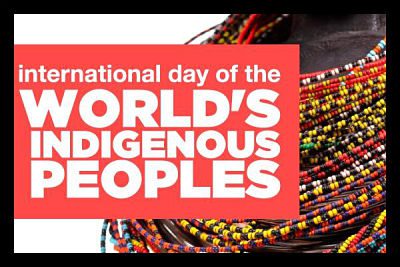
On August 9th, the world celebrated the UN’s International Day of the World’s Indigenous People, an annual event that has been held since 1995. This year’s theme, “honoring treaties, agreements and other constructive arrangements,” struck a chord with aboriginal peoples around the globe. With many suffering from poverty and marginalization at the hands of states in power, the indigenous peoples of today are finding a dead end at the intersection of state interests and modern culture. The United Nations adopted the Declaration on the Rights of Indigenous Peoples in 2007 and has been advocating for indigenous peoples’ rights ever since. In a report released in 2009, the UN Department of Economic and Social Affairs described the state of the world’s indigenous peoples, particularly the impoverishment that most have found themselves in.  The report points out that globalization has given governments a reason to take indigenous lands for use in profitable industries like mineral extraction. Either seized or heavily polluted, these lands and territories of indigenous people have increasingly become their heaviest losses. With unsettling histories marked by colonization, dispossession, and injustice, indigenous peoples have been forced into the lowest echelons of society where they often remain. Research conducted by the International Fund for Agricultural Development (IFAD) has produced statistical figures that characterize the overwhelming poverty felt by these peoples. There are about 370 million indigenous peoples around the globe today, or about 5% of the world population. They make up 15% of the world’s poor and 1/3 of the world’s “extremely poor rural people.” Disparities between countries’ indigenous and nonindigenous populations in education, healthcare, and other basic sectors are substantial. On August 9th, several indigenous populations spoke out against their marginalization.  In the Philippines, the people of Cordillera called on their government to “honor their commitments to [the people of Cordillera].” In the past three years, these people have seen the rise of the state’s mining industry, which has ultimately violated their rights. Given their circumstances, indigenous peoples’ voices are rarely heard. Where foreign aid could be the key to a better world for these peoples, countries continue to allot funds to secure state interests, often leaving aboriginal peoples behind. In a collective effort to shift the tides, indigenous peoples everywhere are calling on donors to consider sending direct donations in support of their development.
Lina Saud
Sources: Indigenous Day, What Indigenous Peoples Need from Foreign Aid Photo: Indian Country

thailand_tribes_poverty
Thailand is often known as the land of beautiful beaches, burgeoning tourism, and The Hangover 2. But that’s not quite the whole picture. While Thailand has seen great developmental leaps over the past 20 years, the country still faces challenges with poverty and more recently growing inequality in Thailand.

At the surface, Thailand appears to lie in a positive, growing position. Starting in 1990, the poverty level decreased from 27 percent to 9.8 percent, in just 12 years. The number of chronically underweight children dropped to half its previous measurement in this same time period. Access to education and literacy rates continue to improve annually.

The problem lies in the fact that this growth has been concentrated in cities and urban areas, leaving the rural communities and hill tribes to suffer. Nearly one million children lack documents proving their birth registration. This means the Thai government does not recognize them as citizens, preventing them from receiving any governmental benefits and recognition of their basic human rights.

While unemployment stands at a promising 2 percent rate, child labor remains a fact of life for many, with an estimated 818,000 children aged five to fourteen generating income for their families. As Thailand’s economy continues to grow from increased international trade and as educational standards increase, this number is expected to fall.

Issues with water sanitation have continued to create health problems for 4 percent of the country, with the majority of that 4 percent consisting of rural communities without proper sanitary technology or regulations. This lack of clean water leads to malnutrition and the spread of disease through bacteria.

Human trafficking continues to stand out as significant problem for the Thai people. This underground industry leads to thousands of kidnapped people who are then forced into modern day slavery, in the form of prostitution or forced labor. The popularity of prostitution in the country also contributes to the spread of HIV and AIDS, currently afflicting more than 610,000 people.

Currently 9.8 percent of the population lives under the poverty line. This percentage is largely concentrated in the rural outskirts of the country. This demographic consists of small farmers, without access to education. In contrast, many citizens in the urban areas of Thailand have benefited from the job creation generated by the country’s growing international economy.

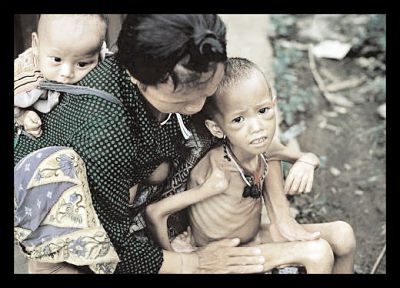
Geographically, the struggling sections of the country lie on the borders, with the hill tribes in the far northern and far southern regions remain left behind as the rest of Thailand has progressed over the last two decades. These isolated areas see the greatest problems with hunger, with women and children’s health in particular struggling with malnutrition and mortality rates. Without access to proper medical care, little improvement is being made and disease continues to spread. Similarly, a lack of education prevents these remote areas from growing economically.

While Thailand certainly has achieved great progress in meeting its problems with poverty, there remains much work to be accomplished. The growing disparity in both wealth and basic human rights must be addressed and the country must unify even its most distant regions in order to continue to move forward in its developmental journey.

– Allison Meade

Sources: World Vision, Central Intelligence Agency
Photo: Bunnie Blog