• Link to X
  • Link to Facebook
  • Link to Instagram
  • Link to TikTok
  • Link to Youtube
  • About
    • About Us
      • President
      • Board of Directors
      • Board of Advisors
      • Financials
      • Our Methodology
      • Success Tracker
      • Contact
  • Act Now
    • 30 Ways to Help
      • Email Congress
      • Call Congress
      • Volunteer
      • Courses & Certificates
      • Be a Donor
    • Internships
      • In-Office Internships
      • Remote Internships
    • Legislation
      • Politics 101
  • The Blog
  • The Podcast
  • Magazine
  • Donate
  • Click to open the search input field Click to open the search input field Search
  • Menu Menu

Archive for category: Inequality

Global Poverty, Health, Inequality, Women and Female Empowerment

Public Health Crisis in Nepal

public health crisis
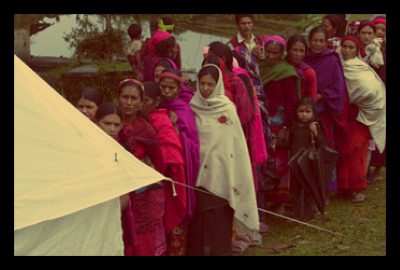
Nepal finds itself in the midst of a public health crisis for a sizable number of its female citizens. The crisis has its roots in poor preventative measures, but it mostly stems from the intolerable gender discrimination that many Nepalese women endure on a daily basis.

For instance, uterine prolapse, a condition that occurs when the uterus falls out of its normal position, is plaguing millions of women in the small nation. This condition is extremely painful and prevents many women from doing basic household duties.

In fact, its ubiquity is staggering: over 10% of 13.4 million women are affected by uterine prolapse.

The condition prevents many women from lifting heavy items which leads many to be ostracized within their own families. Since they are unable to do any intensive physical labor, they are seen as “lazy” by their families and therefore looked down upon.

Unfortunately, uterine prolapse can be traced to even greater gender discrimination pervasive within Nepalese society as a whole. Women generally have no say in when they marry, when to have children and how many children they desire to have. They are also denied basic birth control.

Bearing too many children in a short period of time is heavily associated with early onset of the condition. Generally, uterine prolapse is experienced by older women.

However, because of the lack of choice in having children at an early age, the condition in Nepal has been seen in women in their early 20’s. In a society that treats women as second class citizens, it is hard to imagine the number of avenues women are able to take in order to prevent uterine prolapse.

The government of Nepal has taken notice of the problem and was compelled to address the crisis once the Supreme Court mandated it in 2008. Unfortunately, the government response has been woefully inadequate.

There is a serious dearth of preventative measures in the government’s strategy. The main focus has been providing surgery for those who are already affected by the condition, which has done nothing to ease the discrimination responsible for its prevalence.

The quality of the government’s response to the crisis should not come as a surprise since the government has been in a state of flux since the monarchy was deposed in 2008. Since then, an interim constitution has been created to govern the country.

Political bouts within the government have left many stuck in a cycle of poverty. In fact, over one-quarter of the Nepalese population survives on just $2 per day.

The situation underscores how institutionalized discrimination leads to more than just decreased social stature in one’s society. There may be other examples around the world illustrating the health effects discrimination has on powerless individuals.

Hopefully an effective governing body can be solidified to aid the women of Nepal.

– Zachary Lindberg

Sources: Reuters, Amnesty International
Photo: Merlin

January 27, 2014
https://borgenproject.org/wp-content/uploads/borgen-project-logo.svg 0 0 Borgen Project https://borgenproject.org/wp-content/uploads/borgen-project-logo.svg Borgen Project2014-01-27 10:37:552017-03-20 13:21:49Public Health Crisis in Nepal
Activism, Advocacy, Gender Equality, Global Poverty, Inequality

Forbes’ Inspiring 30 Under 30

forbes’_inspiring_30_under_30
Forbes released its 2014 list of “30 Under 30 who are Changing the World,” which recognizes 30 notable young people in 15 different categories such as education, finance, science and Hollywood who are making a big impact in their chosen field.

Forbes recognized 30 inspiring people in the Social Entrepreneur category who are working in various fields such as girls’ education, rural agricultural development, mobile phone access in remote locations and the creation of online giving platforms.

Those honored were a part of a pool of nominated people who were then selected by philanthropist and former-eBay president Jeff Skoll, Cheryl Dorsey of Echoing Green — which funds social entrepreneurs — and Randall Lane, Editor-in-Chief of Forbes.

Some notable entries in Forbes’ Inspiring 30 Under 30: Social Entrepreneurs include the following people.

Malala Yousafzai, 16, and Shiza Saheed, 24, joined forces in 2012 after Malala was shot in the head by the Taliban in retribution for her vocal stance on the importance of girls’ education. Saheed became Malala’s “chief strategist” for how Malala’s courage and activism could be utilized on a broad scale to create lasting global change.

They cofounded the Malala Fund, have raised $400,000 in grants from the World Bank and from Angelina Jolie and Brad Pitt, and have become a powerful symbol of the movement for girls’ education and female empowerment around the world.

Kennedy Odede, 29, grew up in the Kenyan slum of Kibera where he was called to action by the community’s desperate conditions, especially for women and girls. He founded the organization Shining Hope for Communities (SHOFCO), which runs the tuition-free Kibera School for Girls, a health clinic, community center, clean water initiatives and revenue-generating activities for adults in the community.

SHOFCO’s overarching idea is that if community development can be visibly linked to gender equity initiatives, people will support the empowerment of girls.

Odede and SHOFCO have been recognized by the Clinton Global Initiative and the Newman’s Own Foundation and will be featured in a forthcoming women’s rights documentary by New York Times contributor Nicholas Kristof.

Esra’a Al Shafei, 27, is the founder of Mideast Youth, which promotes social justice, political dissent, and open journalism in the Middle East and North Africa. Further, the organization runs online platforms for activist musicians (https://mideastunes.com/) and for young members of the LGBT community in the region.

Bryan Baum, 24, is the co-founder of Prizeo, which raffles various experiences with A-listers such as Justin Bieber, One Direction, Muhammad Ali and Alicia Keys in order to benefit non-profit organizations. Prizeo has to-date raised $3 million for charities, including St. Jude, Typhoon Haiyan Relief and Invisible children.

Talia Leman, 18, was only ten years old when she raised $10 million for Hurricane Katrina relief. Since then she has created RandomKid, which facilitates the efforts of young people who want to make an impact on the world.

Ten cents of every fundraised dollar on the site goes into a general pool for future efforts. The site has engaged projects from over 12 million young people from 20 countries.

– Kaylie Cordingley

Sources: Prizeo, Forbes, Shining Hope for Communities, RandomKid, Malala Fund
Photo: NWHM

January 21, 2014
https://borgenproject.org/wp-content/uploads/borgen-project-logo.svg 0 0 Borgen Project https://borgenproject.org/wp-content/uploads/borgen-project-logo.svg Borgen Project2014-01-21 18:55:502024-05-25 00:30:39Forbes’ Inspiring 30 Under 30
Economy, Global Poverty, Inequality

A Congress of Millionaires

congress_of_millionaires
As Congress debated extending unemployment benefits, like Medicare and Social Security disability benefits, a report regarding other benefits was released. The Center for Responsive Politics found that, for the first time in history, more than half of the Congressional members are worth more than $1 million.

The report, released in early January, finds that at least 268 out of the 534 current members of Congress have an average net worth of more than $1 million. The numbers are based on personal disclosures filed in 2013, regarding the 2012 fiscal year. To calculate net worth, the Center added together the members’ assets, such as corporate bonds and stocks, and subtracted liabilities such as credit card loans and mortgage debt.

Overall, Senators are wealthier than House members while Democrats are slightly wealthier than Republicans.

The fact and knowledge that Congressional members are much wealthier than the average Americans they represent is not new. Intuitively, politicians need large sums of money to run campaigns, and are more likely to have access to influential donors if they themselves are wealthy.

However, this is the first time in history that we have a Congress of millionaires, where over half of Congress is worth more than $1 million. That fact is somewhat ironic, as it is Congress who determines unemployment benefits, food stamps and the minimum wage, as well as legislation to overhaul the tax code.

Josh Bivens, director of research at the Economic Policy Institute, was quoted in the New York Times as saying, “Congress not only seems more responsive to policy desires of the very rich, but increasingly they are the very rich.

These findings also come at a time when wealth disparity within the United States of America is becoming a political focus. During the summer of 2013, Obama decried the “inequality of opportunity” while Pope Francis recently drew attention to growing economic inequalities – a message that Congress supported.

These issues of inequality are likely to weigh heavily on the 2016 election. Whether or not the pressure will result in a more economically diverse group of representatives remains to be seen.

– Claire Karban

Sources: Open Secrets, New York Times, LA Times, Time, New York Times Blogs
Photo: Nation of Change

January 17, 2014
https://borgenproject.org/wp-content/uploads/borgen-project-logo.svg 0 0 Borgen Project https://borgenproject.org/wp-content/uploads/borgen-project-logo.svg Borgen Project2014-01-17 23:02:162017-03-20 13:13:22A Congress of Millionaires
Activism, Advocacy, Developing Countries, Global Poverty, Inequality

South Africa After Mandela

Life_After_Mandela
Nelson Mandela’s legacy looms large over South Africa. Everyone agrees that his death will mean something significant to the country, but few agree on what that will be. Mandela’s death on December 5 left behind a country still rife with painful inequalities, an African National Congress no longer bolstered by their famed leader and a new generation of “born frees” who have never known the pain of apartheid though they live its aftermath every day.

South Africa’s Persistent Inequalities

Though it has made huge strides since the end of apartheid, South Africa continues to be plagued by massive racial inequalities.

Between 2001 and 2011, the annual income of black households nearly tripled while percentages of the adult black population who have completed high school have grown and are continuing to do so. There has even been an increasing, if only by a tiny amount, segment of the black population going to college. These numbers seem to represent real progress, until they are compared to the statistics for whites. In 2001, white households earned an average of $17,000 more than black households, a disparity that grew to $30,000 by 2011. And while a national increase in high school education for blacks certainly represents some positive change, this is a barrier most whites, who have also attended college at higher rates than blacks since apartheid ended, will never face. Unemployment among young black people is, furthermore, at an all time high. Such statistics make it clear that there is much more work to be done.

ANC at the Polls

With the loss of its most beloved leader, the ANC may be facing its most competitive election yet. The party, which came to power in 1994 with Mandela’s election, has lost its “biggest link to its glorious past,” says William Gumede, the author of numerous articles and a book concerning the ANC.

Despite his retirement from politics, many believed Mandela to still be involved in the decision-making of the party which allowed the ANC to enjoy the electoral bump that the legend provided for many years. Now, without him, the party is forced to confront the staggering economic and social inequalities that they have done little to eradicate. Not only are allegations of corruption abound, but the party has been unable to both alleviate unemployment and reduce crime rates.

Moreover, it is likely than many disillusioned ANC supporters will accept how far the party has fallen from its revolutionist ideals now that Mandela has died. Some predict that the weakened party will splinter and fall out of favor. As the ANC is proving, in many ways, to be an inadequate leader of South African democracy, perhaps a change is necessary.

Born Frees: The Next Generation of South Africans

The “born frees,” as the generation born at the end or after apartheid are called, make up about 40% of South Africa’s population according to census data. As one of the largest population segments, their views on the future of the country have the potential to change much of it.

Many born frees feel that the best way to honor Mandela is to focus on the future of South Africa instead of dwelling in the past. They often resent the frequent references to apartheid from their elders, wanting instead to address the problems currently facing the country. Such focus tends to cause tension with older generations, who often feel born frees are too distanced from the harsh realities of apartheid to fully understand the importance of political involvement.

“It’s not a matter of not understanding apartheid; it’s just a matter of us having different challenges,” Akhumzi Jezile, a 24-year-old producer, television personality and speaker, told the New York Times. Jezile cited youth-run efforts to reduce drug use, crime and HIV rates as evidence of changing priorities.

A 2012 Reconciliation Barometer report revealed changes in the born free generation that may hint at a changing social and political landscape for South Africa. The report found that born frees were more likely than older generations to be friends and socialize with people of a different race. The report also found that they were less likely to trust political leaders.

– Sarah Morrison

Sources: The Guardian, New York Times: A Test at the Polls, New York Times, New York Times,Real Truth

January 15, 2014
https://borgenproject.org/wp-content/uploads/borgen-project-logo.svg 0 0 Borgen Project https://borgenproject.org/wp-content/uploads/borgen-project-logo.svg Borgen Project2014-01-15 17:16:542024-05-26 23:00:43South Africa After Mandela
Global Poverty, Hunger, Inequality, United Nations

With, Without: How Greed Perpetuates Hunger

meat_greed
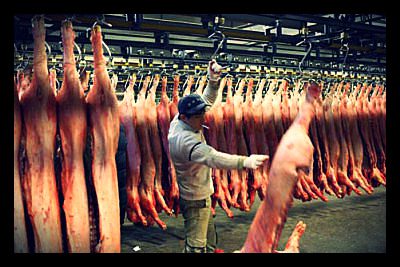
There is enough food in the world to feed everyone, but due to a variety of factors, global hunger persists. In fact, according to the United Nations’ Food and Agriculture Organization (FAO,) the world produces enough food for everyone to intake 2,700 calories a day, much more than the recommended 2,000.

Nevertheless, nearly a billion people go to bed hungry. The reason behind this is multifaceted. Astounding amounts of food are wasted due to poor transportation and storage infrastructure. Even more goes in the trash uneaten. A great deal of grain crops are used for bio-fuels and animal feedlots rather than starving people. Ultimately, it comes down to the fact hunger is caused by inequality.

How are people to combat this inequality? Countries such as Brazil and Ghana have shown success through raising their minimum wage, giving cash to poor people, and investing in small-scale farms. World hunger comes down to the fact that many people simply cannot afford food, with over a billion people living on $1 a day.

The history of poverty begins with globalization and colonialism. When land is privatized and controlled by the few, the majority of people are forced into selling their work for food. Land ownership in the hands of the few is the main cause that spurred income gaps throughout the world.

Colonies exploited the resources and land of their colonies and kept them saddled in debt by claiming ownership in order to maintain this advantage for the long run. Today, less than 25 percent of people use more than 80 percent of the world’s resources. This is a direct result of the economic repression that so many populations are under and have been under for hundreds of years.

Greed led to colonial powers gaining monopolies and establishing claims on resources that were not theirs. Greed led them to effectively enslaving their colonies under shackles of labor and heavy debt for land and resources that originally belonged to the colonies. Although there are many great NGOs and advocacy agencies that have brilliant ideas for solutions to global hunger, few acknowledge colonialism as the original foe, and lack of land ownership as the original problem.

Perhaps people can examine this complex issue more clearly if they perceive it as a parable. In a sun-drenched country, men live peaceful lives on their own farms. One day, a greedy man takes over, burning all their farms and forcing them to work for him. This man builds one massive farm, and exploits their labor and pushes growth, seeking to eat up the rest of the smaller farms in the land. In the end, he is the one who gets all the profits, while the rest barely survive.

This is not a story anyone wants to hear, but it is one that has been in action for centuries. Let us acknowledge this past and seek ways to start a new story.

– Jordan Schunk

Sources: Alternet, The Economist, The Guardian, Huffington Post

January 13, 2014
https://borgenproject.org/wp-content/uploads/borgen-project-logo.svg 0 0 Borgen Project https://borgenproject.org/wp-content/uploads/borgen-project-logo.svg Borgen Project2014-01-13 22:13:062024-05-26 23:02:40With, Without: How Greed Perpetuates Hunger
Activism, Advocacy, Global Poverty, Health, Inequality, War and Violence

Ethnic Tension Within Inner Mongolia

mongolia
It is no secret that the concerns and rights of ethnic minorities in China fall to the wayside in favor of the Han, the ethnicity with the majority in the country. Inner Mongolia serves as an example of the cultural and economic strife caused by marginalizing one group over another. The result is what the Mongol minority believes is outright economic exclusion and the watering down of their culture.

One of the key issues within the region is the migration of the indigenous nomads from their native grasslands to the cities. The Chinese government waves off the migration as a move into modernity for the nomads. A removal from what Chinese authorities refer to as a “backward” culture, but as Nick Holdstock of the U.K. Independent points out, the natives have no say whatsoever when it comes to moving to the cities. This outflow of ethnic Mongolians to urban centers has raised fears among Mongolians that their culture, language and lifestyle are being threatened.

Another point of tension lies in the regional mining of rare-earth metals. Various mining companies have entered the region to take advantage of the lucrative prospects, especially since the value of these metals is demonstrated in their ubiquity among high-tech electronics. However, the mining has been accompanied by a degradation of the surrounding environment as well as the health of the nomads.

For example, the town of Baotou, a major mining hub, has seen its groundwater polluted to toxic levels, their crops ruined and much of their livestock destroyed. Moreover, the use of underground water sources, essential to the removal of impurities from the coal, has lessened the water available to crops and livestock. Many farmers, unable to deal with destruction of their livelihood, have moved away. The Guardian points out that the population within the surrounding villages of the Baotou plants has decreased dramatically. Those that have remained in the area are plagued by severe illness.

All of these factors have coalesced, creating serious economic problems for the ethnic minority. Environmental devastation of their grasslands has degraded some of the main forms of their economic livelihood; the mining industry in the region tends to hire workers from other provinces, excluding the nomads from many of the economic benefits the industry might bring.  Furthermore, those who have migrated to urban areas have discovered cultural barriers to finding gainful employment, namely an inability to speak passable Mandarin.

Tensions have, moreover, reached the point of violence in some instances. In 2011, a herder was killed by a passing coal truck when he attempted to prevent coal trucks from crossing into his land during his protest against the mining industry. Several days later another protester was killed by a forklift driver. Tensions finally boiled over and several thousand Mongolians went out to voice their opposition toward the mining activities.

Unfortunately, the case of Inner Mongolia is a harsh reminder among ethnic minorities in China of their second-class citizen status. Perhaps in time, the Chinese government will listen to the voices of protest among the disenfranchised minority groups that populate many rural areas throughout China. Until then, Mongolians and other ethnicities face major economic and cultural challenges.

– Zack Lindberg

Sources: The Independent, The Guardian
Fabio Ghioni

January 4, 2014
https://borgenproject.org/wp-content/uploads/borgen-project-logo.svg 0 0 Borgen Project https://borgenproject.org/wp-content/uploads/borgen-project-logo.svg Borgen Project2014-01-04 12:23:512016-02-06 08:44:53Ethnic Tension Within Inner Mongolia
Advocacy, Developing Countries, Development, Extreme Poverty, Global Poverty, Inequality, Nonprofit Organizations and NGOs, Poverty Reduction, United Nations

International Day for the Eradication of Poverty

On October 17, International Day for the Eradication of Poverty was celebrated in honor of the goal to end world poverty by 2030. Declared by the UN General Assembly, this annual day serves as a reminder to promote the need to end poverty and destitution in all countries, specifically the developing nations.

In celebration of the International Day for the Eradication of Poverty, Interaction, the NGO alliance, highlighted global programs that are already making an impact. One of these programs, A World Vision program in Zambia, has made health care, education, and psycho-social support accessible for more than a quarter million children. The program has also trained nearly 40,000 volunteers to assist people living with HIV across the country. It is programs like these, indeed, that are helping us reach our goal.

In hope to get to zero percent by our lifetime, NGOs, like Interaction, are essential parts of the solution. “We cannot let over a billion people suffer in extreme poverty when we have the tools and the research to change their lives for the better. … We can do better. We have to do better,” said World Bank president Jim Yong Kim.

So far, the world has made significant progress in working toward this goal. While it is bold, it is undoubtedly achievable. Already, extreme poverty rates are half of what they were two decades ago. In 1990, nearly one in two people in the developing world lived in “extreme poverty” or on less than $1.25 a day. Today, this number is about one in five. Because of the help of many institutions, government and nongovernment organizations alike, we have been able to make immense developments. Still, it is not enough. The International Day for the Eradication of Poverty recognizes these groups that have made all the difference through these years and even further, motivates people to help take those next few steps forward.

– Sonia Aviv

Sources: UN, Global Dimension, Devex
Photo: Times Square

October 26, 2013
https://borgenproject.org/wp-content/uploads/borgen-project-logo.svg 0 0 Borgen Project https://borgenproject.org/wp-content/uploads/borgen-project-logo.svg Borgen Project2013-10-26 04:00:382024-05-25 00:30:06International Day for the Eradication of Poverty
Children, Global Poverty, Inequality

Where Children Sleep Photography Project

It’s hard to say exactly how much of an impact a photo can have. At the risk of cliché, I won’t say that a picture is worth 1,000 words. Imagine seeing hundreds of photographs that detail not only a child’s appearance and age, but also the place they call their own – where they sleep.

James Mollison decided to take on that mission himself. A 40-year-old native of Kenya who grew up in England, Mollison had always been interested in art and design. He graduated from Oxford Brooks University and, later, Newport School of Art and Design with degrees in art, design, film, and photography. After attaining his degree, Mollison moved to Italy in order to work at Fabrica, Benetton’s communications research center and creative lab. This was where the idea for the Where Children Sleep Photography Project came about.

Among his other achievements and publications lies this creation, published in November 2010 – “stories of diverse children around the world, told through portraits and pictures of their bedroom.”

The aforementioned juxtaposition is exactly what Mollison longed to create, in order to point out the inequalities that exist all over the world. The two extremes he found most interesting were in a top-floor apartment in New York and a mud hut in Lesotho, Africa: the bedrooms of Jaime and Lehlohonolo.

Jamie went to a prestigious school in the area. He also had quite a hectic schedule filled with extracurricular activities such as judo, swimming, cello, and kickball. He would often study his finances on the Citibank website.

Lehlohonolo, in contrast, lived a highly different life. Along with his three brothers, who were AIDS orphans, he lived in a mud hut. The floor of this hut was where the boys would sleep, “cuddling up to each other for warmth during the freezing cold nights. Two of Lehlohonolo’s brothers walked to a school eight kilometers away where they are also given monthly rations of food -– cereal, pulses and oil. They couldn’t remember the last time they ate meat. Sadly, they will probably live in poverty for the rest of their lives because crops are difficult to grow on the infertile land and there are no prospects of employment. The vulnerability of these kids was very upsetting.”

When asked what he hoped people would take away from this collection of photos, Mollison said, “We tend to inhabit a small world of friends, family, work, school etc. I hope the book gives a glimpse into the lives some children are living in very diverse situations around the world; a chance to reflect on the inequality that exists, and realize just how lucky most of us in the developed world are.”

– Samantha Davis

Sources: New York Times Blog, Where Children Sleep, Huffington Post
Photo: Visual News

October 23, 2013
https://borgenproject.org/wp-content/uploads/borgen-project-logo.svg 0 0 Borgen Project https://borgenproject.org/wp-content/uploads/borgen-project-logo.svg Borgen Project2013-10-23 04:12:472024-05-25 00:27:36Where Children Sleep Photography Project
Inequality, War and Violence

South Africa’s Transgender Community Denied Rights

south_africa_ID_card
For most people, it is difficult to imagine the immense significance of an identification card, as it seems to be a common part of daily life.  However, without one, essential tasks become impossible. Without an ID, an individual cannot apply for a job. An individual cannot access medical care or educational records. An individual cannot open a bank account, drive, travel, or vote.

In South Africa, the transgender community is keenly aware of the struggles involved in life without an appropriate source of identification. Those who display a different gender presentation from their originally assigned one are constantly humiliated and debased because of this exact discrepancy. Many even face verbal or physical abuse.

In light of this gross inequality, many transgender and inter-sex activists — both nationally and internationally — have campaigned the South African government to overturn their strict and inhumane laws regarding gender changes and identification cards. Before 2003, these aforementioned laws had made a legally recognized gender change in South Africa impossible. That year, Parliament passed “Act 49,” which elucidated the process in which one might legally be able to make such a change.

The act made a medical report mandatory for such a change, but did not require any sort of genital surgery, a process that remains precarious and unfeasible for many in the transgender community.  If the application were to be denied, the Act stipulated that written reasons needed to be provided, and even further, appeals would be possible.

However, in 2013, ten years after “Act 49” passed, little tangible progress has been made in providing proper identification for transgender and intersex individuals. These communities point to the continuing denial of safeguards provided by “Act 49.”

Applicants have waited years for responses from the application process, meanwhile facing the severe inequalities that exist for an individual lacking a tenable identification card. Upon inquiring in regards to their application status, many inter-sex and transgender individuals have faced endless hostilities. When denied, the sanctioned written response detailing the basis of the decision rarely comes.

The changes made to provide basic rights and human services to the transgender and inter-sex communities of South Africa have been legislatively approved. The political fight has ended.

However, in order to provide true equality for all of its citizens, the South African government must, by law, fulfill its promises.

– Anna Purcell

Sources: Human Rights Watch, Humanity in Action
Photo: My Broadband

October 12, 2013
https://borgenproject.org/wp-content/uploads/borgen-project-logo.svg 0 0 Borgen Project https://borgenproject.org/wp-content/uploads/borgen-project-logo.svg Borgen Project2013-10-12 22:21:132024-05-25 00:25:57South Africa’s Transgender Community Denied Rights
Inequality, Women and Female Empowerment

Failure to Meet Millennium Goals for Women Will Have Lasting Echoes

UN_Failure_to_Meet_Womens_Needs
Of all the Millennium Development Goals adopted by the UN, those pertaining to the reproductive health of women seem most likely to be unmet when the 2015 deadline hits. Whatever the other MDG successes, the failure to meet the reasonable objectives set for women should be remembered as a defining symbol of the UN’s ability to get things done in 2015. The issue of reproductive health in and of itself is insufficient to merit that reaction, but it does stand as a weather-vane to all kinds of gender-related issues; it points to a future of injustice.

The Millennium Development Goals in question were meant to achieve universal reproductive health and reduce maternal mortality rates by 75 percent of their 1990 levels. Currently, the rates remain double their intended 2015 targets. As Eva Joly, Chair of the European Parliament’s Committee on Development, observed, “It is a failure of the fight against poverty…but it is also linked to other questions.”

The “questions” which have stymied progress on the issue are mainly cultural in nature. Throughout the world, for many hundreds or even thousands of years, women have been viewed as an inferior sex, in some times and places ranking below valued animals such as horses. From the spatial organization of public and private spaces and places, the norms of social interaction, and the ratio of economic independence, to acceptable activities, clothing, and even mentality, women have long been the second sex.

In failing to keep its MDGs, the UN is not only harming today and tomorrow’s women biologically, it fails to make any headway in provoking a cultural revolution which will allow women to be recognized as equally valuable human beings.

Such sentiments may be senseless to men living in particularly sexist cultures. Indeed, there is a strong argument to make for abstaining from building a homogenous global culture which, conveniently enough, is predicated on modern, Western values, and sees all deviation from that standard as unhealthy, unjust, and immoral. Cultural diversity makes humanity strong, and those who pine for days of a culturally unified humanity may wish to second-guess some of their assumptions.

But the UN has made it clear that it does not intend to allow some cultures to continue to exist according to their traditional ways if those traditions conflict with what the UN perceives to be universal rights. And in that light, the UN has failed to convince these disparate cultures that the lives of their women are worth the cost to be saved from death or trauma in childbirth.

When 2015 comes around, the UN will doubtlessly celebrate their many achievements, as well they should. The effort to meet the Millennium Development Goals has been well spent, and many of the results from it are incontrovertibly good. But the UN should not forget that in this major arena, it has failed.

– Alex Pusateri

Sources: Euractiv, The Atlantic, AWID
Photo: The Gaurdian

October 2, 2013
https://borgenproject.org/wp-content/uploads/borgen-project-logo.svg 0 0 Borgen Project https://borgenproject.org/wp-content/uploads/borgen-project-logo.svg Borgen Project2013-10-02 20:55:442018-03-28 22:10:34Failure to Meet Millennium Goals for Women Will Have Lasting Echoes
Page 16 of 17«‹14151617›

Get Smarter

  • Global Poverty 101
  • Global Poverty… The Good News
  • Global Poverty & U.S. Jobs
  • Global Poverty and National Security
  • Innovative Solutions to Poverty
  • Global Poverty & Aid FAQ’s
Search Search

Take Action

  • Call Congress
  • Email Congress
  • Donate
  • 30 Ways to Help
  • Volunteer Ops
  • Internships
  • Courses & Certificates
  • The Podcast
Borgen Project

“The Borgen Project is an incredible nonprofit organization that is addressing poverty and hunger and working towards ending them.”

-The Huffington Post

Inside The Borgen Project

  • Contact
  • About
  • Financials
  • President
  • Board of Directors
  • Board of Advisors

International Links

  • UK Email Parliament
  • UK Donate
  • Canada Email Parliament

Get Smarter

  • Global Poverty 101
  • Global Poverty… The Good News
  • Global Poverty & U.S. Jobs
  • Global Poverty and National Security
  • Innovative Solutions to Poverty
  • Global Poverty & Aid FAQ’s

Ways to Help

  • Call Congress
  • Email Congress
  • Donate
  • 30 Ways to Help
  • Volunteer Ops
  • Internships
  • Courses & Certificates
  • The Podcast
Scroll to top Scroll to top Scroll to top