• Link to X
  • Link to Facebook
  • Link to Instagram
  • Link to TikTok
  • Link to Youtube
  • About
    • About Us
      • President
      • Board of Directors
      • Board of Advisors
      • Financials
      • Our Methodology
      • Success Tracker
      • Contact
  • Act Now
    • 30 Ways to Help
      • Email Congress
      • Call Congress
      • Volunteer
      • Courses & Certificates
      • Be a Donor
    • Internships
      • In-Office Internships
      • Remote Internships
    • Legislation
      • Politics 101
  • The Blog
  • The Podcast
  • Magazine
  • Donate
  • Click to open the search input field Click to open the search input field Search
  • Menu Menu

Archive for category: Inequality

Advocacy, Developing Countries, Development, Disease, Food & Hunger, Food Aid, Food Security, Global Health, Global Poverty, Health, Human Rights, Hunger, Inequality, Sanitation, Water

5 Facts About Hunger in Rwanda

hunger_rwanda
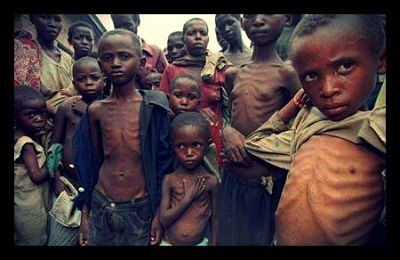
The Republic of Rwanda is a small sovereign state in the Eastern part of Central Africa. Rwanda ranked at 166 of 187 countries on the UNDP Human Development Index in 2011. Rwanda also has the highest population density in the region with 416 people per square kilometer.

Low income, limited natural resources, and food and water insecurity pose a problem for citizens in Rwanda every day. In the years following the Rwandan Genocide in 1994, international rebuilding efforts have been on the ground trying to make sustainable changes to alleviate some of the hunger and water issues.

Here are five facts that explain the state of hunger in Rwanda and how it may change in the coming years:

  1. The 1994 Rwandan Genocide marked the end of the ceasefire signed the year before that stopped the fighting of the Rwandan Civil War. The war began between two ethnic groups the Hutu and Tutsi. The Genocide began when the plane carrying the Hutu supported president Juvenal Habyarimana was shot down and he, along with several other members of the government, were killed. The genocide lasted 100 days and an estimated 800,000 to 1,000,000 people were killed. The fallout from the Rwandan Genocide is the cause for much of the instability in the region that lasts today.
  2. Secondary school attendance in Rwanda is one of the lowest in the world and the literacy rate is 55%.
  3. Approximately 65% of the population has access to safe, clean drinking water
  4. 45% of children under 5 years of age are malnourished.
  5. Over 67,000 refugees from neighboring countries currently reside in Rwanda.

Even though there is a lot of strain on the country today, organizations have been working with the government to address one of Rwanda’s major problems: food insecurity. Agriculture was the country’s main sector before the genocide, and since then, major efforts have been made to make it profitable one more.

Updating the agricultural practices is what the World Food Programme credits with directly reducing the number of food insecure people.

The country hopes that with the reliance on agricultural programs it will improve its GDP to US$900 by the year 2020, up US$380 from its current GDP. Rwanda was also the first country to sign the Comprehensive Africa Agriculture Development Programme (CAADP), meaning that addressing malnutrition and food insecurity is one of the government’s main priorities.

Even though Rwanda still has a long way to go, the government has been taking steps in the right direction that could provide a template for other countries in the region to follow.

– Colleen Eckvahl

Sources: World Food Programme, World Vision
Photo: Rising Continent

February 26, 2014
https://borgenproject.org/wp-content/uploads/borgen-project-logo.svg 0 0 Borgen Project https://borgenproject.org/wp-content/uploads/borgen-project-logo.svg Borgen Project2014-02-26 22:20:472024-05-24 23:56:425 Facts About Hunger in Rwanda
Developing Countries, Disease, Food & Hunger, Global Health, Health, Human Rights, Hunger, Inequality, Violence Against Women, War and Violence, Women, Women & Children

4 Issues Contributing to Malnutrition in the DRC

malnutrition

Kinshasa, DR Congo

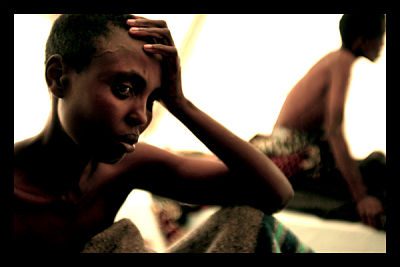
The second largest country in Africa and is located in the middle of the continent. Since the 1990’s the country has been in a state of political unrest and civil war which is the cause of many of the other problems in the region, such as disease, food insecurity, human rights violations, and violence against women.

Here are four issues that contribute to nearly 6.3 million people remaining food insecure and over half of the children under the age of 5 classified as malnourished in the DR Congo:

  1. Political instability between the government and several militia and rebel groups. Peace talks have been ongoing since 2009 with little progress. Since 1998, 5.4 million people have been killed. Less than 10% were killed during the fighting, instead the majority have died from diseases and malnutrition.
  2. 2.7 million people are internally displaced within the DRC as a result of the civil war. 1.6 million are in the North and South Kivu region, where much of the heavy militia activity takes place. There are an additional 116,000 refugees from neighboring countries currently living in the DRC. The large number of displaced people and perpetual fighting in the country has led to a high rate of abuse and sexual assault of women and children. It is estimated that 400,000 women between 15 and 49 were raped between 2006 and 2007. This is the equivalent of 48 women being assaulted every hour.
  3. 3.71% of the population lives below the poverty line, meaning they live on less than two dollars per day.
  4. Rampant infectious diseases are common across the country such as Malaria, Dengue Fever, Typhoid Fever, and HIV/AIDS. The ministry of health said that Malaria was their number one disease concern and in 2011 alone there were 4,561,981 reported cases.

– Colleen Eckvahl 

Sources: The International Campaign to Stop Rape and Gender Violence in Conflict , WFP, WHO
Photo: This is Africa

February 26, 2014
https://borgenproject.org/wp-content/uploads/borgen-project-logo.svg 0 0 Borgen Project https://borgenproject.org/wp-content/uploads/borgen-project-logo.svg Borgen Project2014-02-26 22:20:252024-05-26 23:15:194 Issues Contributing to Malnutrition in the DRC
Advocacy, Developing Countries, Development, Global Poverty, Human Rights, Inequality, Nonprofit Organizations and NGOs, Violence Against Women, Women, Women & Children

Conditions for Garment Workers in Bangladesh

garment_workers_bangladesh
When people buy from brands like Nike and shop at stores like H&M and Gap, they do not pay much attention to how the products arrived at the stores. In many cases, these clothing products are produced in sweatshops in developing countries like Bangladesh, Cambodia, and Indonesia. Almost half of the population in Bangladesh lives off of less than a dollar a day.

Garment workers in Bangladesh toil day after day under extremely harsh conditions for low wages, sometimes handling dangerous chemicals with their bare hands and inhaling toxic fumes due to poor ventilation in many factories.

In April of 2013, an eight story building in Bangladesh called Rana Plaza collapsed leaving over 100 dead and over 2,000 injured.

The poor conditions of the factory itself and the lack of safety precautions taken to ensure its workers’ well-being were neglected and therefore led to the collapse. In addition to this incident, there has been a history of factory mishaps over the past couple of years in Bangladesh. In November of 2012, the Tazreen garment factory in Bangladesh caught fire and killed 112 of its workers.

At this time, the factory was producing goods for Walmart.

Besides the incidents themselves, it is also important to focus on the working conditions and the violations of human rights that happen daily in factories like these. According to the Institute for Global Labor and Human Rights, workers in the Tazreen factory work 72-81 hours per week. Their salary depends on their sewing skill; senior sewing operators earn at minimum 23 cents per hour and junior sewing operators earn 21 to 22 cents an hour.

As a majority of the workers are women, abuse is common and some are even denied maternity leave — blatant violations of human rights that have been occurring for years. Even after one tragedy, further precautions are not taken to ensure the safety of the workers.

An article from the Daily Mail accounts a Canadian journalist who worked undercover in Bangladesh and witnessed the atrocities of one of the smaller garment factories. She reported that when she first arrived at the sweatshop, a nine-year-old girl named Meem was in charge of training her.

The article also noted that there were “no fire extinguishers, only one exit – the front door – and little more than a hole in the ground, down a rat-infested hall, for the toilet.” These accounts present the harsh reality for many garment workers in Bangladesh.

Violations of human rights are happening elsewhere too—most recently in Cambodia. Workers there have started protesting in the city Phnom Penh for higher wages.

Sometimes people take things for granted because they are easily accessible. Organizations like the Clean Clothes Campaign have been established to spread awareness of this issue and to help those who have been detained for protesting for higher wages and better conditions. By not purchasing products from companies who outsource their work unfairly to other countries, a better future can be created for garment workers whose human rights have been violated.

– Kenneth W. Kliesner

Sources: BBC News, The New York Times 1, The New York Times 2, The Epoch Times
Photo: Demotix

February 26, 2014
https://borgenproject.org/wp-content/uploads/borgen-project-logo.svg 0 0 Borgen Project https://borgenproject.org/wp-content/uploads/borgen-project-logo.svg Borgen Project2014-02-26 22:19:382024-06-04 01:17:34Conditions for Garment Workers in Bangladesh
Inequality

Russia’s LGBT Community Fighting for Equality

Russia's LGBT
Russia has been in the spotlight recently for its part in playing host to the Winter Olympics. Hosting the games is an opportunity in which a country can reap the benefits of great publicity and a surge in business from all the people that flock there for the historic event. Russia, however, has had more negative press than positive because of its blatant disregard for ethical treatment of the lesbian, gay, bisexual and transgender (LGBT) community, causing recent uproar among many.

Many are quick to point fingers and blame President Vladimir Putin for not implementing laws to protect them. While Putin deserves some of the blame, Russia has had a long history of homophobia.

Homophobic laws have been enacted as early as the 17th century, with Peter the Great’s punishing homosexuals by flogging or by male rape. As the years progressed, the law extended to punish any adult man that voluntarily participated in sodomy-like behavior.

In 1835, Tsar Nicholas made sure that ban was still being withheld against homosexuals with them being stripped of their Russian citizenship and exiled to Siberia.

Of all the Tsars and rulers, Joseph Stalin was the most intolerant of the LGBT community. Homosexuals were sentenced to hard labor prison camps for 4 years to 5 years under his reign and made-up propaganda had run rampant. Stalin was a huge proprietor and believer that homosexuals were pedophiles who were constantly lurking for young boys. His paranoia that homosexuals were praying on children and that they had “politically demoralized various social layers of young men, including young workers, and even attempted to penetrate the army and navy” compelled him to have his secret police spy and arrest anyone that was perceived to be gay.

Violence against Russia’s LGBT community has only worsened. Putin endorses violence against the community not only because he sees them as “foreign agents” or as a danger to the well-being of children, but as a political tactic as well. Milene Larson, a United Kingdom-based journalist, states, “Putin is looking for enemies. In Russia, homosexuals and gay rights activists are labeled as foreign agents… You have such a vast majority of people who are Orthodox who potentially feel this way, those are his voters…he is not going to step back and say ‘actually gay people are ok.’”

For anti-gay groups like Occupy Paedophilia, Putin’s views on the LGBT community are green light for vicious mob attacks to try and “cure” them. These mobs upload their videos using WhatsApp (a YouTube like clip-sharing application) to humiliate their victims even further. These groups will pose as a homosexual on an Internet dating site or go to gay clubs where they can find someone that falls under the impression that the perpetrator is interested; the victim is then ambushed or kidnapped.

One horrifying account was of a teenage student from Uzbekistan who was lured by the mob group, kidnapped, beaten, stripped and raped. All of these atrocious acts were being filmed while they were being done, with the group telling the victim that they were punishing him for his own good. Another account tells the story of a 23-year-old man who was killed for coming out to his friends while they were drinking.

Russia’s LGBT community faces physical and verbal harassment every single day. For such a large and diverse country, the LGBT community has few allies. With a leader that will not speak out and condemn these attacks, they have nobody to whom they can turn. They cannot turn to the police for help because police officers often commit the crimes and do not report the issues. While the fight rages on for activists to achieve equal rights for the LGBT community, this is going to be an uphill battle for a long time to come.

– Kenneth W. Kliesner

Sources: The Moscow Times, The Star, Human Rights Watch, Russia Today
Photo: Peter T. Atchell Foundation

February 24, 2014
https://borgenproject.org/wp-content/uploads/borgen-project-logo.svg 0 0 Borgen Project https://borgenproject.org/wp-content/uploads/borgen-project-logo.svg Borgen Project2014-02-24 12:19:212024-12-13 17:53:50Russia’s LGBT Community Fighting for Equality
Global Poverty, Inequality

Congressional Black Caucus Fights Income Inequality

Congressional_Black_Caucus
An event hosted by the Congressional Black Caucus has sparked a national effort to confront inequality around the world. As reported by the Baltimore Afro-American weekly newspaper, also known as the Afro, the National Day of Prayer to End Poverty and Income Inequality on February 6 was intended to bring awareness to high rates of poverty among African-Americans.

“The specter of poverty has long haunted communities of color,” reports the Afro. “Nearly 10 million African-Americans, including four in 10 Black children, live in poverty and almost 12 percent of African Americans are unemployed.”

While the event focused on African-Americans, 25.8% of whose income falls below the poverty level (just behind Native Americans,) it also investigated how global trends in wealth disparity negatively affects already disempowered communities around the world. The World Economic Forum’s “Outlook on the Global Agenda 2014,” published in November 2013, listed expanding income disparities as the second greatest trend facing the world today.

“Widening wealth disparity affects every part of our lives,” states the report. “It’s impacting social stability within countries and threatening security on a global scale [and] it’s essential that we devise innovative solutions to the causes and consequences of a world becoming ever more unequal.”

Oxfam Executive Director Winnie Byanyima underscores the importance of addressing global inequality and emphasized its relationship with reducing poverty.

“We cannot hope to win the fight against poverty without tackling inequality. Widening inequality is creating a vicious circle where wealth and power are increasingly concentrated in the hands of a few, leaving the rest of us to fight over crumbs from the top table,” she said.

“Without a concerted effort to tackle inequality, the cascade of privilege and of disadvantage will continue down the generations [and] we will soon live in a world where equality of opportunity is just a dream,” she added. “In too many countries, economic growth already amounts to little more than a ‘winner takes all’ windfall for the richest.”

– Emily Bajet

Sources: Census, Afro, World Economic Forum, Daily Mail

February 19, 2014
https://borgenproject.org/wp-content/uploads/borgen-project-logo.svg 0 0 Borgen Project https://borgenproject.org/wp-content/uploads/borgen-project-logo.svg Borgen Project2014-02-19 04:15:122024-05-26 23:12:36Congressional Black Caucus Fights Income Inequality
Economy, Global Poverty, Inequality

Obama Addresses Decline of Opportunity in America

Opportunity-In-america
President Barack Obama’s 2014 State of the Union Address highlighted the growing imbalances throughout the world.  In recent decades, the U.S. has depended on its military strength as a substitute for diplomacy, but the President specified the need to shift the focus to fighting extreme poverty within Africa, the Americas and the Asia-Pacific.

The President’s agenda is taking on the issue of poverty head-on.

He recognizes that to address the large inequalities we must reverse the decline of social and economic mobility.  Currently, 65 percent of Americans born in the bottom fifth of incomes stay in the bottom two-fifths income class while 65 percent of top fifth stay in the top two-fifths.

A major factor that maintains this mobility gap is poverty.

Families from poor backgrounds and low economic status are at a disadvantage right from the start.  Just 36 percent of kids born in the poorest households get a strong start in life compared to 70 percent for middle-income kids and 87 percent for the upper class.

With federal programs like Head Start and Race to the Top are putting an emphasis on early child development, it is critical that we create social policy that supports individuals throughout all stages of life.  The Brookings Institute has identified five major life stages that we can consciously cultivate in order to increase mobility and opportunity in America.

  • Strong Start in life: Being born to a mother with at least a high school degree increases the likelihood of leading a successful life. Only 48 percent of children in the bottom fifth are born to mothers with a high school level education.  Increased cognitive ability starts in the home and these same children will hear fewer words, read fewer books and are overall less stimulated than their counterparts.
  • Strong Start in School: Starting school with a disadvantage is a factor that only compounds as a child grows.  By the age of five, less than half of low-income children are deemed school-ready.  To get a head start, children must develop social and academic skills before they enter school.  This is the rationale behind the President’s early learning initiative.
  • A Strong Start in Postsecondary Education:  Postsecondary education must begin with a high school diploma.  The dropout rate among low-income students is six times higher than the rate of high-income students.  Students must not only graduate but graduate with sufficient skills to succeed in higher education.
  • A Strong Start in Labor Market: In today’s economy, the value of a postsecondary degree is tremendous.  On average, each additional year of school accounts for an extra 10 percent return in annual income.  This makes four-year degrees more desirable than one from a community college.  Over 50 percent of low-income students enrolled in community college fail to graduate or transfer to a four-year college.  A support system to encourage students to remain focused and finish their degrees will transform their chances in a sluggish labor market.
  • A Strong Start for a Family: This brings the cycle full circle.  Before getting married and having children, individuals need to consider their personal financial security as a prerequisite.  Marriage plays a critical role in determining the fate of a child. Proper parenting skills are often developed through the shared experience of marriage.  Crafting social policy that encourages marriage can offer more incentives for couples to stay together and create a strong family.

– Sunny Bhatt

Sources: Brookings Institute, New York Times
Photo: Prague Post

February 14, 2014
https://borgenproject.org/wp-content/uploads/borgen-project-logo.svg 0 0 Borgen Project https://borgenproject.org/wp-content/uploads/borgen-project-logo.svg Borgen Project2014-02-14 12:02:132017-03-20 13:19:49Obama Addresses Decline of Opportunity in America
Developing Countries, Global Poverty, Human Rights, Inequality, War and Violence

Human Rights Abuses in Sri Lanka

human_rights_abuses_sri_lanka
After 25 years, the civil war that plagued Sri Lanka and claimed thousands of lives is finally finished. The war, between the Sri Lankan government forces and the Tamil Tigers separatist group, is estimated to have killed over 40,000 people in its final months.

The long war was between the Sri Lanka government and the Liberation Tigers of Tamil Eelam (LTTE,) or simply the Tamil Tigers. The LTTE desired an independent state for the Tamil minority in Sri Lanka.

The Tamils claim to have been victimized by the Sinhalese majority once the country became fully independent in 1948.

But, just because the war is finished, does not mean its opponents are any less quiet. In fact, many human rights groups are accusing the Sri Lankan government of destroying mass burial sites in order to cover its fingerprints on various human rights abuses.

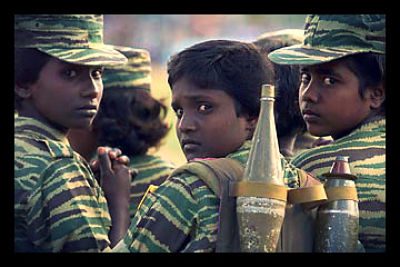
Australia’s Public Interest Advocacy Center detailed an in-depth report chronicling the various abuses perpetrated by both sides of the conflict. The Tamil Tigers have been accused of using civilians as human shields and recruiting child soldiers. While these violations are heinous, the report lays the majority of the blame at the feet of the Sri Lanka government forces.

A United Nations report shows the majority of those 40,000 killed in the war’s final months can mostly be attributed to government action.

The team of investigators highlight the years 2008 and 2009, where the Sri Lankan government is accused of mass civilian bombardment. For example, in 2009, civilians were blocked by rebel fighters from leaving the war zone; the government shelled the entire area.

U.N. satellite images show the area the government shelled was occupied by up to 50,000 noncombatants. The government forces are also accused of purposefully targeting hospitals as well as blocking food and medicine to civilians and miscounting the number of civilians located in the war zone.

The abuses have been noted by the United States Government, resulting in intensified relations between the two countries. Recently, the U.S. has floated the idea of a third U.N. resolution against Sri Lanka. It responded by denying a visa request for a State Department official.

The government remains obstinate in the face of international pressure. Its President Mahinda Rajapaksa stated that it would be a “great crime” to accuse the government of war crimes. He went as far as to say that those bringing these allegations against the Sri Lankan government shows they are “opposed to peace.”

It is uncertain where these U.N. resolutions will lead or if they will be effective at all in finding justice for the many thousands that were needlessly slaughtered by their own government.

– Zack Lindberg

Sources: Al Jazeera, CFR, ABC News
Photo: The Telegraph

February 13, 2014
https://borgenproject.org/wp-content/uploads/borgen-project-logo.svg 0 0 Borgen Project https://borgenproject.org/wp-content/uploads/borgen-project-logo.svg Borgen Project2014-02-13 16:42:142024-12-13 17:50:03Human Rights Abuses in Sri Lanka
Activism, Advocacy, Developing Countries, Development, Global Poverty, Government, Human Rights, Inequality

Human Rights Abuses in West Papua

west_papua_human_rights
The region of West Papua does not make the news often; in fact, it rarely merits a news blurb in most Western headlines. However, West Papua is arguably one of the most under-reported cases of exploitation an indigenous groups in the 21st century.

Since 1969, the people of West Papua have been in conflict with the government of Indonesia in one way or another. The University of Sydney’s Center for Peace and Conflict Studies put out a report stating that for the better part of 40 years, the people of West Papua have been under the boot heel of the Indonesian Security forces.

The report goes on to state that due to wide scale incursions by Indonesia’s armed forces, West Papua has seen over 100,000 of its citizens die and much of its national resources depleted.

A report by The Guardian also notes the devastating effect that Indonesian resource extraction is having on the people of West Papua. It notes the case of the Mooi people, who are one of the 250 indigenous tribes that are having their way of life destroyed due to the deforestation of their lands by timber and palm oil companies.

The oceans off the coasts of West Papua are also being devastated due to nickel mining in the area, which is flooding the bountiful coral reefs with polluted sediment.

It is not only the eco-system of West Papua that is being destroyed. Even though it has been close to 45 years, the Indonesian military is still cracking down severely on people who are part of the Free Western Papua Movement.

Last year, the Free Western Papua Movement’s Facebook published the photo of a dead Papuan named Edward Apaseray, who was reportedly tortured and killed by the Indonesian Special Police Forces for being a “separatist.” The Diplomat, a current affairs magazine for the Asian-Pacific region, published a report in which a recent study noted that in West Papua, an incident of torture occurred every six weeks for the past half-century.

The human rights organization Tapol that monitors human rights abuses in West Papua published the story of Yawan Wayeni. He was a tribal leader and formal political prisoner who was tortured and killed by Indonesian security forces in brutal fashion.

The media have long overlooked the plight of the people of West Papua. It has only recently begun to receive real traction in Western media. The International Parliamentarians for West Papua (IPWP) is a group of politicians around the world who support the right self-determination for the people of West Papua.

One of its members, Benny Wenda, an exile from West Papua, recently had an article published in which he decried the recent statement of Australian Prime Minister Tony Abbot, who stated that things in West Papua are “better and not worse.”

West Papua is one of the forgotten atrocities of the 21st century; the responsibility making sure that it does not continue to be rests with us and our elected officials. The Arab Spring occurred with the help of Facebook and a determined populace. The plight of West Papua needs the same type of support from those who have the ability to stand up to the Indonesian government.

– Arthur Fuller

Sources: Amnesty International, The Guardian, Tapol,  The Diplomat, The University Of Sydney, Tapol,  CNN, The Guardian, Tempo, Australia News Network
Photo: London Mining Network

February 13, 2014
https://borgenproject.org/wp-content/uploads/borgen-project-logo.svg 0 0 Borgen Project https://borgenproject.org/wp-content/uploads/borgen-project-logo.svg Borgen Project2014-02-13 16:33:352024-06-11 02:29:34Human Rights Abuses in West Papua
Children, Developing Countries, Development, Economy, Education, Global Poverty, Government, Human Rights, Inequality

Education in India Suffers from Income Inequality

education_india
India is known for having one of the fastest growing economies in the world. Currently, the growth for GDP within India rests at 4.9 percent, but this is far below its potential.

Similarly to the United States, India is another one of the world’s largest democracies. However, they both also have some of the worst cases of income inequality. In the past 15 years, the net worth of India’s top billionaires have increased 12 times, enough to eliminate poverty in India twice.

The public infrastructure of India is developing at a decent pace, but there are problems that are often left unaccounted for by the Indian government. For example, education in India is a system in dire need of improvement.

According to UNESCO’s Education For All global monitoring report, “At 287 million, India has 37 percent of the total population of illiterate adults across the world.” The report also asserts that the poorest of India will not expect to receive universal education until around the year 2080.

In regards to the specific problems that India faces with education, access and quality are two of the greatest concerns. Much of it is tied to the proper functioning and funding of Indian government, which may not be reliable in certain instances.

90% of people do not continue to college in India, 58% do not finish primary school and 4% never even have the opportunity to start.

The extensive lack of universal education in India also goes on to provide problems for India’s human capital in general. Out of 122 total countries released by the World Economic Forum’s Human Capital Index, India is ranked a measly 78.th The problems India faces may require the nation to make steps toward realizing more inclusive growth and development.

Income inequality ought to be addressed in India for their human capital to rise.

This means core public services including basic healthcare, education and power or water supply must be established by Indian government at multiple levels. Investment in people has proven a successful method to national development. In other words, India still has a ways to go in realizing its full potential.

– Jugal Patel

Sources: World Bank, India Times, Teach For India, Live Mint, Outlook India
Photo: The New York Times

February 13, 2014
https://borgenproject.org/wp-content/uploads/borgen-project-logo.svg 0 0 Borgen Project https://borgenproject.org/wp-content/uploads/borgen-project-logo.svg Borgen Project2014-02-13 16:33:072019-08-13 13:15:12Education in India Suffers from Income Inequality
Children, Global Poverty, Inequality

Rising Need for Social Justice in Guatemala

Guatemala_poverty_community_market_people
The population of Guatemala is 14.7 million and is ranked at 131 out of 187 in the United Nations Human Development Index. Also, the Gross National Income per capita in Guatemala is $2,740 and the Gini Index of Guatemala is 53.7, making this country one of the most unequal in the entire world.

There are 36 countries in the world that account for 90 percent of growth stunting and Guatemala is one of them.  This is because the chronic undernourishment rate for Guatemalan children is 49.8 percent (about 2.5 million children,) the fourth highest in the world and the highest in the region.

Chronic undernourishment in the indigenous areas is at 69.5 percent; 53 percent of the population lives in poverty with 13 percent being in extreme poverty.  Indigenous boys, girls, and women that live in the highlands are the most vulnerable groups to impoverished living conditions.  The illiteracy rate in Guatemala is 31.1 percent in women that are 15 years of age and older, but that reaches as high as 59 percent among older indigenous women.

In the last few decades of the 20th century, Guatemala had multiple civilian and military governments which led to guerilla war.  In 1998, its government signed a peace agreement that ended the conflict with nearly one million refugees and 200,000 deceased.  Guatemala was able to get a non-permanent seat on the U.N. Security Council in January 2012.  The country’s being in an extended drought is now met with the food insecurity and economic crisis.

The government’s unemployment and budget deficit has been increasing because of the global economic crisis reducing exports, revenue from tourism and foreign investment.  Impoverished and food-insecure families are already struggling, but the combination of all these issues together restricts these families even more.

Unfortunately, the regularly occurring natural disasters in Guatemala do not make matters better for those living in poverty.  They are prone to earthquakes, landslides, droughts, hurricanes and floods, which can severely damage the indigenous population, since they are almost completely unprotected.

Guatemala is full of social conflict right now, with NGOs and indigenous groups protesting to get equality.  They are currently trying to block off the very mines that the government sees as essential to the country’s development because the indigenous see them as a threat to their safety since there have been massacres of hundreds of natives just to get certain resources from their land.

Also, people are trying to nationalize the electricity system, since poor households are unable to pay to keep their electricity due to the rising prices employed by private companies.  Children are even being forced to assemble fireworks without any safety equipment because they cannot find any other way of making money.  The Guatemalan people are pleading with the government to raise minimum wage by 47 percent simply so they can get enough money to cover the quickly rising prices of basic goods.

All of this injustice the Guatemalan government and private corporations are committing against their own people is leading to a lot of civil unrest.  If someone wants to be safe in Guatemala, they must pay to be safe, and the only ones that can pay are the rich.  It is clearly observable in most of the tourist destinations of Guatemala that there are uniformed guards in stores, hotels, and plazas to protect the outsiders/rich insiders; that is never a good sign.

There are actually seven private security officers for every public police officer.  The non-rich Guatemalan people are unhappy and cannot protect themselves from those that are hurting them, so action needs to be taken to achieve social justice.

– Kenneth W. Kliesner

Sources: World Food Programme, CIA, The Guardian, IOL News
Photo: The Guardian

February 12, 2014
https://borgenproject.org/wp-content/uploads/borgen-project-logo.svg 0 0 Borgen Project https://borgenproject.org/wp-content/uploads/borgen-project-logo.svg Borgen Project2014-02-12 02:25:312024-05-26 23:11:45Rising Need for Social Justice in Guatemala
Page 15 of 17«‹1314151617›»

Get Smarter

  • Global Poverty 101
  • Global Poverty… The Good News
  • Global Poverty & U.S. Jobs
  • Global Poverty and National Security
  • Innovative Solutions to Poverty
  • Global Poverty & Aid FAQ’s
Search Search

Take Action

  • Call Congress
  • Email Congress
  • Donate
  • 30 Ways to Help
  • Volunteer Ops
  • Internships
  • Courses & Certificates
  • The Podcast
Borgen Project

“The Borgen Project is an incredible nonprofit organization that is addressing poverty and hunger and working towards ending them.”

-The Huffington Post

Inside The Borgen Project

  • Contact
  • About
  • Financials
  • President
  • Board of Directors
  • Board of Advisors

International Links

  • UK Email Parliament
  • UK Donate
  • Canada Email Parliament

Get Smarter

  • Global Poverty 101
  • Global Poverty… The Good News
  • Global Poverty & U.S. Jobs
  • Global Poverty and National Security
  • Innovative Solutions to Poverty
  • Global Poverty & Aid FAQ’s

Ways to Help

  • Call Congress
  • Email Congress
  • Donate
  • 30 Ways to Help
  • Volunteer Ops
  • Internships
  • Courses & Certificates
  • The Podcast
Scroll to top Scroll to top Scroll to top