• Link to X
  • Link to Facebook
  • Link to Instagram
  • Link to TikTok
  • Link to Youtube
  • About
    • About Us
      • President
      • Board of Directors
      • Board of Advisors
      • Financials
      • Our Methodology
      • Success Tracker
      • Contact
  • Act Now
    • 30 Ways to Help
      • Email Congress
      • Call Congress
      • Volunteer
      • Courses & Certificates
      • Be a Donor
    • Internships
      • In-Office Internships
      • Remote Internships
    • Legislation
      • Politics 101
  • The Blog
  • The Podcast
  • Magazine
  • Donate
  • Click to open the search input field Click to open the search input field Search
  • Menu Menu

Archive for category: Global Poverty

Key articles and information on global poverty.

Global Poverty, Technology

Ukraine’s IT and Software Development

Ukraine's IT and software
After the fall of the Soviet Union in the 1990s, many believed Ukraine would climb quickly up the economic ladder. Until recently, government corruption and political instability kept the country in a state of economic stagnation. Over the last two decades, however, the nation’s information technology and software development sectors grew rapidly, helping immensely to boost Ukraine’s economy.

Ukraine Becomes a Major Player

People did not fully recognize the potential of Ukraine’s IT and software industries until 2011 after service exports nationwide exceeded $1 billion. This large revenue also helped the country gain its rank as the 26th most attractive country for outsourced tech services. The following year, the Ukrainian Hi-Tech Initiative conducted a report which ranked Ukraine among the top 10 countries with the most certified IT specialists. Out of the 250,000 Ukrainian IT specialists employed in 2014, over 40,000 of them were certified. Ukraine continues to gain global attention and its rapidly growing IT sector made it one of the most attractive nations for investors and venture capitalists.

The Ukrainian Venture Capital and Private Equity Association recorded that between 2013 and 2018, venture capitalist companies invested $630 million into Ukrainian tech start-ups. Lviv, another major IT city in Ukraine’s Innovation District IT park recently received a $160 million grant. The generous grant provided 14,000 new workplaces in the park. Among the workplaces were tech-labs, hotels and restaurants. This expansion created an array of employment opportunities, which helped to boost Ukraine’s economy even more.

The successful growth of these industries had so much impact that Ukrainian universities had to create specialized degree programs to cater to them exclusively. As of 2018, there were 13,836 students studying at universities with tech programs. Out of the 13,836 students, 5,000 will graduate with the skill-set needed to become IT professionals in Ukraine’s cluster of tech-centered cities. The IT Future Survey from 2018 indicated that 82 percent of all Ukrainian students wanted to pursue a career in IT or software development. To be specific, in 2017, the Lviv IT cluster launched four new tech programs including robotics, cybersecurity, business analysis and life safety. In addition, the cluster also opened four new innovation labs for IT students. The labs should help students master their skill sets in AI tech, machine learning, data science and an array of other cutting-edge technologies.

Outsourcing Services and Real Estate Demand Boosts Ukraine’s Economy

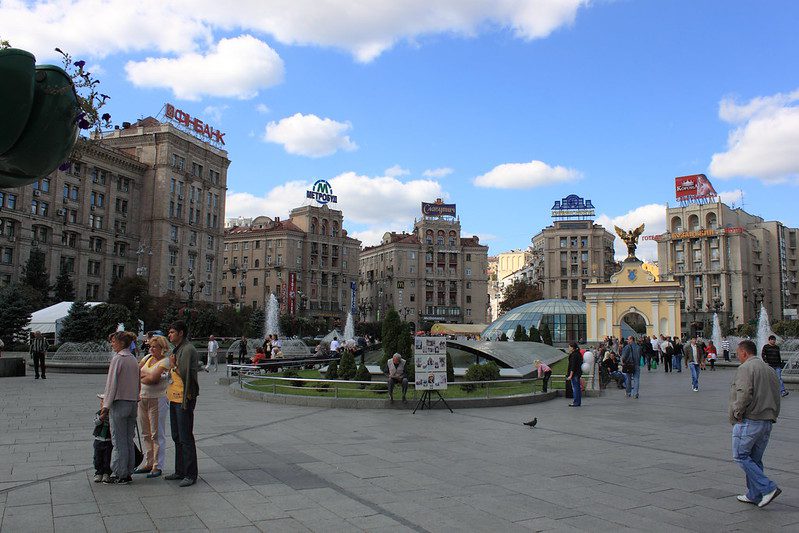
In recent years, the demand for Ukraine’s IT and software services increased exponentially. Consequently, this creates a demand for firms to buy real estate to house their growing businesses. A Cushman & Wakefield property market analysis indicated that in the first half of 2017, IT companies accounted for 50 percent of all office transactions in the city of Kyiv. Tech companies also account for 60 percent of all office rentals in Kyiv’s Gulliver Business Center, a major hub for the city’s tech industry. Other Ukrainian tech-hub cities like Lviv, Odesa and Kharkiv helped boost Ukraine’s economy through these same areas.

Ukrainian tech companies do a majority of their business through outsourcing services. A report conducted by the investment firm AVentures Capital indicated that at least 500 firms provided tech services to the global market. As of 2018, software development became the second largest export service in the world with Ukraine being responsible for 20 percent of those exports globally. With a current market growth of 26 percent, and between 160,000 and 172,000 Ukrainians being software and IT professionals, Ukraine boasts the largest and fastest growth of these industries in all of Europe. Experts speculate that services of this nature are well on their way to becoming the number one export in the country.

Ukraine’s IT and Software Sectors Create Jobs

This growth helped boost Ukraine’s economy and has also provided Ukrainian people with employment opportunities from clients abroad without the direct involvement of their corrupt government systems. The exports of Ukraine’s IT and software services were worth $3.6 billion. In addition, outsourcing companies provided more than 100,000 software development jobs in the country’s IT sector in 2018.

SoftServe, an American outsourcing company, provided 6,000 employment opportunities for Ukrainian IT specialists. The firm also accepts 800 new recruits annually for a six-month training program. A recorded 70 percent of the program’s participants graduate to gainful employment in IT and software development. Moreover, for every software and IT professional that a company hires in Ukraine, four more jobs in various industries open from that one employment opportunity. The growth of these industries had such a large impact on Ukraine that tech companies can almost guarantee a steady inflow into the country’s economy within a few years.

Although Ukraine has a long road to becoming a fully developed country, its people have made impactful improvements over the last couple of decades. Despite the tireless oppression it faced, Ukraine proved that it has the potential to be a world superpower in innovation, creativity and technology.

– Ashlyn Jensen 
Photo: Flickr
November 16, 2019
https://borgenproject.org/wp-content/uploads/borgen-project-logo.svg 0 0 Lynsey Alexander https://borgenproject.org/wp-content/uploads/borgen-project-logo.svg Lynsey Alexander2019-11-16 01:30:032024-05-29 23:13:35Ukraine’s IT and Software Development
Global Health, Global Poverty

8 Facts About Life Expectancy in Senegal

Facts About Life Expectancy in Senegal

The Republic of Senegal is a country on the West African coast bordered by Mauritania, Mali, Gambia and Guinea-Bissau. Around 46.7 percent of Senegal’s 15.85 million residents live in poverty. Today, life expectancy at birth in Senegal is 67.45 years, representing a significant improvement from 39.24 years in 1970 and 59.7 years in 2000. Many factors contribute to a country’s life expectancy rate including the quality and access to health care, employment, income, education, clean water, hygiene, nutrition, lifestyle and crime rates. Keep reading to learn more about the top eight facts about life expectancy in Senegal.

8 Facts About Life Expectancy in Senegal

  1. Despite decades of political stability and economic growth, Senegal is ranked 164th out of 189 countries in terms of human development. Poverty, while decreasing, remains high with 54.4 percent of the population experiencing multidimensional poverty. The World Bank funds programs in Senegal to reduce poverty and increase human development. This work includes the Stormwater Management and Climate Change Adaptation project which delivered piped water access for 206,000 people and improved sanitation services for 82,000 others. Additionally, the West Africa Agricultural Productivity Program helps cultivate 14 climate-smart crops in the area.
  2. Senegal’s unemployment rate has substantially decreased from 10.54 percent in 2010 to 6.46 percent in 2018. This is a positive trend; however, 63.2 percent of workers remain in poverty at $3.10 per day showing that employment does not always guarantee financial stability. To help the most vulnerable 300,000 households, Senegal has established a national social safety net program to help the extremely poor afford education, food, medical assistance and more.
  3. The maternal mortality rate continues to decrease each year in Senegal. In 2015, there were 315 maternal deaths per 100,000 live births compared to 540 deaths per 100,000 live births in 1990. Maternal health has improved thanks to the efforts of many NGOs as well as the national government. Of note, USAID has spearheaded community health programs and launched 1,652 community surveillance committees that provide personalized follow-up care to pregnant women and newborns. In 2015, trained community health workers provided vital care to 18,336 babies and conducted postnatal visits for 54,530 mothers.
  4. From 2007 to 2017, neonatal disorder deaths decreased by 20.7 percent. This is great progress, however, neonatal disorder deaths are still the number one cause of death for children under the age of 5 in Senegal. The World Health Organization (WHO) provides technical and financial support to establish community-based newborn care, including Kangaroo Mother Care programs. This low-cost and low-tech intervention has reduced the risk of death for preterm and low-birth-weight babies by 40 percent and illness by 60 percent. With financial help from UNICEF, 116 health workers have been trained in 22 health centers and seven hospitals. The long-term goal is to have Kangaroo Care introduced to 1,000 health centers across Senegal.
  5. Senegal has been lauded as an African leader in the fight against malnutrition. Notably, from 2000 to 2016, undernutrition declined by 56 percent. Improvements in the health sector, making crops more nutrition-sensitive and helping increase crop yields have been major contributors to recent nutrition success. 
  6. Despite progress, hunger is still a major issue in northern Senegal. Successive droughts have left over a quarter of a million people food insecure. In the district of Podor, rains have decreased by 66 percent from 2016 to 2017. Action Against Hunger is working to keep cattle, which is the main sustenance source for thousands of shepherds, from dying in the drought by funding new drinking troughs. This will benefit 800 families in Podor. Action Against Hunger also covers monthly basic food expenses for 2,150 vulnerable households to prevent further increases in acute malnutrition.
  7. There is a high risk of waterborne diseases in Senegal. Diarrheal diseases are the third leading cause of death. The Senegalese Ministry of Health has recently adopted the WHO diarrhea treatment policy of zinc supplementation and improved oral rehydration therapy. This is a life-saving policy that is taking effect around the country.
  8. Around 41 percent of children aged 6-11 in Senegal are not in school. The largest percentages of out-of-school children are the poorest quintile and rural areas. To increase school enrollment, the government and USAID are making efforts to increase access to school facilities in rural areas and support poorer families with cash transfers through the social safety net. USAID is working to ensure that all Senegalese children, especially girls and those in vulnerable situations, receive 10 years of quality education. The agency has built schools, supported teacher training, increased supplies of books and access to the internet and increased opportunities for out-of-school young people. Since 2007, 46 middle schools and 30 water points have been built and equipped.

These eight facts about life expectancy in Senegal have shown that the combined efforts of nonprofits and the Government of Senegal are making real progress on many fronts that contribute to life expectancy. These efforts must continue and intensify to reduce poverty and increase life expectancy in Senegal.

– Camryn Lemke
Photo: Flickr

November 15, 2019
https://borgenproject.org/wp-content/uploads/borgen-project-logo.svg 0 0 Kim Thelwell https://borgenproject.org/wp-content/uploads/borgen-project-logo.svg Kim Thelwell2019-11-15 12:49:002020-01-18 13:33:468 Facts About Life Expectancy in Senegal
Activism, Advocacy, Developing Countries, Global Poverty

Maxima Acuña: In Defense of the Land

Maxima Acuña

News about native peoples fighting for the rights to their land is, sadly, nothing new. For many years, the indigenous populations of many nations around the world have struggled to keep their rights to their land. They are often ignored by their own country’s governments as well as international entities. However, that didn’t stop Maxima Acuña from fighting against the powerful Newmont and Yanacocha Mining Companies in defense of her land.

The Case

Maxima Acuña’s battle started one day when the Peruvian Mining Company Yanacocha, through the Newmont Mining Company, claimed rightful ownership of her property. Acuña’s land, as well as four lagoons near it, were the new grounds for the Conga mining project. While Conga was projected to be one of the most ambitious gold extraction projects, it didn’t sit well with the farmers that live around the land.

For the successful extraction of the materials, four critical lagoons would have to be “sacrificed” as they would be turned into waste pits or be completely dried out. Since 2011, the Newmont Mining company has been trying to claim the rights to her land. Maxima and her family were told to move as they were on official mining grounds. But, there was no way Maxima Acuaña would go out without a fight.

The Brutality of the Authorities

Because of her refusal, Yanacocha and the Newmont committed several acts of brutality and abuse of power against Maxima Acuña and her family. On more the one occasion, armed men destroyed her home and crops. They sent death threats and even “beat her and one of her daughters unconscious.” Despite all of this, Maxima refused to leave her land. The local authorities accused her of invasion of private land and sentenced her to three years in prison with a $2,000 fine. Luckily, through the help of an environmental NGO called GRUFIDES, Maxima Acuña was released from her sentence and granted legitimate property rights.

With the majority of the local population opposing the Yanacocha and the Conga project and the unconditional support of Grufindes, Maxima Acuña had the means to fight the mining companies. GRUFIDES fights for the environmental rights that were ignored by the Conga Project. With their help, Maxima Acuña was able to overturn the court’s decision. This huge win was not only for her but also for the farmers protesting the Conga project and protecting the lakes. Maxima Acuña now had the support of the local and even the international community.

The Lesson of Hope

In 2016, she became the winner of The Goldman Environmental Prize, making her case known in America. In March 2019, Maxima Acuña and her family won a vital appeal against the Newmont Mining Company against the company’s abuse. The motion guaranteed a fair trial for both parties, something big for Peruvian Farmers.

For many years, the abuse against indigenous farmers has been a topic that many choose to ignore. However, Maxima Acuña’s case is not the first and won’t be last. Her case shows that the fight is not over yet. Even with all the stakes against the environment, even the big companies can overthrow a fighting spirit.

– Adriana Ruiz
Photo: Flickr

November 15, 2019
https://borgenproject.org/wp-content/uploads/borgen-project-logo.svg 0 0 Kim Thelwell https://borgenproject.org/wp-content/uploads/borgen-project-logo.svg Kim Thelwell2019-11-15 08:06:342020-01-18 13:34:18Maxima Acuña: In Defense of the Land
Global Poverty

Zambia’s Growing Energy Sector

Zambia's Growing Energy Sector
Zambia is improving livelihoods, especially for those residing in rural areas without electricity access, through investing in its growing green energy sector. About 70 percent of the population—more than eight million Zambians—lack electricity and could benefit from clean, affordable and reliable power. Electricity access in rural regions is less than 10 percent. Zambia is changing that statistic by focusing on providing affordable and widespread green energy to the nation. Zambia is currently one of the top 10 producers in hydroelectric power, but it is currently focused on diversifying into underappreciated areas within Zambia’s growing energy sector.

Green Energy Developments

The Power Africa: Beyond the Grid Fund for Zambia (BGFZ) emerged in 2016. Sweden funded the BGFZ and the Renewable Energy and Energy Efficiency Partnership (REEEP) manages it. The aim is to provide affordable and clean sustainable energy to Zambia. The program works with the government to provide power for rural areas. As of 2019, more than 100,000 households, reaching 500,000 Zambians, received power as part of the program.

The program’s goal is to reach 1.6 million Zambians by 2021. BGFZ and its partners have created more than 1,100 jobs, about 2.3 MW of energy and affected more than 1,400 businesses. According to a study on the BGFZ program’s impact on the population, more than 25 percent have opened new income streams thanks to electricity access. Also, 87 percent of people in the survey stated that they spend less on lighting and power. Participants in the study mentioned that not having to use candles also alleviates potential fire hazards and helps them feel more at ease with children at home.

Enel Green Power, a renewable energy business, will build Zambia’s first power plant as part of the World Bank Group’s Scaling Solar program. It will be a 34 MW solar PV plant in Ngonye and is part of Zambia’s goal of diversifying its energy sector and providing power to the entire population. Zambia’s Industrial Development Corporation (IDC) carries out the project. Enel owns about 80 percent of the project and the IDC owns 20 percent.

“With the connection to the grid of Ngonye in Zambia, we are reconfirming our commitment to helping the country leverage on its vast wealth of renewable resources, which poses a great opportunity for growth,” said Antonio Cammisecra, Head of Enel Green Power. The facility should generate 70 GWh once complete.

Widespread Impact of Power

Electricity provides much more than a simple electric light in a room. It enables schools to use the technology they could not utilize without power. Computers, calculators and lights to illuminate a chalkboard are all benefits that appear simple but are important in educating and developing a country. Educating a country is yet another way of reducing poverty, yet that is hard to achieve without electricity, whether from green sources or traditional sources.

Health care is another area that Zambia’s growing energy sector impacts. Equipment, such as x-ray machines, requires some sort of power and providing electricity to almost 70 percent would affect more than 8 million Zambians. An important and basic aspect of developing a country is electricity access, as an economy cannot thrive without a widespread and reliable power source. Zambia understands that developing the energy sector, particularly green technology, is the first step to not only sustainable energy and economic development, but also the health of its people.

Outlook

Zambia’s growing energy sector is improving thanks to involvement from businesses, the government and the World Bank. One of Zambia’s largest food suppliers is constructing an approximately $42 million 50 MW solar farm, demonstrating that major businesses are also transitioning into affordable and sustainable energy sources. Zambia’s impact on providing electricity to its people has only begun in recent years, yet its progress shows promise in helping to develop the economy through increasing electricity access.

– Lucas Schmidt
Photo: Flickr

November 15, 2019
https://borgenproject.org/wp-content/uploads/borgen-project-logo.svg 0 0 Lynsey Alexander https://borgenproject.org/wp-content/uploads/borgen-project-logo.svg Lynsey Alexander2019-11-15 07:30:192024-05-29 23:13:37Zambia’s Growing Energy Sector
Global Poverty, Health, Life Expectancy

10 Facts About Life Expectancy in Kyrgyzstan

10 Facts About Life Expectancy in Kyrgyzstan
Kyrgyzstan is a landlocked country in Central Asia with a population of 6.4 million. Since its independence from Russia in 1991, Kyrgyzstan has had unstable political conditions, leading to poor health conditions. Here are 10 facts about life expectancy in Kyrgyzstan.

10 Facts About Life Expectancy in Kyrgyzstan

  1. The average life expectancy in Kyrgyzstan is 71 years. For men, life expectancy is around 68 years, while women generally live 75 years. This represents a significant increase over the last 10 years, rising from an average of 67.7 years in 2010. However, the life expectancy in Kyrgyzstan still remains below the average in Asia, which is 79 years. It also falls behind other Central Asian countries, as the average life expectancy in Central Asia is 70 years for men and 76 years for women.
  2. The mortality rate for children under 5 in Kyrgyzstan is 20 per 1,000 live births. Comparatively, the average mortality rate for children under 5 in developing countries in Europe and Central Asia is 11 per 1,000 live births. Still, Kyrgyzstan has made much progress on reducing the mortality rate for young children over the past 20 years; in 1990, the mortality rate for children under 5 was 65 per 1,000 live births.
  3. Ischemic heart disease is the leading cause of death and disability in Kyrgyzstan. The rate of ischemic heart disease in Kyrgyzstan is significantly higher than the rates in other low-and-middle-income countries. In fact, 4,628.7 per 100,000 deaths in Kyrgyzstan are caused by ischemic heart disease, while the average rate for other low-and-middle-income countries is 3,036.7 per 100,000 deaths. The second most common cause of death in Kyrgyzstan is stroke.
  4. Kyrgyzstan’s sanitation and drinking water services have a significant impact on the health of its population. Around 93 percent of the population has access to basic sanitation services and piped water services reach 58 percent of the nation. Additionally, the practice of open defecation is not found in the country, contributing to more sanitary conditions.
  5. As of 2015, the maternal mortality rate in Kyrgyzstan is 76 per 100,000 live births. Maternal mortality has remained high in the nation for the past two decades, barely decreasing from 1990 when the maternal mortality rate was 80 per 100,000 live births. This is in spite of the fact that 99 percent of all births in Kyrgyzstan are attended by a skilled professional.
  6. In Kyrgyzstan, there are approximately 1.9 doctors and 6.4 nurses per 1,000 people, according to World Bank data from 2014. This is lower than the average for low-and-middle-income countries in Europe and Central Asia, which is approximately three physicians per 1,000 people. Kyrgyzstan has made improvements, however, as the rate was approximately 2.5 doctors per 1,000 people in 2008.
  7. Kyrgyzstan has made reforms to its health care system three times since 2001, with the goal of improving the availability and quality of medical services. A mandatory health insurance fund has been in place since the 1990s and on average people in Kyrgyzstan pay 39 percent of the total cost of their health services. However, a lack of pharmacy price regulation and the devaluation of the national currency led to a 20 percent increase in co-payments for reimbursed medicine in outpatient care increased between 2013 and 2015, driving up out-of-pocket costs.
  8. Kyrgyzstan’s Ministry of Health and Mandatory Health Insurance Fund will implement a new Primary Health Care Quality Improvement Program between 2019 and 2024. This program is largely funded by the World Bank, which is contributing nearly $20 million. Alongside this program is the country’s new health strategy for 2019-2030: “Healthy Person – Prosperous Country.” The government of Kyrgyzstan recognizes that strengthening the primary health care system is essential to improving lives, particularly for the impoverished.
  9. The impoverished — which account for 25.6 percent of the population — and those living remotely in the mountains are most likely to experience malnutrition in Kyrgyzstan. UNICEF estimates that 22 percent of all child deaths occur due to malnutrition and almost 18 percent of all Kyrgyz children are malnourished. Malnutrition causes stunting, low birth weight and vitamin and mineral deficiencies that can have a life-long effect on one’s health and wellbeing.
  10. Education is also an important factor contributing to health and life expectancy. In Kyrgyzstan, education is mandatory for nine years between the ages of 7 and 15. UNICEF notes that many children drop out after grade nine when this mandatory education ends, as only 59 percent for boys and 56 percent for girls attend upper secondary school. Quality of education is another challenge for the nation, with more than 50 percent of children not meeting the basic level of achievement in reading, math and science.

These 10 facts about life expectancy in Kyrgyzstan shed light on health and living conditions in the nation. With new health initiatives being undertaken in the country, there is hope that life expectancy rates will continue to improve.

– Navjot Buttar
Photo: UNICEF

November 15, 2019
https://borgenproject.org/wp-content/uploads/borgen-project-logo.svg 0 0 Jennifer Philipp https://borgenproject.org/wp-content/uploads/borgen-project-logo.svg Jennifer Philipp2019-11-15 05:58:002024-05-29 23:13:3910 Facts About Life Expectancy in Kyrgyzstan
Disease, Global Poverty

Helen Keller International is Combating Poverty 

Helen Keller International
Helen Keller International (HIK) is an organization that is dedicated to helping the world’s poor by combating poverty, blindness, poor health and malnutrition for all people. It predominately helps those who are less fortunate and do not have accessibility to the resources that help maintain an adequate living.

The Main Focus

HIK primarily focuses on preventing blindness in people by providing them with cataract surgery, vision correction and distributing treatments and cures for tropical diseases. This is how it plans on combating poverty in developing countries. It currently has more than 120 programs in about 20 countries all over the world.

It works with various partners to implement strategies that will combat poverty and strengthen these programs. Some of its partners include organizations such as the West African Health Organization, Food and Agriculture Organization, UNICEF, World Health Organization and the World Food Program.

Helen Keller International’s Accomplishments

According to reports from Impact Information in 2018, HIK provided 15,000 free precision glasses to disadvantaged youth and performed 40,000 cataract surgeries.

In 2014, USAID funded a five-year Morbidity Management and Disability Prevention Project (MMDP) to strengthen illness management and prevent disabilities in African countries. HIK has led the MMDP project in Burkina Faso, Cameroon and Ethiopia since July 2014. As a result, thousands of people have benefited from HIK’s help and dedication to the project.

The project combats painful diseases such as trichiasis which can cause scarring to the cornea because it causes the eyelash to grow backward. The project also treats hydrocele, which causes the male scrotum to swell causing extreme pain. This is most common in male newborns.

HIK’s work with the MMDP project in the countries above has helped 2.1 million people get screenings for trichiasis and 76,000 people received trichiasis surgery. Additionally, HIK was able to train 280 trichiasis surgeons. This organization also provided hydrocele surgery to over 2,000 men and trained 200 hydrocele surgeons. HIK has changed the lives of many people at risk.

Global Impact

Helen Keller International is combating poverty by improving the lives of the world’s poor at a global level as well. The MMDP project improves data availability and use by sharing knowledge worldwide. The project also assisted in developing tools and resources for communities to use internationally in trachoma and LF programs around the world.

HIK believes that neglected tropical diseases are direct consequences of poverty. To combat this poverty it has turned its focus to protect health. HIK aids in the fight against five diseases including trachoma, river blindness, intestinal worms, snail fever and lymphatic filariasis. All of these diseases cause extreme pain and can even lead to death.

To combat these diseases, HIK has helped deliver thousands of trachoma surgeries to poor communities and will continue to do so in hopes of eliminating trachoma by 2020. The organization has helped develop a platform that is effective in the treatment of river blindness across Africa. HIK also helps developing countries distribute deworming medication to children in at-risk communities.

Helen Keller International is combating poverty all over the world through efforts to protect health and advert the causes of blindness and more in poor countries. Through its efforts, it has aided many in poverty and that number should only grow.

– Jessica Jones
Photo: Flickr

November 15, 2019
https://borgenproject.org/wp-content/uploads/borgen-project-logo.svg 0 0 Lynsey Alexander https://borgenproject.org/wp-content/uploads/borgen-project-logo.svg Lynsey Alexander2019-11-15 01:30:082024-05-29 23:13:37Helen Keller International is Combating Poverty 
Global Poverty

Improving Literacy Rates in South Sudan

Literacy Rates in South Sudan
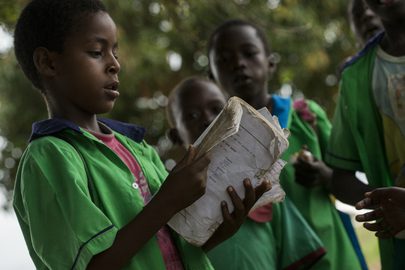
The Republic of South Sudan, more commonly known as South Sudan, has one of the lowest literacy rates in the world. It is a very young nation, having only declared independence from the Republic of Sudan in July 2011. However, recent data shows that only 26.8 percent of South Sudanese people aged 15 or older are literate. Additionally, while 35 percent of men can read and write only 19.2 percent of women possess these important skills. The government has created several initiatives over the past few years to improve literacy rates in South Sudan.

Factors Affecting Literacy

One reason literacy rates in South Sudan are so high is the fact that approximately 2 million, or about 70 percent of children in South Sudan are out of school, mostly young girls. Instead of attending primary school, children often work alongside their families for survival.

Implementing quality literacy programs for children is also costly, and South Sudan has been struggling to fund equal opportunities for all students. For the many who are unable to communicate via writing or consume written media, radio is often a popular alternative for getting the news.

Efforts to Improve Literacy

In recent years, the government has worked to improve literacy rates for both children and adults in South Sudan. For school-aged children, The General Education Strategic Plan, 2017-2022 has been proposed. Also referred to as the Strategic Plan, it has three primary goals: “to improve the quality of general education; to enhance the management capacity of senior staff of the Ministry, State Ministries, the County Education Department and affiliated institutions; and to promote Technical and Vocational Education and Training (TVET) to improve the employability of youth and adults in the next five years.”

According to the Strategic Plan, the government’s alternative education system (AES) has three programs working to improve literacy rates and overall educational quality in South Sudan:

  • The Accelerated Learning Program (ALP) is designed for children ages 13 to 17, but people up to age 25 are allowed to attend.
  • The Community Girls’ School (CGS) is intended for primarily young girls who have not yet reached grade 5; and
  • The Pastoralist Education Program (PEP) is designated for both children and adults in pastoral areas of the country.

As gender disparities are significant, specific efforts have been created that focus on providing education for Sudanese girls. In addition to the Community Girls’ School, funding from an organization called Girls’ Education in South Sudan (GESS) will help more women and girls be able to attend school, thus improving the literacy rate among South Sudanese girls and women.

There are also two programs that have been specifically created for adults who cannot read or write: the Basic Adult Literacy Programme (BALP) and the Functional Adult Literacy Program (FALP). Intensive English courses (IECs) are included in these programs, giving participants the opportunity to improve their skills with the English language.

Moving Forward

Addressing low literacy rates in countries such as South Sudan is crucial to reducing global poverty. Without the ability to read or write, communication skills are weakened and employment opportunities are limited. Therefore, giving people the chance to access to an improved education such as literacy skills lowers the chance of one being in poverty and gets them on the path to an overall higher quality of life.

– A. O’Shea
Photo: United Nations

November 14, 2019
https://borgenproject.org/wp-content/uploads/borgen-project-logo.svg 0 0 Lynsey Alexander https://borgenproject.org/wp-content/uploads/borgen-project-logo.svg Lynsey Alexander2019-11-14 12:09:102024-06-04 01:17:55Improving Literacy Rates in South Sudan
Global Poverty, NGOs, Poverty, Poverty Reduction

3 Nonprofits Helping Syrian Refugees

Nonprofits Helping Syrian Refugees

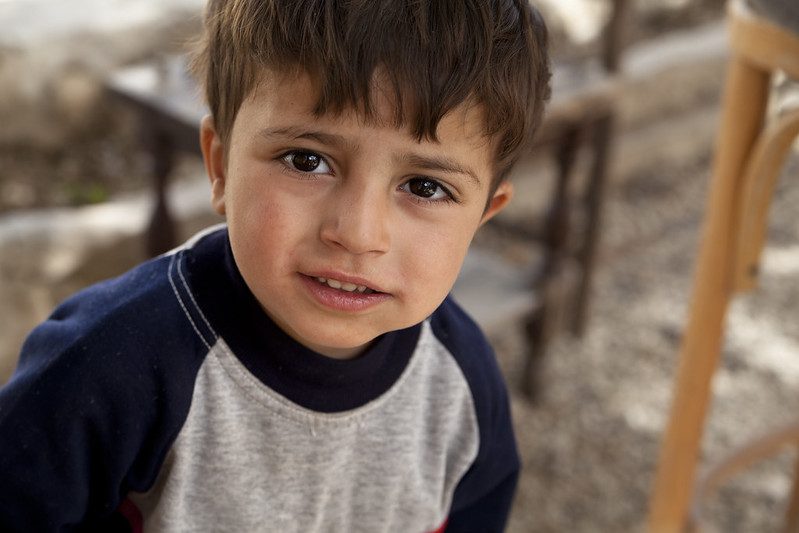
The Syrian civil war has been ongoing since 2011, making the Syrian refugee population the world’s largest group forcibly displaced from their country. At the end of 2018, there were 13 million refugees from Syria, accounting for more than half of the country’s total population. The vast majority of Syrian refugees in Lebanon (70 percent) and Jordan (90 percent) are living below the poverty line. Fortunately, a number of groups are stepping in to deliver humanitarian aid to Syrian refugees. Keep reading to learn more about these three nonprofits helping Syrian refugees.

3 Nonprofits Helping Syrian Refugees

  1. Sunrise USA – Founded in 2011, Sunrise USA is a nonprofit organization focused on providing humanitarian assistance for Syrians in need whether they still live in the country or not. The group is focused on sustainable development in areas including education and health care.
    • Health Care – With help from donations, Sunrise USA built a full-time clinic in the Tayba camp in Syria, as well as a clinic in Istanbul and a polyclinic in Rihanli, Turkey. The organization has also established 22 trauma care facilities in Syria.
    • Education – As of 2018, around 5.8 million children and youth in Syria were in need of education assistance. About 2.1 million of them were out of school completely. Sunrise USA has built four schools and provided books and supplies to students and families around refugee camps. In 2015, Sunrise USA was a lead sponsor in the creation of the Al-Salam School which had 1,200 students.
    • Care for Orphans – The number of Syrian orphans, both in Syria and neighboring countries, has increased to more than 1 million since 2011. Through Sunrise USA’s orphan sponsorship, hundreds of orphans have been provided with food, clothing, education and medicine.
  2. Doctors Without Borders (DWB) – Officially founded in 1971, the organization’s core belief is that “all people have the right to medical care regardless of gender, race, religion, creed, or political affiliation, and that the needs of these people outweigh respect for national boundaries.” Here’s a look at DWB’s efforts to help Syrian refugees:
    • Jordan – In 2017, Jordan closed off the border connecting the country to Syria and in 2018 canceled all subsidized health care for Syrian refugees. Doctors Without Borders has three clinics in Irbid, Jordan that focus on non-communicable diseases, which are the leading causes of death in the region. In 2018, the organization provided 69,000 outpatient consultations, 11,900 individual mental health consultations and 2,690 assisted births.
    • Lebanon – Shatila refugee camp in South Beirut is home to Palestinians, Syrians and Lebanese people living in poor and overcrowded conditions with minimal services. Doctors Without Borders has set up both a primary health care center and a women’s center inside the camp in 2013. The organization also launched a vaccination campaign around the camp, opened a mental health support branch in a clinic in Fneideq, offer family planning and mental health care services in the Burj-al-Barajneh refugee camp, and operate a care program in Ein-al-Hilweh refugee camp for patients with mobility issues.
  3. Concern Worldwide US – Founded in 1968, Concern Worldwide works in the world’s poorest countries to provide emergency response, education, water and sanitation, as well as help communities develop resilience to higher impacting climates. The organization works to help Syrian refugees in a few ways:
    • Lebanon – Concern Worldwide is not only focused on creating “collection centers,”–which are multi-family shelters–but also on improving water, sanitation and hygiene conditions in the highly concentrated refugee areas of the country. The organization has provided assistance for 56,000 refugees and is also helping hundreds of children get access to education.
    • Syria – Since 2014, Concern Worldwide has worked in Syria to tackle waterborne diseases by installing generators and chlorinated water sources and also providing hygiene supplies. The organization also provides basic necessities to Syrians by distributing food baskets and for families with access to markets, food vouchers.

– Jordan Miller
Photo: Flickr

November 14, 2019
https://borgenproject.org/wp-content/uploads/borgen-project-logo.svg 0 0 Lynsey Alexander https://borgenproject.org/wp-content/uploads/borgen-project-logo.svg Lynsey Alexander2019-11-14 10:53:092024-05-27 09:22:473 Nonprofits Helping Syrian Refugees
Global Poverty, Sanitation

The Water Crisis in the Middle East

Water Crisis in the Middle East
Syria, Egypt and Afghanistan are among the bottom 10 countries when talking about access to clean water. Water is a primary necessity for human life. Without food the body can survive for up to three weeks, however, without clean water, the body will perish within three to four days, but not before going into shock and fading in and out of delirium. The water crisis in the Middle East is a serious problem now that ongoing conflicts in the region have only worsened.

Afghanistan

Of the three countries listed above, the water crisis in the Middle East affects Afghanistan the least. Despite that, Afghanistan is in the middle of the worst drought it has seen in the past 10 years. In addition, it cannot effectively distribute resources since 40 years of armed conflict following Soviet intervention in Afghanistan has ruined the country’s infrastructure. As a result, about 260,000 Afghani civilians living in extremely dry areas have had to leave their homes, making them refugees.

The drought has drained natural water sources such as the Kabul River Basin, the primary source of water for the nation’s capital. The established system for distributing water is no longer applicable, so civilians must draw water from unofficial wells. In Afghanistan, a country with over 35 million people, 87 percent of accessible water is polluted. Fortunately, India is providing assistance with the Afghan-India Friendship Dam on the Hari River. With further plans to build another dam on the Kabul River, Afghanistan will have water for irrigation and will not have to live with the threat of flash floods.

Syria

In 2006, a massive drought began that would displace tens of thousands of Syrian farmers. By 2011, there were over a million angry, unemployed former farmers in the country ready to fight in a violent civil war that would go on for years. If one said that the water crisis in the Middle East was the proverbial lit match in the powder keg, it would be inaccurate. One cannot, however, deny that it did fan the flames.

Now that tensions are dying down, Syrian civilians have little infrastructure to help provide them with water. Militant groups that occupy water plants and reservoirs hold monopolies on the water for entire regions. Oftentimes, these groups distribute water selectively to blackmail their enemies. Prior to the civil war that started in 2011, water allocation was already inequitable. President Bashar al-Assad allocated more water to fellow members of his particular sect of Islam. Now that Syria is rebuilding its infrastructure, there exists an opportunity to distribute water equally across the country in order to help prevent humanitarian disasters like this in the future.

Egypt

Even in the time of the pharaohs, Egypt has owed its life to the Nile. The Nile is the primary source of water for a country with rice as its number one agricultural export. Rice requires a great deal of water for cultivation and harvest. One kilo of rice needs about 3,000 liters of water. The water in the Nile now contains dead fish due to heavy metals from industrial pollution. Using heavily polluted water diminishes crop yields leading to a further strain on resources.

Egypt faces more than just a drop in the quality of water. As a result of the Blue Nile dam that Ethiopia built, Egypt is also concerned about the quantity of water. By building a hydroelectric dam on the Nile upstream from Egypt, Ethiopia is developing a power grid to reach 86 million Ethiopians living without electricity. Consequently, this will divert about a quarter of the Nile’s water away from Egypt. The Nile supplies 85 percent of Egypt’s fresh water. Egypt has the most to lose in the event of armed conflict breaking out because of its water scarcity, so it is now pushing for diplomatic and scientific solutions to the problem. Negotiating with Ethiopia to share in the dam’s benefits and investments in desalination technology is helping to alleviate the water crisis.

The water crisis in the Middle East is serious and requires much work to alleviate the problem. Through the building of better infrastructure, however, Egypt, Syria and Afghanistan should be able to improve.

– Nicholas Smith
Photo: Flickr

November 14, 2019
https://borgenproject.org/wp-content/uploads/borgen-project-logo.svg 0 0 Lynsey Alexander https://borgenproject.org/wp-content/uploads/borgen-project-logo.svg Lynsey Alexander2019-11-14 07:30:092024-06-07 05:07:59The Water Crisis in the Middle East
Global Poverty, Human Rights

China’s Human Rights Violations Against the Uyghurs

China's Human Rights Violations
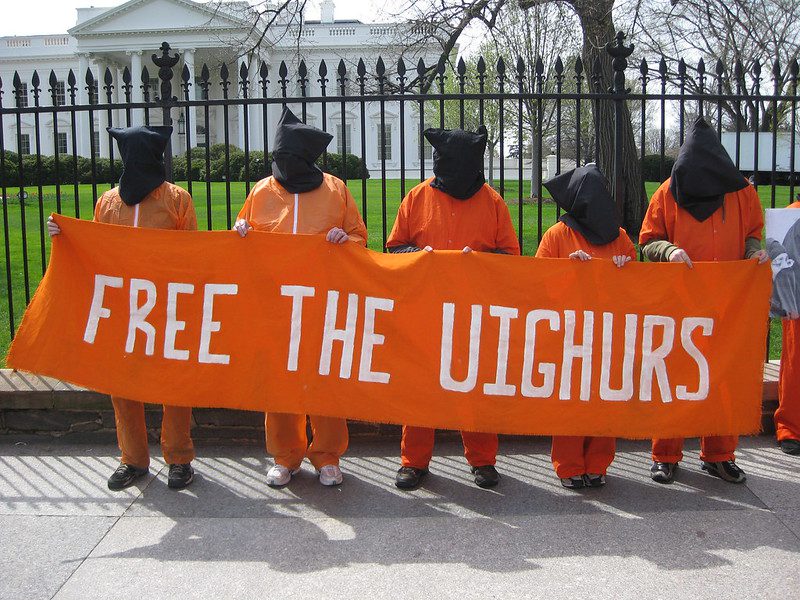
The Chinese government is committing atrocities and human rights violations against the Turkic Muslims in the Xinjiang Uighur Autonomous Region, a northwestern province of China. Chinese authorities detained at least 800,000 and up to 2 million Muslims since 2017; mainly Uyghurs, a predominantly Turkic-speaking ethnic group, along with other ethnic Muslim minorities.

China’s Motives

Riots broke out in Xinjiang in 2009 due to Uyghur mass protests against cultural and economic discrimination and state-incentivized migration of Han Chinese, the dominant ethnic group in China. Since then, the Chinese government worries that Uyghurs hold separatist, religious extremist ideas. Therefore, it justifies its repressive actions as necessary measures in response to threats of terrorism.

Chinese officials launched a Strike Hard Campaign against Violent Extremism in 2014 in Xinjiang, but the repression escalated significantly when Chen Quanguo, the communist party secretary, became the leader of Xinjiang in 2016. Prior to this, Chen Quanguo ruled Tibet from 2011 to 2016, where he implemented a dual strategy to restore and secure national security and social stability. He used aggressive policies to reduce ethnic differences and assimilate Tibetans to Han Chinese, such as re-education programs and intermarriage initiatives. Aside from these ethnic policies, Chen established dense security systems to reinforce this cultural transformation, including militarized surveillance systems. After ruling Tibet, people got to know Chen for restoring stability through the enforcement of the Chinese Communist Party (CCP) rule and for his innovative ethnic policies, which he expanded in Xinjiang, targeting the Uyghur population.

Xinjiang is of particular strategic and economic importance for Beijing as it has the country’s largest natural gas and coal reserves with 40 percent of the national total. Xinjiang is a key area for China’s Belt and Road Initiative, a massive global trade project, as it connects China to the rest of Asia and Europe. Therefore, Beijing may be repressing the Uyghur in Xinjiang for economic reasons to protect its Belt and Road Initiative project in which China invested between $1 to 8 trillion.

China’s Human Rights Violations and Abuses

The autonomous region of Xinjiang changed its legislation to allow local governments to set up re-education camps to intern Muslims, where they must renounce aspects of their religion, learn Mandarin Chinese and praise the CCP, in order to combat extremism. As stated by the Chinese Communist Youth League in March 2017, “the training has only one purpose: to eradicate from the mind thoughts about religious extremism and violent terrorism, and to cure ideological diseases.”

Former detainees reported the use of stress positions, beatings, sleep and food deprivation by authorities, as well as the mistreatment and torture in some mass internment facilities as punishment for resisting or failing to learn the lessons taught.

The 11 million Uyghur living in Xinjiang outside of the camps also endure the tightening repressive policies of Chinese authorities who subject people to pervasive surveillance. Authorities use cutting-edge technology including artificial intelligence, big data and phone spyware. The CCP leader Chen Quanguo installed a grid-management system in Xinjiang, which divides the cities into squares of 500 people. A police station monitors each square that is in charge of regularly checking IDs, fingerprints and searching phones.

Global Response to China’s Human Rights Violations

The E.U. issued a statement in 2018 demanding China to respect the freedom of religion and the rights of minorities, as well as change its policies in Xinjiang. In July 2019, over 20 countries collectively signed a letter to the U.N. High Commissioner for Human Rights, condemning China’s human rights violations against Uyghurs in Xinjiang. The letter urges China to allow U.N. experts access to the camps. However, no Muslim-majority country co-signed the joint statement. Instead, Saudi Arabia alongside 36 other countries signed their own letter in which they praised China’s achievements and argue that “human rights are respected and protected in China in the process of counter-terrorism and deradicalization.”

Most human rights organizations and non-governmental organizations also condemned China’s detention of Uyghurs. This was demonstrated in a joint letter that a coalition of five human rights organizations (including Amnesty International, Human Rights Watch, and more) issued to the U.N. Secretary-General, urging the U.N. to take action.

On October 7, 2019, the U.S. blacklisted 28 Chinese organizations, both government agencies and top surveillance companies. This marked the U.S.’s first concrete action in response to China’s human rights violations against Uyghurs, along with the imposed visa restrictions on the Chinese government and communist party officials.

Conclusion

China still dismisses all allegations of human rights violations and uses its permanent seat on the U.N. Security Council to block human rights issues discussions. Immediate investigations on China’s human rights violations against Uyghurs must transpire and the U.N. should access detention camps. The situation in Xinjiang conveys the level of vulnerability ethnic minorities face, and the urgency for the international community to take concrete action.

– Andrea Duleux
Photo: Flickr

November 14, 2019
https://borgenproject.org/wp-content/uploads/borgen-project-logo.svg 0 0 Kim Thelwell https://borgenproject.org/wp-content/uploads/borgen-project-logo.svg Kim Thelwell2019-11-14 01:30:122020-01-18 13:38:22China’s Human Rights Violations Against the Uyghurs
Page 1184 of 2180«‹11821183118411851186›»

Get Smarter

  • Global Poverty 101
  • Global Poverty… The Good News
  • Global Poverty & U.S. Jobs
  • Global Poverty and National Security
  • Innovative Solutions to Poverty
  • Global Poverty & Aid FAQ’s
Search Search

Take Action

  • Call Congress
  • Email Congress
  • Donate
  • 30 Ways to Help
  • Volunteer Ops
  • Internships
  • Courses & Certificates
  • The Podcast
Borgen Project

“The Borgen Project is an incredible nonprofit organization that is addressing poverty and hunger and working towards ending them.”

-The Huffington Post

Inside The Borgen Project

  • Contact
  • About
  • Financials
  • President
  • Board of Directors
  • Board of Advisors

International Links

  • UK Email Parliament
  • UK Donate
  • Canada Email Parliament

Get Smarter

  • Global Poverty 101
  • Global Poverty… The Good News
  • Global Poverty & U.S. Jobs
  • Global Poverty and National Security
  • Innovative Solutions to Poverty
  • Global Poverty & Aid FAQ’s

Ways to Help

  • Call Congress
  • Email Congress
  • Donate
  • 30 Ways to Help
  • Volunteer Ops
  • Internships
  • Courses & Certificates
  • The Podcast
Scroll to top Scroll to top Scroll to top