• Link to X
  • Link to Facebook
  • Link to Instagram
  • Link to TikTok
  • Link to Youtube
  • About
    • About Us
      • President
      • Board of Directors
      • Board of Advisors
      • Financials
      • Our Methodology
      • Success Tracker
      • Contact
  • Act Now
    • 30 Ways to Help
      • Email Congress
      • Call Congress
      • Volunteer
      • Courses & Certificates
      • Be a Donor
    • Internships
      • In-Office Internships
      • Remote Internships
    • Legislation
      • Politics 101
  • The Blog
  • The Podcast
  • Magazine
  • Donate
  • Click to open the search input field Click to open the search input field Search
  • Menu Menu

Archive for category: Foreign Aid

Foreign aid coverage and information.

Aid, Foreign Aid, Global Poverty

How the US Benefits from Foreign Aid to Guyana

How the U.S. benefits from foreign aid to GuyanaLocated on the northern mainland of South America, Guyana is now considered a middle-income country. That is perhaps why U.S. foreign aid to Guyana has been decreasing over the years. However, Guyana faces many issues such as drug trafficking and other regional crimes that require foreign assistance in order to effectively address them. In fact, it is not just Guyana that benefits from foreign aid. U.S. benefits from foreign aid to Guyana as well, since it helps the U.S. in its fight against diseases such as HIV/AIDS.
One major goal for the U.S. is to effectively address the global HIV/AIDS epidemic, which is why the U.S. President’s Emergency Plan for AIDS Relief (PEPFAR) was established in 2003. Through PEPFAR, Guyana has been able to significantly improve its response to HIV. For instance, PEPFAR helped establish the National Public Health Reference Laboratory (NPHRL) and supported the development of a prevention of mother to child transmission (PMTCT) program.

It also helped the Guyanese national blood safety program to reach international standards, established functioning supply chain management and improved strategic information. As a result of these initiatives, Guyana saw significant improvement in its response to HIV/AIDS and has also become more efficient in working on its own to fight this disease.

Recently, however, there have been drastic reductions in PEPFAR’s operations in Guyana. For instance, PEPFAR no longer provides antiretroviral drugs to Guyana, and the country has assumed responsibility for all cervical cancer and PMTCT activities, blood safety in the country and human resources for the NPHRL. Although this makes it a challenge for the country to continue responding strongly to this epidemic, it also makes Guyana self-sufficient as it gathers domestic funds for HIV/AIDS programs.

However, PEPFAR is still crucial in Guyana because there are many ways the country still needs assistance. For instance, there are still “gaps in core strategic information, laboratory and supply chain systems as well as pervasive stigma and discrimination” in the country. By helping to establish a sustainable national HIV program in Guyana, PEPFAR would achieve its goal. In that way, the U.S. benefits from foreign aid to Guyana.

Additionally, the U.S. benefits from foreign aid to Guyana because the U.S. is committed to combatting drug trafficking, and Guyana is one of the most frequently used transit points for this illegal activity. U.S. assistance through the Caribbean Basin Security Initiative (CBSI) helps Guyana effectively tackle drug trafficking. The CBSI-funded programs in Guyana work to improve law enforcement capabilities, “protect borders and ports, strengthen workforce development, and promote anti-money laundering effectiveness,” efforts that address key concerns shared by both Guyana and the U.S.  Additionally, U.S. assistance also helps promote law enforcement professionalization and effective narcotics investigations, thereby improving the anti-drug trafficking strategy in Guyana.

There are other ways the U.S. benefits from foreign aid to Guyana, as it helps the country effectively respond to issues such human trafficking and other crimes that also affect the U.S. Hopefully, with continued collaborated efforts from both the U.S. and Guyana, the country will be able to effectively address all of these issues.

– Mehruba Chowdhury

Photo: Google

February 15, 2018
https://borgenproject.org/wp-content/uploads/borgen-project-logo.svg 0 0 Borgen Project https://borgenproject.org/wp-content/uploads/borgen-project-logo.svg Borgen Project2018-02-15 07:30:342024-05-29 22:39:20How the US Benefits from Foreign Aid to Guyana
Advocacy, Charity, Development, Foreign Aid, Global Poverty

15 Organizations That Help Improve the World

15 organizations that help the world

With the myriad difficulties that face the world, it is essential to have organizations making the planet a better place. Without such generous assistance, the world would be plagued with unmanageable adversities. The following is a list of 15 organizations that help improve the world with their innovative ideas and generous efforts.

  1. Bill & Melinda Gates Foundation
    The Bill & Melinda Gates Foundation is an organization that works to fight hunger and its consequential effects on a global scale. It works specifically to eradicate infectious diseases and child mortality rates in struggling countries.
  1. Doctors Without Borders
    Doctors Without Borders delivers emergency aid to people in need. These efforts include helping people in situations of natural disasters, epidemics and lack of health care.
  1. Food and Agriculture Organization of the United Nations (FAO)
    The FAO’s prime purpose is to defeat hunger. It works in 130 countries worldwide to help ensure people have access to food and are not going hungry. The organization has been fighting hunger since 1945.
  1. Human Rights Watch
    Human Rights Watch was established in 1978 and is an organization that reports on human rights conditions in countries all over the world. With its findings, it meets with governments and financial corporations to urge for policy changes that assist the betterment of human rights around the world.
  1. Oxfam
    Oxfam is a global organization that helps improve the world through poverty-reduction efforts. It focuses on the conditions that cause poverty and works to fix the effects of such difficulties. Its efforts include disaster response, programs to help people afflicted by poverty and education improvement.
  1. Red Cross
    Founded in 1881, the Red Cross foundation works to help people in urgent need. Assisted greatly by volunteers, the Red Cross mainly provides disaster relief, support to America’s military families, health and safety services, blood donations and international services.
  1. Save the Children
    Save the Children is a nonprofit organization that focuses primarily on helping children in need. This includes emergency response, global health initiatives, HIV and Aids prevention, disaster response and creating educational opportunities. In 2016, Save the Children reached and assisted 157 million children.
  1. The Borgen Project
    The Borgen Project is a nonprofit organization that aims to end poverty by working to make poverty a focus of U.S. foreign policy. The organization is an influential ally for the world’s poor that educates and mobilizes people to communicate with their Congressional leaders to ensure funding for poverty-fighting efforts are not eliminated. In 2017, the organization had volunteers in 754 U.S. cities and is one of the 15 organizations that help improve the world immensely.
  1. The World Bank
    The World Bank works with other organizations to provide extensive financial assistance to developing countries. It was established in 1944 and has more than 10,000 employees and 120 offices worldwide.
  1. United Nations Development Programme (UNDP)
    The UNDP is an organization that aims to eradicate poverty. It implements this goal by developing policies, skills and partnerships to enable people to sustain their progress and improvement. The UNDP is in over 170 countries and territories.
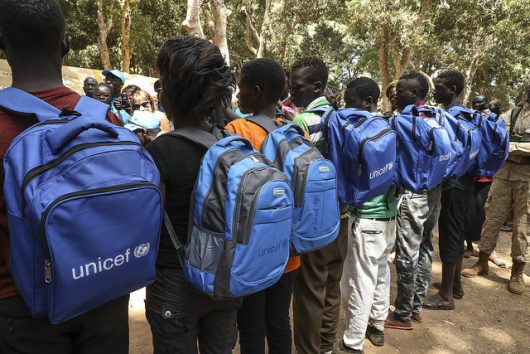
  1. United Nations Children’s Fund (UNICEF)
    UNICEF is an organization that fights for children’s rights to shelter, nutrition, protection and equality. It does so by being children’s advocates and providing humanitarian assistance to children and their families, most often in developing countries.
  1. United States Agency for International Development (USAID)
    USAID is an international agency that provides development assistance to countries in need. It works to advance U.S. national security and “economic prosperity” by promoting self-sufficiency. It uses humanitarian response efforts to bring disaster relief and supplies to those who are struggling.
  1. World Food Programme (WFP)
    WFP’s mission is to fight world hunger and provide people around the world the quality food they need to survive. It does this by working with U.S. policymakers and other foundations to organize financial resources, as well as develop necessary policies to assist the fight against worldwide hunger.
  1. World Health Organization (WHO)
    Of the 15 organizations that help improve the world, WHO is among the largest. The WHO is an organization that works directly with governments and various partners to ensure a healthier future for people all around the world. It fights infectious diseases and works directly with mothers and children to improve and maintain their health.
  1. World Wide Fund for Nature (WWF)
    The WWF is an international nongovernmental organization working to conserve nature and reduce extreme threats. It also aims to increase awareness to prevent further damage to the earth and its inhabitants.

These are only 15 organizations that help improve the world. There are many more that work together with partners to help make the world a better and safer place to live. Their generosity helps people on a daily basis live healthier and happier lives, and it is troublesome to think of where the world would be without such assistance.

– McCall Robison

Photo: Flickr

February 15, 2018
https://borgenproject.org/wp-content/uploads/borgen-project-logo.svg 0 0 Borgen Project https://borgenproject.org/wp-content/uploads/borgen-project-logo.svg Borgen Project2018-02-15 01:30:042024-12-13 17:49:1015 Organizations That Help Improve the World
Aid, Foreign Aid, Global Poverty

Mutual Gains: How the US Benefits From Foreign Aid to Lebanon

U.S. benefits from foreign aid to Lebanon
From the civil war that lasted around 20 years, to the Israeli war in 2006 and the outbreak of the Syrian crisis in March 2011, Lebanon has been in a state of instability and conflict for many years. The nation has struggled to overcome the seemingly endless obstacles that prohibit the country from reform and development. Luckily, though, USAID and foreign aid in general have been a great source of support in assisting its citizens with greater accessibility to clean drinking water, increased access to primary healthcare centers and medical treatment and improving education, poverty and vaccination rates among children.


Is Foreign Aid Detrimental to the U.S.?

Answering how the U.S. benefits from foreign aid to Lebanon has been a subject of debate for many years, particularly among U.S. citizens who believe that their government is continuously providing monetary assistance to developing countries in huge amounts, far more than what is actually needed.


U.S. Perception

Most U.S. citizens estimate that around 25 percent of the federal government’s budget is spent on foreign aid; however, in reality, foreign aid accounts for less than 1 percent of the total budget. Since the perceived amount donated to help third world countries is highly inflated in the public’s eyes, it is expected that approximately 59 percent of Americans want to reduce foreign aid with the hope that the money will instead be invested in their own country.

Yet, what the public neglects is that the funds allocated to underserved nations is not just an act of compassion, but rather the establishment of a mutually beneficial relationship between both parties — the U.S. benefits from foreign aid to Lebanon through improved security, increased stability and economic prosperity. 


What are the U.S. benefits from foreign aid to Lebanon?

By contributing to the country’s development process through the investments in projects and programs aimed at educating people and providing citizens with necessary resources, the U.S. benefits from foreign aid to Lebanon through the establishment of a new trade relationship with the recipient country. This camaraderie will, in turn, increase its margin of profit.

In 2015, Lebanon imported goods from the U.S with a total value of $1.22 billion, as the U.S. ranked the country’s third top importer of goods. Such huge financial transactions have surely benefited both the donor (economic prosperity) and recipient (strong quality of goods).

Moreover, the U.S. donation of $419 million to aid Syrian refugees in Lebanon will not only help the Lebanese population in overcoming the economic and social burden imposed on their nation, but it will also reduce the influx of refugees to the U.S which can create an even greater burden if left uncontrolled.


Democratic Governance and Conflict Resolution

USAID has succeeded in initiating the start of democratic and resilient Lebanese societies by coordinating with local partners to enhance transparency and accountability of governments, as well as supporting elevated participation rates by the civil society, youth and women. By favoring government-led reforms that intend to foster more pluralistic and fair political leadership, U.S foreign aid to Lebanon has offered the country a chance to exercise proper peaceful democratic relationships.


Integration and Expansion

In response to the Syrian war crisis and its impact on Lebanon, USAID has also re-oriented existing projects in the country to integrate the refugees within the established system. Additional foreign aid to Lebanon has been provided to help host the refugees by building more schools, expanding health facilities and improving access to water.

Through foreign aid, Lebanon and the U.S. can maintain a healthy and mutually beneficial relationship that works to improve citizens’ lives from both nations.

– Lea Sacca

Photo: Flickr

February 13, 2018
https://borgenproject.org/wp-content/uploads/borgen-project-logo.svg 0 0 Borgen Project https://borgenproject.org/wp-content/uploads/borgen-project-logo.svg Borgen Project2018-02-13 07:30:302019-12-09 06:08:26Mutual Gains: How the US Benefits From Foreign Aid to Lebanon
Foreign Aid

The Ways the US Benefits from Foreign Aid to Indonesia

U.S. Benefits from Foreign Aid to Indonesia
The U.S. has allocated a total of $27.8 billion in foreign aid for the fiscal year of 2018 to benefit numerous countries around the world. One such recipient of that foreign aid is Indonesia, a country that began receiving U.S.-based funds after it gained its independence from Netherland in 1949.

Agencies like the U.S. Agency for International Development (USAID), Millennium Challenge Corporation (MCC) and Peace Corps have assisted the country for over 60 years in various development challenges. Although the country attributes much of considerable progress to foreign aid, the U.S. benefits from foreign aid to Indonesia in numerous notable ways as well.


U.S. Benefits from Military Cooperation

The U.S. administration requested almost $41.7 million as foreign aid for Indonesia in fiscal year 2008. The goal was a joint fight of the two countries against terrorism, weapon expansion and other trans-national crimes. These aims also included strategic monitoring of waterways surrounding Indonesia and cooperation with the United States armed military forces.

From 2011 to 2016, the U.S. and Indonesia jointly performed 998 defense and security activities. High ranking military officials of the two countries exchanged their views on regional and global security issues through the Indonesia-United States Security Dialog (IUSSD) meetings. In 2015 at one of these meetings, the officials stated their focus on the following activities:

  • Cooperation on Maritime and Peacekeeping Operations
  • Humanitarian Assistance and Disaster Response
  • Defense Procurement and Joint Research and Development
  • Countering Trans-National Threats and improving military professionalization


U.S. Benefits from Maritime Cooperation

In June 2010, the two countries signed a Memorandum of Understanding (MOU) on Maritime Cooperation which led to a joint National Oceanic and Atmospheric Administration (NOAA) expedition. This voyage helped explore geological, biological and archaeological features of the unexplored ocean and involved scientists and engineers from both countries.

The MOU also extends cooperation in conservation and management of fishery, the Coral Triangle Initiative (CTI) and maritime safety and security, including combating and eliminating illegal, unregulated and unreported (IUU) fishing.


U.S. Benefits from Economic Development

In 2008, the U.S. invested almost $27 million in the economic development of Indonesia. This funding helped to prevent corruption and increase transparency in finance, investment and the private sector of Indonesia facilitating trade between the two countries.

As a result of these aims, the U.S. Foreign Direct Investment (FDI) stock reached almost $16 billion in Indonesia in 2009, an increase that substantially aided the growth of the U.S. investment sector. Then, from 2010 to 2011, the trade between the two countries amounted to almost $23.4 million with a 17 percent increase of exports of U.S. goods to Indonesia.

The U.S. is also a major supplier of aircraft transport, rail transport and energy sector equipment to Indonesia. In 2011, the supply of U.S. agricultural products was remarkable and earned more than $3 billion for the country.  Different U.S. firms also invested a combined $450 million on plants.


Other Benefits

Indonesia is one of the world’s top greenhouse gas emitters due to its vast tropical forest. Thankfully, though, with the help of Millennium Challenge Corporation (MCC) and USAID, the country aims to reduce CO2  emissions and generate 19 percent of the energy from renewable sources by 2019; accomplishing these goals would help fulfill the admirable targets of the Sustainable Development Goals (SDGs).

Since 2004, the U.S. has also assisted with Indonesia’s education programs. This aid helped to develop education exchange programs between universities of two countries and in January 2017, it was reported that almost 500 U.S. citizens studied in Indonesia with scholarships helping waive tuition fees and living expenses.

The U.S. benefits from foreign aid to Indonesia is manifold in fighting terrorism and fostering marine exploration, fishing conservation, exchange education programs and job creation. These advantageous results help prove that foreign aid does not have to be charity but rather a strategic investment benefitting both recipient and donor.

– Mahua Mitra

Photo: Flickr

February 13, 2018
https://borgenproject.org/wp-content/uploads/borgen-project-logo.svg 0 0 Borgen Project https://borgenproject.org/wp-content/uploads/borgen-project-logo.svg Borgen Project2018-02-13 01:30:412019-12-09 06:10:10The Ways the US Benefits from Foreign Aid to Indonesia
Aid, Foreign Aid, Foreign Policy, Foreign Relations, Global Poverty

US Benefits from Foreign Aid to Colombia

U.S. benefits from foreign aid to ColombiaForeign aid has always been a source of controversy in U.S. politics. Despite some negative feedback, the aid given to other countries has been beneficial to the U.S. For example, there are multiple ways that the U.S. benefits from foreign aid to Colombia.

For more than 50 years, Colombia was ravaged by war and struggled to reach an agreement of peace that suited both warring parties. This caused the country to be caught in ongoing and seemingly never-ending turmoil. The war impacted millions of citizens in the country and took the lives of more than 220,000 people.

Plan Colombia

In 2016, the U.S. helped Colombia reach a peace agreement with the country’s largest guerrilla group, the Revolutionary Armed Forces of Colombia (FARC). The peace treaty was a culmination of years of hard work for both Colombia and the U.S., who has been working with Colombia to strengthen its military since 2000. The peace agreement has led to nearly 6,900 members of FARC putting down their guns and relocating to the demobilization zones put in place by the U.N. for the former soldiers in the war.

The peace agreement was known as “Plan Colombia,” and it resulted in many U.S. benefits from foreign aid to Colombia. The plan increased U.S. military and diplomatic support from the citizens of the country. 

Colombian Agency for Reintegration

The U.S. has helped Colombia garner peace, increasing military support in the U.S. in the process. The end of the war has prompted the Colombian government, with the help of the U.S., to start an Agency for Reintegration (ACR) in the country. The program is for the millions of people displaced by the war, as well as the soldiers that fought.

The ACR’s efforts include providing healthcare, employment opportunities, education and vocational training for the former soldiers as they transition back into society. Counting the soldiers and their families, almost 30,000 Colombians are in need of assistance and are receiving aid from the ACR.

Giving aid to foreign countries can reflect positively on the U.S. and can help other countries in need. With support from the U.S., Colombia has ended its civil war and has begun to reintegrate members of the war into society. In response to the aid given to Colombia, the U.S. benefits from raised support for the military and increased diplomatic support.

– Simone Williams
Photo: Flickr

February 11, 2018
https://borgenproject.org/wp-content/uploads/borgen-project-logo.svg 0 0 Borgen Project https://borgenproject.org/wp-content/uploads/borgen-project-logo.svg Borgen Project2018-02-11 13:30:062024-12-13 17:58:36US Benefits from Foreign Aid to Colombia
Aid, Foreign Aid, Foreign Policy, Global Poverty

How the U.S. Benefits From Foreign Aid to Jordan

U.S. benefits from foreign aid to JordanJordan is a Middle Eastern region tucked in between Saudi Arabia, Iraq, Syria, Israel and Palestine. The U.S. benefits from foreign aid to Jordan in many different ways.

  1. Foreign aid boosts American exports.
    USAID provides assistance for medium to small-scale enterprises, employing up to 75 percent of Jordan’s workforce. As a result of funding business development since 2006, tens of thousands of jobs have been created, yielding $1 billion in new investment. Since then, exports from Jordan to the U.S. have increased by almost $50 million.
  1. Trade with Jordan supports jobs in the U.S.
    The U.S. benefits from foreign aid to Jordan in a multitude of ways, but it also benefits from trade. Jordan currently ranks sixty-seventh among the largest U.S. trading partners. The U.S. and Jordan entered a Free Trade Agreement in 2001, eventually eliminating business tariffs for bilateral trade in goods and services, a huge benefit for U.S. companies. According to the latest data, U.S. exports of goods and services to Jordan supported an estimated 11,000 American jobs in the year 2015.
  1. Jordan is a peace broker in the Middle East.
    Nestled in the heart of the Arab Spring, Jordan is a voice for moderation, peace and reform in the Middle East, a region saturated with turmoil. Jordan’s central geographic position creates pressure on the Jordanian government for economic and democratic reform. The U.S. benefits from foreign aid to Jordan by strengthening the Middle Eastern nation’s political and economic processes, which in turn counters terrorist groups such as ISIL and promotes the Middle East peace process.
  1. Jordan assists with the refugee crisis.
    Jordan is a haven for many Syrian and Iraqi refugees. U.S. aid supports a bilateral relationship by helping Jordan temporarily absorb over 635,000 Syrian refugees and 52,000 Iraqi refugees. The influx of refugees is a challenge for the Jordanian government, but with a strong agenda for political and economic reform, and with the help of U.S. aid, Jordan serves as a partner with the U.S. in addressing the Syrian refugee conflict.
  1. Foreign Aid increases American influence and interests.
    The U.S. benefits from foreign aid to Jordan because it helps boost international leadership. Foreign aid puts America on an influential level in international politics. When U.S. foreign aid is promoting a region, it boosts American interests. The Middle East faces a complex regional conflict, which affects American soil with terrorism and refugee crises. By contributing to humanitarian aid and development, American interests hold more power.

Assistance to the Middle East and North Africa has been a highly debated topic in the United States, particularly in the recent past with President Trump’s administration’s proposed 2018 budget cut targeting international aid. In truth, there are many ways the U.S. benefits from foreign aid to Jordan greatly.

– Alex Galante

Photo: Wikimedia Commons

February 10, 2018
https://borgenproject.org/wp-content/uploads/borgen-project-logo.svg 0 0 Borgen Project https://borgenproject.org/wp-content/uploads/borgen-project-logo.svg Borgen Project2018-02-10 07:30:362024-06-05 23:55:38How the U.S. Benefits From Foreign Aid to Jordan
Foreign Aid, Global Poverty, Health

Major Accomplishments of Doctors Without Borders

Accomplishments of Doctors Without Borders
As poverty is addressed around the world, there is a need for people in all kinds of specialties but especially the medical field. 
Médecins Sans Frontières (MSF), also known as Doctors Without Borders, is an international medical humanitarian organization helping people from over 60 countries threatened by violence, conflict, neglect, natural disasters, epidemics, health emergencies and exclusion from healthcare.

They address areas where the need is greatest, unbiasedly delivering emergency medical aid. There have been many accomplishments of Doctors Without Borders, but here are three of their most recent projects:


1. Hospital in Tasnimarkhola 

Doctors Without Borders constructed a new hospital in Tasnimarkhola camp, Bangladesh in three weeks. The hospital has an emergency room, an intensive care unit, a pharmacy and sterilization unit. In its first month of operation, MSF staff admitted 220 patients with more than half needing treatment for measles.


2. Medical Assistance to Refugees

MSF provided medical assistance to refugees and migrants in the central Mediterranean. At sea, the search and rescue vessel Aquarius — run by MSF in cooperation with humanitarian organization SOS MEDITERRANEE — rescued 3,645 people and brought those rescued to ports of safety in Italy.

Doctors Without Borders also provided psychological first-aid after tragic rescues while also running several mental health and healthcare projects in Sicily. In Libya, the MSF teams provided medical assistance to refugees and migrants that were arbitrarily held in detention centers nominally under the control of the Ministry of Interior.


3. Treatment of War-Wounded People in Taiz 

Doctors Without Borders has a team treating war-wounded people in Taiz. Currently, Taiz is one of the most intense conflict zones in the country with extremely high humanitarian needs. Doctors Without Borders are one of the few medical organizations in Taiz who remain committed to working in Yemen.

These three specific accomplishments of Doctors Without Borders are some of many; the staff continuously works hard, laborious hours to save the lives of those affected by poverty.

War, disease and lack of resources are major contributing factors of poverty, and Doctors Without Borders have been able to impact these areas beyond its immediate activities, reaching populations or developing the use of practices in ways that have far-reaching and lasting consequences (see MSF-USA’s 2012 Annual Report). 

The accomplishments of Doctors Without Borders are so powerful because so many people are committed to addressing the great needs of poverty and bringing hope to those around the world.

– Julia Lee

Photo: Flickr

February 10, 2018
https://borgenproject.org/wp-content/uploads/borgen-project-logo.svg 0 0 Borgen Project https://borgenproject.org/wp-content/uploads/borgen-project-logo.svg Borgen Project2018-02-10 01:30:232024-05-29 22:39:14Major Accomplishments of Doctors Without Borders
Aid, Foreign Aid, Foreign Policy, Global Poverty

How the US Benefits From Foreign Aid to Bangladesh

U.S. benefits from foreign aid to Bangladesh
Bangladesh has occurred as a main topic in the news lately because of the nation’s struggle to address the Rohingya crisis. Located in South Asia, Bangladesh is one of the poorest countries in the world; additionally, it is also one of the most densely populated nations with approximately 164.7 million people.

Bangladesh ranks one of the most vulnerable and least prepared countries to natural disasters, and as a result, the country heavily relies on foreign aid to fight chronic poverty that results from natural disasters. The aid Bangladesh receives usually goes towards food, commodities and development projects, thus benefitting significantly from foreign aid. However, there are numerous ways that the U.S. also benefits from foreign aid to Bangladesh.


Improved Projects and Institutions

The U.S. benefits from foreign aid to Bangladesh in a large part due to the funds that go towards projects and institutions that address gender-based violence, illiteracy, gender inequality, human trafficking and poverty within Bangladesh — all of which are issues the U.S. strives to combat on a global scale. Foreign assistance to Bangladesh also promotes democratic institutions and practices, which is crucial in the U.S. fight against terrorism.


Reduction of Terrorism

Studies have shown that lower levels of political rights and freedom are linked with higher levels of terrorism. The recent terror attack in the Dhaka city in Bangladesh proves that the country requires closer attention given towards this area. Foreign aid to Bangladesh — through agencies such as USAID — goes towards public institutions that “reduce corruption, increase transparency of government and increase accountability.”

For instance, in 2015, the USAID trained “nearly 500 local government institutions to improve their ability to provide basic services and created citizen forums” to increase citizen input on local government activities.

USAID also works to increase access to the formal justice system and educates citizens about available legal aid services. Overall, USAID focuses on improving Bangladeshi citizens’ ability to advocate for their rights.


Gains in Education

Another way the U.S. benefits from foreign aid to Bangladesh is that the aid helps to increase literacy rates in Bangladesh, which is crucial for a healthy society and a safer world. Education greatly impacts our sense of right and wrong, and in that way, serves to dictate many citizens’ actions.

In Bangladesh, almost 40 percent of all children who enroll in first grade “fail to complete primary school, and 2 percent of children achieve all prescribed competencies by the completion of fifth grade.”


Economic Growth

Additionally, foreign assistance invested in education also helps increase individual income and boosts a country’s economic growth. Nearly one in three people in Bangladesh live in poverty, and Bangladesh’s economy, in general, is a matter of U.S. interest because it could also benefit the U.S. economy. For instance, as countries like Bangladesh become more self-sufficient and better developed, countries also become potential markets for U.S. companies, thereby creating jobs here at home.

In fact, according to the United States Trade Representative, “U.S. goods exports to Bangladesh in 2016 were $895 million, down 5.0 percent ($47 million) from 2015 but up 169 percent from 2006.”


USAID

USAID works closely with the Bangladeshi government to improve literacy rates in the country. For instance, USAID provides extra-curricular activities to increase learning skills, and in 2015, improved reading skills of “more than 295,000 young boys and girls in primary schools.” It also trained more than “2400 teachers on how to assess students’ reading skills.”

The U.S. benefits from foreign aid to Bangladesh because the aid improves national security, healthcare, global access to education, gender equality and fights terrorism and crimes such as human trafficking. As one can clearly see, it is most definitely in the United States’ best interest to continue providing aid to Bangladesh.

– Mehruba Chowdhury

Photo: Flickr

February 10, 2018
https://borgenproject.org/wp-content/uploads/borgen-project-logo.svg 0 0 Borgen Project https://borgenproject.org/wp-content/uploads/borgen-project-logo.svg Borgen Project2018-02-10 01:30:082024-05-29 22:39:15How the US Benefits From Foreign Aid to Bangladesh
Aid, Foreign Aid, Foreign Policy, Global Poverty

US Benefits From Foreign Aid to the Democratic Republic of the Congo

U.S. benefits from foreign aid to the Democratic Republic of the Congo
Many may ask how the U.S. benefits from foreign aid to the Democratic Republic of the Congo, and fortunately, the list of reasons is a lengthy one. Despite its wealth in natural resources, and the resulting potential for prosperity, the Democratic Republic of the Congo remains one of the poorest and least stable regions in Africa. Political and economic instability, in turn, has strained the country’s already weakened institutions, leaving citizens of the Congo to suffer under circumstances that cry out for foreign assistance.

Around nine in 10 citizens still lack basic necessities, with a USAID report showing that over 7.5 million members of the Congo require humanitarian aid. Clearly, the need for assistance to the Congo is strong; yet, unbeknownst to many Americans, there are also reasons why the U.S. benefits from foreign aid to the Democratic Republic of the Congo.


Foreign Aid Reduces Insecurity in the Congo and Increases American National Security

One way in which the U.S. benefits from foreign aid to the Democratic Republic of the Congo is in reduced instability in the nation and the resulting threat it poses to United States interests abroad. General James Jones and Admiral Mike Mullen make this point in an op-ed for Politico, in which they discuss how instability opens nations to terrorist exploitation.

“A host of international terrorist groups,” they write, “Al Qaeda, Al Shabaab, Boko Haram and ISIS, among others — have taken root in highly fragile regions and countries with shared characteristics, such as corruption and poor governance, weak institutions, high poverty and inequality, widespread indignity and low quality of life for ordinary citizens.”

If the United States increased aid to the Congo to reduce instability, it would strengthen the nation and leave it less vulnerable to terrorist attack and the dark possibilities of terrorists taking root in the country and utilizing its abundance of natural resources.


Foreign Aid Spurs Economic Growth in the Congo and Increases Trade with the United States

The United States ratified a bilateral investment treaty with the Congo in 1984, and trade between the countries has continued throughout the new millennium. The United States mainly receives imports in petroleum and exports everything from machinery to poultry, medical devices and American-made automobiles.

Increasing foreign aid to the Congo would, in turn, create a population with more disposable income and greater buying power, expanding the market for imports from the United States, strengthening America’s agricultural, auto, and medical industries and enhancing the prosperity of millions of blue-collar workers. This is an example of how U.S. benefits from foreign aid to the Democratic Republic of the Congo goes beyond simply being an act of charity.


Foreign Aid Improves the Reputation of the United States

Another reason the U.S. benefits from foreign aid to the Democratic Republic of the Congo is because currently, the U.S. has a significant image problem around the world, one that has far-reaching implications for its economic development and military programs. Perceptions of the U.S. among developed and developing nations has steadily declined for over a decade, with only Russia and Israel expressing increasing approval of the United States in the past year.

Foreign aid to developing countries not only helps the image of the United States among the Congolese but also throughout the world. This is beneficial to the U.S. since it can mean greater support from other countries on a broad range of issues, including trade, national security, and other strategic priorities.

Foreign aid might even lead to greater willingness on the part of other countries to aid the United States in times of national crisis, such as during the aftermath of Hurricane Katrina, when 95 nations from around the world offered foreign aid themselves to the United States.

– Shane Summers

Photo: Flickr

February 9, 2018
https://borgenproject.org/wp-content/uploads/borgen-project-logo.svg 0 0 Borgen Project https://borgenproject.org/wp-content/uploads/borgen-project-logo.svg Borgen Project2018-02-09 01:30:092019-12-06 07:31:31US Benefits From Foreign Aid to the Democratic Republic of the Congo
Foreign Aid, Global Poverty

Understanding the Challenges of Measuring Poverty in Cyprus

poverty in Cyprus
Cyprus is a Mediterranean nation with about a quarter of its population living in poverty, but it’s difficult to understand the full scope of the issue because the government does not consider poverty in Cyprus to be a major issue worthy of recording.

To make matters more complex, Cyprus is a nation divided between the north and south. The north is a self-declared Turkish Republic, and the south is known simply as the Republic of Cyprus. This division makes keeping track of those in need on the island more difficult.


A Brief History

Cyprus was classified as a low-income country by the U.N. until 1988, and received $331.6 million in aid from the Food and Agriculture Organization (FAO) of the U.N. from 1973 to 1988. Cyprus has since become a popular vacation spot and rebounded from its tumultuous past; however, the nation has not shown its citizens as much attention as it has its economy. Of the 1.17 million people living in this popular tourist destination in 2016, 230,000 individuals were at risk of poverty.


Tracking Poverty

One reason it’s hard to track poverty in Cyprus is due to the large Greek population in the south. They have strong familial relations, and if one family member suffers from poverty, there is usually someone in the family willing to take them in. Due to this, most at-risk individuals in Cyprus are immigrants, single mothers and retired elderly with no family.

Gathering statistics on poverty in the North is even more difficult, since the country is only recognized by one other U.N. nation (Turkey). Because of this, statistics aren’t regularly collected, and the only ones that are relate to GDP.


International Aid

In June 2012, Cyprus became the fifth euro-area member to request international aid. At the time of President Nicos Anastasiades’ first election, Cyprus had been shut out of debt markets for two years, with lenders losing 4.5 billion euros in 2012’s restructuring of Greek sovereign debt.

Over 100,000 people in Cyprus are unemployed, and shopkeepers and small businesses struggle to make ends meet. The nongovernmental organization, Volunteer Groups, reported that there are still over 12,000 additional families in desperate need of basic provisions.


Supporting the Community

Food lines and soup kitchens are a part of daily life for at least 40,000 Cypriot families. The Sophia Foundation and other charities are busy feeding school children and citizens in destitution. Up for election again in 2017, Nicos Anastasiades ran against opposition party leader Andros Kypriano — Kypriano said that the president is never called out on the issues of poverty in Cyprus.

“Mr. Anastasiades is not asked to explain why, whereas he and his administration are portraying Cyprus as something akin to Switzerland, about one-third of the population is on the poverty threshold. For the last five years this government has turned its back on low-income pensioners, disabled persons and sick people.”

Hopefully with more time and development, Cyprus will not only be able to accurately and comprehensively document its impoverished population, but it will also be able to make strides in poverty eradication.

– Sam Bramlett

Photo: Pixabay

February 8, 2018
https://borgenproject.org/wp-content/uploads/borgen-project-logo.svg 0 0 Borgen Project https://borgenproject.org/wp-content/uploads/borgen-project-logo.svg Borgen Project2018-02-08 01:30:232024-05-29 22:39:11Understanding the Challenges of Measuring Poverty in Cyprus
Page 37 of 61«‹3536373839›»

Get Smarter

  • Global Poverty 101
  • Global Poverty… The Good News
  • Global Poverty & U.S. Jobs
  • Global Poverty and National Security
  • Innovative Solutions to Poverty
  • Global Poverty & Aid FAQ’s
Search Search

Take Action

  • Call Congress
  • Email Congress
  • Donate
  • 30 Ways to Help
  • Volunteer Ops
  • Internships
  • Courses & Certificates
  • The Podcast
Borgen Project

“The Borgen Project is an incredible nonprofit organization that is addressing poverty and hunger and working towards ending them.”

-The Huffington Post

Inside The Borgen Project

  • Contact
  • About
  • Financials
  • President
  • Board of Directors
  • Board of Advisors

International Links

  • UK Email Parliament
  • UK Donate
  • Canada Email Parliament

Get Smarter

  • Global Poverty 101
  • Global Poverty… The Good News
  • Global Poverty & U.S. Jobs
  • Global Poverty and National Security
  • Innovative Solutions to Poverty
  • Global Poverty & Aid FAQ’s

Ways to Help

  • Call Congress
  • Email Congress
  • Donate
  • 30 Ways to Help
  • Volunteer Ops
  • Internships
  • Courses & Certificates
  • The Podcast
Scroll to top Scroll to top Scroll to top