• Link to X
  • Link to Facebook
  • Link to Instagram
  • Link to TikTok
  • Link to Youtube
  • About
    • About Us
      • President
      • Board of Directors
      • Board of Advisors
      • Financials
      • Our Methodology
      • Success Tracker
      • Contact
  • Act Now
    • 30 Ways to Help
      • Email Congress
      • Call Congress
      • Volunteer
      • Courses & Certificates
      • Be a Donor
    • Internships
      • In-Office Internships
      • Remote Internships
    • Legislation
      • Politics 101
  • The Blog
  • The Podcast
  • Magazine
  • Donate
  • Click to open the search input field Click to open the search input field Search
  • Menu Menu

Archive for category: Foreign Aid

Foreign aid coverage and information.

Foreign Aid

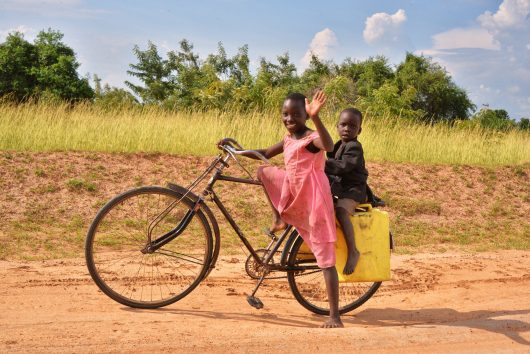
Success of the Straight Talk Foundation and Bursary Program in Uganda

Success of The Straight Talk Foundation and Irish Aid Bursary Program in UgandaDespite being a much smaller country than the United States, Ireland has contributed much of its resources to help end global poverty through funding for a variety of foreign aid, humanitarian and development assistance projects.
Irish Aid

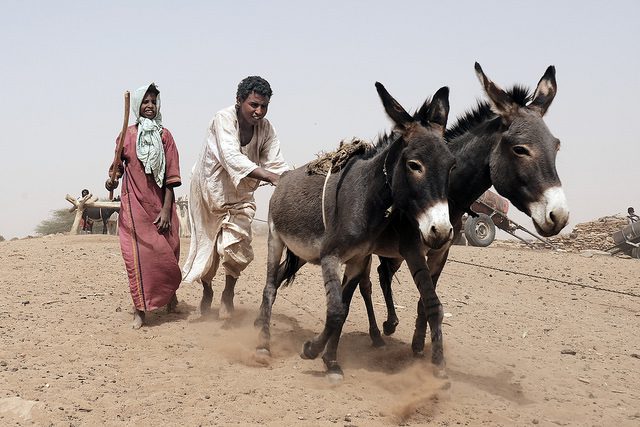
Irish Aid is the country’s official program that fights against poverty and hunger around the world, and which makes up a key part of Ireland’s foreign policy. According to Ireland’s Department of Foreign Affairs and Trade, the program helps poorer countries, particularly in sub-Saharan Africa, pursue development while also providing humanitarian assistance.

In 2015, €647.51 million was spent on Irish Aid, which comprised 0.36 percent of Ireland’s gross national product. Irish Aid uses this money for programs related to agriculture, nutrition development, health, HIV education and emergency assistance in times of crisis.

The Straight Talk Foundation

One country that Irish Aid has worked closely with is Uganda, and one of its partners is the Straight Talk Foundation, which began in 1993 as a newspaper funded by UNICEF. Initially, it targeted Ugandans between the ages of 10 and 24 and focused on reproductive health and HIV education. As it continued to develop, the foundation eventually expanded the topics it covered and started to work with adults in the community rather than just the youth, because of the important role adults, teachers and parents have in the lives of children.

Today, the Straight Talk Foundation works with both adults and youth and provides knowledge and support on topics such as HIV, general life skills, the environment, education, livelihoods and disability needs. The foundation’s mission is to provide reproductive health education to youth, as well as support their general well-being and development, through communication strategies based on evidence, advocacy and various services aimed at a young audience.

Irish Aid Bursary Program in Uganda

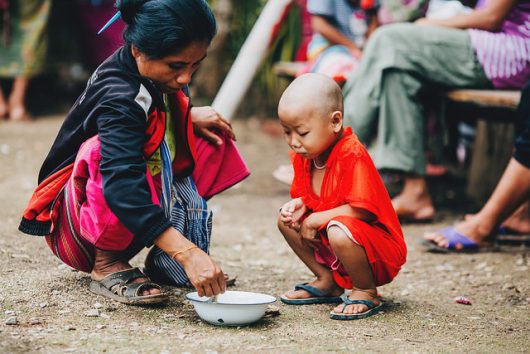
In 2016, the Irish government updated and relaunched the Irish Aid Bursary Program in Uganda as part of its new strategy for foreign aid to the country. The program has been supported by Ireland for 13 years and was designed to help Ugandan youth located primarily in the Karamoja region of Uganda pursue post-primary level education.

A bursary program is similar to a scholarship in that it is money given by an institution or organization to people specifically so they can attend a school.

Also in 2016, the Straight Talk Foundation took control of the bursary program in Uganda. The program provides 200 scholarships for disadvantaged students in the Karamoja region of the country who seek further education after primary school.

The Irish Embassy to Uganda’s website states that since 2005, 1,750 students have benefited from the bursary program, over half of which are young girls. The program covers the cost of tuition, necessary school supplies, transportation to and from school and HIV education.

Speaking to students at the event dedicated to the relaunch of the bursary program in Uganda, Ireland’s ambassador to the country stated that, “’It is our intention that this Irish government-funded bursary scheme will continue to provide educational opportunities to you and many in your communities, empowering you to achieve your dreams.”

As Ireland continues to fund its bursary program in Uganda and provide other forms of foreign assistance, more young Ugandans will gain access to education, and as a result, the opportunity for better livelihoods and futures.

– Jennifer Jones

Photo: Flickr

March 7, 2018
https://borgenproject.org/wp-content/uploads/borgen-project-logo.svg 0 0 Borgen Project https://borgenproject.org/wp-content/uploads/borgen-project-logo.svg Borgen Project2018-03-07 01:30:372024-06-07 05:07:52Success of the Straight Talk Foundation and Bursary Program in Uganda
Aid, Foreign Aid, Global Poverty

How the US Benefits From Foreign Aid to Thailand

How the US Benefits From Foreign Aid to Thailand
The U.S. is Thailand’s third-largest bilateral trading partner, only behind Japan and China. In 2017, the United States imported $26.5 billion goods from Thailand, which was 11.2 percent of total Thailand exports.

The U.S. and Thailand have been trading partners since 1833, when the two nations signed a Treaty of Amity and Commerce and formed diplomatic relations. Recently, these two countries have discussed ways to expand trade and address outstanding issues. The stock of U.S. foreign direct investment (FDI) in Thailand reached $7.4 billion in 2003, which pushed the U.S. to become the largest foreign investor in Thailand that year.

U.S. Benefits from Foreign Aid to Thailand: Trade

The U.S. benefits from foreign aid to Thailand comes mainly in the form of trade, as the Eastern nation holds abundant natural resources. The major Thai exports to the United States are textiles, tin, integrated circuits, rubber, precious stones and sugar.

In 2004, the United States and Thailand made Free Trade Agreement (FTA) negotiations. This agreement eliminates issues related to tariff barrier and facilitates U.S. import and export, especially agricultural goods.

In addition, FTA protects U.S. investment as it can guarantee U.S. preferential status of investments under the U.S.-Thailand Treaty of Amity and Economic Relations (AER).

There were six negotiating rounds about the FTA from 2004 to 2006. These negotiations adjusted the FTA to maximize profits of both countries and strengthen the competition for U.S. import-competing industries such as textiles, apparel and light trucks. As a result of this effort, the pact solves numerous aspects of the issue of job losses prevalent in the U.S.

Fiscal Funding

In 2016, the U.S. ranked the top in all foreign aid with $30,765 million distributed by bilateral aid and international organizations, such as via organizations like the U.N. and the World Bank.

The U.S. planned to give Thailand $5.63 million; in the end, the nation invested around $12 million. This number increased to $7.17 million in 2017, and mainly focused on peace, security, education and social services.

USAID

The most vital foreign assistance of the U.S. in Thailand is the United Statement Agency for International Development (USAID), an organization that began in 1950. USAID trained Thais in various aspects of life such as agricultural productivity, health and family planning, science, technology, infrastructure development, human rights and governance, health and the environment.

Together, all of the USAID agencies spent $7 million in 2017 to further motivate Thailand’s development, and U.S. foreign aid and many U.S. companies brought Thailand from needing help to becoming self-sufficient, and an upper middle-income country.

“U.S. investments abroad help American businesses: by connecting them directly with new customers and suppliers,” Bill Gates wrote in his post on July 27, 2017. “America’s chief aid agency, USAID, uses its expertise to encourage private companies to collaborate on projects.”

A Prosperous Partnership

While Thailand gained numerous benefits from the FTA, the U.S. benefits from foreign aid to Thailand, too. Thailand’s average tariff on agricultural imports is around 39.9 percent, and the FTA largely trimmed U.S. expenses on tariffs in trading with Thailand, so the U.S. can access and acquire a substantial amount of much-needed Thai goods.

In April 2017, American and Thai leaders met under the U.S.-Thailand Trade and Investment Framework Agreement (TIFA) and, based on previous outstanding trade alliance outcomes, reaffirmed to expand trade and strengthen investment ties.

– Judy Lu

Photo: Flickr

March 6, 2018
https://borgenproject.org/wp-content/uploads/borgen-project-logo.svg 0 0 Borgen Project https://borgenproject.org/wp-content/uploads/borgen-project-logo.svg Borgen Project2018-03-06 01:30:502019-11-24 11:51:44How the US Benefits From Foreign Aid to Thailand
Aid, Foreign Aid, Global Poverty

How the US Benefits from Foreign Aid to Sudan

How the U.S. Benefits from Foreign Aid to SudanSudan, a country in North Africa, is one of the poorest countries in the world and has significantly relied on foreign aid over the years for its development. In fact, the country is still coping with challenges that are the consequences of political instability, economic shocks and recurrent environmental hazards, such as droughts and floods, which have resulted in 4.8 million people needing humanitarian assistance.

Many people still die from hunger and diseases, and there are nearly 2.1 million internally displaced persons (IDPs) in Darfur, 230,000 IDPs in the government-controlled parts of South Kordofan and the Blue Nile states, and 545,000 IDPs residing in locations that are not under government control. Due to this ongoing emergency situation in the country, it is not difficult to understand why the U.S. and other nations should give foreign aid to Sudan. However, in many ways, the U.S. benefits from foreign aid to Sudan as well.

History of U.S.-Sudan Relations

Diplomatic relations between the U.S. and Sudan can be traced back to 1956 after the latter had gained independence from joint administration by Egypt and the United Kingdom. However, the nations severed diplomatic ties a few times before the U.S. Embassy was finally reopened in 2002, and has been ever since. Sudan still faces several disputes that threaten its political stability.

For instance, Sudan and South Sudan still have unresolved disputes regarding border demarcation and the status of the Abyei region. Foreign aid to countries like Sudan not only covers basic necessities such as food and shelter, but can also help maintain peace through the promotion of effective reconciliations and investments in youth. As a powerful nation, the U.S. benefits from foreign aid to Sudan because providing assistance will contribute towards a healthy and peaceful Sudan, which, in the long run, also helps the U.S.

How Conflict in Sudan Can Affect the U.S.

Conflicts, even seemingly minor ones far away from the U.S., can nonetheless affect everyone everywhere. Minor disputes could escalate into global crises, resulting in terrorist acts all over the world. Acts of terrorism affect everyone and threaten world peace. Hence, as a superpower nation, the U.S. benefits from foreign aid to Sudan that can contribute to bringing peace to the country.

Additionally, the U.S. benefits from foreign aid to Sudan because, in one year, violence and conflict cost the global economy $13.6 trillion, which is equivalent to 13.3 percent of the gross world product and 11 times the amount spent on foreign direct investment.

Moreover, providing basic necessities to the most vulnerable people could also help avoid further conflict in the region, as numerous studies have found a link between poverty and acts of violence. Poverty and political instability can fuel acts of violence among vulnerable groups of people, who become desperate enough to take any measures in order to escape their conditions.

The Work Being Done to Promote U.S. Benefits from Foreign Aid to Sudan

USAID/OFDA is “addressing the acute and protracted needs of conflict-affected populations in Sudan by prioritizing integrated activities in health, nutrition and water, sanitation and hygiene.” Such continued assistance can be life-saving for many. It could also help keep people from turning to dangerous outlets like violence in order to meet basic necessities.

In short, U.S. benefits from foreign aid to Sudan because it promotes peace not only in Sudan but also in the U.S., since violence in one area can affect the entire world.

– Mehruba Chowdhury

Photo: Flickr

March 6, 2018
https://borgenproject.org/wp-content/uploads/borgen-project-logo.svg 0 0 Borgen Project https://borgenproject.org/wp-content/uploads/borgen-project-logo.svg Borgen Project2018-03-06 01:30:262024-05-29 22:39:37How the US Benefits from Foreign Aid to Sudan
Aid, Foreign Aid, Global Poverty

Top 10 Recipients of US Foreign Aid in 2018

Top 10 Recipients of U.S. Foreign Aid in 2018Despite comprising less than 1 percent of the United States’ federal budget, foreign aid still plays a major part in shaping the United States’ diplomatic and military positions around the world. Many U.S. citizens also have major misconceptions about the amount dedicated to foreign aid and the impact it has on economic growth and national security. This makes it important to look at the top 10 recipients of U.S. foreign aid in 2018 and examine its positive impact on the United States and the world.
  1. Iraq – $347.9 million
    One of the most notable recipients of U.S. foreign aid is Iraq. The conflict in Iraq has remained a major contributor to global instability for 15 years now, claiming the lives of thousands of American soldiers and hundreds of thousands of Iraqis. Thus, the United States plans to spend $347,860,000 in 2018 to help stabilize the region. Current plans involve economic assistance following the collapse of world oil prices (a major contributor to Iraq’s economy), the stabilization of territories recovered from the Islamic State, and support for a humanitarian response to the needs of displaced citizens. Foreign aid to Iraq is key to the United States’ success, as it strengthens national security and helps diminish the threat of terrorist organizations such as ISIL that thrive in unstable regions.
  2. Nigeria – $419.1 million
    The primary goal of the United States’ foreign assistance in Nigeria is the reduction of extreme poverty in the region. Aid in Nigeria also seeks to support the creation of a stable democratic system that engages citizen input and is less vulnerable to attacks by radical terrorist groups such as Boko Haram, which has devastated the northern region of the country through bombings and assassinations over the past several years. Better aid in Nigeria would promote a higher quality of life for local citizens, economically benefit the United States and stop the spread of radical terrorism.
  3. Zambia – $428.9 million
    In Zambia, the United States has pledged funding in order to lower extremely high rural poverty rates in the county, as well as create a mineral economy that offers more prosperity for its citizens. Aid will also go towards establishing sustainable agriculture and combating the spread of deadly diseases such as HIV, malaria and tuberculosis. Investing in Zambia is both humanitarian and helps develop new foreign markets for United States goods in the future.
  4. Uganda – $436.4 million
    Helping the government of Uganda establish sustainable economic development in its communities is key to the stabilization of East Africa as a whole. Uganda has been an ally of the United States, helping with regional threats to national security, and further aid benefits both countries immensely. Aid planned for 2018 will also support the ideals of a multi-party democratic system and will help fight the spread of deadly diseases that threaten to devastate local communities.
  5. Tanzania – $535.3 million
    Despite an increasingly flawed, but stable, multiparty governmental system, and a strong and growing economy, over a quarter of Tanzanians live below the poverty line. As one of the top recipients of U.S. foreign aid, Tanzania aims to address issues of poverty among the populace, and at the same time advance American interests by creating a strong economic ally in the region.
  6. Kenya – $639.4 million
    Despite a series of democratic reforms that have taken place throughout the past decade, Kenya’s political system still suffers from pervasive government corruption and ethnic feuds. Many farmers and citizens live in drought-prone areas, which could spell disaster for some communities in future years and worsen tensions in the country. Planned aid to Kenya this year will increase the ability of the public to hold officials accountable and foster development of drought-prone areas in order to protect people from climate disasters in the future.
  7. Afghanistan – $782.8 million
    Like Iraq, Afghanistan has been one of the least stable countries in the Middle East in the past decade. The presence of the Taliban and subsequent military invasion by the United States caused immense instability in the struggling country. Planned aid in 2018 aims to cement democratic conditions in the fragile new Afghani government and embolden security forces to fight Taliban insurgencies and the expansion of the Islamic State, while also creating self-reliant communities that are less susceptible to occupation and exploitation. Aid to Afghanistan is key to establishing a more stable Middle East and stopping the dangerous spread of radical terrorism.
  8. Jordan – $1 billion
    Due to its location next to war-torn Syria, Jordan is at the center of the current refugee humanitarian crisis, which makes strengthening economic development in the country essential. As one of the top recipients of U.S. foreign aid, Jordan is receiving help to cope with the massive influx of Syrian refugees fleeing the devastating Syrian civil war, as well as increase democratic accountability and gender equality within the Jordanian government.
  9. Egypt – $1.39 billion
    In providing aid to Egypt, one of the top recipients of U.S. foreign aid, the United States intends to improve food security and good governance in the country, while also strengthening its ability to fight extremist terrorism that threatens the country. Aid will also help to continue the healthy economic relationship between Egypt and the United States. Though most aid is dedicated to security and economic development, around $30 million is intended to promote health and education among Egyptian citizens.
  10. Israel – $3.1 billion
    As one of the only functioning democracies in the Middle East, the United States has long supported Israel’s development efforts. The clear majority of Israeli foreign aid goes towards the development of defense programs against regional threats that jeopardize both American and Israeli interests. The United States also hopes to open a pathway of diplomatic negotiations with Palestinians to develop a peaceful resolution to regional conflicts.

These examples demonstrate the varied uses of U.S. foreign aid, and the different methods in which it is used to benefit the country. Whether invested in unstable states to boost global economic development and prevent terrorism, used to promote humanitarianism and improve the global view of the United States, or delegated to defense programs and assistance that increase U.S. soft power and influence, foreign aid has been used to benefit United States interests throughout the globe. This shows that foreign aid is not just an altruistic option, but one beneficial to the U.S. and its citizens.

– Shane Summers

Photo: Flickr

March 6, 2018
https://borgenproject.org/wp-content/uploads/borgen-project-logo.svg 0 0 Borgen Project https://borgenproject.org/wp-content/uploads/borgen-project-logo.svg Borgen Project2018-03-06 01:30:212024-05-29 22:39:40Top 10 Recipients of US Foreign Aid in 2018
Aid, Foreign Aid, Global Poverty

How the US Benefits from Foreign Aid to Honduras

How the US Benefits from Foreign Aid to Honduras
Honduras lies within Central America as a part of a northern triangle with El Salvador and Guatemala, and this nation faces severe problems including crime, violence and poverty. Honduras has a long, and not always beneficial, relationship with the United States. However, there are many scenarios in which the U.S. benefits from foreign aid to Honduras.

History and Past Relationships

The United States has a looming presence over Latin America including Honduras. One of the most notable cases occurred during the Cold War when the United States intervened in a myriad of countries in the name of preserving democracy; Honduras was used as a stationing point by the U.S. in their missions against the Nicaraguan Sandinistas.

The people of Honduras haven’t always necessarily been fans of the United States and its government. The country is a former “banana republic” — its economy was based on the production and sale of bananas through foreign, particularly American, companies.

This arrangement ended up not favoring the Honduran people and poverty in many rural areas can be traced back to this relationship. However, it is still possible to see both Honduran and U.S. benefits from foreign aid to Honduras.

War on Drugs

Honduras has been a pivotal part of drug trafficking through Central America to the United States. Central America is used as a transit region — it transports drugs from countries in South America such as Bolivia and Columbia to Mexico where the drugs can be transported across the border into the United States. This exchange has caused crime and violence to run rampant in the region, and the murder rate in Honduras is the highest in the world at 92 murders per 100,000 citizens.

The United States has previously given aid to Honduras so that the country can combat drug trafficking and the consequences the activity brings.

The U.S. Department of Commerce dedicated $1.5 million in 2017 for a customs and border management program in Honduras. Providing aid for this purpose can not only limit drug-related violence but it will limit some of the transport of drugs into the United States.

Immigration into the United States

The violence and poverty in Honduras has significantly increased immigration rates from the country to the United States. Many citizens have had no choice but to leave, and any risk they may face on their journey is deemed better than the alternative. In 2014, thousands of unaccompanied minors were found trying to flee to the U.S. from the Central American countries of Guatemala, El Salvador and Honduras.

Providing foreign aid could dramatically change the lives of these vulnerable citizens who feel pushed towards immigration. Such outside aid can help to alleviate poverty and provide services like healthcare and public education.

The United States has provided more than three billion dollars in development assistance since 1961, but more can be done for the Honduran people. This investment will lower immigration rates in the long run from Honduras into the United States.

U.S. Benefits from Foreign Aid to Honduras

There are a number of scenarios in which the U.S. benefits from foreign aid to Honduras, but the only scenario in which we will actually see these benefits is the one in which we actually provide much-needed aid. Not only will the United States benefit from such an action but, possibly more importantly, the Honduran people will as well.

– Megan Burtis

Photo: Flickr

March 5, 2018
https://borgenproject.org/wp-content/uploads/borgen-project-logo.svg 0 0 Borgen Project https://borgenproject.org/wp-content/uploads/borgen-project-logo.svg Borgen Project2018-03-05 01:30:382024-05-29 22:39:38How the US Benefits from Foreign Aid to Honduras
Aid, Foreign Aid, Global Poverty

How the U.S. Benefits from Foreign Aid to Guatemala

24. U.S. Benefits from Foreign Aid to GuatemalaGuatemala sits at the neck of the Central American landmass; it connects Mexico and North America to El Salvador, Honduras and South America. As a connector between continents, it is a cornerstone government in international politics. There are many ways that Guatemala benefits from foreign aid, and there are plenty of ways the U.S. benefits from foreign aid to Guatemala.

According to the U.S. Department of State, assistance from the U.S. to Guatemala is focused mainly on:

  1. Anti-corruption and anti-trafficking policy
  2. Human rights defense
  3. Free-trade agreements

One main interest in Guatemala is building a strong anti-illegal immigration task force in the region due to a rising number of illegal immigrants from Guatemala to the U.S. In return, Guatemala offers many imports and exports, as well as political support and free trade agreements between the two countries and other international organizations.

Recently, the U.S. benefits from foreign aid to Guatemala through the country’s support in political spheres to make social statements. The cooperation reflects Guatemala’s reliance on U.S. aid. In a Dec. 25, 2017 article, CNN reported that Guatemala was moving its embassy in Israel to Jerusalem. The change implied that they, as well as the U.S., recognize Israel and not Palestine as the nation which rightfully inhabits the land. 

By deciding to move the embassy, the U.S. and Guatemala went against U.N. protocol regarding the situation. The U.N. later decided in a 128-9 vote to approve a resolution calling on other countries to avoid moving their embassies to Jerusalem. By siding together, Guatemala and the U.S. showed a strong mutual support.

On Guatemala’s side, offering a united front in support of the U.S. not only secures their relations with the U.S., and therefore their trade agreements and aid agreements, but it also helps Guatemala look like a dominant political figure. The U.S. and Guatemala both benefit from foreign aid, but the U.S. benefits from foreign aid to Guatemala in many political and social spheres.

– Molly Atchison

Photo: Flickr

March 4, 2018
https://borgenproject.org/wp-content/uploads/borgen-project-logo.svg 0 0 Borgen Project https://borgenproject.org/wp-content/uploads/borgen-project-logo.svg Borgen Project2018-03-04 07:30:452024-12-13 17:58:38How the U.S. Benefits from Foreign Aid to Guatemala
Aid, Foreign Aid, Global Poverty

The Ways the US Benefits from Foreign Aid to Panama

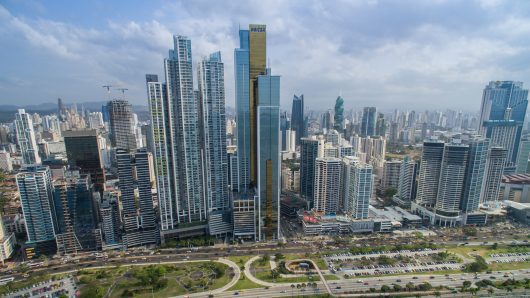
How the US Benefits from Foreign Aid to Panama
Panama is the dividing landmass between two major water sources, the Atlantic Ocean and the Pacific Ocean. A small sliver of a country, Panama is only 115 miles at its widest; such a small country should not by any means be an influencer in international affairs, but with the building of the Panama canal by the United States in 1914, Panama became perhaps the most prolific trading country in the world. As a result, the U.S. benefits from foreign aid to Panama in many ways, especially in access to trade and finances.

Fruitful Waters

According a National Geographic article, nearly 14,000 ships pass through the canal a year. Due to the length of time it takes to move through the canal (approximately eight to ten hours), the canal is a difficult route to navigate, but is crucial to increasing the speed with which shipping companies transfer goods between companies. Panama and the U.S. have had a friendly relationship since the conception of the canal, and it has continued into trading deals.

Location, Location, Location

The U.S. Department of State describes the ways the U.S. benefits from foreign aid to Panama incredibly simply: “Panama’s location and role in global trade makes its success vital to U.S. prosperity and national security.” However, it also notes that the Panama Canal is a hub for traffickers and illegal activity as well. Due to this, the U.S. greatly assists in Panama’s anti-corruption and anti-trafficking policy building and free-trade agreements in the area.

Police Presence

One main interest in Panama is building a strong police presence in the region, due to the amount of cargo coming and going through the canal’s system. The more the U.S. and Panama regulate the canal, the less opportunity traffickers have to transport illegal goods to other countries.

Trading and Transportation

Similarly, the U.S. is incredibly invested in the trading and transportation policies around the canal, because not only is the U.S. one of the biggest investors in the canal, but it is also one of its main users. The Canal’s official website offers a graphic which shows all of the major import/export trade routed through the Panama Canal, and each route begins or ends in the U.S. So not only does Panama benefit from the finances and security the U.S. provides, but the U.S. benefits from foreign aid to Panama by ensuring access to a major trading route that greatly benefits the U.S.

Mutual Benefits

The U.S. benefits from foreign aid to Panama through mutually assured success of U.S. involvement in trade routes and Panama’s maintenance of a secure canal system. As long as the U.S. continues to support anti-trafficking efforts in Panama and help the nation monetarily, it is almost impossible for the U.S. to lose this benefactory system.

– Molly Atchison

Photo: Flickr

March 3, 2018
https://borgenproject.org/wp-content/uploads/borgen-project-logo.svg 0 0 Borgen Project https://borgenproject.org/wp-content/uploads/borgen-project-logo.svg Borgen Project2018-03-03 01:30:182024-05-29 22:39:39The Ways the US Benefits from Foreign Aid to Panama
Aid, Foreign Aid

How the US Benefits From Foreign Aid to Iraq

How the U.S. Benefits From Foreign Aid to Iraq
Iraq is located in a volatile region, with war-torn Syria to its west, daily military incursions by Turkish warplanes from the north and covert funding of proxy militias from eastern neighbor Iran. It has undergone dramatic changes in its modern history, most notably the removal of dictator Saddam Hussein by U.S.-led forces in 2003 and the recent crackdown against the Islamic State. The prolonged state of civil war has devastated Iraqi infrastructure.

In a recent conference held in Kuwait, international donors pledged $30 billion, which falls short of the $88 billion required by the Iraqi government. U.S. Secretary of State Rex Tillerson stressed that “the war on terrorism can be affected by instability in the Gulf.” The current Iraqi regime walks a fine line of stability, brokering a power-sharing deal among its population. The U.S. benefits from foreign aid to Iraq are momentous, but wholly dependent on a stable and united Iraq.

Stability of the U.S. Dollar

Although the U.S. imports most of its oil from Canada and Latin America, its economic interest is still affected by activities in the Middle East. The U.S. dollar is not backed by gold, meaning that it lacks intrinsic value. However, if European or Asian nations purchase oil from Middle Eastern nations, the only acceptable currency is the U.S. dollar. The constant demand for the U.S. dollar ensures its status as the global reserve currency. Thus, its value largely comes from oil.

Likewise, the U.S. dollar is viewed by oil-rich nations like Iraq, Kuwait and Saudi Arabia as being reliable and accepted everywhere. The current Iraqi government, which accepts U.S. dollars, has safeguarded the continuance of petrodollars; this is one of the many U.S. benefits from foreign aid to Iraq.

The Security of NATO

A stable Iraq is one of many U.S. benefits from foreign aid to Iraq. The prospect of Iraq breaking up into ethno-religious microstates has kept Turkey, a NATO ally, on edge. Turkish forces have been battling armed Kurdish groups for decades, such as the Kurdistan Workers’ Party, which has been designated as a terrorist organization by the U.S. and the EU. Washington, Ankara and Baghdad have reached an agreement to establish safe zones along their borders. This is to ensure the protection and accommodation of civilians who have been displaced by armed conflicts.

Profitable Contracts for American Oil Companies

Opening up Iraqi oil to the international market requires international investors building the necessary plants and infrastructure to drill and extract oil. The Iraqi government granted licenses to American-owned multinational oil companies to explore and extract Iraqi oil, including BP, ExxonMobil and Shell. These three companies employ a combined total of 200,000 Americans.

A Reliable Ally Representing Both the Sunni and Shia Sects

Iraq is unique when it comes to its demographics, as it is populated by Shia Arabs, Sunni Arabs and Kurds. The Iraqi forces have proven to be an effective fighting force against the Islamic State. Backed by U.S. air cover, its ground forces have recaptured major cities from the militants. This denied the militants any safe haven to roam freely and plot attacks against the U.S. and its allies next door, such as Jordan, Turkey, Kuwait and Saudi Arabia.

The exercise of soft powers, such as when the Trump administration removed Iraq from the controversial travel ban, has improved the image of the U.S. among Iraq’s population. Friendly relations between Washington and Iraq’s diverse population encouraged moderate voices in the region to voice their pro-U.S. stance as a result of foreign aid to Iraq from the United States. Continued support will ensure that the U.S benefits from foreign aid to Iraq by maintaining an important ally in a key region of the world.

– Awad Bin-Jawed

Photo: Flickr

March 3, 2018
https://borgenproject.org/wp-content/uploads/borgen-project-logo.svg 0 0 Borgen Project https://borgenproject.org/wp-content/uploads/borgen-project-logo.svg Borgen Project2018-03-03 01:30:012024-05-29 22:39:37How the US Benefits From Foreign Aid to Iraq
Aid, Foreign Aid, Global Poverty

How the US Benefits from Foreign Aid to Ghana

How the U.S. Benefits from Foreign Aid to GhanaAccording to Tamela Noboa of the Baltimore Sun, foreign aid makes up less than 1 percent of the U.S. budget. As with many countries around the world, the U.S. benefits from foreign aid to Ghana, and these benefits could be multiplied if the U.S. contributes more to its foreign aid budget.

The U.S. always had an unofficial relationship with Ghana in supporting refinements of its power sector, strengthening healthcare and expanding access to education. Ghana possesses a level of dependency upon assistance given to it by the U.S., a dependence by which a cut in foreign aid could further hinder the country’s development. Since foreign assistance makes up such a minimal amount of the U.S. budget, increasing the amount of foreign aid would advance both countries.

The U.S. benefits from foreign aid to Ghana in these ways:

  1. Epidemics such as Ebola can be minimized and contained away from U.S. borders. According to David Ofori-Adjedi and Kwadwo Koram in an article for the Ghana Medical Journal, the possibility of the Ebola virus appearing in Ghana was high, due to the continuous presence of the virus in Guinea, Sierra Leone and Liberia in 2014. The likelihood of Ebola spreading in Ghana stems from its ability to manage an outbreak if it arises. As Bill Gates pointed out in an op-ed for Time, using foreign aid to ensure that countries such as Ghana are prepared to address an outbreak can keep it from spreading globally.
  2. The U.S. Embassy in Ghana believes that foreign aid contributes to strengthening cultural relationships for stable networking. For instance, foreign aid reinforces markets for U.S. products, opening up possibilities for future partnerships.
  3. Continuing foreign aid distribution to countries like Ghana contributes to sustainable change that aims to improve countries on a systemic level, allowing the country to further develop and eventually lessen its need for foreign aid.
  4. Investing in foreign countries creates the opportunity for nations like Ghana to invest back in the U.S., creating jobs across the country.

According to the U.S. Department of State, Ghana is currently facing a $1.5 billion shortfall in its funding for infrastructure projects. Continued support of these needs through foreign aid can ensure that the U.S. benefits from foreign aid to Ghana by helping the country reach its potential and become a bigger participant in the global economy.

– Christopher Shipman

Photo: Flickr

March 2, 2018
https://borgenproject.org/wp-content/uploads/borgen-project-logo.svg 0 0 Borgen Project https://borgenproject.org/wp-content/uploads/borgen-project-logo.svg Borgen Project2018-03-02 07:30:032024-05-29 22:39:36How the US Benefits from Foreign Aid to Ghana
Foreign Aid, Human Trafficking

How the US Benefits from Foreign Aid to Mali

How the U.S. Benefits from Foreign Aid to MaliA landlocked country in West Africa, Mali gained its independence from France in 1960. It is the eighth-largest country in Africa and its population currently consists of 18 million people. As one of the world’s younger nations, Mali still faces many challenges, from the effects of heavy rainfalls and floods to human rights violations such as terrorism and trafficking. In order to overcome these challenges, Mali needs foreign aid. However, there are many ways that the U.S. benefits from foreign aid to Mali.

Since its inception as an independent country, Mali has maintained diplomatic relations with the U.S. Over the years, the foreign aid Mali received from the U.S. has helped it to foster democracy and reduce poverty in the country. For instance, conflict in the country since 2012 has resulted in displacement, and food insecurity still remains an issue in Mali. Due to the foreign aid it received through USAID, Mali has been able to improve the availability of food and basic services, which led to the return of 60,200 displaced people to their areas of origin. Additionally, aid through USAID/OFDA helps improve access to emergency healthcare, protection services, safe drinking water and sanitation infrastructure in Mali.


Eradication of Extremism

Similarly, the U.S. benefits from foreign aid to Mali since it is committed to the eradication of extremism. Extremism negatively impacts every nation including the U.S., and the focus on Mali is crucial, as it has been called the deadliest country for U.N. peacekeepers. Extremist groups have carried out violent attacks in the country, and most of the recruits associated with such groups explained that their actions were not affected by their religious beliefs. In fact, they expressed the anger they felt due to the longstanding neglect of their communities, which led them to seek a sense of community in extremist groups. In order to eradicate extremism, the USAID has taken some key steps.

Utilizing locally-informed assessment and analysis, USAID has focused on “youth empowerment, social and economic inclusion, media and messaging, improving local governance, reconciliation and conflict mitigation.” The USAID tailors its activities to meet specific threat levels, the political environment and other material needs of each community, especially focusing on groups that need more assistance, such as at-risk young men. Armed bandits and extremists still occupy northern Mali, which accounts for nearly two-thirds of the country. Poor governance and extreme poverty contribute to the rise of extremist groups, which is why many of the USAID activities focus on improving these areas.

For instance, in order to stop the spread of extremism and foster development, USAID and Mali have jointly taken a different approach than previous ones that concentrated more on individual projects. USAID and Mali will target the country’s institutional weaknesses while contributing to ending extreme poverty, and the projected $600 million in investments for fiscal years 2016-2010 will focus on four key objectives:

  • Stabilization of Conflict-Affected Areas Reinforced (transition)
  • Public Trust in Government Improved (governance)
  • Adaptive Capacity of Vulnerable Communities and Households Improved (resilience)
  • Socio-Economic Well-Being Advanced (prosperity)

Combating Human Trafficking

Human trafficking is another serious issue in the country. The U.S. benefits from foreign aid to Mali because it is committed to fighting human trafficking globally, and Mali is a source, transit and destination country for women, men and children subjected to forced sex and labor trafficking. The government of Mali does not fully comply with the minimum standards for the elimination of human trafficking. Hence, the aid it receives from the U.S. makes a considerable difference. For example, foreign aid from the U.S. through the Office to Monitor and Combat Trafficking in Persons provides not only crucial training and technical assistance, but also child protection compact partnerships, emergency victim assistance and research projects that focus on innovative ways to combat human trafficking.

In short, the U.S. benefits from foreign aid to Mali because the latter is facing some dangerous challenges that the U.S. has committed to eradicating. By working together with Mali, the U.S. could help put an end to the violence that is caused by extremism and human trafficking.

– Mehruba Chowdhury

Photo: Flickr

March 1, 2018
https://borgenproject.org/wp-content/uploads/borgen-project-logo.svg 0 0 Borgen Project https://borgenproject.org/wp-content/uploads/borgen-project-logo.svg Borgen Project2018-03-01 01:30:512024-05-29 22:39:32How the US Benefits from Foreign Aid to Mali
Page 35 of 61«‹3334353637›»

Get Smarter

  • Global Poverty 101
  • Global Poverty… The Good News
  • Global Poverty & U.S. Jobs
  • Global Poverty and National Security
  • Innovative Solutions to Poverty
  • Global Poverty & Aid FAQ’s
Search Search

Take Action

  • Call Congress
  • Email Congress
  • Donate
  • 30 Ways to Help
  • Volunteer Ops
  • Internships
  • Courses & Certificates
  • The Podcast
Borgen Project

“The Borgen Project is an incredible nonprofit organization that is addressing poverty and hunger and working towards ending them.”

-The Huffington Post

Inside The Borgen Project

  • Contact
  • About
  • Financials
  • President
  • Board of Directors
  • Board of Advisors

International Links

  • UK Email Parliament
  • UK Donate
  • Canada Email Parliament

Get Smarter

  • Global Poverty 101
  • Global Poverty… The Good News
  • Global Poverty & U.S. Jobs
  • Global Poverty and National Security
  • Innovative Solutions to Poverty
  • Global Poverty & Aid FAQ’s

Ways to Help

  • Call Congress
  • Email Congress
  • Donate
  • 30 Ways to Help
  • Volunteer Ops
  • Internships
  • Courses & Certificates
  • The Podcast
Scroll to top Scroll to top Scroll to top