• Link to X
  • Link to Facebook
  • Link to Instagram
  • Link to TikTok
  • Link to Youtube
  • About
    • About Us
      • President
      • Board of Directors
      • Board of Advisors
      • Financials
      • Our Methodology
      • Success Tracker
      • Contact
  • Act Now
    • 30 Ways to Help
      • Email Congress
      • Call Congress
      • Volunteer
      • Courses & Certificates
      • Be a Donor
    • Internships
      • In-Office Internships
      • Remote Internships
    • Legislation
      • Politics 101
  • The Blog
  • The Podcast
  • Magazine
  • Donate
  • Click to open the search input field Click to open the search input field Search
  • Menu Menu

Archive for category: Foreign Aid

Foreign aid coverage and information.

Foreign Aid, Foreign Policy, Global Poverty, Government

How All Former U.S. Presidents Fight Global Poverty

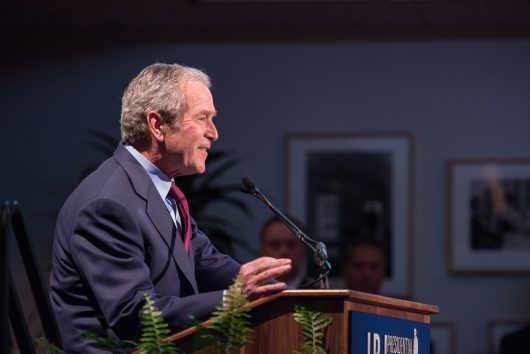
How All Former U.S. Presidents Fight Global PovertyAll five living former presidents met in Texas on October 22, 2017, the first gathering of all past U.S. leaders since 2013. Their mission was to raise funds for hurricane victims in Florida, Texas, the U.S. Virgin Islands and Puerto Rico. The event, titled “Deep from the Heart: One America Appeal,” accumulated $31 million towards helping those in need. The former U.S. presidents fight global poverty because they consider the issue too vital to ignore even in retirement.
Here’s how former presidents Jimmy Carter, George H.W. Bush, Bill Clinton, George W. Bush and Barack Obama helped foreign nations since leaving office.

Jimmy Carter

Even at age 93, Jimmy Carter works alongside other volunteers outdoors to build houses with Habitat for Humanity. Both Carter and his wife Rosalynn have traveled around the world to raise awareness towards the benefits of affordable housing. Their work encompasses 14 countries and 4,000 built homes.

George Herbert Walker Bush

Both George H.W. Bush and Bill Clinton fought a vicious campaign against each other for the presidency in 1992. But all wounds were mended by 2005, when the two former presidents visited Asia to raise money in the wake of a deadly tsunami. The two men also raised more than $100 million to support the victims of Hurricane Katrina.

On the subject of losing the re-election to a member of an opposing party, H.W. Bush commented, “You just can’t go through life with a great deal of bitterness in your heart over something that happened 15 years ago.”

Bill Clinton

In addition to the funds raised after Hurricane Katrina, Clinton established the Clinton Global Initiative (CGI) in 2005. The CGI gathered Nobel laureates, leading CEOs, philanthropists and more than 200 former heads of state to create Commitments to Action for those in need.

Previous Commitments to Action include an amount of refugees taken in by a country, an installation of solar arrays for a country and advice from major corporations to a country. CGI has aided 180 nations since its genesis.

George W. Bush

October wasn’t the first time the world saw George W. Bush and former U.S. presidents fight global poverty together. Both Bush and Clinton raised funds to provide for Haiti in the wake of the 2010 earthquake.

Bush continued his philanthropy even after his two terms saw the achievement of the U.N.’s Millennium Development Goals years ahead of schedule.

Barack Obama

Not even a year after leaving office, Barack Obama advocated for the world to address climate change, poverty and disease. “People wildly overestimate what we spend on foreign aid,” he said, “…It’s a good investment to make countries work.” Obama joined philanthropists Bill and Melinda Gates, Leymah Gbowee and Canadian Prime Minister Justin Trudeau to urge nations in uniting to combat global poverty.

Seeing all former U.S. presidents fight global poverty reveals the tenacity within each leader. All five men, however, believe that saving the world is a global effort.

– Nick Edinger

Photo: Flickr

November 7, 2017
https://borgenproject.org/wp-content/uploads/borgen-project-logo.svg 0 0 Kim Thelwell https://borgenproject.org/wp-content/uploads/borgen-project-logo.svg Kim Thelwell2017-11-07 01:30:012019-12-27 15:15:05How All Former U.S. Presidents Fight Global Poverty
Foreign Aid, Global Poverty

Foreign Aid as a Counterterrorism Strategy

Foreign AidThe September 11 terrorist attack resulted in the construction of development response, the act of aiding and developing an impoverished area. The goal of this strategy is to help combat terrorism. Impoverished areas produce a vulnerable environment ideal for extremist group recruitment. The presence of foreign aid in poverty-filled areas reduces the susceptibility of men and women reaching out to extremist groups for a sense of stability.
Social marginalization and poorly governed areas increase the appeal of an extremist group. Social marginalization, the feeling of being oppressed or excluded from society, creates a need for acceptance. The absence of security may lead to residents looking for an opportunity to escape oppression or economic despair. These conditions produce breeding grounds for the recruitment of terrorists. Extremist groups symbolize a promise of social status, respect, necessary services and a sense of belonging.

Yemen and Somalia are prime examples of terrorist breeding grounds. In Yemen, about 35 percent of the population is undernourished and 55 percent lack food security due to soaring food prices. Merely 2 percent of Yemen’s gross domestic product is spent on healthcare. Unemployment has increased to 35 percent and the Sunni-Shia civil clash has heightened the terrorist capacity.

Somalia, similarly to Yemen, is lacking a central government. The war zone environment has provided a safety net for those hiding from the law, giving terrorists the ability to move freely. About 73 percent of the population lives on about $2 a day. The promise of profit from extremist groups feeds the embrace of terrorist membership. Recruiters use the incentives of food, profit and even a sign-up bonus to gain members.

These nations portray the hardships developing nations face when countering extremism. They are not equipped to stop the targeting of terrorist groups. Economic security and efforts to decrease marginalization would provide a preventive measure for global threats.

In the “Assisting International Partners to Counter Violent Extremism” report, the U.S. Department of State and USAID outline objectives for counterterrorism. These objectives include engaging in partnerships, encouraging policy and employing foreign assistance tools. The recognition that youths are more inclined to embrace extremism led to the production of institutions focusing on employing youths and preventing them from joining extremist groups.

The report details that foreign aid would be spent on building institutions and strengthening impoverished nations’ international partnership. The strategic vision behind foreign aid proves that aid is more than a loan to combat poverty. The objectives can be viewed as a tactic within the grand strategy of foreign aid.

Foreign aid provides a weapon to combat counterterrorism. This strategy provides a cheaper long-term tactic that targets one of the causes for breeding ground conditions. It serves as a preventive measure and a source of international security.

The potential foreign aid budget cuts could put American national security in jeopardy. Foreign aid serves as an investment to prevent vulnerable conditions for terrorist recruitment as well as managing the likelihood of a global threat. Developmental aid is not only a valuable tool to counter poverty, but is an effective counterterrorism strategy.

– Shauna Triplett

Photo: Flickr

October 31, 2017
https://borgenproject.org/wp-content/uploads/borgen-project-logo.svg 0 0 Borgen Project https://borgenproject.org/wp-content/uploads/borgen-project-logo.svg Borgen Project2017-10-31 07:30:482024-05-29 22:27:51Foreign Aid as a Counterterrorism Strategy
Foreign Aid

A Look Back: The Marshall Plan and Investment in New Markets

Investment in New Markets70 years ago, President Harry Truman’s Secretary of State, George C. Marshall, gave a speech to announce the Marshall Plan, an initiative giving $13 billion in foreign aid to help rebuild Western European economies after World War II. The administration knew it would be a heavy lift, convincing Americans to accept the probability of higher taxes in place of tax cuts they had been promised. Now, it is just as important for leaders to make their case for foreign aid and investment in new markets to the American people, highlighting the twin benefits of security and sustainability for all parties involved.
The Pitch

So how did Secretary Marshall sell his plan?

“Your Eighty Dollars” is one of many short videos designed to explain how the funds spent on the plan, equaling $80 per American taxpayer, would bring positive returns to taxpayers themselves. Marshall had the political savvy to appeal to the self-interest of his countrymen, recognizing that a nation weary from the costs of war would not automatically be eager to shell out more money. The administration also understood the value in emphasizing the relatively small sum—$80—each individual taxpayer would be paying, rather than the much larger $13 billion ($132 billion in 2017 dollars) the United States would spend in total.

The video emphasizes the United States’ myriad strategic advantages in helping rebuild Europe as well as the dire consequences of failing to do so. It asserts the debt of cultural heritage the U.S. owed to Europe, the benefit of having allies in the most populated and pivotal theatre when it came to waging war and the danger of debtor democracies in the West becoming easy prey for dictators and demagogues, both foreign and home-grown.

“Your Eighty Dollars” succeeded in part because it showcased results, not just fuzzy goals, far off in the distance. The narrator introduces the video’s purpose as “presenting documentary evidence of the progress the free world is making toward strength through mutual security,” and evidence of what U.S. dollars had already accomplished would prove to be a powerful motivator.

The video included scenes of the United States helping clear Sardinia, an Italian island in the Mediterranean Sea, of malaria so its fields could be ready for farming. Other scenes which showed Europeans rebuilding and improving their factories with U.S. assistance and techniques, helped make the humanitarian and economic case.

Europe’s Gains — America’s Returns

The Marshall Plan’s greatest success was its stimulation of private investment in new markets. The plan itself was not large in scope: the $13 billion spread across Western Europe did not amount to a huge investment in new markets. Much of that money was spent on imports of American industrial materials, semi-finished products and agricultural goods. American investment had started to pay dividends.

More importantly for Europe, the plan encouraged European governments and privately-held companies to invest more. Research by De Long and Eichengreen shows that countries receiving aid under the Marshall Plan saw more national investment and grew far faster than other wealthy economies (e.g., Argentina) that benefitted from the new post-war economic order under Bretton Woods but did not receive aid. Those examples of powerhouse growth became even more reliable markets for American products—as well as American allies. These countries avoided the fate of much of Europe after the First World War: plagued by crushing debt without relief and, thus, vulnerable to voices of prejudice and division.

Global Poverty and the Road Ahead

In the quest for security and sustainability in the developing world, many themes from post-World War II repeat themselves. As was true in the 1940s and 50s, other world powers—some of which do not share the U.S.’ values of freedom, democracy and open markets—are looking to assert their influence and control over poverty-stricken countries in the developing world.

– Chuck Hasenauer

Photo: Flickr

October 23, 2017
https://borgenproject.org/wp-content/uploads/borgen-project-logo.svg 0 0 Borgen Project https://borgenproject.org/wp-content/uploads/borgen-project-logo.svg Borgen Project2017-10-23 01:30:082024-12-13 17:58:29A Look Back: The Marshall Plan and Investment in New Markets
Development, Foreign Aid, Global Poverty

Taking Action on Poverty in Africa: Key to the Future Success

Poverty in Africa Is Key to the Future of the ContinentA recent report published by the ONE Campaign entitled ‘The African Century’ shows the urgent necessity of the international community to pay attention to development on the African continent. With Africa’s population set to double by 2050, the authors of the report have stated that taking action on poverty in Africa is key to future of the continent and of the globe.
Although population growth is rapid and expansive on the continent, the flow of international aid into Africa has been stagnating and decreasing in recent years. Since 2012, the three most significant forms of financing for African countries—official development assistance, domestic revenue and direct foreign investment—have been steadily decreasing; they are now at their lowest aggregate level since 2009. Since 2012, although its population has increased by 15 percent, the combined resources available for development in Africa have nominally decreased by 22 percent.

The authors of the report emphatically underline that the international community must start taking action on poverty in Africa as soon as possible. Alleviating poverty in Africa is key to the future of the continent, one which is uncertain right now and might present very serious challenges. With the population increasing to an estimated 2.5b billion by 2050, and 50 percent of them being 25 years or younger, there is a great risk of further destabilization of the region and massive waves of migration. According to estimates, by 2020 Africa’s unemployed population will equal that of Germany’s entire population, and 50 years from now that number might increase to 310 million, or half the employed population of continental Europe.

Donors who used to largely finance aid and development on the continent have been largely using aid budgets in the pursuit of short-term foreign policy interests rather than in fighting poverty. This shortsightedness might prove catastrophic. As a young population grows up in conditions of extreme poverty, conflict that resonates around the globe might be unavoidable. This is why the authors of the ONE report so emphatically claim that taking action on poverty in Africa is key to the future of the continent and the world. In its conclusion, the report calls for a renewed partnership with African countries, which include the doubling of investments in education, employment and empowerment “to support a programme of economic and policy reform across the continent”. Hopefully, the international community will heed this call and think in the long term in order to avoid catastrophe before it manifests.

– Alan Garcia-Ramos

Photo: Flickr

October 5, 2017
https://borgenproject.org/wp-content/uploads/borgen-project-logo.svg 0 0 Kim Thelwell https://borgenproject.org/wp-content/uploads/borgen-project-logo.svg Kim Thelwell2017-10-05 01:30:092024-05-29 22:27:14Taking Action on Poverty in Africa: Key to the Future Success
Foreign Aid, Global Poverty, Government

Corruption: Kryptonite to Foreign Aid

Foreign Aid

Foreign aid is a topic that stirs controversy, with each side maintaining significant weight in their argument.

“You know the excuses: We can’t afford foreign aid anymore, or we’re wasting money pouring it into these poor countries, or we can’t buy friends—other countries just take the money and dislike us for giving it. Well, all these excuses are just that, excuses—and they’re dead wrong,” Ronald Reagan said in 1987.

The United States’ stance on foreign aid changes with each administration. The phrase, “you are damned if you do, you are damned if you don’t” comes to mind.

Foreign aid has been categorized as “soft power” since the late 1980s. “Soft power” is the ability of a country to persuade others to do what it wants without force or coercion. Joseph Nye coined the phrase, arguing that security relies on winning people as much as winning wars.

Since the 1980s, soft power has become central in U.S. foreign policy practices. Is foreign aid a tool in the soft power toolbox?

Nye believes aid is purchasing power, not soft power. Despite the nuances of whether aid is categorized as purchasing power or soft power, foreign aid is important for the United States to achieve interests abroad.

According to Phil Vernon, “currency of soft power is values, institutions, culture and policy, then soft power is exercised by the choices you make and the actions you take, not by what you say.” If this is true, aid should be accompanied by anti-corruption monitoring organizations, tools of economic sustainability and keys of independence. The goal is not to have a country depending on the United States, but to provide the tools for a state to become independent.

If the United States does not ensure and monitor the aid given, corruption will prevent the money from reaching the population in need. Monitoring programs are even more vital than aid itself. Corruption is the kryptonite to foreign aid.

According to the National Bureau of Economic Research, the more corrupt the government is, the more aid the state receives. There is no evidence that an increase in foreign aid reduces corruption.

Currently, corruption is not being punished. This lack of acknowledgment is only encouraging governments to abuse international funds. If corruption is reflected in next year’s funding, people will suffer. If the population suffers on the government’s behalf, this is motivation for the population to vote in order to correct the situation. Thus, reducing corruption will be imminent.

Despite the controversies and arguments surrounding international aid, it is important to remember that giving aid to corrupt governments is not giving aid to the people. Corrupt governments must be punished in some way in order to reduce international corruption. Corruption is the kryptonite to U.S. foreign policy success. U.S. interests must be maintained, and aid is a tool in the toolbox for doing just that.

– Danielle Preskitt

Photo: Flickr

October 2, 2017
https://borgenproject.org/wp-content/uploads/borgen-project-logo.svg 0 0 Kim Thelwell https://borgenproject.org/wp-content/uploads/borgen-project-logo.svg Kim Thelwell2017-10-02 07:30:162024-05-28 00:00:25Corruption: Kryptonite to Foreign Aid
Foreign Aid, Global Poverty

Causes of Poverty in Tajikistan

Causes of Poverty in Tajikistan

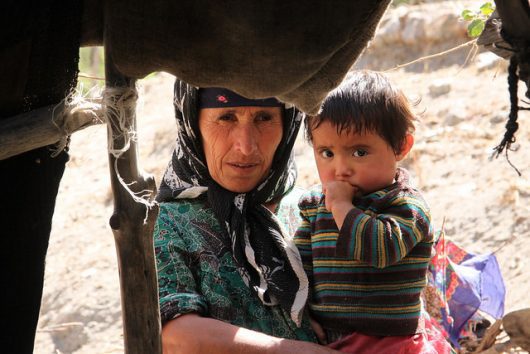
Since its independence, after the fall of the Soviet Union, the government of Tajikistan has made incredible strides in reducing poverty across the country. Since 1991, its pace has placed it among the top 10 percent in the world. Despite this, approximately 32 percent of the country’s 8.6 million citizens remain below the national poverty line, with 3.7 percent living on less than $1.90 per day. With so much strong work already done to combat poverty across the nation, it is important to understand the remaining causes of poverty in Tajikistan in order to successfully continue the fight to eliminate poverty.

The first of these causes relates to Tajikistan’s economy. The poorest of the former Soviet states, Tajikistan has an economy that is largely reliant on remittances from Tajiks who are working abroad – such remittances comprise almost 50 percent of the nation’s total GDP. This leaves the economy open to external factors with the potential to heavily damage the economy, particularly in times of global financial crisis. Additionally, Tajikistan has an apparent inability to draw in foreign direct investment (FDI) due to a perceived unfavorable business environment, inadequate infrastructure and a weak legal system. Without significant change in policy in these areas, investment is unlikely to be forthcoming, limiting the ability of the country to lift itself fully out of poverty via economic means.

The lack of FDI and general private sector investment is also damaging to employment opportunities in the country. Tajikistan’s most valuable asset is its human capital and, at present, the country is incapable of creating enough jobs for the growing workforce. This has led to only 43 percent of the working age population being employed, with younger workers and women particularly hard hit by the lack of opportunity. With private sector opportunities only comprising 13 percent of jobs across the country, there are significant barriers to employment for much of the population, which can further exacerbate Tajikistan’s poverty dilemma.

The third of the primary causes of poverty in Tajikistan is related to infrastructure. An estimated 60 percent of the population is unable to access clean drinking water, leading to water from irrigation ditches – which is often polluted – being consumed instead. Adequate sanitation is similarly inaccessible, which has led to waterborne illnesses such as typhoid and diarrhea being widespread throughout the country. Both of these are particularly dangerous to children and infants and, as such, infant mortalities and malnutrition levels are above acceptable rates.

Through the aid of foreign governments and nongovernment organizations (NGOs), progress has begun in this area. UNICEF’s school-based hygiene project, for instance, is bringing fresh, potable water to schools through developing wells and pumping systems that the children can use, as well as improving sanitation facilities. Through projects such as this, thousands of children have seen living and health conditions improve exponentially. The World Bank is also extremely active in Tajikistan, with just under $370 million committed to a total of 23 projects across the country. These projects are aimed at supporting economic growth through developing the private sector as well as tackling the infrastructural and public service issues which ail the nation.

While foreign aid is certainly benefiting the country, it is unlikely to be enough to further reduce its poverty levels without governmental support. Government involvement is necessary to start seeing progress is overcoming the causes of poverty in Tajikistan, which would ultimately lead to a decrease in its poverty rate.

– Gavin Callander

Photo: Flickr

September 21, 2017
https://borgenproject.org/wp-content/uploads/borgen-project-logo.svg 0 0 Kim Thelwell https://borgenproject.org/wp-content/uploads/borgen-project-logo.svg Kim Thelwell2017-09-21 01:30:192024-05-29 22:26:44Causes of Poverty in Tajikistan
Foreign Aid, Global Poverty, USAID

7 Facts About Mark Green, USAID’s Administrator

Mark GreenOn August 7th, Mark Andrew Green became the 18th administrator of the U.S. Agency for International Development. USAID is the part of the executive branch responsible for furthering international development.
As Administrator, Mark Green is responsible for leading this charge. His vision of international development has the potential to affect the lives of millions of the global poor. With that in mind, it’s important that we know who exactly he is. Here are the 7 most important things to know about Mark Green.

  1. He used to be a member of Congress. Mark Green was a member of the U.S. House of Representatives from 1999 through 2007. He represented Wisconsin’s 8th Congressional District. This is good news. It means that Green understands the ins and outs of politics and advocacy.
  2. He has a track record of supporting international aid. While serving as a representative, Mark Green voted consistently in support for international development. He was a member of the Congressional Human Rights Caucus. And he co-sponsored the Hunger to Harvest bill, which aimed to reduce hunger in sub-Saharan Africa.
  3. He has been an aid-worker himself. After graduating college, Mark Green and his wife taught English to rural Kenyans through WorldTeach. In his congressional testimony, Green reiterated how much this experience shaped his worldview, and how it will shape is work as an Administrator.
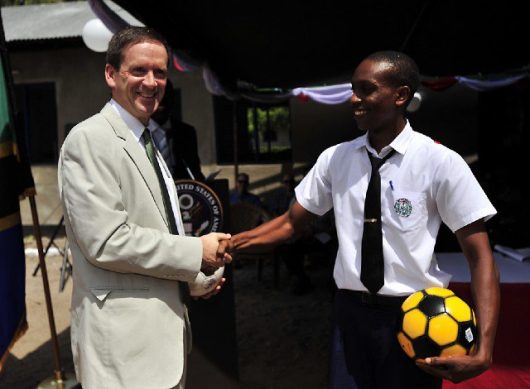
  4. He was the Ambassador to Tanzania. After serving as a representative, Mark Green served as an Ambassador from 2007-2009. He oversaw President George W. Bush’s first visit to Tanzania. According to Mark Green himself, his tenure as Ambassador taught him “lessons too numerous to count.” His experience in the international makes his leadership as an Administrator trustworthy and reputable.
  5. He’s worked in the private sector. After his ambassadorship, Mark Green remained involved in international development. Green served on the board of directors for Malaria No More and the Millennium Challenge Corporation. Most recently, Green was president of the International Republican Institute. Notably, all the organizations Green has been a part of have one important thing in common. They focus on development with the end goal of making donor countries self-sufficient.
  6. He has bipartisan support. Mark Green served as a Republican representative, but he has support from both sides of the aisle. Senator Tammy Baldwin, a Democrat from Wisconsin, praised him during his confirmation hearing. “He has the deep personal passion and commitment to do this job as shown through years of work in advancing our common good on the international stage,” Senator Baldwin said. And Mark Green himself promised during his confirmation hearing to “work in [a] bipartisan spirit.”
  7. He is knowledgeable about aid. Simply put, Mark Green understands what makes good aid policy. He consistently said that “the purpose of foreign assistance should be ending its need to exist.” In other words, Green’s goal at USAID is to end global poverty. Ensure that the world’s poor stop needing aid. And he has been clear in the steps he will take to steer USAID towards achieving this lofty goal. Specifically, he’s called for USAID to “incentivize reform, diversify our partner base,” and “foster local capacity-building” within partner countries.

You may never have heard of Mark Green. USAID doesn’t often make the front pages of newspapers. But that doesn’t make the work that Green and USAID are doing any less important. And under the leadership of Mark Green, USAID is sure to keep on helping millions of people.

– Adesuwa Agbonile

Photo: Google/span>

September 11, 2017
https://borgenproject.org/wp-content/uploads/borgen-project-logo.svg 0 0 Kim Thelwell https://borgenproject.org/wp-content/uploads/borgen-project-logo.svg Kim Thelwell2017-09-11 01:30:592024-12-13 17:58:277 Facts About Mark Green, USAID’s Administrator
Foreign Aid, Government

How Foreign Aid to Colombia Benefits the US

Foreign Aid to Colombia In November 2016, after four years of negotiations, the Colombian government reached a peace agreement with the Revolutionary Armed Forces of Colombia (FARC), a rebel narco-terrorist organization. As of July 2017, FARC rebels have turned over 7,000 weapons. The success of the Colombian peace process is partly due to U.S. foreign aid to Colombia. This assistance benefiting Colombia also helps the U.S.’s economy and national security.
The civil war between the Colombian government and FARC lasted more than five decades. 250,000 people died and 60,000 disappeared. FARC kidnapped American citizens and supplied nearly all the cocaine in the U.S.

To combat this, the United States has invested $10 billion since 2000 in Colombia through Plan Colombia, a bipartisan initiative to strengthen Colombia’s public institutions. President Obama updated America’s foreign policy in Colombia after the successful peace negotiations in 2016 by pledging an additional $450 million in foreign aid to Colombia through the new U.S. initiative Peace Colombia.

While Colombia is covering 90 percent of the peace accord implementation costs, the U.S. assistance is primarily targeted toward security, expanding Colombian state institutions into rebel areas and providing justice services for victims. Peace Colombia also enables USAID to work with the Colombian government, private sector and non-profits so that reintegrated FARC rebels and their families can find stable employment instead of reverting back to growing coca.

Although peace in Colombia is promising, issues persist. According to the United Nations, Colombian cocaine production and coca cultivation increased by 34 and 52 percent respectively in 2016. The upcoming 2018 elections in Colombia could also disrupt the peace process. Though President Trump reaffirmed the U.S. commitment to peace in Colombia in May, his administration requested to reduce foreign aid to Colombia for FY 2017 from $391 million to $250 million.

Nevertheless, progress has been achieved. Colombia is experiencing a steady decline in mortality and an increase in literacy. The country has the fastest growing economy in Latin America and is the leading U.S. ally in the region, becoming a major trading partner.

In testimony to the Senate Foreign Relations Subcommittee, Juan Sebastian Gonzalez, an Associate Vice President of The Cohen Group and former Special Advisor to Vice President Biden, stated that a secure and peaceful Colombia creates potential for U.S. businesses to invest and leads to a more secure U.S., especially in regards to drug trafficking.

On August 13, Vice President Pence, while visiting Colombia, said the U.S. will continue its partnership with Colombia because “…we’ve long recognized the importance of Colombian security and prosperity to our own.” Pence also complimented President Santos of Colombia, stating that “…Colombia represents the future of Latin America. It is a future of freedom, security, and prosperity. And America stands with you.”

– Sean Newhouse

Photo: Flickr

September 10, 2017
https://borgenproject.org/wp-content/uploads/borgen-project-logo.svg 0 0 Borgen Project https://borgenproject.org/wp-content/uploads/borgen-project-logo.svg Borgen Project2017-09-10 01:30:362024-05-28 00:16:13How Foreign Aid to Colombia Benefits the US
Developing Countries, Foreign Aid, Global Poverty

What Makes Effective Foreign Aid Policy?

Effective Foreign AidForeign aid policy can be confusing. Some claim that all foreign aid is useless, while others say it is the only thing our government should fund. All of this is overwhelming, and can drive people away from advocating for aid policies altogether. But choosing which NGO to donate to or which policy to ask your senator to support doesn’t have to be hard. Effective foreign aid policy is out there. By asking these three simple questions, you can spot good policies.

1. Is this policy collaborative?

Effective foreign aid policy is always based around collaboration. Aid organizations and donor governments should constantly be in conversation with aid recipients. Recipients should be able to give feedback on which parts of the aid are working and which parts are not. Most importantly, the people receiving aid should be actively involved in making decisions about the distribution of aid. Collaborating with the people you are trying to help is common sense. People on the ground know better than anyone what will help them succeed and thrive. By making aid collaboration focused, recipients have a bigger stake in the outcomes of aid. They will fight to achieve whatever outcomes the NGO or donor government are working towards.

Aid policies are too often structured to the recipients of aid as passive objects, not active participants. But, as the American Enterprise Institute puts it, “collaboration seems virtually essential for a sustained engagement that brings benefits valued by all.”

2. Is this policy sustainable?

In recent years, many NGOs have adopted ‘band-aid’ policies when it comes to foreign aid. This type of policy includes things like giving out food and medicine to countries affected by disaster.

In the short term, this kind of aid is vital. But in the long term, it can be crippling. For example, after the 2010 earthquake in Haiti, NGOs and governments mobilized to provide disaster relief. For the first few months after the earthquake, this aid saved thousands of lives. But now, seven years after the earthquake, many NGOs and governments are still providing disaster relief. For example, instead of helping the Haitian government build hospitals, NGOs treat people themselves. These ‘band-aid’ policies do not allow Haiti to become self-reliant. They focus too much on the present and lack vision for the future. The result is a Haitian economy that relies heavily on foreign aid.

The most effective foreign aid policy is top-down. Aid policies that focuses on broad, structural changes have the greatest impact. When deciding which foreign aid policy to subscribe to, consider its sustainability. Ask: will whatever service this policy provides be able to continue without support from the NGO or donor government? Is it focused on building sustainable structures of government, or just helping individual people? These questions will help you ascertain the sustainability of whatever policy you’re considering.

3. Is this policy transparent?

Transparency is a must for both NGOs and donor governments. They should always disclose the money put towards certain aid policies and how that money was spent. The NGOs and donor government initiatives you support should have clear benchmarks that are easily measurable and updated regularly. These acts of transparency put the power in the hands of both the recipients and supporters of aid policies. It assures accountability and maximizes the impact of the aid.

Did you answer yes to all these questions? If so, the policy you’re considering supporting is probably an effective foreign aid policy. So support it! Being an advocate for the global poor is both gratifying and deeply important work. Asking these questions ensures that the policies you end up advocating for do a world of good.

– Adesuwa Agbonile

Photo: Flickr

September 8, 2017
https://borgenproject.org/wp-content/uploads/borgen-project-logo.svg 0 0 Borgen Project https://borgenproject.org/wp-content/uploads/borgen-project-logo.svg Borgen Project2017-09-08 01:30:252024-12-13 17:58:27What Makes Effective Foreign Aid Policy?
Disease, Foreign Aid, Global Poverty

Common Mental Illnesses in Developing Countries

Mental Illnesses in Developing CountriesAlthough many diseases plague those in poverty, mental illnesses in developing countries also wreak havoc. Mental healthcare for vulnerable populations cannot keep up with the demand of those suffering from mental illness. While the stigma even in the developed world is still prevalent, awareness must lead to action in order to treat mental illnesses in developing countries.

Mental illnesses in developing countries encompass diverse conditions and ages — from autism and mental retardation in early childhood to substance abuse and schizophrenia in adolescents, depression and bipolar disorder in adults and dementia in older people. Compared to developed countries, the developing world sees the same number, if not more, cases of mental illness. While the genetic disposition for developing most mental illnesses is universal, the social and environmental factors that trigger these diseases are more direct for those in poverty.

Most scientific studies show a close correlation between indicators of poverty and the risk of mental disorders, the most consistent association being with low levels of education — a common factor in low-income societies. Other factors such as the experience of insecurity and hopelessness, rapid social change and the risks of violence and physical ill-health also contribute to the greater vulnerability of the poor to common mental illnesses.

Apart from the innumerable symptoms associated with mental illness, including hopelessness, anxiety, delusions and so many more, these conditions have a big effect on other health issues and on the social and economic opportunities. The World Health Organization estimates that mental and neurological disorders are the leading cause of ill health and disability globally.

People who feel depressed, anxious, or cannot function without extra support are less likely to attend school, seek employment, and follow the laws. Too often, those stuck in this vicious cycle don’t have access to consistent treatment to prevent the negative consequences.

A common myth, even among those who accept that mental disorders are prevalent in poor countries, is that these illnesses cannot be treated affordably. With so many health issues affecting developing countries, tackling mental health tends to seem like a luxury. Foreign aid remains focused on the “big three” communicable diseases of HIV/AIDS, malaria and tuberculosis.

Many other health conditions, especially mental illness, thus receive only a fraction of the attention and funding. The gap between the number of people with disorders and the number who receive evidence-based care is as high as 70 to 80 percent in many developing countries. Almost half the countries in the world have no explicit mental health policy and nearly a third have no mental health program whatsoever.

Individuals, governments and organizations also currently lack interest to treat mental illnesses in developing countries. However, depression, anxiety, bipolar disorder, schizophrenia and all common mental disorders need to be placed alongside other diseases associated with poverty.

Mental health is just as important to a country’s stability as physical health. Regardless of ethnicity, gender, or income level, everybody deserves access and support for growingly common health conditions.

– Allie Knofczynski

September 4, 2017
https://borgenproject.org/wp-content/uploads/borgen-project-logo.svg 0 0 Kim Thelwell https://borgenproject.org/wp-content/uploads/borgen-project-logo.svg Kim Thelwell2017-09-04 01:30:302024-05-28 00:15:56Common Mental Illnesses in Developing Countries
Page 39 of 61«‹3738394041›»

Get Smarter

  • Global Poverty 101
  • Global Poverty… The Good News
  • Global Poverty & U.S. Jobs
  • Global Poverty and National Security
  • Innovative Solutions to Poverty
  • Global Poverty & Aid FAQ’s
Search Search

Take Action

  • Call Congress
  • Email Congress
  • Donate
  • 30 Ways to Help
  • Volunteer Ops
  • Internships
  • Courses & Certificates
  • The Podcast
Borgen Project

“The Borgen Project is an incredible nonprofit organization that is addressing poverty and hunger and working towards ending them.”

-The Huffington Post

Inside The Borgen Project

  • Contact
  • About
  • Financials
  • President
  • Board of Directors
  • Board of Advisors

International Links

  • UK Email Parliament
  • UK Donate
  • Canada Email Parliament

Get Smarter

  • Global Poverty 101
  • Global Poverty… The Good News
  • Global Poverty & U.S. Jobs
  • Global Poverty and National Security
  • Innovative Solutions to Poverty
  • Global Poverty & Aid FAQ’s

Ways to Help

  • Call Congress
  • Email Congress
  • Donate
  • 30 Ways to Help
  • Volunteer Ops
  • Internships
  • Courses & Certificates
  • The Podcast
Scroll to top Scroll to top Scroll to top