• Link to X
  • Link to Facebook
  • Link to Instagram
  • Link to TikTok
  • Link to Youtube
  • About
    • About Us
      • President
      • Board of Directors
      • Board of Advisors
      • Financials
      • Our Methodology
      • Success Tracker
      • Contact
  • Act Now
    • 30 Ways to Help
      • Email Congress
      • Call Congress
      • Volunteer
      • Courses & Certificates
      • Be a Donor
    • Internships
      • In-Office Internships
      • Remote Internships
    • Legislation
      • Politics 101
  • The Blog
  • The Podcast
  • Magazine
  • Donate
  • Click to open the search input field Click to open the search input field Search
  • Menu Menu

Archive for category: Foreign Aid

Foreign aid coverage and information.

Aid, Foreign Aid, Global Poverty

The US Benefits from Foreign Aid to the Philippines

U.S. benefits from foreign aid to the Philippines
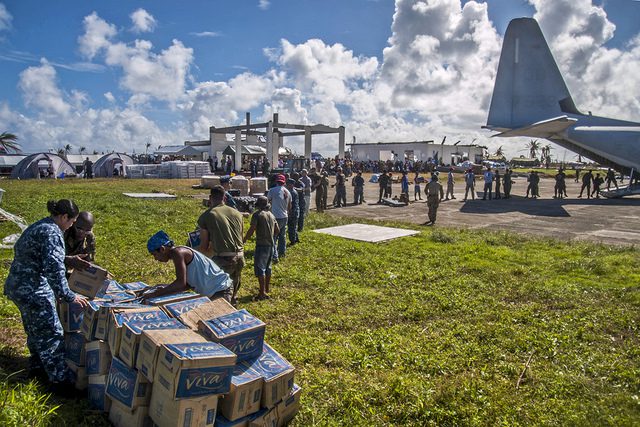
It is well known that the relationship between the U.S. and the Philippines is strained to say the least. This tension between the countries stems from a variety of issues, mainly differences in opinion on how each government is run, and the allies each country chooses to associate with. Even with such a rocky relationship, the U.S. continues to spend foreign aid on the Philippines. This is not only because they have been a longstanding ally of the U.S., but also because the U.S. benefits from foreign aid to the Philippines. These benefits come in many different forms and work for both countries.


A Strong Ally

One of the main reasons for foreign aid is that the U.S. sees the Philippines as a strong partner for trade and economic growth. Much of the aid given to the Philippines goes to increasing the economic growth and trade abilities of the country. Although the two countries are already strong economic partners, the U.S. being one the Philippines’ largest trading partners, promoting the growth of trade and increasing the power of the country’s economic capabilities benefits both countries economically.

To put this relationship into perspective, in 2017 there was $9.35 billion worth of trade between the two countries, but it was a slower year than usual. As of 2012, the average amount of trade between the two countries has been around $14.17 billion per year. The main commodity traded between the countries is electronics, the U.S.’ second biggest import is fresh fruit, and the Philippines’ is transport.


A Powerful Investment (and Investor)

The second way that the U.S. benefits from foreign aid to the Philippines is equally connected to the economic status of both countries — investment. Whether aid goes directly to investing in businesses or U.S. investments benefit from aid indirectly, this fiscal back-and-forth improves the economic growth and abilities of businesses in the Philippines which then, in turn, benefits its investors.

The U.S. is, in fact, one of the largest foreign investors in the Philippines. So as aid helps improve the economy and capabilities of businesses, the U.S. benefits just as much as the Philippines.


A Hub for Foreign Aid

Foreign aid also works as a way to strengthen the currently unstable relationship between the U.S. and the Philippines. The more both countries are able to work together and aid one another, the stronger the alliance between them grows.

The U.S. has designated the Philippines as a major non-NATO ally, and keeping this alliance together, with the help of foreign aid, benefits the U.S. both geographically and politically. The Philippines could be a valuable military ally of the U.S. if the need ever arises, and the nation also works as a diplomatic ally, whether through the alliances the Philippines holds with countries the U.S. does not, or from connections made through trade and economics.

The U.S. benefits from foreign aid to the Philippines both directly and indirectly. Not only does aid strengthen the relationship between both countries and provide a valuable political ally in the east, but it also benefits both countries through trade and investment.

– Keegan Struble

Photo: Flickr

February 8, 2018
https://borgenproject.org/wp-content/uploads/borgen-project-logo.svg 0 0 Borgen Project https://borgenproject.org/wp-content/uploads/borgen-project-logo.svg Borgen Project2018-02-08 01:30:212019-12-06 07:34:50The US Benefits from Foreign Aid to the Philippines
Aid, Foreign Aid, Global Poverty

How the U.S. Benefits from Foreign Aid to Zimbabwe

U.S. benefits from foreign aid to Zimbabwe
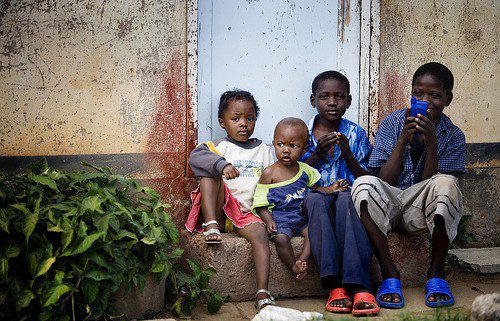
U.S. citizens share a common misconception in attitudes towards foreign aid. Contrary to popular belief, the United States government spends less than 1 percent of the federal budget on foreign assistance. Of the countries receiving this less than 1 percent, Zimbabwe relies on the United States the most heavily as its number one foreign aid provider.

With improvements in HIV/AIDS prevention and economic growth, the benefits Zimbabwe reaps from foreign aid are more apparent than what the United States gets out of the deal. Oftentimes the successes in aid-receiving countries get the focus, but the U.S. benefits from foreign aid to Zimbabwe in different, less measurable ways.


Bilateral Economic Relations

For the fiscal year of 2018, the United States is targeted to provide almost $150 million in funds to Zimbabwe. Why provide so much money to a country navigating a rather turbulent period of governance and recovering from years of economic decline?

By providing funds to Zimbabwe, the United States is working to promote Zimbabwe’s economic recovery. This provides opportunities for trade and investments that will benefit the economies of both Zimbabwe and the United States. As Zimbabwe’s economy continues to grow and prosper with the funds the United States provides, business opportunities in Zimbabwe will open up and allow U.S. citizens to take advantage of those opportunities.


International Cooperation

In addition to benefiting economically, by providing funds, the United States promotes positive international relations and thus benefits from foreign aid to Zimbabwe. The United States and Zimbabwe are members of many of the same international organizations. Both countries are members of the United Nations, the International Monetary Fund, the World Bank and the World Trade Organization.

As the world enters an age of increased international interaction and communication, the U.S. benefits from foreign aid to Zimbabwe and many other countries by cultivating relationships with other international players.


National Security

From a national security standpoint, politically and economically stable countries are less likely to go to war or engage in any type of international conflict. Military leaders have seen firsthand how addressing poverty and disease in countries benefits the United States.

Zimbabwe is currently in an uncertain political period. In November 2017, Robert Mugabe resigned as Zimbabwe’s president after 37 years in office. After a week of military occupation, Emmerson Mnangagwa came to power and is serving as president until elections in August 2018.

The United States hopes to allocate its 2018 funds to programs that advocate government transparency, enhance political participation and create an active civil society. These sorts of programs have the potential to create a sense of political stability that contributes to the security of both citizens from Zimbabwe and the United States.

One of the critiques of foreign aid is that the U.S. sends money that is chewed up by corrupt governments. This is not the case. In Zimbabwe, the United States works directly with a variety of NGOs and community leaders.

The U.S. benefits from foreign aid to Zimbabwe in many different ways encompassed by a variety of sectors. The economy, international relations, and national security are all improved by providing foreign assistance.

– Sonja Flancher

Photo: IRIN

February 7, 2018
https://borgenproject.org/wp-content/uploads/borgen-project-logo.svg 0 0 Borgen Project https://borgenproject.org/wp-content/uploads/borgen-project-logo.svg Borgen Project2018-02-07 01:30:242024-05-29 22:39:09How the U.S. Benefits from Foreign Aid to Zimbabwe
Aid, Foreign Aid, Global Poverty

How the US Benefits from Foreign Aid to Syria

U.S. benefits from foreign aid to SyriaIn March 2018, the crisis in Syria will hit the seven-year mark. The U.S. has been the top contributor of foreign aid to Syria since the Syrian civil war began. As of April 2017, the U.S. has invested $3.3 billion inside of Syria since the 2012 fiscal year.

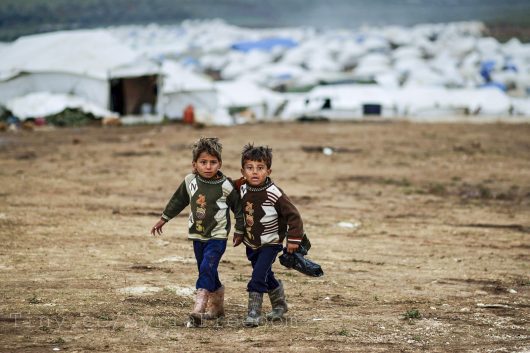
The U.S. benefits from foreign aid to Syria in several ways. Giving foreign aid to Syria will help keep Syrians alive while the country’s civil war goes on. Several countries surrounding Syria have closed their borders, preventing Syrian refugees from fleeing the country. Closed borders cause Syrians to be displaced in the country under unlivable conditions.

The U.S. provides several critical resources to Syrians such as clean water, ready-to-eat food rations, emergency medical services and shelters, as well as many other important services to the most vulnerable Syrians, such as children, the elderly and the disabled. The U.N. estimates that approximately three million Syrians have been displaced within their country to rural areas, which are not easily accessed, which is a small portion of the 13.5 million Syrians suffering within Syrian borders. The U.S. benefits from foreign aid to Syria in many respects:

Syrian Oil

Because of the Syrian civil war, the U.S. has not imported oil from the country since late 2011. Globally, Syria is a small oil distributor. However, the surrounding countries are well known for their large oil exports. Once stability is established in Syria, the U.S. will have another oil export option. Investing foreign aid into Syria helps provide the stability that its citizens desperately need.

Diplomacy

The U.S. benefits from foreign aid to Syria by showing support for its citizens during a time of crisis. Showing support for a country during times of need strengthens diplomatic relationships, which creates further socioeconomic benefits in the future. When Syria’s civil war ends, these acts of humanitarianism will not be forgotten. Continuing to invest in foreign aid for Syria will help promote positive foreign relations with the country, as well as keep the citizens well for the remainder of the civil war.

Terrorism

Syria is affected by acts of terrorism every single day. The extremist group ISIS already exists within Syrian borders. Giving foreign aid to suffering Syrians will potentially keep them from choosing to join those extremist groups. Providing hope and help to those that are suffering benefits the U.S. because it will discourage the growth of terrorism.

Refugees

Many displaced Syrians have fled to countries that will accept them. As of March 2017, more than five million Syrians have left Syria in hopes of surviving in another nation. While accepting refugees from war-torn countries is a very humanitarian thing to do, providing foreign aid within Syria gives Syrians the opportunity to continue their lives in their homeland, and lowers the chance of families being torn apart by being displaced into different nations.

As this civil war goes on, it is important for the U.S. to continue to provide help and security to the innocent Syrian citizens. The U.S. benefits from foreign aid to Syria, but more importantly, continuing to provide assistance to those in need is simply the right thing to do.

– Courtney Hambrecht

Photo: Flickr

February 4, 2018
https://borgenproject.org/wp-content/uploads/borgen-project-logo.svg 0 0 Borgen Project https://borgenproject.org/wp-content/uploads/borgen-project-logo.svg Borgen Project2018-02-04 07:30:162024-06-05 23:55:37How the US Benefits from Foreign Aid to Syria
Aid, Foreign Aid, Global Poverty

How the US Benefits from Foreign Aid to South Africa

US Benefits from Foreign Aid to South Africa
One of the crucial details to understand about foreign aid is that it benefits America as well foreign countries. Over the years, America has done a lot to contribute to struggling countries and provide them with the life-saving help and supplies they would not have otherwise.

Through this progress, America has seen benefits in disease control and the prevention of pandemics, country stabilization and national security. Consequently, foreign aid to different countries and regions across the world benefits not only the foreign countries the aid is going to but also America itself. To narrow the topic down, here are a few instances of specific U.S. benefits from foreign aid to South Africa.

Humanitarian Benefits

By aiding countries in need, America upkeeps its values and leadership by responding vigorously in times of distress. For example, after the Horn of Africa drought and consequential famine in the year 2011, the U.S. provided $740 million to Kenya, Ethiopia, Somalia, South Sudan and Sudan. America ensured its reliability as a strong and generous country by providing aid to these struggling foreign areas.

National Security Benefits

National security interests are yet another way the U.S. benefits from foreign aid to South Africa. Terrorist activities have taken place close to South Africa, including Somalia and Mali, and there has been a potential danger of Boko Haram on Nigeria, which is one of the United States’ main trading partners in Africa. Due to this, the U.S. has essential national security interests existing in that region.

The State Department handles U.S. national security interests by providing funding for counterterrorism partnerships among the U.S. and African militaries, in addition to providing training for African soldiers to practice peacekeeping missions in countries such as Somalia, Sudan and the Democratic Republic of the Congo and Liberia. So, providing such aid enables America to keep peace within their counterterrorism partnerships and as a result, helps protect America.

Economic Partnership Benefits

Economic trade is an important part of any country’s development. According to Brookings, Sub-Saharan Africa has substantial economic potential. From 2001-2010, six of the economies that proved to be growing the fastest were in this African region. This has opened up trading opportunities between the U.S. and Africa.

There are numerous U.S. benefits from foreign aid to South Africa and other struggling countries. By giving these countries assistance in times of distress, the U.S. has directly gained from such partnerships. Stimulating South Africa’s development provides trading opportunities, national security, humanitarian and other benefits to America.

Continuing U.S. Benefits from Foreign Aid to South Africa

Without foreign aid from America, places like South Africa would have little ability to grow, develop and become self-sufficient. It is imperative to understand the benefits that come directly to America from such foreign aid to ensure that efforts abroad continue. Foreign aid has proved to be an essential part of America’s diplomatic and security relationships, and the U.S. truly does benefit from such assistance.

– McCall Robison

Photo: Flickr

February 1, 2018
https://borgenproject.org/wp-content/uploads/borgen-project-logo.svg 0 0 Borgen Project https://borgenproject.org/wp-content/uploads/borgen-project-logo.svg Borgen Project2018-02-01 01:30:402019-12-18 05:48:12How the US Benefits from Foreign Aid to South Africa
Aid, Foreign Aid, Global Poverty

How the US Benefits From Foreign Aid to Egypt

U.S. benefits from foreign aid to EgyptThere are many ways that Egypt has benefited from aid from the U.S. For years, poverty in Egypt has been a serious issue, with over a quarter of the population living below the national poverty line. With a turbulent economy, Egypt has relied on foreign aid and partnerships to keep the country sustained. But this is not the whole story. In fact, the U.S. benefits from foreign aid to Egypt.

Egypt receives more U.S. aid than any other country, except for Israel, Afghanistan, Pakistan and Iraq. Although the amount varies from year to year, U.S. foreign assistance to Egypt has averaged about $2 billion a year since 1979. It was during this time that Egypt struck a peace treaty with Israel, thus aligning itself with American interests and foreign policy. Once this commitment to maintaining peace in Israel was established, the U.S. began providing aid to Egypt to sustain this treaty.

Peace with Israel and Other Arab States

According to Robert Springborg, a Middle East expert and non-resident fellow at the Italian Institute of International Affairs, the primary benefit is the “cessation of hostilities against Israel” by Egypt and “other Arab states that could not wage war against Israel in the absence of Egyptian participation.” Egyptian support for American counterterrorism and counterinsurgency campaigns helps fuel peace and eliminate conflict that could reach U.S. soil.

Military Jobs

The U.S. benefits from foreign aid to Egypt have also helped create jobs and reduce unemployment in the U.S. More than 1.3 million Americans work in manufacturing weapons for defense companies, and more than three million others support the industry indirectly. According to the Stockholm International Peace Research Institute, “the U.S. is among the world’s top five arms producers and distributors.” This does not mean that the U.S. gives money to Egypt for military equipment, however. It means it gives the Egyptian military a list of equipment the American government will purchase on its behalf in the United States, thus aiding in the U.S. job market.

According to the State Department, military aid has included tanks, armored personnel carriers, anti-aircraft missile batteries and surveillance aircraft in addition to the F-16 fighters and Apache attack helicopters. U.S. benefits from foreign aid to Egypt also include expedited processing for U.S. Navy warships when passing through the Suez Canal.

Economic Stability

Since Egypt’s domestic stability is important to the U.S.,  there is an interest in its local economy. The Egyptian military controls up to 60 percent of the Egyptian economy, so it is crucial that for peace in the U.S. continue, there must be a form of economic aid and suitability. Therefore, by providing aid to Egypt to keep its economy stable, the U.S. in turn benefits from this alliance.

This alliance shows the importance of funding and supporting foreign aid. It not only affects the people and economy of many other nations, but there are also many benefits that drastically affect the way Americans live their lives. It only further strengthens the argument that aiding other countries is important and necessary.

– Kailey Brennan

Photo: Flickr

January 29, 2018
https://borgenproject.org/wp-content/uploads/borgen-project-logo.svg 0 0 Borgen Project https://borgenproject.org/wp-content/uploads/borgen-project-logo.svg Borgen Project2018-01-29 07:30:182019-11-08 02:39:03How the US Benefits From Foreign Aid to Egypt
Aid, Foreign Aid, Global Poverty

Diplomatic Ties: How the U.S. Benefits from Foreign Aid to Iran

How the US Benefits from Foreign Aid to IranMany times, governments overshadow the amount of compensation they receive from humanitarian acts. Often, in some way or another, governments will be compensated for their actions, whether through monetary funds or through access to resources. Along with hundreds of other countries and communities, the U.S. benefits from foreign aid to Iran in many ways.
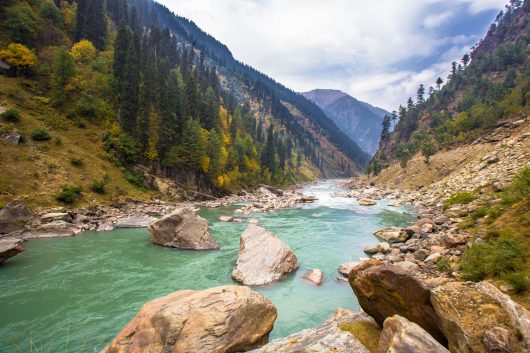
In 2016, the American government provided $3,350,327 in aid to the Iranian people. This money is portioned out into multiple areas, but the majority of it has been paid to Iran by the U.S. Department of Energy for the purpose of removing and destroying nuclear-grade weapons from Iranian civilians and other civilians who may have access. Although the U.S. has had uncertain relations with Iran in the past, the amount of aid the government has given them is fairly average in relation to how much aid they give to other countries in the region.

There are other ways that the U.S. benefits from foreign aid to Iran as well. According to the U.S. Census Bureau, the U.S. received nearly $54.8 million in imports from Iran last year. Iran’s major export is in crude petroleum, along with ethylene polymers and acyclic alcohols. However, what is surprising is that the United States does not even rank as one of Iran’s top exporting partners. Iran relies on the U.S. funds for certain processes such as energy regulation, but the U.S. does not receive quite so much financial gain in return.

So, what does the United States receive?  To some extent, the U.S. government receives diplomatic relations from the money it spends. For supporting Iran, and for interacting in an international trade society, the United States receives not only imports and surpluses from the Iranian government, but it also receives a certain level of compromise and commitment from Iran when it comes to aid and foreign interaction.

The United States has maintained diplomatic relations with Iran since 1979, when Iranian rebels held U.S. employees hostage in the U.S. embassy in Iran for 444 days. After that series of events, new sanctions and agreements were created by the joint governments in an attempt to salvage relations. Since 1981, the U.S. government has maintained diplomatic ties quite well, until recently.

Currently, with a deteriorating situation involving Iran in Syria, and Israel on the defensive in the same region, the U.S. has some serious decisions to make. These decisions will determine not only the ability of the United States to keep Iran as an ally, but will also change the dynamics of U.S. foreign relations in the Middle East as a whole. While the U.S. benefits from foreign aid to Iran on a monetary and diplomatic basis, there is definitely a delicate balance at stake for the United States and Iran both. Diplomatic Ties

– Molly Atchison

Photo: Flickr

January 27, 2018
https://borgenproject.org/wp-content/uploads/borgen-project-logo.svg 0 0 Borgen Project https://borgenproject.org/wp-content/uploads/borgen-project-logo.svg Borgen Project2018-01-27 06:59:562024-06-05 23:55:36Diplomatic Ties: How the U.S. Benefits from Foreign Aid to Iran
Aid, Foreign Aid

How the U.S. Benefits from Foreign Aid to Kazakhstan

US Benefits from Foreign Aid to KazakhstanOn Jan. 16, 2018, U.S. President Donald Trump held press conferences at the White House with President Nursultan Nazarbayev of Kazakhstan to discuss U.S. benefits from foreign aid to Kazakhstan, and trade agreements which favor both countries. “[President Nazarbayev] is working to improve Kazakhstan’s business environment, which will create new opportunities for American companies who are over there, and lots of jobs are being provided to both countries,” President Trump stated.
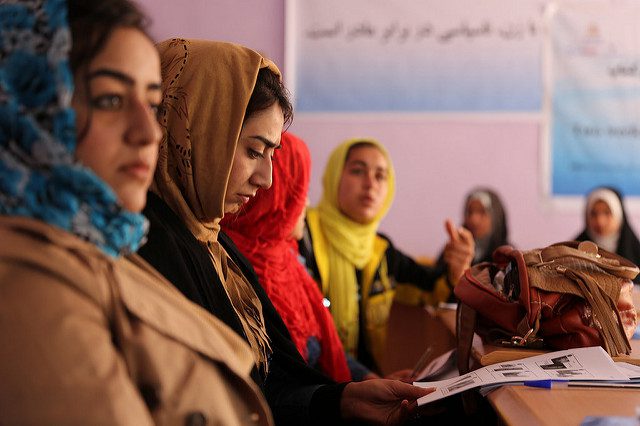
American businesses are among the largest investors in Kazakhstan’s economy. Both presidents are pursuing opportunities to increase U.S. investment in Kazakhstan and the energy sector, in particular.

The U.S. Agency for International Development (USAID) has a strong focus on supporting Kazakhstan through its energy sector. USAID assists in strengthening the nation’s green energy policies, improving energy efficiency and increasing renewable energy supply. By improving regional business and trade connections, Kazakhstan’s energy sector enhances trade avenues between Central and South Asia. By diversifying Kazakhstan’s economy, the U.S. benefits from foreign aid to Kazakhstan through the energy sector.

During the press conference, President Nazarbayev elaborated on the key role that economic relations play between U.S. and Kazakhstan, saying “[w]e have major American companies operating for many years. We have Chevron, ExxonMobil. We have General Electric, Halliburton. And all these companies invested about 50 billion into Kazakhstani economy so far. And also, that trade created additional 5,000 jobs in United States.”

In President Nazarbayev’s recent visit to the White House, he signed major trade agreements which consisted of 20 commercial contracts worth $7.5 billion. The trade agreements are set to accomplish the following:

  1. Promote U.S. investment in the technical modernization of Kazakhstan’s economy.
  2. Initiate the purchasing of Boeing planes in Kazakhstan.
  3. Initiate the assembling of 900 new General Electric locomotives in Kazakhstan.
  4. Collaborate with the U.S. in Kazakhstan’s agriculture sector.

President Trump applauded U.S. investment in Kazakhstan as part of the Central Asia Trade Forum and Central Asia Trade and Investment Framework Agreement. The presidents are working in providing American products and services in the form of commercial aircraft, railways, medical services, technology and energy.

The U.S. benefits from foreign aid to Kazakhstan through national security. Kazakhstan has provided humanitarian and technical support to Afghanistan worth $75 million. Additionally, the nation has invested $50 million in providing professional training and education to Afghanis in Kazakhstan, which would have been otherwise unavailable Afghanistan. Kazakhstan plays a crucial role in moving toward a peace process in Afghanistan, which will in turn foster greater stability and prosperity across the Central and South Asian region and minimize national security threats.

National security is central to the foreign powers’ relations. Kazakhstan is a valued partner in preventing the North Korean regime from threatening the globe with nuclear devastation, a direct result of how the U.S. benefits from foreign aid to Kazakhstan. President Trump commended Kazakhstan’s voluntary elimination of nuclear weapons in the country, which provides a safer and healthier environment for Kazakhstani children.

President Trump has pledged to offer assistance to improve English education programs in Kazakhstani schools, in part to sustain global competitiveness. The two nations are reaching trade agreements entailing the reciprocity of consular expansion and jobs in both the U.S. and Kazakhstan.

Kazakhstan’s economic growth has increased steadily since gaining independence after the Soviet Union’s dissolution in 1991. However, the nation continues to face developmental challenges, and 25 percent of the population lives below the poverty line. In 2017, the U.S. invested $13 million to Kazakhstan in foreign assistance.

As of January 2018, the U.S. Department of State and USAID plan on funding $1.7 million toward peace and security to Kazakhstan in the 2018 fiscal year, exclusive of the nations’ recent trade agreement. The projected amount of U.S. foreign aid is expected to increase as the year progresses, furthering Kazakhstan’s chance for economic success.

– Alex Galante

Photo: Flickr

January 27, 2018
https://borgenproject.org/wp-content/uploads/borgen-project-logo.svg 0 0 Borgen Project https://borgenproject.org/wp-content/uploads/borgen-project-logo.svg Borgen Project2018-01-27 01:30:262024-05-29 22:39:01How the U.S. Benefits from Foreign Aid to Kazakhstan
Foreign Aid, Global Poverty, USAID

10 Facts About USAID That Everyone Should Know

10 Facts About USAIDThe United States Agency for International Development (USAID) is the world’s premier development organization. Founded in 1961, the agency has overseen decades of world economic growth and an unprecedented reduction in global poverty.
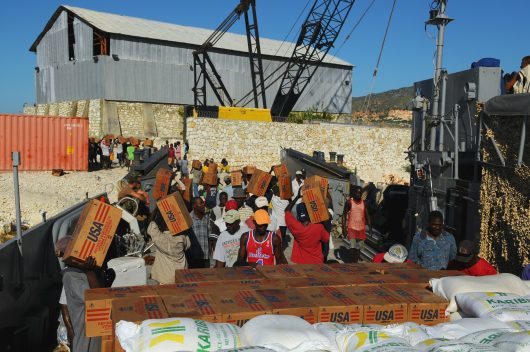

 

10 Important Facts About USAID:


  1. USAID is an independent agency of the U.S. federal government and operates subject to the guidance of the President, the Secretary of State and the National Security Council.
  2. USAID is the largest provider of food assistance in the world.
  3. USAID’s annual budget of $27 billion is larger than the national spending of 165 countries.
  4. Intervention by USAID is always subject to careful analysis to prevent disruption of local agricultural production, markets and adverse effects on recipient nation currencies.
  5. USAID’s budget, spending and programs are subject to oversight and auditing by the Office of Management and Budget in the White House, and the Government Accountability Office under the legislative branch. All of its budget and oversight documents are public record.
  6. USAID has made steady improvement in recent years in rankings by the International Aid Transparency Initiative, primarily due to better data management and increased technology modernization.
  7. As these 10 facts about USAID demonstrate, the organization’s mission involves much more than direct crisis aid. Besides food and disaster relief, USAID has major directives in health, human rights and governance, education, economic growth, agriculture and food security and gender equality.
  8. A significant number of countries have gone from recipients of USAID programs to become donor nations themselves. The Republic of Korea and Brazil are two prime examples.
  9. USAID’s spending accounts for less than one-half of one percent of the U.S. federal budget.
  10. After decades of change, in 2013 USAID launched a new mission statement for the 21st century built on two pillars: ending extreme poverty, and promoting democratic, resilient societies.

As a key pillar in development efforts worldwide, USAID is central to the history of this century, as the world stands on the cusp of some of its greatest humanitarian achievements while, at the same time, facing unprecedented ecological challenges. USAID is a leader and a massively experienced player in facing the world’s biggest problems. Strategies to improve aid and development around the world and to sustain progress into the future rely on these facts about USAID.

– Paul Robertson

Photo: Flickr

January 26, 2018
https://borgenproject.org/wp-content/uploads/borgen-project-logo.svg 0 0 Borgen Project https://borgenproject.org/wp-content/uploads/borgen-project-logo.svg Borgen Project2018-01-26 07:30:072024-05-29 22:38:5910 Facts About USAID That Everyone Should Know
Aid, Aid Effectiveness & Reform, Foreign Aid, Global Poverty

The Ways the US Benefits from Foreign Aid to Brazil

U.S. Benefits from Foreign Aid to Brazil
For the projected Fiscal Year 2018 budget, the United States is allotting $815,000 to Brazil. This budgetary decision is planned to further a partnership with the government of Brazil in improving regional stability through security and law-enforcement, progress in medical care and increasing environmental coordinating and military training. In addition to these improved Brazilian conditions, there will be U.S. benefits that come from foreign aid to Brazil.

A Fruitful Partnership

This budget will assist the Ministry of Health in creating an AIDs-free future population. Funding from this budget will also address military protection to combat transnational crime through advancements in the rule of law and counterterrorism programs.

The two countries also opened dialogues addressing other concerns regarding climate change. Previous signing in 2015 of the U.S.-Brazil Joint Initiative on Climate Change, and the USAID-GOB Development Objective Agreement on Biodiversity Conservation signed in 2014, focuses on biodiversity conservation and climate change mitigation.

This partnership that enables the countries to address current issues is one way the U.S. benefits from foreign aid to Brazil.

Since The United States was the first country to recognize Brazil’s independence in 1822, the two countries have a long history of working together to expand economic growth, support human rights and improve defense and security.

Shared Interests

The countries have shared development in education, energy, health, science and technology. Due to previous foreign aid, Brazil has bolstered itself into a position of economic growth that has enabled it to import U.S. goods and export to the U.S. while also supplying foreign aid to other developing countries.

Combatting the Zika Virus

There are also large efforts being taken between the U.S. government and the government of Brazil to address and fight the Zika virus. USAID and Brazil are also looking to further development in other countries, particularly African and Latin America, as well as provide food security through agriculture development and productivity in Haiti, Honduras and Mozambique.

Trade and Tourism

Some other ways the U.S. benefits from foreign aid to Brazil are through trade, business investments and tourism. Since 2003, Brazilian firms made large investments in the U.S., amounting to billions of dollars. These projects amounted to $2.5 billion in 2010 and, once they’re completed, will create 4,806 new jobs in a variety of different sectors.

Commerce with Brazil creates both small and large business ventures, with one being the WindStream company based out of New Albany, Illinois.

This partnership between the U.S. and Brazil promotes the growth of both economies through trade and provides economic durability. It furthers the advancements of both countries enabling the countries to supply aid to developing countries. The partnership between the U.S. and Brazil shows the benefits of foreign aid and the progression that continuous aid can provide to other countries.

– Bronti DeRoche

Photo: Flickr

January 26, 2018
https://borgenproject.org/wp-content/uploads/borgen-project-logo.svg 0 0 Borgen Project https://borgenproject.org/wp-content/uploads/borgen-project-logo.svg Borgen Project2018-01-26 01:30:352024-05-29 22:30:19The Ways the US Benefits from Foreign Aid to Brazil
Aid, Foreign Aid, Global Poverty

Providing Foreign Aid in 2018

With the end of 2017 approaching, Congress is working on appropriations bills for the year 2018 that will determine where and how much money will be spent on government programs. Science, research and providing foreign aid in 2018 are among some of the things these bills will impact.

In September 2017, the Senate Appropriations Committee approved $51 billion for foreign aid, the State Department and other related programs for 2018. This bill will also provide more than $6 billion for humanitarian assistance.

The issue of providing foreign aid has received bipartisan support in Congress, with both Democrats and Republicans going against President Trump’s proposed cuts to foreign assistance programs. The $6 billion approval for humanitarian assistance is approximately $1 billion more than the president requested.

The U.S. Secretary of State, Rex Tillerson, is one of President Trump’s main voices of support. Tillerson believes that the budget is “historically high” and that it has grown to provide foreign aid and respond to conflicts abroad.

President Trump’s proposed 30 percent budget cut to USAID, the State Department, U.N. contributions and programs like Power Africa and the Peace Corps has also received criticism from Democrats and Republicans alike. Republican Senator Lindsey Graham of South Carolina voiced his support of providing aid by saying, “Now is the time to double down on diplomacy and development.”

Furthermore, the bill proposed by the Senate Appropriations Committee will resume its $10 million funding for the U.N. Environment Programme, counteracting President Trump’s proposal to end it.

“Frankly, I consider the President’s budget request to be dead on its arrival here in the U.S. Senate,” said Sen. Chris Coons of Delaware. “The aid we provide to countries around the world directly advances U.S. national interests by fostering a safer and more stable world, opening markets to U.S. businesses and promoting American values.”

In addition to being a member of the Senate Foreign Relations Committee and the Appropriations Subcommittee, Senator Coons serves as a co-chair of the Congressional Caucus of Effective Foreign Assistance alongside Senator Johnny Isakson (R-GA), Representative Adam Smith (D-WA) and Representative Ted Yoho (R-FL).

Zimbabwe is one of many countries that relies on the United States providing foreign aid. The $150 million in aid provided by the U.S. yearly is used to help with hunger and climate change programs. With a population of 2.1 million people, the foreign aid provided to Zimbabwe has resulted in the creation of the ENSURE program. ENSURE has helped six districts dealing with famine and has provided proper irrigation systems for over 220 hectares serving 4,200 farmers.

With bipartisan support, the United States plans to continue providing foreign aid into 2018. Members of Congress agree that providing foreign aid is vital to both the United States and the world.

– Blake Chambers

Photo: Flickr

December 11, 2017
https://borgenproject.org/wp-content/uploads/borgen-project-logo.svg 0 0 Borgen Project https://borgenproject.org/wp-content/uploads/borgen-project-logo.svg Borgen Project2017-12-11 01:30:402020-01-03 19:50:07Providing Foreign Aid in 2018
Page 38 of 61«‹3637383940›»

Get Smarter

  • Global Poverty 101
  • Global Poverty… The Good News
  • Global Poverty & U.S. Jobs
  • Global Poverty and National Security
  • Innovative Solutions to Poverty
  • Global Poverty & Aid FAQ’s
Search Search

Take Action

  • Call Congress
  • Email Congress
  • Donate
  • 30 Ways to Help
  • Volunteer Ops
  • Internships
  • Courses & Certificates
  • The Podcast
Borgen Project

“The Borgen Project is an incredible nonprofit organization that is addressing poverty and hunger and working towards ending them.”

-The Huffington Post

Inside The Borgen Project

  • Contact
  • About
  • Financials
  • President
  • Board of Directors
  • Board of Advisors

International Links

  • UK Email Parliament
  • UK Donate
  • Canada Email Parliament

Get Smarter

  • Global Poverty 101
  • Global Poverty… The Good News
  • Global Poverty & U.S. Jobs
  • Global Poverty and National Security
  • Innovative Solutions to Poverty
  • Global Poverty & Aid FAQ’s

Ways to Help

  • Call Congress
  • Email Congress
  • Donate
  • 30 Ways to Help
  • Volunteer Ops
  • Internships
  • Courses & Certificates
  • The Podcast
Scroll to top Scroll to top Scroll to top