• Link to X
  • Link to Facebook
  • Link to Instagram
  • Link to TikTok
  • Link to Youtube
  • About
    • About Us
      • President
      • Board of Directors
      • Board of Advisors
      • Financials
      • Our Methodology
      • Success Tracker
      • Contact
  • Act Now
    • 30 Ways to Help
      • Email Congress
      • Call Congress
      • Volunteer
      • Courses & Certificates
      • Be a Donor
    • Internships
      • In-Office Internships
      • Remote Internships
    • Legislation
      • Politics 101
  • The Blog
  • The Podcast
  • Magazine
  • Donate
  • Click to open the search input field Click to open the search input field Search
  • Menu Menu

Archive for category: Foreign Aid

Foreign aid coverage and information.

Aid, Foreign Aid, Global Poverty

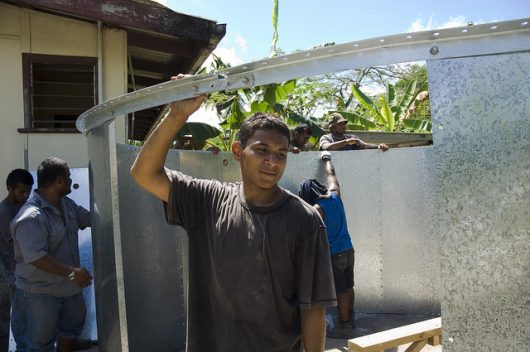
How the US Benefits from Foreign Aid to Papua New Guinea

U.S. benefits from foreign aid to Papua New Guinea
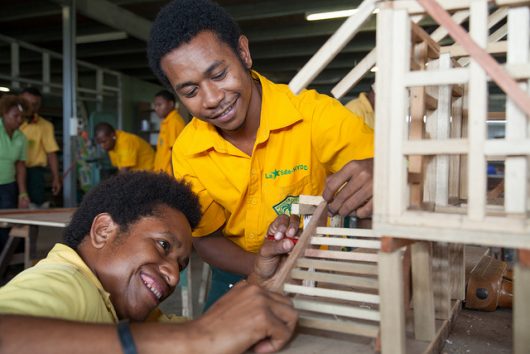
Papua New Guinea is a country rich in mineral, agricultural, forestry and fishery resources. The country suffers from weak governance, corruption, limited capacity to deliver basic services, a deterioration of its health system and a concentrated HIV/AIDS epidemic among key populations. 

With the help of U.S. bilateral and multilateral assistance, Papua New Guinea has experienced recent economic progress based around its abundant energy, agricultural and mineral resources. As a result, the U.S. benefits from foreign aid to Papua New Guinea as well.

For the 2017 fiscal year, U.S. aid to Papua New Guinea totaled $9.1 million. The largest areas of focus included strengthening HIV/AIDS services for more at-risk populations ($3.5 million), disaster readiness ($3.5 million) and general climate protection through the Pacific-American Climate Fund ($1.6 million).

Providing the opportunity for stability in impoverished countries strengthens their stability and benefits the U.S. through contributing to trade and foreign relations. 

Trade a Key Way the U.S. Benefits from Foreign Aid to Papua New Guinea

The U.S. benefits from foreign aid to Papua New Guinea through trade relations. In 2016, the U.S. had a trade surplus with Papua New Guinea of $35 million. U.S. goods exports to Papua New Guinea totaled $127 million in 2016, while U.S. goods imports totaled $92 million. Key U.S. exports included machinery and mechanical appliances, cereals and aircraft.

The major U.S. exports to Papua New Guinea are petroleum and mining machinery and aircraft. Imports to the U.S. from Papua New Guinea include gold, copper ore, cocoa, coffee and other agricultural products. 

Additionally, through the U.S.-Pacific Islands Multilateral Tuna Fisheries Treaty, Papua New Guinea is able to access U.S. fishing vessels in exchange for a license fee from the U.S. industry.

Asia Pacific Economic Cooperation

The U.S. benefits from foreign aid to Papua New Guinea through foreign relations. The United States and Papua New Guinea meet through a mutual membership in the Asia Pacific Economic Cooperation (APEC). APEC facilitates trade and investment, economic growth and regional cooperation. It serves as the leading forum in the Asia Pacific community and focuses on developing and strengthening the multilateral trading system, increasing the interdependence of member economies and promoting sustainable economic growth in the region. 

APEC’s work is non-binding, meaning that decisions are made based on consensus and commitments are taken voluntarily. APEC has contributed to the reduction of barriers to trade, such as tariffs, which has led to the expansion of economic growth and international trade in the region.

U.S. Promote Good Governance in Papua New Guinea

In addition to APEC, the United States and Papua New Guinea have a history of close partnership. The two countries work together to combat issues such as improving transparency and good governance, fighting human trafficking, restraining the effects of climate change, protecting fisheries, improving public health and promoting gender equality. The militaries of both the U.S. and Papua New Guinea have a cooperative security assistance relationship that focuses on joint humanitarian exercises and the training of Papua New Guinean military personnel.

Papua New Guinea and the U.S. belong to several of the same international organizations, including the United Nations, the International Monetary Fund, the World Bank, the World Trade Organization, the ASEAN Regional Forum, the Pacific Community and the Secretariat of the Pacific Regional Environment Program.

The U.S. aims to improve countries around the world by supporting them with foreign aid. Countries such as Papua New Guinea have shown that the money provided to them has strengthened their economic conditions, and in turn, the U.S. benefits from foreign aid to Papua New Guinea through trade and foreign relations. 

– Anne-Marie Maher
Photo: Flickr

June 9, 2018
https://borgenproject.org/wp-content/uploads/borgen-project-logo.svg 0 0 Borgen Project https://borgenproject.org/wp-content/uploads/borgen-project-logo.svg Borgen Project2018-06-09 01:30:312024-06-06 00:08:00How the US Benefits from Foreign Aid to Papua New Guinea
Foreign Aid

A Stronger Economy and a Changing Côte d’ Ivoire

A Changing Côte d’Ivoire
Côte d’Ivoire is located in Western Africa off the Gulf of Guinea. In recent years, Côte d’Ivoire’s increased stability has attracted foreign investment and its swelling middle class has created domestic demand. Both of these have been possible as a changing Côte d’Ivoire evolves with its three main crops: cocoa, coffee and cashews.

History of Côte d’Ivoire

Côte d’Ivoire is a country with a troubled past. It began as a French colony that was granted independence in 1960 under President Felix Houphouet-Boigny, who held the post until his death in 1993. There was relative peace and democracy until the 2000 election when Alassane Ouattara decided to run against the current President Henri Konan Bedie. This election split the country into the north and south.

The north, led by Ouattara, was a Muslim-based rebel group; the South turned into a Christian-based government. Then, after some deadly hostilities, the U.N. sent a peacekeeping force in 2004. Events continued in this vein until 2010 when Ouattara was elected president. Laurent Gbagbo (who at the time had claimed leadership for himself) refused to accept terms, which led Ouattara to lead troops across the country in 2011. Gbagbo was captured and later tried for crimes against humanity.

It has been a long road since the end of the civil war in 2011, but the country has been on track for beginning to turn life around for its citizens. There are still instances of unrest, such as in 2017 when demobilized soldiers took to the streets, demanded pay and did not return to their barracks until the government had paid them back $21,000. In this particular instance, 15 people died.

Points of Concern

There are also suggestions of the government using false accusation to hold journalists or publishers back. On February 12th, six journalists were held for 48 hours after they reported the payment to the mutineers. Another instance was when an online news editor was charged for releasing fake news after an interview with ex-President Gbagbo’s son, Michel.

Along with potentially wrongful convictions is the concern over Côte d’Ivoire’s ability to handle criminals. Particularly those accused of the human rights abuse during the civil war. The trial of former First Lady Simone Gbagbo led many to lose belief in the judiciary system after she was released.

A Bright Future

Despite concerns, there have been some impressive steps in the right direction. President Ouattara is helping to create a changing Côte d’Ivoire with a new constitution as well as putting forth continued efforts to strengthen the judicial system. The government has also adopted a decree to help enforce the law that strengthened human rights defenders three years ago.  

The increased stability has led to increased investment and the ability to focus on agricultural strengths. Côte d’Ivoire has the second highest growth rate in Sub-Saharan Africa standing around 8.8 percent as of 2016. While the middle class is currently at 23 percent. Both of these growth trajectories have been made possible by the cash crops (cocoa, coffee, and cashews).

Cashews, while not being a native to Côte d’Ivoire, hit a record of 625,000 tons in its first growing season of 2015. By the end of 2015 Côte d’Ivoire passed India in cashew exports making it the largest cashew exporter. The Côte d’Ivoire government offered a bonus payment of CFA 400 for every kilogram of cashew exports.

Moments of Success

The Côte d’Ivoire has evolved as successes and incentives increased interest from foreign investors. China has invested and given foreign aid totaling around $4 billion to the Côte d’Ivoire in the last 15 years. Such investments lead to improved infrastructure, especially in Côte d’Ivoire’s energy sector. With its growing energy sector, power demand has grown 10 percent within the nation each year from 2012-2017.

A changing Côte d’Ivoire has brought wealth and prosperity to the country. However, there is still a ways to go as Côte d’Ivoire learns how to face and deal with the aftermaths of the civil war.

– Natasha Komen
Photo: Flickr

June 6, 2018
https://borgenproject.org/wp-content/uploads/borgen-project-logo.svg 0 0 Borgen Project https://borgenproject.org/wp-content/uploads/borgen-project-logo.svg Borgen Project2018-06-06 01:30:002024-05-29 22:42:37A Stronger Economy and a Changing Côte d’ Ivoire
Foreign Aid

Three Debunked Myths About Overpopulation and Poverty

Overpopulation and Poverty
There has been a longstanding notion that overpopulation and poverty are related. The belief is that overpopulation causes poverty. While it is true that many of the poor nations around the world are overpopulated, research has shown that overpopulation is not the prime reason for poverty.

Experts believe that blaming overpopulation for the financial struggle of a nation could be an oversimplification of the problem. Here are the three main myths when it comes to overpopulation and poverty.

Three Myths About OverPopulation and Poverty

  1. Improving healthcare in poor nations contributes to overpopulation: Couples in poor nations on an average have four children, double the average of their counterparts in a developed nation. It is not a coincidence that the same nations also have the highest infant mortality rate and the worst healthcare facilities in the world. The reason for this is that parents are hoping to make sure that at least two of their children live long enough to take care of them when they are old. When medical facilities are improved, the infant mortality rate drops. As a result, children are less affected by fatal diseases and live longer healthier lives. Gradually, parents start to have smaller families due to a confidence that their existing offspring shall live and thrive and the overall population growth rate starts to drop.Therefore, poor health care conditions are actually what contribute to overpopulation and poverty. Conversely, improving healthcare facilities helps reduce the population.
  2. Foreign aid to poor countries leads to overpopulation: The U.S. contributes less than one percent of its GDP toward foreign aid. The funding reaches the poorest of nations around the world, helping them fulfill the basic needs of their populations like providing grains at subsidized rates, providing clean drinking water and building toilets, among others. This, in turn, reduces the risk of fatal diseases like typhoid and diarrhoea.Foreign aid also supports education, specifically girls’ education. Educating a female child is still considered an unnecessary financial burden or even taboo in many societies. Girls’ education is often discontinued to fund their brothers’ education.Girls’ education is a key factor to resolve overpopulation and poverty. Research and data in the past decades have shown that improving girls’ education has a direct and profound impact on population control. Therefore, foreign aid does not cause overpopulation; rather, it helps uplift nations out of poverty, giving them basic amenities and education.
  3. Overpopulation cannot be solved in this lifetime: Controlling the constantly rising population is a daunting task. Based on the current population growth rate, the world population is projected to swell to 11 billion people in the year 2100. Nevertheless, by reaping the benefits of persistent efforts toward improving global medical facilities, equality in education and birth control awareness overpopulation and poverty can be resolved. More importantly, it is possible in this lifetime.By bringing down the average number of children per couple to 1.5, total world population would decline to about six billion by 2100–less than half the projected rise! Fewer people means more resources, subsequently leading to a greater number of self-sufficient and prosperous nations.

These myths about overpopulation and poverty have persisted for years and still continue to stand in the way of poverty eradication. If the world is to move toward a brighter, healthier, more equal future for all, these myths must be eradicated as well.

– Himja Sethi
Photo: Flickr

June 4, 2018
https://borgenproject.org/wp-content/uploads/borgen-project-logo.svg 0 0 Borgen Project https://borgenproject.org/wp-content/uploads/borgen-project-logo.svg Borgen Project2018-06-04 01:30:472024-05-29 22:42:36Three Debunked Myths About Overpopulation and Poverty
Aid, Foreign Aid

How the US Benefits from Foreign Aid to Nauru

U.S. Benefits from Foreign Aid to Nauru

Nauru is a small island nation that, on a map, seems like a speck in the ocean. However, there are 10,000 people that live here, and a dire situation faces the population. As the world faces rising temperatures, island nations like Nauru are in grave danger. According to the Inter-Governmental Panel on Climate Change, sea levels are scheduled to rise between 2 and 3 feet this century. If greenhouse gas emissions are not slowed, sea levels could rise even faster, which would lead to a devastating situation in Nauru producing thousands of refugees and the loss of a homeland.

The current U.S. administration has been slashing budgets for foreign aid, and many have condemned this nationalistic approach to global poverty. The International Rescue Committee has called the proposed cuts “counterproductive and ill-timed,” especially in the face of global instability due to climate change. Considering the ways in which the U.S. benefits from foreign aid to Nauru, these cuts seem counterproductive.

President Trump banned the provision of U.S. funds to countries supportive of Georgia’s “Russian Occupied Territories” in 2017. Since Nauru recognized these territories as independent, it is losing U.S. funding in a time of dire need. The U.S. has historically provided direct assistance to Nauru in the form of water-tanker trucks and aid for Nauru’s law enforcement. Many are urging the U.S. government to reconsider, as countries like Nauru are in extreme need of aid.

The fact of the matter is that when the U.S. provides foreign aid, it boosts national security and helps the global economy. The U.S. benefits from foreign aid to Nauru, as, according to the Bill and Melinda Gates Foundation, everyone is better off when there are more middle-income countries in the world.

Shared prosperity prevents global epidemics and war, and promotes U.S. exports because more countries can afford them. In addition, it promotes global stability and improves the mindset of Americans in a humanitarian manner. Another way that the U.S. benefits from foreign aid to Nauru is that it will prevent a refugee humanitarian crisis, as is happening in Syria.

More specifically to this country, the U.S. benefits from foreign aid to Nauru by the provision of seafood stocks to U.S. fisherman. Nauru is home to the world’s largest sustainable tuna fishery. The fishery is a global leader in tuna conservation, and it provides a product that many U.S. consumers enjoy. If Nauru is not provided aid, world tuna stocks will greatly deplete, which would be destructive to this industry.

The World Bank strongly champions the benefits of foreign aid to Nauru in relation to fish stocks, and addressed this topic in conjunction with increasing economic returns and sustainable management. If there is targeted investment, an extra $300 million could be netted without depleting fish stocks. This aid would greatly improve Nauru’s economy, creating benefits for U.S. exporters and fishermen.

The facts are clear: Nauru needs help, and it needs it now. Experts are condemning current U.S. policy that prohibits aid. The good news is, by providing funds to Nauru, the U.S. is also benefitting itself.

– Jillian Fox
Photo: Flickr

May 28, 2018
https://borgenproject.org/wp-content/uploads/borgen-project-logo.svg 0 0 Borgen Project https://borgenproject.org/wp-content/uploads/borgen-project-logo.svg Borgen Project2018-05-28 13:15:082024-05-29 22:42:33How the US Benefits from Foreign Aid to Nauru
Foreign Aid

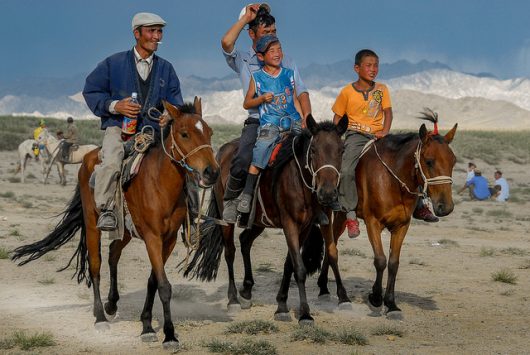
How the US Benefits from Foreign Aid to Mongolia

Foreign Aid to Mongolia
Since its formation in 1987, the U.S. diplomatic relationship with Mongolia has remained incredibly strong in the areas of development, security, and trade. Mongolia sits in an interesting geopolitical position due to its shared borders with China and Russia. As China and Russia continue to act as rivals to U.S. military and economic policy, Mongolia becomes more significant component to U.S. foreign policy in Asia and Eastern Europe. Although total foreign assistance to Mongolia is relatively small, the U.S. has benefited greatly from ensuring a future of peace and democratic idealism in Mongolia. 

A Democratic Mongolia

Mongolia has often referred to the U.S. as its most important “third neighbor.” At first glance, the value of providing foreign assistance might seem elusive. In comparison to the Russian and Chinese titans, Mongolia’s value may seem inconsequential. This couldn’t be further from the truth. As popular support for democratic institutions begins to increase in tempo, Mongolia serves as a beacon of light for democratic values in the region. Since 1990, the year in which Mongolia formally became a democratic country, over 10 elections has occurred on the legislative and presidential level. The continued success Mongolians have seen in democratic institutions has bolstered the over-arching U.S. mission of spreading democratic ideals across the globe. This is one major way in how the U.S. benefits from foreign aid to Mongolia. 

The Education Vehicle

Within the same vein, English has been made mandatory in Mongolia’s educational system since 2005. Furthermore, Mongolia has committed roughly $600,000 to the Fulbright master’s program, which has greatly increased the total number of Mongolians studying in the United States. A newly launched program in 2017 gives Mongolian high school students the chance to study abroad in the U.S. Continued sponsorship and foreign aid in programs such as these not only gives Mongolians access to U.S. universities and schools but also helps carry the torch of U.S. democratic values to less accessible regions of the world. In this case, particularly Russia and China. 

Geopolitical Ally

In recent years, tensions between the U.S. and Russia have increased due to the Crimean crisis and civil war within Ukraine. The Russo-U.S. relationship has remained relatively frigid since these cataclysmic events. Mongolia’s shared border and partnership with the U.S. gives the latter country increased geopolitical proximity to the Kremlin. Within the realm of conflict, Mongolia also has deployed troops to support the U.S. effort in Iraq and Afghanistan. The U.S. sponsored a program entitled “Khan Quest,” which was aimed at improving Mongolian military competency at home and abroad. Providing military support in Mongolia has allowed the U.S. a slight buffer to Russian influence in Asia. This is how the U.S. benefits from foreign aid to Mongolia. 

Aid

In 2015, the Mongolian economy grounded to a halt after a long period of growth and prosperity. Prior to the crash, U.S. exports to Mongolia totaled in around $650 million. The U.S. aid budget to Mongolia for FY19 is $1.75 million, all of which will be dedicated towards peace and security. As a target for U.S. exports, foreign assistance to Mongolia becomes increasingly important. Holding a strong partner in exports is another way in how the U.S. benefits from foreign aid to Mongolia.

– Colby McCoy
Photo: Flickr

May 28, 2018
https://borgenproject.org/wp-content/uploads/borgen-project-logo.svg 0 0 Borgen Project https://borgenproject.org/wp-content/uploads/borgen-project-logo.svg Borgen Project2018-05-28 01:30:192024-05-29 22:42:30How the US Benefits from Foreign Aid to Mongolia
Aid, Foreign Aid, USAID

How the US Benefits from Foreign Aid to Armenia

How the U.S. Benefits from Foreign Aid to Armenia
Ever since Armenia gained independence from the Soviet Union in 1991, it has shared a mutually beneficial relationship with the U.S. As a country attempting to recover from widespread poverty and corruption, the benefits Armenia receives from organizations like the United States Agency for International Development (USAID) are clear. Yet, the U.S. benefits from foreign aid to Armenia are significant in their own right.

Some of these benefits include increased stability and independence so that Armenia can resist Russian pressure and have closer ties with the Euro-Atlantic community. Both politically and economically, the U.S. has much to gain from cultivating greater stability and economic growth in Armenia.

Achieving Government Stability

Since Armenian independence in 1991, the government has struggled to maintain a stable democracy the Armenian people can trust. Fortunately, USAID is working with both the government and citizens to build trustworthy institutions that work for the people. By creating stability in the region, the U.S. benefits directly from Armenian foreign aid by gaining a trustworthy political ally in the region that champions U.S. ideals and supports U.S. goals. These are a few ways USAID is helping to achieve this goal:

  1. Media for Engaged Civil Public Project
    One of the backbones of a strong democracy is a trustworthy media that properly informs its public. This program plans to set up a healthy media as well as media watchdogs to prevent excessive bias.
  2. Engaged Citizenry for a Responsible Government Project
    USAID is helping to increase activity in local government and create an engaged public. Many Armenians are uninformed about their government or do not believe they can make a difference. This program aims to change that.
  3. Local Government Reform Activity
    By helping to decentralize the Armenian government, USAID is helping to create natural checks and balances in the system and give power back to local areas.

These are just a few of the ways USAID is helping Armenia achieve a sustainable government. The U.S. plans to give just over $3 million for “Democracy, Human Rights, and Governance” as well as “Peace and Security” in 2019. In return, the U.S. benefits from foreign aid to Armenia through gaining a strong ally in the region that is trustworthy and stable.

The U.S. Benefits from Foreign Aid to Armenia by Developing a Trade Partner

With greater economic stability in Armenia, the country becomes a reliable trade partner for the U.S. While GDP growth in the country has steadily been on the rise in recent years, there is still progress to be made. In 2019, more than $3 million will be allocated through USAID for the express purpose of economic development. Some of the ways USAID plans to use this money to help Armenia are:

  1. The Partnership for Rural Prosperity Program
    Despite consistent GDP growth, Armenia still struggles in the disparity between urban centers and rural areas. This project aims to alleviate this gap by providing economic opportunities to rural regions, improving access to markets and reinforcing infrastructure.
  2. Agribusiness Teaching Center
    This program aims to educate the Armenian public on agriculture and agribusiness while conducting research to help local farmers. As a hub for agricultural knowledge, this center will provide a strong foundation upon which to build an agricultural community.
  3. Tax Reform Project
    This program hopes to create a more accessible dialogue between the lawmakers deciding tax rates and the citizens paying them. It also hopes to reform the tax code in a way that makes it easier for citizens to start small businesses.

Through these programs and others, foreign aid to Armenia is helping to develop a powerful ally that can work with the U.S. as a mutually beneficial trading partner. Programs such as these contribute to a strong trade relationship between the two countries, with the U.S.-Armenia Economic Task Force being an indicator of how well the relationship has developed.

Overall, the U.S. benefits from foreign aid to Armenia are numerous and significant. By investing in the people of this developing country, the U.S. gains a political and economic partner while helping alleviate poverty and corruption.

– Jonathon Ayers
Photo: Flickr

May 28, 2018
https://borgenproject.org/wp-content/uploads/borgen-project-logo.svg 0 0 Borgen Project https://borgenproject.org/wp-content/uploads/borgen-project-logo.svg Borgen Project2018-05-28 01:30:192024-05-29 22:42:32How the US Benefits from Foreign Aid to Armenia
Foreign Aid

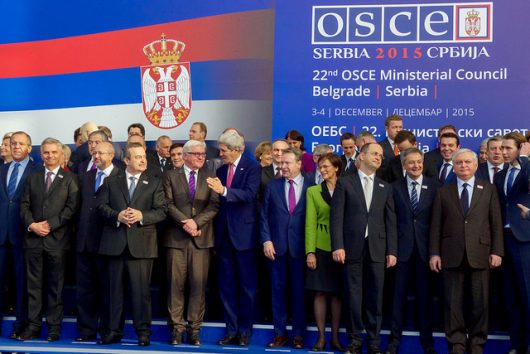
Understanding How the U.S. Benefits From Foreign Aid to Serbia

How the US Benefits from Foreign Aid to Serbia
Serbia is working to strengthen human rights protections and to promote economic growth within the country while facing external pressure from Russia. Russia has been expanding its influence and amplifying ethnic tensions in several countries that may join the European Union. In particular consideration of the close relations between Serbia and Russia, the U.S. benefits from foreign aid to Serbia because this aid works to prevent a new Cold War in the Balkans.

Social Benefits of Foreign Aid to Serbia

From 2001 to 2017, the U.S. gave about $800 million in aid to Serbia to help the country stimulate economic growth, promote good governance and strengthen its justice system. One example of a major issue Serbia is dealing with is human trafficking.

According to the U.S. Department of State’s 2017 Trafficking in Persons report, Serbia remains listed as a Tier Two country because it has yet to fully comply with the minimum standard for eliminating the issue. However, Serbia has shown significant efforts to address human trafficking by establishing a permanent human smuggling and trafficking law enforcement task force, identifying more victims as well as providing guidelines to judges and prosecutors.

Other U.S. aid to Serbia in the past has gone toward strengthening its export and border controls. This includes efforts to prevent the spread of weapons of mass destruction. More recently, U.S. military aid has helped Serbia take part in NATO’s Partnership for Peace programs as well as prepare for international peacekeeping missions.

Economic Benefits of Aid to Serbia

From an economic standpoint, the U.S. benefits from foreign aid to Serbia through U.S. investors in the country. These investors include KKR, Philip Morris, Ball Packaging, Coca-Cola, PepsiCo, Cooper Tire and Van Drunen Farms. In 2013, Fiat began shipping cars manufactured in Serbia to the U.S., increasing imports from the Balkan countries.

In addition, U.S. technology companies in Serbia are becoming more interested in opportunities in areas such as e-government, cloud computing, digitization, IT security and systems integration. In 2013, Microsoft even signed a $34 million contract to provide software to government offices in Serbia.

Political Benefits of Aid to Serbia

U.S. aid to Serbia is currently focused on helping the country integrate into the European Union, which will decrease Serbia’s vulnerability to Russian aggression as well as strengthen its democratic institutions. Out of the $5.39 million the U.S. plans to allot in foreign aid to Serbia in 2019, 46 percent will be allocated to strengthening the country’s rule of law and protection of human rights, 34 percent will be put toward increasing the capacity of civil society organizations and 20 percent will be for good governance.

The U.S. benefits from foreign aid to Serbia from a diplomatic perspective as well in the case of international terrorism. The Ministry of Interior Directorate of Police, the Security Information Agency and Serbia’s law enforcement and security agencies have continued to work with the U.S. to prevent this major security threat, which affects both nations as well as the rest of the world.

In the past, Serbia has hosted a regional counterterrorism conference on foreign terrorist fighting. The country has also sent representatives to conferences in Albania, Italy and Slovenia to discuss how to counter violent extremism.

There are many economic and political reasons the U.S. and Serbia would benefit from the U.S. providing aid to Serbia. Together, the two countries have great potential to make technological advancements as well as work for a more peaceful world.

– Connie Loo
Photo: Flickr

May 26, 2018
https://borgenproject.org/wp-content/uploads/borgen-project-logo.svg 0 0 Borgen Project https://borgenproject.org/wp-content/uploads/borgen-project-logo.svg Borgen Project2018-05-26 01:30:332024-05-29 22:42:30Understanding How the U.S. Benefits From Foreign Aid to Serbia
Aid, Foreign Aid, Global Poverty

Danida: The World-Leading Agency of Denmark’s Foreign Aid

Danida Denmark's Foreign Aid
Denmark is one of the world’s leading providers of foreign aid. Not necessarily by dollars, but by Gross National Income (GNI). The U.N. set a target for 0.7 percent of a well-developed nation’s GNI be set aside for foreign aid. Denmark’s foreign aid meets that goal and its funds are distributed by Danida.

Denmark passed its first law regarding foreign assistance in 1962. Nine years later, the name Danida appeared to distribute Denmark’s foreign aid. Since its inception, it has gained its own logo and place within the Danish Ministry of Foreign Affairs.

Denmark’s Foreign Aid Through Danida

Denmark is one of the few nations that consistently meets and exceeds the U.N.’s goal. In 2015, Denmark allocated 0.85 percent of its GNI toward international development. Only six other nations met or exceeded the goal that year. Since 1978, Denmark has allocated at least 0.7 percent of its GNI toward Danida. This year will be no different. 

Danida operates in countries from Belarus to South Africa and from China to Chile. In recent years, Danida has centered its focus on Africa through various programs. Danida also supports non-governmental organizations already working in these countries. Like other nations, Danida also provides research grants to organizations and individuals through its Danish Development Center. In 2018, Danida will focus Denmark’s foreign aid to four main areas:

  1. Streamlining development cooperation projects and humanitarian aid projects in countries with conflict
  2. Focusing on immigration and the proper readmission of migrants not legally able to stay in Denmark
  3. Increasing employment of migrants and people in countries where there are Danish businesses
  4. Educating young people and providing more funding to women’s health and rights 

The Goal: Eradicating Poverty

Danida’s goal is to eradicate poverty in order to stabilize societies and governments. To achieve its goal, Danida funds programs that encourage the following:

  • Social and economic development
  • Human rights
  • Democratization
  • Security and counterterrorism
  • Humanitarian assistance including disaster relief
  • Environmental protection
  • Eliminate HIV/AIDS

Spending Foreign Aid Domestically

In 2016, Denmark began to roll-out a new strategy. According to the CPH Post, 30 percent of the money from Denmark’s foreign aid allocated to combat the refugee crisis abroad will be used to help migrants who have already reached Denmark. This system received mixed reviews. It was praised due to the benefits it would provide migrants in Denmark, including food vouchers, housing and healthcare.

However, critics say that by using this funding at home there is less money to help stabilize the nations the refugees are fleeing. There would be no need to spend this money domestically if these nations were stabilized in the first place.

Denmark is following the lead of other Scandinavian countries such as Sweden and Norway, who also spend 20 to 30 percent of the same allocated funds domestically. Both Sweden and Norway also consistently spend 0.7 percent or more of their GNI on foreign aid.

The 2018 budget outlines foreign aid plans and funding for Danida through 2021, staying at 0.7 percent of its GNI. The plan also hints that Denmark wants to keep this going until 2030. Hopefully, Danida will continue to operate well into the future and well past 2030.

– Nick DeMarco
Photo: Flickr

May 25, 2018
https://borgenproject.org/wp-content/uploads/borgen-project-logo.svg 0 0 Borgen Project https://borgenproject.org/wp-content/uploads/borgen-project-logo.svg Borgen Project2018-05-25 01:30:052024-12-13 17:58:46Danida: The World-Leading Agency of Denmark’s Foreign Aid
Foreign Aid

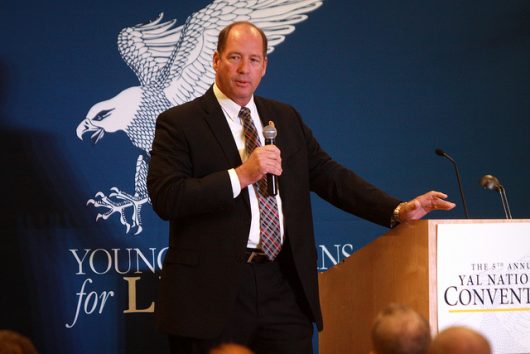
US Representative Ted Yoho’s BUILD Act Gains Support

Representative Ted Yoho
In February, U.S. Representative Ted Yoho (R-FL). proposed an overhaul to foreign aid. This April, with the support of U.S. Representative Adam Smith (D-WA), and Senators Bob Corker (R-TN) and Chris Coons (D-DE), the Better Utilization of Investments Leading to Development Act (BUILD Act) has gained significant momentum.

The International Development Finance Corporation

The BUILD Act, also known as S.2463, aims to consolidate the disparate U.S. agencies currently providing foreign aid into a single, new agency, to be called the International Development Finance Corporation (IDFC). More specifically, there would be a consolidation of the Overseas Private Investment Corporation (OPIC), USAID’s Credit Authority, USAID’s Office of Private Capital and Microenterprise, and USAID’s Enterprise Funds. According to U.S. Representative Yoho, this consolidation would increase efficiency of foreign spending, and promote U.S. security, economic and diplomatic interests abroad.

The proposed agency will also benefit recipients of U.S. foreign aid. More streamlined and efficient spending in the U.S. government will allow for other countries to become stronger trading partners; in doing so, this change would also open new markets, and encourage self-sufficient economic development in communities worldwide. Supporters of the BUILD Act argue that it will help combat humanitarian concerns that plague many developing nations, including poverty, hunger and disease.

In recent weeks the BUILD Act has been publically supported by the Chairman of the House Foreign Affairs Committee, U.S. Representative Ed Royce (R-CA), the committee saying that older agencies such as OPIC need to be modernized, and as Americans, not as Democrats or Republicans, will strengthen American foreign aid and make the U.S. competitive.

What is the BUILD Act?

So what exactly does the BUILD Act propose? It gives the new agency, the IDFC, grantmaking capability, the ability to make equity investments, and an increased spending cap. These capabilities increase U.S. foreign aid spending, and encourage the participation of private sector capital to complement development assistance objectives. It is important to note however, that there is a regulation on how much of foreign aid spending can be used to make equity investments.

The text of the bill describes the purpose of the BUILD Act in Section 101 of the bill as, “to mobilize private capital in support of sustainable, broad-based economic growth, poverty reduction, and development through demand-driven partnerships with the private sector that further the foreign policy interests of the United States,” highlighting the benefits of the BUILD Act going both to the U.S. and international aid recipients.

While some are concerned about how the organization will actually take over USAID’s and OPIC’s duties, many are excited by the fact that the creation of the IDFC will create further accountability and cost no money, making it an increasingly appealing bill. While more work needs to be done concerning the transition, oversight on the IDFC will fall to Congress, and external auditors, who will preform regular audits of the organization.

Allied For a Cause

U.S. Representative Adam Smith, a co-sponsor on the initial proposal, announced a press release that reads: “Through our partnerships with friends and allies, we work to raise up local communities – strengthening institutions, combating hunger and disease, and ensuring that development projects have sustainable, long lasting impacts.” Representative Smith identifies how this increased spending on development improves the lives of individuals abroad.

The BUILD Act is gaining momentum in Washington, and purports to improve efficiency and effectiveness of U.S. foreign aid deployment.

– Katherine Kirker
Photo: Flickr

May 22, 2018
https://borgenproject.org/wp-content/uploads/borgen-project-logo.svg 0 0 Borgen Project https://borgenproject.org/wp-content/uploads/borgen-project-logo.svg Borgen Project2018-05-22 01:30:462024-06-05 23:57:27US Representative Ted Yoho’s BUILD Act Gains Support
Aid, Foreign Aid, Global Poverty

United Kingdom Affirms How Aid Creates Markets

aid creates markets
As public sector debt in developed countries continues to rise, foreign aid has become a target for activists and policymakers seeking to cut spending. The aid budget of the United Kingdom is no exception, with critics claiming that spending on foreigners is wasteful and contrary to national interest.

The country’s Department for International Development (DFID), responsible for administering overseas aid, has rejected calls for cuts in spending by emphasizing that aid creates markets that will ultimately consume British goods and provide higher returns for British investment.

National Debate Over Aid Spending

As one of six countries to reach the United Nations target for international aid spending of 0.7 percent of gross national income, the U.K. is a major contributor to worldwide aid spending. The leadership role the country plays in international aid was bolstered by the passing of a 2015 bill that enshrined the spending target into law, committing the country to sustaining current levels of spending as a share of the economy’s size.

However, in a political environment where nationalist sentiment is rising, exemplified by the 2016 Brexit referendum, prominent U.K. politicians have called for a reduction in foreign aid spending. Jacob Rees-Mogg, a Member of Parliament of the Conservative Party and potential future party leader, has said that with the government budget running a deficit, aid levels are an insane and a costly mistake.

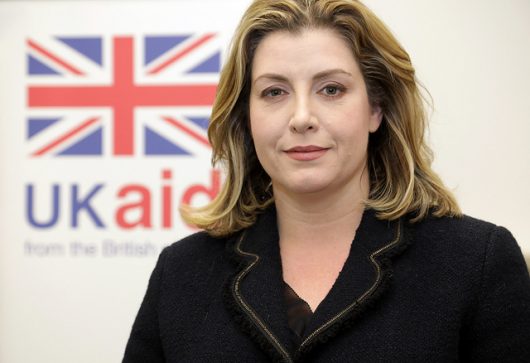
Facing this criticism, Penny Mordaunt, the recently appointed head of DFID, has pushed back, contending that the aid is a moral obligation that also serves British interests. In an April 12 speech laying out her vision for U.K. aid, Mordaunt said that improving global health, security and income is linked to British prosperity and that promoting these goals abroad provides lasting benefits for the U.K.

Notably, Mordaunt emphasized that aid creates markets through the development of economies and human capital, citing DFID’s work in sub-Saharan Africa as having created jobs and growth, benefiting recipient countries but also benefiting British companies by creating new consumers.

Private Sector Partnerships a Key Way That Aid Creates Markets

Mordaunt’s speech also explained how aid creates markets in conjunction with the private sector. Aid will be directed to help African companies to acquire loans through British financial markets, encouraging British investors to direct more capital to the region and spurring economic development. By proposing an aid plan in which British investors could achieve higher returns, DFID is hoping to illustrate another channel through which an aid budget is mutually beneficial to both the donor and recipient countries.

Critics have cautioned of the dangers of conflating national and foreign interests in aid work. In response to Mordaunt’s speech, Tamsyn Barton, chief executive of an international development network representing NGOs called Bond, told Devex that aid programs focused on serving national interests are inherently less effective than those focused on the primary goal of improving conditions in affected countries.

Mordaunt does clarify that aid will not be conditional, stating in her speech that tied aid is bad for U.K. competitiveness and for the recipient nations, but observers such as Barton have warned that this distinction should be made explicit.

Even a country such as the United Kingdom, which has enshrined its commitment to foreign aid in law, faces pressure from domestic critics to redirect this funding home. In highlighting how aid creates markets that benefit the home country, Mordaunt and the DFID are seeking to show that the decision between spending at home and spending abroad is a false dilemma.

– Mark Fitzpatrick

Photo: Flickr

May 18, 2018
https://borgenproject.org/wp-content/uploads/borgen-project-logo.svg 0 0 Borgen Project https://borgenproject.org/wp-content/uploads/borgen-project-logo.svg Borgen Project2018-05-18 01:30:062019-12-03 10:25:45United Kingdom Affirms How Aid Creates Markets
Page 29 of 61«‹2728293031›»

Get Smarter

  • Global Poverty 101
  • Global Poverty… The Good News
  • Global Poverty & U.S. Jobs
  • Global Poverty and National Security
  • Innovative Solutions to Poverty
  • Global Poverty & Aid FAQ’s
Search Search

Take Action

  • Call Congress
  • Email Congress
  • Donate
  • 30 Ways to Help
  • Volunteer Ops
  • Internships
  • Courses & Certificates
  • The Podcast
Borgen Project

“The Borgen Project is an incredible nonprofit organization that is addressing poverty and hunger and working towards ending them.”

-The Huffington Post

Inside The Borgen Project

  • Contact
  • About
  • Financials
  • President
  • Board of Directors
  • Board of Advisors

International Links

  • UK Email Parliament
  • UK Donate
  • Canada Email Parliament

Get Smarter

  • Global Poverty 101
  • Global Poverty… The Good News
  • Global Poverty & U.S. Jobs
  • Global Poverty and National Security
  • Innovative Solutions to Poverty
  • Global Poverty & Aid FAQ’s

Ways to Help

  • Call Congress
  • Email Congress
  • Donate
  • 30 Ways to Help
  • Volunteer Ops
  • Internships
  • Courses & Certificates
  • The Podcast
Scroll to top Scroll to top Scroll to top