• Link to X
  • Link to Facebook
  • Link to Instagram
  • Link to TikTok
  • Link to Youtube
  • About
    • About Us
      • President
      • Board of Directors
      • Board of Advisors
      • Financials
      • Our Methodology
      • Success Tracker
      • Contact
  • Act Now
    • 30 Ways to Help
      • Email Congress
      • Call Congress
      • Volunteer
      • Courses & Certificates
      • Be a Donor
    • Internships
      • In-Office Internships
      • Remote Internships
    • Legislation
      • Politics 101
  • The Blog
  • The Podcast
  • Magazine
  • Donate
  • Click to open the search input field Click to open the search input field Search
  • Menu Menu

Archive for category: Foreign Aid

Foreign aid coverage and information.

Foreign Aid

U.S. Benefits from Foreign Aid to Mauritania

Foreign Aid to Mauritania
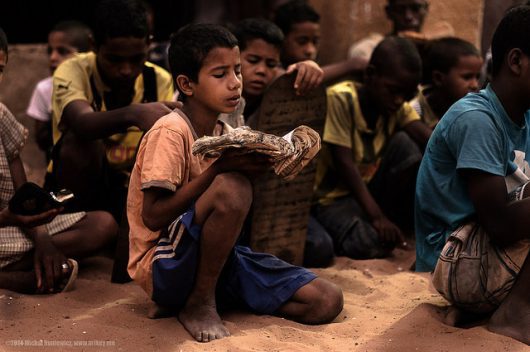
Nestled between Senegal, Mali, and Western Sahara, Mauritania is a mostly desert country. The population is roughly 4.3 million people, making Mauritania the fourth least densely populated country in Africa. Half the population lives at or around the coastal capital of Nouakchott. The country faces the challenge that only 0.5 percent of its land is measured as arable. It suffers an extremely hot and dry climate, leading to dust-laden wind and occasional droughts.

The History of U.S.-Mauritania Relations

The U.S. was the first country to recognize Mauritania’s independence when it became independent from France in 1960. The U.S. had excellent relations with Mauritania from 1960 to 1967 and aided the country with a small amount of economic assistance. In 1989, U.S.-Mauritanian relations were disturbed by the Mauritanian governments expulsion of Senegalese citizens. Ties were further deteriorated by Mauritania’s supposed support of the 1991 Gulf War.

At the end of the 1990s, the Mauritania government began to adopt new policies, which were higher regarded by the U.S. As a result, U.S.-Mauritanian relations grew significantly, and military cooperation and training programs soon followed.

The U.S. condemned Mauritania’s military coups in 2005 and 2008. However, the U.S. supported the nations transition to democracy after the coup d’état in 2005. Furthermore, the U.S. assisted in election-related business, such as voter education and election support in 2007.

Since 2009, funding has returned to Mauritania. The U.S. continues to support the Mauritania government and to encourage political leaders to continue democracy. The U.S. benefits from foreign aid to Mauritania because of key issues the nations fight for together: food security, counterterrorism, strengthening of human rights, and the promotion of trade. This is most evident through the growth of trade and counterterrorism movements.

Trade Growth

Although it is slow, the U.S. benefits from foreign aid to Mauritania by growing trade and investment relations within this country. The two countries are linked through the U.S.-North Africa Partnership for Economic Opportunity (NAPEO), a regional public-private partnership that improves the network of businesspersons in the U.S. with the five Magherb countries, including Mauritania.

Counterterrorism

Mauritania is among five other nations (G5) that work with the Multinational Joint Task Force to end terrorism. They are an important member in creating African-led solutions to counter instability and terrorism. The G5, Mauritanian authorities, and the U.N. have worked closely together to implement solutions of counterterrorism. The representatives set out plans that aim to:

  1. Increase education
  2. Support the role of women in reforming security
  3. Bettering investigative abilities
  4. Reintegrating previous offenders
  5. Strengthening border security

In October 2017, the U.S. government pledged up to $60 million toward the G5’s counterterrorism initiatives. The funding was to be used to train and equip members of the Joint Task Force. The goal of this funding is to entrust nations, like Mauritania, to provide their own safety.

Terrorist organizations are still active in this region and had launched a series of attacks through Mauritanian from 2005 to 2011. Foreign aid workers and tourists were targeted during this time. Although the threat of terrorism in Mauritania remains high, it is on its way toward improvement because of the counterterrorism actions being taken in 2017, made possible by foreign aid.

– Stefanie Babb
Photo: Flickr

August 24, 2018
https://borgenproject.org/wp-content/uploads/borgen-project-logo.svg 0 0 Borgen Project https://borgenproject.org/wp-content/uploads/borgen-project-logo.svg Borgen Project2018-08-24 01:30:232024-05-29 22:52:49U.S. Benefits from Foreign Aid to Mauritania
Foreign Aid

Irish Foreign Aid: Working and Improving

Irish Foreign Aid
Irish foreign aid is distributed by Irish Aid, a program within the Department of Foreign Affairs and Trade. The main focus of Irish Aid is to reduce hunger and improve resilience. This means that Irish Aid focuses on developing economic growth, improving governance and holding governments accountable for human rights. Much of their work and funding is focused in Sub-Saharan Africa.

Ireland and the UN

During the United Nations negotiations to implement the 17 Sustainable Development Goals (SDGs) that were to feature in the United Nations program “Transforming Our World: The 2030 Agenda for Sustainable Development,” Ireland worked alongside Kenya to facilitate intergovernmental negotiations in 2014 and by mid-2015 the negotiations were complete.

This is an important milestone for Irish foreign aid. Ireland has yet to meet the United Nation’s standard of .7 percent of a nation’s gross national income (GNI) for foreign aid; the nation currently only spends .33 percent. Although Irish foreign aid spending is not at expected United Nation levels, it is still effective.

Impact of Irish Aid

Like many other nations and their foreign aid agencies, Irish Aid uses a grant system to make use of its allocated money. In 2012, Irish Aid granted 100 million euros to the organization Concern Worldwide. Irish Aid and Concern Worldwide have been partners ever since.

A similar partnership was struck again in 2017, and the grant money would be used to fund programs all across Africa in 17 different countries. Irish Aid and Concern Worldwide are working together on the Realigning Agriculture to Improve Nutrition (RAIN) project, amongst others.

Concern Worldwide

According to Concern Worldwide, nearly 45 percent of children in Zambia are undernourished, which can lead to health difficulties later in life and hinder a child’s performance in school.

Concern Worldwide works to combat this deficiency by bringing together both the Ministry of Health and Ministry of Agriculture. This cooperation will help the government learn how to effectively manage this issue. Concern Worldwide also provides advanced training for farmers, including improved techniques to increase crop yield and preserve the environment.

Educational Efforts

Education is another important area for Irish foreign aid. On the Irish Aid website, stories can be found about individuals, individual programs and their respective successes. In the realm of education, one young Ugandan man is an exceptional success story. Munyes Michael holds a bachelor’s degree in Business studies with education in a country where nearly 4 out of 5 adults cannot read or write.

Although his parents worked incredibly hard, they were unable to afford to send him to secondary school, let alone college. However, Munyes was able to go to college due to Irish Aid; after graduating, he now works as a community facilitator in Uganda. Munyes is a great example of how investment in people can turn out to be one of the best investments a nation, organization or person can make. Money was spent on one person, and that person can go on to help hundreds of people.

One Step At a Time

Although Irish Aid is changing peoples’ lives all over the world, it can still do better. Better funding and direction from their government can go a long way.

Although Ireland’s government does not yet have a plan to reach the target of .07 percent, credit should still be given to the nation. Ireland was hit hard by the 2008 financial crisis but continued to do its part to help around the world. Hopefully, as the Irish economy continues to grow, its government will begin to form a coherent strategy for improving its foreign aid efforts.

As with any important issue, the best change will happen when a government is called higher by its people and its media (specifically The Irish Times). With concentrated efforts reflective of populations near and abroad, Ireland can only do good.

– Nick DeMarco
Photo: Flickr

August 21, 2018
https://borgenproject.org/wp-content/uploads/borgen-project-logo.svg 0 0 Borgen Project https://borgenproject.org/wp-content/uploads/borgen-project-logo.svg Borgen Project2018-08-21 01:30:512019-08-15 12:03:17Irish Foreign Aid: Working and Improving
Foreign Aid

How the US Benefits from Foreign Aid to Azerbaijan

U.S. Benefits from Foreign Aid to Azerbaijan
Since its formation in 1992, Azerbaijan has had positive diplomatic relations with the United States. The U.S. has affirmed its commitment to strengthening democracy in the region, as well as diversifying the economy and promoting regional stability. In 2017, the United States’ government gave $15.31 million in foreign assistance to Azerbaijan.

Over $4 million of that contribution went towards democracy, human rights and governance agendas. Another $3.63 million went towards economic development. Here are the four major ways in which the U.S. benefits from foreign aid to Azerbaijan.

Positive U.S.-Azerbaijan Relations Support American Jobs

Azerbaijan purchases American services. In 2010, Azerbaijan signed a $1 billion contract purchasing eight civilian airplanes from the American Boeing company; this contract supported 11,000 American jobs.

That same year, seeking to create its first communication satellite, Azerbaijan signed another contract with the Orbital Sciences Corporation in Virginia. The $205.3 million contract created 1,500 American jobs.

U.S. Companies’ Substantial Stakes in Azerbaijan Economy

Azerbaijan has welcomed U.S. investment in its economy. The Law on Protection of Foreign Investments allows for foreigners to directly invest in any activity of the Azerbaijan economy in which a national investor may also invest.

U.S. companies quickly capitalized on this opportunity. Many have long-standing investments in offshore oil development projects; however, experts predict a decline in this industry.

As a result, several U.S. companies are investing in other fields of the Azerbaijan economy such as agriculture, telecommunications, tourism and transportation services. The U.S. also regularly exports aircraft and heavy machinery to the region.

Azerbaijan: Useful Ally in Combating Terrorism

Azerbaijan has a confirmed commitment to combating terrorism. The country is a member of several international organizations such as the Organization for Security and Cooperation in Europe, and the Organization for Islamic Cooperation. The collaborative work of Azerbaijan’s State Security Forces and the Foreign Intelligence Service have made sizeable contributions to the international community’s efforts to combat terrorism.

Furthermore, as a member of the Council of Europe’s Committee of Experts on the Evaluation of Anti-Money Laundering Measures and the Financing of Terrorism (MONEYVAL), Azerbaijan has also taken steps to deter money laundering schemes that could finance terrorism.

Given this commitment, positive relations with Azerbaijan could help advance U.S. security goals in the region.

Successful Market Democracy Could Provide a Model for the Region

The primary objective of USAID contributions in Azerbaijan is “to support Azerbaijan’s reform processes by promoting competition and pluralism in the society, laying the foundations for a sustainable market-based democracy.”

As a Muslim-majority country with a history of religious tolerance, Azerbaijan could be a model for countries in the region. Azerbaijan shares a border with both Russia and Iran. If Azerbaijan can successfully become a market economy, perhaps it can provide a model for similar countries in the region.

How the U.S. Benefits From Foreign Aid To Azerbaijan

By providing aid to the Azerbaijan people, the United States is ensuring the continued economic and security cooperation with a proven ally. Though often overlooked by popular U.S. media, Azerbaijan’s development has a notable effect on the American people.

– Joanna Dooley
Photo: Flickr

August 20, 2018
https://borgenproject.org/wp-content/uploads/borgen-project-logo.svg 0 0 Borgen Project https://borgenproject.org/wp-content/uploads/borgen-project-logo.svg Borgen Project2018-08-20 01:30:492024-05-29 22:52:46How the US Benefits from Foreign Aid to Azerbaijan
Foreign Aid

How the US Benefits from Foreign Aid to Moldova

US Benefits from Foreign Aid to Moldova
The U.S. government has invested over 1 billion dollars in Moldova since 1992 through various foreign aid assistance programs. In times where many Americans think that the government should concentrate on domestic aid, it is important that they should be informed about how the U.S. benefits from foreign aid to Moldova. So, how is the aid America invests in Moldova promoting American interest?

The Economic Benefits

Foreign aid is often characterized as an investment because it typically brings a return for the American people. This is especially true in the case of American businesses. In Moldova, the poorest country in Europe, the logic of foreign aid applies perfectly.

The stated goal of U.S. foreign aid to Moldova is to “target assistance at the country’s most promising economic sectors; which will help create economic opportunities that will raise incomes, promote job growth, and improve living standards.” By improving the economy and living standards, the foreign aid investments will then create a new market for American goods, demonstrating the mutual benefit for Moldova and the United States.

When the U.S. government provides aid for an impoverished country, the country’s economy improves, and typically so do the lives of its people. With this improved quality of life, citizens of the country are transformed from targets of charity to consumers with purchasing power. Instead of barely surviving, they become productive members of society, which results in new markets for U.S. companies. Not only does this create more potential customers for U.S. companies, but the increased demand for American made goods can create jobs in the U.S. to create these goods.

USAid in Moldova

USAID, America’s primary foreign aid agency, plays an important role in connecting American businesses directly with these new consumers in developing markets. USAID accomplishes this by encouraging American companies to partner with local people to help educate and support them on projects in local areas.

The result is the creation of a mutually beneficial relationship, whereby the target of the aid becomes self-reliant and also aligned with U.S. companies. In this way, the U.S. benefits from foreign aid to Moldova as well as Moldova itself.

Furthermore, the U.S. Embassy in Moldova implements programs such as The Cultural/English-Language Small Grants Program, to use education and cultural exchange to help foster mutual understanding between the United States and Moldova. It is the hope that this mutual understanding will lay the foundation for further economic, cultural, and political cooperation between the two countries.

National and International Security

Another common argument in favor of foreign aid is that this assistance helps stabilize vulnerable countries. This lowers the probability of future conflict and, as a result, keeps Americans safe. Syria is the most evident example of what can happen when a country becomes unstable. After the country experienced a drought in 2007, the resulting destabilization and actions by a repressive regime created the terrible crisis we see today.

This is the very reason that the U.S. foreign aid to Moldova targets economic growth in Moldova’s unstable agricultural industry as well as the consolidation of democratic institutions. If there were a slowdown in Moldova’s agricultural industry, which accounts for approximately 17 percent of its GDP, or a crackdown on democracy, the resulting destabilization could be problematic, especially given Moldova’s proximity to Russia.

Therefore, the U.S. benefits from foreign aid to Moldova by helping to minimize the risk of breakdowns in the critical areas of Moldovan society, which helps ensure stability, economic opportunity and pro-American sentiment in an otherwise vulnerable country.

– Taylor Pace

Photo: Flickr

August 18, 2018
https://borgenproject.org/wp-content/uploads/borgen-project-logo.svg 0 0 Borgen Project https://borgenproject.org/wp-content/uploads/borgen-project-logo.svg Borgen Project2018-08-18 06:30:112024-05-29 22:52:54How the US Benefits from Foreign Aid to Moldova
Foreign Aid, Global Health

The Significance of Cuts to Global Healthcare Funding

Global Healthcare Funding
President Trump’s budget request for the fiscal year of 2018 includes drastic cuts — 32 percent — from foreign aid. The drop of 4.6 billion in humanitarian assistance and global health spending comes along with a call for “the world to pay their fair share” in terms of global healthcare funding.

While the U.S. did contribute nearly one-third of the global spending on Development Assistance for Health in 2016, foreign aid makes up less than 1 percent of the national budget; that same year it was only 0.22 percent.  Looking at countries’ spending as a percentage of gross national income, the U.S. ranks 23rd for foreign aid and healthcare funding.

What Would Cutting Aid Mean?

Cutting foreign aid would lead to:

  • Less disease surveillance
  • Decreased diagnostic testing and vaccines
  • A shortage of research
  • Less life-saving medications
  • Fewer healthcare facilities
  • Instability
  • Decreased economic productivity
  • More deaths from curable or treatable diseases
  • Mitigated interest from local governments
  • Increased risk of domestic disease
  • Diminished soft power and global influence

The Brookings Institute forecasts that the domestic cut to foreign aid would drop healthcare funding from 39.2 to 28.8 billion, marking the lowest American investment in the last decade.

How Does Foreign Aid Help Global Healthcare?

Since pathogens such as zika, influenza, and Ebola are prone to spread across borders, aid cuts threaten the health of U.S. citizens. The Ebola breakout killed over 11,000 people; an additional 21,000 died due to a reduction in access to healthcare services.

Investment in surveillance programs greatly reduces the risk of a pandemic and eliminates the spending that an outbreak necessitates. The entire Ebola outbreak cost a total of $3.6 billion — $2.3 billion of which came from the U.S.

Foreign investment also inspires a response from local governments and organizations. By prioritizing health, global support helps to foster expectations that governments should do the same. Funding for HIV/AIDS research, testing and education have resulted in every African country possessing a national AIDS strategy and commission. Between 2011 and 2015, African countries increased their own funding by 150 percent.

How Does Promoting Healthcare Help the World?

Supplying vaccinations promotes prevention and may lead to a complete eradication of deadly diseases. Every dollar invested in childhood immunizations begets $44 in economic benefits, which includes saving money that families lose when a child is sick and the parent is unable to work.

Global healthcare funding and other types of humanitarian spending tend to increase a nation’s soft power — supporting basic human rights and humanitarian causes generally garner influence and respect. In aiding global healthcare funding, the U.S. is able to look out for foreign policy priorities, address national security concerns, and bolster global economic productivity and development.

A healthy individual will become a more productive member of society at large than his/her sick or dead peer; health is a direct determinant for economic stability.

Waves of Improvement

Bill and Melinda Gates sum up the importance of global healthcare funding in saying: “By preventing the spread of disease, we save lives in other countries and at home. By stimulating economic development, we open new markets for our country’s goods. By making conflict less likely, we advance our own national security. And by lifting up the poorest, we express the highest values of our nations.”

Global healthcare funding relates to each point, and thereby creates waves outside of the medical sector.

– Jessie Serody
Photo: Flickr

August 17, 2018
https://borgenproject.org/wp-content/uploads/borgen-project-logo.svg 0 0 Borgen Project https://borgenproject.org/wp-content/uploads/borgen-project-logo.svg Borgen Project2018-08-17 01:30:072019-08-15 12:11:10The Significance of Cuts to Global Healthcare Funding
Foreign Aid

Three Ways Countries Could Make Foreign Aid More Effective

More Bang for Your Buck: Making Foreign Aid More Effective
A highly contentious issue, the effectiveness of U.S. foreign aid has long been the subject of debate among congressmen and concerned citizens alike. From how much money is allocated to recipient nations to the impact that aid actually has on issues such as poverty and civil war, advocates and critics of foreign aid point to various criteria to evaluate the merits, or lack thereof, of continued U.S. aid.

The Case for Aid

Proponents of foreign aid insist programs are instrumental in fostering socioeconomic growth, reducing poverty and improving the overall quality of life. There are certainly examples that support this notion. USAID-funded programs have significantly reduced maternal and child mortality, helping at least 4.6 million children and 200,000 mothers, according to agency officials. As of 2015, more than 7.6 million people had received improved access to drinking water and more than 4.3 million people had improved sanitation. Furthermore, 41.6 million children saw improved reading instruction and safer learning environments between 2011 and 2015.

Foreign Aid Skepticism

Yet critics of aid remain steadfast in their opposition, pointing to fraud and corruption, lack of transparency, foreign aid dependency and general ineffectiveness as indicators. Around $1.17 billion in aid that was given to Malawi in 2012 was exploited by corrupt politicians and businessmen. At least $30 million was taken from the treasury and robbed from the 17 million poor and AIDS-ravaged inhabitants. In fact, these sentiments are so strong that, according to ABC News-Washington Post polls, “the only possible federal spending cut a majority favored was for foreign aid.”

Clearly, there are two sides to the story when it comes to foreign aid. When allocated and distributed properly, it can work wonders for the world’s poor and developing countries. However, corruption and misuse still stand in the way of much of its potential. These issues can be addressed by exploring various ways of making foreign aid more effective.

Making Foreign Aid More Effective

There are three important ways that countries around the globe can make foreign aid more effective.

  1. Improving Aid Quality: By dividing foreign aid into smaller projects, donor countries can control the volatility and lack of predictability of aid, thus significantly decreasing the deadweight loss of development assistance. In 2008 alone, deadweight losses from official aid amounted to $7 billion. Smaller projects, according to Brookings, can lead to further innovation and scaling up, thus offsetting deadweight losses.
  2. Linkage: In order for foreign aid to maximize its impacts in a developing country, it must be linked to other important development policies, namely trade, investment and migration. For example, in Haiti and Pakistan, countries in which the U.S. has a significant economic stake, trade restrictions on textile and garment imports prevent further growth.
  3. Mobilizing the Private Sector: It is generally accepted that in order to foster economic growth and development, countries must turn to the private sector. Unfortunately, foreign aid has yet to reflect that sentiment. In fact, much of it is still directed toward the public sector. Cities harbor the most economic growth yet receive only $1 to $2 billion in aid a year. Approximately one billion slum dwellers reside in the city centers of developing countries and represent the key to mobilizing economic growth.

At the end of the day, foreign aid aims to foster social and economic growth in developing countries by enfranchising governments, health care systems, education institutions and infrastructure. Consequently, growth in these developing nations helps developed nations by opening up new markets and increasing stability. When confronted with corruption or misuse or any of the other criticisms of foreign aid, governments should not slash foreign aid budgets, but rather should apply these three crucial ways of making foreign aid more effective.

– McAfee Sheehan
Photo: Flickr

August 16, 2018
https://borgenproject.org/wp-content/uploads/borgen-project-logo.svg 0 0 Borgen Project https://borgenproject.org/wp-content/uploads/borgen-project-logo.svg Borgen Project2018-08-16 19:30:452019-08-15 12:11:18Three Ways Countries Could Make Foreign Aid More Effective
Foreign Aid

U.S. Benefits from Foreign Aid to Equatorial Guinea

U.S. Benefits from Foreign Aid to Equatorial Guinea
People often think of foreign aid as the provision of emergency assistance without many tangible benefits in return. However, providing foreign aid offers numerous benefits to countries such as the U.S. For the U.S., Equatorial Guinea is by far one of the most important potential trading partners in the world, and aid to Equatorial Guinea is one of the surest ways to create such partnerships. The U.S. benefits from foreign aid to Equatorial Guinea, as it gains access to one of the world’s largest energy exporters.

Equatorial Guinea and Its Neighbors

In order to see how the U.S. benefits from providing aid, it is important to first understand the situation in Equatorial Guinea. As a largely underdeveloped country, Equatorial Guinea also suffers from the woes that plague many of its continental neighbors.

Political turmoil and internal corruption have caused sharp drops in foreign development assistance to the country since 1993. For example, in 2013 the government cracked down on freedom of assembly by shutting down protests and arresting political dissenters, sparking international outcry.

In addition, worsening economic conditions have caused the country’s economy to shrink by nearly 25 percent since 2014 despite this trend of reversed growth being rare among African countries. Most African states have managed to maintain positive economic growth rates in spite of rampant poverty.

For example, although Equatorial Guinea’s fall in growth stabilized at -3.2 percent in 2017 from its all-time low of -9 percent in 2015, most of its neighbors have maintained positive growth rates for years.

Cameroon to the north had GDP growth of 3.2 percent for 2017 and hasn’t dipped below zero since 1993. To the south, Gabon had a growth rate of 1.1 percent for 2017. Although Gabon’s growth has steadily declined since 2008, Equatorial Guinea is unique for having a consistently negative rate several years in a row.

Increasing Economic Prosperity

Nonetheless, the country has a strong export-based economy. In 2016 alone, Equatorial Guinea exported around $4 billion worth of goods, while importing a little over $1 billion. Its trading power has made it one of the few countries in the world with a trade surplus, especially one of that magnitude.

Equatorial Guinea’s economic health relies heavily on its natural resources. In 2016, its largest exports consisted of crude oil (which comprised over half of its exports, at $2.79 billion out of $4.06 billion) and petroleum gas (which accounted for approximately $762 million). Increasing global demand for oil, coupled with heavy reliance on this finite energy product, could make Equatorial Guinea one of the most important developing economies in the 21st century.

The Value of Foreign Aid and Investment

Equatorial Guinea’s economic potential suggests that it is a viable potential trading partner for any country, and providing foreign aid to Equatorial Guinea may be a strong gage for determining how robust such potential trade agreements could be. Increased foreign aid could encourage Equatorial Guinea to work with donor countries in opening new supply chains through trade agreements, complementing international development assistance with long-term economic partnerships.

Providing foreign aid will also help Equatorial Guinea grow its economy and reach its full potential. For example, as foreign donors began slashing development funds to Equatorial Guinea between 2010 and 2014 (from $85 million to $520,000 respectively), its economy began to contract several years later, from $22 billion in 2012 to $12 billion in 2017.

However, despite such alarming figures, there has been some help in the form of an increased focus on infrastructure development. In 2015, China agreed to commit $2 billion to Equatoguinean infrastructure. This support has not only helped revitalize Equatorial Guinea’s economic growth but also brought Equatorial Guinea and China closer together diplomatically.

Equatorial Guinea and the U.S.

In contrast, the U.S. has no trade agreements with Equatorial Guinea. In fact, it currently exports more to Equatorial Guinea (at $278 million) than it imports (at $193 million), signaling a large trade imbalance for Equatorial Guinea.

Furthermore, the U.S. does not supply any foreign aid to Equatorial Guinea. However, it does provide a generous amount to Equatorial Guinea’s neighbors; in 2017, Cameroon received approximately $80 million in U.S. foreign aid funds, while Gabon received over $2 million.

Increased foreign aid to Equatorial Guinea is one of the most practical ways to improve trade relations between the two countries. Each nation has something that the other needs. As one of the wealthiest countries in the world, the U.S. has plenty of foreign aid funds available (specifically, a foreign assistance budget of $50 billion in 2015) to improve the economic outlook of Equatorial Guinea.

Additionally, as one of the largest oil harvesters in the world, Equatorial Guinea has a slew of energy reserves available to export to the U.S., at a total of 1.1 billion barrels of oil as of 2012. It is evident that the U.S. benefits from foreign aid to Equatorial Guinea, due to greater access to a growing Equatoguinean hydrocarbon sector.

How the U.S. Benefits from Foreign Aid to Equatorial Guinea

A diversified import sector is critical to the financial well-being of any country. For the U.S., an oil industry with diversified imports creates stable international supply lines and an even stronger economy. Equatorial Guinea’s resources and economic potential suggest that it could be an ideal trading partner.

The U.S. benefits from foreign aid to Equatorial Guinea by improving relations between the two states and opening up new energy markets for American consumers. In addition, robust trade agreements could yield incentives for elevated oil production, thus helping to reverse Equatorial Guinea’s negative economic growth.

– Vincent Giordano

Photo: Flickr

August 15, 2018
https://borgenproject.org/wp-content/uploads/borgen-project-logo.svg 0 0 Kim Thelwell https://borgenproject.org/wp-content/uploads/borgen-project-logo.svg Kim Thelwell2018-08-15 01:30:162024-05-29 22:52:42U.S. Benefits from Foreign Aid to Equatorial Guinea
Economy, Foreign Aid

US Benefits from Foreign Aid to Guinea

U.S. Benefits from Foreign Aid to Guinea
Guinea is one of the world’s most impoverished countries. More than half of its population lives below the poverty line and 17.5 percent struggle for food security. In 2010, Guinea established its first elected, civilian government. The U.S. benefits from foreign aid to Guinea and its strong economic potential. Assistance with Guinea’s health, stability and effective governance is not only deeply needed by Guinea, but also something from which the U.S. ultimately gains.

Strong Economic Potential

Guinea has rich mineral resources, possessing over half of the world’s bauxite (aluminum ore) reserves. The country is also abundant in high-grade iron ore, diamonds, gold and uranium. The mining sector in Guinea is thus a major part of its economy: about 80 percent of Guinea’s foreign exchanges consist of joint-venture bauxite mining and alumina operations. Compagnie des Bauxites de Guinee (CBG), one of the major two routes for exporting Guinea’s bauxite, is a venture jointly owned by the Government of Guinea, a U.S. company called Alcoa, and an Anglo-Australian company Rio Tinto Group. The other major export force is Chinese conglomerates as well as small and midsize business.

Guinea is also blessed with reliable rainfall, abundant sunshine and natural geography that are favorable for renewable energy. The 240MW Kaleta Dam project, constructed and financed by China, began operating in 2015 and has since more than doubled Guinea’s electricity supply. The country’s climate means that it has great potential for commercial agriculture as well.

Investment Friendly

Pressed to improve development, Guinea has been increasingly open to foreign investment. The country’s government has been depleted of financial resources to improve the economy, especially since the Ebola outbreak in 2014-2015. Meanwhile, enterprises in Guinea are in need of more credit than is available.

In 2016, the government launched a new website via the Investment Promotion Agency of Guinea (APIP). The website is meant to promote transparency and help make investments more smooth. The APIP also offers services to foreign investors, including creating and registering businesses, helping with access to benefits of the new investment code, providing information and research studies to interested investors, etc.

The Guinea government does not allow any foreign investor to own media in the country, but besides that, there are no restrictions discriminating against foreign investors. The U.S. also helped a group of foreign investors in Guinea and the government of Guinea form a liaison in 2015.

Barriers to Overcome

While Guinea has extremely investment-friendly laws, the enforcement of those laws needs a stable political environment and a reliable legal system. It is worth noting the country had its first democratically-elected government in 2010 after the country’s independence in 1958, but state institutions are still recovering from two years of rule by the military junta. It’s also faced a number of security and socio-economic vulnerabilities.

Guinea has a disproportionately large military with serious, deep corruption and human rights abuses. It is also feared by law enforcement because of the potential for military revolt. Even though a panel was formed in 2010 to investigate the violent crushing of tens of thousands of peaceful democracy protesters in 2009, two military commanders that the U.N. revealed to be guilty were able to keep their government positions.

Aid for Stability and Development

U.S. foreign aid would directly address barriers to private sector growth as well as improvement of economic life in Guinea in general. For one thing, the U.S. supported the 2010 election process significantly, which has greatly improved the country’s development prospects.

U.S. foreign aid was restricted in 2008 and 2009 due to the rise of the military coup at the time, but restrictions were lifted after the country’s political transformation. Aid from the U.S. helps improve democratic practices, governance, security sector reform, regional peace and stability, etc. These aspects of society are essential for the alleviation of poverty and the establishment of a solid economic infrastructure. A peaceful Guinea is also viewed as significant for restraining conflict in a region already plagued by political tension and armed struggles.

The Consortium for Elections and Political Process Strengthening, supervised by the USAID, supported the 2015 presidential election and 2018 communal elections. It strengthened Guinea’s Independent National Electoral Commission as well as civil society organizations in monitoring the domestic election.

Ultimately, U.S. foreign aid will assist with areas of life in Guinea that in turn presents a great economic potential for the U.S. In other words, the U.S. benefits from foreign aid to Guinea.

– Feng Ye
Photo: Google

July 28, 2018
https://borgenproject.org/wp-content/uploads/borgen-project-logo.svg 0 0 Borgen Project https://borgenproject.org/wp-content/uploads/borgen-project-logo.svg Borgen Project2018-07-28 10:36:072019-05-22 14:54:27US Benefits from Foreign Aid to Guinea
Foreign Aid

How the U.S. Benefits from Foreign Aid to Mauritius

U.S. Benefits from Foreign Aid to Mauritius

After becoming independent from Britain in 1968, the country of Mauritius began a diplomatic relationship with the United States that is still important today. Mauritius, a small island nation in the Indian Ocean, has become one of Africa’s most developed and stable economies, transforming itself from an impoverished country dependent on sugar to a middle-income nation with a diverse economy. Throughout this period of growth and success, the U.S. has been an important partner and has seen great benefits from foreign aid invested in Mauritius. There are three main ways the U.S. benefits from foreign aid to Mauritius.

Maritime Security

One of the biggest priorities for U.S. foreign aid in Mauritius is maritime security: keeping the Indian Ocean safe from piracy and crime. Maritime security allows for safer trade routes and prevents terrorism that could potentially spring up in the area.

Mauritius is one of the only countries in the region with a strong program for maritime protection and has been an important player in U.S. efforts to keep the Indian Ocean secure. U.S. foreign aid in Mauritius provides security officers with training that deals with counterterrorism methods, seamanship, forensics and maritime law enforcement. Without such measures in place, shipping and trading on the high seas, which have benefited the U.S. and Mauritius, could be more challenging.

Trade and Economic Growth

Mauritius is an example of how foreign aid is a form of investment. As the U.S. used foreign aid to develop Mauritius’ economy and improve trade relations, more and more U.S. businesses invested in Mauritius and experienced great results. The U.S. and Mauritius have a bilateral trade and investment agreement and are active trading partners.

As one of Africa’s most developed economies, Mauritius has engaged in many trade agreements and embraced free-market opportunities, some of which were only made possible with U.S. foreign assistance. In 2016, for example, the East Africa Trade and Investment Hub (funded by USAID) and Mauritius’ Board of Investment signed a Memorandum of Understanding to work together in investment promotion activities. The Hub also agreed to help Mauritius take advantage of trading opportunities with the U.S. and incentivize trade in the nation.

Since Mauritius’ has grown to an upper middle-income country and U.S. brands are purchased commonly in this new market, more than 200 companies and products from the U.S. do business in Mauritius. The U.S. exports agricultural and industrial machinery, jewelry and medical instruments to Mauritius and benefits from Mauritius imports such as textiles, precious stones, processed fish and sugar. Bilateral trade between these two countries is currently valued at $337 million.

Diplomacy and Political Stability

An important sector of U.S. foreign assistance is democracy, human rights and governance. Although Mauritius is already a multi-party democracy, foreign aid to Mauritius is still used to secure future democratic peace and stability in Mauritius and throughout Africa. Political stability in Africa is beneficial to the U.S., as unstable African countries that lack strong governments sometimes become havens for terrorism, threatening national security.

One way that foreign aid is used to foster diplomacy with Mauritius is through exchange programs such as the Young African Leaders Initiative (YALI). This program, started by President Obama in 2010, is an important U.S. effort to invest in future African leaders. The YALI program’s goal is to educate and network young African leaders to work for a peaceful future in Africa.

Since 2010, 66 Mauritians participated in the YALI program in the U.S. and then returned to their country to start new businesses, organizations and programs. There are also Mauritians involved in the YALI Regional Leadership Center in South Africa. These centers act as hubs throughout Africa that enhance leadership skills and teach young people to play important roles in their communities. There are about 1,300 members from Mauritius in the YALI Network, which continually provides online resources for young leaders to learn the skills and connections needed to bring change to their communities and stability to their countries.

These examples demonstrate how the U.S. benefits from foreign aid to Mauritius and the importance of this partnership both now and in the future.

– Alexandra Eppenauer
Photo: Flickr

July 27, 2018
https://borgenproject.org/wp-content/uploads/borgen-project-logo.svg 0 0 Borgen Project https://borgenproject.org/wp-content/uploads/borgen-project-logo.svg Borgen Project2018-07-27 01:30:082024-05-29 22:43:09How the U.S. Benefits from Foreign Aid to Mauritius
Foreign Aid, Global Health, USAID

US Foreign Health Assistance Programs Change Lives

U.S. Foreign Health AssistanceThe beginning of the 20th century saw the United States begin to take its place at the forefront of the international stage. Fast forward to the middle of the century and the end of WWII and the United States took its place as a world superpower. With this newfound responsibility, the government of the United States began to do more to secure the safety and health of citizens of any nation in its sphere of influence.

Key Aspects of U.S. Foreign Health Assistance

  • U.S. foreign health assistance began with the Foreign Assistance Act of 1948, better known as the Marshall Plan. The plan’s goal, which it accomplished successfully, was to economically rebuild a war-torn Europe. This included hospitals and universities to train doctors.
  • The United States Agency for International Development (USAID) was founded in 1961 by President John F. Kennedy as a tool to better aid allied countries and countries teetering on the edge of the West and Communism. The organization also brought all of President Eisenhower’s foreign assistance programs under one agency.
  • U.S. foreign health assistance in the USAID is under the jurisdiction of The Bureau of Global health. For 55 years, the Bureau for Global Health has worked towards strengthening health systems, combating HIV/AIDS, combating other infectious diseases and preventing child and maternal deaths. Past Presidents have each had a hand in improving the operation and mission of the Bureau for Global Health.
  • Between 2000 and 2015, Presidents George W. Bush and Barack Obama both introduced plans to combat malaria and HIV/AIDS. An estimated 6.2 million malaria deaths were prevented around the world.

Global Development Alliances

The USAID Bureau for Global Health is not alone in its fight — Global Health Development Alliances have partnered with USAID since 2001 to provide U.S. foreign health assistance around the world. These partners come from the private sector, and strive to both open new markets and help the local populace in need.

Private medical companies involve themselves in the alliance program — such as “The Utkrisht Impact Bond” led by Merck for Mothers and UBS Optimus — along with other large companies to target infant and maternal mortality in the Rajasthan region of India. Their program currently reaches up to 600,000 people and aims to save 10,000 mothers and children by 2020.

Multilateral and Bilateral Efforts

From 2006 to 2017, the U.S. foreign health assistance programs received a budget increase from $5.4 billion to $10.7 billion. Bilateral efforts comprise 80 percent of the U.S foreign health assistance budget, and one of these efforts is the Family Planning and Reproductive Health Program run by USAID.

The program combats HIV/AIDS, prevents child and maternal deaths and reaches 24 countries on three continents. By 2020, USAID’s goal is to educate 120 million women and girls with family planning information, commodities and services.

Multilateral efforts by the United States government include participation in and funding given to, organizations such as the World Health Organization (WHO) and other multi-government organizations and charities. Unfortunately, the budget request for U.S. health foreign health assistance programs was set at $7.9 billion.

The United States Peace Corps

The United States Peace Corps was founded by President John F. Kennedy in 1960. Its goal then and still today is to help people around the world with the support of the United States government. By helping people in need, Peace Corps Volunteers spread goodwill about the United States and educate people about U.S. citizens and culture. They are probably best known for their English teaching program, but they also specialize in health initiatives.

Such initiatives include participating in programs initiated by Presidents Bush and Obama that reduce people’s exposure to, and number of cases of, malaria and HIV/AIDS. As part of their cooperation with USAID in 2012, the Peace Corps launched the Global Health Service Program to draw the attention of trained health professionals to countries in need.

Members of this program have a one-year service time rather than the usual two years. These volunteers not only help patients in the country, but they also pass on their knowledge and experience to sustainably help these populations in the future.

Center for Disease Control

In 2016, the Center for Disease Control (CDC) was granted $427 million from the United States Congress to participate in combating f HIV/AIDS, malaria and other infectious diseases, as well as promoting immunization and emergency response. The CDC was also granted $10.9 million to participate in recovery efforts in Haiti.

On January 10, 2010, Haiti was hit by a 7 magnitude earthquake. Since then, the CDC has helped the citizens of Haiti in various ways — stopping the spread of infectious diseases through the Haitian health system, educating the Haitian people about the spread and treatment of these diseases and helping the Haitian government reconstruct their health systems. The latter aid is a program first for the CDC.

International Aid Changes Lives

U.S. foreign health assistance has been a major help to many struggling people and countries around the world. Millions of lives have been changed for the better and saved because of the United States’ efforts.

Unfortunately, the budget request for U.S. health foreign health assistance programs was set at $7.9 billion. Although cuts will have to be made in staffing and funding around the world, men and women will not stop trying their best to work with the U.S. government and make a difference.

– Nick DeMarco
Photo: Flickr

July 25, 2018
https://borgenproject.org/wp-content/uploads/borgen-project-logo.svg 0 0 Borgen Project https://borgenproject.org/wp-content/uploads/borgen-project-logo.svg Borgen Project2018-07-25 01:30:472024-05-29 22:52:33US Foreign Health Assistance Programs Change Lives
Page 27 of 61«‹2526272829›»

Get Smarter

  • Global Poverty 101
  • Global Poverty… The Good News
  • Global Poverty & U.S. Jobs
  • Global Poverty and National Security
  • Innovative Solutions to Poverty
  • Global Poverty & Aid FAQ’s
Search Search

Take Action

  • Call Congress
  • Email Congress
  • Donate
  • 30 Ways to Help
  • Volunteer Ops
  • Internships
  • Courses & Certificates
  • The Podcast
Borgen Project

“The Borgen Project is an incredible nonprofit organization that is addressing poverty and hunger and working towards ending them.”

-The Huffington Post

Inside The Borgen Project

  • Contact
  • About
  • Financials
  • President
  • Board of Directors
  • Board of Advisors

International Links

  • UK Email Parliament
  • UK Donate
  • Canada Email Parliament

Get Smarter

  • Global Poverty 101
  • Global Poverty… The Good News
  • Global Poverty & U.S. Jobs
  • Global Poverty and National Security
  • Innovative Solutions to Poverty
  • Global Poverty & Aid FAQ’s

Ways to Help

  • Call Congress
  • Email Congress
  • Donate
  • 30 Ways to Help
  • Volunteer Ops
  • Internships
  • Courses & Certificates
  • The Podcast
Scroll to top Scroll to top Scroll to top