• Link to X
  • Link to Facebook
  • Link to Instagram
  • Link to TikTok
  • Link to Youtube
  • About
    • About Us
      • President
      • Board of Directors
      • Board of Advisors
      • Financials
      • Our Methodology
      • Success Tracker
      • Contact
  • Act Now
    • 30 Ways to Help
      • Email Congress
      • Call Congress
      • Volunteer
      • Courses & Certificates
      • Be a Donor
    • Internships
      • In-Office Internships
      • Remote Internships
    • Legislation
      • Politics 101
  • The Blog
  • The Podcast
  • Magazine
  • Donate
  • Click to open the search input field Click to open the search input field Search
  • Menu Menu

Archive for category: Foreign Aid

Foreign aid coverage and information.

Foreign Aid

Illustrating How the U.S. Benefits From Foreign Aid to Senegal

U.S. Benefits From Foreign Aid to Senegal
Since 2001, the United States has consistently provided foreign aid to Senegal. Washington’s contributions have continuously been above $30 million per year and peaked at $141 million in 2014. As a result, this financial support has had significant impacts on the developing nation.

Combined global aid has improved Senegal’s agricultural efficiency by shifting losses into profits of over $300 million per year, enhanced water access to over 140,000 people and increased access to secondary education by over 75 percent. GDP has increased from four to nearly 15 billion.

How the U.S. Benefits from Foreign Aid to Senegal

Such improvements may seem praise-worthy from a charitable standpoint. Foreign aid, however, is not just a one-way street. In fact, the U.S benefits from foreign aid to Senegal. In one way, foreign aid can be seen as a macro-level investment by a government into an underdeveloped market. Foreign aid is unique in that the risk-level is nearly negligible given that the intent is not to see a personal return on the investment, but rather to accelerate growth to meet basic humanitarian needs.

Despite the moral and seemingly charitable nature of foreign aid, it can pay dividends to the provider in the future. As the receiving state experiences economic growth and stabilizes over time, it becomes more able to establish economic moats and reciprocate the help it received. This is typically though not exclusively seen through an increased ability to trade.

Education

According to the Department of Commerce, current U.S.-Senegal trade relations are limited. While U.S. exports have gone up roughly 90 percent from 2006, U.S. exports to Senegal support only about 900 jobs as of 2015. That number, however, could rise significantly through increased foreign aid in education.

As more individuals become educated and start businesses that leverage increasingly efficient agricultural resources or other products, more jobs and growth could materialize as ‘what goes around comes around’ in giving back to aid nations. Increased trade with Senegal in the future could help the U.S. receive money given as aid back into its economy.

Economic and Political Stability

The U.S. benefits from foreign aid to Senegal by also bolstering economic stability so that it may develop into an emerging market. After the U.S. started providing foreign aid, the IMF in 2015 reported that Senegal’s financial soundness metrics suggested that it was stronger than West Africa as a whole.

The democratic state has also improved politically in the years since foreign aid started. Given the key transfers of peaceful power and the absence of violent conflict, the World Bank has regarded Senegal as one of the most stable states on the continent. Positive ratings have been helpful in slowly pushing Senegal onto the world stage as a prospective future power and perhaps, one day, a true regional hegemon in West Africa.

Investing in Senegal

Today, the nation’s political and economic harmony has drawn talks and the interest of private investors. Senegal’s “Plan Sénégal Emergent” is a new policy framework that seeks to combine social justice with good governance and economic growth to stimulate development. The purpose, as the name suggests, is to establish Senegal as an ‘emerging market’ by 2035.

An emerging market is a state that features characteristics of a developed market, but has not gotten there just yet. Such markets have potential for high growth and profitability – drawing the attention of the world’s financial companies.

While the road ahead seems long and arduous, President Macky Sall remains optimistic that his country can work towards achieving the goal. Foreign aid and a demonstrated domestic interest in maintaining stability show that Senegal wants to be a model for pioneering change in West Africa.

Lucrative Give and Take

The U.S. benefits from foreign aid to Senegal if this happens. Emerging markets are known for high growth opportunities that can be lucrative. Current examples of such markets include states such as China, India and Brazil, which have made big waves in the financial world. Senegal, as a result of development from foreign aid, hopes to be next. Investors could be able to capitalize on growth opportunities in a developing nation, which would materialize benefits to U.S. citizens.

With several nations still struggling with similar issues, there is still work to be done. The Senegal case-study shows that there is a need for foreign aid, and the argument for it is no longer exclusive to just global altruism.

– Mrinal Singh
Photo: Flickr

July 14, 2018
https://borgenproject.org/wp-content/uploads/borgen-project-logo.svg 0 0 Borgen Project https://borgenproject.org/wp-content/uploads/borgen-project-logo.svg Borgen Project2018-07-14 01:30:052024-06-06 00:08:01Illustrating How the U.S. Benefits From Foreign Aid to Senegal
Foreign Aid, Global Poverty

Top 10 Facts About Poverty in Burkina Faso

Facts About Poverty in Burkina Faso

Burkina Faso is a small sub-Saharan African country with a population of 18 million. Often described as one of the world’s poorest countries, the most recent reports estimate that roughly 40 percent of Burkinabè live below the poverty line. While this statistic can be staggering, it is important to take a closer look at the context in which this statistic is produced. In order to achieve this, The Borgen Project offers a list of the top 10 facts about poverty in Burkina Faso.

Top 10 Facts About Poverty in Burkina Faso

  1. Burkina Faso’s Human Development Index Value (HDI)  ranks 185 out of 188 countries: The HDI is a measure of a population’s quality of life, access to education and standard of living. According to the United Nations Development Programme, Burkina Faso received a rating of 0.402 in 2015. This value is an improvement from 2005 when Burkina Faso was given a score of 0.325. However, a great deal of progress is still needed in order to attain an acceptable HDI score.
  2. Burkinabè poverty statistics are subject to significant fluctuation: While it is reported that roughly 45 percent of Burkinabè live below the poverty line, a sizeable portion of households teeter just above this line. Therefore, small variations in household incomes significantly affect the actual number of those living in poverty.
  3. Burkina Faso’s economy is expanding: In 2015, the annual GDP growth was 4 percent. In the time span of a year, the GDP growth increased by another 2 percent, increasing Burkina Faso’s rate of growth by 66.1 percent. This expansion is largely the result of urbanization and improved performance in the agricultural and mining sectors.
  4. Burkina Faso’s high fertility rates have limited the positive effects of the expanding economy: Burkina Faso has one of the highest fertility rates in the world with an average of five children per woman in 2015. Even though the country had experienced a 6 percent annual economic growth rate between 2003 and 2013, increasing family sizes have largely negated the positive impact of this economic growth.
  5. The majority of Burkinabè rely on agriculture: Burkina Faso’s main export is cotton. In recent years, the economy has also benefited from mining gold. However, because the economy is so dependent on the success of a single growing season, natural disasters and unfavorable weather conditions can submerge many households into even deeper poverty. Up to two-thirds of households report being affected annually by these economic blows.
  6. Poverty in Burkina Faso is a hardship endured primarily by members of agrarian society: Geographic location can often predict the economic standing of the Burkinabè. Around 90 percent of those living in poverty reside in rural areas. In the capital city of Ouagadougou, one of the fastest growing cities in sub-Saharan Africa, only 10 percent of the population live in poverty.
  7. Educational enrollment is disproportionately low in rural areas: In 2010, only 45 percent of primary school-age children living in rural areas were enrolled in primary school. Even less, 28 percent of secondary school-age children were enrolled in secondary school. Comparatively, 83 percent of children in urban areas were enrolled in primary school, and 60 percent of were enrolled in secondary school.
  8. The vast majority of Burkinabè poor do not have access to electricity: Less than 5 percent of the poorest households are connected to the national electricity grid. Whereas, over 50 percent of the wealthy have access to these grids. Which shows that only a fraction of the poor communities has access to such a basic service.  
  9. In 2018, the U.S. government intends to provide $14.3 million in foreign assistance: It was initially intended that 98 percent of this money go towards improving overall health in Burkina Faso. However, as of June, the U.S. had already donated $11.83 million, but only 24 percent of that money has gone towards health. At least 46 percent has gone towards humanitarian assistance. The remainder has gone towards a combination of education, social services and economic development.
  10. Progress is being made but at a gradual pace: At the moment, 8.145 million are living on less than $1.25 a day. At this rate, it would take 25 years for the average income per person to double. Comparatively, Ethiopia and Rwanda will double their per capita income in as few as 7 to 10 years.

These top 10 facts about poverty in Burkina Faso reveal the progress being made to combat the country’s unacceptably high poverty rates as well as some important areas where the country must focus more on improvement. In order to accelerate the progress, those in a position to do so must deepen their investment in the poor. This investment would include education, access to basic utilities, improved agricultural technology and expansion in employment opportunities. Through a reinvigorated commitment, the staggering poverty rates in Burkina Faso could be minimized.  

– Joanna Dooley
Photo: Flickr

July 8, 2018
https://borgenproject.org/wp-content/uploads/borgen-project-logo.svg 0 0 Borgen Project https://borgenproject.org/wp-content/uploads/borgen-project-logo.svg Borgen Project2018-07-08 12:45:512024-05-29 22:43:02Top 10 Facts About Poverty in Burkina Faso
Aid Effectiveness & Reform, Foreign Aid

Importance of and Improvements in Foreign Aid Transparency

Foreign Aid TransparencyThe success of foreign aid is often shadowed by misconceptions and myths ranging from effectiveness to large overestimates of how much money is spent on aid every year. In an effort to combat some of these myths, foreign aid transparency has become a central issue both globally and domestically. Understanding where funds are being spent is important to donors and citizens as will be explained below. Keep reading for a few facts about foreign aid transparency and where you can find more information on how your nation’s dollars are being used to provide aid to the developing world.
Why Transparency Matters

Transparency includes knowing how much money is spent, where it is spent, who spends it and the overall impact and results. Global foreign aid transparency matters because as nations try to reach the Sustainable Development Goals, this measure will act as the foundation for aid effectiveness and accountability. Aid transparency is important to donor and recipient governments as well as civil society. As citizens who pay taxes, it is reassuring to know exactly where foreign aid funds are being spent and this transparency encourages greater support for foreign aid.

In order to coordinate aid efforts and prevent donors from spending more funds in certain areas and less in others, transparency is key. When donor countries and nonprofits share what they have already spent or are planning to spend, other donors can coordinate their funding off of these numbers and reduce overlap. It is important for donors to research and discuss their funding plans with other nations to achieve greater impact with their limited resources.

Recipients of aid benefit from transparency as well because it is often difficult to know how much aid is given and where it is spent in their own countries. This, in turn, makes it more challenging for governments to decide how much of their own budget to spend on certain problems. Additionally, when aid recipients are not able to show foreign aid money in their budgets or plans for the country, it is much more challenging for citizens and parliaments to hold leaders accountable and corruption can become an issue.

Increasing Accountability with the Aid Transparency Index

One way transparency has improved in recent years is through Publish What You Fund’s Aid Transparency Index. This organization uses research and advocacy to improve transparency mainly through the International Aid Transparency Initiative (IATI). The IATI commits donors to publish all foreign aid data under a common standard that can be compared and accessed easily.

The 2018 Aid Transparency Index was recently launched on June 20. It is the only independent measure of aid transparency among major development agencies and governments making it a valuable tool for foreign aid. This year’s index evaluates 45 countries on a scale from very good to very poor transparency.

This organization uses a relatively complex and detailed methodology for monitoring transparency and scoring agencies. For the most recent Index, 35 indicators were selected that drew upon IATI standards and whether they were upheld. These indicators were then weighted and split into five categories. Organization planning and commitments to transparency are 15 percent of the score, finance and budgets are 25 percent, project attributes, development data and performance are equally split into 20 percent of the score as well. The website also includes a comparison chart on how agencies have improved or declined and extensive reports explaining the Index’s findings.

How to Evaluate a Country’s Transparency

The Index is one very detailed way citizens of major donor countries can easily check their country’s score and whether or not their aid agencies are being transparent. One must simply click on the agency they are interested in to view scores in each category, how they have changed in recent years and recommendations for years to come.

Besides the Index, for individuals in the U.S., there are currently two separate dashboards for USAID and the State Department to share where aid dollars are spent. These can be found at ForeingAssistance.gov and Foreign Aid Explorer. This year, the U.S. was included in the “good” category on the Aid Transparency Index meaning there is still room for improvement.

In 2016, Congress passed the Foreign Aid Transparency and Accountability Act (FATAA) that established requirements for these agencies to publish foreign assistance data. One final provision suggested that USAID and the State Department combine their data into one dashboard by the end of the fiscal year 2018. It is yet to be seen whether this will happen or not but it could be one way of boosting U.S. foreign aid into the very good category for next year’s index.

These are some of the ways that aid transparency has improved in recent years and why it is such a crucial issue for donors, recipients and civil society.

– Alexandra Eppenauer
Photo: Flickr

July 7, 2018
https://borgenproject.org/wp-content/uploads/borgen-project-logo.svg 0 0 Borgen Project https://borgenproject.org/wp-content/uploads/borgen-project-logo.svg Borgen Project2018-07-07 14:26:042019-09-25 12:28:25Importance of and Improvements in Foreign Aid Transparency
Foreign Aid

The Multiple Ways That The U.S. Benefits from Foreign Aid to St. Lucia

U.S. Benefits from Foreign Aid to St. Lucia
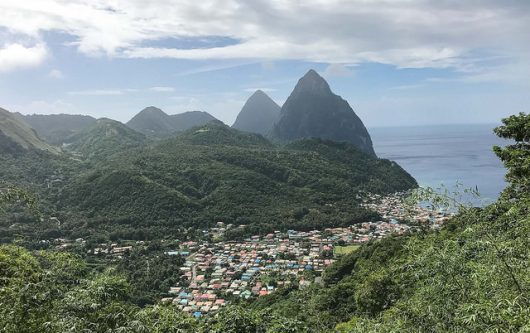
As of 2016, the United States has provided over $38,000 worth of foreign aid to St. Lucia through the United States Agency for International Development (USAID). This small Caribbean island, with a population of 170,015, has a Gross National Income of $11,370 and continues to be at risk for high crime, labor instability and a high level of substance abuse.

Through its many programs and funding ventures via USAID, the U.S. continues to better St. Lucia. However, this foreign aid does not only help the island; the U.S. benefits from foreign aid to St. Lucia as well.

Agriculture and Tourism

Most USAID funding in St. Lucia is allocated to agriculture. By investing in the country’s department of agriculture, the U.S. is aiding as well as fortifying a potential trade relationship. Within the first four months of 2018, almost 10 percent of U.S. imports from St. Lucia were food related — a number that will most likely rise as the country’s agriculture department strengthens.

Another way that the U.S. benefits from foreign aid to St. Lucia is through tourism. St. Lucia’s tourism industry profits greatly from the U.S. as a majority of tourists to the island are American, who tend to buy St. Lucian products. This exchange of goods thus benefits both economies.

The more the U.S. invests in foreign aid to St. Lucia, the more return on investment it will receive. By giving USAID in order to strengthen St. Lucia’s economy, the U.S. is strengthening a trading partner. However, in order to build a secure relationship between the countries, crime and violence must also decrease.

Violence Prevention and Education

One USAID program focuses on targeting violence in a preventative way. In a partnership with St. Lucia’s Department of Education, Innovation, Gender Relations and Sustainable Development, the U.S. has commenced a coding and robotics program into St. Lucia’s secondary education curriculum.

As of June 12, four students and 12 teachers have been trained in the robotics and coding curriculum; more math, physics, computer and traditional classes will be later introduced into St. Lucian secondary schools.

The new initiative creates a new and exciting way for St. Lucian students to become and remain involved in their education as they attend school. In this program, education is not just the knowledge that students gain from learning robotics and coding. The USAID and St. Lucia’s Department of Education also aim to instill a love of learning, teamwork and critical thinking skills into the students.

By introducing the robotics and coding program into secondary schools and impressing a love for learning, as well as teamwork and critical thinking skills, onto St. Lucian students, the two countries hope to decrease the overall violence in St. Lucia.

Sustainable Progress and Growth

People who think critically and are more prone to work together are far less likely to commit violent crimes than their counterparts. By teaching St. Lucian students to be not only better learners, but also better citizens is vitally necessary to the growth of St. Lucia.

With the help of this program, the country’s future adults will be more aptly prepared to participate within St. Lucia as well as the global economy. As the program continues to succeed, St. Lucia will benefit from its future leaders just as the U.S. benefits from foreign aid to St. Lucia.

– Savannah Hawley
Photo: Flickr

July 5, 2018
https://borgenproject.org/wp-content/uploads/borgen-project-logo.svg 0 0 Borgen Project https://borgenproject.org/wp-content/uploads/borgen-project-logo.svg Borgen Project2018-07-05 01:30:492024-05-29 22:42:58The Multiple Ways That The U.S. Benefits from Foreign Aid to St. Lucia
Foreign Aid

The Current State and Progress of Global Infrastructure

Global Infrastructure
One of the key challenges facing developing nations is the lack of available infrastructure. Proper infrastructure can help a country build itself up by improving health, transportation, energy, education and a myriad of other vital institutions. Global infrastructure initiatives are a vital form of potential aid that can improve the quality of life for developing nations.

How Energy Infrastructure Helps Emerging Countries

USAID currently works around the world to improve the infrastructure of developing nations. In Afghanistan, the organization helped develop a national electric company that reduced energy loss in the country from 60 percent to 35 percent. Likewise, in the Philippines, USAID was integral in providing energy to 13,000 rural households via solar and hydroelectric plants. Similar projects are taking place in countries such as Jordan, Vietnam and the Ukraine.

Infrastructure is important to a country’s development because without it growth becomes difficult. Without the energy to power development projects of their own, foreign aid ends up catalyzing a nation to empower itself. By providing clean water, countries can save on healthcare costs and invest in other issues. This makes infrastructure one of the most cost-effective ways to invest in the future of a country.

How It Can Be Improved

Unfortunately, there’s a gap between infrastructure development funding needs and its availability. Erecting fundamental structures and corruption are both costly and difficult projects for governments to overcome.

In order to combat these issues, some experts have suggested acquiring funding from the private sector so as to help aid some of USAID’s massive energy project proposals. The theory is that by selling projects to private contractors, governments can cut costs and prevent corruption. However, others such as W. Gyude Moore suggest that actions like these do not resolve the core issues. In either case, it will take a combination of private investors and foreign aid to solve the problem for good.

According to Moore, there are a few key things to keep in mind while thinking about global infrastructure.

Global Infrastructure

  1. Not Every Country is the Same: It seems obvious, and yet current global infrastructure planning could do a better job of differentiating between countries. The G20 Global Infrastructure Hub Pipeline aims to help alleviate this problem by providing investors with comprehensive data on each project. With unique and accurate information, investors will be able to better match their skills and resources with each project.
  2. Private Investment is too Risky in its Current Form: With imperfect information and little standardization, many investors stay away from global infrastructure initiatives unless they can be guaranteed a profit from governments; this issue is then also combated by the G20 Global Infrastructure Initiative. By providing comprehensive information, investors can better prepare for their jobs, thereby reducing costs for themselves and the governments they work with.
  3. Different Types of Infrastructure are More Profitable than Others: While energy infrastructure attracts a large number of investors, more fragile sectors like water and transportation do not. Part of USAID’s infrastructure initiative is to help build these important systems. In Jordan, these efforts supported a water treatment plant that now provides clean water to two million citizens.

While tough challenges do exist for foreign infrastructure in the future, progress can be made via a combination of foreign aid and private sector investment. USAID is currently working to help foreign governments establish infrastructure, and the G20 Global Infrastructure Hub Pipeline helps investors make informed decisions. While there is always more that can be done in regard to global infrastructure, this is a promising start.

– Jonathon Ayers
Photo: Flickr

July 4, 2018
https://borgenproject.org/wp-content/uploads/borgen-project-logo.svg 0 0 Borgen Project https://borgenproject.org/wp-content/uploads/borgen-project-logo.svg Borgen Project2018-07-04 01:30:222024-05-29 22:38:53The Current State and Progress of Global Infrastructure
Aid, Foreign Aid

The Ways How the US Benefits From Foreign Aid to Kyrgyzstan

How the US Benefits From Foreign Aid to Kyrgyzstan
Kyrgyzstan, once part of the Soviet bloc, transformed from a one-party communist state into a republican democracy in 1991. Despite its reforms, though, the country is beset by both extreme poverty and government incompetence. With a significant portion of the population destitute, a thriving illegal narcotics market and ethnic tensions between native Kyrgyz and migrant Uzbeks, American investment in its government and people would see substantive U.S. benefits from foreign aid to Kyrgyzstan in terms of security.

State of Kyrgyzstan

Kyrgyzstan’s location in geographically-isolated Central Asia and its lack of natural energy resources, such as oil and gas, prevent it from emulating the industrial rise of neighboring economic goliaths, Russia and China.

The inherent difficulty of encouraging economic growth, coupled with institutional problems and social disorder, has resulted in high poverty rates in Kyrgyzstan. As of 2010, more than 40 percent of Kyrgyzstan residents live below the poverty line. High rates of homelessness and unemployment have turned many to narcotics.

Factors Leading to Revolution

Trafficking drugs across a long, unguarded border with other Central Asian countries linked to Afghanistan is a profitable enterprise, making it lucrative to those who do not have sustainable incomes. The second-largest city in Kyrgyzstan, Osh, is often referred to as the “drug capital” due to the volume of illegal narcotics that passes through the city near Kyrgyzstan’s southern border.

In 2012, authorities seized at least six tons of various substances ranging from cannabis to heroin. The rampant nature of the drug problem, and the government’s inability to resolve it, was one factor that led to revolution.

In June of 2010, more than 350 people were killed in southern Kyrgyzstan during the Second Kyrgyz Revolution over a variety of issues —  rape, wealth inequality between rural Kyrgyzstan migrants and urban Uzbeks and gang turf wars over the aforementioned drugs were a few. About 66 percent of Kyrgyzstan’s population is Kyrgyz, with some 14 percent identifying as Uzbeks. The violence between the two ethnic groups in the larger frame of regime change displaced hundreds of thousands of citizens and left the region in turmoil.

Ethnic Tension and Cultural Conflict

Poverty is a breeding ground for radicalism. Its perpetuation is often a vicious cycle, wherein poverty causes political instability, resulting in civil wars and terrorism at home and abroad. These conflicts then wipe out much-needed crops and necessary social institutions like hospitals and schools. In Kyrgyzstan’s case, ethnic tension resulted from lopsided poverty and unaffordable utility prices.

It would be a mistake to assume, however, that the conflict between Uzbeks and Kyrgyz is limited to only Kyrgyzstan or Central Asia. In April 2017, an Uzbek born in Kyrgyzstan killed 14 in St. Petersburg, Russia by rail attack. In October 2017, an Uzbek immigrant killed eight in New York by driving a truck through pedestrians. More than 1,500 Uzbeks have joined the Islamic State, ostracized by many of the countries — especially Kyrgyzstan — they once lived in.

This global violence, spawned in part by the ineptitude of a corrupt and autocratic government in preventing the continuance of radicalization, is not in the interest of either the Kyrgyzstan people or the United States. Just as Kyrgyzstan benefits from foreign aid to Kyrgyzstan, the U.S. benefits from foreign aid to Kyrgyzstan.

In the decades since the Soviet Union’s dissolution, subsequent American administrations have supplied aid intended mostly for the Kyrgyz Republic’s agricultural economy and on-the-ground humanitarian efforts. But it can do more — more for its government and more for its people.

U.S. Benefits From Foreign aid to Kyrgyzstan

Earmarking additional funds could support anti-corruption initiatives to dampen the prevalence of drug transport and abuse among the population. Increased investment in Kyrgyzstan’s energy sector could also diminish dependence on foreign energy and stabilize utility prices. A reduction in poverty and boost in living standards would increase income equality and alleviate some of the tension between Uzbeks and Kyrgyz that currently plagues the country, and by extension of terrorist activity, the world.

As terrorism is such a buzzword in American politics today, preventing it would surely be high on most elected officials’ to-do lists. Helping the Kyrgyz Republic overcome its multidimensional poverty — which can prevent terrorist activity and save lives both in the United States and abroad — would increase national security at a fraction of the cost of not doing so.

To reiterate: the U.S. benefits from foreign aid to Kyrgyzstan. The current administration’s plan to drastically cut its designated aid funds would render most, if not all, of these benefits void.

– Alex Qi
Photo: Flickr

June 22, 2018
https://borgenproject.org/wp-content/uploads/borgen-project-logo.svg 0 0 Borgen Project https://borgenproject.org/wp-content/uploads/borgen-project-logo.svg Borgen Project2018-06-22 01:30:452019-11-14 13:17:45The Ways How the US Benefits From Foreign Aid to Kyrgyzstan
Aid, Foreign Aid, USAID

How the US Benefits from Foreign Aid to Dominica

How the U.S. Benefits From Foreign Aid to Dominica
Natural disasters occur globally, and many countries overcome these disasters with the help of foreign aid. Hurricane Maria, a Category 5 storm, hit Dominica on September 18, 2017. USAID has sent assistance to Dominica, which becomes beneficial to the U.S. by building good relations and maintaining a positive reputation by working with other countries in providing foreign assistance to Dominica.

The U.S. Benefits from Foreign Aid to Dominica by Fostering Good Relations

All countries, especially impoverished ones, need help to recover from a natural disaster of Hurricane Maria’s magnitude. The U.S. benefits from foreign aid to Dominica by stepping in and using its power to help, which strengthens relations between the countries. After Hurricane Maria, Samaritan’s Purse, the Pan American Health Organization and the International Federation of the Red Cross, all under USAID, were able to contribute $3.25 million in foreign aid to Dominica.

The U.S. Department of Defense’s Southern Command worked with USAID’s Caribbean Hurricanes Disaster Assistance Response Team (DART) to help repair roofs in Dominica that were damaged by the hurricane. USAID provided plastic sheeting and DART taught a group of local builders how to use the tools provided to fix the damaged roofs properly. Through donations and direct assistance to individuals, the U.S. is building good relations with other countries.

International Collaborations Build a Positive Reputation

The U.S. has worked with other countries to provide water, food and tools to rebuild Dominica immediately after Hurricane Maria hit the island. The U.N. World Food Programme (WFP) contributed about 10 metric tons of food, which fed around 25,000 people in Dominica over three months. By assisting with the WFP’s food distribution, the U.S. benefits from foreign aid to Dominica by using its resources to help impoverished countries, which grows a positive international reputation.

Collaborations with other countries to help provide foreign aid to developing countries do make a difference and help the U.S. maintain a positive reputation. According to Diálogo Digital Military Magazine, the prime minister of Dominica, Roosevelt Skerrit, commented positively on the progress the U.S. and other countries have made. He stated, “We have many allies. Thanks for helping my people, without you, our partner nations, it would not have been possible to get past the first phase of this emergency.”

Countries dealing with poverty and disasters benefit from other countries stepping in to help via foreign aid, and that help allows the affected country to get back on its feet. The U.S. benefits from foreign aid to Dominica through maintaining its positive reputation by doing good for poor countries.

While natural disasters can do great damage to countries dealing with poverty, those countries can also recover promptly with the foreign aid provided by other countries. The U.S. benefits from foreign aid to Dominica by connecting with its people to encourage good relations, as well as ensuring a positive reputation by reaching out to less developed countries in times of need. The U.S. can retain in its positive relationship with the government of Dominica by continuing to support the country, especially when natural disasters hit.

– Kelly Kipfer
Photo: Flickr

June 20, 2018
https://borgenproject.org/wp-content/uploads/borgen-project-logo.svg 0 0 Borgen Project https://borgenproject.org/wp-content/uploads/borgen-project-logo.svg Borgen Project2018-06-20 07:30:242024-05-29 22:42:49How the US Benefits from Foreign Aid to Dominica
Foreign Aid

How the US Benefits from Foreign Aid to Namibia

U.S. Benefits from Foreign Aid to Namibia
Namibia is a sparsely populated country on the southwestern coast of Africa whose priceless natural resources and small population of 2.5 million enable its upper-middle income status. Relations between the United States and Namibia are friendly, and the U.S. has supported the country’s recovery after the damage of apartheid through programs that improve healthcare, education and economic opportunities.

About two-thirds of Namibian citizens live in rural areas, and two-thirds of the people in rural areas rely on subsistence farming for a living. The country has seen a reduction in poverty, yet this has not had an effect on the rather high unemployment rate of 28.1 percent and the socioeconomic inequalities that linger from the apartheid era. Outside of satisfying a moral need, the U.S. benefits from foreign aid to Namibia in its efforts to address these issues.

A History of U.S. Involvement

USAID involvement in Namibia started in 1990 with the country’s independence from South Africa. South Africa seized the territory from Germany, which was then called South-West Africa, during World War I and annexed it after World War II. The South-West Africa People’s Organization guerrilla group spurred a war for independence in 1966, but South Africa did not release the territory until 1988 under the United Nations peace plan. 

In 2014, the Millennium Challenge Account Compact that aimed to reduce poverty and stimulate growth in education, tourism and agriculture proved to be a success. Namibia is also one of the countries participating in the President’s Emergency Plan for AIDS Relief (PEPFAR), which was initiated by USAID and the Centers for Disease Control and Prevention. Considering the global epidemic of HIV/AIDS and the changing needs within Namibia, USAID has since shifted its main attention to HIV/AIDS work, making large investments in Namibia’s health services. 

How the U.S. Benefits from Foreign Aid to Namibia: Economic Growth and Trade 

Namibia has many strengths that make it a viable country for economic growth. It is politically stable and has developed infrastructure and a modern telecommunication system.

As Bill Gates has noted in several op-eds supporting foreign aid, foreign U.S. investments are beneficial to American businesses by providing opportunities for new customers and new suppliers. When private companies collaborate with organizations like USAID, it creates a market for American goods. One example of a way in which the U.S. benefits from foreign aid to Namibia is if an American company were to help to raise the productivity of subsistence farmers in Namibia, this would benefit farmers and workers in the U.S. while opening the possibility for a larger market in that part of the world.

In regard to fighting HIV/AIDS and disease globally, Gates says societies are more productive when there are healthy “teachers, police officers and entrepreneurs.” Countries such as Namibia that worked with PEPFAR have “improved three times more on one measure of economic development than their non-PEPFAR counterparts,” Gates confirmed. Gates observes that foreign aid alone is not an immediate solution to global poverty, but it stimulates sustainable growth that improves global well-being. Continued support of Namibia and other countries can bring wide-ranging benefits to the U.S. and the world.

– Camille Wilson
Photo: Flickr

June 18, 2018
https://borgenproject.org/wp-content/uploads/borgen-project-logo.svg 0 0 Borgen Project https://borgenproject.org/wp-content/uploads/borgen-project-logo.svg Borgen Project2018-06-18 07:30:512024-05-29 22:42:46How the US Benefits from Foreign Aid to Namibia
Aid, Foreign Aid

Ukraine Bounces Back After Revolution of Dignity

Revolution of DignityIn November 2013, student protests in Ukraine turned into a full-fledged revolution against government corruption that has since been dubbed the Revolution of Dignity. Now, with a new government in place, the country is attempting to align itself with its European neighbors and become a stable democracy. With multiple roadblocks in the way, such as the annexation of Crimea by Russia, Ukraine will need to rely on its allies in order to achieve its goals.  

How the Revolution of Dignity Began

Ukraine’s Revolution of Dignity started out as a series of student protests to pressure the prime minister to sign an association agreement with the European Union. However, as the protests raged on, they became a catalyst for the rest of the country to express its discontent with larger issues with the government like the regime’s power grabs and rampant corruption.  

Despite these issues, protests only became a revolution when violence broke out between the government and protesters on Nov. 29, 2013. After this point, the goal became to overthrow the government and establish a more democratic state, one free of corruption and acting in the people’s best interests. In 2014, the people in overthrowing the government, reinstating the previous constitution and holding new elections in May.

While the revolution was successful, it was not without consequence. The destabilization in the country helped lead to the annexation of the southeastern Crimea region by the Russian Federation. On top of that, while the previous regime was friendly to the Russian government, the new one looked for a more independent governance supported by the E.U. and other western allies. With tough challenges ahead, Ukraine needed to look to allies for help.

What Allies Are Doing to Help

Since the protests initially started to pressure the Ukrainian president to sign an agreement with the E.U., it comes as no surprise that the E.U. is a key ally in helping Ukraine handle its political turmoil. One of the first things the newly elected government did was pass the Ukraine-European Union Associated Agreement and join the Deep and Comprehensive Free Trade Area. These moves strengthen the nation’s economic, political and cultural ties with Europe through mutually beneficial relationships.  

While the U.S. is not as geographically close to Ukraine as the E.U., it has a vested interest in keeping the region stable and independent. Currently, over $204 million is planned in foreign aid for Ukraine. Among this, 33 percent is for peace and security, 32 percent goes toward human rights, democracy and governance, 29 percent is for economic development, and six percent goes toward health. With this aid, the U.S. hopes to keep Ukraine free of Russian influence and welcome them into the western world.

Through USAID, foreign aid is being used to help out local communities of Ukrainians.  In 2017, the organization helped 50 communities effectively manage resources and become sustainable without the central government. This not only fights corruption but also helps improve the everyday lives of Ukrainians who face instability in the face of recent changes.   

Continuing Progress in Ukraine

The aftermath of the Revolution of Dignity and the struggle with Russia has left many Ukrainians in a state of upheaval. With an uncertain future and violence a real possibility, it is key that allies help the country through this traumatic point in its history. The humanitarian impact of political uncertainty is often understated in the media, but it is real. While there are larger political reasons for Ukraine’s allies to help it, the aid these allies give to the Ukrainian people has an impact on the ground that can help save many lives.

– Jonathon Ayers
Photo: Flickr

June 17, 2018
https://borgenproject.org/wp-content/uploads/borgen-project-logo.svg 0 0 Borgen Project https://borgenproject.org/wp-content/uploads/borgen-project-logo.svg Borgen Project2018-06-17 01:30:512024-05-29 22:42:44Ukraine Bounces Back After Revolution of Dignity
Aid, Foreign Aid, Global Poverty

Understanding Why Providing Foreign Aid Helps the U.S.

foreign aid helps the U.S.
Giving, especially in the form of foreign aid, has shown to cultivate meaningful relationships among people and countries, some that lead to rewarding trading agreements amid other benefits. Recent history has particularly exhibited how foreign aid helps the U.S., which is a crucial consideration in the political dialogue surrounding the current foreign aid budget.

Foreign Aid Helps the U.S. with Trade

One valuable return the U.S. has received in its giving of foreign aid to other developing countries has been the increase in American jobs as well as trade. Foreign aid is much like an investment; it helps to forge the foundation needed for low-income countries to build up and become middle-income, sustainable states. Here are some examples:

  1. After World War II, U.S. foreign aid to Japan helped recover Japan’s infrastructure and highly contributed to the success of American companies like Microsoft.
  2. The U.S. now trades and does business with former recipients of foreign aid, such as South Korea, Brazil, Mexico, Vietnam and Thailand.
  3. The President’s Emergency Plan For AIDS Relief (PEPFAR) successfully slowed down the AIDS epidemic and countries that received such aid have, in turn, consumed more American goods. Exports rose 77 percent in Tanzania, 189 percent in Zambia and 241 percent in Ethiopia.
  4. PEPFAR is one of the strong determinants of increases in the trade of pharmaceuticals.
  5. Foreign aid has attributed $46 billion more in U.S. exports and 920,000 more jobs in the U.S.
  6. In 2011, 44.6 percent of U.S. exports went to developing countries.
  7. In Tennessee alone, more than $33 billion in goods and services were exported to foreign countries in 2014 and this trade, in turn, supports over 22 percent of jobs, 830,000 local jobs to be specific.

Foreign Aid Helps with Health

Foreign aid helps the U.S. in preventing global epidemics that could otherwise be much worse. While assisting developing countries with their challenges in health, the U.S. also does its duty to minimize any possible health issues and diseases from traveling overseas or across borders to the U.S. There has been a great number of such instances, such as:

  • The U.S. was the largest funder of a number of health workers stationed in Nigeria with the original goal of polio eradication. The workers were later reassigned and succeeded in countering the infamous Ebola epidemic.
  • The PEPFAR program has helped stop the spread of AIDS by supplying life-saving medicines to over 14 million people.

Foreign Aid Helps with National Security

One of the non-negotiable benefits the U.S. reaps from its giving of foreign aid to developing countries is an improvement in national security. To prevent a third world war, the U.S. created what is now the modern development assistance program to avoid further instability in Europe.

Stability in developing countries is key in preventing future political issues from unfolding. The U.S. has defense agreements with 131 out of the 135 countries that it provides foreign aid to.

The importance of international aid lies in economic benefits, such as trading proliferations, as much as health and national security. As evidenced above, it is clear that there is truth in the fact that foreign aid helps the U.S. just as much as it helps other nations.

– Roberto Carlos Ventura
Photo: Flickr

June 12, 2018
https://borgenproject.org/wp-content/uploads/borgen-project-logo.svg 0 0 Borgen Project https://borgenproject.org/wp-content/uploads/borgen-project-logo.svg Borgen Project2018-06-12 01:30:172024-06-06 00:08:00Understanding Why Providing Foreign Aid Helps the U.S.
Page 28 of 61«‹2627282930›»

Get Smarter

  • Global Poverty 101
  • Global Poverty… The Good News
  • Global Poverty & U.S. Jobs
  • Global Poverty and National Security
  • Innovative Solutions to Poverty
  • Global Poverty & Aid FAQ’s
Search Search

Take Action

  • Call Congress
  • Email Congress
  • Donate
  • 30 Ways to Help
  • Volunteer Ops
  • Internships
  • Courses & Certificates
  • The Podcast
Borgen Project

“The Borgen Project is an incredible nonprofit organization that is addressing poverty and hunger and working towards ending them.”

-The Huffington Post

Inside The Borgen Project

  • Contact
  • About
  • Financials
  • President
  • Board of Directors
  • Board of Advisors

International Links

  • UK Email Parliament
  • UK Donate
  • Canada Email Parliament

Get Smarter

  • Global Poverty 101
  • Global Poverty… The Good News
  • Global Poverty & U.S. Jobs
  • Global Poverty and National Security
  • Innovative Solutions to Poverty
  • Global Poverty & Aid FAQ’s

Ways to Help

  • Call Congress
  • Email Congress
  • Donate
  • 30 Ways to Help
  • Volunteer Ops
  • Internships
  • Courses & Certificates
  • The Podcast
Scroll to top Scroll to top Scroll to top