• Link to X
  • Link to Facebook
  • Link to Instagram
  • Link to TikTok
  • Link to Youtube
  • About
    • About Us
      • President
      • Board of Directors
      • Board of Advisors
      • Financials
      • Our Methodology
      • Success Tracker
      • Contact
  • Act Now
    • 30 Ways to Help
      • Email Congress
      • Call Congress
      • Volunteer
      • Courses & Certificates
      • Be a Donor
    • Internships
      • In-Office Internships
      • Remote Internships
    • Legislation
      • Politics 101
  • The Blog
  • The Podcast
  • Magazine
  • Donate
  • Click to open the search input field Click to open the search input field Search
  • Menu Menu

Archive for category: Food & Hunger

Information and stories on food.

Advocacy, Developing Countries, Development, Disease, Food & Hunger, Food Aid, Food Security, Global Health, Global Poverty, Health, Human Rights, Hunger, Inequality, Sanitation, Water

5 Facts About Hunger in Rwanda

hunger_rwanda
The Republic of Rwanda is a small sovereign state in the Eastern part of Central Africa. Rwanda ranked at 166 of 187 countries on the UNDP Human Development Index in 2011. Rwanda also has the highest population density in the region with 416 people per square kilometer.

Low income, limited natural resources, and food and water insecurity pose a problem for citizens in Rwanda every day. In the years following the Rwandan Genocide in 1994, international rebuilding efforts have been on the ground trying to make sustainable changes to alleviate some of the hunger and water issues.

Here are five facts that explain the state of hunger in Rwanda and how it may change in the coming years:

  1. The 1994 Rwandan Genocide marked the end of the ceasefire signed the year before that stopped the fighting of the Rwandan Civil War. The war began between two ethnic groups the Hutu and Tutsi. The Genocide began when the plane carrying the Hutu supported president Juvenal Habyarimana was shot down and he, along with several other members of the government, were killed. The genocide lasted 100 days and an estimated 800,000 to 1,000,000 people were killed. The fallout from the Rwandan Genocide is the cause for much of the instability in the region that lasts today.
  2. Secondary school attendance in Rwanda is one of the lowest in the world and the literacy rate is 55%.
  3. Approximately 65% of the population has access to safe, clean drinking water
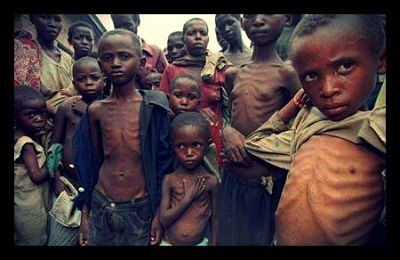
  4. 45% of children under 5 years of age are malnourished.
  5. Over 67,000 refugees from neighboring countries currently reside in Rwanda.

Even though there is a lot of strain on the country today, organizations have been working with the government to address one of Rwanda’s major problems: food insecurity. Agriculture was the country’s main sector before the genocide, and since then, major efforts have been made to make it profitable one more.

Updating the agricultural practices is what the World Food Programme credits with directly reducing the number of food insecure people.

The country hopes that with the reliance on agricultural programs it will improve its GDP to US$900 by the year 2020, up US$380 from its current GDP. Rwanda was also the first country to sign the Comprehensive Africa Agriculture Development Programme (CAADP), meaning that addressing malnutrition and food insecurity is one of the government’s main priorities.

Even though Rwanda still has a long way to go, the government has been taking steps in the right direction that could provide a template for other countries in the region to follow.

– Colleen Eckvahl

Sources: World Food Programme, World Vision
Photo: Rising Continent

February 26, 2014
https://borgenproject.org/wp-content/uploads/borgen-project-logo.svg 0 0 Borgen Project https://borgenproject.org/wp-content/uploads/borgen-project-logo.svg Borgen Project2014-02-26 22:20:472024-05-24 23:56:425 Facts About Hunger in Rwanda
Developing Countries, Disease, Food & Hunger, Global Health, Health, Human Rights, Hunger, Inequality, Violence Against Women, War and Violence, Women, Women & Children

4 Issues Contributing to Malnutrition in the DRC

malnutrition

Kinshasa, DR Congo

The second largest country in Africa and is located in the middle of the continent. Since the 1990’s the country has been in a state of political unrest and civil war which is the cause of many of the other problems in the region, such as disease, food insecurity, human rights violations, and violence against women.

Here are four issues that contribute to nearly 6.3 million people remaining food insecure and over half of the children under the age of 5 classified as malnourished in the DR Congo:

  1. Political instability between the government and several militia and rebel groups. Peace talks have been ongoing since 2009 with little progress. Since 1998, 5.4 million people have been killed. Less than 10% were killed during the fighting, instead the majority have died from diseases and malnutrition.
  2. 2.7 million people are internally displaced within the DRC as a result of the civil war. 1.6 million are in the North and South Kivu region, where much of the heavy militia activity takes place. There are an additional 116,000 refugees from neighboring countries currently living in the DRC. The large number of displaced people and perpetual fighting in the country has led to a high rate of abuse and sexual assault of women and children. It is estimated that 400,000 women between 15 and 49 were raped between 2006 and 2007. This is the equivalent of 48 women being assaulted every hour.
  3. 3.71% of the population lives below the poverty line, meaning they live on less than two dollars per day.
  4. Rampant infectious diseases are common across the country such as Malaria, Dengue Fever, Typhoid Fever, and HIV/AIDS. The ministry of health said that Malaria was their number one disease concern and in 2011 alone there were 4,561,981 reported cases.

– Colleen Eckvahl 

Sources: The International Campaign to Stop Rape and Gender Violence in Conflict , WFP, WHO
Photo: This is Africa

February 26, 2014
https://borgenproject.org/wp-content/uploads/borgen-project-logo.svg 0 0 Borgen Project https://borgenproject.org/wp-content/uploads/borgen-project-logo.svg Borgen Project2014-02-26 22:20:252024-05-26 23:15:194 Issues Contributing to Malnutrition in the DRC
Food & Hunger, Global Poverty, Health

Clean Cookstoves in Kenya Save Millions of Lives

Clean_Cookstoves
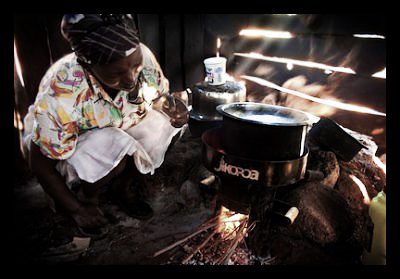
More than seven billion people live in this world. Yet, according to the World Health Organization, more than 3 billion risk experiencing serious respiratory infections and early death simply by cooking food and heating their homes using traditional wood stoves and solid fuels instead of clean biogas cookstoves.

The National Clean Cookstoves and Fuels Conference at Nairobi, Kenya in February was sponsored by the Global Alliance For Clean Cookstoves (GACC). The conference drew attention to a simple fact: “Cooking is essential and should not kill,” noted Radha Muthiah, the executive director of GACC.

In Kenya alone, illnesses linked to cookstove smoke claim 15, 700 lives a year.  Yet 84 percent of the country continues to uses solid fuels for cooking.

Naturally, the most affected group are mothers – responsible for the bulk of the cooking – and children. Muthiah shared this tragic figure: 8,300 Kenyan children die annually due to respiratory infections attributed to this indoor air pollution.

The solution, though clear, poses a high cost.

Isaac Kalua, chairperson of the Kenya-based Green Africa Foundation, asserted, “We are losing people because of indoor [air] pollution and we therefore need urgent transition from traditional methods of cooking to modern technologies.” He continued by observing that the “affordability of the new technologies is a main challenge to providing clean fuels for all.” Such technologies include reliable, safe biogas cooking stoves, used in conjunction with biogas digesters.

Despite the cost, a number of donors in place who recognize the needless loss of life and are committed to helping Sub-Saharan Africa address this issue. During the February GACC conference, several organizations pledged their continuing financial support.  Benefactors include the UN Foundation, which has invested $3 million this year. GACC aims to provide reliable cookstoves and clean fuels globally.

The U.S. government awarded $1 million to three Kenyan organizations. This recent donation continues a lengthy history of support: since 2010, the US has contributed $125 million to GACC.

Though financial support is critical, outreach to those at risk equally addresses the harms of indoor pollution. These education efforts extend to women, as well as farmers. As the popularity of diary farmer grows in Sub-Saharan Africa, sources for biogas are expanding, According to SciDiv.Net, biogas “is a system that converts organic waste from livestock manure into energy for cooking” and heating. This system burns cleanly, because the biogas fuel does not release toxic emissions.

Consequently, biogas offers the opportunity to circumvent the health risks associated with traditional wood burning stoves.

Tradition, however, is formidable opponent. Mary Njoki, a rural Kenyan mother of five, shared this observation: “Biogas is good because it cooks fast but I still use wood fuel when it is the cold season to warm the house and cook food, since during this period, the heat produced by biogas is not sufficient.” Organizations world wide are committed to changing not only Mary Njoki’s mind – but the habits of millions of families heating their homes and cooking food for their children.

As Radha Muthiah observes, “using clean, efficient, and safe cookstoves” reduces fuel consumption, exposure to toxins and deforestation. And, most importantly, save millions of lives.

– Ellery Spahr 

Sources: SciDevNet, Sci Dev Net, Global Alliance for Clean Cookstoves
Photo: Burn Design Lab

February 26, 2014
https://borgenproject.org/wp-content/uploads/borgen-project-logo.svg 0 0 Borgen Project https://borgenproject.org/wp-content/uploads/borgen-project-logo.svg Borgen Project2014-02-26 04:00:132016-02-16 12:07:55Clean Cookstoves in Kenya Save Millions of Lives
Children, Food & Hunger, Food Security

Hunger in South Africa

Hunger in South Africa Starvation
South Africa is one of the few countries able to provide its entire population with food. Each individual is able to receive approximately 600 grams of starch, 300 grams of fruit and vegetables, and 150 grams of meat or fish, according to the Food and Agriculture Organization of the United Nations. However, hunger in South Africa continues to be a prevalent issue.


Causes of Hunger in South Africa


Thus, 11 million South Africans are unsure where their next meal will come from, a concept known as “food insecure.” A quarter of the South African population is currently struggling from malnourishment and hunger. The rural areas are where hunger hits the hardest, and the majority of South Africa’s poor are living in the rural parts of the country.

The reasoning for this is because natural resources are being wasted and are not being put to appropriate use. The cost of food is rising, and many South Africans are finding it increasingly difficult to afford or access nutrient dense foods at an affordable price.

Dr. Gerhard Backebery, Executive Manager of the South African Water Research Commission states, “Although not conclusive, it seems that most poor people are buying and not growing the food that they are eating. At the same time it is of major concern that available natural resources (such as water, soil and plants) are under-utilized.”


Devastating Health Outcomes of Hunger in South Africa


People are not merely dying of hunger in South Africa, but more specifically, they are dying from the side effects of lacking proper nutrients.  What people are able to eat is directly stemmed from what they are able to afford. Children, in particular, are suffering from undernourishment and malnourishment; a study in the Eastern Cape shows that some children are only ingesting meat one time per month, therefore they are severely lacking in minerals such as zinc and iron.

One in five children are reportedly stunted from lack of necessary nutrients and minerals.  Their nutrient deficiencies can have a lasting effect on their growth process, causing significant impairment to their physical health and mental development.

For example, iron deficiencies can cause poor attention spans and fatigue, making brain activity slower and learning more difficult.

Food fortification is one of the main methods to help reduce malnutrition and deprivation of nutrients.

Wheat flour, sugar, and maize flour now include essential vitamins and minerals. The addition of fortification in food has led to a reduction in birth defects. Children who are not breastfed, or who have been improperly breastfed, present elevated levels of malnourishment, growth defects, diarrhea, and are at greater risk of HIV and AIDS.

Other factors such as access to clean water, sanitization and health care can have a large impact on resolving hunger in South Africa. They influence health and can lead to maintaining essential nutrients that may otherwise be lost due to diarrhea and dehydration.

– Rebecca Felcon

Sources: UNICEF, Food Bank, Mail and Guardian
Photo: Telegraph

February 26, 2014
https://borgenproject.org/wp-content/uploads/borgen-project-logo.svg 0 0 Borgen Project https://borgenproject.org/wp-content/uploads/borgen-project-logo.svg Borgen Project2014-02-26 04:00:032024-05-26 23:13:27Hunger in South Africa
Aid Effectiveness & Reform, Food & Hunger, Global Poverty, Hunger

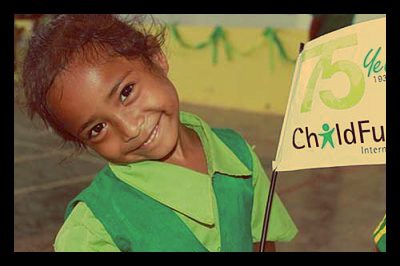
ChildFund International Tackles World Hunger

Childfund International
The United States Census Bureau has forecasted the population of the world to reach eight billion by the year 2025. In terms of hunger this can be considered an extremely daunting statistic. How will eight billion people eat in the future when people cannot even adequately feed everyone living on Earth today? Eliminating global poverty and giving children necessary skills to survive and thrive in the coming years are crucial parts of the world hunger solution.

ChildFund International is one organization that focuses mainly on children and improving their quality of life in order to sustain a better future. It is known for sponsoring children in over 50 countries. Giving to countries in need with specific guidelines involving nutrition and social development have been proven effective in comparison with unspecific cash donations.

Focusing on making sure children and families have access to food and health living environments is a great strategy for charities to implement. Once starvation is off the table, kids can go to school and parents to work. Eventually they can become self-sufficient, disbarring the notion of welfare dependency.

Supporting children with food, water, school supplies, and access to decent medical care is all part of the sponsorship benefits that ChildFund International distributes. A recent article on their website notes how population increases are only exacerbating the problem of widespread hunger. Developing countries are becoming more urban; building cities means destroying farmland. Farmland is necessary for agricultural production, and the less natural farmland there is, the more difficult it becomes to produce food.

Solving global poverty and solving world hunger are interrelated goals. Providing access to clean drinking water, food and medical care boosts the economy by increasing the number of healthy learning and working children in a community. The more educated the children are, the more likely they are to grow up and secure sustainable employment.

Having a stable job will mean having a stable income and the ability to break the vicious cycle of poverty. Studies have shown that poverty in the United States has decreased significantly over the past 50 years and the goal of eradicating poverty altogether is very possible with governmental assistance and appropriate policy implementation. However, poverty is still a huge issue in foreign nations and every effort is needed to help resolve it.

There are still billions of people living on barely $2 per day and suffering from hunger and the absence of clean water. Foundations like ChildFund International and everyone who gets involved can make sure everyone has the chance at a better tomorrow.

– Kaitlin Sutherby

Sources: The Economist, The Huffington Post
Photo: TriCounty Sentry

February 24, 2014
https://borgenproject.org/wp-content/uploads/borgen-project-logo.svg 0 0 Borgen Project https://borgenproject.org/wp-content/uploads/borgen-project-logo.svg Borgen Project2014-02-24 15:14:452020-07-31 11:26:30ChildFund International Tackles World Hunger
Food & Hunger, Global Poverty

Syrian Peace Talks Bring Ceasefire to City of Homs

City_of_Homs
The Syrian peace talks in Switzerland at the start of 2014 have had little success. Members of the West insist on a transitory government away from the present Assad regime, yet that is a non-starter for negotiators from the regime. In the meantime, the Syrian people are still being killed, starved and stuck in the midst of battlefields. Relief organizations looking to bring in goods to the region have had repeated difficulties in doing so.

The one major development from the talks has been the agreement for a ceasefire at the city of Homs.

The city has been besieged for the greater part of the war, and while it is currently held by rebel groups, the people remaining in the city were still subject the whims of Assad’s forces.  The city had been under siege by Syrian Army troops for 600 days. This city where such horror has taken place was the one area where peace was actually achieved during the Switzerland peace talks.

During the week of evacuations, at least 1,400 Syrians were evacuated from the city.There were projected to be about 3,000 people in the city at the start of the conflict, with many women and children involved.

The effort was focused on getting those groups out of the city, yet some men aged between 16 years old and 54 years old were included as well.Issues arose around these men, who were detained and interviewed by the regime. Some were allowed to leave after declaring their allegiance to the Assad government, bu the evacuation was not extended in part due to the detainment of some.

Even with the ceasefire, there were reports of violence in the war-torn city. Belying the difficulties of administering relief during a time of war, some convoys were fired upon by unknown sources. The United Nations reported that 10 people were killed during the operation, though none were relief workers.

Despite the difficulties, a U.N. team leader said food supplies sustainable for 2,500 people for up to a month were delivered to the city.

The evacuation of Homs is an important first step for the Syrian peace talks, though it is not nearly enough for the international community to deserve praise.

The work that relief organizations did during the operation shows what can be achieved if these groups are given the chance. However, there is not enough work being done by governing bodies to give the people of Syria a fighting chance; it is up to advocacy groups to push governing bodies to do this work.

Despite obvious tensions on both sides, the soldiers on either side were operating in close proximity and there were no blows exchanged for the time of the evacuation. While fighting raged on in other parts of the embattled nation, in Homs there was at least peace for a week. This week showed that these two sides can at least peacefully coexist for a time, and hopefully is an example that could be used to better the situation of all Syrians soon.

– Eric Gustafsson

Sources: Los Angeles Times, International Business Times, CBS News
Photo: Daily Mail

February 24, 2014
https://borgenproject.org/wp-content/uploads/borgen-project-logo.svg 0 0 Borgen Project https://borgenproject.org/wp-content/uploads/borgen-project-logo.svg Borgen Project2014-02-24 12:40:142020-07-31 11:41:15Syrian Peace Talks Bring Ceasefire to City of Homs
Food & Hunger, Foreign Aid

South Sudan Food Crisis Grows

South_Sudan_Food_Crisis
On July 9, 2011, the Republic of South Sudan gained independence from Sudan.  Since then, the newly formed nation has been engulfed in internal conflicts, claiming the lives of up to 10,000 people.  The violence has caused over 870,000 South Sudanese to flea their homes, of which over 140,000 have escaped to neighboring countries.

Meanwhile, the South Sudan food crisis continues to grow, prompting international organizations to come together for a solution.

The displacement has disrupted the nations already unstable agriculture sector.

Markets have been disrupted as the food supply chain is broken and foreign investors try to avoid the conflict.  According to United Nations estimates, 3.7 million people were already facing food insecurity, but the new wave of violence that erupted in December of 2013 has raised this figure to almost 7 million.

The timing of the conflict could not have been worse as local farmers are gearing up to plant their crops for the incoming season.  Constant relocation is forcing millions to rely on scarce food aid.  In some cities like Malakal, desperate populations have begun raiding aid supply stored in warehouses.  The UN Food and Agriculture Organization (FAO) warned that if farmers miss the planting season, it would compound food insecurity issues for this year and 2015.

Farmers that remain tied to their land are facing a shortage of agriculture inputs such as seeds and tools to cultivate their crops.  The FAO is seeking $77 million to assist the Republic of South Sudan in implementing an emergency response plan.  Their aim is to deliver farming tools, seeds and fishing equipment to 545,000 households in some of the more war-torn states of the country.

The FAO has collected just 6 percent of its total donation goal.

To complicate matters further, migrant animal herds are now intermingling with displaced human populations and their livestock.  These unvaccinated animals have potential to transmit disease and cause further complications for public health and food safety initiatives.  To combat the collapse of the vaccine supply chain, the FAO is working to build capacity within local communities and deliver basic health support.

The UN mission in South Sudan is increasing its support with 266 peacekeepers being flown in on February 4, 2014.  In total, the UN has over 12,500 peacekeepers and 1,323 police on the ground.  The UN through the FAO and the World Food Program have teamed up with ACTED, OXFAM, Save the Children, Concern Worldwide, Mercy Corps, and Joint Aid Management to provide much needed assistance throughout the country.

For anyone seeking to volunteer or donate to the South Sudan food crisis, please visit the World Food Programme.

– Sunny Bhatt

Sources: The New York Times, United Nations, BBC
Photo: Africa Review

February 24, 2014
https://borgenproject.org/wp-content/uploads/borgen-project-logo.svg 0 0 Borgen Project https://borgenproject.org/wp-content/uploads/borgen-project-logo.svg Borgen Project2014-02-24 12:36:242024-06-11 02:32:00South Sudan Food Crisis Grows
Food & Hunger, Foreign Aid, United Nations

U.N. Security Council Proposes Rules Against Syria

UN Security Council
The continuing conflict in Syria between the Bashar al-Assad’s regime and opposition forces, the National Coalition, has led to a grave population in crisis where basic humanitarian needs are not being met.

But despite the push for nationwide access to United Nations relief aid, the Syrian government is determined to keep the course with restrictions. Thus, western powers of the U.N. Security Council have opined for sanctions against Syria.

Russia, however, has continued to veto such proposals.

United States President Barack Obama, alongside French President Francois Hollande, are adamant that save for Russia, the Security Council is completely in favor of aiding the undernourished population. Obama levies criticisms towards Russia in obstructing the Security Council.

The Syrian city of Homs, previously blockaded, recently received food aid under a ceasefire. While its war-torn population, ravaged by famine and in dire need of medical supplies, obtained aid; an estimated 200 individuals were evacuated. The two-year siege was broken with the delivery of a month’s worth of food.

Though the success of the recent ceasefire in Homs prevailed, the conflict is far from over.

The National Coalition also has put pressure on Russia. With peace talks currently underway in Switzerland, the Syrian opposition has expressed that the Russians should push the Syrian government towards a resolution.

In addition, the opposition proposes a transitional government that will maintain a ceasefire throughout the nation; the U.N. would run the proposed government.

U.S. Secretary of State John Kerry has also agreed on the need for a transitional government where Assad is not connected.

With discussions at a standstill and a divided U.N. Security Council, progress is slow towards rebuilding a nation where thousands of its civilians have been harmed by violence and hunger with displacement even increasing the numbers negatively afflicted by the conflict.

– Miles Abadilla

Sources: Al Jazeera, Cleveland.com, New York Times, New York Times
Photo: CS Monitor

February 24, 2014
https://borgenproject.org/wp-content/uploads/borgen-project-logo.svg 0 0 Borgen Project https://borgenproject.org/wp-content/uploads/borgen-project-logo.svg Borgen Project2014-02-24 12:13:452024-05-25 00:19:02U.N. Security Council Proposes Rules Against Syria
Disease, Education, Food & Hunger, Global Poverty

9 Facts About Poverty in the South Pacific

south_pacific_poverty_women
When economic crises, military conflict and general mayhem plague the continents, few people consider the impact such events may have on the communities located in the South Pacific. Over 10 million people populate the 3,500 islands scattered across the Pacific Ocean, an extremely large number of whom suffer from debilitating disease and poverty.

Save for the extreme natural catastrophes that seem to constantly plague the Philippines, the high rates of poverty, poor education and abysmal health of Pacific islanders fails to gander consistent international attention.

To illustrate the severity of the problem, here are nine facts to learn about poverty in the South Pacific.

1. 38 percent of Papua New Guineans live below the National Basic Needs Poverty Line, which means 2.7 million people are unable to buy sufficient food and meet basic requirements for housing, clothing, transport and school fees. Even more alarmingly, 61 percent of the populace does not have access to safe drinking water. Tweet this fact

2. Pacific islands are disproportionately affected by global disasters. A 2012 World Bank study revealed that of the 20 countries in the world with the highest average annual disaster losses scaled by gross domestic product, eight are Pacific island countries: Vanuatu, Niue, Tonga, the Federated States of Micronesia, the Solomon Islands, Fiji, Marshall Islands and the Cook Islands.

3. Literacy rates are a persistent concern, especially on the Solomon Islands, where only 65 percent of the adult population (330,000 people) can read.

4. Pacific Islanders may be notorious for their love of canned meats like spam and corned beef, but what is not widely discussed is the debilitating effects such imported goods have on their health. As of 2007, eight of the 10 heaviest countries were located in the South Pacific. Nauru, the world’s smallest republic with just over 9,000 inhabitants, earned the number one spot with over 90 percent of their adult population considered obese.

5. Human rights violations also remain high in the pacific. Amnesty International recently reprimanded Papua New Guinea for burning a woman alive amid allegations of sorcery. Although the 1971 Sorcery Law has been repealed, which criminalized sorcery and could be used as a defense in murder trials, the United Nations Special Rapporteur on Violence Against Women in 2012 found that sorcery allegations are often made to mask the abuse of women.

6. Domestic abuse and gendered violence is also a concern but inconsistent reporting makes it difficult to pinpoint exact levels of abuse. In the first National Study on Domestic Violence in Tonga, conducted in 2009, results found that 45 percent of Tongan woman reported having experienced physical, sexual or emotional abuse in their lifetime.

7. Pacific Islanders are at high risk for Neglected Tropical Diseases, which commonly affect the world’s poor, women and disabled. Hookworm, leprosy, scabies and Japanese encephalitis are among the most prevalent; these adversely affect worker productivity, pregnancy outcomes and child cognition and development.

8. In 2010, Oceania unemployment rates reached 14 percent, while the United States average in the same period came in at 9 percent.

9. Since the mid 20th century, approximately 9.2 million people in the Pacific region have been affected by extreme events, resulting in 9,811 deaths and $3.2 billion in damages.

Pacific island nations’ small size, limited natural resources and great distances to major markets makes them particularly vulnerable to external crises and thus results in extremely volatile economies. Greater commitment to development initiatives will enable Oceanic nations to handle stresses caused by external forces and eventually strengthen the autonomy of the respective nations.

– Emily Bajet

Sources: University of Hawaii, Asian American For Equality, Oxfam, The World Bank, The World Bank News, Poodwaddle, Australia Network News, Australia Network, The New York Times, PLOS, Samoaobserver, Matangitonga, Labour
Photo: IFAD

February 22, 2014
https://borgenproject.org/wp-content/uploads/borgen-project-logo.svg 0 0 Borgen Project https://borgenproject.org/wp-content/uploads/borgen-project-logo.svg Borgen Project2014-02-22 04:00:262024-06-04 03:01:159 Facts About Poverty in the South Pacific
Food & Hunger, Global Poverty

Hunger in Ethiopia

Hunger in Ethiopia
Ethiopia is a Sub-Saharan African country fringed by Sudan, Somalia, Kenya and Eritrea. For the past few decades, the Ethiopian government has implemented institutional reforms in order to transition to a stable market economy. This transition would also reduce poverty, improve health, education and infrastructure in the endeavor to establish a stable economy.

Although Ethiopia has made remarkable economic strides and has secured its position as one of the most efficient economies in Sub-Saharan Africa, it is still one of the poorest nations in the world.

In order to raise awareness of the severity the epidemic hunger in Ethiopia, the World Food Programme has complied a comprehensive list of facts that every global citizen should know regarding the hunger crisis in Ethiopia.

As mentioned above, Ethiopia has taken steps to improve its economy, an endeavor that in turn has also improved nutrition within the nation. Yet, despite this marked progress, Ethiopia still remains embattled by malnutrition.

The true extent of this malnutrition is appalling. According to the report “Cost of Hunger in Africa”, child malnutrition costs Ethiopia 16.5 percent of its Gross Domestic Product (GDP) each year.

Furthermore, nearly 40% of Ethiopian children are underdeveloped, suffering from a condition known as “stunting”, which arises when individuals miss critical periods of development due to a lack of a proper diet.

Not only are these children physically stunted, they also experience a stunt in academic achievement. For the individuals who survive the complications of childhood malnutrition, stunting persists throughout adulthood as well.

As approximately 67% of adults in Ethiopia experienced stunting as children,  the majority of Ethiopians are not able to reach their maximum physical or educational potential in part due to hunger.

Additionally, nearly half of health issues arising from malnutrition manifest themselves before the child has lived to see his or her first birthday. Unfortunately, this early onset of malnutrition related health issues has also contributed to nearly 30% of child fatalities in Ethiopia. These child fatalities in Ethiopia have contributed to an approximate 8% reduction in the total Ethiopian workforce.

The cycle of poverty, hunger, and death in Ethiopia ensnares the nation in a stage of underdevelopment. Poverty and hunger in Ethiopia simultaneously attacks the population, holding the nation back from its full potential.

However, food programs and continued economic expansion can help the nation become not only one of the most stable economies in Sub-Saharan Africa, but also become a global competitor.

– Phoebe Pradhan

Photo: Action Against Hunger
Sources:
Info Please, WFP, Rural Poverty Portal

February 17, 2014
https://borgenproject.org/wp-content/uploads/borgen-project-logo.svg 0 0 Borgen Project https://borgenproject.org/wp-content/uploads/borgen-project-logo.svg Borgen Project2014-02-17 20:00:572024-05-26 23:13:15Hunger in Ethiopia
Page 63 of 78«‹6162636465›»

Get Smarter

  • Global Poverty 101
  • Global Poverty… The Good News
  • Global Poverty & U.S. Jobs
  • Global Poverty and National Security
  • Innovative Solutions to Poverty
  • Global Poverty & Aid FAQ’s
Search Search

Take Action

  • Call Congress
  • Email Congress
  • Donate
  • 30 Ways to Help
  • Volunteer Ops
  • Internships
  • Courses & Certificates
  • The Podcast
Borgen Project

“The Borgen Project is an incredible nonprofit organization that is addressing poverty and hunger and working towards ending them.”

-The Huffington Post

Inside The Borgen Project

  • Contact
  • About
  • Financials
  • President
  • Board of Directors
  • Board of Advisors

International Links

  • UK Email Parliament
  • UK Donate
  • Canada Email Parliament

Get Smarter

  • Global Poverty 101
  • Global Poverty… The Good News
  • Global Poverty & U.S. Jobs
  • Global Poverty and National Security
  • Innovative Solutions to Poverty
  • Global Poverty & Aid FAQ’s

Ways to Help

  • Call Congress
  • Email Congress
  • Donate
  • 30 Ways to Help
  • Volunteer Ops
  • Internships
  • Courses & Certificates
  • The Podcast
Scroll to top Scroll to top Scroll to top