• Link to X
  • Link to Facebook
  • Link to Instagram
  • Link to TikTok
  • Link to Youtube
  • About
    • About Us
      • President
      • Board of Directors
      • Board of Advisors
      • Financials
      • Our Methodology
      • Success Tracker
      • Contact
  • Act Now
    • 30 Ways to Help
      • Email Congress
      • Call Congress
      • Volunteer
      • Courses & Certificates
      • Be a Donor
    • Internships
      • In-Office Internships
      • Remote Internships
    • Legislation
      • Politics 101
  • The Blog
  • The Podcast
  • Magazine
  • Donate
  • Click to open the search input field Click to open the search input field Search
  • Menu Menu

Archive for category: Food & Hunger

Information and stories on food.

Education, Food & Hunger, Global Poverty, Health

How Many People Live in Poverty Worldwide?

What do the 700 million people who watched the world cup in 2010 have to do with global poverty? 700 million people is the number of people who survive on less than a dollar a day, which is 10 percent of the world’s population. A shocking 80 percent of the world’s population survives on less than 10 dollars a day. That is almost 6 billion people living in poverty worldwide.

There are a little over two billion children living in the world currently and half of those children live in extreme poverty every day. According to UNICEF, 22,000 of those children die each year, which is roughly the same number of college students attending at a state university in the United States.

The children living in poverty stricken areas do not have access to proper education. The number of school days missed by these children are over 433 million days of absence. Those days not attended could have been utilized to provide a better life for themselves and their families, but because of their circumstances they are ensnared in that world. Children need access to health resources, clean water and sanitation. Unfortunately, almost one billion children do not receive access to those essentials.

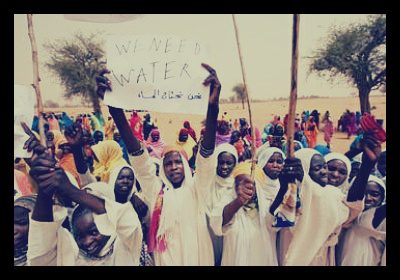
Another major problem that touches nearly half of the world’s population is access to water. Over one billion people in developing countries to not have access to clean water and one in three of those people live on less than one dollar a day. The average toilet flush usage is about three liters of water, which is more than the ordinary quantity of access to water in developing countries. This issue causes problems with human development in these developing nations and causes daily life to continue to be a battle. Nearly half of those populations are suffering from health problems linked to the lack of sanitation and fresh water.

In developing countries the gap between the rich and poor continues to grow each day. This limits areas in poverty, particularly rural, isolated areas to accept limitations to opportunities and resources. The progress that has been formed in developing nations is at times threatened by climate change, famine and economic changes making growth in areas of poverty more difficult. The access to clean water, wellness services and education remains difficult to obtain, causing movement between the class systems stagnant. One answer to the issues of worldwide poverty and climate change is the implementation of the proper education for small marginal farming techniques like irrigation and crop rotation. Food security in the growing nations is a number one goal to continue to reduce worldwide poverty.

– Rachel Cannon

Sources: Global Issues, World Bank
Photo: PKH

May 3, 2014
https://borgenproject.org/wp-content/uploads/borgen-project-logo.svg 0 0 Borgen Project https://borgenproject.org/wp-content/uploads/borgen-project-logo.svg Borgen Project2014-05-03 04:00:262024-05-26 23:29:34How Many People Live in Poverty Worldwide?
Food & Hunger, Food Aid, Global Poverty, Nonprofit Organizations and NGOs

Bread for the World: The Faith to End Hunger

Bread_For_The_Word
Bread for the World, a Washington D.C. based nonprofit organization, is urging government leaders and communities of faith to end hunger.

Every day, around 16,000 children die from hunger related causes. 1.5 billion people live in extreme poverty in developing nations around the world, but developed nations are not exempt from the problem of hunger – nearly 15 percent of those living in the U.S. have struggled with food insecurity at some point in their life.

Motivated by the belief that ordinary people can do “plenty” to end global hunger, Bread for the World seeks to empower U.S. citizens to voice their support of hunger-fighting policies to their elected representatives. A bipartisan “collective Christian voice,” their network includes thousands of individuals, churches and denominations – therefore creating an impact that reaches far beyond their local communities.

After analyzing policy, Bread for the World creates strategies to move toward their ultimate goal – to end hunger at home and abroad. The movements they create within churches, campuses and other organizations help build political commitment to overcome poverty. Bread for the World accomplishes their work with integrity, earning a four star Charity Navigator rating and spending an impressive 82.9 percent of their budget on deliverable programs and services.

Bread for the World Institute, the educational wing of Bread for the World, exists to conduct extensive research on food policy and provide information to Bread for the World’s advocacy network. Their studies empower constituents with information to ultimately change the politics of hunger.

For 2014, Bread for the World is focusing its efforts on reforming U.S. food aid, calling for the economically powerful U.S. government to use their resources more efficiently and effectively. Bread for the World estimates that with improvements and changes, 17 million more people could benefit from food aid each year without any additional costs to taxpayers.

Find more information and extensive educational materials, visit www.bread.org.

– Madisson Barnett

Sources: Bread For the World, Charity Navigator
Photo: Food Tank

April 28, 2014
https://borgenproject.org/wp-content/uploads/borgen-project-logo.svg 0 0 Borgen Project https://borgenproject.org/wp-content/uploads/borgen-project-logo.svg Borgen Project2014-04-28 10:38:592020-07-25 00:52:58Bread for the World: The Faith to End Hunger
Children, Education, Extreme Poverty, Food & Hunger, Global Poverty, Hunger

10 Facts on Child Labor

Child Labor
Child labor is work that steals a child’s childhood. Defined in International Labour Organization (ILO) Conventions, child labor is work that children should not be involved in given their age, or – if that child is old enough – work that is too dangerous and unsuitable.

Forcing children to take part in often dangerous and strenuous work and preventing them from attending school, child labor stands in the way of a child’s healthy physical and mental development in addition to his or her education.

In some cases children are enslaved laborers, engaged in the agricultural, mining and manufacturing sectors, or in domestic service, subsequently pushed into homelessness and living on the streets. However, others are trafficked and enslaved in prostitution, or forced into armed combat as child soldiers. These are all forms of child labor; the latter qualifying as some of the worst forms of child labor given that such bondage is especially harmful and in direct violation of a child’s human rights. Child labor is a continuing global phenomenon and following are some shocking, but important, facts regarding the practice.


Important Facts about Child Labor


  1. Currently, there are nearly 30 million people held in slavery and an estimated 26 percent are children.
  2. In 2012, 168 million children – from 5-years-old to 17 – were involved in child labor. Of this number, 85 million worked in hazardous conditions, enduring beatings to sexual violence.
  3. Around the world one in six children are forced to work, with children below the age of 18 representing between 40 to 50 percent of laborers.
  4. Children living in more rural areas can begin working as young as the age of five.
  5. According to the ILO, an estimated two thirds of all child labor is in the agricultural sector.
  6. The highest proportion of child laborers is in Sub-Saharan Africa where 49 million children are forced laborers.
  7. The highest numbers of child laborers are in Asia and the Pacific, where over 122 million children are forced into work.
  8. According to the U.N. Children’s Fund (UNICEF), there are over 300,000 child soldiers forced into armed combat.
  9. In most regions, girls are just as likely as boys to be involved in child labor; however, girls are more likely to be involved in domestic work.
  10. According to the ILO, only one in five child laborers is paid for their work, as the majority of child laborers are unpaid family workers.

So why are some children forced into labor?

Poverty is the most often cited reason why children work. Pressured to provide food and shelter, as well as to pay off debt owed by the parents, some children have no other choice but to become involved in labor in order to support their families. However, some children are sold against their will and forced into slavery. Other factors that influence whether children work or not include barriers to education and inadequate enforcement of legislation protecting children.

Child labor is a complex issue, as are the solutions, but the following steps must continue to be pushed for in order to see further progress. First and foremost, child labor laws must be enforced. Another strategy would be to reduce poverty in these areas so as to limit the need for children to be forced into these situations. Finally, providing access to quality education ensures that each child has a chance for a better future.

– Rachel Cannon

Sources: UNICEF 1, International Justice Mission, UNICEF 2, International Programme on the Elimination of Child Labour, International Labour Organization, UN 1, UN 2
Photo: Flickr

April 24, 2014
https://borgenproject.org/wp-content/uploads/borgen-project-logo.svg 0 0 Borgen Project https://borgenproject.org/wp-content/uploads/borgen-project-logo.svg Borgen Project2014-04-24 04:00:462024-12-13 17:50:1410 Facts on Child Labor
Disease, Food Security

Global Banana Disease Threatens Production

In the past few weeks we have seen the rapid spread of what could become a devastating threat to the world’s banana population – a fungus known as Panama Disease Tropical Race 4 (TR4).

TR4 is a soil-born fungus that attacks plant roots and is now known to be deadly to the Cavendish banana, which is the world’s most popular and valuable banana crop, making up 95% of banana imports.

The fungal banana disease began its devastating journey in Southeast Asia, decimating tens of thousands of crops in Indonesia, China, Malaysia and the Philippines. TR4 has most recently been discovered in Jordan and Mozambique, indicating its spread beyond Asia to Africa and the Middle East.

The UN Food and Agriculture Organization (FAO) notes that there is already a risk that the fungus has spread to the world’s most important banana-growing areas in Latin America. These countries include Ecuador, Costa Rica and Colombia, where hundreds of thousands of people rely on the banana trade to make a living each day.

Not only is the banana an essential component of more than 400 million people’s diets, it is also an essential component of their monetary livelihood. According to one estimate, TR4 could destroy up to 85% of the world’s banana crop by volume, decimating thousands of plantations across the globe and severely impacting the $8.9 billion banana trade.

One leading banana expert, Professor Rony Swennen claims, “If [TR4] is in Latin America, it is going to be a disaster, whatever the multinationals do. Teams of workers move across different countries. The risk is it is going to spread like a bush fire.”

The FAO has further warned that TR4 represents an “expanded threat to global banana production” and that virtually all export banana plantations will be vulnerable in the coming weeks unless TR4’s spread can be stopped or new resistant strains developed.

The Cavendish banana is not the first to fall prey to such a fungal epidemic. Prior to its cultivation, the Gros Michel banana had been wiped out by a similar strain of the Panama disease.

Current researchers are attempting to discover new banana varieties that are resistant to the fungus or develop disease-resistant GM strains. However, a concerted effort between the industry, research institutions, government and international organizations will be necessary to prevent the spread of the disease.

– Mollie O’Brien

Sources: Bloomberg, The Independent
Photo: Flickr

April 20, 2014
https://borgenproject.org/wp-content/uploads/borgen-project-logo.svg 0 0 Borgen Project https://borgenproject.org/wp-content/uploads/borgen-project-logo.svg Borgen Project2014-04-20 04:00:222024-05-26 23:27:05Global Banana Disease Threatens Production
Economy, Food & Hunger, Global Poverty

What’s the Matter with Mexico’s Margaritas?

They are small, green and Mexico’s staple fruit, but they are also rising steadily in price.

Mexico’s lime prices are soaring upwards of 50% each month this year, and it is taking a devastating toll on the Mexican working class. The prices are currently at an all-time high.

What is the cause of the hyperinflation? Limes have always been the most dependable fruit to sell in Mexico, so what are the reasons behind this sudden disruption?

Tax reform has caused a spike in inflation this year, and products such as sodas, junk foods and now limes are all incredibly expensive.

Limes were added to the list of pricey groceries after a disease struck the citrus fruits in Colima, Mexico. The disease is called “huanglongbing” (or “citrus greening disease”) and it infects fruit by way of tiny insects that infect both the tree and the fruit. The trees are left producing bitter, hardened limes until it ultimately dies.

Climate change is also to blame. “With the arrival of winter there has been a cold snap in nearby states,” stated Juan Leana Malpica, a Morelos state lime grower. The fruit do not taste as fresh; the quality of the Mexican limes is suffering.

A bartender from Mexico City, Manuel Ambrosio, states that because of the lack of limes he is unable to give his customers the same sized portion margaritas as before. Customers are upset that the quality of the fruit has gotten worse and Ambrosio’s business is declining because of it.

Margarita sales are down 30% because of the poor lime conditions and Ambrosio stated that “this is the worst [he’s] seen prices in four years.”

A safe fix is hard to find though. The violent outbreaks in Michoacan make the importation of limes difficult for growers because they do not want to risk putting their products on the roads. Vigilante groups are destroying dangerous drug cartels, and the threat of having lime growers’ livelihood intercepted is too high and too much of a hazard.

The United States is concerned about the risk of imported limes bringing in disease. Some importation services have been limited, including airlines, and this is also bringing up costs in Mexico.

Mexico is attempting to squelch this problem by cutting off infected lime tree branches and using nitrogen in October 2014 to make the trees flower “in February, March and April” of 2015. Rafael Abriz Cervantes of the Agriculture Ministry also mentioned that technology is being tested in hopes that it will help remedy the situation and bring back their staple fruit.

– Becka Felcon

Sources: Bloomberg, CNN, LA Times
Photo: Westword

April 19, 2014
https://borgenproject.org/wp-content/uploads/borgen-project-logo.svg 0 0 Borgen Project https://borgenproject.org/wp-content/uploads/borgen-project-logo.svg Borgen Project2014-04-19 04:00:272024-05-26 23:26:43What’s the Matter with Mexico’s Margaritas?
Food & Hunger, Global Poverty

Nigeria on the Brink of a Food Crisis

Continued sectarian violence in Nigeria resulted in the widespread abandonment of farms. Conflict spreads throughout the country, affecting the agricultural season in rural and often isolated regions. This led to dramatic decline in household food stocks. In addition to farming, the conflict limits “off-season livelihood activities” such as fishing.

This coupled with a predicted shortened growing season to create a potentially devastating food crisis. Consequently, Nigerian government reported as many as one million people facing food shortages in the coming months.

The Islamist insurgency in northern Nigeria, which began in 2009, has forced more than 365,000 people to flee their homes and farms. Agriculture generally serves as the primary means of support. Moreover, as refugees, these families have little opportunity to independently replenish their food supplies. According to The Guardian, “violence linked to the Boko Haram insurgency has caused 60 percent of farmers to leave the fertile region.”

In addition to low production, this conflict led to disruption in trade routes. Those managing the trade fear security, for the products and their lives. As production declines, the prices for staple food rise. These prices rose an estimated 10 percent from last year and more than 30 percent from the five-year average.

Alone, this lack of production has led to serious food shortages. Now, the strain of drought-induced food shortage threatens a full-scale crisis. According to The Nigerian Meteorological Agency, the national agricultural sector depends heavily on rain, “with the bulk of its produce cultivated in the north and central regions.” Weather forecasters predict the rainy season to begin in June, though it typically starts in May. In addition, the rain season may end before September. The result: a severely shortened growing season. With a population of 160 million to feed, Nigeria prepares this looming food crisis.

Refugees and farmers affected by the drought cannot afford the drastic rise in prices. Without an independent stock of food, though, these individuals must rely on the market.

In response, farmers are encouraged to use early maturing seeds to help generate a shorter planting season.

However, as Ibrahim Mota of the Dawanau Grain Traders Union shared recently, “Seeds, no matter how sophisticated, have to be planted by humans to germinate.” The Famine Early Warning Systems Network continues to monitor the food supply in this region, encouraging the Nigerian government to alleviate the burden of this conflict on farmers. Without details on the exact tactics to mitigate conflict, families live in constant risk of acute food security.

– Ellery Spahr

Sources: The Guardian
Photo: India Times

April 15, 2014
https://borgenproject.org/wp-content/uploads/borgen-project-logo.svg 0 0 Borgen Project https://borgenproject.org/wp-content/uploads/borgen-project-logo.svg Borgen Project2014-04-15 14:17:482024-05-26 23:24:04Nigeria on the Brink of a Food Crisis
Food & Hunger, Food Security

What the 10 Poorest Countries are Eating

Food is deeply integrated into all cultures, and it’s often the poorest countries who take the most pride in their meals. Food brings people together, even if the distance never changes.

Democratic Republic of the Congo

Cassava, being available year round, is the staple food, though there are Arabic, French and Asian influences in Congolese cuisine. It’s common to grill or boil insects such as caterpillar, crickets and grasshoppers while bananas and local vegetables are common. A simple dish, called saka saka is made from cassava leaves cooked with palm oil and peanut sauce.

Zimbabwe

The national dish, called sadza, is based on cornmeal and generally served with a vegetable stew. Meats such as beef, springbok, kudu and goat are consumed regularly by those who can afford it, but those who cannot rely on a wide variety of fried insect for protein.

The majority of Zimbabweans are Christian, so Christmas is widely celebrated. Often an animal is roasted on a spit for hours to be shared by the entire village.

Burundi

The Burundi diet is heavy in carbohydrates such as corn, millet, sorghum, cassava and sweet potatoes. Cassava is typically boiled and mashed into a porridge that’s used to school up a vegetable sauce. Beans are the most common source of protein as meat is rare, though fish is regularly eaten by those who live beside Lake Tanganyika.

Locally-brewed beers are common and accepted as part of the social interaction when families negotiate over a marriage. There are many food customs that revolve around cows, which are considered sacred. Milk cannot be heated or drunk on the same day that peas or peanuts are eaten, and when a cow dies its horns are planted beside the family’s house to bring good luck.

Liberia

Typically found in Liberian meals are cassava, peppers, sweet potatoes, tomatoes, ginger, palm oil and no meal is complete without rice. Cassava is sometimes boiled and then pounded into what is called a dumboy, and sauces made from the Cassava leaf over beef or chicken are a traditional favorite.

Eritrea

Goats, cattle, sheep, pigs and chickens are all commonly raised and eaten while fish consumption is low, regardless of Eritrea’s proximity to the Red Sea. The base of most meals is either kitcha – a thin wheat bread – or injera – a spongy pancake made from taff. Food is typically served in a communal bowl and eaters use the kitcha or injera to pinch out some of the main course.

Since Eritrea was once an Italian colony, tourists often find spaghetti, lasagna and pizza in the country’s restaurants. Blended drinks with bananas, mango and papaya are common, and three drinks share the title of ‘national beverage’: suwa, an alcoholic drink similar to beer; meis, a fermented honey drink; and Araki, an anise-flavored liquor.

Central African Republic

Meat is scarce and expensive, so nuts and insects serve as daily protein. The base of most meals is usually millet or sorghum, and vegetables and spices such as garlic, onions, chiles, okra and peanuts are gradationally used to add flavor.

Specialties include palm butter soup, futu – pounded cassava – and foutou – pounded plantains. Palm wine and banana wine are the favorite local beverages.

Niger

As a desert country, Niger’s citizens rely on grains that can be stored for long periods of time like millet and rice. Beef and mutton often serve as the main interest in the meal, and a local favorite is dumplings made from crushed and fermented millet and cooked in milk, sugar and spices.

Those who border Lake Chad have access to fresh mish and the vegetables used in European, Asian and African dishes. The country is predominantly Islamic and so alcohol isn’t easily available. Instead, tae is the drink of choice and is available from carts beside the road.

Malawi

Rural Malawian families all play a part in growing maize, the staple of their diet. Cooked maize is shaped into patties that are called nsima, and family members eat from the communal bowl while sitting in a circle on the ground. The bowl typically contains a variation of ndiwo, a sauce made with beans, meat or vegetables, and the nsima is used to scoop out a mouth-full at a time.

Those who boarder Lake Malawi eat a great deal of fish, and they dry what they don’t eat to sell to the neighbors. Chambo (the same fish used to make Western tilapia) is a popular favorite.

Madagascar

Those who have a history in Madagascar have left their mark on the cuisine; therefore finding dishes that belong to France, parts of Africa, the Indonesians and Arabs is common. Traditional meals are eaten on the floor and eaten with spoons from a large communal plate. Ro – rice mixed with herbs and leaves – is the base of most meals, and Ravitoto – meat and herbs – is generally its counterpart. No beverages accompany the meal, but there is a popular drink called Ranonapango which is made by burning rice.

Afghanistan

The country’s neighbors, the Pashtuns, Tajiks and Uzbeks, heavily influence Afghanistan’s menu. India’s spices such as saffron, coriander, cardamom and black pepper are also prevalent as well as naan, an Indian flat bread that can be made in a wide variety. Rice is present in most meals, and lamb is the preferred meat.

Perhaps the most popular dish in Afghanistan is qabli pulao, a streamed rice dish topped with raisins, carrots and some kind of meat. Kababs are also a local favorite, ranging from lamb, ribs or chicken and served with a side of naan. Qorma is a dish made up of a bed of fried onions and layered with fruit, meat, spices and vegetables.

In many of the world’s poorest countries, there is only one meal a day. The women in a family traditionally will start cooking first thing in the morning, and the day’s meal is eaten in the early afternoon. Many times food is eaten with the hands out of communal bowls, making clean water a great necessity for public health and hygiene. Sharing food is a sign of respect and welcome so that guests are often fed at the cost of the family going hungry. Food is important in every nation as it binds us together at the same time that it allows us to demonstrate our heritage and creativity.

– Lydia Caswell

Sources:  MapsOfWorld, SAARC Tourism, Our Africa, The Borgen Project, Eritrea, Liberian Forum, EveryCulture, FoodByCountry, FoodSpring
Photo: The News Gastronomes

April 12, 2014
https://borgenproject.org/wp-content/uploads/borgen-project-logo.svg 0 0 Borgen Project https://borgenproject.org/wp-content/uploads/borgen-project-logo.svg Borgen Project2014-04-12 13:59:372024-05-26 23:26:53What the 10 Poorest Countries are Eating
Aid Effectiveness & Reform, Food & Hunger, Foreign Aid, Global Poverty

Impending Famine in South Sudan

Famine_In_Sudan
The famine in South Sudan has reached a scale similar to that in Syria. Close to one third of the population of South Sudan is already at severe risk of starvation and, unless something is done soon, the struggle will only get worse. Some are calling it a race against time.

Since the violence erupted this past December, around 255,000 people have fled to neighboring countries such as Ethiopia, Kenya and Uganda, and more than 800,000 people have been displaced inside the country. Some people have even fled north to South Sudan’s recently separated Sudan counterpart. The United Nations coordinator for humanitarian aid in South Sudan, Toby Lanzer, has appealed for the essentials such as food and water, as well as farming tools and seeds. If the South Sudanese are unable to plant their crops by the time rain comes in May, they will face the most disastrous famine in Africa since the 1980s.

According to Lanzer, aid donations have been catastrophically faltering. A United Nations appeal for $1.3 billion was not fully funded and only a quarter of the requested money went though, in an assertion that only $232 million was necessary for the bare minimum of humanitarian aid to the country. But the bare minimum is not enough, as tragic 7 million people in South Sudan are at risk of hunger. People are in such dire need of food and water that one family started boiling poisonous roots for an entire week in order to have something to eat. Many travel for days with no water whatsoever.

Violence in the country has only made matters worse. When weapons were reported to have been found in a UN convoy in March, the government and army in South Sudan understandably felt obligated to increase surveillance and security measures on UN vehicles delivering aid. The issue strained relations between the international agency and South Sudan, subsequently making aid delivery increasingly difficult.

The horrifying conditions in which people are currently living, however, can be changed. Famine implies that people are dying and, while many argue that South Sudan has not yet reached that point, the risk is very real. With enough funding reaching the people of South Sudan in a timely enough fashion, an even worse future can be avoided.

– Jaclyn Stutz

Sources: USA Today, Al Jazeera, The New York Times
Photo: UPI

April 12, 2014
https://borgenproject.org/wp-content/uploads/borgen-project-logo.svg 0 0 Borgen Project https://borgenproject.org/wp-content/uploads/borgen-project-logo.svg Borgen Project2014-04-12 04:00:462024-06-04 01:08:04Impending Famine in South Sudan
Food & Hunger, Food Security, Global Poverty

Agriculture Fails to Entice Youth in Africa

African_youth_farmers_decline
Africa continually fails to produce high agricultural returns, as low government investment translates to low productivity in the field. The agricultural sector employs 60% of its population. Yet it accounts for only 25% of the African GDP.

David Adama of Action Aid International faults politics. “African governments must follow through on their promises and provide more money for agriculture and ensure it is better targeted to help the millions of smallholder farmers,” he asserts.

Those in politics hold agriculture in low regard and as a result, youth do as well. The “unglamorous prospects” of working in the fields drive these young Africans to the cities. Youth constitute the largest and most productive labor force, yet fields across the continent fail to entice them.

The proportion of youth in the African workforce ranks the highest worldwide. Why? More people younger than 20 live in Africa than any continent in the world. An estimated 35% of youth working in Sub-Saharan Africa and 40% in North Africa. In contrast, youth comprise 20% of the European workforce. As the African population continues to grow, the World Bank estimates 60% of the global workforce will lie in Africa between 2010 and 2050.

To champion agriculture, greater investment and commercialization of the sector must occur. Gerda Verburg serves as chairperson of the Committee on World Food Security, and considers this key to attracting unemployed youth. To “reverse the rural mentality” of farming as a last resort, commercialization offers greater employment opportunities and a larger income.

“Private sector finance and agri-industries are helping to modernize agriculture by creating value adding chains that will pay a farmer more for his labor than the local market,” she notes.

The rise of supermarkets accompanies the rise of an African middle class. Large commercials threaten small farmers in regions, such as Lesotho. In this country, more than a million citizens farm. The development of large value chains and supermarkets excludes farmers, threatening their livelihood.

To participate in this lucrative business model, the government must invest in the small farmers. Youth seek food and economic security, yet cannot obtain this without protection against the encroachment of big businesses.

Electricity promises to increase agricultural yield and widening the access to it promises to retain youth in rural regions. As secretary of the Food and Agriculture Organization regional conference, Cheikh Ly cites electricity as a “major contributing factor” for migration. Many youth prefer urban centers because of access to telecommunications and Internet connectivity.

“Electrification is a key need for Africa’s rural economy. Modern agricultural production is not possible without reliable access to power. We will also lose the young who want to be connected and communicate via phones and the Internet if these needs are not met,” Ly remarks.

From Somalia to Ethiopia, food security poses a formidable threat to African youth. Yet these young men and women hold the potential to combat this. More than 50% of fertile and unused land lies in Africa. In addition to these natural resources, foreign investment will likely exceed $45 billion in 2020.

To reap the benefits of this investment, the government must fund an “agricultural renaissance” and help youth to feed future generations.

– Ellery Spahr

Sources: Inter Press Service, Marketplace
Photo: Continent of Riches

April 12, 2014
https://borgenproject.org/wp-content/uploads/borgen-project-logo.svg 0 0 Borgen Project https://borgenproject.org/wp-content/uploads/borgen-project-logo.svg Borgen Project2014-04-12 04:00:422024-12-13 17:50:13Agriculture Fails to Entice Youth in Africa
Food Security, Global Poverty

Climate Change To Worsen Food Security and Impact Poverty

In a report released by the UN Intergovernmental Panel on Climate Change (IPCC), scientists say that there is cause for concern that global warming makes it more difficult to provide food for the world’s population. The scientists say the negative impacts of climate change on crop yields have been more common than the positive.

Further climate change is expected to slow down economic growth, hinder efforts at poverty reduction and generally diminish food security. Since climate change will negatively impact crop production, food prices will rise and therefore food insecurity will rise. This food insecurity will be especially prevalent in countries with high levels of income inequality and will most affect those that are already poor, thereby undermining efforts to get rid of the cycle of poverty. Indeed, the report mentions climate change as a “threat multiplier” to the lives of people living in poverty worldwide.

However, crop production is expected to increase given the constant improvement of agricultural techniques, which is set to expand production at a rate of 10 percent per decade. Since climate change is expected to decrease agricultural output at a rate of 1 percent per year, this means crop production will go up, but at a slower pace than it would normally, according to David Lobell of Stanford University.

Yet some rural areas in countries such as India do not rely on irrigation techniques to increase crop yield, but rely rather on rainfall. Such places would be affected greatly by the climate change.

The report also stated that climate change would increase food prices within the range of 3 to 84 percent by 2050. Staple agricultural products such as wheat and corn would be most affected, and the report mentions that the countries in Central and South America that grow coffee will be negatively impacted.

Climate change is a reality that we must face right now if we want to help prevent human suffering on a grand scale years from now. We have been warned, now it is up to all of us, including our governments and the private sector, to do something about it.

– Jeff Meyer

Sources: Denver Post, Huffington Post, IPCC: Climate Change, IPCC: Livelihoods and Poverty
Photo: InHabitat

April 9, 2014
https://borgenproject.org/wp-content/uploads/borgen-project-logo.svg 0 0 Borgen Project https://borgenproject.org/wp-content/uploads/borgen-project-logo.svg Borgen Project2014-04-09 11:02:162024-06-05 01:57:22Climate Change To Worsen Food Security and Impact Poverty
Page 61 of 78«‹5960616263›»

Get Smarter

  • Global Poverty 101
  • Global Poverty… The Good News
  • Global Poverty & U.S. Jobs
  • Global Poverty and National Security
  • Innovative Solutions to Poverty
  • Global Poverty & Aid FAQ’s
Search Search

Take Action

  • Call Congress
  • Email Congress
  • Donate
  • 30 Ways to Help
  • Volunteer Ops
  • Internships
  • Courses & Certificates
  • The Podcast
Borgen Project

“The Borgen Project is an incredible nonprofit organization that is addressing poverty and hunger and working towards ending them.”

-The Huffington Post

Inside The Borgen Project

  • Contact
  • About
  • Financials
  • President
  • Board of Directors
  • Board of Advisors

International Links

  • UK Email Parliament
  • UK Donate
  • Canada Email Parliament

Get Smarter

  • Global Poverty 101
  • Global Poverty… The Good News
  • Global Poverty & U.S. Jobs
  • Global Poverty and National Security
  • Innovative Solutions to Poverty
  • Global Poverty & Aid FAQ’s

Ways to Help

  • Call Congress
  • Email Congress
  • Donate
  • 30 Ways to Help
  • Volunteer Ops
  • Internships
  • Courses & Certificates
  • The Podcast
Scroll to top Scroll to top Scroll to top