• Link to X
  • Link to Facebook
  • Link to Instagram
  • Link to TikTok
  • Link to Youtube
  • About
    • About Us
      • President
      • Board of Directors
      • Board of Advisors
      • Financials
      • Our Methodology
      • Success Tracker
      • Contact
  • Act Now
    • 30 Ways to Help
      • Email Congress
      • Call Congress
      • Volunteer
      • Courses & Certificates
      • Be a Donor
    • Internships
      • In-Office Internships
      • Remote Internships
    • Legislation
      • Politics 101
  • The Blog
  • The Podcast
  • Magazine
  • Donate
  • Click to open the search input field Click to open the search input field Search
  • Menu Menu

Archive for category: Food & Hunger

Information and stories on food.

Food & Hunger, Global Poverty, Health

Are Developing Countries Now Overweight?

Developing_Countries_Overweight
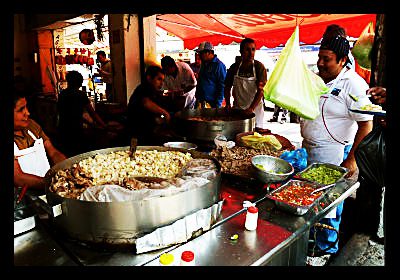
Statistics indicate that individuals who are obese or overweight in developing countries have tripled over the last 30 years. It seems that as countries begin to shift from low income towards middle income and onwards, people are able to purchase more food, most of which is unhealthy.

High-calories foods, usually quite tasty, are now easily accessible in practically every country but now those with more money are purchasing larger quantities.

In the 1980s, less than 23% of adults in the third world were overweight; currently, the amount of obese people in the developing world rival those of rich nations. Mexico is a prime example of this global problem. In 1980, under 40% of Mexican women were overweight but in 2008 it increased to 70% and there is speculation of a greater increase in recent years.

An official from the Overseas Development Institute in London, Steve Wiggins, reports that large varieties of high-calorie snacks such as chips, cookies and carbonated drinks are readily available in various Mexican stores, making it the “poster child” for the obesity problem.

Over 90% of men in some Pacific Island nations are also facing the overweight issue. Countries in the Middle East, such as Egypt, have a growing number of overweight women.

Health systems in developing nations already have significant issues with infectious diseases and now this burden of excessive consumption of high-calorie foods poses a risk for developing other diseases. Cardiovascular diseases, diabetes and various cancers can all be caused by large intake of fat, sugar and salt.

This global trend could potentially lead to increased health care expenses and decreased economic growth from a loss of productivity.

Despite these risky factors, reports suggest that a quick turn around is possible if new health campaigns for better diets are adopted. In the mean time, developing nations are not too interested in advocating for a fruit and vegetable substitute since several families are finally getting sufficient income for more food.

– Maybelline Martez

Sources: Centers for Disease Control and Prevention, NPR
Photo: Club House News

January 31, 2014
https://borgenproject.org/wp-content/uploads/borgen-project-logo.svg 0 0 Borgen Project https://borgenproject.org/wp-content/uploads/borgen-project-logo.svg Borgen Project2014-01-31 04:00:092024-05-26 23:08:12Are Developing Countries Now Overweight?
Activism, Advocacy, Charity, Food & Hunger, Food Aid, Global Health, Global Poverty, Health, Hunger, Philanthropy, Technology

Saving Calories & Lives

In recent years, technology and applications have had an increasingly philanthropic purpose. The latest of these technologies is the Share Your Calories application. The app was designed by Catherine Jones, a well-known author of nutrition cookbooks, Elaine Trujillo, a leader in nutrition, and Stop Hunger Now, an international agency aimed to end hunger across the globe.

The app can be used to help people lose weight while simultaneously providing food to people harmed by natural disasters. By adding a philanthropic purpose, the designers of the application aimed to give users another goal as well as more motivation to eat healthier. Studies also show that spending on others makes us happier than spending on ourselves, so the application, in and of itself, allows users to feel lasting happiness.

The application allows users to monitor their daily activities and food intake through a calorie bank determined by bio-data. If they do not consume all the calories in their calorie bank, the user has the option to convert the extra calories into monies. Once they have accumulated $12, the user has the option to donate to Stop Hunger Now.

Each Stop Hunger now high-protein dehydrated meal is equivalent to 250 calories and 25 cents.

The financial contributions from the Share Your Calories App go toward Stop Hunger Now meal packaging events. Each of these meals contains rice, dehydrated soy and vegetables as well as a vitamin-mineral pack. These meals are easy to store and have a shelf-life of 2 years.

These meals are currently distributed through host-organizations, but the funds from this application will also allow smaller groups and businesses to participate.

This application hopes to bring in $95,000 to build an android app, provide basic nutrition information, translate the app into different languages, etc. The Stop Hunger Now effort is supported by the Medical Science Foundation, TruBios Communications, iSO-FORM, The Ohio State University Food Innovation Center and the Experiment.

– Lienna Feleke-Eshete

Sources: IndieGoGo, FoodTank
Photo: Irish Red Cross

January 25, 2014
https://borgenproject.org/wp-content/uploads/borgen-project-logo.svg 0 0 Borgen Project https://borgenproject.org/wp-content/uploads/borgen-project-logo.svg Borgen Project2014-01-25 21:17:472024-05-26 23:04:12Saving Calories & Lives
Activism, Developing Countries, Development, Extreme Poverty, Food & Hunger, Food Security, Global Poverty, Poverty Reduction, Technology

Spreading Agricultural Technology to India’s Poor Farmers

India_Technology
It is an accepted fact that poverty is the root cause of malnutrition. Over 42% of the Indian population lives on less than $1.25 a day. However, if farmers could increase their output and earn more from what they already have through the use of innovative technology, food insecurity could decrease and that same dollar and a quarter could go much further.

Technology can help farmers to augment their knowledge of which crops to produce for the best return, find the most effective farming practices and make plans based upon weather forecasts.

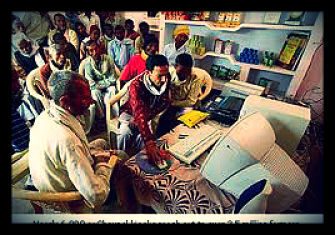
The e-Choupal initiative is one way that technology is being used to give farmers the information they need to be more successful. The aforementioned benefits of technology are all accounted for on the e-Choupal platform, even enabling buyers to come to the farmers instead of having to haul the produce to market, where oftentimes traders manipulate the market in order to exploit the farmers out of their proper earnings.

The initiative also provides access to storage services and agricultural equipment in addition to other important assets for rural farmers. The e-Choupal network has expanded to 6,500 centers synchronizing the efforts of 40,000 villages to produce greater quantities of better produce and profit.

In this same vein of increased technology and higher profits, organic farming is a possible venue poor farmers could explore. Organic produce consistently garner high prices, the demand for which is only rising. The only constraints are the ones that the e-Choupal network is already helping to eradicate, at least in India, including lack of technical expertise and insufficient market knowledge.

Another example of innovative agricultural technology is the use of drip-irrigation, which cuts water use by 40%, and saves the equivalent of 10 million households water expenditures per year. Much in the same way, the e-Choupal initiative has created a network where over 25,000 small farmers have organized a supply chain that has augmented their average annual incomes by a very significant $1,000.

India is a country of fertile lands and capable farmers. Technology is the catalyst that promises to drive the more than 400 million people living on less than $1.25 a day out of poverty.

– Jordan Schunk
Sources: The Huffington Post, New Indian Express, Rural Poverty Portal
Photo: The Fourth Revolution

January 22, 2014
https://borgenproject.org/wp-content/uploads/borgen-project-logo.svg 0 0 Borgen Project https://borgenproject.org/wp-content/uploads/borgen-project-logo.svg Borgen Project2014-01-22 16:07:182015-02-09 14:12:08Spreading Agricultural Technology to India’s Poor Farmers
Food & Hunger, Food Aid, Food Security, Global Poverty

Zimbabwe Facing Food Crisis Due to Corn Shortage

zimbabwe_food_crisis_corn_shortage`
Zimbabwe announced plans last Friday to import 150,000 tons of corn from South Africa in attempt to stave off the threat of mass starvation as poor crop yields and bad credit plunge the country into its worst food crisis in years.

A UN report found that at least 2.2 million Zimbabweans will require food assistance before the next harvest season to survive. Many people in rural areas are subsisting only on what wild fruit they can find.

Zimbabwe was once known as southern Africa’s breadbasket, but is now suffering low yields of its staple crop due to last year’s droughts, the late arrival and poor distribution of rainfall and an infestation of army worms. Economic collapses and poor planning by the government exacerbated the bad growing season, and Zimbabwe was able to produce only 800,000 of the 2.2 million tons of corn necessary to feed its population.

Scarcity has driven the price of corn up 20 percent since 2012, according to the to US-based Famine Early Warning System (FEWSNET).

“Communities, especially rural ones, are facing a twin evil: food is scarce, and that tends to push prices up,” Innocent Makwiramiti, an economist and former executive officer of the Zimbabwe National Chamber of Commerce, told reporters.

“The government has no money to import enough grain so that people can buy it at subsidized levels,” Makwiramiti said. “The hungry are therefore forced to buy from private sellers, who charge high prices.”

Zimbabwe’s hyperinflation and resulting economic freefall, which many critics blame on President Robert Mugabe and his chaotic ascension to power, threaten the country’s ability to borrow to feed its citizens.

In the past, Zimbabwe has combated inflated food prices by importing grains on credit from neighboring countries like Zambia, many of whom are no longer willing to gamble that they will be paid back. In October, Zambia reversed its decision to give Zimbabwe 150,000 tons of corn on credit, instead requesting cash up front.

Zimbabwe managed to obtain only 14,000 tons.

Many Zimbabweans are angered by the response from President Mugabe and his ZANU PF party, who have acknowledged the food crisis and promised that “no Zimbabwean will die of hunger” but have yet to reveal any concrete plans to address food scarcity or the underlying economic problems ravaging the country.

In addition to a poor growing year and an economy in free fall, Zimbabwe’s food crisis has roots in Mugabe’s violent redistribution of land in 2000. Many white landowners fled the country as government forces seized their farms.

Instead of turning land over to Zimbabwe’s poor black farmers, as he had promised, Mugabe gifted properties to leaders of his ruling party, whom left much of it unattended and improperly cared for. Ironically, the farming surplus that Zambia has experienced, allowing them to sell corn to Zimbabwe, can be attributed at least in part to white farmers chased out of the country.

It will take time for Zimbabwe’s economy to rebound, but its people are dying now. The 150,000 tons of corn recently granted by South Africa will help some, but without money or credit, Zimbabwe and its citizens will be largely dependent on food aid from international organizations. Now is the time to get involved.

– Sarah Morrison

Sources: All Africa, New Zimbabwe, New Zimbabwe, New York Times, World Food Programme
Photo: The Guardian

January 21, 2014
https://borgenproject.org/wp-content/uploads/borgen-project-logo.svg 0 0 Borgen Project https://borgenproject.org/wp-content/uploads/borgen-project-logo.svg Borgen Project2014-01-21 18:53:402024-05-26 23:05:47Zimbabwe Facing Food Crisis Due to Corn Shortage
Activism, Advocacy, Food & Hunger, Food Aid, Foreign Aid, Global Poverty, Migration, Nonprofit Organizations and NGOs, Philanthropy, Poverty Reduction, Refugees and Displaced Persons

Heavyweight Helps Syrian Refugees

evander
Evander Holyfield, former world heavyweight boxing champion, is taking on an even greater role in helping displaced communities of the Syrian refugee crisis.

On November 13, Holyfield announced that he would be working to aid the alleviation cause for an estimated of 6,500 refugees fleeing from the war-torn Syrian nation, those of whom have settled in Bulgaria. During the announcement, Holyfield noted, “Somebody helped me and that gives me the opportunity to help someone else.”

The refugee crisis that has taken shape out of the Syrian civil war has become staggering. It’s estimated that 9 million Syrians have been displaced out of a population of 23 million.  Syrians are settling in nearby countries such as Jordan and Turkey, most of where large camps have drawn the majority of foreign assistance — muting attention for the relatively small amount that has ended up in Bulgaria.

Holyfield and the Global Village Champions Foundation, the organization where he works as a Goodwill Ambassador, hope to raise awareness and deliver support for these refugees. To future add to the impact of celebrities bridging successful traction to raise awareness, the head of the Global Village Champions Foundation is musician, Yank Barry, from the 1960s band “The Kingsmen.”

The pairing might seem odd, but they are united in their hope to make the lives of the Syrian refugees at least somewhat easier.  In an interview with CNN, Holyfield stated, “at some point in time, when you leave this earth… they’ll say: What did you do for the least of them?”

Yank Barry may not be as well known in modern pop culture, but he has been actively philanthropic in recent years.  Barry founded the Global Village with Mohammed Ali in 1995, and they worked together until Holyfield took Ali’s place within the organization in 2012.  Since the founding of the organization, it has sent out 900 million meals to the needy around the globe and, according to Barry, including “5,000 tons of food to (Syrian) camps” since last year.
https://www.youtube.com/watch?v=VEInSPRIVDY

During the 1990s, Holyfield’s biggest worries were Mike Tyson’s left hook and how he would retake a heavyweight championship belt that he ended up winning five separate times.  Now, he has taken it upon himself to help the world community that he once entertained.  While recent reports have claimed that Holyfield has not retained the fortune he accumulated over the course of his boxing career, his reputable standing as a celebrity can still help causes for those that never had the opportunities he did.

While the help from private foundations like the Global Village is welcomed and inspiring for others to emulate, the global community still has plenty of work to do.  The UN says that the number of Syrian refugees registered in various EU countries ranks over 62,000 with more likely to come.  With so many of them looking for ways to get by, the hungry continue to appreciate the influencers like those in the U.S. for the help that such refugee communities could barely survive without.

– Eric Gustafsson

Sources: Fox News, CNN, Huffington Post
Photo: Vintage 3D

January 19, 2014
https://borgenproject.org/wp-content/uploads/borgen-project-logo.svg 0 0 Borgen Project https://borgenproject.org/wp-content/uploads/borgen-project-logo.svg Borgen Project2014-01-19 01:41:142024-05-26 23:01:29Heavyweight Helps Syrian Refugees
Education, Food & Hunger, Global Poverty, Nonprofit Organizations and NGOs

Digital Green and Nutrition Education

cart
In 2006, a non-governmental organization called Digital Green was created as a spin-off from Microsoft Research India’s Technology for Emerging Markets Team.  Digital Green operates with the purpose of “integrat[ing] innovative technology with global development efforts to improve human well being.”  Teams of trained mediators are assembled in various target villages in order to educate community members on locally relevant health and agricultural practices using low cost and adaptive equipment.

Digital Green has already produced over 2,600 videos and has shared these videos with more than 150,000 households in India and throughout Africa.  Each video is content and context specific, based on the community’s individual needs. Digital Green’s efforts have noticeably improved agricultural development efforts in these areas.

Due to the success of the video project, Digital Green is teaming up with Strengthening Partnerships, Results, and Innovations in Nutrition Globally (SPRING) – USAID’s global nutrition project – to try to use similar methods in a new project.  The initiative includes using videos to endorse maternal, infant and child nutrition and hygiene practices.

Digital Green, SPRING and other partners have already made 10 videos designed to educate on nutrition and hygiene techniques in developing communities.  The videos are shown at small women’s groups on a projector.  Participants are encouraged to give feedback, exchange ideas and engage in discourse to improve conditions based on the experiences of others.

SPRING hosted a webinar on December 17, 2013 to highlight and examine Digital Green’s video methods.  Through nutrition education, the process is a testament to how the collaboration between technological innovation and the ability of communities to work together improve quality of life for developing regions.

The Digital Green and SPRING collaborative videos on nutrition can be found at the following links:
Digital Green, Collection of Maternal and Child Nutrition Videos
SPRING Webinar, “Seeds of Change: Leveraging Community Video for Agriculture and Nutrition Behavior Change in South Asia and Sub-Saharan Africa”

– Daren Gottlieb

Sources: USAID Blog, Digital Green, SPRING Nutrition
Photo: Vintage 3D

January 15, 2014
https://borgenproject.org/wp-content/uploads/borgen-project-logo.svg 0 0 Borgen Project https://borgenproject.org/wp-content/uploads/borgen-project-logo.svg Borgen Project2014-01-15 17:11:522024-05-26 23:01:44Digital Green and Nutrition Education
Activism, Advocacy, Economy, Food & Hunger, Foreign Aid, Foreign Policy, Global Poverty, Government

Merchant Marines and Food Aid Bill

merchant marines food aid
For some, the U.S. Merchant Marine represents an organization that shuttles American imports and exports around the world during peacetime while becoming a naval auxiliary during wartime. For others, they represent the largest obstacle to food aid reform.

Current food aid regulations stipulate that at least 80% of aid must be shipped by U.S. citizens on U.S. flagged vessels. Critics argue that needless money and time is spent hauling items around the world when food could be purchased locally in a much more timely fashion.

President Obama proposed a food aid overhaul in 2014’s fiscal budget that would reach an estimated 2 to 4 million more people within the year. Specifically, he wished to expand local and regional procurement procedures and food vouchers.

U.S. mariners were not amused by this proposal, however. When the food aid amendment attached to the farm bill reached the Congress floor, maritime lobbyists worked strenuously to ensure it wouldn’t pass, and succeeded.

The U.S. merchant marines provide a unique service for the United States. As they are not employed by United States military, they are able to service both the government and private sector.

The duality of their role in regard to the United States is significant for a number of reasons. The Navy League, a special interest group representing the U.S. maritime community, reports that they provide over 33,000 jobs for Americans, account for $1.9 million in economic output and $24 million in household earnings. Although food aid reformists argue that the shift in these numbers would be slight, by only a few hundred, Merchant Marine advocates contend that change would usher in the end of the merchant marines all together.

The Merchant Marine’s ability to transport troops and supplies during wartime, known as sealift, may be severely impacted if reform results in job loss. The U.S. Maritime Service was established by President Roosevelt in 1938 in anticipation of needed shipping vessels to both the European war front and Pacific Theater. The Merchant Marine provided invaluable service during the war, and current mariners argue that their services are still necessary.

Despite the mariners concerns, the Obama Administration has plans to counteract any negative effects the reform may usher in by providing aid directly to the U.S. Merchant Marine.

The administration proposes shifting $25 million of the efficiency savings that will be obtained through the food aid reform to the Department of Transportation’s Maritime administration. According to the White House International Food Aid Fact Sheet, this additional funding will provide a vehicle to support sustainment of militarily-useful vessels and a qualified pool of citizen merchant mariners.

Although this may not be the solution the merchant mariners were hoping for, the strong advocates for food aid reform may ensure that this is the best they can expect.

– Emily Bajet

Sources: The Center for Public Integrity, U.S. Merchant Marine FAQ, The Maritime Executive, The White House: International Food Aid Fact Sheet
Photo: Giphy.com

January 14, 2014
https://borgenproject.org/wp-content/uploads/borgen-project-logo.svg 0 0 Borgen Project https://borgenproject.org/wp-content/uploads/borgen-project-logo.svg Borgen Project2014-01-14 09:56:202016-04-05 21:03:49Merchant Marines and Food Aid Bill
Food & Hunger, Global Poverty

Namibia’s Fish Supply Threatened by Oil and Gas

namibia_oil_and_gas
When oil and gas reserves are believed to exist in a particular region, companies in the oil and gas industry conduct what is known as a seismic survey to locate and estimate the size of underground oil and gas reserves. The results of such seismic surveys are often used by oil and gas companies to determine the viability of additional investments into oil and gas exploration.

The end result of seismic surveys is a seismic image, which is produced by generating, recording and analyzing seismic waves that travel through the Earth. A potential problem with seismic surveys, however, is explosives are sometimes involved in the process. Explosives or vibrating plates may generate the seismic waves and a line or grid of geophones, electronic receivers designed to pick up seismic vibrations, records the waves. In lieu of explosives, companies have at their disposal several additional techniques capable of producing seismic waves.

Oil and gas exploration has recently begun on Namibian waters. The production of oil and gas would certainly help boost the Namibian economy, which currently boasts a gross domestic product of $13.7 billion and a poverty rate of 28.7 percent, according to the World Bank. But this potential economy booster also comes with a hefty price tag.

While it is unclear what method is being used to generate the seismic waves on Namibia’s waters, that is, explosives, vibrating plates or other available methods, the seismic surveys have led to a massive depletion of tuna output from 1,800 tons in 2012 to approximately 650 tons in 2013. Both numbers are far from the output in 2011, which was 4,000 tons.

The reduction in the tuna supply is one that Namibia can ill afford. The country is already experiencing a food crisis due to drought. Almost one-third of the country’s population, in all of Namibia’s thirteen regions, face moderate to high levels of food insecurity after rainfall in southern Africa declined for the second straight year. The substantial level of loss to the tuna supply also threatens to damage Namibia’s economy to the extent that it relies on the tuna supply as a source of income.

In response to this crisis, a government task force, commissioned to assess the effects of seismic surveys on the fishing industry, recently recommended that the seismic surveys should be done outside the tuna fishing season, according to All Africa. The task force proposed that research should be conducted on the distance from the tuna migratory route and areas where most fishing takes place to determine which seismic surveys can be conducted to avoid interference with fishing. According to the commission’s findings thus far, efforts should be made to delay seismic surveys between February and March, during which 70 percent of the catch is made, to between May and September.

– Cavarrio Carter

Sources: All Africa, Encyclopedia Britannica, Lonestar Geophysical Surveys, World Bank, Al Jazeera, Southern Times Africa

January 9, 2014
https://borgenproject.org/wp-content/uploads/borgen-project-logo.svg 0 0 Borgen Project https://borgenproject.org/wp-content/uploads/borgen-project-logo.svg Borgen Project2014-01-09 04:00:572020-08-29 00:22:49Namibia’s Fish Supply Threatened by Oil and Gas
Activism, Aid Effectiveness & Reform, Charity, Food & Hunger, Food Aid, Food Security, Global Poverty, Health

Food Aid in Puntland, Somalia

puntland_cyclone
On November 10, a deadly cyclone raged through the region of Puntland, located in Somalia’s northeastern coast. Though the cyclone has reportedly killed up to 300 people, the death toll has not yet been verified. Many of these victims were children and elderly, both of which are more vulnerable to hypothermia and exposure. Moreover, the United Nations says as many as 30,000 people are in need of food aid.

Whole villages have been washed away by the storm, thus forcing local aid workers to struggle to reach the stranded victims due to the damaged infrastructure. Furthermore, large portions of roads have been damaged, driving aid workers to deliver food aid on foot. Many people are also missing, especially in coastal towns where fisherman and their boats have been lost at sea.

Pastoralists have been hit the hardest since their livestock and poorly built homes and barns have been washed away. The region does not normally experience rain so the area’s infrastructure has not been built to withstand this sort of storm. In fact, some of the worst hit villages have lost 90 percent of their livestock to icy rain and flooding.

Moreover, areas infamous for pirates such as the port of Ely are some of the worst affected. This is worrisome as the 2004 Tsunami was considered one of the major triggers of the pirate attacks off the coast of Somalia where 736 people and 32 ships were held hostage.

The World Food Programme (WFP) recently arrived in Puntland and transported 340 metric tons of food including cereal and vegetable seeds to the worst affected areas of Bossaso, Banderbayla, Dongoroyo and Eyl. In total 27, 000 people have been given a month’s worth of food rations. In addition Puntland’s government sent 32 trucks of emergency supplies throughout the needed areas.

Once emergency aid has been distributed and the region is no longer in a state of disaster the WFP will begin recovery work to rebuild the infrastructure of the area. The Food-for-Assets initiative is a recovery program run by the WFP that assists communities in rebuilding their infrastructure in a way that would better withstand a future natural disaster. Moreover, community workers are paid in food rations for assisting with the development.

Further south in Middle Shabelle, flooding has devastated the town of Jowhar and surrounding areas, pushing over 10,000 people to flee their homes. Their water supplies have, furthermore, been contaminated increasing the risk of waterborne diseases, while all standing crops and livestock in the area have been destroyed or lost. The International Committee of the Red Cross has provided 25,800 people with emergency essentials such as kitchen sets, clothes and sleeping mats.  They have also been able to stop flooding and repair riverbanks in five locations and distributed emergency food aid and water.

– Lisa Toole

Sources: AllAfrica: Food Aid, AllAfrica: Twin Natural Disasters, Yahoo, World Food Programme, Aljazeera

January 1, 2014
https://borgenproject.org/wp-content/uploads/borgen-project-logo.svg 0 0 Borgen Project https://borgenproject.org/wp-content/uploads/borgen-project-logo.svg Borgen Project2014-01-01 17:22:102024-05-25 00:37:18Food Aid in Puntland, Somalia
Food & Hunger, Global Poverty, Government

Poverty in Nepal

Poverty in Nepal
Poverty in Nepal? Sadly, yes. Nepal is one of the poorest countries in the world. The UN estimates that 40% of Nepalis live in poverty. Food insecurity, poor housing, low soil quality, low literacy, natural disasters, and ethnic discrimination plague the Nepalese people.  Though subsistence farming is the main way of life in Nepal, most of the population lives in the rural, mountainous region where the rocky terrain and arid soil make agriculture difficult.

Ownership of the fertile land is based on the feudal system.  Most families have land holdings of less than 1 hectare, too small to meet their family’s needs.  Most villages are made up of large families, and migrants come from the mountains to the lowlands. Refugees from Bhutan fled to Nepal during the violence in the 1990s. The growing population is putting pressure on the little cultivable land.

As a country straddling two tectonic plates, earthquakes, floods, landslides, and glacial melting inhibit economic growth.  Socially, Nepal unofficially recognizes the caste system, especially in rural areas.  This means poverty of lower castes is justified and expected.  Women also face discrimination in terms of healthcare, nutrition, education, and the domestic realm.  Women are unable to make major decisions or take responsibility for their own economic advancement.  Many women go hungry, and female babies are sometimes victims of infanticide.

The Maoists that rose up against the monarchs of Nepal from 1990s to the early 2000s dominate the government.  There is a president and a prime minister; however, there has not been a parliament since May 2012 after they failed to draft a new constitution.  Political instability is a major obstacle to socioeconomic reform and international cooperation.

Tourism, especially for climbing, is a key industry for the rural regions with urban areas surviving off of trade with India.  Major exports include carpet, clothing, leather goods, and grain.  Nepal is highly dependent on foreign aid and assistance from NGOs.  Ongoing NGO projects include energy access, skills development, environmental protection, infrastructure, clean water, and education.

– Stephanie Lamm

Sources: ADB, Rural Poverty Portal, BBC
Photo: Wikipedia


Learn about education in Nepal.

December 16, 2013
https://borgenproject.org/wp-content/uploads/borgen-project-logo.svg 0 0 Borgen Project https://borgenproject.org/wp-content/uploads/borgen-project-logo.svg Borgen Project2013-12-16 04:00:152019-10-24 09:05:38Poverty in Nepal
Page 65 of 78«‹6364656667›»

Get Smarter

  • Global Poverty 101
  • Global Poverty… The Good News
  • Global Poverty & U.S. Jobs
  • Global Poverty and National Security
  • Innovative Solutions to Poverty
  • Global Poverty & Aid FAQ’s
Search Search

Take Action

  • Call Congress
  • Email Congress
  • Donate
  • 30 Ways to Help
  • Volunteer Ops
  • Internships
  • Courses & Certificates
  • The Podcast
Borgen Project

“The Borgen Project is an incredible nonprofit organization that is addressing poverty and hunger and working towards ending them.”

-The Huffington Post

Inside The Borgen Project

  • Contact
  • About
  • Financials
  • President
  • Board of Directors
  • Board of Advisors

International Links

  • UK Email Parliament
  • UK Donate
  • Canada Email Parliament

Get Smarter

  • Global Poverty 101
  • Global Poverty… The Good News
  • Global Poverty & U.S. Jobs
  • Global Poverty and National Security
  • Innovative Solutions to Poverty
  • Global Poverty & Aid FAQ’s

Ways to Help

  • Call Congress
  • Email Congress
  • Donate
  • 30 Ways to Help
  • Volunteer Ops
  • Internships
  • Courses & Certificates
  • The Podcast
Scroll to top Scroll to top Scroll to top