• Link to X
  • Link to Facebook
  • Link to Instagram
  • Link to TikTok
  • Link to Youtube
  • About
    • About Us
      • President
      • Board of Directors
      • Board of Advisors
      • Financials
      • Our Methodology
      • Success Tracker
      • Contact
  • Act Now
    • 30 Ways to Help
      • Email Congress
      • Call Congress
      • Volunteer
      • Courses & Certificates
      • Be a Donor
    • Internships
      • In-Office Internships
      • Remote Internships
    • Legislation
      • Politics 101
  • The Blog
  • The Podcast
  • Magazine
  • Donate
  • Click to open the search input field Click to open the search input field Search
  • Menu Menu

Archive for category: Food & Hunger

Information and stories on food.

Food & Hunger, Global Poverty, Hunger

10 Quotes on World Hunger

Quotes_on_World_Hunger
Scholars have discovered that the issue with world hunger is not a food shortage, but the logistics behind food distribution. We need to improve access to food by looking at production strategies, trade agreements and food aid. Here are 10 quotes on world hunger.

“We know that a peaceful world cannot long exist, one-third rich and two-thirds hungry.” – Jimmy Carter, 39th president of the United States.

“Close to a billion people – one-eighth of the world’s population – still live in hunger. Each year 2 million children die through malnutrition. This is happening at a time when doctors in Britain are warning of the spread of obesity. We are eating too much while others starve.” – Jonathan Sacks, jewish scholar.

“We are a country that prides itself on power and wealth, yet there are millions of children who go hungry every day. It is our responsibility, not only as a nation, but also as individuals, to get involved. So, next time you pass someone on the street who is in need, remember how lucky you are, and don’t turn away.” – Lesley Boone, actress and social activist.

“When you share your last crust of bread with a beggar, you mustn’t behave as if you were throwing a bone to a dog. You must give humbly, and thank him for allowing you to have a part in his hunger.” – Giovanni Guareschi, Italian journalist.

“When people were hungry, Jesus didn’t say, “Now is that political, or social?” He said, “I feed you.” Because the good news to a hungry person is bread.” – Bishop Desmond Tutu, Anglican bishop and social activist.

“It is important for people to realize that we can make progress against world hunger, that world hunger is not hopeless. The worst enemy is apathy.” – Reverend David Beckmann, president of Alliance to End Hunger.

“There are genuinely sufficient resources in the world to ensure that no one, nowhere, at no time, should go hungry.” – Ed Asner, actor and social activist.

“The fact is that there is enough food in the world for everyone. But tragically, much of the world’s food and land resources are tied up in producing beef and other livestock–food for the well off–while millions of children and adults suffer from malnutrition and starvation.” – Dr.Walden Bello, 2003 Right Livelihood Award winner.

“The war against hunger is truly mankind’s war of liberation.” – John F. Kennedy, 35th President of the United States.

“The first essential component of social justice is adequate food for all mankind. Food is the moral right of all who are born into this world.” – Norman Borlaug, biologist and humanitarian.

– Stephanie Lamm

Sources: Bits of Positivity, Do One Thing, Second Harvest Food Bank

February 14, 2014
https://borgenproject.org/wp-content/uploads/borgen-project-logo.svg 0 0 Borgen Project https://borgenproject.org/wp-content/uploads/borgen-project-logo.svg Borgen Project2014-02-14 12:00:342016-04-15 14:42:2210 Quotes on World Hunger
Food Security, Global Poverty

Food Crisis in South Sudan

food_crisis_in_South_Sudan
On July 9, 2011, the Republic of South Sudan gained independence from Sudan.  Since then, the newly formed nation has been engulfed in internal conflicts, claiming the lives of up to 10,000 people.  The violence has caused over 870,000 South Sudanese to flea their homes, of which over 140,000 have escaped to neighboring countries.

The displacement has disrupted the nations already unstable agriculture sector. Markets have been disrupted as the food supply chain is broken and foreign investors try to avoid the conflict.  According to United Nations estimates, 3.7 million people were already facing food insecurity, but the new wave of violence that erupted in December of 2013 has raised this figure to almost 7 million. There is a major food crisis in South Sudan.

The timing of the conflict could not have been worse as local farmers are gearing up to plant their crops for the incoming season.  Constant relocation is forcing millions to rely on scarce food aid.  In some cities like Malakal, desperate populations have begun raiding aid supply stored in warehouses.  The UN Food and Agriculture Organization (FAO) warned that if farmers miss the planting season, it would compound food insecurity issues for this year and 2015.

Farmers that remain tied to their land are facing a shortage of agriculture inputs such as seeds and tools to cultivate their crops.  The FAO is seeking $77 million to assist the Republic of South Sudan in implementing an emergency response plan.  Their aim is to deliver farming tools, seeds and fishing equipment to 545,000 households in some of the more war-torn states of the country.  The FAO has collected just 6 percent of its total donation goal.

To complicate matters further, migrant animal herds are now intermingling with displaced human populations and their livestock.  These unvaccinated animals have potential to transmit disease and cause further complications for public health and food safety initiatives.  To combat the collapse of the vaccine supply chain, the FAO is working to build capacity within local communities and deliver basic health support.

The UN mission in South Sudan is increasing its support with 266 peacekeepers being flown in on February 4, 2014.  In total, the UN has over 12,500 peacekeepers and 1,323 police on the ground.  The UN through the FAO and the World Food Program have teamed up with ACTED, OXFAM, Save the Children, Concern Worldwide, Mercy Corps, and Joint Aid Management to provide much needed assistance throughout the country.

For anyone seeking to get involved in the food crisis in South Sudan, through volunteering and donations, please visit the World Food Program.

– Sunny Bhat

Sources: New York Times, UN News Center, BBC
Photo: WFT

February 12, 2014
https://borgenproject.org/wp-content/uploads/borgen-project-logo.svg 0 0 Borgen Project https://borgenproject.org/wp-content/uploads/borgen-project-logo.svg Borgen Project2014-02-12 13:48:572024-06-11 02:26:43Food Crisis in South Sudan
Food & Hunger, Global Poverty

After Years of Conflict, New Crisis in Mali

Mali_Africa_Food_Shortage_Crisis
At this time last year, France had just lead an intervention into Mali as Al-Qaeda militants had control over much of the country. The French sent troops in after the government became alarmed by the direction Mali was going. Within three weeks, the French had driven out many of the jihadists that had once seemed like they would take hold of the country.

While there are still worries about a remaining Al Qaeda presence in the region, the tumult that ensued in the last few years has severely affected the nation’s food situation. Many residents were displaced from the fighting and harvests have been disrupted as well.

Thus, a number of food programs have stated that 800,000 people are in need of “immediate food aid,” and that “three million people nationwide are at risk.”

Food shortages have been an ongoing problem amid the tumult going back to 2012.

This looks to be the largest crisis facing the country at the present time, yet the help that came last year to fight the jihadists has not been there to fight hunger. According to the Thomson Reuters Foundation, “the ‘lean’ season… will start early this year. The late arrival of rains, the low availability of cereal stocks… mean that people have not been able to recover.”

These factors, along with the instability that has been much publicized, has brought Mali to the food crisis they are now facing. It is up to organizations like The Borgen Project to raise the proper awareness about the food crisis. The United Nations appeal for help in the food situation was only able to raise half the funds it set out for.

The Oxfam director in Mali said, “We have to invest in agricultural and pastoral policies that… make people less vulnerable to shocks.”

The next few months will be very important for the future of Mali. It is just this sort of food crisis that could cause the desperation that allowed the jihadists to come into Mali previously. If the Western world identifies the issue beforehand, they will be able to save the money and resources that another intervention would entail. Mali is a banner example for the importance of foreign poverty relief, and the background of the past two years should weigh heavily on the work the West can do.

– Eric Gustafsson

Sources: Trust.org, The Economist, ABC News, The Guardian
Photo: Voice of America

February 12, 2014
https://borgenproject.org/wp-content/uploads/borgen-project-logo.svg 0 0 Borgen Project https://borgenproject.org/wp-content/uploads/borgen-project-logo.svg Borgen Project2014-02-12 08:15:472024-05-26 23:11:59After Years of Conflict, New Crisis in Mali
Food & Hunger, Food Security, Global Poverty, Hunger

Vertical Farms Will Shape Future Food Security

Vertical Farms
As developing countries slowly modernize, a whole new set of challenges await them. One of those challenges is increased urbanization.

Urbanization is a symptom of modernity that is usually accompanied by a decrease in overall poverty.

As countries implement 21st century medical care and sanitation systems, populations have increased in well-being and life span, which can result in overpopulated cities. As cities become more and more populated, resources will become more scarce. This is especially true for food availability.

Luckily, a new brand of farming is coming to fruition that will help address the problems associated with increased urban populations; it’s called vertical farming.

Vertical farming removes the farms from traditional fields and places them in warehouses several stories high. This allows producers to place farms directly in the cities and away from the drought and disease that normally threatens reliable crop yields. Utilizing hydroponic water systems and LED lighting, the farms provide the ideal environment for plant growth. The LED lights further allow the farmers to dial in the specific spectrum of light ideal to that plant. Fluorescent lights were initially used but proved to be too inefficient.

As LED lights have become more cost effective, they have created the ideal environment for vertical farms. Farmers are even able to program the light to change throughout the day, mimicking the movement and intensity of the actual sun.

The efficiency of LED lights is not where it could be, however. Many farms currently use lights that operate at about 28% efficiency though engineers are developing LEDs that operate at 68% efficiency.

For example, in the Netherlands, engineers at Phillips have successfully created an LED that operates at 150% efficiency.

The beauty of vertical farms is their ability to be greener, more cost efficient and sustainable. Imagine a world where India has vast swaths of its cities dedicated to vertical farming; the amount of relief that could provide to impoverished individuals is staggering.

An example of vertical farming’s potential can be found in Scranton Pennsylvania. Soon, it will have the world’s largest vertical farm composed of a single story building with racks consisting of six levels. The farm will be able to house 17 million plants.

When one considers the challenges urbanization will bring to developing nations, vertical farming presents itself as a panacea.

The U.N. predicts that by the year 2050, there will be 6.25 billion people living in cities. As such, food production will have to increase 70% globally to sustain 2.3 billion people.

The U.N. also predicts that reliance on traditional, “resource-intensive” agricultural products will continue to grow, consisting mainly of livestock and dairy products.

Vertical farms present an opportunity for the world community to truly address hunger. With billions of people expected to occupy world cities in the coming decades, the demand for food will only increase. Vertical farms growing food locally, in a sustainable environment has a chance to provide food for millions who otherwise would go hungry.

– Zachary Lindberg

Sources: BBC, New Scientist, World Bank
Photo: Amazon

February 11, 2014
https://borgenproject.org/wp-content/uploads/borgen-project-logo.svg 0 0 Borgen Project https://borgenproject.org/wp-content/uploads/borgen-project-logo.svg Borgen Project2014-02-11 15:18:452016-02-16 12:05:34Vertical Farms Will Shape Future Food Security
Food & Hunger, Global Poverty, Poverty Reduction

The Rise of Supermarkets in Africa

Supermarket_PicknPay_Africa_Food_Farm
Customers engage in heated negotiations over tomatoes and beans, chickens cluck loudly, and a thick cloud of smoke surrounds tables. These tables sit on a dirt road, as meat rots in the heat. At this Zambian market, every farmer can sell a product and every customer can barter for a more affordable price.

And, yet few miles from the Bauleni market, customers stroll the aisles of a local Pick ‘n Pay.

The rise of supermarkets in Africa holds the promise of dramatically reducing poverty this region. These stores attract both farmers and customers. For farmers, this business offers a more reliable – and higher – income.

More than sixty small farmers currently produce food for a local Zambian Pick ‘n Pay. Agriculture dominates the economy in Zambia, providing more than 60 percent of the jobs.  The manager reportedly receives five or six calls a day from local farmers. To ensure quality products, the company visits each farm, checks the water supply and offers further training.

These chains also offer men and women the opportunity to work in the store. For instance, women often chop and package food for the shelves.

Large commercial farms, however, pose a threat in some African economies. In Zambia, the Farmers Union holds significant political power, and lobbied the government for fair opportunity in the industry. The government negotiated with the supermarket chains and as a result, set the requirements for companies in the region. Chains like Pick ‘n Pay must purchase at least half of the products from Zambian suppliers.

In other nations, though, small farmers face less government assistance. In Lesotho, more than half of the two million residents farm. Yet these supermarket chains import an estimated 99 percent of goods from large South African businesses.

A small minority benefit from this current supply structure. If farmers live more than a few miles from the supermarket, participation is not feasible.  Many do not have the refrigeration or transportation capabilities to meet the demands of a partnership. To include these farmers, companies must continue to expand or provide transportation.

One chain, Shoprite supermarkets, increased sales by 28 percent in the year. This chain established 47 new African stores, primarily in Nigeria and Angola. The expansion of may benefit or harm small farmers; more stores offer greater opportunity to sell produce, but also infringe on land traditionally used for farming.

Alone, small farmers cannot meet the quantity or quality demanded by these chains. However, those near a store partner to produce goods for a Pick ‘n Pay or other business. For instance, nearly sixty farmers consolidate produce in an independently-owned storehouse. Men and women from across the region deliver tomatoes, beans or onions in trucks – at times, wheelbarrows – to contribute to the business.

To continue to profit, these South African chains must tailor goods to the economic status of customers. For instance, customers in the cooper belt of Zambia purchase luxury chocolate bars or a sack of maize, a working class staple. The chains must offer a wide range of products, depending on the income of the region.

Six African nations rank among ten-fasted growing economies in the past decade. These supermarket chains help farmers capitalize on existing agriculture, offering a more secure income to those in poverty.

– Ellery Spahr

Sources: Marketplace, The Economist
Photo: Boag World

February 11, 2014
https://borgenproject.org/wp-content/uploads/borgen-project-logo.svg 0 0 Borgen Project https://borgenproject.org/wp-content/uploads/borgen-project-logo.svg Borgen Project2014-02-11 15:15:502024-05-26 23:09:58The Rise of Supermarkets in Africa
Aid Effectiveness & Reform, Economy, Food & Hunger, Food Aid, Food Security, Global Poverty

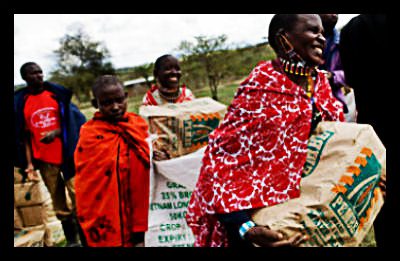
Hunger in Zimbabwe

zimbabwe_food_hunger
Drought in Zimbabwe is reaching epic proportions as nearly one million people are at risk of food insecurity. According to the 2013 Zimbabwe Vulnerability Assessment Committee (ZimVAC,) food insecurity levels will affect roughly 2.2 million Zimbabweans at the peak of hunger season between January and March in the upcoming year. Zimbabwe already suffers from high poverty rates as approximately 72 percent of citizens currently below the poverty line and nearly 14.7 percent of the population is HIV prevalent.

Zimbabwe relies heavily on rain-fed agriculture, which has since plummeted since last season’s drought.  As the need for food increases, maize, a primary source of food in Zimbabwe, continues to rise in price making it more difficult on a population who already lives on less than a $1 a day. Making matters worse, the World Food Programme (WFP) recently announced that their initial plan of providing support for 1.8 million people will be drastically reduced.

“We’d been hoping to have scaled up our seasonal relief operations to reach 1.8 million people in the coming months with distributions of food aid, in some areas, cash transfers. Despite generous contributions from donors such as (United States,) (United Kingdom,) Japan, Australia, ECHO and the central Emergency Relief Fund (UN CERF), it’s now looking like all this will not be possible because of a shortage of funds. In fact, we’ve had to cut rations for one million of our beneficiaries in recent months and there are likely to be deeper cuts as from next month,” said WFP in a statement to the media.

Of the $86 million funding dispersed by the previous listed countries, only half of it has been implemented into relief intervention. “Rising food prices are making matters worse — in some areas, they are as much as double what they were last year,” says WFP communications manager Tomson Phiri.

These rising prices in the market are heavily affecting food security and although WFP is short on funding, they are hoping to raise another $60 million over the next 6 months in an effort to implement relief and recovery operations.

– Jeffrey Scott Haley
Feature Writer

Sources: World Food Programme, World Food Programme, Zimeye
Photo: The Telegraph

February 8, 2014
https://borgenproject.org/wp-content/uploads/borgen-project-logo.svg 0 0 Borgen Project https://borgenproject.org/wp-content/uploads/borgen-project-logo.svg Borgen Project2014-02-08 04:00:472024-12-13 17:49:57Hunger in Zimbabwe
Activism, Food & Hunger, Food Aid, Food Security, Global Poverty

World Hunger Relief and Christina Aguilera

world_hunger_relief
In 2007, Yum! Brands Inc., the world’s largest fast food restaurant, created the World Hunger Relief program. Using its nearly 40,000 stores and 1.5 million employees, Yum! Brands Inc. leads the most expansive private sector hunger relief effort. The World Hunger Relief and international superstar Christina Aguilera are teaming up to help save the nearly 1 billion people around the world who are hungry.

Consisting of KFC, Pizza Hut, and Taco Bell restaurant chains, the company uses its network to raise awareness and funds in order to benefit the United Nations World Food Program (WFP) that reaches more than 90 million people worldwide. Since its inception, the World Hunger Relief program has raised over $150 million for the WFP and other hunger relief organizations, breaking their annual donation record every year. Every one-dollar that’s donated provides four meals for hungry children at school.

In 2012, the World Hunger Relief provided 132 million meals in more than 45 countries. This was attributed to the record-breaking $33 million raised by the program.
The World Hunger Relief takes advantage of Yum! Brands Inc.’s huge employee base that enlists friends and family to volunteer for hunger relief efforts. Together, they have logged millions of volunteer hours in communities around the world.

The aid provided to emergency operations conducted by the WFP has helped thousands of men, women, and children. Other achievements of the World Hunger Relief include:

• Directed $1.5 million to relief funds in the Philippines after Typhoon Haiyan

• Providing assistance so that a school feeding program in Ethiopia, reaching 438,000 primary school age children, can continue for one year

• Those affected by floods in Bolivia were given fortified meals for one month

• Those affected by civil conflict in Somalia were provided fortified meals for one month

• Provided 132,000 people affected by floods with fortified meals for one month

• After a major earthquake in Peru, 80,000 survivors were provided with rice for one month

• Following Cyclone Sidr, victims in Bangladesh were provided with fortified meals for one month

– Sunny Bhatt

Sources: Hunger to Hope, Business Wire, World Food Programme
Photo: BGR

February 6, 2014
https://borgenproject.org/wp-content/uploads/borgen-project-logo.svg 0 0 Borgen Project https://borgenproject.org/wp-content/uploads/borgen-project-logo.svg Borgen Project2014-02-06 05:00:302024-06-11 02:21:42World Hunger Relief and Christina Aguilera
Food Security, Global Poverty

Poverty in Scotland

Scotland_poverty
Poverty in Scotland is worse than it has been for the past 30 years. According to a Breadline Britain Poverty and Social Exclusion report, 29 percent of Scots are unable to afford three or more basic necessities for living (things like food, water, shelter, and clothing).

A spokeswoman for Glasgow University (which helped to fund the report) said: “For a significant and growing proportion of the population, living conditions and opportunities have been going backwards. Housing and heating conditions in particular have deteriorated rapidly.”

The report found that 8 percent of Scots could not afford to heat the living areas of their homes, and 16 percent of children in Scotland live in a home which is either damp or ineffectively heated. Commonly known as fuel poverty, those affected are unable to keep adequately warm at a reasonable price, and are often forced to spend more than ten percent of their household income on fuel for heating.

“These findings paint a very bleak picture of life for large numbers of people living in low- income households in Scotland today,” said Nick Bailey, a senior urban studies lecturer at Glasgow University.

It is such a crucial issue that the Scottish government has sworn to eradicate it by 2016, or else risk more citizens falling into lifestyles of poverty.

Enter Knowes Housing Association: a company that decided to help fight this growing problem. 350 homes at risk of fuel poverty in the city of Clydebank were supplied with solar PV installations by Edison Energy. Also known as photovoltaic systems, the devices use solar energy to supply usable electric power for a large amount of purposes.

Part of a £2 million energy improvement program for the housing association over the next two years, the solar arrays will generate a revenue stream for the housing association through the associated feed-in-tariff payments. Local installer Edison Energy plans to offer aftercare, financing and maintenance support during the lifetime of these payments.

“In a climate of escalating uncertainty over traditional energy supplies and concern about potential price hikes, it is important to emphasize the vital role that solar PV is already playing – and will continue to play – as part of the renewable energy mix, helping to stave off the threat of fuel poverty in areas hardest hit by the challenging economic circumstances of recent years,” said Richard Rushin, a sales manager for Trina Solar, a company that supplied 4,000 pieces of equipment for the project.

KHA, Edison Energy, and Trina Solar plan to continue working together to create and maintain high-quality projects like this one, in order to help those in danger of fuel poverty in the UK.

“Our relationship with Trina Solar has allowed us to develop a sustainable energy solution using market-leading solar technologies, resulting in lower operations and maintenance costs. It is critical to our business model that we have established relationships with our supply partners to ensure that we work together to deliver a consistently high-quality product, in terms of both system performance and maintenance,” said Fraser MacKenzie, Business Development Director at Edison Energy.

The improvements are expected to deliver annual energy bill savings of £70,000.

– Samantha Davis

Sources:  Herald Scotland, Scotland.gov, Solar Power Portal
Photo:  STV News

February 3, 2014
https://borgenproject.org/wp-content/uploads/borgen-project-logo.svg 0 0 Borgen Project https://borgenproject.org/wp-content/uploads/borgen-project-logo.svg Borgen Project2014-02-03 04:00:002024-05-26 23:09:29Poverty in Scotland
Food & Hunger, Global Poverty

6 Reasons to Be Vegetarian or Vegan

Vegetarian_vegan_planet_health
Although many people used to eating meat, poultry and dairy products, it is becoming common to exclude animal products from one’s diet. People often mention health benefits, sympathy for the animals or sometimes even weight loss as their primary reasons for going vegetarian/vegan. However, as more and more natural disasters occur, it has become clear there are more pressing reasons for considering the lifestyle change:

1. According to the Worldwatch Institute, more than half of all global greenhouse gas emissions result from animal agriculture.

2. Raising animals for food is “one of the top two or three most significant contributors to the most serious environmental problems, at every scale from local to global,” says a representative from the United Nations.

3. According to a study conducted by the University of Chicago, going vegan has an insanely positive effect on carbon dioxide emissions into the atmosphere, For comparison, switching from a normal car to a Prius reduces said emissions by circa one ton, while going vegan prevents 1.5 tons from entering the atmosphere.

4. A study done in 2008 in Germany found a carnivore is responsible for seven times more greenhouse gas emissions than an herbivore.

5. Military “Meatless Mondays” – an entire army already pledged last year to eat vegetarian one day per week. Norway, belonging to the highly globally aware Scandinavia, is making serious efforts in reducing its carbon footprint. If an entire military can withhold from eating animal products for the sake of the environment – even for just one day – then everyone else should be able to, also.

6. As a bonus, one’s health improves together with the world’s. Numerous studies exist that show the long-term benefits of omitting animal products from one’s diet, including more energy, better skin and an overall stronger body.

Just a few decades ago, making the change would be considered a fuss: not enough resources were available to fully complement an animal-free diet. Today, numerous supplements and alternatives are sold worldwide, easily accessible and with a pleasant taste. Perhaps going vegan right away could be a bit difficult, but at least sampling vegetarianism might be a good start for those concerned with the health of the planet.

– Natalia Isaeva

Sources: PETA, Earth Save, Daily Caller
Photo: Vegan Soapbox

February 1, 2014
https://borgenproject.org/wp-content/uploads/borgen-project-logo.svg 0 0 Borgen Project https://borgenproject.org/wp-content/uploads/borgen-project-logo.svg Borgen Project2014-02-01 04:00:132020-07-02 12:12:416 Reasons to Be Vegetarian or Vegan
Development, Food & Hunger, Food Security, Global Poverty

Call for Second Green Revolution

Farming_Agriculture_India_Food_Insecurity_Green Revolution
PUNJAB, India – A declining Indian economy and growing food insecurity has policy and environmental experts calling for a Second Green Revolution since one of the best solutions would be heightened research and investments in the agricultural sector to increase the production and yields of small farmers.

This new Revolution would focus on the next generation of agricultural modernization since the original movement in the 1960s. “Food security became a major cause for concern in the 1960s,” says The National, “when it caught the imagination of India’s policymakers and spawned the green revolution, an ambitious plan to transform the country’s agricultural land via high-yielding crops, increased use of fertilizers and a raft of land reforms.” That is to say, as a result of population growth, political upheaval and massive socio-economic shifts throughout the world, the world endeavored to overhaul the current agro-environmental systems.

The main goal of the first Green Revolution was to supply enough food for the growing populations as cost efficiently as possible. “Fearing global upheaval, the developed nations initiated a deliberate strategy to supply cheap, abundant food to prevent political unrest,” states Kenny Ausubel, author of Restoring the Earth.  However, the plant seeds used to develop and economize food production were expensive, and the equipment needed to produce the seeds were costly as well. “While initially the “miracle high-yielding” seeds did produce bigger crops,” Ausubel notes, “this gain proved to be at the expense of the environment and small farmers.”

Moreover, the first Revolution privileged corporations and big agribusiness, leaving small, rural and hometown farmers in the dust. Experts from agriculture, economics and policy agree that a Second Green Revolution is needed “to improve the yield of crops grown in infertile soils by farmers with little access to fertilizer, who represent the majority of third-world farmers.” Small farmers are the key to food production in many countries around the world – not just India – and must be protected from being bought out by large agricultural corporations.

As such, research and development initiatives need to be undergone in order to generate more cost-effective and easily accessible resources for small farmers. Advancements in plant biology seem to be promising, as genetic modifications within crops could significantly yield larger harvests. As J.P. Lynch from the college of Agricultural Sciences states, “population growth, ongoing soil degradation and increasing costs of chemical fertilizer will make the Second Green Revolution a priority for plant biology in the 21st century.”

Food security is a necessary factor to global economic and development systems. Despite the advances made in the initial agricultural movement, more action is necessary in order to modernize and economize production for the world’s thousands of small farmers. “While the first Green Revolution was aimed at undertaking mass production,” declares Dr. N.G. Hedge of BAIF Development Research Foundation, “the second Green Revolution should be to promote production by the masses.

– Mallory Thayer

Sources: BAIF, The National, Penn State, Urban Habitat
Photo: Tree Hugger

January 31, 2014
https://borgenproject.org/wp-content/uploads/borgen-project-logo.svg 0 0 Borgen Project https://borgenproject.org/wp-content/uploads/borgen-project-logo.svg Borgen Project2014-01-31 23:37:162024-06-05 02:51:43Call for Second Green Revolution
Page 64 of 78«‹6263646566›»

Get Smarter

  • Global Poverty 101
  • Global Poverty… The Good News
  • Global Poverty & U.S. Jobs
  • Global Poverty and National Security
  • Innovative Solutions to Poverty
  • Global Poverty & Aid FAQ’s
Search Search

Take Action

  • Call Congress
  • Email Congress
  • Donate
  • 30 Ways to Help
  • Volunteer Ops
  • Internships
  • Courses & Certificates
  • The Podcast
Borgen Project

“The Borgen Project is an incredible nonprofit organization that is addressing poverty and hunger and working towards ending them.”

-The Huffington Post

Inside The Borgen Project

  • Contact
  • About
  • Financials
  • President
  • Board of Directors
  • Board of Advisors

International Links

  • UK Email Parliament
  • UK Donate
  • Canada Email Parliament

Get Smarter

  • Global Poverty 101
  • Global Poverty… The Good News
  • Global Poverty & U.S. Jobs
  • Global Poverty and National Security
  • Innovative Solutions to Poverty
  • Global Poverty & Aid FAQ’s

Ways to Help

  • Call Congress
  • Email Congress
  • Donate
  • 30 Ways to Help
  • Volunteer Ops
  • Internships
  • Courses & Certificates
  • The Podcast
Scroll to top Scroll to top Scroll to top