• Link to X
  • Link to Facebook
  • Link to Instagram
  • Link to TikTok
  • Link to Youtube
  • About
    • About Us
      • President
      • Board of Directors
      • Board of Advisors
      • Financials
      • Our Methodology
      • Success Tracker
      • Contact
  • Act Now
    • 30 Ways to Help
      • Email Congress
      • Call Congress
      • Volunteer
      • Courses & Certificates
      • Be a Donor
    • Internships
      • In-Office Internships
      • Remote Internships
    • Legislation
      • Politics 101
  • The Blog
  • The Podcast
  • Magazine
  • Donate
  • Click to open the search input field Click to open the search input field Search
  • Menu Menu

Archive for category: Food & Hunger

Information and stories on food.

Charity, Food & Hunger, Global Poverty, Hunger, Nonprofit Organizations and NGOs

From Being Homeless to Feeding the Homeless

Derrick Walton knows what it feels like to be homeless, sleep in abandoned cars and not have enough, if anything, to eat. Therefore, when he established Chef D’s Rock Power Pizza in January 2014 in Des Moines, Iowa, he pledged to shut down his restaurant once a week to help in feeding the homeless.
“I made a promise that if I ever got in a position where I could help somebody, I would give something back,” Walton told Yahoo’s Good News blog.

Although Walton can’t really afford to close his restaurant one night a week, he continues to do so to make sure anyone who needs food can get it – for free.

On April 2, 2014, Walton was invited on the Ellen Degeneres Show and she gave him $10,000 for his cause. Ellen has been partnering with Bank of America to highlight people who give back to their communities. When she heard of Walton, she was touched by his story and wanted to help him get the word out about his restaurant.

Walton grew up in Detroit in a household of eight kids and he learned to cook from his mother. After going to culinary school, Walton said he made some bad choices that landed him homeless.

“It put me in a position where I needed help from others, but the doors were always closed,” he recalls. “I made a promise that if I ever got in a position where I could help somebody, I would give something back.”

After saving up money from a dish washing job and later a line cook, Walton was able to open Chef D’s Pizza. And now, the $10,000 check from Ellen will help him continue to be able to keep his doors open for the homeless on Monday nights.

Iowa is home to almost 3,000 homeless people. The state has a poverty rate of 12.7%. With poverty often comes food insecurity and Walton is doing a small part to alleviate hunger in the homeless population of Des Moines.

– Haley Sklut

Sources: Ellen, The Huffington Post, Yahoo, Spotlight on Poverty
Photo: LiftBump

April 4, 2014
https://borgenproject.org/wp-content/uploads/borgen-project-logo.svg 0 0 Borgen Project https://borgenproject.org/wp-content/uploads/borgen-project-logo.svg Borgen Project2014-04-04 16:37:432024-05-26 23:26:25From Being Homeless to Feeding the Homeless
Food & Hunger, Global Poverty, Health

How a GMO-Free Diet Could Benefit Global Health

The debate over genetically modified organisms has been on the rise for quite some time, but lately the American Academy of Environmental Medicine has issued a warning encouraging physicians to tell their patients to remove GMO foods from their diets.

GMOs are created in a laboratory and then injected into a food source. The injection contains a gene that carries a desirable trait, and is used to give that trait to another food source. This way, farmers are able to give their plants and animals characteristics that are more appealing to consumers.

At first biotechnology companies, such as Monsanto, promoted their biotech foods as a means to feeding those that are living in poverty and not receiving proper nutrients. The GMO food known as “golden rice” was thought to be the answer to malnutrition because it contained the vitamin beta-carotene needed for vitamin A production. Time Magazine stated that golden rice could help end blindness and death in countries that suffer heavily from vitamin A deficiencies.

On the contrary though, golden rice is not the golden ticket to ending world hunger. In fact, GMO foods have been found to do more harm than good.

Firstly, producing golden rice requires expensive amounts of pesticides and fertilizers, an expense that would not be affordable in developing countries.

Secondly, water is a major contributor to golden rice thriving, and in countries where vitamin A deficiency is prominent clean water is also usually scarce.

Thirdly, the amount of golden rice needed to properly nourish a healthy young boy is 27 bowls a day, but for a malnourished person the nutrients in golden rice may not even be properly digested in the body. One of Monsanto’s developments was a system known as the Terminator Technology, which genetically forms plant seeds that are sterile. Farmers in developing countries usually save seeds from fertile crops in order to produce their next batch of crops, with this Monsanto system farmers would suffer and potentially starve.

The Institute for Responsible Technology has found that GMOs are huge contributors to health problems, such as immune and gastrointestinal system problems, infertility, trouble with insulin balance and failing organs. The best possible method is to stay away from genetically modified foods. CNN offered a list of ways to keep your diet free of GMOs, some examples included:

  1.  Eating fresh produce, usually they are GMO free.
  2.  Buy foods with the non-GMO-verified seal, as food companies are not required to label that their foods contain GMO.
  3. Always buy wild seafood in order to avoid farm-raised and potentially GMO fish.

As for GMO foods’ relation to poverty, fresh is always healthier, cheaper, and more beneficial in terms of nutrients. GMO has been proven to not yield any higher amount of crops than organic and chemical free crops.

– Becka Felcon

Sources: The Food Revolution, CNN, International Business Times, GMO Awareness
Photo: LA Times

March 29, 2014
https://borgenproject.org/wp-content/uploads/borgen-project-logo.svg 0 0 Borgen Project https://borgenproject.org/wp-content/uploads/borgen-project-logo.svg Borgen Project2014-03-29 04:00:472024-05-26 23:23:14How a GMO-Free Diet Could Benefit Global Health
Food & Hunger, Global Poverty

Poverty and Obesity in Developing Countries

Poverty and Obesity Fast Food Developing Countries
The diplomatic phrase “emerging markets” is a term food companies use to target individuals living in developing countries. Processed food companies, such as KFC, McDonald’s and the like are using developing countries as a way to boost economic growth – the world’s poor is a market that needs to be tapped – and it is the food companies that have taken full advantage of these unchartered territories, bringing poverty and obesity into the public eye.


Fast Food Stimulates Poverty and Obesity


Take this real life paradox: in South Africa, 60% of women and 25% of children are overweight, yet 20% of the children also suffer from malnutrition. The sudden introduction of fast food joints in developing countries is harmful for a number of reasons. The first is that the world’s poor are unaware of the dangers of processed food because they have not been properly educated about nor introduced to this market in the past.

The second reason is cultural; a fast food joint is a sign of luxury and status in developing countries – so locals may feel more inclined to spend a week’s worth of wages for one meal simply because they appear to be better off than they actually are. In order to get past these potential consequences, locals need to be educated about the nutritional value of cheap, processed food (or lack thereof) otherwise there will be more health crises to accompany the already dire situation in developing countries. Heart disease, diabetes and obesity may very well follow in the path of malnutrition, HIV/AIDS and death that run rampant in developing countries.

If food companies are going to be tapping into this market then the public needs to be educated about the potential consequences of including a diet with cheap, processed foods. Fast food corporations are inherently at an advantage because they have the resources to enter these countries and make incredible profits off of unsuspecting locals.

South Africa is not the only country that has been drastically targeted by this “other” food crisis. Six countries out of the top ten in the world – Kuwait, Lebanon, Qatar and Saudi Arabia are in the lead for prevalence of type 2 diabetes, affecting 11% of the population. All of these countries within the Middle East reveal negative effects of the presence of fast food companies in developing countries. The global poor are seriously lacking in aid, yet when they are seen as a consumer, they are suddenly bombarded with attention from companies who want to make a buck off of them.

Obviously the reality is that fast food companies are in every country – no one is immune – but they are especially harmful for developing countries. Food corporations are tapping into new markets because their markets in the global north have reached a “saturation point” – “that point is reached when processed foods provide 60% of a country’s total calories”. In other words, they want more money and they want it now.

The solutions to this are unclear, but there are some countries that are making great leaps towards remedying the fast food crisis. Brazil for example, has government legislation that calls for healthier school meals for children and the basic right to access healthy food, as outlined in the Brazilian constitution.

Do the developing countries or even the United States attempt what Brazil has done and enact these solutions into legislation to disarm the fast food takeover, or is it through education and awareness that we quell this crisis?


-Rozali Telbis

Photo: Oxford Journals
Sources:
Food Tank, Huffington Post, The Guardian

March 21, 2014
https://borgenproject.org/wp-content/uploads/borgen-project-logo.svg 0 0 Borgen Project https://borgenproject.org/wp-content/uploads/borgen-project-logo.svg Borgen Project2014-03-21 09:56:072024-12-13 17:50:10Poverty and Obesity in Developing Countries
Developing Countries, Development, Economy, Food Security, Global Poverty

Desertification Heightens Poverty in Mongolia

Up until about 1990, Mongolia never faced any fears of living in poverty. Rural land specifically, and the large volume of land has been Mongolia’s source of food security and livelihood for centuries.

Mongolia owns approximately 838,853.13 square miles of land in which much of it is desert, but the arable land is quickly becoming depleted, polluted, or turned to desert.

Currently, 33% of people in Mongolia are poor, and over half of the country’s population is living in rural areas. This quickly happened after Mongolia’s large farms became private and hundreds of herders became unemployed and without government benefits.

Most of the rural poor live nomadic lifestyles, moving from area to area with their families in order to feed cattle and find food. Some families live in soums, or villages consisting of multiple families, and some rural families, particularly the nomads, live in tents known as ger. The benefit of living in soums is the ability to obtain some form of education, health services, and essential necessities.

Those living in rural areas rely on their animals for food and making money.

With much of the fertile land being utilized for feeding cattle, there has been a severe increase in land degradation. Mongolia has yet to find strengthening mechanisms for sustainable land management or a method to control desertification. Without these forms of protection, Mongolia is at an increasing risk of losing what little remains of one of their most needed natural resources: fertile land.

Desertification brings with it many struggles; drought and causing land to become irreparable are among the worst-case scenarios. With more and more of the land being overgrazed, little land will be left for agriculture, herding, and living. Mongolia is already naturally a very dry climate with little rainfall and plant growth, which is only worsened by the constant migration, over-cultivated land, and now competition for natural resources.

– Rebecca Felcon

Sources: Rural Poverty Portal, Scoop World
Photo: Stephane L

March 21, 2014
https://borgenproject.org/wp-content/uploads/borgen-project-logo.svg 0 0 Borgen Project https://borgenproject.org/wp-content/uploads/borgen-project-logo.svg Borgen Project2014-03-21 04:00:582024-05-26 23:20:44Desertification Heightens Poverty in Mongolia
Disease, Food & Hunger, Global Poverty

HIV-Hunger Trap

Referred to as the “wasting disease,” HIV demands a far greater energy and nutrient intake to fight infection. The virus threatens the immune system, leaving its host emaciated.

With the double burden of malnutrition and HIV/AIDS, those in developing countries must decide between food or antiretroviral medications. According to the nutritionists at the World Food Programme (WFP,) many live in this “HIV-Hunger Trap.”

The WFP reports a prioritization of food over treatment.

Yet, those living with HIV/AIDS continue eat less than their healthy counterparts. Symptoms such as nausea, vomiting and sore mouth may affect appetite. The illness–as well as the medication for it–may “modify the taste of food and prevent the body from absorbing it.” The Food and Agriculture Organization (FAO) of the United Nations also cites exhaustion, depression and isolation symptoms.

These may limit energy to prepare and eat regular meals. And, in general, populations with high rates of HIV/AIDS lack sufficient access to food.

African nations affected the most depend on “labor-intensive farming systems.” Agriculture accounts for more than a third of these countries’ gross national product, reports the U.N. Yet from 1985 to 2011, AIDS led to death of seven million agricultural workers in 25 African countries. By 2020, the U.N. predicts HIV/AIDS could reduce the agricultural workforce by 25%.

This loss of the most productive age group (15 years old to 49 years old) results in greater food insecurity. Many households offer food and shelter to sick relatives or orphans, further limiting nutrient intake for each member.

HIV/AIDS also inhibits the ability to absorb food. Digestion breaks food into nutrients, and these nutrients subsequently provide energy and defense against infection. HIV and other infections, though, damage the gut wall. Consequently, food cannot pass through and be absorbed. Coupled with reduced food intake, this damage leads to severe weight loss and malnutrition.

The Elizabeth Glaser Pediatric AIDS Foundation (EGPAF) engineered a solution to the “HIV-Hunger Trap” in Lesotho. The country faces one of the highest prevalence rates, with 23.6% living with the virus. An estimated 28,000 children live with the dual threat of a weakened immune system and food insecurity.

The EGPAF aims to integrate nutrition education and support at local hospitals and health centers. At its “Nutrition Corners,” mothers and caregivers observe cooking demonstrations “using locally available fare such as sorghum porridge, beans, peas, vegetables and fruits.” This program also helps provide early treatment to HIV-positive children below the age of 2 years old.

Malnutrition serves as a gateway to infection for HIV-positive children.

At these hospitals and clinics, EGPAF monitors children to ensure proper weight for age and weight for height. If children fail to improve nutritionally for three visits, the foundation provides one-on-one counseling. Families who did improve participate in a group discussion. EGPAF also acts preemptively, providing caregivers and children of unknown status counseling. Testing services also offer an early diagnosis and access to treatment.

The HIV virus demands both medication and sufficient food intake. The World Health Organization recommends increasing energy intake by 50% to 100% for HIV-positive children experiencing weight loss. The Elizabeth Glaser Pediatric AIDS Foundation understands how impoverished regions fall into the “HIV-Hunger Trap.”

AIDS claims the lives of agricultural workers and those living with the virus subsequently face growing food insecurity. To meet the demands of this virus, the public health and agricultural fields can converge to protect vulnerable populations.

– Ellery Spahr

Sources: Elizabeth Glaser Pediatric Aids Foundation, Food and Agricultural Organization of the United Nations, United Nations
Photo: Joe McKay

March 21, 2014
https://borgenproject.org/wp-content/uploads/borgen-project-logo.svg 0 0 Borgen Project https://borgenproject.org/wp-content/uploads/borgen-project-logo.svg Borgen Project2014-03-21 04:00:412024-05-26 23:21:02HIV-Hunger Trap
Developing Countries, Economy, Food & Hunger, Global Poverty

Wasting Food Makes Ending Poverty Difficult

According to a report by the World Bank, 25% to 33% of the food produced for consumption around the globe is wasted every year.

The Food Price Watch report argues, “Between one-fourth and one-third of the nearly four billion metric tons of food produced annually for human consumption is lost or wasted.”

The World Bank claims that such waste mainly occurs during the production, transport, retail and consumption stages of food. This is bad news, considering millions of people around the world are dying of hunger, particularly in countries throughout Africa and South Asia.

Sadly, the report also argues that most of the food is wasted in developed countries.

“Overall, some 56% of total food loss and food waste occurs in the developed world; the remaining 44 percent across developing regions,” said the report.

The president of the World Bank, Jim Yong Kim, said that the large amount of food wasted around the world is shameful.

“Millions of people around the world go to bed hungry every night, and yet millions of tons of food end up in trash cans or spoiled on the way to market,” Kim said.

Apart from the food insecurity that such waste can create, the World Bank claims that wasting and losing food also harms the economy and environment, and makes fighting poverty even harder.

But, how guilty are Americans when it comes to wasting food?

According to NPR, people in the United States waste around $165 billion worth of food each year. On one of the agency’s radio programs, Jonathan Bloom, author of “American Wasteland: How America Throws Away Nearly Half of Its Food (and What we Can do About It,)” said, “We often don’t tend to realize that we’re throwing away perfectly edible food, especially when we’re paying attention to those expiration dates and when we’re thinking of those as the gospel truth.”

He believes that expiration labels are placed on food items for quality reasons, not safety.

But returning to the report by the World Bank, consumers often fall victim to the deals pushed by advertisements. Since consumers tend to buy more food than they need, many perishable items tend to expire by the time they are finally willing to eat them.

It is ultimately up to the consumer how much food to purchase and how long to wait before eating it. However, the consumers can make a big difference in the world if they stop wasting so much food.

This can be achieved by paying closer attention to their own eating patterns and simply buying less food.

– Juan Campos

Sources: NPR, The World Bank, Yahoo News
Photo: Enterra Solutions

March 18, 2014
https://borgenproject.org/wp-content/uploads/borgen-project-logo.svg 0 0 Borgen Project https://borgenproject.org/wp-content/uploads/borgen-project-logo.svg Borgen Project2014-03-18 04:00:162024-05-26 23:18:47Wasting Food Makes Ending Poverty Difficult
Children, Food Aid, Global Poverty

The National Food Security Act in India

Food_Security_Act_in_India
Food has become a right, rather than a luxury, in India. Parliament approved the National Food Security Act (NFSA) in September 2013, requiring the government subsidize food for nearly 800 million people. Success of this program will lead to greater food security for nearly 70% of the Indian population and a political advantage to the ruling Congress Party.

Yet critics fear the program asks too much from an economy “burdened by a weakened currency and a large fiscal deficit.” This monumental step toward food security “relies on an unwieldy network of farmers, buyers, storage facilities, and sellers.” NFSA requires this network to supply an estimated 60 million tons of subsidized grains a year. Individuals receive an average of five kilograms per month. Those occupying the lowest income bracket receive more as well as assistance from state-run programs.

Supporters of NFSA highlight the past success in government food subsidies. In the 2011, more than 500 million Indians benefited from government programs. Delivering 51.3 million tons to those in need, the government provided 10 times more than the World Food Programme.

Those in opposition cite the 2005 incidents of “theft, corruption and difficulties identifying the needy.” In this fiscal year, the government estimates a 60% loss in grain, yet researchers returned to analyze recent government efforts, reporting gradual improvement in food delivery.

This program began at the start of the 2013 fiscal year and will cost the government an estimated $20 billion annually.

Supporters contend this modest increase from past years fulfills the “moral obligation of the government” to protect its people. Sonia Gandhi currently serves as the leader of the Congress Party and stands in staunch support of the program.

More than 100 million children attending school currently receive midday meals and a “take-home ration,” according to the New York Times. NFSA strengthens these entitlement programs, expanding access and improving efficiency. A number of studies support these school-based food programs, pointing to increased attendance and healthier development. The program also proposes revitalized efforts to protect maternal health, allocating 1,000 rupees, or $16.43 per month, for six months.

Maternal health during and following pregnancy directly affects the health and development of infants.

The success of NFSA depends on the strict government supervision and reform. Gandhi understands this and regards access to food as a fundamental right.

“The question is not whether we can do it or not,” she asserts. “We have to do it.”

– Ellery Spahr

Sources: TIME, New York Times
Photo: Commodity Online

March 17, 2014
https://borgenproject.org/wp-content/uploads/borgen-project-logo.svg 0 0 Borgen Project https://borgenproject.org/wp-content/uploads/borgen-project-logo.svg Borgen Project2014-03-17 04:00:092014-03-21 07:27:49The National Food Security Act in India
Food & Hunger, Global Poverty

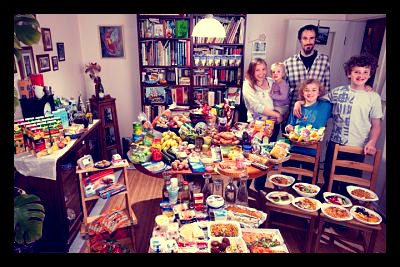
Hungry Planet: What Does the World Eat?

Hungry_Planet
A project called Hungry Planet depicts what an average family consumes in a week. Ranging from $325 in Germany to $1.23 in Chad, food costs are based on many factors including environment, culture and economy.
What_does_the_world_eat_hungry_planet
An average family in the United States spends about $150 per week on food, according to a 2012 Gallup poll. Hungry Planet depicted a few American families who spent various amounts per week ranging from $341 in North Carolina to $242 in Texas and $159 in California.

The United States Department of Agriculture performed a study in 2011 that revealed what Americans eat. The results include: 632 pounds of dairy products, 415 pounds of vegetables, 273 pounds of fruit and 183 pounds of meat and poultry. Perhaps the most shocking result is that Americans consume 141 of sweeteners and 53 gallons of soda in a year. Of the 415 pounds of vegetables that Americans consume, 29 pounds are french fries.

In Kuwait, the average four-person family spends the equivalent of $221 per week on food. Because most of the land in Kuwait is not well-suited for agriculture due to soil infertility, water scarcity, unfavorable climate or lack of a trained labor force, much of the food comes from the water. Fish and crustaceans are plentiful in the Persian Gulf, but most of the food commodities are imported.

Those in Mali spend the equivalent of $26 per week on food, which consists mainly of rice, millet, sorghum, fish and vegetables. An Emergency Food Security Assessment conducted by the Government of Mali revealed that three out of four households in northern Mali are moderately to severely food insecure.

Chad, a country where people are barely spending the equivalent of one dollar per week on food, is heavily reliant on external assistance. Agriculture and farming is hindered by erratic rains, cyclical droughts and poor farming practices. A 2011 drought left the country in a severe food crisis in 2013.

Food insecurity is connected to education and environment. In Chad, access to basic education is limited, with an enrollment rate of 36 percent and adult literacy rates of 21 percent for women and 43 percent for men.

Improved literacy is one factor in increasing the understanding of agricultural and sustainable practices, which can increase food production. Advanced technologies to control excessive rains or draughts also benefit farming practices. When policies aimed at enhancing agricultural productivity are combined with education and climate control technologies, the effect will be a positive change to create more vibrant markets, employment opportunities and economic growth.

– Haley Sklut

Sources: Time, USDA, GALLUP, Our Africa, World Food Programme, UN-FAO
Photo: Time

March 9, 2014
https://borgenproject.org/wp-content/uploads/borgen-project-logo.svg 0 0 Borgen Project https://borgenproject.org/wp-content/uploads/borgen-project-logo.svg Borgen Project2014-03-09 04:00:222024-05-26 23:13:24Hungry Planet: What Does the World Eat?
Food Aid, Global Poverty

Malnutrition in Haiti: Philanthropic groups

world map
Since the catastrophic earthquake four years ago, the number of people suffering from malnutrition in Haiti has risen dramatically. Even before the earthquake hit, people were struggling to eat a nutritious balance of food, with complications from malnutrition contributing to 60% of deaths in children and a relatively high mortality rate in adults.

Although children are the primary worry, the concern regarding malnourishment extends to those sick with HIV and tuberculosis, pregnant women and young adults. Poor sanitation also contributes to poor health by spreading disease, which can critically damage the immune system or cause severe dehydration. Other effects of malnutrition include hindered mental and physical growth, emotional changes (depression or anxiety) and difficulty learning or concentrating.

There are ways to help ebb malnutrition in Haiti.  Here are a couple of philanthropic causes that are focused on heightening nutrition in Haiti.

The Nourimanba Production Facility

Located in a modest two-story building in Haiti’s Central Plateau, the Nourimanba Production Facility is more than it appears on the outside. The facility is quite sophisticated, using top-of-the-line stainless steel devices to process peanuts and mix the peanut based paste with vitamins in order to create a nutritious and essential medicine. Andrew Marx, Director of Communications at Partners in Health (PIH) stated that this facility enables 350 tons of Nourimanba to reach 50,000 children a year, with each child taking the medicine daily for up to eight weeks.  The company supports local peanut farmers and opens up an incredibly convenient and dependable market for the community to yield both sales and even jobs.

Hunger Relief International (HRI)

HRI works with local farmers to provide three meals per day consisting of beans, rice, cornmeal and pasta, to 1,450 orphans in 28 different orphanages. HRI also helps children and women plant gardens at homes and schools, helps tackle malnutrition in Haiti, promotes healthy eating and forms new sources of income for the communities. The easy access to nutritional food will relieve the families of unnecessary spending, which will allow their money to be spent on education or school supplies, for example.

World Food Programme (WFP)

WFP is a leading agency in the fight to provide young children and mothers with the proper nutrients necessary during crucial developmental stages. The WFP is working with the Ministry of Agriculture to build a link between local smallholder farmers and the school meal system to produce a greater market for farmers and cut down on food insecurity. An estimated 3,000 metric tons of rice will be bought from Haitian farmers during the current school year in order to provide the National School Meals Programme with a supply large enough to sustain the 685,000 children in school. Milk is also bought from local smallholder farmers and distributed to 84 different schools.

With continued support from these various causes, Haiti is making strides to rebuild its health and economy. Farmers and the most vulnerable members of the community are also being given the necessary resources needed to help strengthen them and curb malnutrition in Haiti.

– Becka Felcon

Sources: Partners in Health, Partners in Health, Hunger Relief International, World Food Programme

February 28, 2014
https://borgenproject.org/wp-content/uploads/borgen-project-logo.svg 0 0 Borgen Project https://borgenproject.org/wp-content/uploads/borgen-project-logo.svg Borgen Project2014-02-28 11:50:122024-05-26 23:16:22Malnutrition in Haiti: Philanthropic groups
Children, Food & Hunger, Global Poverty

Japanese Model Kurara Chibana as WFP Ambassador

WFP_Kurara_Chibana
Japanese model Kurara Chibana was recently appointed as the first Japanese National Ambassador to the United Nations World Food Programme (WFP). The 31-year-old model and Japanese celebrity uses her status to bring attention to those communities with scarce food resources and the issues faced in those communities.

As a former Miss Universe contestant, Chibana was the first runner-up for the 2006 competition cycle. The Okinawa native has since focused her energy on fighting world hunger alongside the WFP.

Chibana has held the position of WFP Celebrity Partner since 2007. Chibana has traveled to several developing countries.  To date, those countries include the Philippines, Zambia, Tanzania, Ethiopia and Sri Lanka.

The WFP is the largest humanitarian agency in the world fighting against hunger, and the Japanese government itself has consistently donated to the WFP.

In Tanzania, Chibana visited the Longido district of Arusha. There, Chibana spent time with the children of the Engikaret Primary School, a recipient school of WFP Tanzania. WFP Tanzania provides two meals to over 1,167 schools in regions vulnerable to droughts; meals that feed an estimated half million schoolchildren.

For her part, Chibana shared a meal with the children of Engikaret Primary School and visited the community of one of the school’s pupils. In 2011, donations amounted to $290 million, both from the public and private sector. The funds went to over 30 different countries in the form of foreign aid.

Furthermore, as an ambassador for the WFP, Chibana hopes to learn more about disaster preparedness and emergency protocols following natural disasters.

Oftentimes, celebrity power can draw hundreds of donors to a particular fundraiser that goes toward relief aid. Other times, celebrities such as Chibana use their international presence as a means to draw attention to otherwise globally voiceless communities.

– Miles Abadilla

Sources: Japan Times, Japan Update, Ryukyu Shimpo, Trust.org, World Food Programme 1, World Food Programme 2
Photo: WFP

February 27, 2014
https://borgenproject.org/wp-content/uploads/borgen-project-logo.svg 0 0 Borgen Project https://borgenproject.org/wp-content/uploads/borgen-project-logo.svg Borgen Project2014-02-27 04:00:182024-06-04 03:01:15Japanese Model Kurara Chibana as WFP Ambassador
Page 62 of 78«‹6061626364›»

Get Smarter

  • Global Poverty 101
  • Global Poverty… The Good News
  • Global Poverty & U.S. Jobs
  • Global Poverty and National Security
  • Innovative Solutions to Poverty
  • Global Poverty & Aid FAQ’s
Search Search

Take Action

  • Call Congress
  • Email Congress
  • Donate
  • 30 Ways to Help
  • Volunteer Ops
  • Internships
  • Courses & Certificates
  • The Podcast
Borgen Project

“The Borgen Project is an incredible nonprofit organization that is addressing poverty and hunger and working towards ending them.”

-The Huffington Post

Inside The Borgen Project

  • Contact
  • About
  • Financials
  • President
  • Board of Directors
  • Board of Advisors

International Links

  • UK Email Parliament
  • UK Donate
  • Canada Email Parliament

Get Smarter

  • Global Poverty 101
  • Global Poverty… The Good News
  • Global Poverty & U.S. Jobs
  • Global Poverty and National Security
  • Innovative Solutions to Poverty
  • Global Poverty & Aid FAQ’s

Ways to Help

  • Call Congress
  • Email Congress
  • Donate
  • 30 Ways to Help
  • Volunteer Ops
  • Internships
  • Courses & Certificates
  • The Podcast
Scroll to top Scroll to top Scroll to top