• Link to X
  • Link to Facebook
  • Link to Instagram
  • Link to TikTok
  • Link to Youtube
  • About
    • About Us
      • President
      • Board of Directors
      • Board of Advisors
      • Financials
      • Our Methodology
      • Success Tracker
      • Contact
  • Act Now
    • 30 Ways to Help
      • Email Congress
      • Call Congress
      • Volunteer
      • Courses & Certificates
      • Be a Donor
    • Internships
      • In-Office Internships
      • Remote Internships
    • Legislation
      • Politics 101
  • The Blog
  • The Podcast
  • Magazine
  • Donate
  • Click to open the search input field Click to open the search input field Search
  • Menu Menu

Archive for category: Development

Information and stories on development news.

Development, Education, Technology

Uruguay Pioneers One Laptop Per Child Project

One Laptop Per Child
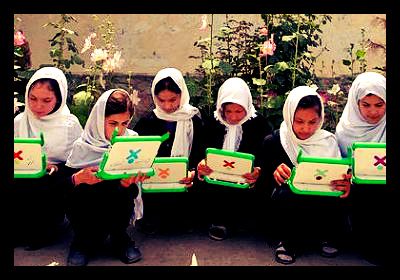
Uruguay was the first country in the world to provide a laptop to every primary school student. Plan Ceibal, Uruguay’s national One Laptop Per Child project, provided an XO laptop to each of the 395,000 children in first through sixth grades. The acronym Ceibal stands for Basic Informatic Educative Connectivity for Online Learning (Conectividad Educativa de Informática Básica para el Aprendizaje en Línea).

One Laptop Per Child, a non-profit based in Massachusetts, strives to provide each child in developing nations with a low-cost, low-power laptop. Through this technology, children become more engaged in their education and more connected to one another. The laptops are designed to be highly power efficient, with the ability to use solar power, generators, wind power or water power.

“This is not simply the handing out of laptops or an education program. It is a program which seeks to reduce the gap between the digital world and the world of knowledge,” Miguel Brechner explained, director of the Technological Laboratory of Uruguay and in charge of Plan Ceibal.

In Uruguay, the Plan Ceibal program has a cost of $260 per child, including maintenance costs, equipment repairs, teacher training and internet connection. The total figure represents less than 5 % of the country’s education budget.

The XO laptops, with Linux operating software, can connect directly to one another, meaning that a single point of access can be shared among a community of XO users.

Education in Uruguay is among the best of the Latin American countries. Uruguay has one of the highest adult literacy rates of all of Latin America. Elementary education is mandatory and free; secondary and technical education are also free. As the first country to implement a One Laptop Per Child program, Uruguay is setting the model for other countries, such as Rwanda, Nicaragua, Paraguay and Peru, which have all adapted a One Laptop Per Child program.

– Haley Sklut

Sources: One Laptop Per Child, Sources: BBC
Photo: Kit Guru

February 21, 2014
https://borgenproject.org/wp-content/uploads/borgen-project-logo.svg 0 0 Borgen Project https://borgenproject.org/wp-content/uploads/borgen-project-logo.svg Borgen Project2014-02-21 17:00:322024-05-26 23:13:23Uruguay Pioneers One Laptop Per Child Project
Development, Global Poverty

Beyond Fair: Doi Chaang Coffee Beans and Development

Doi_Chang_Coffee_Harvest_Thailand
Do you like to drink coffee? If you are like me and happen to need a cup every morning in order to function properly, here is a chance to drink your single-origin morning nectar and help to alleviate poverty all at the same time.

Some readers may have heard of the Golden Triangle, or the border area of Laos, Myanmar and Thailand. It is one of the largest opium-producing regions in the world.

One of the reasons that people resort to growing and selling opium is the grinding poverty experienced by the ethnic minorities that live across the borders of the three countries. Many of the minority groups have very few rights and are often discriminated against.

In the case of Thailand, many hill tribes members do not possess Thai identification documents—rendering them unrecognized as Thai citizens.

This consequently impedes them from accessing many basic public services such as health care and education. This combination of decades of poverty and disenfranchisement has driven minority groups towards illicit drug trade.

However, for the past few decades some tribes—among them the Akha of northern Thailand—have shifted to growing cash crops such as coffee. Nevertheless, the revenue they receive through trading with large companies was far from mutually beneficial. Enter Wicha Promyong—a successful Southern Thai entrepreneur—and his Canadian colleague, John Darch, who had spent many years in the banking sectors of Canada and England.

Together, they founded Doi Chaang Coffee with the goal of bringing development and sustainable prosperity to an Akha village on Doi Chaang Mountain.

What the Canadian-registered company does is unprecedented: 50% of the ownership of the company is given to the tribe, who also receives 50% of the profits as well as all of the money obtained from selling the green beans. Amazing!

What has this innovative and charitable form of a corporate-grower relationship achieved for the village so far? Well, they have done a good many wonderful things.

From an isolated village that was hitherto neglected by the authorities, left without paved roads, a hospital, schools, or even running water, the income from growing coffee allows the Akha tribe to become more self-sustainable. The village now has its own all those that it had erstwhile been lacking. It even has its own library and a coffee academy!

The business philosophy of Doi Chaang Coffee demonstrates that multinational commodity trades do not have to be exploitative in order to be profitable. It also suggests that perhaps the key component in establishing an equality and dignity based business model is simple and straightforward: the desire to be fair.

Readers in North America can purchase Doi Chaang Coffee both at their local Safeway and other supermarkets—if they are in Canada—as well as on their website if you happen to be in the U.S.

– Peewara Sapsuwan

Sources: Doi Chaang Coffee, Fair Trade , YouTube

February 21, 2014
https://borgenproject.org/wp-content/uploads/borgen-project-logo.svg 0 0 Borgen Project https://borgenproject.org/wp-content/uploads/borgen-project-logo.svg Borgen Project2014-02-21 11:31:152024-12-13 17:53:50Beyond Fair: Doi Chaang Coffee Beans and Development
Activism, Advocacy, Developing Countries, Development, Global Poverty, Human Rights

Dalai Lama: Non-Violent Resolve to Tibetan Oppression

dalai_lama_tibetan
The Chinese occupation of Tibet has been going on since 1949. The Tibetan people, under command of the “Holy Dalai Lama,” have been attempting to win back their freedom and independence through non-violent means. All over the world, international networks of people have been forming Tibet Support Groups, or TSG’s.

The support groups serve as initiatives that raise awareness among foreign nations and generate support and aid towards freeing the Tibetan people.

China is trying to gain membership status in the United Nations Human Rights Council, but the nation has an ongoing ban on all information concerning the exiled Dalai Lama. Although the Central Tibetan Administration and the Dalai Lama believe they can solve the oppression of the Tibetans and still remain a part of China, anti-Tibet propaganda still runs throughout the occupied territory.

Jiang Zemin was the former President of China, replaced this year by Xi Jinping. The previous leader was under investigation for crimes against Tibetan humanity, but the Spanish Government abruptly let the situation drop without consequences and the oppression continues today.

In January, the Intercontinental Hotel Group was issued a complaint by Tibetan protesters for plans to construct a high-class hotel in occupied Tibet. The Intercontinental Hotel Group has yet to respond to this complaint, and the U.N. Global Compact (UNGC) has given them a deadline to answer these complaints.

The UNGC was an initiative signed by the Intercontinental Hotel Group that serves to provide the most honorable and genuine business practices among companies with holdings in multiple countries. Another complaint with the hotel in Lhasa involves the main executive being corrupt and participating in fraudulent business dealings, but so far nobody has responded to any of the issues raised.

The Dalai Lama is adamant about solving Tibet’s problems through non violent means as a way to bolster the Buddhist way. The Chinese wants to build water powered projects on the large Brahmaputra river that originates in Tibetan India.

In a business-standard.com article, the Dalai Lama said, “The mighty Brahmaputra river, which flows through many parts of India and southeast Asia, has its origin in Tibet. The success of the Tibetan movement is an imperative for saving the environment and ecology of the entire world.”

The struggle against Tibetan oppression in China, especially its non-violence, is an important lesson for everyone to learn. The Tibetan movement is trying to prove that morally sound, peaceful, and righteous action against an enemy can be just as effective and more beneficial to everyone. Politicians, leaders and citizens on all sides of the earth can use this information to their advantage and take it forward into the future that we all share together.

– Kaitlin Sutherby

Sources: Tibet.net, Business Standard, Tibet.org
Photo: Telegraph

February 15, 2014
https://borgenproject.org/wp-content/uploads/borgen-project-logo.svg 0 0 Borgen Project https://borgenproject.org/wp-content/uploads/borgen-project-logo.svg Borgen Project2014-02-15 09:01:212024-12-13 17:50:02Dalai Lama: Non-Violent Resolve to Tibetan Oppression
Activism, Advocacy, Developing Countries, Development, Global Poverty, Government, Human Rights, Inequality

Human Rights Abuses in West Papua

west_papua_human_rights
The region of West Papua does not make the news often; in fact, it rarely merits a news blurb in most Western headlines. However, West Papua is arguably one of the most under-reported cases of exploitation an indigenous groups in the 21st century.

Since 1969, the people of West Papua have been in conflict with the government of Indonesia in one way or another. The University of Sydney’s Center for Peace and Conflict Studies put out a report stating that for the better part of 40 years, the people of West Papua have been under the boot heel of the Indonesian Security forces.

The report goes on to state that due to wide scale incursions by Indonesia’s armed forces, West Papua has seen over 100,000 of its citizens die and much of its national resources depleted.

A report by The Guardian also notes the devastating effect that Indonesian resource extraction is having on the people of West Papua. It notes the case of the Mooi people, who are one of the 250 indigenous tribes that are having their way of life destroyed due to the deforestation of their lands by timber and palm oil companies.

The oceans off the coasts of West Papua are also being devastated due to nickel mining in the area, which is flooding the bountiful coral reefs with polluted sediment.

It is not only the eco-system of West Papua that is being destroyed. Even though it has been close to 45 years, the Indonesian military is still cracking down severely on people who are part of the Free Western Papua Movement.

Last year, the Free Western Papua Movement’s Facebook published the photo of a dead Papuan named Edward Apaseray, who was reportedly tortured and killed by the Indonesian Special Police Forces for being a “separatist.” The Diplomat, a current affairs magazine for the Asian-Pacific region, published a report in which a recent study noted that in West Papua, an incident of torture occurred every six weeks for the past half-century.

The human rights organization Tapol that monitors human rights abuses in West Papua published the story of Yawan Wayeni. He was a tribal leader and formal political prisoner who was tortured and killed by Indonesian security forces in brutal fashion.

The media have long overlooked the plight of the people of West Papua. It has only recently begun to receive real traction in Western media. The International Parliamentarians for West Papua (IPWP) is a group of politicians around the world who support the right self-determination for the people of West Papua.

One of its members, Benny Wenda, an exile from West Papua, recently had an article published in which he decried the recent statement of Australian Prime Minister Tony Abbot, who stated that things in West Papua are “better and not worse.”

West Papua is one of the forgotten atrocities of the 21st century; the responsibility making sure that it does not continue to be rests with us and our elected officials. The Arab Spring occurred with the help of Facebook and a determined populace. The plight of West Papua needs the same type of support from those who have the ability to stand up to the Indonesian government.

– Arthur Fuller

Sources: Amnesty International, The Guardian, Tapol,  The Diplomat, The University Of Sydney, Tapol,  CNN, The Guardian, Tempo, Australia News Network
Photo: London Mining Network

February 13, 2014
https://borgenproject.org/wp-content/uploads/borgen-project-logo.svg 0 0 Borgen Project https://borgenproject.org/wp-content/uploads/borgen-project-logo.svg Borgen Project2014-02-13 16:33:352024-06-11 02:29:34Human Rights Abuses in West Papua
Children, Developing Countries, Development, Economy, Education, Global Poverty, Government, Human Rights, Inequality

Education in India Suffers from Income Inequality

education_india
India is known for having one of the fastest growing economies in the world. Currently, the growth for GDP within India rests at 4.9 percent, but this is far below its potential.

Similarly to the United States, India is another one of the world’s largest democracies. However, they both also have some of the worst cases of income inequality. In the past 15 years, the net worth of India’s top billionaires have increased 12 times, enough to eliminate poverty in India twice.

The public infrastructure of India is developing at a decent pace, but there are problems that are often left unaccounted for by the Indian government. For example, education in India is a system in dire need of improvement.

According to UNESCO’s Education For All global monitoring report, “At 287 million, India has 37 percent of the total population of illiterate adults across the world.” The report also asserts that the poorest of India will not expect to receive universal education until around the year 2080.

In regards to the specific problems that India faces with education, access and quality are two of the greatest concerns. Much of it is tied to the proper functioning and funding of Indian government, which may not be reliable in certain instances.

90% of people do not continue to college in India, 58% do not finish primary school and 4% never even have the opportunity to start.

The extensive lack of universal education in India also goes on to provide problems for India’s human capital in general. Out of 122 total countries released by the World Economic Forum’s Human Capital Index, India is ranked a measly 78.th The problems India faces may require the nation to make steps toward realizing more inclusive growth and development.

Income inequality ought to be addressed in India for their human capital to rise.

This means core public services including basic healthcare, education and power or water supply must be established by Indian government at multiple levels. Investment in people has proven a successful method to national development. In other words, India still has a ways to go in realizing its full potential.

– Jugal Patel

Sources: World Bank, India Times, Teach For India, Live Mint, Outlook India
Photo: The New York Times

February 13, 2014
https://borgenproject.org/wp-content/uploads/borgen-project-logo.svg 0 0 Borgen Project https://borgenproject.org/wp-content/uploads/borgen-project-logo.svg Borgen Project2014-02-13 16:33:072019-08-13 13:15:12Education in India Suffers from Income Inequality
Developing Countries, Development, Economy, Global Poverty

The Myth of Countries Being Doomed to Poverty

Myth_of_poverty_gates_foundation
The Bill and Melinda Gates Foundation released its 2014 annual letter, which, rather than focusing on the foundation’s accomplishments over the past year or discussing its plans for the future, addressed three widely held beliefs regarding poverty.

The Foundation focused on eliminating these three myths: “Poor Countries are Doomed to Stay Poor,” “Foreign Aid is a Big Waste,” and “Saving Lives Leads to Overpopulation.” The letter deconstructs these myths, showing they are not only incorrect, but also highly detrimental to the progression of the fight against global poverty.

The idea that poor countries are trapped in a cycle of poverty is one held by people worldwide, especially those in the United States and other Western countries. While this belief that poor countries can never improve is deeply ingrained, it can be disproved through simple statistics.

In 1960, the majority of the global economy was focused in the West, with many of the countries across Asia, Africa, and Latin America counting as among the most impoverished in the world.

Today, many of the countries formerly considered irrevocably poor, such as Mexico, Turkey and Chile have rapidly growing and thriving economies and according to the Bill and Melinda Gates Foundation, “the percentage of very poor people has dropped by more than half since 1990.”

Many countries that were once viewed as “developing” such as China and India have come so far that it is difficult to continue viewing them as such, even for those who subscribe to the belief that poor countries are doomed to remain impoverished.

While people may find it easy to accept growth in countries in Asia as well as North and South America, they have a harder time believing that life in Africa will improve in the future.

The fallacy that the quality of life in African countries remains stagnant or decreases persists despite the fact that “7 of the 10 fastest-growing economies of the past half-decade are in Africa.”

In addition to growing economies, health care quality and availability both increasing throughout Africa. Since 1960, in spite of the AIDS epidemic, the life span of women in sub-Saharan Africa has increased by 39 percent from 41 years old to 57 years old. Education is improving as well, with over 75 percent of sub-Saharan children in school since 1970.

While not every impoverished country is experiencing drastic improvement, it is irrational to view all poor countries as the same. So long as there are not inherent geographical difficulties, such as those the landlocked countries in Africa face, or a government that impedes their growth, as is seen in North Korea, impoverished countries have the ability to improve exponentially.

Poverty will inevitably continue across the globe, but it will decrease significantly in scope and severity as it has done over the past several decades.

In addition to dissolving the misguided belief that poor countries will never improve, The Bill and Melinda Gates Foundation examines why this myth must be reevaluated. This misinformation harms the fight against global poverty because no one will support a cause they believe to be pointless.

– Cameron Barney

Sources: Gates Foundation, Forbes

February 10, 2014
https://borgenproject.org/wp-content/uploads/borgen-project-logo.svg 0 0 Borgen Project https://borgenproject.org/wp-content/uploads/borgen-project-logo.svg Borgen Project2014-02-10 04:00:302018-01-08 10:49:45The Myth of Countries Being Doomed to Poverty
Development, Food & Hunger, Food Security, Global Poverty

Call for Second Green Revolution

Farming_Agriculture_India_Food_Insecurity_Green Revolution
PUNJAB, India – A declining Indian economy and growing food insecurity has policy and environmental experts calling for a Second Green Revolution since one of the best solutions would be heightened research and investments in the agricultural sector to increase the production and yields of small farmers.

This new Revolution would focus on the next generation of agricultural modernization since the original movement in the 1960s. “Food security became a major cause for concern in the 1960s,” says The National, “when it caught the imagination of India’s policymakers and spawned the green revolution, an ambitious plan to transform the country’s agricultural land via high-yielding crops, increased use of fertilizers and a raft of land reforms.” That is to say, as a result of population growth, political upheaval and massive socio-economic shifts throughout the world, the world endeavored to overhaul the current agro-environmental systems.

The main goal of the first Green Revolution was to supply enough food for the growing populations as cost efficiently as possible. “Fearing global upheaval, the developed nations initiated a deliberate strategy to supply cheap, abundant food to prevent political unrest,” states Kenny Ausubel, author of Restoring the Earth.  However, the plant seeds used to develop and economize food production were expensive, and the equipment needed to produce the seeds were costly as well. “While initially the “miracle high-yielding” seeds did produce bigger crops,” Ausubel notes, “this gain proved to be at the expense of the environment and small farmers.”

Moreover, the first Revolution privileged corporations and big agribusiness, leaving small, rural and hometown farmers in the dust. Experts from agriculture, economics and policy agree that a Second Green Revolution is needed “to improve the yield of crops grown in infertile soils by farmers with little access to fertilizer, who represent the majority of third-world farmers.” Small farmers are the key to food production in many countries around the world – not just India – and must be protected from being bought out by large agricultural corporations.

As such, research and development initiatives need to be undergone in order to generate more cost-effective and easily accessible resources for small farmers. Advancements in plant biology seem to be promising, as genetic modifications within crops could significantly yield larger harvests. As J.P. Lynch from the college of Agricultural Sciences states, “population growth, ongoing soil degradation and increasing costs of chemical fertilizer will make the Second Green Revolution a priority for plant biology in the 21st century.”

Food security is a necessary factor to global economic and development systems. Despite the advances made in the initial agricultural movement, more action is necessary in order to modernize and economize production for the world’s thousands of small farmers. “While the first Green Revolution was aimed at undertaking mass production,” declares Dr. N.G. Hedge of BAIF Development Research Foundation, “the second Green Revolution should be to promote production by the masses.

– Mallory Thayer

Sources: BAIF, The National, Penn State, Urban Habitat
Photo: Tree Hugger

January 31, 2014
https://borgenproject.org/wp-content/uploads/borgen-project-logo.svg 0 0 Borgen Project https://borgenproject.org/wp-content/uploads/borgen-project-logo.svg Borgen Project2014-01-31 23:37:162024-06-05 02:51:43Call for Second Green Revolution
Developing Countries, Development, Disease, Global Health, Global Poverty, Health, Human Rights

A Picture of Polio

polio_immunizations_developing_countries
Since 1979 the United States has been free of the disease that at one point crippled 35,000 people per year. Although Polio has now been stopped in the United States, several countries continue to suffer from the Polio virus. This infectious disease spreads rapidly to the spinal cord and can ultimately lead to paralysis. Unfortunately there is no cure for the disease but thanks to the Polio vaccination, its spread is better controlled. Many are unaware of what causes Polio so an overview including symptoms will be presented. 

“Polio” is short for Poliomyelitis which is caused by a virus that infects the nervous system. Though the virus is usually transmitted through person to person contact, 95% of those infected don’t have any symptoms. The virus tends to remain inside the human body, reaching the environment through either a fecal or oral route. Infection is rampant in areas that are extremely unsanitary and where children are exposed to the fecal material of other infected people. Since the Poliovirus enters humans, for the most part, through the mouth or nose, it is inclined to spread easily. Once in the throat, the virus multiplies until reaching the bloodstream, possibly even infecting the nervous system. Complications that arise from the virus include the following:

  • Pneumonia
  • Shock
  • Urinary tract infections
  • Paralysis
  • Loss of intestinal function
  • Lack of movement
  • Muscle weakness

Several treatments in developing nations have been adopted to help counteract these symptoms including antibiotics for infections, painkillers for muscle pain, physical therapy and surgery for muscle complications. Additionally, the Polio immunization prevents the spread of the virus in over 90% of the population though cases in which the spinal cord and brain are not involved have a positive outlook from the start. This vaccination has proven to be extremely effective as illustrated through the fact that global immunization campaigns have diminished thousands of cases worldwide. Polio outbreaks are, however, still seen in Asia and Africa, but several organizations are continuing to campaign for vaccine accessibility.

Polio

– Maybelline Martez

Sources: Centers for Disease Control, Mayo Clinic, NIH,
Photo: Foreign Policy

January 27, 2014
https://borgenproject.org/wp-content/uploads/borgen-project-logo.svg 0 0 Borgen Project https://borgenproject.org/wp-content/uploads/borgen-project-logo.svg Borgen Project2014-01-27 04:00:192024-05-26 23:03:44A Picture of Polio
Development, Global Poverty

Rwanda 20 Years Later: Genocide to Development

This year marks the 20th anniversary of the Rwandan genocide, so it is necessary to compare the country then and now.  Today, the Rwandan population is estimated at 12,012,589 people, which is the 74th biggest population in the world.  But just 20 years ago, before the genocide, there were estimated to be anywhere from 500,000-1,000,000 more people alive (just under 20% of the population at the time).  This number has such a large range because there are still investigations going on to find how many perished that year.

The whole genocide was originally sparked by an ongoing ethnic competition for power between the Hutus and Tutsis.  In 1959, the Hutus (the majority ethnic group) overthrew the Tutsi king in power, started the slaughter of thousands of Tutsis and forced them to take refuge in surrounding countries.  Then in 1990, the offspring of those exiles formed a rebellion called the Rwandan Patriotic Front (RPF) and initiated a civil war. This war goaded the tensions between these two ethnicities, and in 1994 led to genocide by the Rwandan government against civilians (three-quarters of which were Tutsi).  The genocide ended when the RPF defeated the national army and almost 2,000,000 Hutu people fled the country (most of which have returned today) fearing a possible retribution of the Tutsis.

Since the end of the genocide, things have been drastically improving in Rwanda, particularly with regards to governance.  In 2003, they had their first post-genocide legislative and presidential elections. Then in 2009, Rwanda joined the Commonwealth after it was able to restore diplomatic relations between Kinshasa and Kigali, with the help of the Congolese Army.  Last year they were able to assume a nonpermanent seat on the United Nations Security Council for the first time for this 2013-2014 term.

Rwanda has also progressed significantly in its services to the poor.  Rwanda is the very first country in sub-Saharan Africa to introduce dual measles-rubella vaccines to its people.  These types of immunizations are incredibly important because they are a cost-effective and successful way to save children’s lives, which is obviously a great accomplishment, but it also reduces overpopulation since child mortality rate and child birthrate are directly proportional.

Rwanda is fully embracing the Millennium Development Goals (MDGs), being one of the few African countries that are actually on track to achieve seven of the eight. Recently, the poverty rate in Rwanda has dropped almost 12 percent, from 56.7 percent in 2006 to 44.9 percent in 2011.  This decrease comes from a number of reasons: the Rwandan government encouraging all of its citizens to take part in community development, the slowing of population growth, improved national infrastructure and agricultural production.

The percentage of people with safe drinking water in 2011 was 74.2 percent and is only improving.  Also, maternal mortality has dropped drastically, being at 1071 deaths per year in 2000 and 487 in 2010. Today, over 90 percent of children in Rwanda are vaccinated and living healthy lives. UNICEF has been a driving force behind all of this and has helped Rwanda over the last 20 years to go from genocide to development.

– Kenneth W. Kliesner

Sources: CIA World Factbook, UNICEF, UNDP
Photo: Paul Kagame

January 26, 2014
https://borgenproject.org/wp-content/uploads/borgen-project-logo.svg 0 0 Borgen Project https://borgenproject.org/wp-content/uploads/borgen-project-logo.svg Borgen Project2014-01-26 18:42:462024-05-26 23:06:51Rwanda 20 Years Later: Genocide to Development
Activism, Development, Education, Global Health, Global Poverty, Nonprofit Organizations and NGOs, Philanthropy

Why the GHIC Should be on Your Calendar

Global_Health_Innovation_Conference
On April 12, students, professionals and policy makers will come together for the Global Health and Innovation Conference (GHIC).  Taking place on campus at Yale University in New Haven, Connecticut, the conference will discuss methods and means of global healthcare development.

Topics to be addressed at GHIC range from the Key Note Address “Reducing Toxins to Protect Health: A Global Concern” to business innovations in healthcare delivery to student-researched projects about environmental sustainability.  By casting such a wide net of current and prospective advocates and leaders, the conference truly offers a diverse range of perspectives and solutions.

The conference is, furthermore, sponsored annually by Unite for Sight.  Unite for Sight is a nonprofit organization dedicated to providing quality eye care for those who are prevented access to such care.  The organization has helped over 1.7 million patients and performed 66,000 sight-restoring operations worldwide.  As such a dynamic agency for global healthcare, Unite for Sight has hosted the GHIC for the past 11 years.

Past reviews of the conference are overwhelmingly positive.  CNN has called the Global Health and Innovation Conference a “Meeting of Minds,” and as speakers vary from CEOs to undergraduate students, such a convergence seems apt.  The Consortium of Universities for Global Health has even dubbed the conference a “must attend” event.  With such strong praise, it is no wonder the conference is now officially the largest global health conference in the world.

There is something intriguing and engaging for all global health advocates at the conference.  Exhibitions by graduate programs in Public Health and International Affairs, such as Brandeis University’s Keller School of Social Policy and Management, offer wonderful opportunities to learn more about making global development into a professional goal.  Interactive workshops in sustainable architecture and global health writing are also sure to be great draws.

– Taylor Diamond

Sources: Unite for Sight, Consortium of Universities for Global Health
Photo: Pragzter

January 24, 2014
https://borgenproject.org/wp-content/uploads/borgen-project-logo.svg 0 0 Borgen Project https://borgenproject.org/wp-content/uploads/borgen-project-logo.svg Borgen Project2014-01-24 15:39:142024-05-26 23:05:39Why the GHIC Should be on Your Calendar
Page 148 of 163«‹146147148149150›»

Get Smarter

  • Global Poverty 101
  • Global Poverty… The Good News
  • Global Poverty & U.S. Jobs
  • Global Poverty and National Security
  • Innovative Solutions to Poverty
  • Global Poverty & Aid FAQ’s
Search Search

Take Action

  • Call Congress
  • Email Congress
  • Donate
  • 30 Ways to Help
  • Volunteer Ops
  • Internships
  • Courses & Certificates
  • The Podcast
Borgen Project

“The Borgen Project is an incredible nonprofit organization that is addressing poverty and hunger and working towards ending them.”

-The Huffington Post

Inside The Borgen Project

  • Contact
  • About
  • Financials
  • President
  • Board of Directors
  • Board of Advisors

International Links

  • UK Email Parliament
  • UK Donate
  • Canada Email Parliament

Get Smarter

  • Global Poverty 101
  • Global Poverty… The Good News
  • Global Poverty & U.S. Jobs
  • Global Poverty and National Security
  • Innovative Solutions to Poverty
  • Global Poverty & Aid FAQ’s

Ways to Help

  • Call Congress
  • Email Congress
  • Donate
  • 30 Ways to Help
  • Volunteer Ops
  • Internships
  • Courses & Certificates
  • The Podcast
Scroll to top Scroll to top Scroll to top