• Link to X
  • Link to Facebook
  • Link to Instagram
  • Link to TikTok
  • Link to Youtube
  • About
    • About Us
      • President
      • Board of Directors
      • Board of Advisors
      • Financials
      • Our Methodology
      • Success Tracker
      • Contact
  • Act Now
    • 30 Ways to Help
      • Email Congress
      • Call Congress
      • Volunteer
      • Courses & Certificates
      • Be a Donor
    • Internships
      • In-Office Internships
      • Remote Internships
    • Legislation
      • Politics 101
  • The Blog
  • The Podcast
  • Magazine
  • Donate
  • Click to open the search input field Click to open the search input field Search
  • Menu Menu

Archive for category: Development

Information and stories on development news.

Development, Global Poverty, Technology

GIS: The Universal Language of Development

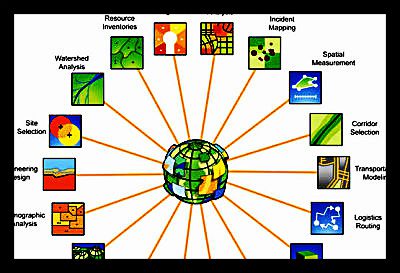
GIS_map
If a picture is worth a thousand words, a custom-tailored map which can be manipulated to display the interactions between multiple selected variables must be worth entire books. Geographic Information Systems (GIS) provides this power to the user who understand the language of the software, and this power is especially important to development and aid organizations seeking to maximize their impact.

Unlike conventional cartography, GIS software can exploit social, economic, political, and environmental data to create an image which can then be layered onto the topographic landscape in any way the user desires. The relations between layers, and between data within layers, can then be presented to the viewer in a way that draws attention to the important facts.

This differs fundamentally from the report by presenting information visually, without losing depth in the way that a chart or graph flattens the ethnographic depth of the actual survey informing it.

Geospatial analysis has been used primarily for military purposes in the past, but that situation is already evolving. USAID is deploying geo-analysts in almost every program to give its staff the most useful information possible, going so far as to institute its own geospatial arm, to ensure the best possible use of the existing technology. The United Nations is on a similar path.

A software which was once esoteric and difficult to manage – akin to prototypical PC operating systems – has been streamlined and aestheticized so that with less than a year’s training, anyone can masterfully manage multiple databases with thousands of streams of data into coherent maps.

As with any form of communication and representation, there is a danger of misrepresentation and error. Factors can be ignored or manipulated to produce maps that do not mirror reality, or that fail to bring attention to critical factors. Even if the map is sound, it can still be misused by those with ulterior motives or simple incompetence.

As with all analysis, GIS relies entirely on a substrate of reliable data from which to extrapolate conclusions. Unlike polls, however, GIS data does not require a ‘boots on the ground’ approach – though this can be useful. For many applications, remote sensing, satellite imagery, and tomography are sufficient, meaning that, in many situations, the difficulties of other analytical approaches are evaded.

What is more, with cloud computing becoming nearly universal, a global GIS network, shared by all development agencies, would perpetuate a system whereby an up-to-date cartographic representation of reality would be accessible to those seeking to capitalize on its wealth of information, thereby bridging the gap between those who are able and willing to help – but lack an idea of where to begin or what needs doing – and those who require assistance. GIS transcends language barriers, enabling global cooperation and understanding to tackle pressing issues. In that way, GIS is becoming the universal language of development.

– Alex Pusateri
Sources: Directions Mag, Esri

December 1, 2013
https://borgenproject.org/wp-content/uploads/borgen-project-logo.svg 0 0 Borgen Project https://borgenproject.org/wp-content/uploads/borgen-project-logo.svg Borgen Project2013-12-01 04:30:512017-03-20 13:10:09GIS: The Universal Language of Development
Advocacy, Developing Countries, Development, Extreme Poverty, Global Poverty, Inequality, Nonprofit Organizations and NGOs, Poverty Reduction, United Nations

International Day for the Eradication of Poverty

On October 17, International Day for the Eradication of Poverty was celebrated in honor of the goal to end world poverty by 2030. Declared by the UN General Assembly, this annual day serves as a reminder to promote the need to end poverty and destitution in all countries, specifically the developing nations.

In celebration of the International Day for the Eradication of Poverty, Interaction, the NGO alliance, highlighted global programs that are already making an impact. One of these programs, A World Vision program in Zambia, has made health care, education, and psycho-social support accessible for more than a quarter million children. The program has also trained nearly 40,000 volunteers to assist people living with HIV across the country. It is programs like these, indeed, that are helping us reach our goal.

In hope to get to zero percent by our lifetime, NGOs, like Interaction, are essential parts of the solution. “We cannot let over a billion people suffer in extreme poverty when we have the tools and the research to change their lives for the better. … We can do better. We have to do better,” said World Bank president Jim Yong Kim.

So far, the world has made significant progress in working toward this goal. While it is bold, it is undoubtedly achievable. Already, extreme poverty rates are half of what they were two decades ago. In 1990, nearly one in two people in the developing world lived in “extreme poverty” or on less than $1.25 a day. Today, this number is about one in five. Because of the help of many institutions, government and nongovernment organizations alike, we have been able to make immense developments. Still, it is not enough. The International Day for the Eradication of Poverty recognizes these groups that have made all the difference through these years and even further, motivates people to help take those next few steps forward.

– Sonia Aviv

Sources: UN, Global Dimension, Devex
Photo: Times Square

October 26, 2013
https://borgenproject.org/wp-content/uploads/borgen-project-logo.svg 0 0 Borgen Project https://borgenproject.org/wp-content/uploads/borgen-project-logo.svg Borgen Project2013-10-26 04:00:382024-05-25 00:30:06International Day for the Eradication of Poverty
Development, Global Poverty, United Nations

Forum on Sustainable Development, UN Seeks Scientific Input

UN_sustainable_development
Following the termination of the UN Commission on Sustainable Development (CSD), the UN announced recently the formation of the High-Level Political Forum on Sustainable Development. The new organization seeks to supercede the original, which operated from 1992 to 2012, by incorporating more input from the scientific community and providing a centralized, direct interface between data and policy makers.

The CSD was ahead of its time when it was first created, but had major flaws. Representatives from and experts on topics under discussion were not included in key talks, and as such, solutions ranged from impractical to irrelevant.

Members of governing bodies with the power to enact the solutions that were feasible were not always in communication with the CSD, and the measures were not carried through with the necessary vigor. As these problems compounded, the CSD came to be little more than a subsidiary of ECOSOC.

Aware of the numerous faults, the UN commissioned a special report on the CSD’s failures and addressed each of them with the new Forum. Annual meetings will be structured to ensure constant attention, and every four years, an additional meeting will be convened with the aim of attracting the highest level policy makers to streamline the legislative process and make appeals for particular actions directly to those with the power to do so.

In the same vein, the Forum on Sustainable Development will seek greater integration between UN agencies, to give it the greatest possible reach and resources in tackling the broad problems that are its concern.

Most importantly is the UN’s commitment to seek out and utilize the expertise and knowledge of the scientific community. Environmental, biological, and social scientists will be looked to to identify and address the most pressing problems facing the globe; economists will be sought to consider the financial feasibility of all solutions and, indeed, the Forum itself, which will have its own independent budget to operate from.

As a central aegis under which the many (and incontrovertibly convoluted) disciplines can dialogue to tackle issues in the most efficient way, the Forum on Sustainable Development is itself addressing a major issue: the disconnect between information and policy.

Socially segregated from the much of the rest of the world, the work done by scientists remains stuck in academic journals and treatises, unless it contains enough flash and style to appeal to major media outlets. There is an argument to be made that if the general public was aware of the relentless pace of scientific progress in every field, and the severe constraints put on it by a scarcity of funding, favorable sentiment would increase dramatically.

None of this is set to happen until 2016, pending the announcement of post-2015 Development Goals, but the UN appears committed to making the Forum fully equipped to hit the ground running when its objectives are officially announced.

This swift action is a promising sign in an institution which has been known for sluggishness and irrelevance, and is one sign among many recently that Secretary General Ban Ki-moon is aware of the UN’s singular place in the contemporary world and the necessity for it to aim for the greatest possible goals.

If the bureaucratic cogs continue to churn at the same rate, the world will have a beacon of hope come 2016, and the coming years may vindicate the often-criticized Mr. Ban.

– Alex Pusateri

Sources: Sci Dev Net: UN Launches New Sustainable Development, All Africa, Sci Dev Net
Photo: UN News Centre

October 25, 2013
https://borgenproject.org/wp-content/uploads/borgen-project-logo.svg 0 0 Borgen Project https://borgenproject.org/wp-content/uploads/borgen-project-logo.svg Borgen Project2013-10-25 08:43:162016-02-16 11:59:29Forum on Sustainable Development, UN Seeks Scientific Input
Development, Global Poverty, Poverty Reduction, Technology

How Technology can Alleviate Poverty

Technology can Alleviate Poverty
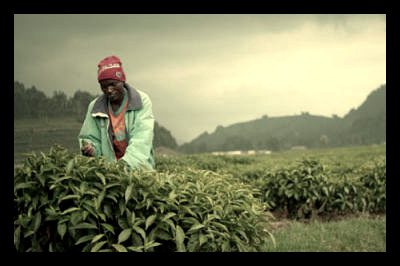
Politicians everywhere are starting to learn the relation between technology and poverty. They are starting to realize that in the growing demand for new innovations in technology plays a part in the solution to poverty. Technology makes not only global communication and information access easier, it also creates infrastructure and development in developing nations, helps discover and get access to alternative resources, and along with all this, helps create many jobs and stimulates the economy.


In Practice: Technology Eradicating Poverty


Chile’s president, Sebastian Pinera, sees the importance of technology and how it can alleviate poverty. The Chilean government has almost doubled their investment in technology. Pinera hopes this will help Chile rise out of poverty by the end of the decade. Various programs in Chile encourage innovation and development of technology. From organizations that give grants to entrepreneurs to organizations that support travel abroad (such as Silicon Valley in California) to see and learn how the hub of technology works, there is a lot of encouragement of creativity and innovation in Chile. Such dedication to eliminating poverty helps not just those living in poverty, but also the national economy, and the world with the possible technological innovations.

Organizations like Practical Action focus on helping those living in extreme poverty with the help of technology. Their concept of technology justice, that technology should be aimed at helping humanity rather than just focused on pleasing the consumers who can afford technology, is something that will greatly benefit those in need. By bringing those living in poverty access to technologies such as electricity, technology that ensures clean water, technology that improves agricultural yield, and preparation for natural disasters, Practical Action gives them opportunities that bring not only financial stability and good health, but also the opportunity to rise out of poverty.

– Aalekhya Malladi

Sources: Bloomberg, Practical Action
Photo: Twisted Sifter

October 23, 2013
https://borgenproject.org/wp-content/uploads/borgen-project-logo.svg 0 0 Borgen Project https://borgenproject.org/wp-content/uploads/borgen-project-logo.svg Borgen Project2013-10-23 18:58:442024-12-13 17:49:45How Technology can Alleviate Poverty
Development, Extreme Poverty, Global Poverty

How do you Accurately Measure Extreme Poverty?

New Definition of Extreme Poverty
We currently measure poverty by quantifying it as existing on less than $1.25 USD a day. Not only is that an inaccurate capture monetarily, the true cost or measure of poverty often exists on parallels outside of the economic benchmarks given to development and poverty.

A recent event organized by ActionAid described the $1.25 a day or less benchmark as a starvation line, not a poverty line.

Lant Pritchett of the Center for Global Development has argued that a single monolithic figure to indicate extreme poverty is not only flawed, but fails the poor on an additional level. He has suggested employing a range to indicate and understand extreme poverty, and identifies those living in the range of existing on $10 USD a day or less as those living in extreme poverty.

The current definition of extreme poverty would suggest that only 6% of the world’s population is poor. Taking Pritchett’s range of $10 a day or less, it expands to 5 billion of the 7 billion global population as living in poverty.

Keeping the definition to an economic understanding still does not account for the reality of what poverty means to those who are trapped in it. Consider how even if someone earns enough to live off $1.25 or even $10 a day, without education and access to healthcare or social services, he or she will still exist in a state of extreme poverty.

Not only do they lack the same access to key factors of human development and progress, they are just as likely to be trapped in its cyclical and systemic nature as someone who is numerically counted as living in extreme poverty.

In wealthy countries, the Pritchett range does not account for many who would obviously be identified as part of the global poor and as living in extreme poverty. The economic measurement of poverty varies between national borders and rests on the value of a given currency.

Those who live in extreme poverty, regardless of the borders surrounding them, face similar risks and lack similar basic needs. If development can be universally measured, why can’t poverty?

The Oxford Poverty and Human Development Initiative along with ministers from several countries in the developing world have pushed for the adoption of a multidimensional poverty index (MPI). An MPI could be utilized alongside economic indicators to present a more dynamic and nuanced understanding of poverty, how to address it, and how to measure progress when combating it.

The MPI would measure individuals and households across a series of parallels, including access to healthcare and education.  This would create a profile of deprivations to not only measure extreme poverty, but to offer a structural analysis of the ways in which people are impoverished and what is being denied to them.

The data would also provide indicators for points of investment in development, so that suffering and the ways in which it can be eliminated can be measured.

– Nina Verfaillie
Feature Writer

Sources: The Guardian, National Review, World Bank
Photo: Awareness Bali

October 23, 2013
https://borgenproject.org/wp-content/uploads/borgen-project-logo.svg 0 0 Borgen Project https://borgenproject.org/wp-content/uploads/borgen-project-logo.svg Borgen Project2013-10-23 04:24:562024-05-25 00:27:26How do you Accurately Measure Extreme Poverty?
Development, Global Poverty

AMK Cambodia

amk_finance
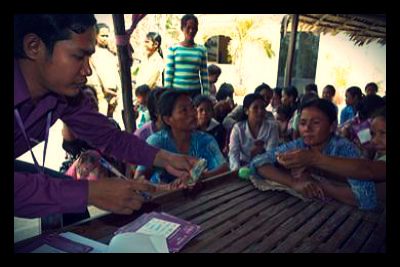
Angkor Mikroheranhvatho (Kampuchea) Co. Ltd. (AMK) began as a part of Concern Worldwide; their initial work was with savings and credit in Cambodia. From the years of 1997 – 1998, this area of work was separated from their broad-spectrum focus in regards to community development programs.

The vision of this branch of the organization was long-term, a Cambodian society in which citizens would have “equal and sufficient economic and social opportunities to improve their standard of living, and where they could positively contribute to the overall development of the country.”

The section had grown significantly by the year 1999, having accumulated a value of about KHR 1,000 million (US $250,000). With this success in mind, Concern Worldwide began the process of making this division an independent legal entity.

In 2001, the name of the organization was set to Thaneakea Ponleu Thmey (TPT) and became an officially recognized Cambodian Microfinance Institution (MFI). As things progressed from 2002 to 2003, the organization finally gained its current title – AMK. It was now independent from Concern Worldwide.

Over the years, AMK has built itself up to be a highly successful organization with a large amount of growth and stability. AMK even weathered the global financial crisis of 2008. It is currently regarded as one of the leading financial institutions in Cambodia.

The staff of AMK keeps ethics high on the priority list. Their Code of Practice includes the following: inclusion of the poor, transparency and honesty in transactions, ethical and respectful behavior, avoidance of over-indebtedness, freedom of choice, reasonable and collaborative collection practices, accessible complaint and problem resolutions, and privacy of client data.

At this moment, AMK provides credit to over 250,000 Cambodian customers (over 2 percent of the entire population and 9 percent of the households in Cambodia). This large number gives AMK Cambodia the ability to exercise great influence over financial inclusion in the country.

Other information regarding the organization’s successes and current assets can be found at AMK Cambodia’s Highlights.

– Samantha Davis

Sources:  AMK Cambodia, Britannica
Photo: Oiko Credit

October 20, 2013
https://borgenproject.org/wp-content/uploads/borgen-project-logo.svg 0 0 Borgen Project https://borgenproject.org/wp-content/uploads/borgen-project-logo.svg Borgen Project2013-10-20 04:00:042024-05-25 00:27:03AMK Cambodia
Developing Countries, Development, Global Poverty, Poverty Reduction

World Bank Risk Management Helps Reduce Poverty

Risk Management World Bank Development Strategy
In its annual World Development Report on October 7, the World Bank stated that successful risk management can be an essential tool for development.

Risk management in development involves policies that can help improve the negative effects of natural disasters, economic shocks or health crises. The World Development Report suggests that poor risk management has resulted in a staggering child mortality rate from injury and illness in low-income countries, one that is nearly 20 times higher than that in high-income countries. These slacking policies have also led to more deaths during droughts in Africa than from any other natural disaster. However, if governments and decision-makers can create more durable environments for managing risks, these trends can indeed be reversed.

“Risk management can save lives, avert economic damages, and can provide resilience and prosperity by allowing people to undertake new endeavors,” said Norman Loayza, director of the 2014 World Development Report.

The World Development Report has been released annual since 1978 and is the World Bank’s most comprehensive publication. As inferred, this year’s report looked at how managing risks can end poverty and increase equity.

As of now, many societies and individuals fail to tackle risk successfully because of lack of resources and information, missing markets and public goods and even more, social exclusion. “We’re advocating a sea change in the way risk is managed,” World Bank President Jim Yong Kim said. “Our new approach calls for individuals and institutions to shift from being ‘crisis fighters’ to proactive and systematic risk managers.”

The report tells us that because most individuals remain ill-equipped to confront many shocks and disasters, they must instead depend on shared action and responsibility. Without coherence from the international community, individuals, states and nations will continually be unable to handle problematic events on their own terms.

– Sonia Aviv

Sources: Global Issues, World Bank, Topix
Photo: World Bank

October 15, 2013
https://borgenproject.org/wp-content/uploads/borgen-project-logo.svg 0 0 Borgen Project https://borgenproject.org/wp-content/uploads/borgen-project-logo.svg Borgen Project2013-10-15 15:08:142014-03-24 12:22:06World Bank Risk Management Helps Reduce Poverty
Development, Health

10 New Health Innovations for Developing Countries

health_care_innovations
The need for new, inexpensive medical innovations in the third world is staggering. These devices must be easy to transport, operate, and most importantly, be affordable, or else they will remain available only to the wealthy. These ten new health care innovations for developing countries will be ready to distribute by 2015 and have the potential to save 1.2 million people.

1. Kit Yamoyo: This medical kit contains anti-diarrheal medicine that is packaged to fit over Coca-Cola bottles.

2. Anti-Shock Garment: The cloth is wrapped around the lower body to alleviate excessive bleeding after childbirth. The garment also prevents blood from leaving the vital organs until the mother can be transported to a healthcare facility.

3. Chlorhexidine: An antiseptic that averts dangerous infections that result from cutting the umbilical cord on a newborn baby.

4. Rotovac: The vaccine prevents rotavirus related diarrhea.

5. The Backpack-PLUS: It provides health workers with the tools to deliver a baby properly.

6. Helping Babies Breathe: Although not technically an invention, the program trains one million “birth attendants” to keep babies breathing after they are born, despite the birthing conditions.

7. Bubble CPAP: This airway device forces oxygen down babies’ lungs to save them from severe respiratory diseases.

8. Phone Oximeter: The mobile phone-based monitoring system is able to report blood oxygen levels for healthcare workers in areas without proper health facilities. The device assists in the diagnosis and treatment of pre-eclampsia and pneumonia.

9. Sayana Press: A contraceptive that comes packaged and pre-filled with a one dose injection system called Uniject.

10. Magnesium sulfate: Reportedly a highly effective treatment for severe pre-eclampsia and eclampsia as well as pregnancy-related conditions.

Another innovation that deserves honorable mention is the winner of a competition funded by Boehringer Ingelheim and organized by HITLAB. The winning device is a wireless pill bottle that benefits people living with diabetes. The pill bottle, in addition to storing medicine, provides data transmission, measuring medicine and sending patient reminders.

These innovations will be vital in the fight against poverty and disease in developing countries.

– Mary Penn

Sources: Business Standard, Boehringer Ingelheim
Photo: Flickr

October 9, 2013
https://borgenproject.org/wp-content/uploads/borgen-project-logo.svg 0 0 Borgen Project https://borgenproject.org/wp-content/uploads/borgen-project-logo.svg Borgen Project2013-10-09 11:29:472024-12-13 17:49:4210 New Health Innovations for Developing Countries
Development, Global Poverty

Posner Center for International Development

Posner_Center_International_Development
The Posner Center for International Development, located in Denver, Colorado, is an organization that displays the convergence of over 30 companies working together to help create better living conditions for the world’s poor while also addressing environmental issues. These companies work together to come up with creative and innovative solutions that can help those in poverty while also staying environmentally friendly. While these individual companies already create positive impact, their collaboration can only significantly boost the results.

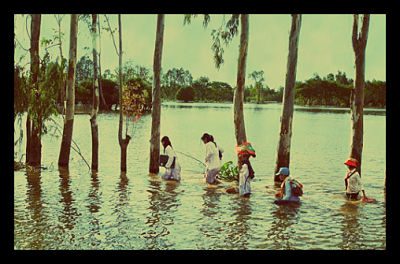
Bridges to Prosperity is one of the organizations that has joined the Posner Center for International Development. Bridges to Prosperity plans and builds bridges over rivers all over the world. While building a bridge over a river may seem like a small development, it can be life altering. In villages with little transportation, most of the world’s poor depend on walking to reach their destinations. Bridges give them a safe means of transport, whether it is to school, a hospital, to work, etc. So far, Bridges to Prosperity has had projects in South America, Asia, Africa, and Central America.

Another such organization is Nokero, short for “no kerosene.” Nokero’s attempt to eliminate kerosene lights that are harmful to the environment is ambitious but possible. They hope to replace these kerosene lamps with solar lights, which are energy efficient and environmentally friendly. Engineers at Nokero have also developed a solar powered cell phone charger. Such valuable technology is affordably priced and cost effective.

Nokero and Bridges to Prosperity are just two of the 35 organizations working at the Posner Center for International Development. Whether it’s with seemingly simple solutions like building bridges to make transportation easier, or with life changing technologies that bring power to a neighborhood, these organizations’ attempts to change the world are indeed powerful and inspiring. Their collaborative efforts will only result in bigger and better ideas and innovations for the future.

– Aalekhya Malladi

Sources: The Denver Post, Posner Center for International Development, Bridges to Prosperity, Nokero
Photo: Hosted

October 5, 2013
https://borgenproject.org/wp-content/uploads/borgen-project-logo.svg 0 0 Borgen Project https://borgenproject.org/wp-content/uploads/borgen-project-logo.svg Borgen Project2013-10-05 04:55:212024-06-05 01:53:38Posner Center for International Development
Development, Economy, Foreign Aid, Foreign Policy, Global Poverty

What is the OECD?

OECD_policies_
What is the OECD?

In short: OECD stands for Organization for Economic Co-operation and Development. It is an international economic organization whose mission is to “promote policies that will improve the economic and social well-being of people around the world.”

A little more detail: In the beginning, the OECD was actually named the OEEC – the Organization for European Economic Co-operation. It was founded in April of 1948, with 18 original European participants. The first and original principles of the OEEC were as follows: “Promote cooperation between participating countries and their national production programs for the reconstruction of Europe; Develop intra-European trade by reducing tariffs and other barriers to the expansion of trade; Study the feasibility of creating a customs union or free trade area; Study multi-lateralization of payments; and Achieve conditions for better utilization of labor.”

In 1961, the OEEC became the OECD, and membership was extended to non-European countries. Most OECD members are regarded as “developed countries” with a high human development index. To this day, according to Pierre Tristam at about.com, the OECD remains one of the most cited sources for “economic data and information” because the organization keeps vast databases and “conducts some of the world’s most authoritative analyses and studies on the world economy.”

The OECD said that it provides a forum in which countries can work together to “seek solutions to common problems.” The organization aims to identify good practices and to coordinate “domestic and international policies.” It is committed to democracy and a sustainable market economy. Some of these good practices include taxes and social security, leisure time, school systems and “pension systems” that look after country’s elderly citizens, since the OECD tries to look at issues “that directly affect the lives of ordinary people.”

Its reach extends to the environment, the economy and social issues. The OECD is committed to helping the lives of ordinary people, thus making life harder for those “whose actions undermine a fair and open society,” such as terrorists, unethical businessmen and tax evaders.

The OECD promotes policies designed:

“To achieve the highest sustainable economic growth and employment and a rising standard of living in Member countries, while maintaining financial stability, and thus to contribute to the development of the world economy; to contribute to sound economic expansion in Member as well as nonmember countries in the process of economic development; and to contribute to the expansion of world trade on a multilateral, nondiscriminatory basis in accordance with international obligations.”

As of 2013, the OECD has 34 active member countries, including the United States, and “is in accession talks with the Russian Federation.”

– Alycia Rock

Sources: OECD: About, OECD: Report 2013, Middle East About, OECD
Photo: CIB

October 4, 2013
https://borgenproject.org/wp-content/uploads/borgen-project-logo.svg 0 0 Borgen Project https://borgenproject.org/wp-content/uploads/borgen-project-logo.svg Borgen Project2013-10-04 20:31:102024-12-13 17:49:41What is the OECD?
Page 150 of 163«‹148149150151152›»

Get Smarter

  • Global Poverty 101
  • Global Poverty… The Good News
  • Global Poverty & U.S. Jobs
  • Global Poverty and National Security
  • Innovative Solutions to Poverty
  • Global Poverty & Aid FAQ’s
Search Search

Take Action

  • Call Congress
  • Email Congress
  • Donate
  • 30 Ways to Help
  • Volunteer Ops
  • Internships
  • Courses & Certificates
  • The Podcast
Borgen Project

“The Borgen Project is an incredible nonprofit organization that is addressing poverty and hunger and working towards ending them.”

-The Huffington Post

Inside The Borgen Project

  • Contact
  • About
  • Financials
  • President
  • Board of Directors
  • Board of Advisors

International Links

  • UK Email Parliament
  • UK Donate
  • Canada Email Parliament

Get Smarter

  • Global Poverty 101
  • Global Poverty… The Good News
  • Global Poverty & U.S. Jobs
  • Global Poverty and National Security
  • Innovative Solutions to Poverty
  • Global Poverty & Aid FAQ’s

Ways to Help

  • Call Congress
  • Email Congress
  • Donate
  • 30 Ways to Help
  • Volunteer Ops
  • Internships
  • Courses & Certificates
  • The Podcast
Scroll to top Scroll to top Scroll to top