• Link to X
  • Link to Facebook
  • Link to Instagram
  • Link to TikTok
  • Link to Youtube
  • About
    • About Us
      • President
      • Board of Directors
      • Board of Advisors
      • Financials
      • Our Methodology
      • Success Tracker
      • Contact
  • Act Now
    • 30 Ways to Help
      • Email Congress
      • Call Congress
      • Volunteer
      • Courses & Certificates
      • Be a Donor
    • Internships
      • In-Office Internships
      • Remote Internships
    • Legislation
      • Politics 101
  • The Blog
  • The Podcast
  • Magazine
  • Donate
  • Click to open the search input field Click to open the search input field Search
  • Menu Menu

Archive for category: Development

Information and stories on development news.

Development, Global Poverty, Human Rights

Same-Sex Marriage Laws Around the World

same_sex_couples_marriage
Although recent gains have been made in advancing equality for same-sex couples, the majority of the world’s countries do not have any legislation permitting same-sex marriage. As of 2014, only 16 countries have laws allowing same-sex marriage.  The majority of those countries are in Europe and South America, while the rest of the world struggles to gain ground for this meaningful right.

It is important to note, however, that legal recognition of gay couples varies from country to country and even within countries. Some countries provide full recognition of gay marriage, while other provide for limited civil union status, to even countries that criminalize same-sex marriage such as Uganda.

France legalized gay marriage after much effort and debate in May 2013, becoming the 14th country to do so. Despite more than 60% of France approving of same-sex marriage, the approval of same-sex marriage provoked acts of violence and protests that drew in hundreds of thousands of people from all over the country.

A prior law, the Pacte civile de Soldarité, allowed for civil unions between couples but did not provide the full benefits that marriage brings. Namely, the law did not confer similar treatment under the law for same-sex couples over inheritance issues and parenting rights.

The Netherlands was the first country to grant full legal recognition of same-sex marriage under the law when it passed a bill in 2001. One major difference between the treatment of same-sex couples and heterosexual couples lies in the birth of children. In the Netherlands, the biological father of the child is considered the father while their partner needs to adopt the child in order to obtain a co-parenting status.

In May 2013, a legal body in Brazil, the National Council of Justice, handed down a ruling effectively legalizing gay marriage. The ruling explicitly prohibited government officials from discriminating against same-sex couples by denying them the right to marry. Before this ruling, Brazil allowed for same-sex civil unions through its constitution, which permits “stable unions.” Stable unions gave many same-sex couples the same rights as married heterosexual couples, from the right to joint declaration of income tax, pension, property sharing, and inheritance.

In 2006, South Africa became the only country on the African continent to legalize same-sex marriage when it passed the Civil Union Act. This approval had its roots in the 1997 constitution that was the first to recognize sexual orientation as a basic human right. Despite this progressive legislation, some say homophobia in South Africa continues to be rampant, with famous South African soccer star Eudy Simelane killed in a hate-crime due to her sexual orientation.

– Jeff Meyer

Sources: Council on Foreign Relations, The New York Times
Photo: Illinois Observer

March 12, 2014
https://borgenproject.org/wp-content/uploads/borgen-project-logo.svg 0 0 Borgen Project https://borgenproject.org/wp-content/uploads/borgen-project-logo.svg Borgen Project2014-03-12 04:00:372024-05-26 23:16:30Same-Sex Marriage Laws Around the World
Activism, Development, Economy, Global Poverty

Famous, Rich and Hungry: BBC’s Latest Foray Into Poverty

The BBC is one of the more respected production companies in the world.

It produces such shows as Top Gear, which is an extremely popular show. It also produces a variety of news programs and also many sports programs as well. However, the BBC has, in the past few years, been straying from its normal programming and delving into the area of reality television and poverty. The BBC has aired Famous, Rich and Jobless, Famous, Rich and Homeless, and, most recently, Famous, Rich and Hungry.

The shows are designed to expose the lives of those who live on the fringes of England’s society and air them to the entire nation. In the latest show, Famous, Rich and Hungry, various celebrities in England are sent to live with poor families for a week in order to experience what food poverty really feels like. The show will have such celebrities as Rachel Johnson, the sister of the Mayor of London Boris Johnson.

It will also have Teo Paphitis an extremely successful businessman who is estimated to be worth over 200 million British pounds (roughly $332.26 million.)

The show is produced by Love Productions, who was also behind the production of the other Famous and Rich series. The show’s executive producer, Richard McKerrow, spoke in an interview recently and said, “I am sure there will be the same media storm, because my God, there is a political bun fight about whether people in Britain are currently going hungry.”

There is a plethora of evidence from both scientific and scholarly sources that there is indeed a crises occurring in Europe. The situation in Europe right now calls for a united effort to pass laws and bills that aid in both the economic recovery and aid of getting Europe citizens out from the ever present shadow of poverty.

The austerity measure that are being used by many European counties at the moment in order to lift their economies out from the rubble. The BBC has an opportunity as one of the world’s largest television producers and acclaimed sources of information really to aid those in need.

The BBC should focus on producing quality television that can educate, enrich, and inform its viewers rather than sensationalizing someone’s misfortune by showcasing it as a spectacle to the world. The poor need informed and educated people fighting for them, rather than having their lives made a mockery of.

– Arthur Fuller

Sources: The Guardian TV-Radio Blog, The Guardian Media, The Guardian, Daily Mail
Photo: Daily Mail

March 11, 2014
https://borgenproject.org/wp-content/uploads/borgen-project-logo.svg 0 0 Borgen Project https://borgenproject.org/wp-content/uploads/borgen-project-logo.svg Borgen Project2014-03-11 16:40:362024-05-26 23:19:18Famous, Rich and Hungry: BBC’s Latest Foray Into Poverty
Developing Countries, Development, Economy

More Than Safaris: Kenya’s Rise to Power

Thus far, Kenya’s economy depends largely on tourism, specifically safari tours. Travelers often spend the night in Nairobi, the region’s gateway to business, before their safari adventure. Kenya also benefits from pineapple production–a top five producer worldwide–through exporting both canned pineapple and juice concentrates. But there is much more to the booming country than tourism and agriculture. So what else is special about this east African nation?

Kenya is Young and Friendly

Youths serve as optimists for the future and in Nairobi, they keep the economy going. More than 60% of the population is less than 25 years old. Kenyans tend to be warm-hearted and welcoming to foreigners. While the national language in Swahili, many Kenyans speak English at a high level and are willing to converse with tourists about Kenyan culture.

While Kenya is sophisticated compared to its East African neighbors, the country still suffers from unemployment and poor infrastructure. Many of Kenya’s young cannot get jobs due to a lack of skills and opportunities.

The Diaspora Returns

Waiting an hour and a half for a pizza in Nairobi? Rotesh Doshi would rather not. After studying at the London School of Economics, he pursued work opportunities abroad. When he had the chance to bring United States-based franchise, Naked Pizza, to Nairobi, he took it and ran with it.

Although it is his hometown, Doshi found many challenges to setting up a business in Nairobi, including poor infrastructure, government bureaucracy and a short supply of skilled human labor. “You often ask yourself ‘is it worth it’ when a lot more things go wrong than right,” Doshi said. “But there is nothing else that I would rather be doing right now, especially being part of that growth story in my own country.”

Promising Entertainment Industry

Lupita Nyong’o’s Oscar win for her supporting performance in 12 Years a Slave gives Kenya’s entertainment industry a ray of hope. With 40% of Kenya’s workforce unemployed, and 70% of those being less than 35 years old, successes like Nyong’o’s show young people that they can, in fact, make it in the entertainment sector, which can then boost the economy.

The government hopes to do this through establishing a film school and promoting the entertainment industry as a legitimate avenue for job creation. Kenya looks to Nigeria for inspiration. Nigeria’s film industry, referred to as “Nollywood,” produces about 50 films per week–many more than Hollywood and second only to India’s Bollywood.

Attracting New Businesses

Food processing giant Del Monte set up a Kenyan branch called Cirio Del Monte Kenya to take advantage of the region’s high-yielding pineapple production. In the technology sector, Korean electronics manufacturer Samsung announced plans for a new assembly plant in Nairobi, positioning the city as the East African center of operation.

With businesses like Proctor & Gamble, Pfizer Pharmaceuticals and IBM opening regional hubs in Nairobi comes the opportunity for more employment for the country’s youth. Foreign businesses that are setting up their African headquarters in centrally located Nairobi also benefit local businesses, like Kenya Airways.

– Haley Sklut 

Sources: BBC, How We Made It In Africa, All Africa, US Embassy, Career Nation
Photo: Sida

March 7, 2014
https://borgenproject.org/wp-content/uploads/borgen-project-logo.svg 0 0 Borgen Project https://borgenproject.org/wp-content/uploads/borgen-project-logo.svg Borgen Project2014-03-07 18:57:362024-06-04 03:01:16More Than Safaris: Kenya’s Rise to Power
Children, Developing Countries, Development, Global Poverty

Olympic Youth Development Center Celebrates Third Year

Zambia_Olympics_youth
The International Olympic Committee (IOC) thinks sports are the answer to improving life in developing countries. The IOC’s “Sports for Hope” program provides communities with better opportunities to exercise and learn about the values of Olympism.

The organization believes practicing sports in a safe and welcoming environment has the power to bring hope and positivity to developing countries. Sports have the ability to foster cognitive development, social interactions and community integration. The program involves building multi-functional sports facilities in developing countries.

Besides improving the health of those who participate, the program will also help young athletes actively develop their minds. Other goals of “Sports for Hope” include offering athletes professional training opportunities, organizing sports competitions and providing health services.

The pilot project for the program is in Lusaka, Zambia. In addition to the Olympic Youth Development Center, the project provides community development services, Olympic education, health services and sports administrators’ seminars. The Olympic education covers girls’ empowerment and civic education.

The Center, costing a total of about $10 million, includes outdoor sports fields, indoor multi-purpose courts, a boxing arena, a gym, classrooms, administrative offices, locker rooms and storage rooms. The IOC partnered with the Government of the Republic of Zambia and the National Olympic Committee of Zambia to bring the center to the people of Zambia.

Now in its third year, the Center welcomes about 10,000 children and teenagers each month. The facility offers opportunities for young athletes to train in 16 different sports.

Following the success of The Center in Zambia, the IOC is currently building its second Olympic Youth Development Center, this one in Port-au-Prince, Haiti. The Haitian Center will feature large shaded areas to protect athletes from the heat of the region.

The Centers offer educational classes, including HIV/AIDS programs. Zambia has one of the world’s most devastating HIV/AIDS epidemics; at least one in every seven adults in the country live with HIV. Woman and girls aged 15 years old to 24 years old are most vulnerable to the disease with double the prevalence of men in the same age group. The educational programs on female empowerment focus on positivity, including safe sexual practices to prevent the transmission of HIV/AIDS.

Zambia’s Olympic Youth Development Center is an example of how a sports complex and sports in general, can be so much more than what meets the eye. Zambian Olympian Samuel Matete says, “As an Olympian myself, I look forward to using the Center to provide great opportunities for young people to achieve their dreams.”

– Haley Sklut

Sources: Olympic, Olympic, Olympic Youth Development Center, Avert, YouTube
Photo: Asian Wave Mag

March 7, 2014
https://borgenproject.org/wp-content/uploads/borgen-project-logo.svg 0 0 Borgen Project https://borgenproject.org/wp-content/uploads/borgen-project-logo.svg Borgen Project2014-03-07 04:00:072024-12-13 17:53:51Olympic Youth Development Center Celebrates Third Year
Development

World Bank: Economic Consequences of Discrimination

economic_consequences_discrimination
United States history is rife with racial and sexual discrimination. This history has shown, however, that systematic alienation of particular social groups comes with costly economic consequences.

For example, the 381 days long 1955-1956 Montgomery Bus Boycott, spurred by the arrest of Rosa Parks, reportedly ameliorated 75 percent of the city bus line’s revenue. The damage translated to approximately a loss of $3,500 per day, calculating a total loss of over $1.3 million.

It is no coincidence that as segregation was outlawed, U.S. economic growth accelerated.

Discrimination based on race, gender or sexual orientation in the U.S. business practices are still rampant today. A report from the Center for American Progress revealed the significant costs involved in discriminatory practices—an estimated $64 billion of revenue per year.

On February 24, Ugandan President Yoweri Museveni signed an anti-gay law. The legislation called for a 14-year prison sentence for each initial homosexual act committed and the possibility of life imprisonment for continued homosexual relations.

In response to this discriminatory law, World Bank President Jim Yong Kim has frozen all of the Bank’s loans, totaling $90 million, to Uganda.

Kim has also harnessed the seismic forces of this bold move to address further forms of discrimination worldwide, such as sexism and racial discrimination. He stressed that discrimination in any form is not only destructive in a moral sense, but harbors the growth of economies around the world.

In a recent public statement, Kim used the negative economic impact of he marginalizing women from job opportunities as a key example. In countries with low economic participation from women, a World Bank study revealed income losses of 27 percent in the Middle East and North Africa. The same study showed that raising female employment and entrepreneurship to equal male levels could improve average income by 19 percent in South Asia and 14 percent in Latin America.

Marginalizing people based on gender, race or sexual orientation is destructive to economies. Legislation that aims to alienate potentially some of the most talented and efficient of a country’s or business’s workers is nothing short of self-mutilation on a macro scale. As Kim said, “Eliminating discrimination is not only the right thing to do; it’s also critical to ensure that we have sustained, balanced and inclusive economic growth in all societies — whether in developed or developing nations, the North or the South, America or Africa.”

– Malika Gumpangkum

Sources: The World Bank, HuffPost, Bloomberg, The Washington Post, Robert J. Walker
Photo: Economic Times

March 5, 2014
https://borgenproject.org/wp-content/uploads/borgen-project-logo.svg 0 0 Borgen Project https://borgenproject.org/wp-content/uploads/borgen-project-logo.svg Borgen Project2014-03-05 12:33:072024-12-13 17:50:08World Bank: Economic Consequences of Discrimination
Development, Gender Equality, Violence Against Women

HRW Reports Violence Against Women in Iraq

violence_women_in_iraq
There are many women in Iraq who have faced and continue to face abuse within the Iraqi judiciary system, as outlined in a new report from the Human Rights Watch (HRW). According to the HRW, although both men and women suffer from the severe flaws of the criminal justice system, women suffer a double burden due to their second-class status in Iraqi society.

Iraq has had other allegations challenging its reputation for gender discrimination in the past. During the 1970s, Iraq guaranteed equal rights to women before the law by mandating compulsory education through primary school for both genders and changed labor, employment, and personal laws to grant women greater equality in the workplace, marriage, divorce and inheritance. These advancements were done, however, in order to create loyalty to the ruling government and Baath Party.

After losing the Gulf War, Saddam Hussein tried to boost his power and popularity by embracing Islamic and tribal traditions. This led to the rapid deterioration in social status for women in Iraq, which has only worsened since the Iraq War.

Although there has been some debate in the international community as to the legitimate use of interrogation tactics like water-boarding, the abuses these women sustained seem to have amounted to torture. Nearly all of the women in Iraq that were interviewed by the HRW were handcuffed, kicked, punched, beaten with cables, subjected to electric shocks, and subjected to falaqa, which is the practice of tying someone upside down and beating their feet.

Many also reported being raped and sexually assaulted by security officials who also threatened to do the same to their daughters. After succumbing to torture, these women were forced to sign and fingerprint confessions they could not read, or in some cases, that were just blank pieces of paper.

Although prohibited by both Iraqi and international law, corruption and a lack of government oversight ensures that these abuses continue with no repercussions for the abusers and no relief for the victims. By detaining women without arrest warrants, holding them for indefinite periods before allowing them to see a judge and demanding bribes for their release, the actions of the government are synonymous to kidnapping.

The current situation is also influenced by religious strife, as the vast majority of these women and girls are Sunni and being illegally detained by the Shia-led government solely because of their branch of Islam. The majority of the women interviewed were held for allegedly covering up for crimes committed by male family members, and charged under Iraq’s Anti-Terrorism Law. Many were convicted not by evidence, but based on coerced confessions and testimony from “secret informants.”

The response from Prime Minister Nuri Al-Maliki’s administration has been criminally insufficient. They have yet to begin investigating allegations of abuse, and many government officials have denied that there is a problem, with some even accusing the women of lying. To move past the legacy of corruption left by Saddam Hussein, a greater sense of transparency of and accountability for government procedures could greatly improve the situation.

– Kenneth W. Kliesner

Sources: Human Rights Watch, Al Jazeera
Photo: Aljazeera

March 5, 2014
https://borgenproject.org/wp-content/uploads/borgen-project-logo.svg 0 0 Borgen Project https://borgenproject.org/wp-content/uploads/borgen-project-logo.svg Borgen Project2014-03-05 12:30:442014-03-05 12:30:44HRW Reports Violence Against Women in Iraq
Development, Global Poverty, Politics and Political Attention

Guinea-Bissau: From Independence to Poverty

guinea-bissau_poverty
Guinea-Bissau is one of the poorest nations in the world, ranked 176 out of 187 countries on the United Nations Human Development Index in 2012. With a population of 1.5 million inhabitants, approximately 40 percent are under the age of 14-years old. In many communities, women and girls have limited education and health services.  Many fall victim to forced marriage, exploitation, sexual violence and childhood pregnancy.

Guinea-Bissau has had substantial military and political upheaval since its independence from Portugal in 1974. Shortly after, a military coup appointed Joao Bernardo “Nino” Vieira as its president in 1980. Vieira created a nice path to a multi-party system and market economy, but his regime was characterized by suppressing his political opposition and by purging political rivals.

Throughout the 1980s and 1990s, there were multiple coup attempts against Vieira, but they all failed to cast him out. He was elected as president in the country’s first free elections in 1994 only to be expelled from the country in 1999 after a military mutiny and civil war that started in 1998.

A transitional government turned over power to the opposing leader Kumba Yala after he was elected president in transparent polling in 2000. After only three years in office, Yala ended up being overthrown in a nonviolent military coup in 2003, and Henrique Rosa, a businessman at the time, was sworn in as interim president. Vieira came back to Guinea-Bissau, was re-elected in 2005 and pledged to pursue national reconciliation and economic development, but he was assassinated in 2009.

In an emergency election in June of 2009, Malam Bacai Sanha was elected, but he passed away in 2012 from a pre-existing illness. To determine his successor, there was supposed to be an election in April of 2012, but a military coup prevented it from taking place. Currently, Manuel Serifo Nhamadjo is the transitional president and the transitional government keeps postponing the new presidential election that was supposed to take place two years ago.

All of this political strife has led Guinea-Bissau’s economy to be severely harmed and it has been very difficult for it to recover. A UN human rights expert called out the Guinea-Bissau authorities on February 28 in her visit to the nation to inform them how crucial it is that they help out their own people that are in extreme poverty.  She said the population cannot wait any longer for the transitional state policies to become effective and that the government needs to work to ensure the welfare of future generations, especially those living in abject poverty.

Much of Guinea-Bissau suffers from low levels of school enrollment, illiteracy and unemployment. Development of Guinea-Bissau is mostly dependent on the investment in basic services like health and education.  The country cannot successfully improve the situation of the poor until its framework is improved first.

– Kenneth W. Kliesner

Sources: UN News Centre, The World Factbook
Photo: Tia Mysoa

March 5, 2014
https://borgenproject.org/wp-content/uploads/borgen-project-logo.svg 0 0 Borgen Project https://borgenproject.org/wp-content/uploads/borgen-project-logo.svg Borgen Project2014-03-05 12:13:332024-06-05 01:57:14Guinea-Bissau: From Independence to Poverty
Development, Global Poverty, Poverty Reduction, United Nations

World Poverty on the Decline

world poverty
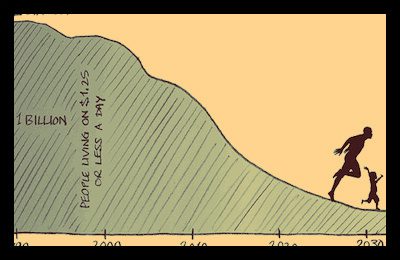
Despite the ever-pressing need to lend aid to the global community, as of recently, world poverty has been declining-presumably from a convergence of factors such as foreign aid, economic stabilization and increased development. As a result of increased investment in education, health, housing and facilitated access to water, living conditions around the globe have undergone improvement, further contributing to the decline in world poverty. According to a development report by the United Nations, the decline of poverty in the developing world was surpassing predictions.

The UN reported that “The world is witnessing an epochal ‘global re-balancing’ with higher growth in at least 40 poor countries helping lift hundreds of millions out of poverty and into a new ‘global middle class.’ Never in history have the living conditions and prospects of so many people changed so dramatically and so fast.” Furthermore, shortly after the release of the UN report, Oxford University conducted a study supporting the UN’s findings.

According to Oxford University’s poverty and human development initiative, poverty in many regions of the world is no longer as acute. According this initiative, acute poverty in the poorest countries could become eliminated within the short time frame of 20 years. Among the countries that could experience the eradication of severe poverty are Nepal, Bangladesh, Ghana, Tanzania and Bolivia.

Furthermore, the method of gauging poverty has also changed. Sabine Alkire and Maria Emma Santos of the UN engendered the Multidimensional Poverty Index (MPI) in 2010 to provide a more compressive measure of poverty. The MPI measures poverty along ten dimensions, such as nutrition, child morality, schooling, cooking fuel, water, sanitation, electricity and infrastructure. Unlike older measures of poverty that overlook critical indicators of poverty such as nutrition and health, the MPI is a far more thorough assessment.

Despite the economic crises of 2008 and 2009 that had catapulted the global economy into a recession, the world’s poorest nations are still able to rapidly approach the achievement of Millennium Development Goals. According to estimates by the World Bank, the global poverty rate is projected to fall below 15 percent by 2015, implying that other consequences of poverty such as hunger and death are also projected to decline significantly.

– Phoebe Pradhan

Sources: The Guardian, UN
Photo: Dreambook

March 5, 2014
https://borgenproject.org/wp-content/uploads/borgen-project-logo.svg 0 0 Borgen Project https://borgenproject.org/wp-content/uploads/borgen-project-logo.svg Borgen Project2014-03-05 10:23:112024-06-05 01:57:13World Poverty on the Decline
Developing Countries, Development, Global Health, Global Poverty, Health

Asthma in Developing Countries

Asthma in Developing Countries
Asthma is often considered a burden of wealthy countries.

However, asthma is a public health problem that is increasing with globalization and modernization. Although diagnoses may differ, symptoms are present across all regions of the world. Sociological, economic and educational differences play a large part in the lack of diagnoses in developing nations.

Despite being a burden to high-income countries, most asthma-related deaths occur in low to middle-income countries.

According to the American Academy of Allergy Asthma and Immunology, an estimated 300 million people worldwide suffer from asthma, with 250,000 annual deaths attributed to the disease.

However, there have not been reliable epidemiological studies to determine the magnitude of the disease in many developing countries.

Asthma is a difficult disease to tackle in developing countries. The limited data and the expense of the problem makes it difficult to diagnose. It typically takes two different asthma exacerbations less than six months apart for an individual to be officially diagnosed by a physician.

This can be troublesome for developing countries who may have as little as one physician for every 10,000 people. Rural locations can also have compliance and testing issues.

However, because the effects of asthma go hand-in-hand with the social determinants of health, impoverished countries are at a high risk for this “wealthy-nation-disease.” Increasing air pollution and rapid industrialization create ideal environments for asthma to thrive. Asthma is further complicated by poor access to medical services and high drug prices.

Chelsea Stone, a student at Drexel University’s School of Public Health, studies epidemiology and focuses on asthma in developing countries.

While Stone was conducting research in Haiti, she found that education was the biggest hurdle to treatment. Only half of the families surveyed in the Croix des Bouquets community knew or had heard of asthma, revealing a large gap in health education. Asthma surveys have to be worded in concise, culturally appropriate ways.

In other asthma studies, rates have varied from 3% to 30% depending on location and survey methods. Solomon, an older man, willingly discussed his asthma with Stone.

Asthma typically beings in early childhood, as it had with Solomon.

He explained that his symptoms are better than they were while living in New York City because of the climate. Solomon was educated on the disease, a significant factor in controlling asthma attacks. Since there wasn’t always medications available or access to the emergency department, Solomon used natural remedies, such as coconut oil, to help with asthma flare-ups.

Asthma education is a substantial part of controlling the disease and preventing asthma-related deaths. Since there is limited data on asthma in developing countries, there is little education as a result.

This lack of research generates an under-diagnosed and under-treated disease.

The burden imposed on individuals and families is restricting and socioeconomically hindering. The availability of modern medications can complicate treatment and management. Even if there is access to an emergency department, they may not be equipped with proper medication to control asthma.

Avoiding asthma triggers all together can also reduce the severity of asthma. Some argue that there is not enough education centered on asthma awareness and signs of these triggers. Asthma education and management should be taught not just at the community level, but also integrated into nation-wide health staff education.

– Maris Brummel

Sources: Elsvier, World Health Organization, NCBI

March 4, 2014
https://borgenproject.org/wp-content/uploads/borgen-project-logo.svg 0 0 Borgen Project https://borgenproject.org/wp-content/uploads/borgen-project-logo.svg Borgen Project2014-03-04 04:00:312024-06-05 01:57:11Asthma in Developing Countries
Development, Global Poverty, Slums

Kathputli Colony: From Slum to Skyscraper

Kathputli Colony
The Kathputli Colony is home to artists, musicians, performers, magicians and poets. It is, however, not home to adequate sanitation facilities, a sufficient water supply or a healthy environment for children.

The Delhi Development Authority (DDA), in partnership with Raheja Developers, a private firm, wants to develop the colony in West Delhi. The DDA sees the colony as a future home for apartment blocks, some of which will be sold to the residents at a reduced rate and others which will be offered at the market price to those who can afford it.

During the construction period, the DDA plans to move Kathputli residents to a transit camp and later rehabilitate them back into the multi-story apartment buildings that will replace their modest homes.

Due to population increases, building vertically will be the most efficient way to accommodate everyone. However, some Kathputli members are fearful that after moving away from their village, they will not be able to come back.

From Kathputli’s population of about 20,000, the government will move 2,800. The DDA chose candidates based on a survey done by a private firm in 2011 which indicated that 2,754 families deserved a place in the redeveloped Kathputli Colony. Those families will be moved to the transit camps and relocated back to the redeveloped colony.

Residents conducted their own survey and put the number of families at 3,200 because they were unhappy at the way the initial survey was conducted. Nonetheless, none of the residents, even those on the DDA’s original list, are prepared to move. Furthermore, representatives from the colony have demanded that a 15-square-yard plot be given to each resident to use how he or she pleases.
The representatives have insisted that if residents are able to develop their own plots from scratch, the true essence of Kathputli Colony will not only remain intact, but the infrastructure will become more developed. Though the Kathputli Colony is seen as a slum by many outsiders, the residents keep the colony alive with their art as well as music and, further, plan to continue their self-sustaining colony without government intervention.

– Haley Sklut

Sources: The Independent: Postcard from Delhi, The Independent: Letter from Asia, Times of India: Kathputli Colony to be Vacated, Times of India: Elders Meet
Photo: Atlas Obscura
March 1, 2014
https://borgenproject.org/wp-content/uploads/borgen-project-logo.svg 0 0 Borgen Project https://borgenproject.org/wp-content/uploads/borgen-project-logo.svg Borgen Project2014-03-01 04:00:132016-02-16 12:07:59Kathputli Colony: From Slum to Skyscraper
Page 146 of 163«‹144145146147148›»

Get Smarter

  • Global Poverty 101
  • Global Poverty… The Good News
  • Global Poverty & U.S. Jobs
  • Global Poverty and National Security
  • Innovative Solutions to Poverty
  • Global Poverty & Aid FAQ’s
Search Search

Take Action

  • Call Congress
  • Email Congress
  • Donate
  • 30 Ways to Help
  • Volunteer Ops
  • Internships
  • Courses & Certificates
  • The Podcast
Borgen Project

“The Borgen Project is an incredible nonprofit organization that is addressing poverty and hunger and working towards ending them.”

-The Huffington Post

Inside The Borgen Project

  • Contact
  • About
  • Financials
  • President
  • Board of Directors
  • Board of Advisors

International Links

  • UK Email Parliament
  • UK Donate
  • Canada Email Parliament

Get Smarter

  • Global Poverty 101
  • Global Poverty… The Good News
  • Global Poverty & U.S. Jobs
  • Global Poverty and National Security
  • Innovative Solutions to Poverty
  • Global Poverty & Aid FAQ’s

Ways to Help

  • Call Congress
  • Email Congress
  • Donate
  • 30 Ways to Help
  • Volunteer Ops
  • Internships
  • Courses & Certificates
  • The Podcast
Scroll to top Scroll to top Scroll to top