• Link to X
  • Link to Facebook
  • Link to Instagram
  • Link to TikTok
  • Link to Youtube
  • About
    • About Us
      • President
      • Board of Directors
      • Board of Advisors
      • Financials
      • Our Methodology
      • Success Tracker
      • Contact
  • Act Now
    • 30 Ways to Help
      • Email Congress
      • Call Congress
      • Volunteer
      • Courses & Certificates
      • Be a Donor
    • Internships
      • In-Office Internships
      • Remote Internships
    • Legislation
      • Politics 101
  • The Blog
  • The Podcast
  • Magazine
  • Donate
  • Click to open the search input field Click to open the search input field Search
  • Menu Menu

Archive for category: Development

Information and stories on development news.

Activism, Developing Countries, Development, Extreme Poverty, Food & Hunger, Food Security, Global Poverty, Poverty Reduction, Technology

Spreading Agricultural Technology to India’s Poor Farmers

India_Technology
It is an accepted fact that poverty is the root cause of malnutrition. Over 42% of the Indian population lives on less than $1.25 a day. However, if farmers could increase their output and earn more from what they already have through the use of innovative technology, food insecurity could decrease and that same dollar and a quarter could go much further.

Technology can help farmers to augment their knowledge of which crops to produce for the best return, find the most effective farming practices and make plans based upon weather forecasts.

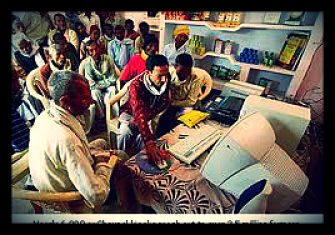
The e-Choupal initiative is one way that technology is being used to give farmers the information they need to be more successful. The aforementioned benefits of technology are all accounted for on the e-Choupal platform, even enabling buyers to come to the farmers instead of having to haul the produce to market, where oftentimes traders manipulate the market in order to exploit the farmers out of their proper earnings.

The initiative also provides access to storage services and agricultural equipment in addition to other important assets for rural farmers. The e-Choupal network has expanded to 6,500 centers synchronizing the efforts of 40,000 villages to produce greater quantities of better produce and profit.

In this same vein of increased technology and higher profits, organic farming is a possible venue poor farmers could explore. Organic produce consistently garner high prices, the demand for which is only rising. The only constraints are the ones that the e-Choupal network is already helping to eradicate, at least in India, including lack of technical expertise and insufficient market knowledge.

Another example of innovative agricultural technology is the use of drip-irrigation, which cuts water use by 40%, and saves the equivalent of 10 million households water expenditures per year. Much in the same way, the e-Choupal initiative has created a network where over 25,000 small farmers have organized a supply chain that has augmented their average annual incomes by a very significant $1,000.

India is a country of fertile lands and capable farmers. Technology is the catalyst that promises to drive the more than 400 million people living on less than $1.25 a day out of poverty.

– Jordan Schunk
Sources: The Huffington Post, New Indian Express, Rural Poverty Portal
Photo: The Fourth Revolution

January 22, 2014
https://borgenproject.org/wp-content/uploads/borgen-project-logo.svg 0 0 Borgen Project https://borgenproject.org/wp-content/uploads/borgen-project-logo.svg Borgen Project2014-01-22 16:07:182015-02-09 14:12:08Spreading Agricultural Technology to India’s Poor Farmers
Developing Countries, Development, Economy, Global Poverty

Venezuelan Economic Spiral

2
Eudomar Tovar is the Central Bank President in Venezuela and has taken the spotlight most recently for blaming a nation-wide blackout on sabotage. Accusations have been made that the Central Bank has been using their gold supply in a deal with Goldman Sachs and Bank of America to increase hard currency.

Tovar vehemently denies that the Central Bank is doing any sort of business with either Goldman Sachs or Bank of America. Henrique Capriles, an opposition leader, claims that Central Bank was involved in a value swap with Goldman Sachs for the equivalent of $2 billion dollars (USD) in gold ounces. Central Bank has also been accused of dealing with Bank of America to pay off debts owed to foreign governments. Tovar denied any such deals and claimed they were unofficial proposals, but did not elaborate or further explain the Bank’s position in regards to these claims.

The main problem is that Venezuela is experiencing a shortage of basic goods, and could potentially use its huge reserves of gold to procure a loan from such companies such as Goldman Sachs or Bank of America. Main Central Bank officials have complained that they are due a huge amount of hard currency from Washington, and that the red tape and delay in receiving this currency is causing inflation and product shortages.

Furthermore, a decrease in oil supply has caused tension on the dollar value, making some think that Venezuela is in desperate need of cash. The value of gold has decreased as well, putting a dent in the net worth of the country’s enormous gold reserves. As it stands, only government channels have access to the dollar due to harsh capital requirements, which often causes delays and bottlenecks day-to-day cash flow.

Leaders of the South American nation do not believe in free market capitalism and have tightly controlled the cash flow for decades. Consequently, the country falls more deeply into poverty every year, while the tyrannical government is not improving the situation.

President Maduro replaced the recently deceased President Chavez, who had a reputation for spending funds that could not be liquidated. Shortages have increased, inflation has risen to 55% and an inside Bank official claimed that Venezuela was indeed conversing with Wall Street. However, all three parties involved had no comment to offer on these claims. The economy is in a downward spiral, encouraged by the fact that stores cannot buy new inventory due to the cost of goods being higher than the retail price.

Questions are circulating about methods of intervention and whether American aid is appropriate, as well as questions regarding the depth of corruption in the Venezuelan government. Basic economics further show that public spending is good for the economy, when business have the right to compete with each other for capital gain.

The absence of a free market suggests that if Bank of America or Goldman Sachs loaned Venezuela the cash they need, it would just be reinvested into a corrupt system and exacerbate the problem. Solutions must involve correcting the dishonest practices of the government and its leaders so that the citizens will not continue to suffer, but instead thrive.

– Kaitlin Sutherby

Sources: Reuters, The Wall Street Journal: The Pope, State and Venezuela, The Wall Street Journal: Blackout
Photo: Vintage 3D

January 18, 2014
https://borgenproject.org/wp-content/uploads/borgen-project-logo.svg 0 0 Borgen Project https://borgenproject.org/wp-content/uploads/borgen-project-logo.svg Borgen Project2014-01-18 04:00:422017-01-11 12:35:54Venezuelan Economic Spiral
Development, Economy, Global Poverty

Myanmar to Reclaim Title “Asian Rice Bowl”

mynamar monkeys
Myanmar makes strides towards reclaiming the title of being the primary source of rice exports, so named the “Asian Rice Bowl,” by doubling its rice production and export.

In fact, Myanmar aims to ship 2.5 million metric tons of rice between 2014-2015 with a targeted increase of 4.8 million tons between the years 2019-2020. In comparison, Myanmar shipped approximately 690,000 tons last year, ranking 9th in the world.

Among Myanmar’s competitors are its neighboring countries: Thailand, Cambodia and Vietnam. In its favor, Myanmar holds vast arable land, a large water supply and labor force, as well as low production costs.

Myanmar’s primary beneficiaries include Russia, as well as a number of other European and African countries. Half of Myanmar’s rice shipment goes towards its largest shipper: China.

However, a key hindrance to Myanmar’s growth concerns the remnants of its past military regime. Myanmar was the largest exporter of rice between 1961-1963.

More importantly, Myanmar’s prime deterrent in reestablishing itself as a large rice exporter is its infrastructure. With almost five decades run by a military junta, Myanmar has since seen little development in mechanization, basic electricity, telephone networks, and facilities such as governmental buildings are severely lacking in computers. From processing and shipment to transport, Myanmar is also lacking in the quality of its ports.

As the nation shrugs off 49 years of dictatorship rule, Myanmar is ready to show the world, particularly foreign investors, that the rules will change. In 2010, pro-democracy and Nobel Peace Prize winner Aung San Suu Kyi was released. Since then, many more political prisoners have been released. Political parties formed and participated in parliamentary elections in 2012 and in the same year, privately owned newspapers were allowed into the country.

Results have come about. Previous economic sanctions by the United States and the European Union have been lifted. The Asian Development Bank, in a bid to jump start the fledgling regime’s economic and social institutions, granted loans to Myanmar. Furthermore, Myanmar recently regained its position in the Association of Southeast Asian Nations (ASEAN).

Despite a history of human rights abuses and ethnic and religious conflicts occurring, Myanmar is implementing necessary changes, starting with rice.

In regards to its citizens, Myanmar’s working sector is heavily tied to the rice industry in which an estimated 70% of the population partakes. Additionally, 13% of Myanmar’s gross domestic product is in the rice industry.

In order to truly be the Asian Rice Bowl, Myanmar must continue to cultivate and foster its existing industry towards creating a surplus of opportunity for its citizens.

– Miles Abadilla

Sources: BBC: Increase in Rice Exports, BBC: Reforms in Burma, Bloomberg, Thomson Reuters: Analysis, Thomson Reuters: ASEAN Chair
Photo: Giphy.com

January 18, 2014
https://borgenproject.org/wp-content/uploads/borgen-project-logo.svg 0 0 Borgen Project https://borgenproject.org/wp-content/uploads/borgen-project-logo.svg Borgen Project2014-01-18 04:00:042017-11-30 13:34:13Myanmar to Reclaim Title “Asian Rice Bowl”
Children, Developing Countries, Development, Education, Family Planning and Contraception, Global Health, Global Poverty, Health, Women & Children

Big Impact of Baby Footprints

baby elephant
In one of the largest countries in Africa, a new program is working to change the outcome of premature births with a simple footprint.  Tanzania is home to an estimated 46,218,000 people who earn an average of $570 per year.  With about one third of its people living below the national poverty line, Tanzania is regarded as a ‘developing country.’  The term ‘developing country’ is described by Princeton as “a nation with a low level of material well-being.”  A common reality in developing countries is the limited or complete lack of access to medical assistance, whether a hospital, pharmaceuticals or a birth attendant.

The latter is an issue that can have devastating consequences.  In low-income countries, about 40% of births are unattended by a trained, medical professional.  Whether or not they are equipped with modern tools and resources, a trained professional is better able to determine the dangers and necessary steps to take before, during, and after birth, especially regarding premature babies.  Of the approximately 10% of infants worldwide born prematurely each year, about one million die, with over 80% of those deaths occurring in South Asia and Sub-Saharan Africa.

At present, Dr. Joanna Schellenberg and a team at Ifakara Health Institute (IHI) in Tanzania are researching a strategy with the potential to have a global impact.  The research began by attempting to solve how to reduce premature infant deaths without requiring entire health systems to be constructed (and funded) first. This is especially important since one of the greatest obstacles facing health care in rural areas is the absence of equipment.  However, the World Health Organization (WHO) estimates that 75% of preterm infant deaths could be prevented without the use of intensive care and modern resources.  Premature infant weights are under 5lb 5oz, yet since scales cannot be assumed to be available, the IHI team came up with another measurement: the size of a baby’s footprint.

Volunteer health workers visit villages with a laminated card picturing two footprints.  The health workers measure infants’ feet against the pictures and determine how to proceed based on their size.  If the infant’s footprint is the same size or larger than the bigger footprint, then the child is not premature.  If the footprint is between the two sizes, it may be premature but not necessarily in danger.

Health workers then proceed with suggestions on how to promote infant health such as holding the child skin-to-skin for warmth, or how to breastfeed effectively.  Finally, if the footprint is smaller than both samples, about 67mm or less, the mother is directed to the nearest health center where the infant can receive potentially life-saving care.

The strategy just described is called “Mtunze Mtoto Mchanga” which translates to “Protect the newborn baby,” a concept that local women have been quick to support.  With the persistent visits and encouragement by the project’s health workers, support has grown into a greater compliance by the public. Though the project will continue for another six months before clear results are available, the team is already poised to implement it throughout Tanzania.

The laminated-card system is not only relatively simple to duplicate, it also demonstrates potential self-sufficiency amongst rural women.  Moreover, once the procedure and subsequent actions are ingrained, the individuals could monitor their babies themselves without the need for health workers help with premature birth testing.

The versatility of the project only heightens anticipation for the results of the study.  If successful, the IHI project could mean saving up to three-quarters of a million infants each year with just a footprint.

– Katey Baker-Smith

Sources: World Health Organization, Princeton University, United Nations Data, The World Bank, BBC
Photo: Giphy.com

January 16, 2014
https://borgenproject.org/wp-content/uploads/borgen-project-logo.svg 0 0 Borgen Project https://borgenproject.org/wp-content/uploads/borgen-project-logo.svg Borgen Project2014-01-16 04:00:062024-05-25 00:51:41Big Impact of Baby Footprints
Development

Top 5 Cities for Development Expansion

In recent years, development organizations have sprung up and taken off swiftly around the globe. Headquarters hot spots dot the map from Southeast Asia to Northern Africa, from Latin America to the Middle East.

It is critical for these growing organizations to establish networks in environments suitable for development expansion; it is an investment that involves careful consideration and strategic planning.  As an aid, experts at Devex compiled a list of the top 5 best cities for development organizations to consider.  Taking factors such as location, demographics, resources and political environment into account, the top cities are as follows:

1. Bangkok, Thailand – Bangkok’s strategic location in the heart of Southeast Asia makes it a prime site for development networks.  Home to the UN Economic and Social Commission for Asia and the Pacific, the capital is already a nucleus for development efforts. Devex experts note that expected economic growth in the area means the city “will be even more of a regional hub” in the future.  Furthermore, Thailand boasts a lower cost of living than neighboring countries and tops the World Bank’s list of easiest countries to do business in for East Asia and the Pacific.

2. Bogota, Colombia – Another high-ranked country for ease of doing business by the World Bank, Colombia is a growing site for both private sector companies and development organizations. The Latin American capital possesses a young and skilled labor force due to the prevalence of universities and libraries. USAID Mission Director for Colombia Peter Natiello praises the city’s potential, claiming “Bogota allows USAID to build partnerships we need to achieve greater impact…with the private sector, NGOs, government institutions, and academia.”

3. Nairobi, Kenya – Africa as a whole is in the middle of a surge of financial and technological growth, with Nairobi at the center.  The Kenyan capital is home to more than 100 major international organizations, including the UK Department for International Development and UN Environment Program. Business analyst Naomy Wanga cites “communications technology, business development services, and the availability of both expertise and business opportunities” as major factors contributing to development success in Nairobi.

4. Amman, Jordan – Despite political tumult in the region, Amman boasts a relatively secure environment; the World Bank ranks it the least corrupt among low and middle-income countries in the Middle East.  Jordan follows an open-border policy and grants myriad public health and education services to the country’s more than 500,000 refugees.  Furthermore, Amman has a young workforce and improving status in health and education.

5. New Delhi, India – As both the world’s largest democracy and fourth-largest economy, India is a hot spot for growing development organizations.  New Delhi boasts a strong NGO community. In addition, the capital city is home to several UN regional offices and more than 140 foreign embassies and commissions focused on overcoming development challenges throughout India and South Asia. Though the South Asian region as a whole is struggling to reach several Millennium Development Goals, New Delhi shows potential for growth; the metropolis features an educated work force with strong English-speaking skills.

Each of these cities offers a unique package to expanding development organizations and demands serious consideration. Other cities Devex experts recommend include Manila, Philippines; Addis Adaba, Ethiopia; Dakar, Senegal; Dhaka, Bangladesh; and Yangon, Myanmar.

– Mallory Thayer

Sources: Devex, World Bank
Photo: Wikipedia

January 11, 2014
https://borgenproject.org/wp-content/uploads/borgen-project-logo.svg 0 0 Borgen Project https://borgenproject.org/wp-content/uploads/borgen-project-logo.svg Borgen Project2014-01-11 17:13:202024-05-26 23:02:23Top 5 Cities for Development Expansion
Development, Technology

IFC Invests in Fluidic Energy Climate-Smart Batteries

Energy is tantamount to the development of poor nations. Several sectors rely on energy — from lighting schools and hospitals, powering farms, manufacturing facilities, maintaining water sanitation plants to keeping emerging businesses afloat. Mobile telecommunications has become a fundamental part of successful business — especially, the business of global development.

IFC, the private sector arm of the World Bank Group, plans to invest $7 million to the clean energy company, Fluidic Energy, which is a company for the research and development of new climate-smart batteries that power cellular phone networks in developing countries. The rechargeable energy sources are promised to be a solution that is both cost-effective and power-efficient. As the technology will reduce costs of powering mobile networks in rural areas, the battery is also a cleaner alternative to diesel generators and lead-acid batteries. In result, it is less damaging to the environment for it leaves a smaller carbon footprint.

The technology is currently used in Indonesia and other South East Asian countries. The hope is that the technology will branch out into the rest of Asia and South America. Fluidic Energy, the Arizona-based company, is a fine example of private businesses working in tandem with The World Bank Group for the common goal of global development.

Providing sustainable energy to telecommunications is a development that is promised to open new frontiers in other sectors where sustainable energy can be a progressive alternative.

– Malika Gumpangkum

Sources: IFCPressRoom, thegef
Photo: Panos

January 11, 2014
https://borgenproject.org/wp-content/uploads/borgen-project-logo.svg 0 0 Borgen Project https://borgenproject.org/wp-content/uploads/borgen-project-logo.svg Borgen Project2014-01-11 04:00:262024-12-13 17:49:46IFC Invests in Fluidic Energy Climate-Smart Batteries
Development, Poverty Reduction

The Quest for Stability in Sudan

Stability
For the region of Sudan and the people who live there, resilience and adversity are far more than just words. They are a waking reality. Sudan has been plagued by decades of war and social unrest resulting in genocide, widespread hunger, a diminishing economy and economic turmoil. In terms of development, Sudan ranks 171 out of 187 countries on the 2013 Humanitarian Development Index. Making matters worse is the ongoing economic loss of oil dependent revenue which has drastically decreased by 75 percent due to the separation of South Sudan. As the economy tanks, so does the food supply in the region, which is in dire need for roughly 2.9 million conflict-affected people in Darfur.

Luckily, rebuilding the country from the inside out seems to be top priority for more than 100 internationally recognized organizations who are trying to raise $1.1 billion for programs in the area which would help approximately 3.1 million people. With roughly half of the population population living below the national poverty line, it’s no wonder how dangerously in need some of the people in the region really are. As one of the top 10 recipients of foreign humanitarian assistance last year, Sudan has been largely dependent on outside assistance to help the country recover and pick itself up when it comes to agriculture and economic opportunity.

Recently, the European Union announced its humanitarian efforts for the 2014 year, which will include aid totaling $20 million, which will be implemented in increments over the next three years in the area and will support food security measurements. With the cooperation of the Food and Agriculture Organization of the United Nations (FAO,) the grant will be incorporated into poverty campaign programs as well as provisions for agricultural technology and seeding. These efforts are in hopes to help recover Sudan’s economy and to encourage agricultural growth in an area where only four percent of arable land is actually cultivated.

Also lending its hand to the efforts in Sudan is the World Food Programme (WFP,) which provides essential food assistance to those most vulnerable in the region for the last 50 years. Starting in 1963, WFP has made Sudan one of the organizations largest operations and has provided food assistance to 3.9 million people. Some of the food assistance that has been contributed include; dried skimmed and whole milk, dried and canned fruits, and vegetable oil from countries such as the United States, Austria, New Zealand, Australia, and Germany. The main goal for the WFP is to promote long-term food security in hopes to build resilient communities in the heart of conflict.

There have been a number of lasting efforts that have been implemented into the region including food voucher programs, the Safe Access to Firewood and Alternative Energy initiative, and the Farmers to Market program which gave local farmers and women a second chance at a normal life. In a country where the future is beginning to brim with potential, it is important to acknowledge the harsh realities and challenges that the Sudanese people face, all for the sake of trying to build a better life and bring stability in Sudan.

– Jeffrey Scott Haley
Feature Writer

Sources: World Food Programme – Sudan, World Food Programme – 50 Years, Sudan Vision Daily, Ahram Online

January 1, 2014
https://borgenproject.org/wp-content/uploads/borgen-project-logo.svg 0 0 Borgen Project https://borgenproject.org/wp-content/uploads/borgen-project-logo.svg Borgen Project2014-01-01 17:46:592024-12-13 17:49:47The Quest for Stability in Sudan
Advocacy, Developing Countries, Development, Economy, Foreign Aid, Foreign Policy, Global Poverty, Government, Human Rights

More than Moved

cars white background
In the midst of international mourning for Nelson Mandela and in an attempt to drive home the message of International Human Rights Day, a Brazilian NGO posed a provocative question on Tuesday, December 10.

A billboard designed by Conectas Human Rights, featured an image of Nelson Mandela and the question, “Do you feel moved by his legacy?” The text then urged the Brazilian population to act upon their emotions and “Do more than be moved.”

This campaign is driven by recent public opinion polls that reveal a negative feeling toward human rights issues in Brazil and support for more stringent laws and regulations.

Respondents to surveys administered across 134 municipalities in June 2013, support the reduction of maximum crime penalties from 18 years of age to 16, based on a belief held by 60% of the sample population that criminality is the result of ‘bad character.’

Moreover, the Datafolha Research Institute released data that reveal 26% of self-identified conservative-leaning respondents believe that homosexuality must be discouraged by society as a whole, whilst 33% believe that poverty is the result of laziness.

These emerging public opinions are linked to a reduction in funding for human rights groups, namely through foreign aid.

Brazil is widely considered to be an emerging market, the country’s role as 2014 World Cup host is evidence of this image but it disguises the fact that a growing economy does not automatically address human rights issues as seen through the need of foreign aid in assisting structural development.

It is estimated that 60% of the country’s NGOs relied on foreign aid for 80% of their budgets in 2003. Between 2008 and 2009 this aid decreased by 30% and again by another 49% in 2010 alone.

Executive Director of the Brazil Human Rights Fund, Ana Araújo, reminds us that Brazil was marked by dictatorship as recently as 30 years ago, a type of legacy that differs greatly from the one being celebrated across the globe on International Human Rights Day 2013.

Araújo argues that domestic support for human rights groups is the next, though not imminent, step, suggesting that emerging powers require more support, not less, to ensure that their emergence is ‘just.’

– Zoë Dean

Sources: Global Voices Online, Universo Online: CNT, Universo Online: Rightist Leanings, Open Democracy

December 22, 2013
https://borgenproject.org/wp-content/uploads/borgen-project-logo.svg 0 0 Borgen Project https://borgenproject.org/wp-content/uploads/borgen-project-logo.svg Borgen Project2013-12-22 14:16:582024-06-04 03:01:13More than Moved
Development

Village Health Works Rebuilds a Burundian Village

village_health_works_burundi
Burundi, a tiny east African nation and one of the world’s five poorest countries, is a landlocked state of 10 million and has witnessed a 12-year civil war that has left more than 300,000 casualties. For any global health organization, the country is an intimidating assignment. However, Seattle physicians Sachita Shah, Kris Sherwood, Joseph Alsberge and Harvard’s Dr. Paul Farmer, founder of Partners in Health, donate their time and medical expertise to Burundians through the nonprofit organization, Village Health Works.

More than 20 years ago, Village Health Works’ founder Deogratias Niyizonkia, fled from a gruesome massacre in a rural hospital in northern Burundi where he was a third-year medical student. Following his escape in 1994, Niyizonkiza fled to New York City, graduated from Columbia University and attended the Harvard School of Public Health. It was there that he met Dr. Farmer, and began working at the PIH in Burundi’s neighbor country, Rwanda. Shortly after, Niyizonkiza returned to Burundi and realized his dream of establishing a rural clinic in his native village of Kigutu in 2007.

The plundered nation of Burundi currently has fewer than 300 physicians and to combat that, shocking health statistics. Wasterborne diseases and lack of sanitation account for one in five deaths and more than 54 percent of children under five suffer from extreme malnutrition. The country also has one of the highest rates of child mortality in the world – nearly 180 out of every 1,000 do not make it to five years old – and the average life expectancy is 50 years old. Most of those deaths are due to infection including diarrheal disease, pneumonia and malaria.

However, Niyizonkiza, Farmer and their team are a blessing amongst all the hunger and disease. “Village Health Works was an idea in my mind for a long time,” said Niyizonkiza. “When I came to the United States, I left Burundi, but it never left my mind. One of those memories was mothers dying in childbirth.” Since its opening in 2007, Village Health Works has treated more than 70,000 patients. In 2012 alone, the clinic saw promising steps forward. It treated more than 22% more patients than the years before, saw a 221% rise in prenatal consultations and a 228% increase in voluntary HIV testing.

The mission that Village Health Works has set out on shows that even a small group can make a large impact. The clinic itself has drawn mass attention and for many outsiders, has put the country of Burundi on the map. The lives that have been saved and the health battles that have been fought are no small victory.

– Sonia Aviv

Sources: Cross Cut, Village Health Works, Wheelock College

December 19, 2013
https://borgenproject.org/wp-content/uploads/borgen-project-logo.svg 0 0 Borgen Project https://borgenproject.org/wp-content/uploads/borgen-project-logo.svg Borgen Project2013-12-19 04:00:112018-02-26 10:35:31Village Health Works Rebuilds a Burundian Village
Developing Countries, Development

Kenya Launches Railway Project Funded by China

On Thursday, November 28, Kenya launched a multi billion-dollar railway project that will link the port city of Mombasa to the capital of Nairobi. The President of Kenya, Uhuru Kenyatta calls the project, “a historic milestone.” Kenyatta told the media, “The project will define my legacy as President of Kenya.” The railway was built by a Chinese state-owned firm called China Road and Bridge Corporation (CRBC), and is funded by the Chinese government. Completion of the first section is estimated within the year 2017.

This is certainly a big deal for Kenya, and for Africa. The current railway in Kenya was built back in the Colonial Era. This project is said to be the nation’s largest infrastructure venture since Kenya’s independence 50 years ago. The new railway comes with economic and China-Kenya relational benefits.

The new transportation addition will impact the people in the region tremendously. This first link of the project, Mombasa to Nairobi, will cut travel time from 15 hours to about 4 hours. Passenger trains will reach a maximum speed of 75 mph.

At the railway launch ceremony, President Kenyatta said, “What we are doing here today will most definitely transform… not only Kenya but the whole eastern African region…east Africa will become a competitive investment destination. A busy growing east Africa is good for us as a country.”

Chinese Ambassador to Kenya, Liu Guangyuan also spoke at the ceremony. He said the railway is a strategic endeavor for Kenya. He noted how railways have powered China’s economy for quite some time.

Deputy Director of the African Department at the International Monetary Fund in Washington, Roger Nord, also explained the impacts this project will have on the east African people. “From an economic point of view, this is quite beneficial, improving both access to global markets and boosting regional trade,” he said.

The railway has allowed a Kenya-China relationship to grow and look toward the future. In regard to the relationship, Guangyaun said, “Kenya is stepping forward…it will be a landmark project for Kenya and east Africa.” In reponse, President Kenyatta praised the Chinese for their support, and felt the Chinese are, “A true friend to Kenya.” Kenyatta pointed out how the Chinese are currently technological leaders when it comes to railway infrastructure. Kenyatta thoroughly thanks the Chinese leaders present at the launch ceremony.

– Laura Reinacher

Sources: FT, Aljazeera, BBC, Global Post
Photo: WUNRN

December 14, 2013
https://borgenproject.org/wp-content/uploads/borgen-project-logo.svg 0 0 Borgen Project https://borgenproject.org/wp-content/uploads/borgen-project-logo.svg Borgen Project2013-12-14 04:00:022024-05-25 00:39:09Kenya Launches Railway Project Funded by China
Page 149 of 163«‹147148149150151›»

Get Smarter

  • Global Poverty 101
  • Global Poverty… The Good News
  • Global Poverty & U.S. Jobs
  • Global Poverty and National Security
  • Innovative Solutions to Poverty
  • Global Poverty & Aid FAQ’s
Search Search

Take Action

  • Call Congress
  • Email Congress
  • Donate
  • 30 Ways to Help
  • Volunteer Ops
  • Internships
  • Courses & Certificates
  • The Podcast
Borgen Project

“The Borgen Project is an incredible nonprofit organization that is addressing poverty and hunger and working towards ending them.”

-The Huffington Post

Inside The Borgen Project

  • Contact
  • About
  • Financials
  • President
  • Board of Directors
  • Board of Advisors

International Links

  • UK Email Parliament
  • UK Donate
  • Canada Email Parliament

Get Smarter

  • Global Poverty 101
  • Global Poverty… The Good News
  • Global Poverty & U.S. Jobs
  • Global Poverty and National Security
  • Innovative Solutions to Poverty
  • Global Poverty & Aid FAQ’s

Ways to Help

  • Call Congress
  • Email Congress
  • Donate
  • 30 Ways to Help
  • Volunteer Ops
  • Internships
  • Courses & Certificates
  • The Podcast
Scroll to top Scroll to top Scroll to top