• Link to X
  • Link to Facebook
  • Link to Instagram
  • Link to TikTok
  • Link to Youtube
  • About
    • About Us
      • President
      • Board of Directors
      • Board of Advisors
      • Financials
      • Our Methodology
      • Success Tracker
      • Contact
  • Act Now
    • 30 Ways to Help
      • Email Congress
      • Call Congress
      • Volunteer
      • Courses & Certificates
      • Be a Donor
    • Internships
      • In-Office Internships
      • Remote Internships
    • Legislation
      • Politics 101
  • The Blog
  • The Podcast
  • Magazine
  • Donate
  • Click to open the search input field Click to open the search input field Search
  • Menu Menu

Archive for category: Development

Information and stories on development news.

Developing Countries, Development, Education, Global Poverty

Shortage in Public School Openings Hinders Education in Argentina

Argentina_school_children
According to the Buenos Aires Minister of Education Esteban Bullrich, 7,000 to 9,000 children aged one and a half months to three years will not be able to attend nursery school in 2014. This number has risen since last year, when 6,700 young children were unable to attend school and receive an education in Argentina.

Parents will either have to pay for a private school or search for other daycares that they are able to afford. Bullrich acknowledge that the Ministry was not able to accomplish and satisfy the expectations of the public.

The shortage of space in public schools and the “failures in the bureaucratic forms of information processing” caused 4,000 students to have to be moved to different schools farther away from their homes, Bullrich claims. This is an issue, particularly because there are no school buses in Argentina, so students have to walk or take some form of public transportation to school each morning.

Those families were initially told that there were vacancies for their students in schools, only to be made aware later that their students had to be removed from the lists.

Bullrich did however highlight that the recently developed online registration process was functioning properly “despite these mistakes.” He stated that although many students were unable to gain spots within the public schools, roughly 100,000 children were able to register and be placed. Statistically speaking, Bullrich says that the system was a success in regards to those who could be placed compared to those who could not.

Bullrich claims that since 2007 more spots have opened up in kindergartens, allowing 20 percent more students to gain an education in Argentina at a young age. There were approximately 45,956 vacancies in 2007 and currently there are 55,607 kindergarten vacancies in Buenos Aires.

The National Education Law and the City Constitution are butting heads regarding a student’s right to begin school. The National Education law states that school attendance is mandatory at the age of four, but the City Constitute claims that at 45 days old a child has the right to begin education.

The City Education Ministry recognizes that, “No government has achieved this so far.”

– Rebecca Felcon

Sources: The Argentina Independent, Country Reports, Buenos Aires Herald
Photo: Carlo Shiller

February 27, 2014
https://borgenproject.org/wp-content/uploads/borgen-project-logo.svg 0 0 Borgen Project https://borgenproject.org/wp-content/uploads/borgen-project-logo.svg Borgen Project2014-02-27 04:00:372024-05-26 23:16:26Shortage in Public School Openings Hinders Education in Argentina
Advocacy, Developing Countries, Development, Disease, Food & Hunger, Food Aid, Food Security, Global Health, Global Poverty, Health, Human Rights, Hunger, Inequality, Sanitation, Water

5 Facts About Hunger in Rwanda

hunger_rwanda
The Republic of Rwanda is a small sovereign state in the Eastern part of Central Africa. Rwanda ranked at 166 of 187 countries on the UNDP Human Development Index in 2011. Rwanda also has the highest population density in the region with 416 people per square kilometer.

Low income, limited natural resources, and food and water insecurity pose a problem for citizens in Rwanda every day. In the years following the Rwandan Genocide in 1994, international rebuilding efforts have been on the ground trying to make sustainable changes to alleviate some of the hunger and water issues.

Here are five facts that explain the state of hunger in Rwanda and how it may change in the coming years:

  1. The 1994 Rwandan Genocide marked the end of the ceasefire signed the year before that stopped the fighting of the Rwandan Civil War. The war began between two ethnic groups the Hutu and Tutsi. The Genocide began when the plane carrying the Hutu supported president Juvenal Habyarimana was shot down and he, along with several other members of the government, were killed. The genocide lasted 100 days and an estimated 800,000 to 1,000,000 people were killed. The fallout from the Rwandan Genocide is the cause for much of the instability in the region that lasts today.
  2. Secondary school attendance in Rwanda is one of the lowest in the world and the literacy rate is 55%.
  3. Approximately 65% of the population has access to safe, clean drinking water
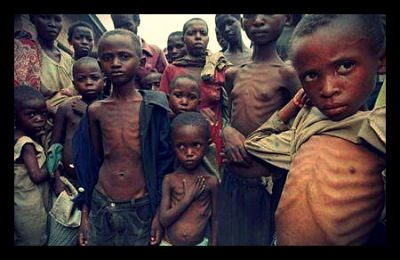
  4. 45% of children under 5 years of age are malnourished.
  5. Over 67,000 refugees from neighboring countries currently reside in Rwanda.

Even though there is a lot of strain on the country today, organizations have been working with the government to address one of Rwanda’s major problems: food insecurity. Agriculture was the country’s main sector before the genocide, and since then, major efforts have been made to make it profitable one more.

Updating the agricultural practices is what the World Food Programme credits with directly reducing the number of food insecure people.

The country hopes that with the reliance on agricultural programs it will improve its GDP to US$900 by the year 2020, up US$380 from its current GDP. Rwanda was also the first country to sign the Comprehensive Africa Agriculture Development Programme (CAADP), meaning that addressing malnutrition and food insecurity is one of the government’s main priorities.

Even though Rwanda still has a long way to go, the government has been taking steps in the right direction that could provide a template for other countries in the region to follow.

– Colleen Eckvahl

Sources: World Food Programme, World Vision
Photo: Rising Continent

February 26, 2014
https://borgenproject.org/wp-content/uploads/borgen-project-logo.svg 0 0 Borgen Project https://borgenproject.org/wp-content/uploads/borgen-project-logo.svg Borgen Project2014-02-26 22:20:472024-05-24 23:56:425 Facts About Hunger in Rwanda
Developing Countries, Development, Refugees and Displaced Persons, United Nations

Typhoon Recovery in the Philippines: 100 Days

typhoon_recovery
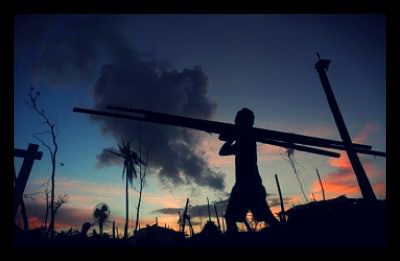
It’s been more than 100 days after the devastating Typhoon Haiyan hit the Philippines and recovery efforts are still underway for those who have been displaced from their homes.

The storm, one of the most powerful ever recorded, hit the archipelago on November 8th, killing nearly 6,000 people and displacing 4.1 million.

A government-led recovery effort, known as the Strategic Response Plan (SRP), was launched following the typhoon. The plan covers the next twelve months and requires $788 million, of which 45% has already been received.

Along with these typhoon recovery efforts, the United Nations and its affiliated partners have helped to provide food, medicine, water, and sanitation and hygiene assistance to those affected. Tents and tarpaulins have been distributed to approximately 500,000 families, but many more still remain without shelter.

UN Humanitarian Coordinator for the Philippines, Luiza Carvalho notes that, “the need for durable shelter for millions of people whose homes were damaged or destroyed is critical.”

In Tacloban, a city of 250,000, major typhoon recovery efforts have been underway to pump money back into the local economies. Coconut farmers and fishermen represent the backbone of the economy in this area but their livelihoods have been severely threatened by the storm. In response, the UN development programme has recently implemented both short-term and long-term plans to help farmers get back on their feet.

Oxfam has noted that the Filipino government has been slow to deliver funds for agricultural and reconstruction support.

Thanks to generous donor contributions, great things have been achieved in the relief phase of the recovery effort. In the coming weeks, it is critical that the international community continues to provide support to those whose lives have been devastated by Typhoon Haiyan.

In a recent UN statement, Carvalho noted, “the Filipino people should be commended for the pace of progress that we have seen in the first 100 days. But we cannot afford to be complacent.”

– Mollie O’Brien

Sources: The Guardian, UN
Photo: Aljazeera

February 26, 2014
https://borgenproject.org/wp-content/uploads/borgen-project-logo.svg 0 0 Borgen Project https://borgenproject.org/wp-content/uploads/borgen-project-logo.svg Borgen Project2014-02-26 22:20:022024-06-05 01:57:11Typhoon Recovery in the Philippines: 100 Days
Advocacy, Developing Countries, Development, Global Poverty, Human Rights, Inequality, Nonprofit Organizations and NGOs, Violence Against Women, Women, Women & Children

Conditions for Garment Workers in Bangladesh

garment_workers_bangladesh
When people buy from brands like Nike and shop at stores like H&M and Gap, they do not pay much attention to how the products arrived at the stores. In many cases, these clothing products are produced in sweatshops in developing countries like Bangladesh, Cambodia, and Indonesia. Almost half of the population in Bangladesh lives off of less than a dollar a day.

Garment workers in Bangladesh toil day after day under extremely harsh conditions for low wages, sometimes handling dangerous chemicals with their bare hands and inhaling toxic fumes due to poor ventilation in many factories.

In April of 2013, an eight story building in Bangladesh called Rana Plaza collapsed leaving over 100 dead and over 2,000 injured.

The poor conditions of the factory itself and the lack of safety precautions taken to ensure its workers’ well-being were neglected and therefore led to the collapse. In addition to this incident, there has been a history of factory mishaps over the past couple of years in Bangladesh. In November of 2012, the Tazreen garment factory in Bangladesh caught fire and killed 112 of its workers.

At this time, the factory was producing goods for Walmart.

Besides the incidents themselves, it is also important to focus on the working conditions and the violations of human rights that happen daily in factories like these. According to the Institute for Global Labor and Human Rights, workers in the Tazreen factory work 72-81 hours per week. Their salary depends on their sewing skill; senior sewing operators earn at minimum 23 cents per hour and junior sewing operators earn 21 to 22 cents an hour.

As a majority of the workers are women, abuse is common and some are even denied maternity leave — blatant violations of human rights that have been occurring for years. Even after one tragedy, further precautions are not taken to ensure the safety of the workers.

An article from the Daily Mail accounts a Canadian journalist who worked undercover in Bangladesh and witnessed the atrocities of one of the smaller garment factories. She reported that when she first arrived at the sweatshop, a nine-year-old girl named Meem was in charge of training her.

The article also noted that there were “no fire extinguishers, only one exit – the front door – and little more than a hole in the ground, down a rat-infested hall, for the toilet.” These accounts present the harsh reality for many garment workers in Bangladesh.

Violations of human rights are happening elsewhere too—most recently in Cambodia. Workers there have started protesting in the city Phnom Penh for higher wages.

Sometimes people take things for granted because they are easily accessible. Organizations like the Clean Clothes Campaign have been established to spread awareness of this issue and to help those who have been detained for protesting for higher wages and better conditions. By not purchasing products from companies who outsource their work unfairly to other countries, a better future can be created for garment workers whose human rights have been violated.

– Kenneth W. Kliesner

Sources: BBC News, The New York Times 1, The New York Times 2, The Epoch Times
Photo: Demotix

February 26, 2014
https://borgenproject.org/wp-content/uploads/borgen-project-logo.svg 0 0 Borgen Project https://borgenproject.org/wp-content/uploads/borgen-project-logo.svg Borgen Project2014-02-26 22:19:382024-06-04 01:17:34Conditions for Garment Workers in Bangladesh
Development, Global Poverty

U.S. and Russia Clash Over Ukraine

u.s._russia
In a Cold War-style competition between the U.S. and Russia, Ukraine’s ousting of President Viktor Yanukovych insinuates that the West, for now, holds the upper hand. Yet saying so could fuel the Russian fire to turn back the current state of affairs.

The conflict began when Yanukovych refused to sign a free-trade agreement between Ukraine and the E.U., instead leaning on inevitable trade ties with its Russian counterpart to the East. Many Ukrainians did not see the appeal. On February 21, in response to violent protests and backlash, Yanukovych gave up responsibility for his country.

Purporting to support a peaceful transition in Ukraine, President Barack Obama and senior officials discussed the situation with Russian President Vladimir Putin and his aides. The main effort emphasized a multibillion-dollar aid package for Ukraine with the International Monetary Fund. Various governments in the European Union support this endeavor, or at least intend to contribute economically to peace in Ukraine.

Ultimately, the goal is to keep Russia from sending troops into the country. Interference by Russia in order to restore a pro-Russian government in Ukraine would be detrimental to all parties involved. United States national security advisor Susan Rice emphasized on an episode of Meet the Press that Russian interference “would be a grave mistake.” Likewise, British Foreign Secretary William Hague stressed the importance of persuading “Russia that this need not be a zero sum game.”

The U.S. and Russia, according to Rice, share hopes for a unified, independent Ukraine that is capable of exercising freedom amongst its people. Obama and Putin jointly aim to see the agreement of February 21 carried out in peaceful terms. Constitutional reforms, near-term elections and a government to bring together the unified desires of the Ukrainian people shall be implemented in due process. These efforts shall reflect “the will of the Ukrainian people and the interests of the United States and Europe,” said Rice.

While Rice did not mention Russian interests, one might hope that continued violence is not among them. Perhaps diplomacy can win this war.

– Jaclyn Stutz 

Sources: Businessweek, Foreign Policy, New York Times, Wall Street Journal
Photo: BASIC

February 26, 2014
https://borgenproject.org/wp-content/uploads/borgen-project-logo.svg 0 0 Borgen Project https://borgenproject.org/wp-content/uploads/borgen-project-logo.svg Borgen Project2014-02-26 22:18:542024-05-26 23:15:41U.S. and Russia Clash Over Ukraine
Advocacy, Children, Development, Global Poverty, Human Rights

Young Migrants Focus of UN Report

young migrants
On February 14th, the UN Department of Economic and Social Affairs (DESA) released the 2013 World Youth Report, aimed at addressing the significant impact of young migrants on both origin and destination countries. The report also highlights the specific concerns, challenges and successes faced by migrants across the globe.

Whether it be for work, study or family reasons, voluntary migration continues to increase every year. The UN estimates that there are 232 million international migrants worldwide, representing 3.2% of the world’s total population. More than 30% of these migrants are considered youth migrants under the age of 29 and approximately half of these are female.

Youth migration has a significant impact on not only individual lives, but also global economies. Many young migrants leave their country of origin in search of better job opportunities and often send remittances home to benefit their families. These individuals improve their financial situations while engaging in economic transactions that will benefit their destination country.

However, countries of origin often suffer the negative effects of “brain drain,” or human capital flight. This is the process by which professionals, often in the fields of health or education, leave developing countries in search of a higher salary and better living conditions.

The report also goes into detail about the specific struggles and opportunities that young migrants can face.

In the preparatory stage, migrants cited the difficulties they faced in obtaining accurate information about their intended destination, as well as in obtaining needed documents and making travel accommodations.

On arrival, migrants noted experiencing both culture shock and loneliness. Often communication barriers had to be overcome and in the long term, many faced both stereotyping and discrimination.

The report notes some recommendations made by migrants to ease the transition from origin to destination country. Among these is the development of tools to assess the readiness of a migrant and to help facilitate decision-making and planning. They recommended peer-to-peer initiatives, pre-departure orientation programs, and awareness-raising campaigns.

Despite these challenges, many young migrants have become exemplary examples of what can be achieved in the face of adversity.

As the report notes, “their capacity as agents of social change and development should not be underestimated.”

– Mollie O’Brien

Sources: UN News Centre, United Nation Regional Information Centre for Western Europe
Photo: Caritas

February 26, 2014
https://borgenproject.org/wp-content/uploads/borgen-project-logo.svg 0 0 Borgen Project https://borgenproject.org/wp-content/uploads/borgen-project-logo.svg Borgen Project2014-02-26 16:36:442024-06-05 01:57:10Young Migrants Focus of UN Report
Development, Global Poverty

Wealth Gap is Largest in Rich U.S. Cities

wealth gap
According to a study by the the Brookings Institution, the gap between the rich and the poor is the largest in some of the richest American cities. The Associated Press quoted the Brookings study saying, “The economic divides in Atlanta, San Francisco, Washington, New York and Los Angeles are significantly greater than the national average.”

Senior fellow at Brookings Alan Berube said that a relationship exists between inequality and economic success since the aforementioned cities “are home to some of the highest paying industries and jobs in the country.”

Berube argues that many of these cities have a widening gap between rich and poor people due to their public housing and the services that attract low-wage workers. But according to the AP, “the findings come at a delicate moment for the country, still slogging through a weak recovery from the Great Recession.”

The United States is undoubtedly going through some tough times. But how is the country’s income inequality compared to other nations?

The Washington Post claims the way in which income inequality is measured is going through some changes. For many years, economists often relied on the Gini coefficient to measure the income distribution throughout nations. However, others argue the Palma ratio should be adopted instead. Unlike the Gini coefficient, this formula makes it easier to measure the gap between rich and poor people in societies.

The U.S. ranks “well below every other developed society measured,” the Post suggests after analyzing 86 nations with the Palma ratio. “It’s one spot below Nigeria, which has some of the worst political corruption in the world and in 2012 saw nationwide protests over perceived income inequality.

In other words, despite America’s having more economic equality than most of the world, it is still placed “at the bottom end of the developed world.” Nevertheless, of the 50 biggest cities in the U.S., the AP said only 18 of them experienced inequality that was statistically significant since the recession occurred. However, this was largely due to the declining incomes of the poorest residents of these cities.

Allowing this pattern to continue will be detrimental to American societies in the long run. Therefore, to prevent the wealth gap from expanding in prosperous U.S. cities and to avoid the potential dissent that such inequality caused in other global cities, Washington needs to come up with a plan to make America less unequal.

– Juan Campos

Sources: AP, The Washington Post

February 26, 2014
https://borgenproject.org/wp-content/uploads/borgen-project-logo.svg 0 0 Borgen Project https://borgenproject.org/wp-content/uploads/borgen-project-logo.svg Borgen Project2014-02-26 12:33:332024-12-13 17:50:06Wealth Gap is Largest in Rich U.S. Cities
Development

Corporations that Make a Difference

Corporations that make a difference
When reading up on global poverty and matters of social justice, it’s easy to find articles that vilify corporations for their detrimental effects on society. While those businesses certainly do exist, there are also many corporations that make a difference by working for the greater good rather than just their shareholders.

Ranging from the omnipotent Coca-Cola Company to the Swedish powerhouse IKEA, here are a list of corporations that make a difference by using their power and influence to shape a more egalitarian society.

Muhtar Kent of Coca-Cola

Since 2008, Kent has held the role of Chief Executive Officer of Coca-Cola. In his tenure, he has committed the company to achieving water neutrality by 2020, in which “total water use after a development does not exceed the total water use before developing.” Meaning, if new businesses were to spring up where none had existed before, the new tenants would need to employ extreme water efficiency to ensure the same amount of water is being used as prior to the development.

For Coca-Cola, this means recycling and reducing the water its facilities use, as well as harvesting rain water to replenish any diminished supply.

They also hope to distribute the Slingshot, a vapor compression water purification machine which purportedly creates 850 liters of safe drinking water from contaminated sources and uses less power than a hairdryer to operate.

As for why they’re doing it, Kent believes that, “when there’s healthy communities, we have a healthy, sustainable business.” While not the most altruistic of intentions, Kent’s argument echoes the belief that helping developing countries will only increase business for the rest of the United States.

Peter Agnefjäll of IKEA

As the most recently appointed CEO of IKEA, Agnefjäll will continue the furniture company’s race toward high levels of sustainability, both as a means of protecting its future as well as gearing up for the millions of people in poverty they hope to help usher into the middle class.

Chief Sustainability Officer Steve Howard outlined IKEA’s plans to Forbes contributor Peter Kelly-Detwiler, stressing the importance of addressing all areas of sustainability as key to the company’s success.

“We’ve got emissions that have to peak by 2020, and then we need a rapid decline in order to stabilize the climate. And we are building cities like never before “said Howard. “We have resource scarcity and climate change. So you have to say ‘this has to be a transformative agenda.’  Sustainability used to be a ‘nice to do,’ like planting trees, or doing incrementally less bad.  It’s about a mindset.  If you’re trying to reduce impacts here and there, that won’t do –it’s when you go all in that matters.”

Again, while these may not be extremely altruistic goals, the truly philanthropic branch of the company, the IKEA Foundation, created easily assembled shelters for Syrian refugees. Five people may live in each 17.5 square meter house, which include a solar-powered USB port and built-in lamp.

Michael Kowalski of Tiffany & Co.

Michael Kowalski has been CEO of Tiffany & Co. since 1999. As the leader of an influential and high-end jewelry business for fifteen years, Kowalksi considers the power of the Tiffany brand both an “opportunity and responsibility.”

Some of that responsibility takes place in the store, where Kowalksi believes it’s the brand’s duty to deliver ethically sourced jewelry to its patrons, regardless if theythink to ask about the jewelry’s background.

“That promise begins with an assurance that the materials were sourced and crafted responsibly, including the use of recycled precious metals and a focus on mines that minimize impact on the environment and respect human rights,” said Kowalski to Forbes contributor Rahim Kanani. “It also includes an effort to provide economic opportunities beyond mining in developing countries that host mining operations.”

Among those initiatives include IRMA, the Initiative for Responsible Mining Assurance. The project would protect the environment, communities and workers by establishing rigorous standards evaluated by an outside, independent source.

For Kowalksi, Tiffany’s future depends upon a “healthy mining industry.” Like the previous two CEOs, he understands that the continued success of his company and the world depends on greater equality between workers and socially just business practices.

– Emily Bajet

Sources: Forbes, “Muhtar Kent”, Forbes, “IKEA”, Forbes, “CEA of Tiffany & Co.”, The Wall Street Journal, The Telegraph
Photo: Truist

February 25, 2014
https://borgenproject.org/wp-content/uploads/borgen-project-logo.svg 0 0 Borgen Project https://borgenproject.org/wp-content/uploads/borgen-project-logo.svg Borgen Project2014-02-25 17:58:272024-12-13 17:50:05Corporations that Make a Difference
Aid Effectiveness & Reform, Developing Countries, Development, Economy, Foreign Aid, Global Poverty

Facts About U.S. Aid to Israel

U.S._Aid_to_Israel
Since 1997, Israel has received $3.1 billion annually in foreign aid from the United States. The agreement began almost two decades ago, after Israeli Prime Minister Benjamin Netanyahu spoke before a join session of congress to establish a goal for economic independence.

“Israel’s gross domestic product is at about $250 billion a year, and its per capita income is about $33,000 a year.”

Considering the nation’s level of economic development, the aid could be much more beneficial in other areas. The United Nations Human Development Index currently ranks Israel at 16th in the world and life expectancy at birth is at 81 years—two years higher than the United States itself. Israel has also been the top recipient of United States foreign aid for over the past 30 years.

The question therefore arises, how does a developed nation with per capita gross domestic product on the same level as the European Union average, receive the most amount of aid from the United States?

The answer is riddled with politics and is primarily concerned with influence in the Middle East region. The vast majority of U.S. aid to Israel actually goes to supporting Israel’s military.

The U.S. presently funds about one quarter of Israel’s defense budget.

Much of this aid ends up going to the Israel’s weapons industries. Accordingly, it is not the people of Israel who receive the majority of the aid. In fact, “replacing all American aid would cost Israelis about 1 percent of their income per year,” which is a modest figure considering that the funds could be going to developing nations.

Recent polls show that when asked about the U.S. federal budget, U.S. citizens believe that 28 percent of the budget goes to foreign aid and that the percentage ought to be reduced to 10%. In actuality, less than 1 percent of the U.S. budget goes to foreign aid.Tweet this fact

Considering that much of that 1 percent goes to the economically stable nation of Israel, other programs or nations could use the money much more efficiently.

The U.S. and Israel have had a longstanding alliance, which has contributed to their agreement in military funding. However, considering the purpose of foreign aid, contemporary third world nations facing popular suffering and instability have a far greater need for the help.

– Jugal Patel

Sources: Economonitor, Le Monde
Photo: IMEMC

February 24, 2014
https://borgenproject.org/wp-content/uploads/borgen-project-logo.svg 0 0 Borgen Project https://borgenproject.org/wp-content/uploads/borgen-project-logo.svg Borgen Project2014-02-24 12:30:042020-07-31 11:47:26Facts About U.S. Aid to Israel
Aid Effectiveness & Reform, Developing Countries, Development, Economy, Global Poverty

TOMS Shoe Company: Buy a Pair, Give a Pair

Toms_Shoe_Charity
Most people have heard of TOMS shoe company, or even own a pair of TOMS themselves. The shoes are comfortable and casual as well as fashionably cute for everyday wear. In addition, for every pair of shoes purchased from TOMS, another pair is given away to someone in need.

The company has recently been criticized for hurting economies struggling against poverty by taking away business with their shoe give-aways.

A for-profit company, TOMS’s mission is to help societies that are lacking in basic supplies such as shoes. They have announced their plan to produce one third of shoes in the countries in which they donate the extra pair.

Blake Mycoskie, the founder of TOMS shoe company, has stated that the company is looking forward to helping solve more global issues such as clean water, nutrition and education. The company is examining ways to expand their product lines and business model to help further improving the quality of lives of those suffering from poverty around the world.

TOMS website shares how providing shoes to children helps give them the ability to go to school, to work and to participate in their communities without fear of injury and illness that can easily happen with bare feet.

Shoes are a basic need for everyone, and having kids in school, working and being healthy is a huge factor in breaking societies out of poverty.

The TOMS team calculates how many pairs of shoes they sell and match that number in pairs that they will give away.

Partners that operate community health programs in foreign countries work with TOMS to figure out sizes, quantities, and delivery costs. TOMS covers all of the shipping and distribution, and corrects their methods based on feedback from their ‘giving partners’ that are actually working in the societies TOMS donates to.

More and more companies are beginning to realize that making a positive difference in the lives of others is actually a very profitable venture. More than a billion people are living on less than two dollars per day, and that is a huge customer base for a company to cater to.

Viewing the world’s poor as a market share is an innovative and successful way to start a business and simultaneously free people from the cycle of poverty.

The cycle is often perpetuated by illness, malnutrition, unemployment and lack of medical care; these are problems that businesses can solve with new products and services. TOMS is only one of the companies that is thriving in the business world and helping people who really need it every step of the way. Additionally, TOMS personalizes their shoe donations for the different countries they assist. In January 2014, members of the company visited Tanzania and learned that almost half of the residents are under the age of fourteen years old.

This helps them decide types and quantities of shoes to distribute to Tanzania versus another country with alternative statistics. The more successful TOMS becomes, the more people across the globe are receiving shoes and the ability to walk to a better future on their own.

– Kaitlin Sutherby

Sources: The Huffington Post, Toms, Toms Stories
Photo: Forbes

February 23, 2014
https://borgenproject.org/wp-content/uploads/borgen-project-logo.svg 0 0 Borgen Project https://borgenproject.org/wp-content/uploads/borgen-project-logo.svg Borgen Project2014-02-23 04:00:312024-12-13 17:50:04TOMS Shoe Company: Buy a Pair, Give a Pair
Page 147 of 163«‹145146147148149›»

Get Smarter

  • Global Poverty 101
  • Global Poverty… The Good News
  • Global Poverty & U.S. Jobs
  • Global Poverty and National Security
  • Innovative Solutions to Poverty
  • Global Poverty & Aid FAQ’s
Search Search

Take Action

  • Call Congress
  • Email Congress
  • Donate
  • 30 Ways to Help
  • Volunteer Ops
  • Internships
  • Courses & Certificates
  • The Podcast
Borgen Project

“The Borgen Project is an incredible nonprofit organization that is addressing poverty and hunger and working towards ending them.”

-The Huffington Post

Inside The Borgen Project

  • Contact
  • About
  • Financials
  • President
  • Board of Directors
  • Board of Advisors

International Links

  • UK Email Parliament
  • UK Donate
  • Canada Email Parliament

Get Smarter

  • Global Poverty 101
  • Global Poverty… The Good News
  • Global Poverty & U.S. Jobs
  • Global Poverty and National Security
  • Innovative Solutions to Poverty
  • Global Poverty & Aid FAQ’s

Ways to Help

  • Call Congress
  • Email Congress
  • Donate
  • 30 Ways to Help
  • Volunteer Ops
  • Internships
  • Courses & Certificates
  • The Podcast
Scroll to top Scroll to top Scroll to top