• Link to X
  • Link to Facebook
  • Link to Instagram
  • Link to TikTok
  • Link to Youtube
  • About
    • About Us
      • President
      • Board of Directors
      • Board of Advisors
      • Financials
      • Our Methodology
      • Success Tracker
      • Contact
  • Act Now
    • 30 Ways to Help
      • Email Congress
      • Call Congress
      • Volunteer
      • Courses & Certificates
      • Be a Donor
    • Internships
      • In-Office Internships
      • Remote Internships
    • Legislation
      • Politics 101
  • The Blog
  • The Podcast
  • Magazine
  • Donate
  • Click to open the search input field Click to open the search input field Search
  • Menu Menu

Archive for category: Developing Countries

Information and stories about developing countries.

Advocacy, Developing Countries, Development, Disease, Food & Hunger, Food Aid, Food Security, Global Health, Global Poverty, Health, Human Rights, Hunger, Inequality, Sanitation, Water

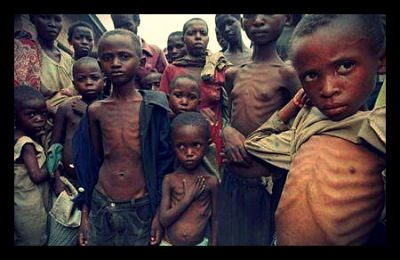
5 Facts About Hunger in Rwanda

hunger_rwanda
The Republic of Rwanda is a small sovereign state in the Eastern part of Central Africa. Rwanda ranked at 166 of 187 countries on the UNDP Human Development Index in 2011. Rwanda also has the highest population density in the region with 416 people per square kilometer.

Low income, limited natural resources, and food and water insecurity pose a problem for citizens in Rwanda every day. In the years following the Rwandan Genocide in 1994, international rebuilding efforts have been on the ground trying to make sustainable changes to alleviate some of the hunger and water issues.

Here are five facts that explain the state of hunger in Rwanda and how it may change in the coming years:

  1. The 1994 Rwandan Genocide marked the end of the ceasefire signed the year before that stopped the fighting of the Rwandan Civil War. The war began between two ethnic groups the Hutu and Tutsi. The Genocide began when the plane carrying the Hutu supported president Juvenal Habyarimana was shot down and he, along with several other members of the government, were killed. The genocide lasted 100 days and an estimated 800,000 to 1,000,000 people were killed. The fallout from the Rwandan Genocide is the cause for much of the instability in the region that lasts today.
  2. Secondary school attendance in Rwanda is one of the lowest in the world and the literacy rate is 55%.
  3. Approximately 65% of the population has access to safe, clean drinking water
  4. 45% of children under 5 years of age are malnourished.
  5. Over 67,000 refugees from neighboring countries currently reside in Rwanda.

Even though there is a lot of strain on the country today, organizations have been working with the government to address one of Rwanda’s major problems: food insecurity. Agriculture was the country’s main sector before the genocide, and since then, major efforts have been made to make it profitable one more.

Updating the agricultural practices is what the World Food Programme credits with directly reducing the number of food insecure people.

The country hopes that with the reliance on agricultural programs it will improve its GDP to US$900 by the year 2020, up US$380 from its current GDP. Rwanda was also the first country to sign the Comprehensive Africa Agriculture Development Programme (CAADP), meaning that addressing malnutrition and food insecurity is one of the government’s main priorities.

Even though Rwanda still has a long way to go, the government has been taking steps in the right direction that could provide a template for other countries in the region to follow.

– Colleen Eckvahl

Sources: World Food Programme, World Vision
Photo: Rising Continent

February 26, 2014
https://borgenproject.org/wp-content/uploads/borgen-project-logo.svg 0 0 Borgen Project https://borgenproject.org/wp-content/uploads/borgen-project-logo.svg Borgen Project2014-02-26 22:20:472024-05-24 23:56:425 Facts About Hunger in Rwanda
Developing Countries, Disease, Food & Hunger, Global Health, Health, Human Rights, Hunger, Inequality, Violence Against Women, War and Violence, Women, Women & Children

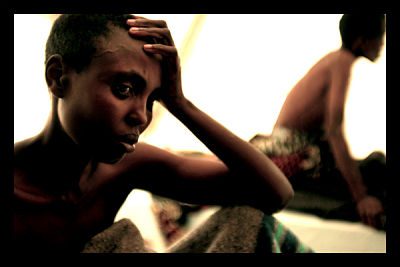
4 Issues Contributing to Malnutrition in the DRC

malnutrition

Kinshasa, DR Congo

The second largest country in Africa and is located in the middle of the continent. Since the 1990’s the country has been in a state of political unrest and civil war which is the cause of many of the other problems in the region, such as disease, food insecurity, human rights violations, and violence against women.

Here are four issues that contribute to nearly 6.3 million people remaining food insecure and over half of the children under the age of 5 classified as malnourished in the DR Congo:

  1. Political instability between the government and several militia and rebel groups. Peace talks have been ongoing since 2009 with little progress. Since 1998, 5.4 million people have been killed. Less than 10% were killed during the fighting, instead the majority have died from diseases and malnutrition.
  2. 2.7 million people are internally displaced within the DRC as a result of the civil war. 1.6 million are in the North and South Kivu region, where much of the heavy militia activity takes place. There are an additional 116,000 refugees from neighboring countries currently living in the DRC. The large number of displaced people and perpetual fighting in the country has led to a high rate of abuse and sexual assault of women and children. It is estimated that 400,000 women between 15 and 49 were raped between 2006 and 2007. This is the equivalent of 48 women being assaulted every hour.
  3. 3.71% of the population lives below the poverty line, meaning they live on less than two dollars per day.
  4. Rampant infectious diseases are common across the country such as Malaria, Dengue Fever, Typhoid Fever, and HIV/AIDS. The ministry of health said that Malaria was their number one disease concern and in 2011 alone there were 4,561,981 reported cases.

– Colleen Eckvahl 

Sources: The International Campaign to Stop Rape and Gender Violence in Conflict , WFP, WHO
Photo: This is Africa

February 26, 2014
https://borgenproject.org/wp-content/uploads/borgen-project-logo.svg 0 0 Borgen Project https://borgenproject.org/wp-content/uploads/borgen-project-logo.svg Borgen Project2014-02-26 22:20:252024-05-26 23:15:194 Issues Contributing to Malnutrition in the DRC
Developing Countries, Development, Refugees and Displaced Persons, United Nations

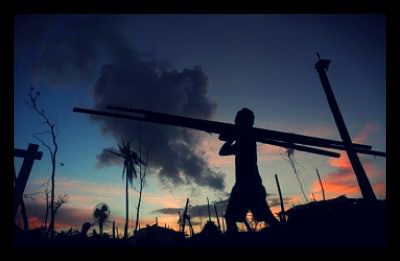
Typhoon Recovery in the Philippines: 100 Days

typhoon_recovery
It’s been more than 100 days after the devastating Typhoon Haiyan hit the Philippines and recovery efforts are still underway for those who have been displaced from their homes.

The storm, one of the most powerful ever recorded, hit the archipelago on November 8th, killing nearly 6,000 people and displacing 4.1 million.

A government-led recovery effort, known as the Strategic Response Plan (SRP), was launched following the typhoon. The plan covers the next twelve months and requires $788 million, of which 45% has already been received.

Along with these typhoon recovery efforts, the United Nations and its affiliated partners have helped to provide food, medicine, water, and sanitation and hygiene assistance to those affected. Tents and tarpaulins have been distributed to approximately 500,000 families, but many more still remain without shelter.

UN Humanitarian Coordinator for the Philippines, Luiza Carvalho notes that, “the need for durable shelter for millions of people whose homes were damaged or destroyed is critical.”

In Tacloban, a city of 250,000, major typhoon recovery efforts have been underway to pump money back into the local economies. Coconut farmers and fishermen represent the backbone of the economy in this area but their livelihoods have been severely threatened by the storm. In response, the UN development programme has recently implemented both short-term and long-term plans to help farmers get back on their feet.

Oxfam has noted that the Filipino government has been slow to deliver funds for agricultural and reconstruction support.

Thanks to generous donor contributions, great things have been achieved in the relief phase of the recovery effort. In the coming weeks, it is critical that the international community continues to provide support to those whose lives have been devastated by Typhoon Haiyan.

In a recent UN statement, Carvalho noted, “the Filipino people should be commended for the pace of progress that we have seen in the first 100 days. But we cannot afford to be complacent.”

– Mollie O’Brien

Sources: The Guardian, UN
Photo: Aljazeera

February 26, 2014
https://borgenproject.org/wp-content/uploads/borgen-project-logo.svg 0 0 Borgen Project https://borgenproject.org/wp-content/uploads/borgen-project-logo.svg Borgen Project2014-02-26 22:20:022024-06-05 01:57:11Typhoon Recovery in the Philippines: 100 Days
Advocacy, Developing Countries, Development, Global Poverty, Human Rights, Inequality, Nonprofit Organizations and NGOs, Violence Against Women, Women, Women & Children

Conditions for Garment Workers in Bangladesh

garment_workers_bangladesh
When people buy from brands like Nike and shop at stores like H&M and Gap, they do not pay much attention to how the products arrived at the stores. In many cases, these clothing products are produced in sweatshops in developing countries like Bangladesh, Cambodia, and Indonesia. Almost half of the population in Bangladesh lives off of less than a dollar a day.

Garment workers in Bangladesh toil day after day under extremely harsh conditions for low wages, sometimes handling dangerous chemicals with their bare hands and inhaling toxic fumes due to poor ventilation in many factories.

In April of 2013, an eight story building in Bangladesh called Rana Plaza collapsed leaving over 100 dead and over 2,000 injured.

The poor conditions of the factory itself and the lack of safety precautions taken to ensure its workers’ well-being were neglected and therefore led to the collapse. In addition to this incident, there has been a history of factory mishaps over the past couple of years in Bangladesh. In November of 2012, the Tazreen garment factory in Bangladesh caught fire and killed 112 of its workers.

At this time, the factory was producing goods for Walmart.

Besides the incidents themselves, it is also important to focus on the working conditions and the violations of human rights that happen daily in factories like these. According to the Institute for Global Labor and Human Rights, workers in the Tazreen factory work 72-81 hours per week. Their salary depends on their sewing skill; senior sewing operators earn at minimum 23 cents per hour and junior sewing operators earn 21 to 22 cents an hour.

As a majority of the workers are women, abuse is common and some are even denied maternity leave — blatant violations of human rights that have been occurring for years. Even after one tragedy, further precautions are not taken to ensure the safety of the workers.

An article from the Daily Mail accounts a Canadian journalist who worked undercover in Bangladesh and witnessed the atrocities of one of the smaller garment factories. She reported that when she first arrived at the sweatshop, a nine-year-old girl named Meem was in charge of training her.

The article also noted that there were “no fire extinguishers, only one exit – the front door – and little more than a hole in the ground, down a rat-infested hall, for the toilet.” These accounts present the harsh reality for many garment workers in Bangladesh.

Violations of human rights are happening elsewhere too—most recently in Cambodia. Workers there have started protesting in the city Phnom Penh for higher wages.

Sometimes people take things for granted because they are easily accessible. Organizations like the Clean Clothes Campaign have been established to spread awareness of this issue and to help those who have been detained for protesting for higher wages and better conditions. By not purchasing products from companies who outsource their work unfairly to other countries, a better future can be created for garment workers whose human rights have been violated.

– Kenneth W. Kliesner

Sources: BBC News, The New York Times 1, The New York Times 2, The Epoch Times
Photo: Demotix

February 26, 2014
https://borgenproject.org/wp-content/uploads/borgen-project-logo.svg 0 0 Borgen Project https://borgenproject.org/wp-content/uploads/borgen-project-logo.svg Borgen Project2014-02-26 22:19:382024-06-04 01:17:34Conditions for Garment Workers in Bangladesh
Advocacy, Developing Countries, Disease, Gender Equality, Global Health, Global Poverty, Health, Human Rights, Violence Against Women, Women

Female Genital Mutilation and Poverty

Female Genital Mutilation
Female Genital Mutilation (FGM) ruins countless lives every day. FGM is a humiliating torturous cutting of the female genitalia carried out by various groups of the community, including health practitioners, elderly people and female relatives. According to the World Health Organization (WHO,) four types of FGM procedures exist:

Clitoridectomy

The partial or complete removal of the clitoris.

Excision

Involves removal or partial removal of clitoris, as well as labia.

Infibulation

Narrowing of the vaginal opening.

Other

This includes other forms of FGM not classified above, such as, burning, piercing or scraping. Any one of these types of FGMs is carried out on a female at any time in her life.

Millions of cases of FGM are reported each year. According to the WHO, over 100 million women and girls have had their human rights violated.

FGM is considered a human rights violation because it inflicts unnecessary pain and harm to unwilling women and girls. Laws against FGM practices have been created in 18 African countries. If caught sentences from three months up to life in prison are given.

There are also 12 industrialized nations that have passed laws criminalizing FGM.

An 8-year-old girl from Djibouti died from the effects of FGM. She was held down by friends and neighbors while a “practitioner” subjected her to FGM. Her clitoris, labia minora and labia majora, all external genitalia, was cut away causing uncontrollable bleeding.

After the procedure was done the girl’s legs were tied shut to promote “healing” and she was refused water because the need to pass urine was thought to introduce bacteria to the wounds. The young helpless girl continued to bleed throughout the evening and sob uncontrollably due to pain.

Eventually the girl was taken to the hospital and given a blood transfusion. Sadly, it was too late to save her life.

FGM has been reported in 28 African countries and various Asian countries.

According to data from the WHO, seven countries: Djibouti, Egypt, Eritrea, Guinea, Mali, Somalia and Sudan have a FGM prevalence rate affecting 85 percent or more women. Other African countries have only slightly lower prevalence rates; a large portion of the African continent has not received FGM rates.

FGM is most likely performed in lower class poverty-stricken communities. This is due in part to the fact women and girls do not know FGM is against the law. Most believe that it is there duty as a woman to have FGM performed and if they refuse, they will be harshly criticized and shamed. These are the ones who are not held down and forced against their will.

Several campaigns to eradicate FGM from the world are underway. One government organization, the United Nations, has been tackling it as one of the world’s Millennium Development Goals. Also, Women against Female Genital Mutilation leads campaigns to increase awareness of FGM laws and harmful health and psychological effects of FGM on females.

The continuation of advocacy for women and girls suffering from Female Genital Mutilation needs to last until FGM prevalence is zero. People should continue to call their congressmen, write their legislature, and advocate for worlds helpless.

Hopefully, through the increased awareness, global campaigns, and laws FGM will become a thing of the past and no female will have to endure torturous inhumane pain ever again.

– Amy Robinson

Sources: World Health Organization, All Africa, WHO, UNICEF, Center for Reproductive Rights
Photo: International Business Times

February 25, 2014
https://borgenproject.org/wp-content/uploads/borgen-project-logo.svg 0 0 Borgen Project https://borgenproject.org/wp-content/uploads/borgen-project-logo.svg Borgen Project2014-02-25 22:21:082024-05-26 23:13:47Female Genital Mutilation and Poverty
Aid Effectiveness & Reform, Developing Countries, Development, Economy, Foreign Aid, Global Poverty

Facts About U.S. Aid to Israel

U.S._Aid_to_Israel
Since 1997, Israel has received $3.1 billion annually in foreign aid from the United States. The agreement began almost two decades ago, after Israeli Prime Minister Benjamin Netanyahu spoke before a join session of congress to establish a goal for economic independence.

“Israel’s gross domestic product is at about $250 billion a year, and its per capita income is about $33,000 a year.”

Considering the nation’s level of economic development, the aid could be much more beneficial in other areas. The United Nations Human Development Index currently ranks Israel at 16th in the world and life expectancy at birth is at 81 years—two years higher than the United States itself. Israel has also been the top recipient of United States foreign aid for over the past 30 years.

The question therefore arises, how does a developed nation with per capita gross domestic product on the same level as the European Union average, receive the most amount of aid from the United States?

The answer is riddled with politics and is primarily concerned with influence in the Middle East region. The vast majority of U.S. aid to Israel actually goes to supporting Israel’s military.

The U.S. presently funds about one quarter of Israel’s defense budget.

Much of this aid ends up going to the Israel’s weapons industries. Accordingly, it is not the people of Israel who receive the majority of the aid. In fact, “replacing all American aid would cost Israelis about 1 percent of their income per year,” which is a modest figure considering that the funds could be going to developing nations.

Recent polls show that when asked about the U.S. federal budget, U.S. citizens believe that 28 percent of the budget goes to foreign aid and that the percentage ought to be reduced to 10%. In actuality, less than 1 percent of the U.S. budget goes to foreign aid.Tweet this fact

Considering that much of that 1 percent goes to the economically stable nation of Israel, other programs or nations could use the money much more efficiently.

The U.S. and Israel have had a longstanding alliance, which has contributed to their agreement in military funding. However, considering the purpose of foreign aid, contemporary third world nations facing popular suffering and instability have a far greater need for the help.

– Jugal Patel

Sources: Economonitor, Le Monde
Photo: IMEMC

February 24, 2014
https://borgenproject.org/wp-content/uploads/borgen-project-logo.svg 0 0 Borgen Project https://borgenproject.org/wp-content/uploads/borgen-project-logo.svg Borgen Project2014-02-24 12:30:042020-07-31 11:47:26Facts About U.S. Aid to Israel
Advocacy, Children, Developing Countries, Extreme Poverty, Global Poverty

Best Solution for Poverty: Investing in Children

L_children_playing_africa
Across the world, almost one billion children live in poverty. They live without access to proper nutrition, healthcare and especially, adequate education. Children are the future of the world and need to be nurtured to become successful. When children grow up with skills to join the labor force, they can help pull their countries out of poverty by making changes in the political system and economy. As educated citizens, they will be less likely to engage in unethical behavior and more likely to have fewer children. As a result, both mortality and overpopulation rates decline.

By ignoring children’s education, developing countries are also unaware of talented children.

Talented children are more likely to achieve higher degrees and may go into professions such as being educators, business leaders and scientific researchers. These children have the capacity to make huge contributions to society in various fields that will support economic growth in developing countries.

Therefore, nurturing talent, both physically and psychologically is a crucial to reducing global poverty in the long run.

From a physical perspective, children need to have a good nutritional diet so that they can be healthy both physically and mentally. Lacking necessary nutrition can cause children to develop slower and not be able to absorb education properly.

From a psychological point of view, education systems and societal support are the keys to unlock the full potential for young talents. Good education gives children the chance to prove themselves as well as the basic knowledge to pursue their dreams. At the same time, support from society gives them the motivation to overcome challenges in their daily life and strive to become a better citizen of the world.

– Phong Pham

Sources: Spring: Gifted Children, Spring, UNICEF
Photo: Borgen Project

February 24, 2014
https://borgenproject.org/wp-content/uploads/borgen-project-logo.svg 0 0 Borgen Project https://borgenproject.org/wp-content/uploads/borgen-project-logo.svg Borgen Project2014-02-24 12:11:012024-12-13 17:53:49Best Solution for Poverty: Investing in Children
Aid Effectiveness & Reform, Developing Countries, Development, Economy, Global Poverty

TOMS Shoe Company: Buy a Pair, Give a Pair

Toms_Shoe_Charity
Most people have heard of TOMS shoe company, or even own a pair of TOMS themselves. The shoes are comfortable and casual as well as fashionably cute for everyday wear. In addition, for every pair of shoes purchased from TOMS, another pair is given away to someone in need.

The company has recently been criticized for hurting economies struggling against poverty by taking away business with their shoe give-aways.

A for-profit company, TOMS’s mission is to help societies that are lacking in basic supplies such as shoes. They have announced their plan to produce one third of shoes in the countries in which they donate the extra pair.

Blake Mycoskie, the founder of TOMS shoe company, has stated that the company is looking forward to helping solve more global issues such as clean water, nutrition and education. The company is examining ways to expand their product lines and business model to help further improving the quality of lives of those suffering from poverty around the world.

TOMS website shares how providing shoes to children helps give them the ability to go to school, to work and to participate in their communities without fear of injury and illness that can easily happen with bare feet.

Shoes are a basic need for everyone, and having kids in school, working and being healthy is a huge factor in breaking societies out of poverty.

The TOMS team calculates how many pairs of shoes they sell and match that number in pairs that they will give away.

Partners that operate community health programs in foreign countries work with TOMS to figure out sizes, quantities, and delivery costs. TOMS covers all of the shipping and distribution, and corrects their methods based on feedback from their ‘giving partners’ that are actually working in the societies TOMS donates to.

More and more companies are beginning to realize that making a positive difference in the lives of others is actually a very profitable venture. More than a billion people are living on less than two dollars per day, and that is a huge customer base for a company to cater to.

Viewing the world’s poor as a market share is an innovative and successful way to start a business and simultaneously free people from the cycle of poverty.

The cycle is often perpetuated by illness, malnutrition, unemployment and lack of medical care; these are problems that businesses can solve with new products and services. TOMS is only one of the companies that is thriving in the business world and helping people who really need it every step of the way. Additionally, TOMS personalizes their shoe donations for the different countries they assist. In January 2014, members of the company visited Tanzania and learned that almost half of the residents are under the age of fourteen years old.

This helps them decide types and quantities of shoes to distribute to Tanzania versus another country with alternative statistics. The more successful TOMS becomes, the more people across the globe are receiving shoes and the ability to walk to a better future on their own.

– Kaitlin Sutherby

Sources: The Huffington Post, Toms, Toms Stories
Photo: Forbes

February 23, 2014
https://borgenproject.org/wp-content/uploads/borgen-project-logo.svg 0 0 Borgen Project https://borgenproject.org/wp-content/uploads/borgen-project-logo.svg Borgen Project2014-02-23 04:00:312024-12-13 17:50:04TOMS Shoe Company: Buy a Pair, Give a Pair
Activism, Advocacy, Developing Countries, Development, Global Poverty, Human Rights

Dalai Lama: Non-Violent Resolve to Tibetan Oppression

dalai_lama_tibetan
The Chinese occupation of Tibet has been going on since 1949. The Tibetan people, under command of the “Holy Dalai Lama,” have been attempting to win back their freedom and independence through non-violent means. All over the world, international networks of people have been forming Tibet Support Groups, or TSG’s.

The support groups serve as initiatives that raise awareness among foreign nations and generate support and aid towards freeing the Tibetan people.

China is trying to gain membership status in the United Nations Human Rights Council, but the nation has an ongoing ban on all information concerning the exiled Dalai Lama. Although the Central Tibetan Administration and the Dalai Lama believe they can solve the oppression of the Tibetans and still remain a part of China, anti-Tibet propaganda still runs throughout the occupied territory.

Jiang Zemin was the former President of China, replaced this year by Xi Jinping. The previous leader was under investigation for crimes against Tibetan humanity, but the Spanish Government abruptly let the situation drop without consequences and the oppression continues today.

In January, the Intercontinental Hotel Group was issued a complaint by Tibetan protesters for plans to construct a high-class hotel in occupied Tibet. The Intercontinental Hotel Group has yet to respond to this complaint, and the U.N. Global Compact (UNGC) has given them a deadline to answer these complaints.

The UNGC was an initiative signed by the Intercontinental Hotel Group that serves to provide the most honorable and genuine business practices among companies with holdings in multiple countries. Another complaint with the hotel in Lhasa involves the main executive being corrupt and participating in fraudulent business dealings, but so far nobody has responded to any of the issues raised.

The Dalai Lama is adamant about solving Tibet’s problems through non violent means as a way to bolster the Buddhist way. The Chinese wants to build water powered projects on the large Brahmaputra river that originates in Tibetan India.

In a business-standard.com article, the Dalai Lama said, “The mighty Brahmaputra river, which flows through many parts of India and southeast Asia, has its origin in Tibet. The success of the Tibetan movement is an imperative for saving the environment and ecology of the entire world.”

The struggle against Tibetan oppression in China, especially its non-violence, is an important lesson for everyone to learn. The Tibetan movement is trying to prove that morally sound, peaceful, and righteous action against an enemy can be just as effective and more beneficial to everyone. Politicians, leaders and citizens on all sides of the earth can use this information to their advantage and take it forward into the future that we all share together.

– Kaitlin Sutherby

Sources: Tibet.net, Business Standard, Tibet.org
Photo: Telegraph

February 15, 2014
https://borgenproject.org/wp-content/uploads/borgen-project-logo.svg 0 0 Borgen Project https://borgenproject.org/wp-content/uploads/borgen-project-logo.svg Borgen Project2014-02-15 09:01:212024-12-13 17:50:02Dalai Lama: Non-Violent Resolve to Tibetan Oppression
Developing Countries, Global Poverty

Carbon Emissions Outsourced to Developing Countries

Carbon_Emissions_Climate_China
Currently, carbon emissions from the burning of fossil fuels are sought to be decreased on an international scale. Nations have been working together to combat the dilemma of climate change by seeking zero emissions technologies and by addressing carbon emissions within their own borders. 

However, what makes it more difficult to calculate carbon emissions by country is that many institutions of wealthy, developed nations have been able to outsource their carbon emissions to developing countries. Apparently, studies show that, “the United States, Japan and many Western European nations have managed to ‘outsource’ more than half of their carbon dioxide emissions and evade responsibility for their share of the climate-altering pollution.”

There is already a prevalence of goods manufactured in developing countries such as India or China and consumed in developed countries in the United States and Europe. Accordingly, the carbon emissions produced by businesses or corporations are often unconsidered in regards to their total impact on the world.

After all, climate change is a global issue rather than regional or domestic. When carbon emissions are outsourced, the only winner is the public image of the institution that outsources the pollution—that is unless it is uncovered.

With prior calculations of carbon emissions categorized by country, analysts say that they will apparently have to be redone to account for all of the outsourcing. The implications are substantial for European countries who—in comparison to the rest of the world—seem to have low carbon emissons. However, with European nations accounting for a large amount of carbon emission outsourcing, the numbers may reflect their status differently.

Additionally, nations such as China and India—who attain international status as some of the highest ranking carbon polluters—see that many of their emissions actually ought to be attributed to institutions of other developed nations, such as the United States.

China and India in particular serve as examples that reflect the problems that may arise from outsourcing outdated and polluting technologies to developing countries in order to boost their economies. While their rapid industrialization has been able to increase their economic status to an extent, it has done much harm to the environment with their heavy reliance on fossil fuels.

Therefore, the issues presented require much more in-depth analysis on the true extent of carbon emissions. Thus it seems as though categorizing emissions by nation are essentially misleading.

– Jugal Patel 

Sources: Carnegie Science, The Guardian, Stanford
Photo: Lemonde

February 14, 2014
https://borgenproject.org/wp-content/uploads/borgen-project-logo.svg 0 0 Borgen Project https://borgenproject.org/wp-content/uploads/borgen-project-logo.svg Borgen Project2014-02-14 11:45:382024-05-26 23:10:00Carbon Emissions Outsourced to Developing Countries
Page 147 of 157«‹145146147148149›»

Get Smarter

  • Global Poverty 101
  • Global Poverty… The Good News
  • Global Poverty & U.S. Jobs
  • Global Poverty and National Security
  • Innovative Solutions to Poverty
  • Global Poverty & Aid FAQ’s
Search Search

Take Action

  • Call Congress
  • Email Congress
  • Donate
  • 30 Ways to Help
  • Volunteer Ops
  • Internships
  • Courses & Certificates
  • The Podcast
Borgen Project

“The Borgen Project is an incredible nonprofit organization that is addressing poverty and hunger and working towards ending them.”

-The Huffington Post

Inside The Borgen Project

  • Contact
  • About
  • Financials
  • President
  • Board of Directors
  • Board of Advisors

International Links

  • UK Email Parliament
  • UK Donate
  • Canada Email Parliament

Get Smarter

  • Global Poverty 101
  • Global Poverty… The Good News
  • Global Poverty & U.S. Jobs
  • Global Poverty and National Security
  • Innovative Solutions to Poverty
  • Global Poverty & Aid FAQ’s

Ways to Help

  • Call Congress
  • Email Congress
  • Donate
  • 30 Ways to Help
  • Volunteer Ops
  • Internships
  • Courses & Certificates
  • The Podcast
Scroll to top Scroll to top Scroll to top