• Link to X
  • Link to Facebook
  • Link to Instagram
  • Link to TikTok
  • Link to Youtube
  • About
    • About Us
      • President
      • Board of Directors
      • Board of Advisors
      • Financials
      • Our Methodology
      • Success Tracker
      • Contact
  • Act Now
    • 30 Ways to Help
      • Email Congress
      • Call Congress
      • Volunteer
      • Courses & Certificates
      • Be a Donor
    • Internships
      • In-Office Internships
      • Remote Internships
    • Legislation
      • Politics 101
  • The Blog
  • The Podcast
  • Magazine
  • Donate
  • Click to open the search input field Click to open the search input field Search
  • Menu Menu

Archive for category: Developing Countries

Information and stories about developing countries.

Children, Developing Countries, Development, Education, Family Planning and Contraception, Global Health, Global Poverty, Health, Women & Children

Big Impact of Baby Footprints

baby elephant
In one of the largest countries in Africa, a new program is working to change the outcome of premature births with a simple footprint.  Tanzania is home to an estimated 46,218,000 people who earn an average of $570 per year.  With about one third of its people living below the national poverty line, Tanzania is regarded as a ‘developing country.’  The term ‘developing country’ is described by Princeton as “a nation with a low level of material well-being.”  A common reality in developing countries is the limited or complete lack of access to medical assistance, whether a hospital, pharmaceuticals or a birth attendant.

The latter is an issue that can have devastating consequences.  In low-income countries, about 40% of births are unattended by a trained, medical professional.  Whether or not they are equipped with modern tools and resources, a trained professional is better able to determine the dangers and necessary steps to take before, during, and after birth, especially regarding premature babies.  Of the approximately 10% of infants worldwide born prematurely each year, about one million die, with over 80% of those deaths occurring in South Asia and Sub-Saharan Africa.

At present, Dr. Joanna Schellenberg and a team at Ifakara Health Institute (IHI) in Tanzania are researching a strategy with the potential to have a global impact.  The research began by attempting to solve how to reduce premature infant deaths without requiring entire health systems to be constructed (and funded) first. This is especially important since one of the greatest obstacles facing health care in rural areas is the absence of equipment.  However, the World Health Organization (WHO) estimates that 75% of preterm infant deaths could be prevented without the use of intensive care and modern resources.  Premature infant weights are under 5lb 5oz, yet since scales cannot be assumed to be available, the IHI team came up with another measurement: the size of a baby’s footprint.

Volunteer health workers visit villages with a laminated card picturing two footprints.  The health workers measure infants’ feet against the pictures and determine how to proceed based on their size.  If the infant’s footprint is the same size or larger than the bigger footprint, then the child is not premature.  If the footprint is between the two sizes, it may be premature but not necessarily in danger.

Health workers then proceed with suggestions on how to promote infant health such as holding the child skin-to-skin for warmth, or how to breastfeed effectively.  Finally, if the footprint is smaller than both samples, about 67mm or less, the mother is directed to the nearest health center where the infant can receive potentially life-saving care.

The strategy just described is called “Mtunze Mtoto Mchanga” which translates to “Protect the newborn baby,” a concept that local women have been quick to support.  With the persistent visits and encouragement by the project’s health workers, support has grown into a greater compliance by the public. Though the project will continue for another six months before clear results are available, the team is already poised to implement it throughout Tanzania.

The laminated-card system is not only relatively simple to duplicate, it also demonstrates potential self-sufficiency amongst rural women.  Moreover, once the procedure and subsequent actions are ingrained, the individuals could monitor their babies themselves without the need for health workers help with premature birth testing.

The versatility of the project only heightens anticipation for the results of the study.  If successful, the IHI project could mean saving up to three-quarters of a million infants each year with just a footprint.

– Katey Baker-Smith

Sources: World Health Organization, Princeton University, United Nations Data, The World Bank, BBC
Photo: Giphy.com

January 16, 2014
https://borgenproject.org/wp-content/uploads/borgen-project-logo.svg 0 0 Borgen Project https://borgenproject.org/wp-content/uploads/borgen-project-logo.svg Borgen Project2014-01-16 04:00:062024-05-25 00:51:41Big Impact of Baby Footprints
Activism, Advocacy, Children, Developing Countries, Gender Equality, Global Poverty, Slums, Women & Children, Women and Female Empowerment

Katherine Boo’s Behind the Beautiful Forevers

christmas
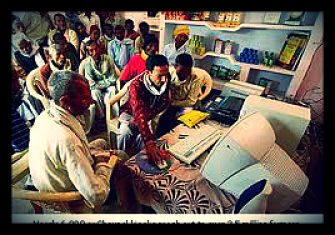
Pulitzer Prize winner Katherine Boo spent years in Annawadi, a slum outside the bustling metropolis of Mumbai, India. With most people living without electricity or stable income in makeshift shelters, the slum stands in stark contrast to the bustling airport and luxury hotels a few miles away.  Over the course of her stay, Boo followed the lives of the people that call Annawadi home. She describes the stories she heard and the events she saw in her book, Behind the Beautiful Forevers.

Boo introduces us to many residents such as Asha, who uses the corrupt political climate to gain influence and prestige. Her daughter, Maniu, studies education and rejects many of the gender norms of her society.

Young children in the village compete for short-term jobs at the Mumbai hotels. These children are easily exploited and often work for next-to-nothing in stressful conditions before collecting garbage to sell as scraps and recyclables.

Corrupt police and vague laws govern the people of Annawadi. Mysterious deaths are not investigated, false accusations fly around without evidence and gangs run the streets. Religious tension is obvious as Muslim families are singled out in the predominately-Hindu village.

Though Boo paints a dark picture of poverty in India, there is still hope. International organizations are moving in to help the people in India, especially since the slums of the region are in dire need of schools, permanent housing and job opportunities. The children of the region believe that one day they will have permanent jobs in Mumbai, own a house and send their own children to school.  The young girls in the village also believe that the time has come to stand up for their rights and make a living for themselves.  Furthermore, children are becoming motivated to stay in school while families plan to move on to permanent housing projects.

– Stephanie Lamm

Sources: Behind the Beautiful Forevers, New York Times
Photo: Vintage 3D

January 15, 2014
https://borgenproject.org/wp-content/uploads/borgen-project-logo.svg 0 0 Borgen Project https://borgenproject.org/wp-content/uploads/borgen-project-logo.svg Borgen Project2014-01-15 17:19:032024-06-04 03:01:13Katherine Boo’s Behind the Beautiful Forevers
Activism, Advocacy, Developing Countries, Global Poverty, Inequality

South Africa After Mandela

Life_After_Mandela
Nelson Mandela’s legacy looms large over South Africa. Everyone agrees that his death will mean something significant to the country, but few agree on what that will be. Mandela’s death on December 5 left behind a country still rife with painful inequalities, an African National Congress no longer bolstered by their famed leader and a new generation of “born frees” who have never known the pain of apartheid though they live its aftermath every day.

South Africa’s Persistent Inequalities

Though it has made huge strides since the end of apartheid, South Africa continues to be plagued by massive racial inequalities.

Between 2001 and 2011, the annual income of black households nearly tripled while percentages of the adult black population who have completed high school have grown and are continuing to do so. There has even been an increasing, if only by a tiny amount, segment of the black population going to college. These numbers seem to represent real progress, until they are compared to the statistics for whites. In 2001, white households earned an average of $17,000 more than black households, a disparity that grew to $30,000 by 2011. And while a national increase in high school education for blacks certainly represents some positive change, this is a barrier most whites, who have also attended college at higher rates than blacks since apartheid ended, will never face. Unemployment among young black people is, furthermore, at an all time high. Such statistics make it clear that there is much more work to be done.

ANC at the Polls

With the loss of its most beloved leader, the ANC may be facing its most competitive election yet. The party, which came to power in 1994 with Mandela’s election, has lost its “biggest link to its glorious past,” says William Gumede, the author of numerous articles and a book concerning the ANC.

Despite his retirement from politics, many believed Mandela to still be involved in the decision-making of the party which allowed the ANC to enjoy the electoral bump that the legend provided for many years. Now, without him, the party is forced to confront the staggering economic and social inequalities that they have done little to eradicate. Not only are allegations of corruption abound, but the party has been unable to both alleviate unemployment and reduce crime rates.

Moreover, it is likely than many disillusioned ANC supporters will accept how far the party has fallen from its revolutionist ideals now that Mandela has died. Some predict that the weakened party will splinter and fall out of favor. As the ANC is proving, in many ways, to be an inadequate leader of South African democracy, perhaps a change is necessary.

Born Frees: The Next Generation of South Africans

The “born frees,” as the generation born at the end or after apartheid are called, make up about 40% of South Africa’s population according to census data. As one of the largest population segments, their views on the future of the country have the potential to change much of it.

Many born frees feel that the best way to honor Mandela is to focus on the future of South Africa instead of dwelling in the past. They often resent the frequent references to apartheid from their elders, wanting instead to address the problems currently facing the country. Such focus tends to cause tension with older generations, who often feel born frees are too distanced from the harsh realities of apartheid to fully understand the importance of political involvement.

“It’s not a matter of not understanding apartheid; it’s just a matter of us having different challenges,” Akhumzi Jezile, a 24-year-old producer, television personality and speaker, told the New York Times. Jezile cited youth-run efforts to reduce drug use, crime and HIV rates as evidence of changing priorities.

A 2012 Reconciliation Barometer report revealed changes in the born free generation that may hint at a changing social and political landscape for South Africa. The report found that born frees were more likely than older generations to be friends and socialize with people of a different race. The report also found that they were less likely to trust political leaders.

– Sarah Morrison

Sources: The Guardian, New York Times: A Test at the Polls, New York Times, New York Times,Real Truth

January 15, 2014
https://borgenproject.org/wp-content/uploads/borgen-project-logo.svg 0 0 Borgen Project https://borgenproject.org/wp-content/uploads/borgen-project-logo.svg Borgen Project2014-01-15 17:16:542024-05-26 23:00:43South Africa After Mandela
Activism, Advocacy, Charity, Developing Countries, Education, Foreign Aid, Foreign Policy, Global Poverty, Philanthropy, Politics and Political Attention, Poverty Reduction

What U.S. Foreign Aid Does for Education

u.s. foreign aid
The money the United States gives out in foreign aid is usually focused in areas of direct impact, such as food to famine-stricken countries or in disaster relief efforts. Some of the lesser-known impacts are in the field of education. In particular, scholarships in foreign aid have allowed students to attend universities throughout the United States which provide more opportunities than would schools in their home countries.

This form of foreign aid is, however, not unique in the Western world. In fact, just as the United States lags behind in the overall standings for foreign aid, it falls behind its Western allies in funding for foreign scholarships as well. France leads all nations in foreign scholarship aid with 18% ($1.36 billion) of its foreign aid going to education, with Germany ranking second, at 13% ($1.05 billion), according to University World News. The U.S., on the other hand, only gives about 3.5% ($805 million) of its own foreign aid to scholarships.

U.S. foreign aid is directed to a number of other areas, but the one area that outshines all others is foreign military assistance. As it stands, roughly 38% ($14 billion) of the U.S. foreign aid budget goes to foreign military assistance. Comparing this to the budget given to foreign scholarships shows where the aims of U.S. foreign policy lie, as they push their military agendas overseas.

The military agenda of the United States looks toward the promotion of friendly democracies in places that the United States does not currently have allies. This can be seen in the United States invasions of Afghanistan and Iraq, as well as support given to rebels in Syria and Libya.  In hopes of achieving these goals, the United States pumps dollars towards friendly foreign militaries in hopes that they will create functioning democracies, with informed and supportive citizens.

In a recent Seattle Times Article, columnist Thomas L. Friedman took aim at this disparity by comparing the figures of foreign military aid for Egypt ($1.3 billion) and foreign scholarships for Jordan ($13.5 million). Friedman wrote that, “merit-based college scholarship program promote(s) tolerance, gender and social equality and critical thinking.”

These qualities of ideal democratic citizens that the United States is hoping to instill in foreigners would be much better fostered through foreign education aid, according to the first-hand observer, Friedman. While Egypt remained in a state of flux during 2013, Jordan has dedicated itself to working towards a state of democracy.  The comparison put forward by Friedman is an informative one for a casual observer, as one can see the benefits that current education aid gives and the potential of what the United States could do.

– Eric Gustafsson

Sources: National Priorities Project, University World News, Seattle Times
Photo: Giphy.com

January 15, 2014
https://borgenproject.org/wp-content/uploads/borgen-project-logo.svg 0 0 Borgen Project https://borgenproject.org/wp-content/uploads/borgen-project-logo.svg Borgen Project2014-01-15 17:15:522017-02-15 10:33:53What U.S. Foreign Aid Does for Education
Activism, Advocacy, Developing Countries, Education, Foreign Aid, Foreign Policy, Global Poverty, Philanthropy

5 Initiatives Fighting Illiteracy

swiss
Technology has, over the years, come to run our lives.  We rely upon it for anything ranging from healthcare innovation to entertainment.  Even now, you are reading this article that was composed on a computer for you to read on the Internet.  No paper newsletter for you.

It is precisely because technology is so all-encompassing for us that the following statistic is so shocking: 1 billion adults worldwide are illiterate.  Equaling 26% of the world’s total adult population, there are 1 billion people who cannot partake in the reading of this article, which you may be taking for granted.

Technology may have made reading and writing even more accessible in our sphere but in lesser-developed areas, such advancements are not seen.  According to UNESCO, the entire continent of Africa has a literacy rate of less than 60%.  Compare that to the 99% literacy rate in the United States.

However, there is hope.

Numerous organizations are dedicated to eradicating illiteracy. Here are five of the top literacy initiatives worldwide.

1. ProLiteracy

The mission statement of ProLiteracy is a perfect articulation of why literacy should be on the forefront of global advocacy: “…when individuals the world over learn to read, write, do basic math and use computers, the more likely they are to lift themselves out of poverty.”  The organization makes literacy for women in developing nations as a top action addressed by their donations and programs.

2. UNESCO Institute for Lifelong Learning

UNESCO hosts a “LitBase” website, which chronicles programs worldwide that have been successful in combating illiteracy.  In doing so, UNESCO hopes to have a go-to source for advocates interested in starting or joining the cause.

3. World Literacy Foundation

The World Literacy Foundation was founded in 2003 to promote awareness of illiteracy by bringing together various government organizations and NGOs.  Some of the programs championed by the Foundation include the Write On English writing competition in Azerbaijan, founding the Centre of Hope computer center in Uganda and the USAID-supported Fantastic Phonics computer program.

4. Global Literacy Project

A key program of the Global Literacy Project is the shipment of books and basic educational supplies throughout Africa, Asia and the Caribbean.  The Walk-for-Literacy fundraiser housed at Rutgers University is run through the Global Literacy Project as well.

5. Literacy.org

Founded at the University of Pennsylvania through a partnership with UNESCO, literacy.org (formerly the Literacy Research Center) has been training teachers and advocates of literacy since 1983.  Literacy.org also hosted a summer intensive workshop in Philadelphia for mid-career professionals interested in promoting literacy in developing countries.

– Taylor Diamond

Sources: ProLiteracy, UNESCO LitBase, World Literacy Project, Global Literacy Project, Literacy.org
Photo: Vintage 3D

January 15, 2014
https://borgenproject.org/wp-content/uploads/borgen-project-logo.svg 0 0 Borgen Project https://borgenproject.org/wp-content/uploads/borgen-project-logo.svg Borgen Project2014-01-15 17:10:482024-05-26 23:03:025 Initiatives Fighting Illiteracy
Activism, Advocacy, Aid Effectiveness & Reform, Developing Countries, Foreign Aid, Foreign Policy, Global Health, Global Poverty, Health

WISH Summit Innovates Health Care Systems

bike
The inaugural World Innovation Summit for Health (WISH) – a conglomeration of entrepreneurs, business leaders, academics and technicians in the health space – convened last week in Qatar. As its title suggests, WISH serves as an arena for international delegates to create and implement innovative, nontraditional solutions to pressing issues in global health.

One participant, Londoner Lord Darzi of Denham (chairman of the Institute of Global Innovation at Imperial College), succinctly stated after the announcement of the Summit that “WISH is about action.”

Qatar’s newfound consideration as a hub for frontline innovation- principally through the Qatar Foundation- landed the nation the opportunity to host the prestigious two-day summit event. The Foundation has been on the forefront of the nation’s “visionary national health strategy” and initiated a first-of-its-kind investigation into the healthcare systems of eight major world players, the United Kingdom, the United States, Spain, Australia, South Africa, Brazil, India and Qatar. The Global Innovation Diffusion Report, unveiled on the second day of the summit, presented a well-researched report card of how each nation fosters and incorporates innovation to maximize health outcomes for their citizens.

The report noted both victories and areas in need of improvement for the eight nations of study. Each succeeded on a general level in identifying and addressing doctors and involving patients in treatment. Unfortunately, however, every nation but Qatar fell short in matching research-based suggestions with real changes in the health care space. Expert assessments of appropriate technological or practical innovations were ignored for different reasons in each nation.

In Spain and the United Kingdom, the least innovative countries, funds for research and development are scarce. New ideas simply cannot get off the ground because there is no money to put wind in their sails to begin with. Australia, Brazil and South Africa were slightly more successful than their European counterparts, but need to improve incentives for academics and policymakers who spread innovation. The United States and India showed a consistent, but small, gap between the ideal and reality.

The thorough case study concluded that innovation is most successfully spurred in the United States when incorporated into (or alongside) insurance and the accompanying payment system. Incidentally, the report identified the rollout of Patient Centered Medical Home (PCMH) programs as a major success for the U.S. in terms of innovation implementation. PCMH programs encourage primary care providers to tailor payments around patient outcomes and foster cooperation between medical and social services.

Moving forward, hot areas of progress for medical innovation will likely include: the application of mobile technology to share and store medical information; policymaking that encourages clinicians to adopt new ways of working; mobilization of resources to allow coordination between researchers and clinicians; and the development of an “innovation culture” and leadership among front line health care professionals.

Delegates representing our nation will undoubtedly confer about these recent findings and carve out a designated space for innovation in discussions touching on future policies, programs and technologies.

– Casey Ernstes

Sources: Gulf News, NCQA, PR News Wire, World Innovation Summit for Health: Home, World Innovation Summit for Health: Global Diffusion
Photo: Vintage 3D

January 14, 2014
https://borgenproject.org/wp-content/uploads/borgen-project-logo.svg 0 0 Borgen Project https://borgenproject.org/wp-content/uploads/borgen-project-logo.svg Borgen Project2014-01-14 09:54:332017-03-20 13:12:30WISH Summit Innovates Health Care Systems
Developing Countries, Global Health, Global Poverty, Health

Obesity Growing in the Developing World

goonies-chunk-o
The number of overweight and obese people has grown drastically in the past 30 years, going from 23% of the world’s population in 1980 to over a third today.  Surprisingly to some, the majority of overweight and obese people live in developing countries.  As globalization spreads and countries go from low-income to middle-income, people have more money to buy food.  At the same time the access to cheap junk food full of fat, carbohydrates, sugar and salt is becoming readily available.  As food gets tastier and cheaper, families in the developing world are consuming these products and steadily gaining weight.

Sharada Keats and Steven Wiggins from the Overseas Development Institute in London released a report on January 3rd called, “Future Diets.”  This report summarizes research that shows that diets are changing.  As incomes rise in the developing world people are moving from a diet that consists of cereals and tubers to diets that include meat, fat and sugar.

The portion sizes that people are eating are also going up.

These changes mean that the price of animal products will go up all over the world while prices for grains will go down.  The agricultural crisis of not having enough grains to feed the poor may be replaced by a public health crisis as more people move to eating unhealthy diets.

Obesity is increasing throughout the developing world.  Further, reports have noted that obesity has tripled in the developing world in the past 30 years.

Mexico is a good example of how globalization and higher incomes are impacting diets and waistlines of middle-income countries. In 1980, fewer than 40% of Mexicans were overweight or obese. Today that figure is more than 70%.  In 1980 there were 250 million overweight and obese adults in the developing world. In 2008 those numbers have grown to 904 million.

This is a global health concern as unhealthy diets and weight gain put people at a large risk for a wide range of health conditions including cancer, cardiovascular disease, and diabetes. This is going to place an increased burden on low and middle-income countries with already struggling health care systems.  It will also cause economic difficulties and increased health care costs.

At the moment there seems to be little interest among the public and leaders to take action against the growing obesity problem.  Keats and Wiggins suggest that as countries begin to face the serious health implications and economic problems associated with obesity they may consider investing in public education and policy changes as well.  Conclusively, Keats and Wiggins suggest for a resolution that is a moderate combination of education, prices and regulation measures.

– Elizabeth Brown

Sources: NPR, Overseas Development Institute (ODI), BBC

January 11, 2014
https://borgenproject.org/wp-content/uploads/borgen-project-logo.svg 0 0 Borgen Project https://borgenproject.org/wp-content/uploads/borgen-project-logo.svg Borgen Project2014-01-11 16:49:212024-06-04 03:01:14Obesity Growing in the Developing World
Advocacy, Children, Developing Countries, Global Health, Global Poverty, Health, Human Rights, Poverty Reduction, United Nations

Child Labor: An Overview

Child_Labor_an_Overview
“Millions of children are victims of violence and exploitation. They are physically and emotionally vulnerable and they can be scarred for life by mental or emotional abuse. That is why children should always have the first claim on our attention and resources. They must be at the heart of our thinking on challenges we are addressing on a daily basis. We know what to do, and we know how to do it. The means are at hand, it is up to us to seize the opportunity and build a world that is fit for children,” remarked Ban Ki-moon, Secretarty-General of the United Nations on November 20, 2009, on the Twentieth Anniversary of the Convention on the Rights of the Child.

Just as Ban Ki-moon mentioned, children are not physically or mentally ready to enter the labor force. With the lack of physical abilities, the safety of the workplace cannot be ensured, for both the children and other employees. In fact, children are more likely to be abused and mistreated in an environment centering around child labor.

“Few human rights abuses are so widely condemned, yet so widely practiced. Let us make (child labor) a priority. Because a child in danger is a child that cannot wait,” stated Kofi Annan, Former UN Secretary-General. Around the world, more than 211 million children between the age of 5 and 14 are being forced to work. Among these children, 120 million children are working full time.

To eradicate child labor, people should first understand what leads to such situations. For example, poverty is the first and foremost reason of child labor.  Since many parents do not have the capability to support their household, children end up working to help support the family’s daily lives. Another reason for child labor is a poor education system.

When education is expensive or not readily available, impoverished parents do not see the benefit of learning and think that working is a better alternative. In the United States, there are many laws that prohibit child labor, however, in some countries, child labor laws exist, but are not enforced. Companies can thus take advantage of the cheap labor and further exploit it.

On the other hand, many organizations have been striving to put a stop to child labor by various programs. For example, the United Nations has been running campaigns to raise the awareness of child labor across various nations and airing them in global events such as the World Cup. Moreover, in order to raise the level of education in poverty stricken areas, the Red Cross and governments of third world countries have been recruiting teachers to volunteer in remote areas.

– Phong Pham

Sources: Child Labor Public Education Project, UN: Agencies Urge Greater Action, International Labor Rights Forum, UN: Child Labor
Photo: Addicting Info


Facts about Child Labor

December 26, 2013
https://borgenproject.org/wp-content/uploads/borgen-project-logo.svg 0 0 Borgen Project https://borgenproject.org/wp-content/uploads/borgen-project-logo.svg Borgen Project2013-12-26 04:00:472024-05-25 00:32:50Child Labor: An Overview
Advocacy, Developing Countries, Development, Economy, Foreign Aid, Foreign Policy, Global Poverty, Government, Human Rights

More than Moved

cars white background
In the midst of international mourning for Nelson Mandela and in an attempt to drive home the message of International Human Rights Day, a Brazilian NGO posed a provocative question on Tuesday, December 10.

A billboard designed by Conectas Human Rights, featured an image of Nelson Mandela and the question, “Do you feel moved by his legacy?” The text then urged the Brazilian population to act upon their emotions and “Do more than be moved.”

This campaign is driven by recent public opinion polls that reveal a negative feeling toward human rights issues in Brazil and support for more stringent laws and regulations.

Respondents to surveys administered across 134 municipalities in June 2013, support the reduction of maximum crime penalties from 18 years of age to 16, based on a belief held by 60% of the sample population that criminality is the result of ‘bad character.’

Moreover, the Datafolha Research Institute released data that reveal 26% of self-identified conservative-leaning respondents believe that homosexuality must be discouraged by society as a whole, whilst 33% believe that poverty is the result of laziness.

These emerging public opinions are linked to a reduction in funding for human rights groups, namely through foreign aid.

Brazil is widely considered to be an emerging market, the country’s role as 2014 World Cup host is evidence of this image but it disguises the fact that a growing economy does not automatically address human rights issues as seen through the need of foreign aid in assisting structural development.

It is estimated that 60% of the country’s NGOs relied on foreign aid for 80% of their budgets in 2003. Between 2008 and 2009 this aid decreased by 30% and again by another 49% in 2010 alone.

Executive Director of the Brazil Human Rights Fund, Ana Araújo, reminds us that Brazil was marked by dictatorship as recently as 30 years ago, a type of legacy that differs greatly from the one being celebrated across the globe on International Human Rights Day 2013.

Araújo argues that domestic support for human rights groups is the next, though not imminent, step, suggesting that emerging powers require more support, not less, to ensure that their emergence is ‘just.’

– Zoë Dean

Sources: Global Voices Online, Universo Online: CNT, Universo Online: Rightist Leanings, Open Democracy

December 22, 2013
https://borgenproject.org/wp-content/uploads/borgen-project-logo.svg 0 0 Borgen Project https://borgenproject.org/wp-content/uploads/borgen-project-logo.svg Borgen Project2013-12-22 14:16:582024-06-04 03:01:13More than Moved
Developing Countries, Development

Kenya Launches Railway Project Funded by China

On Thursday, November 28, Kenya launched a multi billion-dollar railway project that will link the port city of Mombasa to the capital of Nairobi. The President of Kenya, Uhuru Kenyatta calls the project, “a historic milestone.” Kenyatta told the media, “The project will define my legacy as President of Kenya.” The railway was built by a Chinese state-owned firm called China Road and Bridge Corporation (CRBC), and is funded by the Chinese government. Completion of the first section is estimated within the year 2017.

This is certainly a big deal for Kenya, and for Africa. The current railway in Kenya was built back in the Colonial Era. This project is said to be the nation’s largest infrastructure venture since Kenya’s independence 50 years ago. The new railway comes with economic and China-Kenya relational benefits.

The new transportation addition will impact the people in the region tremendously. This first link of the project, Mombasa to Nairobi, will cut travel time from 15 hours to about 4 hours. Passenger trains will reach a maximum speed of 75 mph.

At the railway launch ceremony, President Kenyatta said, “What we are doing here today will most definitely transform… not only Kenya but the whole eastern African region…east Africa will become a competitive investment destination. A busy growing east Africa is good for us as a country.”

Chinese Ambassador to Kenya, Liu Guangyuan also spoke at the ceremony. He said the railway is a strategic endeavor for Kenya. He noted how railways have powered China’s economy for quite some time.

Deputy Director of the African Department at the International Monetary Fund in Washington, Roger Nord, also explained the impacts this project will have on the east African people. “From an economic point of view, this is quite beneficial, improving both access to global markets and boosting regional trade,” he said.

The railway has allowed a Kenya-China relationship to grow and look toward the future. In regard to the relationship, Guangyaun said, “Kenya is stepping forward…it will be a landmark project for Kenya and east Africa.” In reponse, President Kenyatta praised the Chinese for their support, and felt the Chinese are, “A true friend to Kenya.” Kenyatta pointed out how the Chinese are currently technological leaders when it comes to railway infrastructure. Kenyatta thoroughly thanks the Chinese leaders present at the launch ceremony.

– Laura Reinacher

Sources: FT, Aljazeera, BBC, Global Post
Photo: WUNRN

December 14, 2013
https://borgenproject.org/wp-content/uploads/borgen-project-logo.svg 0 0 Borgen Project https://borgenproject.org/wp-content/uploads/borgen-project-logo.svg Borgen Project2013-12-14 04:00:022024-05-25 00:39:09Kenya Launches Railway Project Funded by China
Page 149 of 157«‹147148149150151›»

Get Smarter

  • Global Poverty 101
  • Global Poverty… The Good News
  • Global Poverty & U.S. Jobs
  • Global Poverty and National Security
  • Innovative Solutions to Poverty
  • Global Poverty & Aid FAQ’s
Search Search

Take Action

  • Call Congress
  • Email Congress
  • Donate
  • 30 Ways to Help
  • Volunteer Ops
  • Internships
  • Courses & Certificates
  • The Podcast
Borgen Project

“The Borgen Project is an incredible nonprofit organization that is addressing poverty and hunger and working towards ending them.”

-The Huffington Post

Inside The Borgen Project

  • Contact
  • About
  • Financials
  • President
  • Board of Directors
  • Board of Advisors

International Links

  • UK Email Parliament
  • UK Donate
  • Canada Email Parliament

Get Smarter

  • Global Poverty 101
  • Global Poverty… The Good News
  • Global Poverty & U.S. Jobs
  • Global Poverty and National Security
  • Innovative Solutions to Poverty
  • Global Poverty & Aid FAQ’s

Ways to Help

  • Call Congress
  • Email Congress
  • Donate
  • 30 Ways to Help
  • Volunteer Ops
  • Internships
  • Courses & Certificates
  • The Podcast
Scroll to top Scroll to top Scroll to top