• Link to X
  • Link to Facebook
  • Link to Instagram
  • Link to TikTok
  • Link to Youtube
  • About
    • About Us
      • President
      • Board of Directors
      • Board of Advisors
      • Financials
      • Our Methodology
      • Success Tracker
      • Contact
  • Act Now
    • 30 Ways to Help
      • Email Congress
      • Call Congress
      • Volunteer
      • Courses & Certificates
      • Be a Donor
    • Internships
      • In-Office Internships
      • Remote Internships
    • Legislation
      • Politics 101
  • The Blog
  • The Podcast
  • Magazine
  • Donate
  • Click to open the search input field Click to open the search input field Search
  • Menu Menu

Archive for category: Children

Information and stories addressing children.

Children, Education, Global Poverty

The Global Learning Crisis and How It Can Be Addressed

The Global Learning Crisis and How the Social Gap Continues to WidenAccording to a World Bank report, there is a global learning crisis that is continuing to threaten millions of young students, and as the social gaps widen, the learning crisis increasingly becomes a moral and economic crisis as well.

This current report states that without learning, education fails to deliver on its main goal of eliminating extreme poverty and creating important life opportunities for all. Even after spending several years in school, millions still cannot read, write or do basic mathematics.

Globally, approximately 264 million lives are shy of achieving the fourth Sustainable Development Goal (SDG4), quality education for all. Some of the hardest hit by this global learning crisis are youths in countries such as Syria, Yemen and Sudan, as well as thousands of Rohingya children that were driven from their homes by the Myanmar government.

The report also notes that when leaders of countries make “learning for all” a national priority for its citizens, education standards can improve dramatically. South Korea is an excellent example of this. What was once a war-torn country with very low literacy rates achieved universal enrollment by 1995, and its youth performed at some of the highest levels when it came to international learning assessments.

Not all hope is lost, however. Some countries have decided to take action when it comes to combating the global learning crisis, and in particular, there is one region that happens to be facing the most severe cases of these challenges. Ghana’s government has been actively investing in its future and is completely on board with SDG4 by pursuing innovative strategies that will ensure girls, in particular, can continue their education.

In all, World Bank Chief Economist Paul Romer states that “The only way to make profess is to ‘find the truth from facts.’ If we let them, the facts about education reveal a painful truth. For too many children, schooling does not mean learning.” Three factors that will work towards combating the global learning crisis include assessing learning, making schools work for all children and mobilizing anyone and everyone who has a stake in learning.

– Sara Venusti
Photo: Flickr

October 20, 2017
https://borgenproject.org/wp-content/uploads/borgen-project-logo.svg 0 0 Borgen Project https://borgenproject.org/wp-content/uploads/borgen-project-logo.svg Borgen Project2017-10-20 07:30:362024-06-11 02:48:34The Global Learning Crisis and How It Can Be Addressed
Children, Global Poverty, Human Rights

Examining Human Rights in Comoros

Comoros

Comoros is an archipelago off the coast of Africa composed of three distinct volcanic islands: Nhazidja, Mwali and Ndzouani. Since declaring independence from France in 1975, the state has suffered a steady decline in its gross domestic product. Environmental hazards such as an unpredictable climate, overpopulation and poor harvests have stunted the growth of Comoros’s economy. In 2016, Comoros’ agriculture-based workforce was at a stagnant unemployment rate of 19.96% and scored .497 on the Human Development Index, indicating insufficient rates of life expectancy, education and per capita incomes.

In 2001, Comoros published its official constitution. In its preamble, the constitution states that equality, freedom and both economic and basic security will be provided for its citizens, “without distinction based on sex, origin, race, religion or belief.” The proclamation goes on to specify direct measures of this freedom, emphasizing both the promised protection of accused citizens to properly defend his or herself before the courts, as well as the rights of a child to be safeguarded by authorities against “any form of abandonment, exploitation and violence.”

Despite these mandates, however, Comoros’ human rights record is tainted with accounts of political corruption, extensive pretrial detention, as well as several instances of child exploitation and abuse. In its current state, Comoros is acting out of the bounds of its own written law and the Universal Declaration of Human Rights adopted by the United Nations. Here are two examples of the evasion of human rights in Comoros.

Prisoner Conditions

According to the 2016 Human Rights Report, Comoros’ prison and detention centers were severely overcrowded. Out of three prisons, the largest is based in the nation’s capital city, Moroni. After analyzing the size and structural scope of this prison, the International Committee of the Red Cross announced its capacity at 60 prisoners. However, when examined at the time of this report, Moroni’s prison was holding 148 inmates. Reports also concluded that each prisoner was allotted, on average, only one meal per day. Malnutrition was prevalent among inmates, most particularly those who were not supplemented with food from family members

Investigation into the livelihood of inmates suggested that juveniles and adults are also held together in the same cellblock. Studies like the one done by the Justice Policy Institute suggest that this practice leads to juveniles re-entering society as hardened criminals, more assimilated to an immoral way of life. This leads to higher levels of recidivism and stunts the growth of the nation’s next generation.

When discussing human rights in Comoros, however, one of the biggest concerns comes from the delay of fair trials when a citizen falls under formal accusation. Disarray within the judicial system often leaves pretrial detainees awaiting trial for more than four months, beyond the permissible limits of holding. On top of this, many of the innate liberties in which the accused are entitled to are ignored or unacknowledged by the court system. These rights include that to a public defender and an impartial judicial environment in which to present his or her case. Oftentimes, bribery, corruption and unpredictability within the court system stomped on the rights of the accused, and many are imprisoned without a fair chance at proving their innocence.

Child Abuse

Among other violations of human rights in Comoros include the exploitation and forced labor of young children. In 2002, three studies financed by UNICEF evaluated and confirmed the widespread physical and psychological abuse suffered by the children of Comoros. These studies determined sexual abuse to be at the forefront of offenses, and the average age of the victim to be 13.

In 2005, UNICEF published the story of Amina, an 11-year-old girl whose life was stolen after the delivery of her illegitimate child. Amina’s rapist, the father of this child, was a Koranic teacher who lived near Amina and her family. Ashamed of what had transpired between her and the 45-year-old aggressor, Amina hid her pregnancy for seven months — neglecting the necessities of prenatal care and putting her life at risk.

Cases like Amina’s are far too common within Comorian society, often ending in informal contracts between the victim’s family and the abuser. Instead of reporting instances of rape and molestation, the offender pays money to the victim and, in the case of pregnancy, agrees to care for and support the unborn child.

Reports also show high instances of human trafficking in the case of young, impoverished children being sent to work for wealthier families in both the financial and agricultural sectors. Their new caretakers often exploit the children by having them work long, exhaustive hours and expose them to both physical and sexual abuse. Some of these children are reportedly placed into positions where they are forced to smuggle drugs into neighboring islands or operate covertly in unlawful tasks.

In other cases, children are sent to Koranic schools headed by fundi, a “learned person,” in order to edify themselves on Islamic law and culture. In 2009, the ILO reported more than 60% of the children it surveyed were victims of sexual abuse by their fungi — forced, then, to live among and learn from their attacker.

In order for human rights in Comoros to be acknowledged and respected, these transgressions need to be punished with the proper repercussions. This comes primarily from supporting the U.N. in their initiatives like the Global Action Programme on Child Labor Issues. In its targeting of problem countries, Comoros included, this project works to pinpoint the legal gaps that allow child labor to exist, and diminish its existence in terms of both legislation and livelihood. The effort of the individual to lobby for programs and projects like this helps perpetuate the regard for human rights in Comoros.

– Briana Fernald

Photo: Flickr
October 20, 2017
https://borgenproject.org/wp-content/uploads/borgen-project-logo.svg 0 0 Kim Thelwell https://borgenproject.org/wp-content/uploads/borgen-project-logo.svg Kim Thelwell2017-10-20 01:30:322024-06-07 05:07:46Examining Human Rights in Comoros
Children, Education

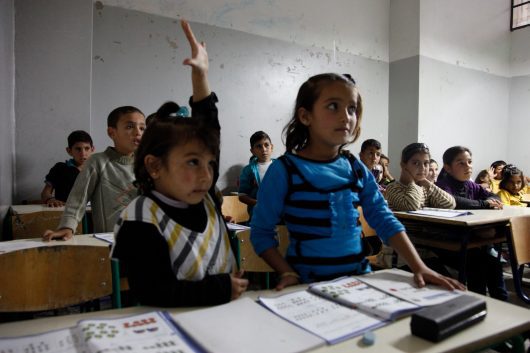
Efforts to Reduce the Syrian Education Crisis

Efforts to Reduce the Syrian Education Crisis

The Syrian education crisis is a direct result of the displacement of people during the Syrian Civil War, which began in 2011 with protesting and civil unrest that turned increasingly violent. The conflict continues today, after four years of fighting, and while there are innumerable effects of the war, among the worst and long-lasting effects is an uneducated generation of Syrians.

Before the beginning of the conflict in 2011, Syria reported that 97% of primary-school-aged children were enrolled, with high literacy rates for both men and women — higher than the regional average with neighboring countries like Lebanon, Turkey, Egypt and Jordan. Now, the United Nations estimates that over 500,000 Syrian refugee children are not receiving any education, which does not account for children who are still in Syria and are not being taught.

More than 4,200 schools, about 20% of schools in Syria, have been damaged, destroyed, or are currently shelters for displaced people. The U.N. believes that more than five million young lives are at risk of becoming a “lost generation.” Schools can provide shelter, structure and stability for students coping with trauma. The implications of an entire generation of youths not having access to a stable and fully developed educational system can be extensive, but include an increased risk of abuse, exploitation and recruitment into armed groups, as well as a lack of knowledge and skills needed to rebuild a community post-conflict.

Groups Advocating for Syrian Students

There are some notable organizations working to improve these conditions that have set goals and aspirations for the future of Syrian education.

UNICEF is one organization seeking to alleviate the Syrian education crisis with its No Lost Generation initiative. The strategy, as described by UNICEF, proposes “…$1 billion focused on expanding access to learning and psychosocial support, strengthening social cohesion and peacebuilding efforts, and restoring hope for the future to millions of children.” This initiative comes from leading international humanitarian organizations and key advocates and donors. The action that comes from the incentive expands vocational and remedial secondary education and alternative ways of delivering education, as well as “building life-skills for children and adolescents; vocational training; mobilizing communities to support peacebuilding (e.g. peace forums and…integrating peacebuilding into education, programs that directly confront conflict and its causes, sports and arts…).”

Save the Children is making ongoing efforts to aid Syrian children. They accept donations from as many people as possible and of any size. They describe their efforts as ensuring children are nourished, educated and warm through the winter while also giving families food and a means by which to earn income.

There are also smaller efforts being made across the globe, like that of Dubai Cares, who worked with Save the Children to give 50,000 refugees school kits in five provinces in Jordan. Small and large efforts combined are what can truly reduce and potentially eliminate the Syrian education crisis altogether, and guarantee a generation is not lost due to conflict they cannot control.

– Gabriella Paez
Photo: Flickr

October 18, 2017
https://borgenproject.org/wp-content/uploads/borgen-project-logo.svg 0 0 Borgen Project https://borgenproject.org/wp-content/uploads/borgen-project-logo.svg Borgen Project2017-10-18 07:30:262024-06-04 01:08:25Efforts to Reduce the Syrian Education Crisis
Children, Health

SoaPen Brings Thrill and Awareness to Hand Hygiene

hand hygiene
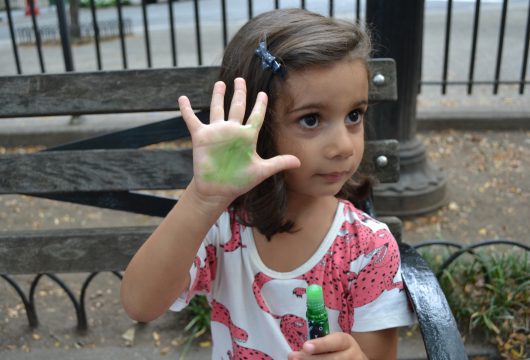
Revolutionizing hand hygiene, the “crayon-soap” hybrid known as SoaPen is the brainchild of Amanat Anand, Yogita Agrawal and Shubham Issar — a trio of industrial designers from the Parsons School of Design. Primary-colored and lipstick-sized, each pen is packed with an analogue solution that accommodates up to 60 hand washes, providing children a thrilling way to fight bacteria and develop a habit of hand-washing at a young age.

Fun and flair aside, Shubham Issar said, the SoaPen is primarily a teaching tool aimed at promoting “better hygiene practices among children” and illuminating the benefits of washing hands, a habit that can stonewall the spread of lethal viruses.

According to a study published by The Lancet, preventable infectious diseases accounted for two-thirds of the nine million child deaths in 2008. Pneumonia and diarrhea, two deadly diseases that can be suppressed by vaccines, jointedly contributed to 25% of 2015 deaths in children under five years old.

“There is not enough awareness around the benefits of hand washing, not only among children, but among parents, teachers and caretakers,” Issar said. “With SoaPen’s playful design, ability to mark all over a child’s hand, and portability we have created a teaching tool that opens dialogue around hand washing.”

SoaPen’s Goal

SoaPen seeks to create a lasting psychological shift in the way children perceive hand washing by ingeniously transforming it from a chore to a pastime. Incorporating art and health, drawing and scrubbing, the product shows parents and children alike that hand washing can be made into a daily routine almost as exhilarating as tag.

In recent years, in-depth research has yielded alarming findings on the toxically high alcohol content in hand sanitizers — ranging from 45 to 95% — and how it severely cripples a child’s immune system. From 2010 to 2015, poison control center hotlines across the U.S. reported a 400% increase in emergency calls pertaining to inebriated children who had ingested excess sanitizer alcohol.

Parents are becoming increasingly anxious to find a safer replacement like the SoaPen, which Issar compared to a “portable soap.” Striking a delicate balance between caution and fun, Issar said, SoaPen “has a place in not just every classroom around the world,” but also every daycare center, pre-school and arts-and-crafts class.

Making a Difference

One of the team’s priorities is to teach children in low-income schools the importance of hand hygiene and provide teachers creative methods of using the SoaPen. After conducting multiple campaigns in schools, team members report to seeing more lasting hand hygiene retention. The company hopes to develop a “buy one, give one” business model to convert product sales in the U.S. to donations toward developing countries, Issar said.

With a Kickstarter fundraising campaign already underway, the team plans to soon contact nonprofits in the hygiene sector to disseminate SoaPens through their extensive connections in poorer corners of the world.

– Claire Wang

Photo: SoaPen

October 18, 2017
https://borgenproject.org/wp-content/uploads/borgen-project-logo.svg 0 0 Borgen Project https://borgenproject.org/wp-content/uploads/borgen-project-logo.svg Borgen Project2017-10-18 01:30:212024-05-29 22:27:44SoaPen Brings Thrill and Awareness to Hand Hygiene
Children, Global Poverty, Government, Women & Children

How to Help People in Lithuania by Addressing Alcoholism

 Lithuania

Alcoholism in Lithuania and many of its eastern European neighbors is a major concern. The Lithuanian government and various organizations, including SOS Children Villages Lithuania, are stepping in to determine how to help people in Lithuania and how to protect those that are most vulnerable to the effects of alcohol abuse.

In June of this year, the Lithuanian government announced that it will implement new, highly prohibitive alcohol laws in 2018. This announcement was made after the World Health Organization published a report that named Lithuania as the heaviest drinking country in the world in 2016.

Though this is Lithuania’s first year to top the list, its severe drinking problems are hardly new, and the details of this decades-long problem are shocking:

  • In 2013, UNICEF’s Innocenti Report Card 11 found that 27 percent of children between the age of 11 and 15 had been drunk at least twice. This was the highest measured rate in Europe that year.
  • In 2014, nearly one-quarter of women in the country engaged in binge drinking, more than women in any other country.
  • In 2014, it was found that nearly 10 percent of Lithuania’s population suffered from an alcohol use disorder, among the highest out of all nations reviewed.

Why is alcohol abuse so rampant in Lithuania and other eastern European countries? Analysts offer myriad reasons that vary depending on the particular country in question, but some of the most frequently cited answers relate to high unemployment rates, the societal legacy of Soviet control, poor mental health care and a lack of information and public policy regarding alcohol.

One source reported that currently, eight of the nations with the highest levels of consumption do not have public policy initiatives that address the effects of alcohol consumption on the general public. This lack of public information exacerbates the danger of this situation to women and children. Alcohol use among women in Lithuania and other eastern European countries has been increasing steadily, and women in these countries may not be aware of the dangers of drinking during pregnancy. Experts therefore assert that an essential tenet of answering the question of how to help people in Lithuania is simply to make them more aware of the health effects of drinking.

The effects of alcoholism in Lithuania extend to children. Research shows that children whose parents have an alcohol problem suffer an increased likelihood of several violent and troubling scenarios, are six times more likely to suffer domestic violence and three times more likely to have suicidal thoughts. Furthermore, in June 2016, 20,000 Lithuanian children were found to be living in conditions of “social risk”, which the Lithuanian government defines as a household situation in which the parents have problems concerning alcohol abuse, poverty,or domestic violence. A significant number of these children were removed from their parents’ care and placed in institutional alternatives.

The question of how to help people in Lithuania is as complex and multivariable as its catalysts. The Lithuanian government’s upcoming prohibitive measures indicate policymakers’ dedication to engendering large-scale societal change, but it will take time for Lithuanians to wholly shift their attitudes and habits of alcohol dependency and abuse. In the meantime, there are tens of thousands of Lithuanian children and millions more across eastern Europe that currently live in endangered situations or institutional care due to parental abuse of alcohol.

Recognizing the need for increased child protection and better solutions, the organization SOS Children Villages Lithuania has developed an EEA grants funded project entitled “Sustained Transition from Institutional Care to Family-Based and Community-Based Alternatives”. The goal of this project is to determine the best environment and means of caring for children that have been removed from dangerous situations through comparative studies. SOS Children Villages Lithuania is dedicated to advocating for and stepping in to protect children in Lithuania as the country works to lessen its rates of alcoholism.

– Savannah Bequeaith

Photo: Flickr

October 15, 2017
https://borgenproject.org/wp-content/uploads/borgen-project-logo.svg 0 0 Kim Thelwell https://borgenproject.org/wp-content/uploads/borgen-project-logo.svg Kim Thelwell2017-10-15 01:30:192020-02-13 19:55:11How to Help People in Lithuania by Addressing Alcoholism
Children, Nonprofit Organizations and NGOs, Refugees

Nonprofit Organizations Support and Educate Refugees

Nonprofit Organizations Support and Educate RefugeesThe International Rescue Committee and Sesame Workshop both provide support and education to refugees throughout Jordan, Lebanon, northern Iraq and Syria. Through care and education, these two nonprofit organizations plan to aid children who are dealing with any potential or existing trauma and neglect.
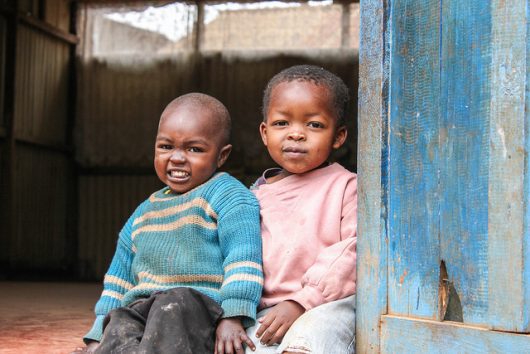
Refugee crises happening today often leave a lasting impact on the children involved. Children of refugees experience a great deal of trauma and sometimes torture. These children are exposed to war and violence, separation from their caregivers and malnutrition. Many of these factors lead to lasting negative effects on the children such as anxiety, insomnia, introversion, depression, behavioral issues, anorexia and many more.

The International Rescue Committee is a nonprofit organization which aims to help those who have been affected by war, conflict and natural disasters. The organization works in countries in which people lack the support they need in order to overcome a crisis; they do this by helping restore health, safety, education and economics. The International Rescue Committee also welcomes those refugees moving into the U.S. and helps them to resettle and thrive in their new home. This committee has responded to the world’s humanitarian crises for 83 years.

Sesame Workshop is the nonprofit organization that is behind Sesame Street, the popular children’s television show. This organization works to help children who have lost parents and caregivers, help families who are unemployed and provide education to children throughout the world. For 40 years, Sesame Workshop has reached millions of children in over 150 countries.

Together, International Rescue Committee and Sesame Workshop give support and provide education to refugees who are in desperate need for help and guidance through the rough environment they are living in.

“Our Partnership with Sesame Street will help transform children’s lives by making sure that their social-emotional needs are met so they are able to receive and education, contribute to their community and succeed as adults,” said David Miliband, President and CEO of the International Rescue Committee, on the committee’s webpage. With the efforts of these two organizations, hopefully there will be progress made in improving refugees’ lives, especially for children.

– Chloe Turner

Photo: Flickr

October 7, 2017
https://borgenproject.org/wp-content/uploads/borgen-project-logo.svg 0 0 Borgen Project https://borgenproject.org/wp-content/uploads/borgen-project-logo.svg Borgen Project2017-10-07 01:30:102020-07-23 09:49:13Nonprofit Organizations Support and Educate Refugees
Children, Developing Countries, Global Poverty, Health

Pediatric Heart Disease in Developing Countries

Pediatric Heart Disease in Developing CountriesPediatric heart disease is seen throughout the world and causes grave sickness in children. It is often complicated and hard to treat. With poverty and lacking resources, pediatric heart disease in developing countries becomes nearly impossible to manage.
It is difficult to determine how many children have heart disease because of lacking global data. Figures are generally surmised from industrialized nations. Since better diagnostics were implemented, experts estimate that 8-12 per 1,000 live births have heart disease. Children can also develop heart disease from heart rhythm disorders and infections (among other things).

Children with heart disease have very complicated health situations. Those born with a heart defect may have other birth defects. And as treatment improves and children live longer, they develop secondary diseases such as kidney failure.

Their situation is worsened by a lack of knowledge in developing countries. There is a common misconception that children do not develop heart disease. Parents may not recognize the serious symptoms, and as a result, children are often diagnosed later in life when treatment is harder and more expensive. Medical professionals do not always recognize heart disease in children, leading to misdiagnosis.

Worldwide, heart disease is expensive to treat. In the U.S. in 2009 the hospital cost of treating heart failure in children was thought to be $1 billion. This figure does not include outpatient visits, medications, treating secondary conditions, transportation and parents’ lost work.

Funding treatment of pediatric heart disease in developing countries is challenging. There is a lack of data to guide medical policy and infrastructure and the disease is likely under-reported. When poor countries decide how to best spend small healthcare budgets, it seems plausible to focus on more prevalent conditions that are cheaper to prevent, such as infection.

Providing adequate cardiac care requires significant resources. For simple heart surgeries, sterile consumables (such as drapes) are needed, as well as sophisticated equipment and trained personnel. More complex heart conditions may require more advanced equipment and highly educated providers.

Many children with heart disease in developing countries have surgically curable defects. Yet, because of costs, these children receive simpler “quick fix” surgeries. Another issue that developing countries have with providing acceptable heart surgeries is they often struggle with clean water and electricity, which are crucial in running any hospital.

Fortunately, many organizations see the struggle of treating pediatric heart disease in developing countries. In 2015, there was a survey of NGOs that provide care for this population. The survey lists more than 80 NGOs.

Some of these organizations perform mission trips to developing countries, where they perform heart surgeries in the local hospitals. Others bring children into industrialized nations for surgery and take them back after recovery. In some instances, organizations have worked with the country and local healthcare providers to build lasting cardiology programs that can serve the country more permanently.

Pediatric heart disease is a complicated condition. While seen throughout the world, it has a greater impact in developing nations because of higher birth rates. This does not mean it is not treatable. With great investment from NGOs and governments, children in developing countries can have the same outcomes as those in industrialized nations.

– Mary Katherine Crowley

Photo: Flickr

October 4, 2017
https://borgenproject.org/wp-content/uploads/borgen-project-logo.svg 0 0 Kim Thelwell https://borgenproject.org/wp-content/uploads/borgen-project-logo.svg Kim Thelwell2017-10-04 07:30:302020-07-22 07:47:23Pediatric Heart Disease in Developing Countries
Children, Education, Global Poverty

The Success of Private Education in Pakistan

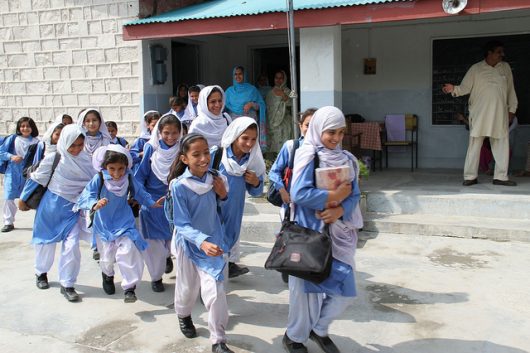
Private Education in PakistanAs in many other nations, private education in Pakistan is filling the gaps created by a struggling public-school system. Public education is a dismal scene; despite being a nation with a school-aged population of 47.8 million, a full 64 percent of public schools are deemed to be in unsatisfactory conditions. This is a relatively unsurprising number considering the newest public schools built in urban areas are anywhere from 40 to 60 years old. Furthermore, many students are unable to enroll in public schools simply due to their scarcity, evidenced by the 10 percent decrease in the number of public primary schools from 2011 to 2016.

With all this in mind, it is of no surprise that 37 percent of the nation’s educational institutions are private. Even more significant is the fact that this private 37 percent is somehow serving 42 percent of the nation’s total population of enrolled students and employing 48 percent of all teachers. Even so, the obvious reality is that private education is often expensive, thus making it out of reach for the most vulnerable and impoverished children. Consequently, a new subset of private education has further entered the scene: low-cost private schools.

Such is where Nasra Public Schools comes in. Despite its misleading name, it is indeed a low-cost private educational institution, and was founded in 1949 in a bungalow living room. Today, it has expanded into a system of private schools that boasts five campuses and serves 11,000 students. By 2020, it is projected to expand to 14 campuses, and will potentially expand further to 70 campuses across the nation.

Nasra is committed to low-cost, high quality private education. It does so through a contained monthly fee, meaning that fees have a maximum limit in the effort to maintain financial accessibility for low-income families. This works extremely well, as an astounding 79 percent of Nasra students are from homes that make less than four dollars a day. Additionally, Nasra rents campus locations rather than purchasing land- diluting infrastructural costs, which is ultimately what allows them to continually expand.

The system employs a staff of roughly 1,000, and teaches in English, a huge draw for the school. Further, it partners with various well-established institutions, such as the British Council and Pakistan’s COMSATS Institute of Information Technology, to provide the necessary technological resources and to create the most modern curricula it can. It also provides various extracurricular activities, such as student council, arts programs, cricket and table tennis, the latter two being supported through a partnership with the British Council’s International Inspirational Program.

Yet, it is still necessary to note that Nasra schools are not currently located throughout the nation, although such is the intention for the future. There is still a myriad of students who cannot afford to enroll in even low-cost institutions, an issue largely due to transportation fees. In many cases, urban and rural alike, students’ transportation fees would exceed that of school fees themselves, effectively making even low-cost private schooling inaccessible as well. Thus, the work of Nasra and its potential for expansion is even more essential; more Nasra schools spread throughout the nation would mean more educational opportunities for those that most desperately need them.

– Kailee Nardi

Photo: Flickr

September 30, 2017
https://borgenproject.org/wp-content/uploads/borgen-project-logo.svg 0 0 Kim Thelwell https://borgenproject.org/wp-content/uploads/borgen-project-logo.svg Kim Thelwell2017-09-30 07:30:052024-06-11 23:17:13The Success of Private Education in Pakistan
Children, Global Poverty

How to Help People in Romania

How to Help People in RomaniaAbout 25 percent of people in Romania live below national poverty lines. According to UNICEF, the people most subject to disadvantages within this statistic are children. Education, healthcare and orphanages are among the main challenges for youth. Thankfully, three nongovernmental organizations (NGOs) are working to relieve these barriers. How to help people in Romania can be answered by examining the efforts of the following institutions:

1. Love Light Romania
Love Light Romania believes that poverty can be reduced through increased access to education. Their education project, Jacodu Education Project, currently supports more than 50 children. Aside from giving children an education, the program aims to rebuild their homes and families. Jacodu Children’s Project is unique in its ability to reach a wide range of children, including children with special needs. Volunteer openings are available in all programs and projects for Love Light Romania. Workers are also wanted for renovation purposes.

2. Humanium
Humanium focuses on childrens’ rights in Romania. Of the most significant rights, access to healthcare is a top priority. Humanium claims poverty is the main contributor to the lack of healthcare within the region. Poor working conditions in impoverished areas force doctors to work in cities abroad. As a result, children in Romania are vulnerable to malnutrition, disease and death. Fortunately, this establishment offers a program called Sponsor a Child. Through a monthly donation of $10 or more, a child’s rights, such as the right to adequate healthcare, will be protected. Interning or volunteering are two other examples of how to contribute to Humanium’s progress.

3. Firm Foundations Romania
This NGO is transforming Romania through love and care. Founded after the fall of communism, Firm Foundations Romania (FFR) feels an overwhelming responsibility to attend to the needs of abandoned children. FFR reports that poverty is the main reason behind children being left after birth. Because of this, their team operates a project which provides care for the discarded children of Romania. This program offers hospital care for children until they can be placed in a good home. Firm Foundations Romania provides the best protection through donations and volunteer work. You can support this organization by contributing on their website.

How to help people in Romania starts by acknowledging the lives of children. Once children are lifted out of poverty, future generations will have an improved chance at life. Volunteering and contributions are imperative, but commitment and patience are just as vital. With your assistance, these three organizations can continue working to break the vicious cycle of poverty in Romania.

– Emilee Wessel

Photo: Flickr

September 27, 2017
https://borgenproject.org/wp-content/uploads/borgen-project-logo.svg 0 0 Kim Thelwell https://borgenproject.org/wp-content/uploads/borgen-project-logo.svg Kim Thelwell2017-09-27 01:30:262024-06-07 05:07:45How to Help People in Romania
Children, Development, Global Poverty

Kailash and Malala: Fighting for All Children

All Children“One child, one teacher, one book and one pen can change the world,” Malala Yousafzai stated at the U.N. Youth Assembly, where she launched her international campaign to fight for the equality of all children.

Education is the art of unfolding and absorbing hidden knowledge. As a student matures, the pupil gains the ability to think for themselves, as well as the ability to differentiate fact from fiction. Absorbing the world like a sponge in order to gain knowledge not only enlightens the student, but molds them to better all of mankind.

In 2014, the Nobel Peace Prize focused on empowerment through education. Kailash Satyarthi and Malala Yousafzai shared this international honor “for their struggle against the suppression of children and young people and for the right of all children to education”.

Malala and Kailash dedicated their lives to the betterment of those around them, believing education is the means to lasting peace. Education can be obtained or earned, but cannot be stripped from the person.

Both Nobel Peace Prize recipients defied all odds in order to utilize their experience to touch millions of lives and fight for all children.

Malala was born in Pakistan during a time of chaos and violence. In 2012, she was shot by the Taliban, causing severe injuries and a long recovery. Throughout Pakistan, the Taliban often attacked young girls at school in order to discourage females from receiving an education.

This traumatic incident did not deter Malala from continuing her education, but instead encouraged her to pursue an international campaign from London. Threats from the Taliban poured into her mailbox and inbox as she pursued her recovery as well as her campaign for the universal right to education.

Her platform includes her published book, multiple speeches to the UN, meeting heads of state and traveling to various universities. She has quickly become the face of female empowerment through education and the fight for the education of all children.

In India, Kailash worked as a teacher until 1980, when he became inspired to do more for those most vulnerable. He founded the organization Bachpan Bachao Andolan, which frees thousands of children from exploitation each year. In order to protect their newfound freedom, all children go to school and get an education, the ultimate key to lasting freedom.

Throughout the United States and Europe, education can seem like a chore for some families. To those living in poverty around the world, putting on the school uniform is the embodiment of dignity and pride. Entering the classroom is the first step in breaking the cycle of poverty and domestic abuse, as well as providing hope to dreams.

– Danielle Preskitt

Photo: Flickr

September 27, 2017
https://borgenproject.org/wp-content/uploads/borgen-project-logo.svg 0 0 Borgen Project https://borgenproject.org/wp-content/uploads/borgen-project-logo.svg Borgen Project2017-09-27 01:30:172020-07-16 21:21:32Kailash and Malala: Fighting for All Children
Page 93 of 137«‹9192939495›»

Get Smarter

  • Global Poverty 101
  • Global Poverty… The Good News
  • Global Poverty & U.S. Jobs
  • Global Poverty and National Security
  • Innovative Solutions to Poverty
  • Global Poverty & Aid FAQ’s
Search Search

Take Action

  • Call Congress
  • Email Congress
  • Donate
  • 30 Ways to Help
  • Volunteer Ops
  • Internships
  • Courses & Certificates
  • The Podcast
Borgen Project

“The Borgen Project is an incredible nonprofit organization that is addressing poverty and hunger and working towards ending them.”

-The Huffington Post

Inside The Borgen Project

  • Contact
  • About
  • Financials
  • President
  • Board of Directors
  • Board of Advisors

International Links

  • UK Email Parliament
  • UK Donate
  • Canada Email Parliament

Get Smarter

  • Global Poverty 101
  • Global Poverty… The Good News
  • Global Poverty & U.S. Jobs
  • Global Poverty and National Security
  • Innovative Solutions to Poverty
  • Global Poverty & Aid FAQ’s

Ways to Help

  • Call Congress
  • Email Congress
  • Donate
  • 30 Ways to Help
  • Volunteer Ops
  • Internships
  • Courses & Certificates
  • The Podcast
Scroll to top Scroll to top Scroll to top