• Link to X
  • Link to Facebook
  • Link to Instagram
  • Link to TikTok
  • Link to Youtube
  • About
    • About Us
      • President
      • Board of Directors
      • Board of Advisors
      • Financials
      • Our Methodology
      • Success Tracker
      • Contact
  • Act Now
    • 30 Ways to Help
      • Email Congress
      • Call Congress
      • Volunteer
      • Courses & Certificates
      • Be a Donor
    • Internships
      • In-Office Internships
      • Remote Internships
    • Legislation
      • Politics 101
  • The Blog
  • The Podcast
  • Magazine
  • Donate
  • Click to open the search input field Click to open the search input field Search
  • Menu Menu

Archive for category: Children

Information and stories addressing children.

Children, Refugees

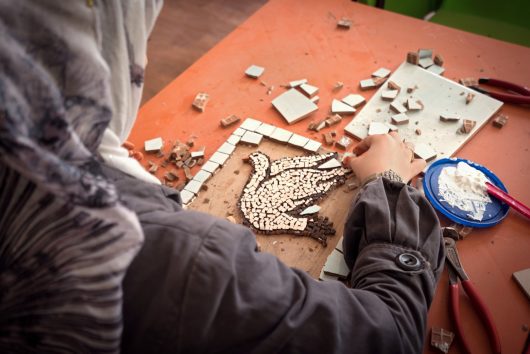
The Benefits of Art Therapy for Syrian Refugees

Art Therapy for Syrian Refugees

Non-governmental organizations around the world have been using art therapy for Syrian refugees as a way to deal with trauma.

One of the non-governmental organizations using art therapy for Syrian refugees is Global Humanitaria, based in Spain. According to HuffPost, the organization has partnered with Bader Medical Center in Jordan to help Syrian refugees create artwork. These art pieces will be displayed in Madrid and Barcelona and sold online. The proceeds from these will support the artists.

More than the monetary value, therapy using the arts helps Syrian refugees express the horrors that they have experienced in Syria. According to Al Jazeera, many of the Syrian children are too young to verbalize what they went through. Others are too traumatized to talk about the things that they have seen. Art therapy for Syrian refugees gives children a nonverbal way to work through their thoughts.

Many Syrian children draw things that they have witnessed. These things often include bombs, severed limbs and tanks. Other children draw happier pictures to signify a happier outlook.

Art therapy for Syrians seeking refuge also gives children an opportunity to talk about their trauma on their own terms. According to Al Jazeera, Syrian children often become belligerent or withdrawn when asked about the situations that they have faced. Art helps them process these experiences.

Syrian refugees experience many of difficulties beyond escaping from the country. Several of the children at the Bader Medical Center have lost limbs, for example. Others must deal with a lack of education, employment and permanent housing.

In spite of the benefits of art therapy for Syrians seeking refuge, there is not much of funding for it. Al Jazeera discusses how little non-governmental organizations receive for art therapy. A lack of funds leads to not having enough patient time to make a long-lasting improvement.

This being said, even short-term art therapy for Syrian refugees has had a positive influence on the refugees exposed to it.

– Cortney Rowe

Photo: Flickr

September 25, 2017
https://borgenproject.org/wp-content/uploads/borgen-project-logo.svg 0 0 Kim Thelwell https://borgenproject.org/wp-content/uploads/borgen-project-logo.svg Kim Thelwell2017-09-25 07:30:282024-05-24 23:41:33The Benefits of Art Therapy for Syrian Refugees
Children, Health

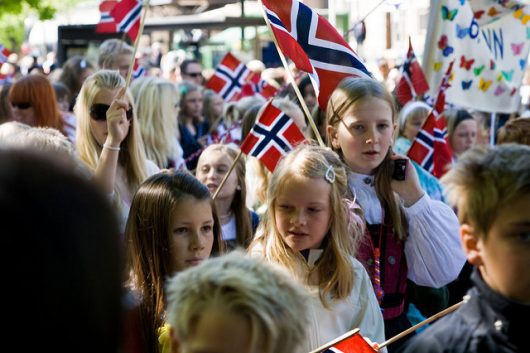
Six Important Facts About Child Poverty in Norway

Child Poverty in NorwayNorway is among the richest countries in the world; in fact, the Human Development Index ranks it first globally. However, by the country’s own standards of development, there are still segments of society which are considered below the line of poverty. Reports on child poverty in Norway reveal some troubling facts about the country’s economically successful image. Here are six important facts about child poverty in Norway.

  1. More than 90,000 children come from families that are defined as poor. According to UNICEF Norway, this number has doubled since 2000. It is feared that this number will continue to rise if adequate measures are not taken to address the issue.
  2. According to a report by Norway Today, every fifth child, or about 18, 500 of the country’s total number of poor children, lives in Oslo. Child poverty in Norway is relatively high in metropolitan areas such as Oslo.
  3. According to the Minister of Children and Equality, Solveig Horne, more than half of poor children come from families with immigrant backgrounds. However, Kari Elisabeth Kaski, the first candidate in Oslo and party secretary of the Socialist Party, says that child poverty is an important issue regardless of immigration status. Kaski also says that child poverty should become a priority issue in the upcoming election in Norway.
  4. One report shows that though child poverty in Norway is particularly high among certain immigrant groups, approximately half of the children in low-income families are of Norwegian ethnic backgrounds.
  5. In some low-income neighborhoods, such Nedre Toyen in Oslo, two out of three children are poor compared to one in five in the Kampen area, which is several steps away. Differences in child poverty – depending on the area in Oslo – are substantial.
  6. The effects of living in poor neighborhoods on childrens’ future opportunities are alarming. A poor neighborhood, where most or all families are poor, does not provide a good network or “social and cultural capital” that can be mutually beneficial to members of the community in getting a job, better education or any other assistance.

Despite these troubling facts, the good news is that as the world’s most developed country, child poverty in Norway is defined differently in relation to the poverty of children globally. It mostly means for children to have little to no resources to participate in life experiences such as birthday parties, a school trip and other experiences that are socially and culturally enriching. Norway is also a welfare state. Generally, there is little difference between children from rich and poor backgrounds in the sense that they get equal education and healthcare among other social services. Further, the number of children who die has decreased by 50 percent in the last 20 years.

Clearly, poor children in Norway still have the resources to give them the best chance of growing up to be healthy, educated and successful adults; however, there need to be government efforts aimed at the underlying causes in order to prevent child poverty in the first place. Only then will these children have access to necessary socially and culturally uplifting experiences.

– Aslam Kakar

Photo: Flickr

September 25, 2017
https://borgenproject.org/wp-content/uploads/borgen-project-logo.svg 0 0 Kim Thelwell https://borgenproject.org/wp-content/uploads/borgen-project-logo.svg Kim Thelwell2017-09-25 01:30:372020-07-16 10:24:50Six Important Facts About Child Poverty in Norway
Children, Developing Countries, Global Poverty

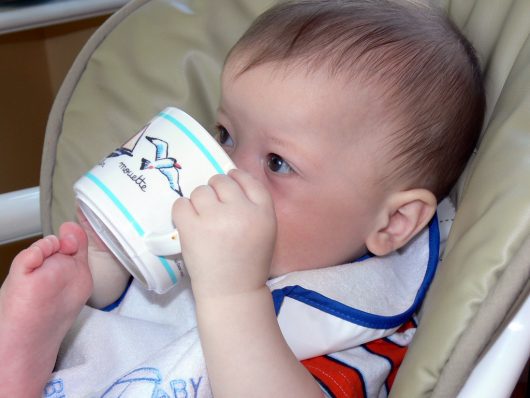
The NIFTY Cup: A Lifesaving Alternative to Breastfeeding

NIFTY Cup
Millions of newborn babies in developing countries face death due to the inability to feed properly. These infants may be born prematurely, have facial abnormalities or other special needs that impacts their ability to effectively suckle and nurse.

According to the World Health Organization (WHO), newborn deaths account for 45% of all deaths among children under five, the majority in developing countries. It is estimated that two-thirds of newborn deaths can be prevented, if effective measures are implemented within the first week of life. One such effective measure to prevent neonatal deaths is to ensure that babies receive adequate nourishment.

Michael Cunningham, who leads craniofacial  medicine at Seattle Children’s Hospital, experienced firsthand children dying from the inability to receive nutrition within their first few days of life. He came up with the idea for the NIFTY cup to solve this issue, and partnered with PATH, a nonprofit organization specializing in global health technologies, to design it.

The NIFTY part of this nifty solution stands for Neonatal Intuitive Feeding Technology. This cup is a simple, yet brilliant device that can have major impacts on children worldwide.

The cup is designed to replace the act of breastfeeding while allowing infants to receive adequate nutrition. It is a soft, plastic cup that has a unique reservoir for holding milk. Mothers collect their breastmilk in the 40- milliliter cup and then feed it to their baby. The cup allows the baby to eat at its own pace, with minimal spilling.

“We just knew that there had to be a simple intervention that could be life-changing for this population,”Cunningham said.

The NIFTY cup would not be truly impactful if it was expensive and unavailable. The NIFTY cup resolves this, too. The cup only costs one dollar. They have been used successfully in India, and are becoming accessible in many African birthing institutions.

This creation has the potential to save millions of babies from the effects of malnutrition at birth. It may even save their lives.

– Sydney Missigman

Photo: Flickr

September 20, 2017
https://borgenproject.org/wp-content/uploads/borgen-project-logo.svg 0 0 Borgen Project https://borgenproject.org/wp-content/uploads/borgen-project-logo.svg Borgen Project2017-09-20 07:30:112024-06-05 04:52:33The NIFTY Cup: A Lifesaving Alternative to Breastfeeding
Children, Global Poverty

Project CASITA Helps Infants and Toddlers in Peru

Project CASITAProject CASITA, created by Partners in Health in Peru, identifies infants and toddlers with developmental delays and trains parents and caregivers to stimulate children and encourage age-appropriate behavior. The program is designed to help children aged six to 24 months who exhibit signs of potential developmental delay, such as lack of communication and mobility. The program began in November 2013 and in 2016 had enrolled 180 children and families. Researchers found that 85 percent of children exhibiting early developmental delays showed improvement after time in the program. The program is located in Carabayllo, a province north of Lima.

Community health workers aid the mothers and teach them activities to do with their children to encourage mobility and language development. The community health workers help parents design toys to exercise their infants’ tongues and play games to promote language development. Toddlers also work on picking up small objects to develop their fine motor skills. Some health workers meet parents weekly in their home and other parents attend education sessions at a central location. Health workers and caregivers typically work together for three months.

Grand Challenges Canada helps to support Project CASITA. Initially, Grand Challenges Canada provided a grant of $199,000. In May 2016, they provided a second grant to help Partners in Health expand the program to reach 3,000 children. In order to successfully expand, 30 additional community health workers were trained.

Partners in Health also cooperates with the Peruvian Ministry of Health to ensure programs are integrated and sustainable on the community and municipal levels.

Project CASITA supports families in other ways as well. They provide food baskets and mental health services. Families also receive help in applying for national identification cards which grant them access to a variety of public services.

– Sarah Denning
Photo: Flickr

September 15, 2017
https://borgenproject.org/wp-content/uploads/borgen-project-logo.svg 0 0 Borgen Project https://borgenproject.org/wp-content/uploads/borgen-project-logo.svg Borgen Project2017-09-15 01:30:472024-05-28 00:16:24Project CASITA Helps Infants and Toddlers in Peru
Children, Health

Effects of Poverty on Development of Children

Effects of PovertyOf all the social issues faced by a developing country, poverty often feels especially overwhelming. Of the many factors working against the poor, the effects of poverty on the brain development of children is probably the most daunting yet.
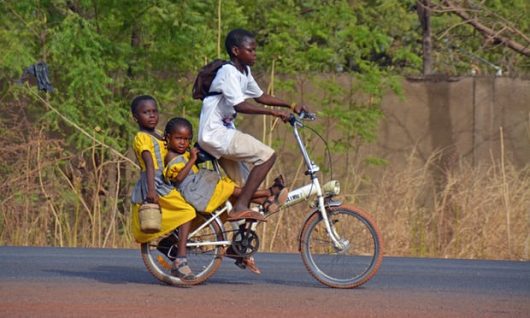
Researchers have long suspected a correlation between a child’s behavior and cognitive abilities and their socio-economic status. This correlation becomes even more apparent among people living in extreme poverty. In a 2015 study published in Nature Neuroscience, a team led by neuroscientists Kimberly Noble from Columbia University in New York City and Elizabeth Sowell from Children’s Hospital Los Angeles, California, imaged the brains of 1,099 children, adolescents and young adults in several U.S. cities. Their findings revealed that children from the lowest income bracket of less than $25,000 had up to six percent less surface area than children from families making more than $150,000. Within the poorest families themselves, income inequalities of a few thousand dollars were associated with major differences in brain structure and cognitive skills.

Within countries that live on less than a dollar a day, researchers have found other developmental problems such as stunted growth and cognitive issues. In an unprecedented study conducted in 1960, a team of researchers began giving out nutritional supplements to young children in rural Guatemala. The study was aimed at collecting data to test the theory that providing enough supplements during a child’s formative years would help in reducing stunted growth. This theory was proved in the early 2000s, when the researchers returned to check on the children who had received the supplements in the first three years of their life. They found that not only did the children grow one to two centimeters more than the control group; they even scored higher in cognitive tests. This experiment proved the effects of poverty on the brain development of children.

In 2006, the World Health Organization (WHO) published a study into the heights and weights of children between birth and age five in Brazil, Ghana, India, Norway, Oman and the United States. The results showed that healthy children, regardless of their home countries, follow a very similar growth trajectory. Based on these results, the WHO established benchmarks for atypical growth. In countries like Bangladesh, India, Guatemala and Nigeria, over 40 percent of children meet the definition of stunted growth. In light of the growing awareness and consensus around effects of stunting, the WHO included the reduction in the number of children under five with stunted growth by 40 percent as one of its six global nutritional targets for 2025.

Similar studies were conducted in Brazil, Peru, Jamaica, the Philippines, Kenya and Zimbabwe, all with the same conclusion. However, pediatric cognitive development is a complex multidimensional problem and not all stunted growth, which affects an estimated 160 million children worldwide, is connected to malnutrition. Malnutrition is one side of this multifaceted problem; poor sanitation, stressful home environments, exposure to industrial chemicals, lack of access to good education and income disparities are other possible factors.

It would not be an overstatement to say that all research points to an urgent need to address the problem of world poverty. Factors such as lack of education, poor hygiene, lack of pre-post-natal care, nutritional deficiency, exposure to chemicals and stressful childhood are some of the paralyzing issues faced by those in extreme poverty. The daunting effects of poverty on the brain development of children have already been proven by researchers and new research and studies are further fortifying what is already known. In essence, even as officials start to take action in providing adequate nutrition, research cannot be clearer in building the case for the urgent need to eliminate world poverty.

– Jagriti Misra

Photo: Flickr

September 13, 2017
https://borgenproject.org/wp-content/uploads/borgen-project-logo.svg 0 0 Kim Thelwell https://borgenproject.org/wp-content/uploads/borgen-project-logo.svg Kim Thelwell2017-09-13 07:30:102024-05-28 00:16:20Effects of Poverty on Development of Children
Children, Education, Global Poverty, Women and Female Empowerment

Providing Bicycles to Families in Africa Improves Education

Providing Bicycles to Families in AfricaFor many children living in rural villages in Africa, the most valuable educational tool is not a pencil or a notebook: it is a bicycle. Several organizations are providing bicycles to families in Africa as a means of bringing education, health services and economic stability to entire communities.
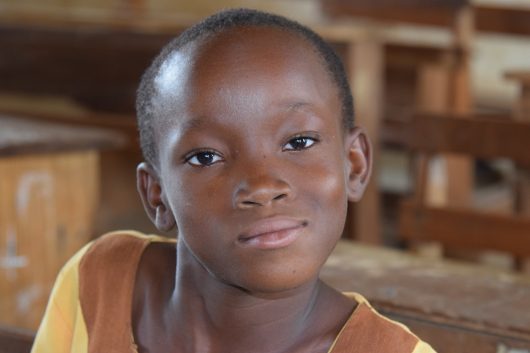
In Zambia, children often have to walk miles to get to school. They might arrive late, miss early classes and face an embarrassing punishment from the teacher. This is a particular problem for girls, who are expected to complete household chores before even starting on their journey.

In 2014, World Bicycle Relief donated 100 bikes to students and faculty at a primary school in Zambia. Now that she rides her bike to school, one girl said she can put all of her energy into concentrating in class, and she has time to study in the evenings.

Providing bicycles to families in Africa also allows them to improve their economic situations. Steel workers and chicken farmers can carry larger and heavier loads to the market. In Zambia, dairy farmers have increased their deliveries by up to 25 percent. Mine workers and door-to-door salesmen use bicycles to shorten their commutes. They save time and energy and are able to afford necessities like food and school supplies.

Women in Sierra Leone and Ghana are responsible for the vast majority of the household chores. As with the men, women use the bicycles to balance heavy materials and travel long distances. For women and girls, however, owning a bike is a form of protection–against sexual assault. Put simply, no man can outrun them anymore.

Despite this, it is far more unlikely for a woman to have access to a bicycle. In places like Sierra Leone, women are discouraged from riding bikes in the belief that it causes them to lose their virginity. Boys and men commandeer the household bicycle, claiming that the women don’t have time to learn how to ride it. However, many organizations are working against this idea: for example, the Village Bicycle Project operates a month-long Learn to Ride program for women and girls in Ghana and Sierra Leone.

Presenting one woman with a bike can improve life for an entire community. In villages in Zambia where HIV is prevalent, taking care of the sick often falls to Community Healthcare Volunteers (CHVs). They care for elderly men and women, orphaned children and those suffering from AIDS. After receiving a bicycle, one female healthcare worker was able to increase the number of patients she visited per day from four to 18.

Providing bicycles to families in Africa not only empowers rural villagers, but it also has positive implications for the environment. The organization Ghana Bamboo Bikes constructs bicycles out of bamboo, an eco-friendly material that, unlike wood, will not result in damage to Ghana’s rainforests.
The bicycles are built to be light, yet stable–good for navigating the roads of rural Ghana. The organization also teaches young men and women with little education how to build the bikes, offering them a job skill that will prove valuable as the demand for bicycles in Africa continues to grow.

– Emilia Otte

September 12, 2017
https://borgenproject.org/wp-content/uploads/borgen-project-logo.svg 0 0 Kim Thelwell https://borgenproject.org/wp-content/uploads/borgen-project-logo.svg Kim Thelwell2017-09-12 07:30:302024-05-28 00:16:13Providing Bicycles to Families in Africa Improves Education
Children, Education, Global Poverty

Education Access for Children With Disabilities in Ghana

Children With Disabilities in GhanaAround the world, children with disabilities are faced with many challenges that can hinder their success and well-being. In Ghana, children with mild to moderate disabilities are often denied access to education simply because of basic impairments. This creates a sense of isolation and lack of motivation among these children, and diminishes their quality of life. Fortunately, in recent years several programs led by a variety of humanitarian organizations (such as UNICEF) have begun improving education access for children with disabilities in Ghana.
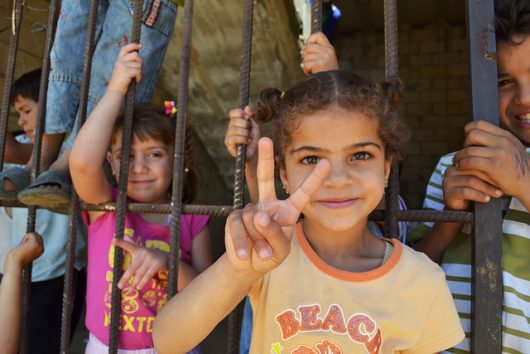
With one in three children who are not in school being withheld simply because of a disability, this problem is affecting Ghana’s children significantly. Children with disabilities such as cerebral palsy are often hidden in their communities, unable to or not allowed to go to school. Parents of children with these mild to moderate disabilities often recognize their child’s intelligence, but lack local schools with the support required to care for their needs.

This is changing, however, with the help of initiatives from UNICEF and the Campaign for Learning Disabilities (CLED).

UNICEF, in partnership with USAID, has led this mission by creating and supporting inclusive schools where children with disabilities are welcomed and can get assistance. The goal of creating inclusive schools was pursued by a community outreach program where parents were encouraged to hear about how all children, regardless of ability, were entitled to an education.

From UNICEF’s initiative, more than 450 teachers have been trained in inclusive education, and children with mild to moderate disabilities have access to over 83 basic schools that provide an inclusive learning environment.

CLED has also improved education access for children with disabilities in Ghana. CLED is a non-profit organization that helps communities by equipping teachers and parents with the tools needed to best support children with disabilities, as well as by providing specialized tutoring for children with disabilities. CLED has also acted as an advocate for this issue in Ghana by leading monthly radio talk shows on inclusive education. So far, CLED has donated 2850 school supplies, provides tutoring programs in 30 schools, and has trained 2292 teachers.

While many children with disabilities still lack access to proper education, the solution to this problem will require better understanding and support from communities. However, through these initiatives led by UNICEF and CLED, more and more disabled children are able to learn and express themselves in inclusive schools.

– Kelly Hayes

September 12, 2017
https://borgenproject.org/wp-content/uploads/borgen-project-logo.svg 0 0 Borgen Project https://borgenproject.org/wp-content/uploads/borgen-project-logo.svg Borgen Project2017-09-12 01:30:142020-07-09 06:57:02Education Access for Children With Disabilities in Ghana
Children, Education, Refugees

Social Circus Brings Joy to Children in Need

Nothing brings a smile to a child’s face more quickly than watching the circus. Except, perhaps, being able to perform the feats themselves.

Sirkhane Social Circus School in Turkey trains refugee children from Syria in the art of circus performance as a way of bringing joy into a very difficult situation. A typical day of classes consists of children juggling, spinning multicolored plates, doing tricks on a trapeze and walking on stilts.

But the school is dedicated to more than just teaching practical skills. For the Syrian refugee children, circus arts have become a way of dealing with the trauma they have witnessed. They practice peace and harmony in a safe environment.

Located in an old house in Mardin, a city on the Turkish-Syrian border, the school serves students from Turkey, Afghanistan and Iraq as well as refugees from Syria. The children learn teamwork and form friendships with children from different backgrounds.

Older children are often inspired to give back to the community by becoming mentors to the younger students in a program called Circus Heroes. These older students also put on their own performances and participate in larger festivals.

Sirkhane School was founded by the Turkish organization Art Anywhere, an NGO which works to bring art to communities. Over the past three years, Sirkhane has trained more than 600 young circus performers. According to co-founder Pinar Demiral, the school’s main goal is to give these children a second chance to experience childhood.

Sirkhane is part of the social circus movement, a global movement that uses circus arts to reach children and youth who are considered at-risk. Social circus organizations work not only with refugees and victims of war trauma, but also with children from impoverished backgrounds.

The Red Nose Foundation in Indonesia welcomes children from two of the most impoverished areas in Jakarta, a fishing community and a trash pickers’ slum.

Kids describe the classes as a way to fill free time, and parents say that spending time at the learning centers teaches the children to be patient and polite. The foundation hopes that circus performance will inspire the kids to be more confident, responsible and aware of the world around them.

Besides teaching basic juggling, clowning and acrobatics, Red Nose also offers more traditional education classes, particularly in English and math, all through the lens of the creative arts.

For these children, science lessons might involve drawing pictures of the solar system or of a particular ecosystem. English is taught through the medium of creative drama. The organization also offers scholarships to help cover schooling expenses for children who have participated in the program for two or more years.

For students who continue to attend a social circus, their acrobatic and artistic skills sometimes become a source of income. The Cambodian non-profit Phare Ponleu Selpak, a social circus organization whose name translates to “The Brightness of the Arts,” specializes in training students who wish to work professionally in creative fields.

The organization runs a Visual and Applied Arts School, which trains Cambodian youth in fine arts, graphic design and animation, and a Performing Arts School, which teaches theatre, dance and music as well as circus techniques. Graduates of the program have gone on to study in Europe, the United States and Canada.

The movement is still growing. The first Social Circus Day in April of 2016 brought together organizations from 32 countries, including Zambia, Myanmar, Afghanistan, El Salvador and Italy. Entire communities came together to celebrate and enjoy the performances.

This is perhaps the most important lesson of social circus, a lesson the children already know: regardless of setting or circumstances, the power of laughter prevails.

– Emilia Otte

Photo: Flickr

September 11, 2017
https://borgenproject.org/wp-content/uploads/borgen-project-logo.svg 0 0 Kim Thelwell https://borgenproject.org/wp-content/uploads/borgen-project-logo.svg Kim Thelwell2017-09-11 01:30:052020-07-09 06:12:52Social Circus Brings Joy to Children in Need
Children

Increasing Immunization and Vaccination in South Asia

The South Asia region is home to over 1.7 billion people, 31.5 percent of whom are children. Across South Asia, up to one in four children is under-immunized or goes without vaccination. Since 1990, the region’s governments have made significant progress in increasing vaccination in South Asia as part of the United Nations Millennium Development Goal 4, which centers on strengthening routine immunization. Despite this, many barriers stand in the way of increasing immunization, such as a lack of funding, inadequate healthcare materials and a lack of consistent and reliable data on children’s vaccination needs.

In 2012, South Asia was one of many regions to adopt the Global Vaccine Action Plan in order to maximize the benefits of vaccination and aimed to achieve 90 percent of diphtheria-tetanus-pertussis (DTP3) coverage. Though progress has been made, with countries like Nepal and Bhutan achieving over 90 percent coverage, overall, South Asia lags behind other regions. Certain regions in Afghanistan and Pakistan have dangerously low immunization coverage and struggle with treatable illnesses such as meningitis and typhoid fever.

One of the main organizations trying to reverse these trends by increasing coverage in South Asia is Gavi, The Vaccine Alliance. Gavi has committed nearly $10 billion in funding for increasing immunization and vaccination in South Asia between 2000 and 2020. These funds are going towards vaccine development and implementation, especially in areas where refrigeration and effective vaccine delivery are not certain. One of Gavi’s most impactful developments was the introduction of a childhood pneumonia vaccine in Pakistan in 2012, making Pakistan the first country in the region to implement such a vaccine. Gavi has worked alongside UNICEF and the government of Pakistan, and they are still partnering to ensure the continued distribution of vaccines like this one.

Mixed success stories have been prevalent in the last decades when examining the efforts towards vaccination in South Asia. Bangladesh is one of the biggest success stories in the region; they heavily invested in health infrastructure and training after launching an Expanded Program on Immunization in the late 1980s. Since 1990, DTP3 has increased in Bangladesh by over 20 percent.

While certain South Asia countries struggle to implement uniform immunization measures, countries like India and Pakistan are changing things on a local level. Several districts in both states have implemented a system to recognize under-immunized communities and adopt corrective solutions. A recent breakthrough in India was the addition of a measles-rubella vaccine to their universal vaccination program.

As a region, South Asia lags behind other countries in terms of immunization and vaccination coverage, though certain countries have made great progress in the last decades. Thanks to the work of organizations like Gavi, the vaccine alliance, the future is brighter for South Asian children.

– Nicholas Dugan

Photo: Flickr

September 11, 2017
https://borgenproject.org/wp-content/uploads/borgen-project-logo.svg 0 0 Kim Thelwell https://borgenproject.org/wp-content/uploads/borgen-project-logo.svg Kim Thelwell2017-09-11 01:30:012020-07-09 06:16:45Increasing Immunization and Vaccination in South Asia
Children, Global Poverty

Children with Disabilities in Developing Countries

Children with Disabilities in Developing Countries
Worldwide, between 93 million and 150 million children have a disability. While research is lacking, children with disabilities in developing countries are common because of disability’s links to poverty. Poverty reduces access to treatment and illness may disallow working abilities. Coupled with a childhood disability, a person may be faced with a life of poverty.

One current study screened for developmental disabilities in low- to middle-income countries. It cited past studies stating the prevalence of developmental disability varied from 0.4 percent to 12.7 percent. The variance is from different definitions of disability and the use of different screening tools. This particular study found that, across 16 developing countries, 20.4 percent of children screened had a developmental impairment.

Children with any disability tend to be the most stigmatized population in many countries. Some cultures shun those with them, believing the ailment is a result of sin or bad luck, or that a disability can be contagious. This leads to the discrimination of disabled children. Additionally, these children are often excluded from programs, education, healthcare, society and family because of the lack of resources and the inability of poor societies to accommodate them.

Access to healthcare is a known issue in low- to middle-income countries. Children with disabilities in developing countries have a higher mortality rate due to lack of basic healthcare. While many medical advances have been made, they are mostly seen in wealthier nations. These nations have seen reductions in disability mortality; however, in developing nations, wealthy families can afford treatment and much of the poor cannot afford assistive devices or treatment needed. There is also little literature on care specific to the disabled population.

Children with disabilities are less likely to attend or finish primary school. Only 10 percent attend and five percent complete primary school. Families may not enroll their disabled child because of low expectations. Schools may be unable to accommodate a disability whether the child is unable to see the blackboard or access the bathroom. Reasons like these prevent children from finishing or attending school.

Poor children are faced with malnutrition, dangerous work conditions, conflict and lack of clean water, making them vulnerable to disabilities. Disability leaves these children excluded from education and job-training opportunities, setting up a cycle of poverty for life.

Despite the injustice children with disabilities in developing countries are experiencing, the social norms are changing positively. Disability is now being seen as a human rights issue. International organizations, such as UNICEF, state that children should not be discriminated against based on disability and that these children have the right to freedom and happiness as others do. Governments are beginning to advocate for the disabled, too. The U.S. and U.K. both have legislation making it illegal to discriminate based on disability.

The World Health Organization (WHO) created specific guidelines to include people with disabilities in the Millennium Development Goals. It recognized that those with disabilities are impacted differently and therefore need different resources. For instance, women with disabilities face more severe discrimination, as do mothers of the disabled. The WHO noted that extra supportive programs are needed for these populations. This trend is continuing in the Sustainable Development Goals.

It is important to see a child with a disability as a child first, to focus on raising the child as a part of society. Childhood is a critical time for development and sets the foundations for adulthood. Building these children up creates stronger adults and better futures for the world.

– Mary Katherine Crowley

Photo: Flickr

September 9, 2017
https://borgenproject.org/wp-content/uploads/borgen-project-logo.svg 0 0 Borgen Project https://borgenproject.org/wp-content/uploads/borgen-project-logo.svg Borgen Project2017-09-09 07:30:372024-05-28 00:16:07Children with Disabilities in Developing Countries
Page 94 of 137«‹9293949596›»

Get Smarter

  • Global Poverty 101
  • Global Poverty… The Good News
  • Global Poverty & U.S. Jobs
  • Global Poverty and National Security
  • Innovative Solutions to Poverty
  • Global Poverty & Aid FAQ’s
Search Search

Take Action

  • Call Congress
  • Email Congress
  • Donate
  • 30 Ways to Help
  • Volunteer Ops
  • Internships
  • Courses & Certificates
  • The Podcast
Borgen Project

“The Borgen Project is an incredible nonprofit organization that is addressing poverty and hunger and working towards ending them.”

-The Huffington Post

Inside The Borgen Project

  • Contact
  • About
  • Financials
  • President
  • Board of Directors
  • Board of Advisors

International Links

  • UK Email Parliament
  • UK Donate
  • Canada Email Parliament

Get Smarter

  • Global Poverty 101
  • Global Poverty… The Good News
  • Global Poverty & U.S. Jobs
  • Global Poverty and National Security
  • Innovative Solutions to Poverty
  • Global Poverty & Aid FAQ’s

Ways to Help

  • Call Congress
  • Email Congress
  • Donate
  • 30 Ways to Help
  • Volunteer Ops
  • Internships
  • Courses & Certificates
  • The Podcast
Scroll to top Scroll to top Scroll to top