• Link to X
  • Link to Facebook
  • Link to Instagram
  • Link to TikTok
  • Link to Youtube
  • About
    • About Us
      • President
      • Board of Directors
      • Board of Advisors
      • Financials
      • Our Methodology
      • Success Tracker
      • Contact
  • Act Now
    • 30 Ways to Help
      • Email Congress
      • Call Congress
      • Volunteer
      • Courses & Certificates
      • Be a Donor
    • Internships
      • In-Office Internships
      • Remote Internships
    • Legislation
      • Politics 101
  • The Blog
  • The Podcast
  • Magazine
  • Donate
  • Click to open the search input field Click to open the search input field Search
  • Menu Menu

Archive for category: Children

Information and stories addressing children.

Advocacy, Children, Human Rights, Nonprofit Organizations and NGOs

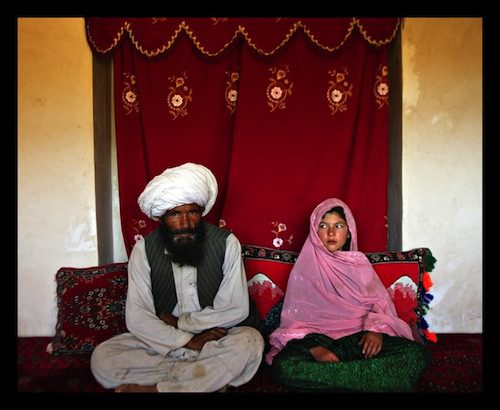
Child Marriage: A Promise of Poverty

Child Marriage: A Promise of Poverty

The average teenager worries about hanging out with friends, getting good grades, and fitting in with a group of people—not marrying a stranger and creating a home.

However, child marriage is a reality in the world’s 51 least-developed countries.  Half of all girls living in these countries are married before the age of 18, according to the United Nations. Parents arrange the marriage, and the groom can be more than twice the bride’s age.  Girls are ripped from their communities and forced into social isolation. These abrupt marriages sever a girl from her support network—a group of people necessary for helping the girl face the physical and emotional challenges of marriage.

Many cultures view girls as economic burdens, subservient individuals, or family mistakes. Marrying girls off as soon as possible alleviates the household expenses and restores the family’s reputation.

The UN Convention on the Rights of the Child (UNCRC) established that the minimum age of marriage is 18 years old. This is considered the upper limit of childhood, and the individual is fit to decide whether to be married.  Many countries continue to practice child marriage despite proven physical and psychological effects.

World Vision reported that child marriages are increasing due to the increase in global poverty crises. 14 million girls under the age of 18 are married each year.  Child marriages are most prevalent in rural, poor areas and are associated with areas of low education and healthcare.  Polygamy is common, and these marriages are bargaining chips between two parties.

South Asia (46%) and Central Africa (41%) are the top areas for child marriages.  These regions do not monitor the age of spouses carefully.  Girls who live in countries with humanitarian crises are most likely to be subjected to child marriages. Fear of rape, unwanted pre-marital pregnancies, family shame, and hunger are the main motivators for child marriage. Poverty, weak legislation, gender discrimination, and lack of alternative opportunities reinforce these motivations.

Anti-poverty organizations, such as CARE, are working in various countries to combat child marriage.  According to CARE, “As levels of education and economic opportunities increase, so does the average age of marriage.”  CARE mobilizes community organizers, parents, and tribal and religious leaders to lobby against the child marriage law in Ethiopia. Leaders are constructing savings and loans groups to empower families financially. Though child marriage still exists, this will eliminate one major cause of child marriage. Community forums now focus on the elimination of bride price, bride abduction, and child marriage.

– Whitney M. Wyszynski

Source: NBC News

April 10, 2013
https://borgenproject.org/wp-content/uploads/borgen-project-logo.svg 0 0 Borgen Project https://borgenproject.org/wp-content/uploads/borgen-project-logo.svg Borgen Project2013-04-10 10:00:092024-12-13 17:49:16Child Marriage: A Promise of Poverty
Children, Development, Foreign Aid, Global Poverty

China: A Model for Ending Poverty

China_Foreign_Aid_Africa
It is predicted that by 2015 China will decrease the number of its citizens living in poverty by 50 million. Other developing countries are taking note of China’s success and, with the help of foreign investment, hope to employ the same methods. With its growing economy and monetary assistance, China is, by example, taking a leading role in foreign aid and assisting the developing world.

China’s representative for the World Food Programme, Brett Rierson, explains how China used a bottom-up method of alleviating poverty. The Chinese government focused on aiding poor farmers by implementing policies that permitted farmers to keep a higher percentage of their profits and allocating foreign investment and technology to small villages. Investment in infrastructure, as well as improving nutrition education, women’s health, and agriculture production, are also factors responsible for China’s success story.

A majority of China’s aid goes to countries in Asia and Africa. These developing countries can mimic China’s strategy by investing in infrastructure and farming communities. Deborah Brautigam, director of the international development program at Johns Hopkins University in Baltimore, reminds us that it was China’s decision to invest in agriculture that helped reduce poverty, not just foreign assistance. African countries have the potential to lift themselves out of poverty, but it depends on how they invest the money they received from foreign aid.

China formerly received foreign aid from Western countries and is now ready to begin investing in other developing countries. With China’s help, the United Nations is on track to reaching the Millennium Development Goal of ending extreme poverty by 2030.

-Mary Penn
Source: SCMP
Photo: The Guardian

April 4, 2013
https://borgenproject.org/wp-content/uploads/borgen-project-logo.svg 0 0 Borgen Project https://borgenproject.org/wp-content/uploads/borgen-project-logo.svg Borgen Project2013-04-04 14:48:542020-05-04 08:04:43China: A Model for Ending Poverty
Activism, Children

The Revolutionary Optimists: A Documentary

“As a girl, I am always being told that things happen because of fate, but it’s the things I do, not luck that determine my fate,” says Sikha, a young girl from the slums of Kolkata and one of the children featured in “The Revolutionary Optimists,” a documentary following several children living in the slums of Kolkata and making a difference.

Salim is an eleven year old boy who lives in a community that has no water. Every morning at 4:30, he has to go to a neighboring slum to collect water for his family. By mapping their community and collecting data, he is leading a team of child activists to persuade the government to provide their community with a water tap. Priyanka is a sixteen year old girl who teaches and leads a dance troupe as a means of fighting tradition and the pressure to enter into arranged marriage and to keep girls in school. These children and others featured in the film are the child activists of Prayasam.

Founded by Ashoka Fellow Amlan Ganguly, Prayasam is an organization that doesn’t work to rescue children; rather the organization empowers them to become “agents of change.” The philosophy is to reach out to these children who live in dire circumstances but believe that they decide their own fates. Prayasam works with six child advisors and more than thirty children as core members who take the lead in spearheading projects that address social issues within their communities.

Through methods from street theater to data collection, the children have managed to organize education campaigns, first aid training, and vaccination drives for polio, and turn garbage dumps into playing grounds. Fueled by child-led activism, the work of Prayasam and its child activists has had a considerable effect on health, hygiene, and sanitation in their neighborhoods having decreased cases of malaria and diarrhea.

Inspired by the film, the BAVC Producer’s Institute for New Technologies developed a project called Map Your World based on Salim’s mapping of his own communities. The technology would allow other child activists to map their community, track and collect data on health issues, and improve health in their communities using cell phones.

“The Revolutionary Optimists” was the recipient of the Hilton Lightstay Sustainability Award this year from Sundance and is set to officially open in New York on March 29 with other cities to follow.

– Rafael Panlilio

Source: Ashoka, Prayasam, Revolutionary Optimists, Telegraph India

March 22, 2013
https://borgenproject.org/wp-content/uploads/borgen-project-logo.svg 0 0 Borgen Project https://borgenproject.org/wp-content/uploads/borgen-project-logo.svg Borgen Project2013-03-22 10:50:112024-06-04 02:43:50The Revolutionary Optimists: A Documentary
Children, Food Aid, Health

How Can Golden Rice Help End World Hunger

How Can Golden Rice Help End World HungerDr. Gerard Barry, project leader for the International Rice Research Institute (IRRI), is developing a type of genetically modified rice called “Golden Rice.” This rice contains the essential nutrient beta-carotene, the source of vitamin A, which is often lacking in the diets of people living in poverty. The GMO rice is referred to as “Golden” because beta-carotene produces an orange color once added to the rice. Dr. Barry and IRRI are working to address vitamin A deficiency in developing countries and hope that Golden Rice is the answer.
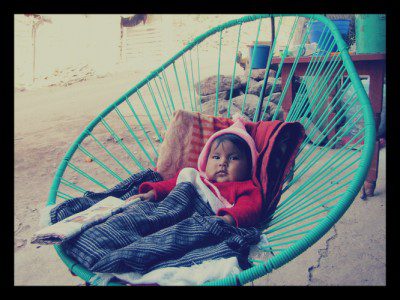
In an interview with National Public Radio, Dr. Barry spoke enthusiastically about engineering new types of rice pointing out that it is the staple food of a couple of billion people. His passion for the crop led to a career at IRRI and he quickly began working on Golden Rice which he explains has the potential to greatly benefit those living in impoverished conditions. IRRI hopes to distribute the GMO rice in Bangladesh and the Philippines, where the institute is located.

Vitamin A deficiency is a result of malnourishment and a limited diet. The consequences of this deficiency include tissue damage, blindness, and a weakened immune system. For those millions of people affected by vitamin A deficiency, one cup of Golden Rice a day could provide half the amount needed for a healthy diet. “This product has the potential to reduce the suffering of women and children and save lives,” said Dr. Barry. IRRI is working with nonprofit organizations to ensure the super rice reaches those who need it most. Once it has passed food and safety regulations, we will begin to see the real impact of Golden Rice.

– Mary Penn
Source: IrishCentral
Photo: Forbes

March 12, 2013
https://borgenproject.org/wp-content/uploads/borgen-project-logo.svg 0 0 Borgen Project https://borgenproject.org/wp-content/uploads/borgen-project-logo.svg Borgen Project2013-03-12 10:53:182020-05-24 23:29:22How Can Golden Rice Help End World Hunger
Children, Health, Women and Female Empowerment

Mexico’s First Midwifery School

Mexico's First Midwifery SchoolIn Mexico, traditional midwifery services have been fallen steadily as women choose to have their babies in hospitals. However, many citizens who still live too far from hospitals need midwives. To meet this demand, Mexico has established its first public midwifery school, and young women are learning this ancient practice with the intent to graduate.
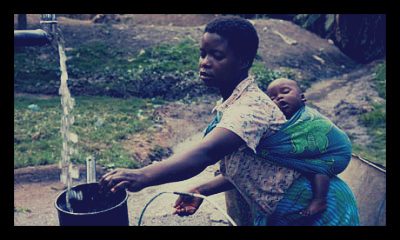
Guadalupe Maniero, the school’s director, explains that in Mexico, “hospitals are oversaturated, and so it’s a big problem.” Since the 2011 law that grants midwives a place among the country’s legally accepted medical professions, age-old stigmas have begun to fade. By helping to deliver babies, doctors have much more time to spend focusing on dangerous births in which the child and/or mother are in danger.

The four-year program grants its graduates certificates that allow them to practice in legitimate health centers. By interweaving longstanding cultural traditions with modern-day needs and practices, Mexico’s first midwifery school has the potential to benefit the entire country for years to come.

– Jake Simon

Source: NPR

March 10, 2013
https://borgenproject.org/wp-content/uploads/borgen-project-logo.svg 0 0 Borgen Project https://borgenproject.org/wp-content/uploads/borgen-project-logo.svg Borgen Project2013-03-10 10:27:082020-05-19 22:06:59Mexico’s First Midwifery School
Children, United Nations, Women and Female Empowerment

Early Marriage as a Form of Violence

Early Marriage as a Form of ViolenceIn 2020, more than 140 million girls will be attending a wedding – their own. Of these 150 million girls, 50 million will be attending their own wedding before they have even celebrated their 15th birthday.
These numbers are based on current rates of early marriage, according to the UN.

Most child marriages occur in sub-Saharan Africa and South Asia. In fact, nearly half of all young women are married before the age of 18 in South Asia. In Africa, this percentage drops, but only to one-third.

In light of International Women’s Day, whether child marriage should be considered a form of violence against women and children is up for debate. According to UN Women, early marriage increases a girl’s chance of becoming a victim of sexual violence in the home. It also limits a girl’s access to education because she is often expected to have children and take care of her husband and household. It is also associated with increased health risks due to early pregnancy and motherhood.

The Commission on the Status of Women (CSW) was recently presented a petition by the World Young Women’s Christian Association (WYWCA) that urged CSW to help end child marriage by 2030.

Yet, fighting early marriage will be an uphill battle. In many countries and cultures, marrying at a young age is traditional and is not seen as a problem. In some areas, particularly poorer countries, there are not enough resources for girls to continue in school as their male counterparts. Marriage serves as an easy way to justify girls abandoning their education to stay at home. Another issue plaguing poorer countries and people is the practice of a “bride price.” Some fathers will marry their daughters off for the price of a cow, especially during difficult times. According to Catherine Gotani Hara, Health Minister of Malawi, “Someone will come in and give a father a cow for a girl when they are eight or nine years old and when they reach puberty they will give another cow.” Out of need or necessity, a daughter may be worth two cows.

Getting around the barriers surrounding child marriage will require the support of governments and the passing of legislation that raises the legal age of marriage, as well as provides more resources for schools so that girls can reach the same level of education as their male counterparts. Currently, this is what happening in Malawi. The rate of child marriage in Malawi is currently 50 percent but by 2014, the age of legal marriage will hopefully have moved up from 15 to 18. Only time will tell if these steps will help eradicate child marriage.

– Angela Hooks

Source: Guardian

March 9, 2013
https://borgenproject.org/wp-content/uploads/borgen-project-logo.svg 0 0 Borgen Project https://borgenproject.org/wp-content/uploads/borgen-project-logo.svg Borgen Project2013-03-09 17:30:052020-05-19 22:10:29Early Marriage as a Form of Violence
Children, Developing Countries, Development, Extreme Poverty, Foreign Aid, Poverty Reduction

Teenager Helps Residents of a Garbage Dump

Teenager Helps Residents of a Garbage DumpWhile most teenage girls her age are reluctant to take out the trash, Courtney Quigley is begging her parents to return to Guatemala City to help the poverty-stricken residents of a garbage dump there. In the past, Courtney has worked with Potter House, a nonprofit which helps the 11,000 people living in the garbage dump. Out of that population, 6,500 are children.

According to the Lake Zurich Patch, Courtney first fell in love with Guatemala when she was nine and her family took a trip to build playgrounds with Kids Around the World, an organization whose primary goal is to provide safe play equipment for children who find it difficult to be “just a kid.” Courtney describes the garbage dump as being 40 acres filled with trash and yet the children somehow manage to stay positive and in high spirits.

While her family has been on other mission trips, Courtney has fallen in love with Guatemala. She was able to return in 2011, meeting a family of seven who lived in a 9 x 10 shack. One of the children, a 15-year-old girl, was pregnant and Courtney decided that something needed to be done to help improve their living condition.

To help, Courtney and her friends are hosting a “Hope’s in Style” fashion show fundraiser on February 24 at the Garlands Center in Barrington, Illinois.

Although she is now living in the United States, the memory of the children in Guatemala still remains vivid in her mind.

“There is nothing here that is hopeful, but when you shake hands, hug, and talk to people, they are so full of hope, so full of faith,” Courtney said. Their determination to make the best of their situation is what inspires her to keep moving forward.

 – Pete Grapentien

Source: Lake Zurich Patch

February 24, 2013
https://borgenproject.org/wp-content/uploads/borgen-project-logo.svg 0 0 Borgen Project https://borgenproject.org/wp-content/uploads/borgen-project-logo.svg Borgen Project2013-02-24 12:47:412020-05-11 03:55:29Teenager Helps Residents of a Garbage Dump
Children, Developing Countries, Health

Oscar Nominated Film Documents Children’s Heart Surgery

Filmed in 2012, ‘Open Heart’ documents the journey of eight patients going through surgery at the Salam Center in Khartoum, Sudan. Salam is Africa’s only state-of-the-art, free-of-charge cardiac hospital offering children’s heart surgery and has been operating since 2007.

‘Open Heart’ follows Dr. Gino Strada, a surgeon at Salam and features Angelique Tuyishimere, the six-year-old daughter of a Rawandan farmer. Close to a third of the patients at Salam are under 14 making children’s heart surgery a common occurence at Salam.

Salam employs four cardiac surgeons  and is set up for 1,500 operations per year. However, due to funding issues, last year only 600 patients were operated on. Dr. Strada is forward about admitting the need in Africa is more than Salam can aid, but is still very happy with the progress that has been made and optimistic about the future.

Now, Davidson and the doctors – Rusingiza and Strada – will be attending the Oscars. If passport and visa issues are resolved, six-year-old Angelique and her dad will also be attending. Although he stands the chance of being honored at the Oscars, documentarian Kief Davidson still has not lost sight of the original problem being addressed – the lack of affordable healthcare in Africa, especially concerning the preventable diseases fought at Salam.

– Pete Grapentien

Source ABC News

February 24, 2013
https://borgenproject.org/wp-content/uploads/borgen-project-logo.svg 0 0 Borgen Project https://borgenproject.org/wp-content/uploads/borgen-project-logo.svg Borgen Project2013-02-24 09:35:432024-12-13 17:53:41Oscar Nominated Film Documents Children’s Heart Surgery
Children, Education

Investing in the Future with Universal Pre-K

Investing in the Future with Universal Pre-KIn his State of the Union address, President Obama called for action on something just as unprecedented as universal healthcare in America – universal preschool.

The White House has released an infographic sharing that at-risk children who do not receive a high-quality early education are 25 percent more likely to drop out of school, 40 percent more likely to become a teen parent, 50 percent more likely to be placed in special education, 60 percent more likely to never attend college and 70 percent more likely to be arrested for a violent crime.

The investment in preschools, therefore, means investing in the future of American life, according to an administration that has championed demands that every child one day receive an affordable college education, and who has also called for sharp restrictions to be placed on assault weapons as a result of increasingly sensationalized acts of gun violence.

The investment in early education may raise a generation out of poverty, as current reports claim that the United States provides, at the moment, some of the least access to the social mobility of the world’s utmost developed nation. This has proven disheartening to a society that functions on the ideals of the American Dream, which is that anyone can achieve anything if they work hard enough.

Investing in the future is a principle that is both bipartisan and essential to the capitalist identity of America. We can only hope that legislators can overcome their differences to invest in this preventative social program, as has been done in the states of Georgia and Oklahoma.

– Nina Narang

Sources: The Huffington Post, The Washington Post
Photo: Post University

February 19, 2013
https://borgenproject.org/wp-content/uploads/borgen-project-logo.svg 0 0 Borgen Project https://borgenproject.org/wp-content/uploads/borgen-project-logo.svg Borgen Project2013-02-19 14:42:132024-12-13 17:49:13Investing in the Future with Universal Pre-K
Page 137 of 137«‹135136137

Get Smarter

  • Global Poverty 101
  • Global Poverty… The Good News
  • Global Poverty & U.S. Jobs
  • Global Poverty and National Security
  • Innovative Solutions to Poverty
  • Global Poverty & Aid FAQ’s
Search Search

Take Action

  • Call Congress
  • Email Congress
  • Donate
  • 30 Ways to Help
  • Volunteer Ops
  • Internships
  • Courses & Certificates
  • The Podcast
Borgen Project

“The Borgen Project is an incredible nonprofit organization that is addressing poverty and hunger and working towards ending them.”

-The Huffington Post

Inside The Borgen Project

  • Contact
  • About
  • Financials
  • President
  • Board of Directors
  • Board of Advisors

International Links

  • UK Email Parliament
  • UK Donate
  • Canada Email Parliament

Get Smarter

  • Global Poverty 101
  • Global Poverty… The Good News
  • Global Poverty & U.S. Jobs
  • Global Poverty and National Security
  • Innovative Solutions to Poverty
  • Global Poverty & Aid FAQ’s

Ways to Help

  • Call Congress
  • Email Congress
  • Donate
  • 30 Ways to Help
  • Volunteer Ops
  • Internships
  • Courses & Certificates
  • The Podcast
Scroll to top Scroll to top Scroll to top