• Link to X
  • Link to Facebook
  • Link to Instagram
  • Link to TikTok
  • Link to Youtube
  • About
    • About Us
      • President
      • Board of Directors
      • Board of Advisors
      • Financials
      • Our Methodology
      • Success Tracker
      • Contact
  • Act Now
    • 30 Ways to Help
      • Email Congress
      • Call Congress
      • Volunteer
      • Courses & Certificates
      • Be a Donor
    • Internships
      • In-Office Internships
      • Remote Internships
    • Legislation
      • Politics 101
  • The Blog
  • The Podcast
  • Magazine
  • Donate
  • Click to open the search input field Click to open the search input field Search
  • Menu Menu

Archive for category: Aid

Aid, Global Poverty, Volunteer

5 Reasons to Join the Peace Corps

Peace Corps
Founded by President Kennedy in 1961, the Peace Corps has enabled thousands of Americans to serve abroad. If you’re thinking about a commitment to the Peace Corps, here are five reasons to sign up.

To Help Others

Peace Corps volunteers are driven by the need to serve others. They are typically placed abroad for commitments of 27 months, during which volunteers assist in local development projects.

These projects may deal with issues of food security, global health or gender equality. Volunteers partner with NGOs to ensure measurable results in the communities that they serve.

For example, one of the organization’s global health initiatives is the Stomping Out Malaria program. The initiative seeks to halt the spread of malaria through Africa. Volunteers partner with organizations like Malaria No More to support those who are endangered by the deadly but preventable disease.

To See the World

The mission of the organization is to promote world peace and friendship. Volunteers serve as citizen diplomats abroad and encourage international cooperation. For those who want to see the world, the organization offers a unique opportunity to live and work abroad.

Its volunteers spend several months overseas. Almost 150 countries have received volunteers to date and there are 64 countries that partner with the organization today.

Applicants can select up to three preferred locations and work sectors. It is also possible to select a “wherever I am needed” option that places volunteers in a location that would benefit the most from a Peace Corps placement.

After 27 months of service, volunteers are also given an $8,755 stipend (before taxes). This money can be used for travel once the period of service has ended.

To Grow as a Person

Volunteers gain many different skills during their time of service. This can be useful for both personal and career development.

The organization opens new doors to other cultures that would be difficult to experience otherwise. For example, the organization provides instruction in a wide variety of languages.

This is also a great way to build a career. Volunteers learn leadership and teamwork, which are invaluable in almost every professional setting. Employers value cultural awareness and the ability to adapt to difficult situations.

For those looking to start a career in international development, the Peace Corps can be a great way to gain experience and make connections abroad.

To Help Defer Student Loans

Most Peace Corps volunteers are college graduates, which means a lot of volunteers will have some student loan debt. Those who serve in the Peace Corps are still solely responsible for these loans. However, they may qualify for a deferment on federal loans while serving in the Peace Corps.

Additionally, students with Perkins loans may qualify for a partial cancellation of these loans, depending on the length of their Peace Corps service as well as other considerations.

To Join a Growing Network of Returned Volunteers

The benefits of joining the Peace Corps don’t end after 27 months. Returning volunteers join a network of over 200,000 people who have completed their service.

This network can be used to keep in touch, meet other volunteers or assist with reintegration back home. Returned volunteers who are looking for a job will find the network helpful as well.

– Kevin McLaughlin

Sources: Peace Corps 1, Peace Corps 2, Humanitarian Jobs
Photo: MIIS Communications

July 17, 2015
https://borgenproject.org/wp-content/uploads/borgen-project-logo.svg 0 0 Borgen Project https://borgenproject.org/wp-content/uploads/borgen-project-logo.svg Borgen Project2015-07-17 11:12:172024-12-13 17:51:465 Reasons to Join the Peace Corps
Aid, Global Poverty, Humanitarian Aid, Refugees and Displaced Persons

In Transit: The World’s Fleeing Refugee Crisis

refugee_crisis
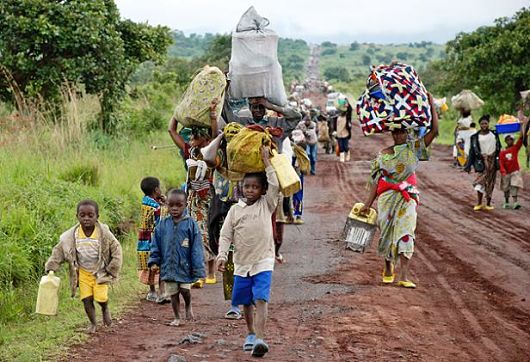
On July 1, 2015, the U.N. High Commissioner for Refugees, Antonio Guteress, addressed a congregation of international humanitarian organizations in Geneva about the escalating challenges his agency faced in what is widely being called the greatest refugee crisis the world has ever known.

“For an age of unprecedented mass displacement, we need an unprecedented humanitarian response and a renewed global commitment to tolerance and protection for people fleeing conflict and persecution,” the High Commissioner urged.

In his speech Guteress told listeners, “The moment of truth had arrived.” He was speaking in regards to the tremendous strain the world’s current refugee crisis has placed on the resources of Europe and other host countries. Across the globe, fleeing refugees are migrating at unprecedented rates.

The world’s current refugee crisis cannot be explained in simple terms. It is a complex issue with many factors involved. Political instability, devastating wars and lack of adequate economic opportunities are all reasons why people are leaving their countries in search of greener pastures.

In last month’s United Nations High Commissioner for Refugees (UNHCR) Global Trends Report: World at War, the estimated number of people displaced due to war, conflict and persecution was a staggering 59.5 million at the end of 2014. On average, 42,500 people are newly displaced per day.

A few countries are well known to all, such as Iraq, Afghanistan and Syria, but they do not represent the entire spectrum of refugees. The refugees come from Myanmar, Sudan, Ukraine, Pakistan, North Korea, Mexico and many other South American countries. Most are currently fleeing to Europe, but others are going to the United States, Indonesia and Australia.

It truly is a global refugee crisis.

In a newly published Human Rights Watch report, “The Mediterranean Migration Crisis,” senior analysis reported that in 2014, over 219,000 refugees attempted to navigate the Mediterranean Sea into Europe, which is considered the world’s deadliest crossing. This was up from 60,000 the previous year. So why are people enduring such dangerous undertakings for a better life?

The report interviewed over 150 refugees and asylum seekers from Somalia, Syria, Eritrea and Afghanistan. The migrants echoed similar reasons for leaving their countries—lack of security and basic necessities such as food, water and medicine. Not surprisingly, these are some of the poorest countries in the world with some of the direst need for humanitarian aid.

There is a direct correlation between humanitarian aid and fleeing refugees. The nations with the largest need for humanitarian aid are also responsible for some of the largest number of fleeing refugees.

Humanitarian aid is used to run programs that provide potential refugees with more than just food and water. Humanitarian efforts provide tools for farmers to grow crops that they can sell in market places, providing income to their families and strengthening their local markets.

The aid also provides educational facilities, training people with the skills that they need to be successful. People who are finding economic stability in their own nations are less likely to flee.

However, passing aid to the ailing countries is not the only way the world can help solve the refugee crisis. Host nations and coalitions such as the European Union (EU) need aid to support refugee and asylum seeking processing facilities. The burden of dealing with so many refugees must be equally distributed among developed nations. The blind eye approach many developed countries are practicing is not helping the situation.

Even though the United States is not the destination for the majority of refugees, it is tremendously affected by the issues of extreme poverty that are driving these migrations. An example is the situation in Greece, a country already preoccupied with economic collapse and in desperate need of a bailout. The U.N. reported more than 48,000 refugees entered the country in 2014. The economic pressure of all these issues reduces the buying power of Greece, in turn reducing U.S. exports to the country.

This year, the U.N. has declared that it needs no less than $18.1 billion to meet the needs of over 80 million people. Currently it has only received 26% of that amount.

The United States cannot continue to ignore the global refugee crisis and must work with the EU to provide more aid. The Borgen Project has demonstrated extensively how providing foreign aid in such situations reduces global threats to the United States and bolsters the U.S. economy.

If the United States does not help provide more aid and the refugees continue to flee, years of development and aid will all go to waste. Rebuilding developing nations will be a lot more expensive for future generations, considering there will be no one there left to help rebuild.

— Adnan Khalid

Sources: Human Rights Watch, International Organization for Migration, U.N. 1, U.N. 2, UNHCR
Photo: NGO News Africa

July 17, 2015
https://borgenproject.org/wp-content/uploads/borgen-project-logo.svg 0 0 Borgen Project https://borgenproject.org/wp-content/uploads/borgen-project-logo.svg Borgen Project2015-07-17 11:00:272024-12-13 17:51:48In Transit: The World’s Fleeing Refugee Crisis
Aid, Global Poverty, Government, USAID

Improving Governments Decreases Poverty

Improving Governments Decreases Poverty - Borgen Project
A country is as strong as their government, and as the world comes closer to ending global poverty, policies in developing nations are beginning to improve. Poor countries are adopting new ways to help the public and, as a result, find a decline in poverty. When people have access to resources like food, sanitation and education, they have a greater opportunity to improve their lives. Although resources are vital to improving governance, it is just as important to establish equal political participation.

The World Bank understands the importance of proper governance and collects data of the progress in developing countries. The data collected includes “Gender Statistics, African Development Indicators, and Education Statistics,” says The World Bank. Keeping track of governments that are improving policies will determine the rate of poverty. Measuring statistics gives a better look at what is working to help improve the lives of those in need.

USAID has taken measures to better the lives of those living in Afghanistan. They have brought safety to the population and voter inclusion for women. “Since 2012, USAID has supported over 1,200 community improvement activities, such as construction of potable water pumps and maintenance for local schools and clinics,” according to USAID’s website. Elections in Afghanistan have greatly improved; representation of women has brought a greater turnout of voters.

Latin America has also experienced economic growth thanks to the efforts of USAID. “Political advances have been notable as well: free elections, vibrant civil society, and responsive governments are mostly the norm,” says USAID. They continue to focus on drug trade, civil rights and natural disasters. However, USAID has improved family planning, revitalization in Haiti and the decline of violence in El Salvador.

The government of a country represents the health and safety that the people are receiving. If development continues to progress, poverty will continue to decline. It is vital that the World Bank continues to track progress and organizations like USAID help those in poor countries.

– Kimberly Quitzon

Sources: World Bank, USAID, USAID 2,
Photo: UN

July 17, 2015
https://borgenproject.org/wp-content/uploads/borgen-project-logo.svg 0 0 Borgen Project https://borgenproject.org/wp-content/uploads/borgen-project-logo.svg Borgen Project2015-07-17 09:21:382020-07-10 12:39:19Improving Governments Decreases Poverty
Aid, Global Poverty, Health

Recent Trends in Global Public Health Funding

Global_Public_Health

While aid for global public health programs skyrocketed just after the Millennium Development Goals (MDGs) were announced 15 years ago, aid has stalled in the past few years, according to a recent report by the University of Washington’s Institute for Health Metrics and Evaluation (IHME).

The MDGs, a set of eight anti-poverty goals with broad international backing, expire this year. Because of them, there have been significant reductions in child mortality and broad treatment of HIV/AIDS, malaria and tuberculosis in the developing world. However, donors must realize that continued funding is necessary to sustain the progress already achieved and make further improvements in public health internationally.

The report from the IHME found that there was an incredible surge in funding after the MDGs were announced, jumping from 5.4% prior to 2000 up to 11.4%. In the past 15 years, this growth in funding amounted to a total of around $228 billion invested in health-related causes. However, that growth has essentially stalled and, in some cases, reversed—from 2013 to 2014, total spending on health even decreased by 1.6%.

This trend can probably be attributed to waning enthusiasm for health-related aid once the initial excitement of the MDGs died down and their 2015 deadline draws to a close. Additionally, it could be a symptom of more cash-strapped governments seeking to trim their budgets after the 2008 global financial crisis.

While overall funding for health went down between 2013 and 2014, a few national donors did manage to increase their contributions, including the United Kingdom, Australia and Japan. Nongovernmental organizations also modestly increased their funding, including UNICEF, the Bill and Melinda Gates Foundation, and the African Development Bank.

Even modest changes in health aid funding would have a disproportionate impact on certain populations who have differing disease burdens. For example, 84% of funding for the treatment and prevention of HIV/AIDS comes from the United States. A small percentage decrease in funding for HIV/AIDS relief from the United States would have a much greater negative impact than a small percentage decrease from a smaller donor.

The IHME report, by describing flows of global health financing, reveals the need not only to maintain or increase aid but to diversify it also. Katie Leach-Kemon, a co-author of the study, said of HIV/AIDS funding that “diversifying the portfolio of financing sources for this area is crucial for safeguarding the progress made in combating the HIV epidemic.” Vulnerable populations would have access to more consistent aid if funding sources were spread more evenly across a wider variety of donors. That way, if funding trends continue to fluctuate, as they do in the report, those who typically rely on robust health aid programs, such as Ethiopia, Haiti and Kenya, will not find themselves cut off.

Health funding studies like the IHME report serve as excellent roadmaps that describe successes in global public health programs and reveal their shortcomings as well. Clearly, international initiatives with broad support, such as the MDGs, serve to jump start health aid. On the other hand, in the past five years, the incidence of tuberculosis was as high as 13% in some areas, HIV/AIDS as high as 20% and under-5 child mortality as high as 18%. Health aid has made huge strides in the past 15 years, but in order to continue reducing the global disease burden and improve the lives of people all over the world, funding has to be maintained.

– Derek Marion

Sources: Humanosphere, NPR, IHME, World Bank
Photo: Flickr

July 13, 2015
https://borgenproject.org/wp-content/uploads/borgen-project-logo.svg 0 0 Borgen Project https://borgenproject.org/wp-content/uploads/borgen-project-logo.svg Borgen Project2015-07-13 10:20:162020-07-09 22:52:03Recent Trends in Global Public Health Funding
Aid, Global Poverty, Volunteer

How to Become an International Aid Worker

How_to_Become_an_International_Aid_Worker
Thinking of becoming an international aid worker? Concerned about world issues like human rights, sustainability, agriculture, industrial development and natural disasters? Want to help people around the globe who need healthcare, housing, sanitation, education and relief from natural disasters?

Thousands of people with such noble ideals and ambitions are at work in developing countries. Their paths to working abroad were probably quite varied and more horizontal than vertical for a number of years before they headed overseas. Here is some other essential information to consider before planning a career as an international aid, development or humanitarian worker.

The first step is earning a degree. Like any other job, it should be in a field of strong interest that builds knowledge and develops talents and skills. The subjects most relevant to international aid work are sociology, social policy, human rights, languages, economics, sanitation and logistics. Workers with degrees in medicine, nursing, healthcare and water engineering are currently in high demand.

After earning a degree (in fact, more importantly than having a degree), one must acquire relevant experience. In reality, it is the most viable entry path to these highly competitive jobs. Because it is a catch 22—needing experience to acquire a job but needing a job to acquire experience—many beginners start as volunteers or interns in charities, nonprofits, and volunteer or nongovernmental organizations. Obviously, self-funding is necessary at this stage.

These experiences provide the training needed to move up because most organizations do not have the funding to provide extensive training programs. However, Oxfam International and the United Nations are two organizations that do provide structured internships and graduate development programs.

Once some experience has been acquired, next steps vary greatly. It is necessary to be open to changing career paths, as development needs change. Some typical work activities at this phase include hands-on project management, conducting needs assessments and organizing fundraising.

It may be that an advanced degree or some short courses will provide the necessary skills to progressing on the path to a desired position. For example, engineers, health care workers and disaster relief workers require advanced degrees and special skills. The same is true for people in microfinance and logistics. It is equally necessary to change organizations often in a horizontal or zigzag path in order to gain varied and relevant experiences.

After 10 to 15 years, it becomes possible to work in a higher level capacity. In this phase, consulting, general leadership development, policy and strategy development, or budget control are some of the possible responsibilities. These positions, whether domestic or international, are highly competitive, but they usually allow longer commitments and require less mobility.

No matter the degree, skills or experiences needed to become an international aid worker, it is also essential to begin with certain personality traits. These characteristics include: willingness to work more than 40 hours a week on a somewhat unpredictable schedule, ability to communicate with a variety of people, capacity to work under pressure and willingness to travel and live in basic conditions.

Working in the international aid field has its ups and downs like any other field. However, the entry and career paths are very different. International aid workers are among the most intelligent, skilled, resourceful and hardworking people in the world. They also have the satisfaction of knowing that the world is a better place because of the work that they do.

– Janet Quinn

Sources: All About Careers 1, Prospects 1, All About Careers 2, Prospects 2, All About Careers 3, Prospects 3, Humanitarian Jobs
Photo: One

July 9, 2015
https://borgenproject.org/wp-content/uploads/borgen-project-logo.svg 0 0 Borgen Project https://borgenproject.org/wp-content/uploads/borgen-project-logo.svg Borgen Project2015-07-09 09:43:122024-05-27 09:25:12How to Become an International Aid Worker
Aid, Foreign Aid, Migration

The Mediterranean Migrant Crisis

migrant_crisis
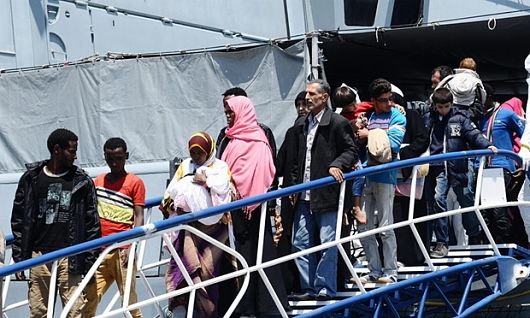
At the start of July 2015, plans were announced for Britain to spend more than 300 million pounds in international aid, which is targeted towards Syria and the Sahel Region of Africa and includes countries such as South Sudan, Sudan, the Central African Republic and Nigeria. The money is supposed to help stabilize the lives of people in those regions in order to relieve the Mediterranean migrant crisis by reducing the influx of migrants traveling to the European Union, especially to Italy and Greece.

As the Washington Post states, migrants flee from their home countries to Europe because of poverty, civil war, violence and political instability. The largest number of migrants by boats are Syrians, who are attempting to flee from a civil war which has left over 200,000 dead and more than 4 million displaced. The second greatest number of refugees comes from Eritrea, which is suffering from economic issues, a repressive government and forced conscription. A large number of migrants also come from Libya, Mali and Nigeria.

As of May 2015, the U.N. estimated that over 60,000 migrants crossed over the Mediterranean Sea since the start of 2015, and another 1,800 died during the crossing.

The journey across the Mediterranean by boat is very perilous, and migrants cross because they have no other choice. They normally pay a smuggler who forces them into an old and unreliable boat (sometimes at gunpoint) and often leaves the boat halfway across the Mediterranean, relying on rescue teams from Italy and other E.U. countries to get the migrants safely to shore.

Some blame the rescue teams for the influx of immigrants. While it is true that large numbers of people attempt the dangerous journey across the Mediterranean in order to migrate into Europe — there were 220,000 unauthorized immigrants in Europe in 2014 — the rescue teams are not to blame for the large numbers of people attempting the crossing. Since Italy shut down its Mare Nostrum rescue program last October, numbers of migrants trying to cross the Mediterranean remained about the same. However, the death toll jumped dramatically. From January to April 2014, only 96 died while crossing the Mediterranean, compared to 1,500 during the first four months of 2015.

Nevertheless, some are still convinced that rescue teams are responsible for the higher number of people attempting to cross the Mediterranean, and the situation has led to the rise of the far-right in Europe, especially in Italy and France, where levels of anti-immigrant rhetoric are high.

In reality, migrants only try to cross the Mediterranean because they do not have another choice. As one migrant put it, “We are between hell and the deep blue sea.”

Britain hopes that the money it is adding to the international aid budget will help lower the number of migrants by increasing political stability in regions that are suffering. However, even if Britain’s plan works, it is still unsure what will happen to those who have already migrated to Europe. There were plans to relocate 40,000 Italian and Greek refugees to other parts of Europe, but those plans appear to have stalled due to anti-immigrant sentiments.

– Ashrita Rau

Sources: Express, The Guardian, Washington Post, The Independent, The Atlantic
Photo: The Guardian

July 9, 2015
https://borgenproject.org/wp-content/uploads/borgen-project-logo.svg 0 0 Borgen Project https://borgenproject.org/wp-content/uploads/borgen-project-logo.svg Borgen Project2015-07-09 09:11:142024-12-13 17:51:50The Mediterranean Migrant Crisis
Aid, Development, Global Poverty

How Foreign Aid Wins Hearts, Reduces Extremism

foreign_aid

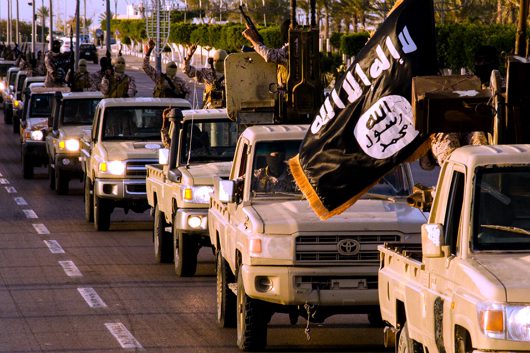
On June 2, 2015, Iraqi Prime Minister Heider Al-Abadi spoke to an international coalition of over 20 countries in Paris in a bid to refresh the coalition’s strategy on combating violent extremists such as the self-proclaimed Islamic State, or ISIS.

The Iraqi leader requested more foreign aid, specifically intelligence and weapons, and blamed Western nations for not doing enough to stop foreign fighters from joining ISIS.

The next day, at a United Nations forum discussing the role of the media in combating terrorism, U.N. Under-Secretary-General for Political Affairs, Jeffrey Feltman said, “Groups like ISIS succeed because they offer young people opportunities to engage with their peers and provide a space where they can bond over their grievances, hopes and deeply held desire for a world that is just and fair.”

The fighting that has raged throughout Iraq has left many families desolute and has taken a tremendous toll on children. According to the UNICEF, violations against children has increased by 75% over the last year. This includes abduction and the recruitment of child soldiers.

Missing amidst the talks of military and media foreign aid strategies to combat ISIS is the lack of humanitarian aid investments for displaced Iraqis. U.N. officials warn that millions of Iraqis caught between ISIS and the Iraqi Army could be without food or shelter over the next six months unless $497 million is raised in emergency funds.

As if the current demands are not hard-pressing, on June 23, the World Health Organization has asked for an additional $60 million to prevent 77 healthcare clinics from shutting down. The lack of water and soaring temperatures have led to a rise in dehydration among displaced Iraqis. With desperation mounting, Iraqis are looking for alternatives to extremist groups to find support. However, these alternatives often do not exist.

The National Bureau of Economic Research (NBER) has shown that when the Iraqi government provides service provisions across the socioeconomic spectrum, there is a reduction in violent insurgency. According to the NBER, a 10% increase in labor-related spending generated a 15% to 20% decline in labor-intensive violence in Iraq. As the violence decreases, social and economic stability ensues.

Unfortunately, according to the Organization for Economic Co-operation and Development, official development assistance to the poorest countries fell by 8% between 2013 and 2014, excluding debt relief nations where the figures are higher at 16%. Iraq oversaw a spike in violence over that same period of time.

Providing intelligence and weapons may help to slow down ISIS. However, continued foreign aid investments into social and economic programs in Iraq and Syria are needed to ultimately reduce global threats.

If the international community does not supply the necessary foreign aid to Iraq, if people are not fed and do not have their basic health needs met, they will have no choice but to turn to ISIS, a group ready to supply them with work and food. This outcome would be catastrophic for the Iraqi government as well as the United States and our allies.

– Adnan Khalid

Sources: National Bureau of Economic Research 1, National Bureau of Economic Research 2, The Guardian, The Organization for Economic Co-operation and Development, UN 1, UN 2, UNICEF, Wall Street Journal
Photo: NY Post

July 9, 2015
https://borgenproject.org/wp-content/uploads/borgen-project-logo.svg 0 0 Borgen Project https://borgenproject.org/wp-content/uploads/borgen-project-logo.svg Borgen Project2015-07-09 08:03:522024-12-13 17:51:44How Foreign Aid Wins Hearts, Reduces Extremism
Aid, Aid Effectiveness & Reform, Food & Hunger, Food Aid, Global Poverty, Refugees and Displaced Persons

UN Scales Back Food Aid for Syrian Refugees

UN-Scales-Back-on-Food-Aid-for-Syrian-Refugees
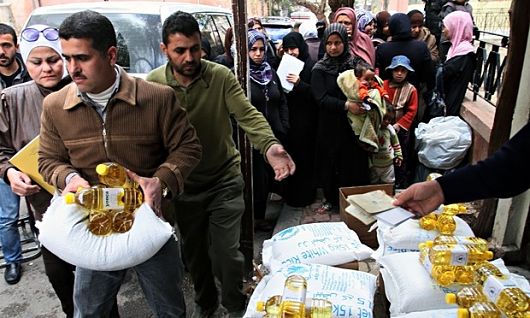
In the wake of large budget cuts and conflict with the Islamic State, or ISIS, the United Nations World Food Programme (WFP) is scaling back its food aid for more than 1.2 million Syrian refugees in Lebanon. These cuts will manifest themselves in the monthly food assistance vouchers that Syrian refugees receive. Normally valued at $19 per person, the vouchers will be reduced to $13.50 as of July.

Around 75% of Syrian refugee households in Lebanon are undergoing “some level of food insecurity,” according to a recent WFP survey. In addition, roughly 800,000 refugees in Lebanon qualify for food vouchers, and this scale-back is arriving right in the middle of Ramadan.

The WFP was banking on a ceasefire between ISIS and the Syrian government in order to let Syrian farmers harvest wheat stored in ISIS territory. No such ceasefire took place.

“That wheat that is harvested cannot be brought across lines of conflict into the area where it is needed most by people who are suffering now into a fifth year of this conflict,” WFP Executive Director Ertharin Cousin told the Associated Press.

A WFP press release issued earlier this month points out that the WFP’s refugee operations are currently 81% underfunded. The WFP is requesting $139 million in order to continue aiding refugees in Lebanon, Jordan, Egypt, Turkey and Iraq through the summer.

“We are extremely concerned about the impact these cuts will have on refugees and the countries that host them,” WFP Regional Director Muhammad Hadi told the U.N. News Centre. “Families are taking extreme measures to cope such as pulling their children out of school, skipping meals and getting into debt to survive. The long-term effects of this could be devastating.”

– Alexander Jones

Sources: McGuirk, UN, Wood
Photo: The Guardian

July 8, 2015
https://borgenproject.org/wp-content/uploads/borgen-project-logo.svg 0 0 Borgen Project https://borgenproject.org/wp-content/uploads/borgen-project-logo.svg Borgen Project2015-07-08 10:47:072024-06-11 02:48:08UN Scales Back Food Aid for Syrian Refugees
Advocacy, Aid, Global Health, Health

Report Uncovers Decline of Global Health Funding

global_health_funding_decline

According to a new report, countries around the world contributed 1.6% less to global health projects in 2014 as compared to 2013. This is only the second time in the past 15 years a reduction in funding has been documented.

The report, published by The Institute for Health Metrics and Evaluation in Seattle, shows that while global health funding grew by 5.4% annually in the 1990s and increased to 11.3% annually from 2000-2010, it stalled around a year later.

Overall, the world has contributed $227.9 billion to global health funding in poorer countries since the turn of the century, when the United Nations revealed its Millennium Development Goals.

The eight goals, which focus on providing monetary funding to pressing global issues, led to a surge in global health funding.

The largest donor has consistently been the United States, which gave $12.4 billion last year toward the treatment and prevention of AIDS and malaria in developing countries.
However, only three nation’s governments increased overall funding between 2013 and 2014: the United Kingdom, Australia and Japan.

Specifically, funds allocated to improving maternal health around the world decreased by 2.2% and supplies used for the treatment and prevention of tuberculosis were cut by 9.2%.

In addition to revealing the decrease in funding for global health projects, the report also gives insight into disease funding. It shows that some treatments and programs are favored over others.

For example, last year, over $3 billion was allocated toward vaccines for children, over $1 billion was spent on children nutrition initiatives, and $778 million was put toward family-planning projects.

In contrast, only $164 million was spent addressing mental health issues and only $31 million was used for anti-tobacco programs.

David Molyneux, Peter Hotez and Alan Fenwick are three scientists who became frustrated that certain treatments and programs receive more funding than others. Specifically, the three wanted the world to know about 17 largely ignored diseases in the world’s poorest countries.

These diseases can result in blindness, deformed limbs and stunted growth, but are ignored because they have disappeared from the developed world.

With 1.4 billion people suffering from these illnesses, which include onchocerciasis, lymphatic filariasis and leishmaniases, the scientists decided to stimulate awareness about them by coining the term “neglected tropical diseases.”

Molyneux and Hotez first used the term at a World Health Organization (WHO) meeting in Berlin in 2003 to “market” the diseases to politicians and private foundations. It was approved at another WHO meeting the following year, which was also in Berlin.

As a result, the Department of Control of Neglected Tropical Diseases was formed, and since 2006, around a billion dollars has been pledged by government and aid organizations to the fight against neglected tropical diseases.

Pharmaceutical companies are also donating 1.4 billion treatments of the diseases each year, resulting in 700 million people being treated in 2014.

In addition, last month Dr. Matshidiso Moeti, who directs WHO operations in Africa, announced a plan to create an entity with the sole purpose of directing work related to neglected tropical diseases. This is just one part of efforts by the international community to rid the continent of some of these diseases within the next five years.

While some treatments and programs are favored over others, people like Molyneux, Hotez and Fenwick are giving a voice to those in developing countries suffering from largely ignored illnesses such as the neglected tropical diseases.

– Matt Wotus

Sources: International Business Times, International Business Times, Humanosphere
Photo: Johns Hopkins University

July 7, 2015
https://borgenproject.org/wp-content/uploads/borgen-project-logo.svg 0 0 Borgen Project https://borgenproject.org/wp-content/uploads/borgen-project-logo.svg Borgen Project2015-07-07 07:13:282020-07-13 11:53:05Report Uncovers Decline of Global Health Funding
Aid, Global Poverty, Philanthropy

The Benefits Of Corporate Philanthropy

Corporate Philanthropy
Although much important philanthropic work is done by volunteers on the ground, it is important to remember that some of the most significant contributions to worthy causes come in the form of monetary aid. Donations from wealthy individuals and groups are the life-force for nonprofit organizations trying to help those in need. Some of the most influential benefactors are large corporations which donate to causes as small as funding local sports tournaments and as large as making a stand against human trafficking.

Companies invest billions of dollars each year in efforts to make a positive impact on the world. According to the 2012 Giving in Numbers report generated by the Committee Encouraging Corporate Philanthropy (CECP), corporate giving is on the rise. From the survey of 240 companies, the CECP discovered that giving in the year 2012 totaled US$20.3 billion. This sum was a substantial increase from the previous year and continues the rise in corporate donations observed in the 5 years prior. From 2007 to 2012, the CECP recorded a 42 percent increase in corporations’ giving numbers.

Matched employee donations account for a large part of these numbers for at least 181 of the 240 companies surveyed. Per company, the average total amount raised from employee payroll deductions in 2012 was $2.33 million. The efforts of employees to donate to worthy causes are beneficial to the corporations for which they work as it makes the corporations, as a whole, appear more charitable.

Employees are more likely to contribute to causes when they have wide access to those that are important to them and are not restricted in their giving opportunities. In order to meet their corporate philanthropy objectives, some companies have begun to utilize social giving platforms that allow employees to form groups around the issues about which they are most passionate. An example of one of these platforms is Givelocity, a social network that allows people to join “giving circles” revolving around the issues users find most important. Companies that are comfortable with doing business online may find that these platforms provide a new method to get their employees involved in philanthropic activities.

These glowing facts and statistics aside, there is a dark side to corporate philanthropy. One might wonder whether companies donate to causes because they care about their impact or merely because they want to bolster their own success. Donating to the community creates a heroic image for companies both large and small, and the goodwill that corporate philanthropy generates can increase customer interest and improve consumer opinions. Although corporate donations are impactful now, one might worry that if generosity becomes bad for business, companies might choose selfishness instead.

Whether or not the motives of giving corporations are wholly admirable, it cannot be denied that the efforts of companies to give back to the community are effective in growing local economies. Corporate donations are, after all, derived from the community in the first place and are rightly used to generate income back in that community. In areas below the poverty line, companies are able to generate new markets and opportunities for people who may never have had access to certain products before. In this way corporate philanthropy benefits both the buyer and supplier. From a savvy business perspective, new consumer income is readily available to go right back to the company, but it also means a higher quality of life for those taking advantage of the growing economy.

– Katie Pickle

Sources: Houston Chronicle, The Corporate Social Responsibility Newswire
Photo: Causecast

July 6, 2015
https://borgenproject.org/wp-content/uploads/borgen-project-logo.svg 0 0 Borgen Project https://borgenproject.org/wp-content/uploads/borgen-project-logo.svg Borgen Project2015-07-06 13:33:132020-07-11 11:31:49The Benefits Of Corporate Philanthropy
Page 64 of 65«‹62636465›

Get Smarter

  • Global Poverty 101
  • Global Poverty… The Good News
  • Global Poverty & U.S. Jobs
  • Global Poverty and National Security
  • Innovative Solutions to Poverty
  • Global Poverty & Aid FAQ’s
Search Search

Take Action

  • Call Congress
  • Email Congress
  • Donate
  • 30 Ways to Help
  • Volunteer Ops
  • Internships
  • Courses & Certificates
  • The Podcast
Borgen Project

“The Borgen Project is an incredible nonprofit organization that is addressing poverty and hunger and working towards ending them.”

-The Huffington Post

Inside The Borgen Project

  • Contact
  • About
  • Financials
  • President
  • Board of Directors
  • Board of Advisors

International Links

  • UK Email Parliament
  • UK Donate
  • Canada Email Parliament

Get Smarter

  • Global Poverty 101
  • Global Poverty… The Good News
  • Global Poverty & U.S. Jobs
  • Global Poverty and National Security
  • Innovative Solutions to Poverty
  • Global Poverty & Aid FAQ’s

Ways to Help

  • Call Congress
  • Email Congress
  • Donate
  • 30 Ways to Help
  • Volunteer Ops
  • Internships
  • Courses & Certificates
  • The Podcast
Scroll to top Scroll to top Scroll to top