• Link to X
  • Link to Facebook
  • Link to Instagram
  • Link to TikTok
  • Link to Youtube
  • About
    • About Us
      • President
      • Board of Directors
      • Board of Advisors
      • Financials
      • Our Methodology
      • Success Tracker
      • Contact
  • Act Now
    • 30 Ways to Help
      • Email Congress
      • Call Congress
      • Volunteer
      • Courses & Certificates
      • Be a Donor
    • Internships
      • In-Office Internships
      • Remote Internships
    • Legislation
      • Politics 101
  • The Blog
  • The Podcast
  • Magazine
  • Donate
  • Click to open the search input field Click to open the search input field Search
  • Menu Menu

Archive for category: Aid

Aid, Humanitarian Aid, Technology

Wireless and Emergency Communications Tech in Disaster Relief

Wireless and Emergency Communications Tech in Disaster Relief
When disaster strikes, as it did in April 2015 in Nepal, there is an immediate need for life-saving aid; the distribution of food, water and shelter becomes paramount to relief efforts. However, in the 21st century, technology is becoming an increasingly necessary facet of day-to-day functionality. As the world’s rural regions develop and technology becomes cheaper and more efficient, the more people rely on that technology to function. Today, even in the world’s most remote and impoverished regions, things like Internet access and mobile phone service are just as important to survival and well-being.

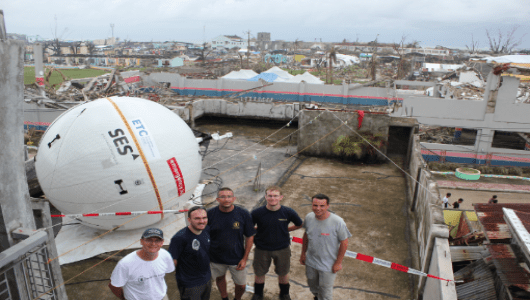
In addition to providing life-sustaining resources, aid workers are now being called upon to provide things like Wi-Fi access and cellular support. The leading provider of emergency communications is the United Nation’s Information and Communication Technologies Task Force (ICT). Within 48 hours of a disaster, ICT deploys its Emergency Telecommunications Cluster, or ETC.

The ETC is a series of connected balloons that act like cell phone towers and routers that can be set up to provide wireless Internet and cellular service in disaster zones. These services enable survivors to contact family or other outside assistance, find routes out of the disaster zone, or transfer vital funds. Those providing assistance benefit from these services as well, for they can receive vital information from the survivors themselves on the exact situation on the ground.

Today’s digital world makes it nearly impossible to do any work without staying connected. By repairing or installing communication networks, aid workers help themselves as much as they help survivors. With Wi-Fi and cell service, workers can more effectively communicate and coordinate their efforts, and thus deliver crucial assistance quicker.

Wi-Fi is not the only advanced technology being utilized in disaster relief. Drones have recently been implemented to aid humanitarian missions. Drones can access remote areas quickly and survey locations with cameras, which would otherwise be dangerously inaccessible. In fact, the ongoing relief efforts in Nepal have seen the largest deployment of drones in the history of disaster relief. The devices are currently being used to survey the damage, search for signs of survivors, and help relief organizers further coordinate their efforts. Drones, when used in a humanitarian capacity, have the potential to produce a significant impact. Perhaps in the not-so-distant future, autonomous drones will be able to drop food, medicine and water far more quickly than actual aid workers.

– Joe Kitaj

Sources: ICT, ATISW, Direct Relief
Photo: ICT

August 2, 2015
https://borgenproject.org/wp-content/uploads/borgen-project-logo.svg 0 0 Borgen Project https://borgenproject.org/wp-content/uploads/borgen-project-logo.svg Borgen Project2015-08-02 07:41:492020-07-06 07:01:44Wireless and Emergency Communications Tech in Disaster Relief
Aid, Global Poverty, Philanthropy

The Sebastian Foundation Fights Poverty in Australia and Globally

povertyAustralia is considered a developed nation with rather good development indicators: children in school, high life expectancy, higher than average gross national income and the ability to be an agent of change. Yet, like most countries, there are still people living in poverty or at a disadvantage.

Guy Sebastian and his wife Jules have started a foundation to directly combat poverty in their native Australia as well as branch out and help others living in poverty abroad.

In the United States, Guy Sebastian is best known for the song “Battle Scars,” released in 2012 with Lupe Fiasco, but his musical career began when he won the first Australian Idol title in 2003. His wife Jules is a celebrity stylist and a copartner in The Sebastian Foundation.

Sebastian’s humanitarian work started very early in his musical career when he took a tour of Africa, specifically Uganda, as an ambassador for World Vision. During his time there, he saw the debilitating effects that poverty can have on a person, and he has worked for awareness surrounding poverty from that time on.

When the Sebastian’s family started to grow, they became even more involved with helping children and families in Australia and the world. Through this desire, The Sebastian Foundation was formed.

The Sebastian Foundation states, “Our focus is people. Our love is people. We want to see the need and meet the need. We want to help in any way we can and we hope you join us in our mission.” With this thought in mind, they form collaborations with like-minded organizations to work with as partners.

Recently, much of their work has centered on local initiatives such as Big Brothers and Big Sisters, dance programs for youth with Downs Syndrome and children’s hospitals. They have also partnered with Sam Moran, the Yellow Wiggle as of 2006 and a UNICEF Goodwill ambassador; Sam works to help “Australian children who are sick, disadvantaged or have special needs.”

The foundation has global poverty in mind as well. Especially because of Sebastian’s time as a World Vision ambassador, The Sebastian Foundation focuses on families in regards of “poverty, poor health and disease, empowering women, educating children and giving them a chance at a better future [and] community.”

One way to be involved with this great foundation is to donate and, in return, one can receive a gift heart bracelet with the word “joy” on it. Or they have a shop where one can purchase a beautiful print of a photo taken by Sebastian, and all proceeds are a donation for the foundation.

Overall, the Sebastian family has used their celebrity status in Australia to help those who need it most in their home country. But through their global work, and Sebastian’s breakthrough on the U.S. music market, their reach can spread even farther than before, helping so many people in need around the world.

– Megan Ivy

Sources: Guy Sebastian, The Sebastian Foundation, The Sebastian Foundation Facebook Page, The World Bank, YouTube
Photo: Jules Sebastian

August 1, 2015
https://borgenproject.org/wp-content/uploads/borgen-project-logo.svg 0 0 Borgen Project https://borgenproject.org/wp-content/uploads/borgen-project-logo.svg Borgen Project2015-08-01 07:03:342024-12-13 17:54:04The Sebastian Foundation Fights Poverty in Australia and Globally
Aid, Global Poverty, Philanthropy

10 Jewelry Companies that Help Reduce Global Poverty

reduce_global_poverty

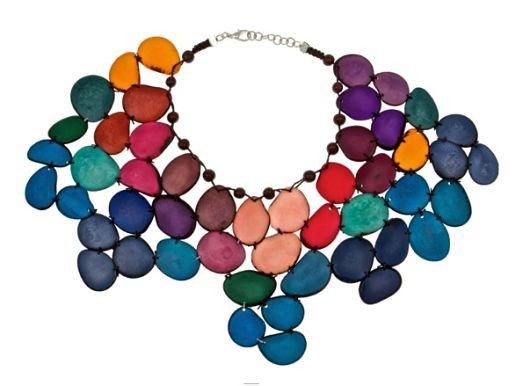
Today, many socially conscious companies work to reduce global poverty. They help the poor either by donating directly to charities or by providing jobs and fair wages for those in need. Many of these organizations make jewelry. Here are 10 companies that sell jewelry products in order to help the global poor:

1. Article 22 — Article 22 sells jewelry made by bombs, plane parts or other materials leftover from the Vietnam War. Their first collection, Peacebomb, uses Vietnam War Era bombs and is crafted by Laotian Artisans. Article 22 helps the poor by providing jobs to Laotian Artisans who may have been ignored or forgotten. Also, each Peacebomb item funds the demining of land that is littered by bombs.

2. 31 Bits — The 31 Bits mission statement is “using fashion and design to empower people to rise above poverty.” They work with women in Uganda who earn an income from the jewelry they create. The women also receive counseling, finance training, health education and business mentorships. Each purchase from 31 Bits funds their work in Uganda.

3. Half United — The purchase of any Half United product gives seven meals to children in need in the United States, Fiji, Cambodia and Madagascar.

4. Indego Africa — Indego Africa works with women in Rwanda in order to help them flourish as independent businesswomen. They partner with female artisans and sell their products in their shop. One hundred percent of their profits go toward job skills training programs for their artisans in business management, technology, entrepreneurship and English and Kinyarwanda literacy.

5. Kurandza — Kurandza works with HIV positive women in Mozambique. Many of these women do not have the money necessary for transportation to the hospital and are therefore not able to obtain the medicine that they need. Kurandza works with these women, and the proceeds from the skirts and jewelry that they make go toward transportation to the hospital and other household items, such as schoolbooks for their children.

6. Purpose — Purpose is a fashion jewelry brand launched by International Sanctuary. International Sanctuary was an organization found in 2007 that works to help those who escaped sex trafficking, in both Mumbai, India and Orange County, California. Survivors are placed in mentoring programs and given an education, medical and dental care, scholarships and microloans. In 2014, International Sanctuary founded Purpose as a way to give survivors employment, financial stability and a brighter future.

7. The Starfish Project — The Starfish Project was founded in 2006 in order to help exploited women in China. It works to give them alternative employment and holistic care services and provides them with counseling, vocational training, language acquisition, family education grants, healthcare access and housing in a women’s shelter. The Starfish Project wants to raise awareness about violence against women and its goal is to restore hope for each woman that enters its doors.

8. The Purple Buddha Project — Like Article-22, the Purple Buddha Project works to help demining. As they say, more tons of bombs were dropped on Cambodia than on Germany and Japan combined during World War II. The Purple Buddha Project uses remains of weapons in Cambodia in order to make jewelry, providing jobs to Cambodian artisans. The purchase of each piece goes toward the demining of land in Cambodia or Laos. Many of the Purple Buddha Project bracelets contain positive messages.

9. Mujus — Mujus works to give back to Peru. They pair fair wages and provide health insurance to Mujus artisans in Peru in order to help provide social change to communities around Lima. (Mujus also works with the ALS association in the United States, and has a special collection designed to help raise money for those with Lou Gehrig’s disease).

10. Colorful Minds — While Colorful Minds does not sell specific jewelry pieces, they do sell jewelry boxes and pouches (which you can use to keep all the jewelry you purchased while helping the global poor). Colorful Minds works with vocational centers in India that serve those living with disabilities. They market the products that are made at the vocational centers in order to help those with disabilities to integrate into society, increase self-esteem and motivate them to use their creativity. They also execute a grant program that provides necessary items, such as prosthetics or supplies, to vocational centers.

– Ashrita Rau

Sources: Article 22, Busy Mommy, 31 Bits, Half United, Indego Africa, Kurandza, Purpose Jewelry, Starfish Project, The Purple Buddha Project, Mujus, Colorful Minds
Photo: The Big Piece of Cake

July 31, 2015
https://borgenproject.org/wp-content/uploads/borgen-project-logo.svg 0 0 Borgen Project https://borgenproject.org/wp-content/uploads/borgen-project-logo.svg Borgen Project2015-07-31 07:35:452024-12-13 17:52:0710 Jewelry Companies that Help Reduce Global Poverty
Aid, Global Poverty

Ireland: Closer to International Development Aid Target

Development_Aid
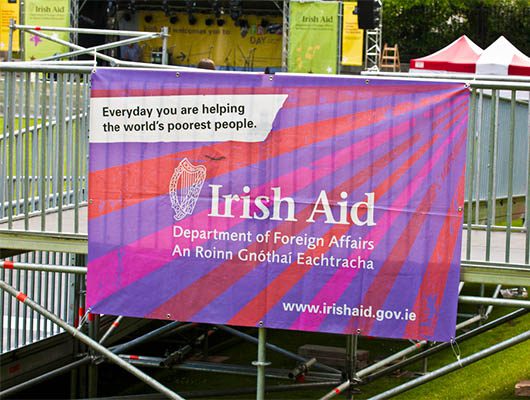
Countries around the world have been revamping their anti-poverty efforts in preparation for the establishment of new Sustainable Development Goals in September. Although Ireland has not yet met its target of allocating 0.7% of Gross National Product, or GNP, to overseas development aid, it is making improvements.

Minister of Foreign Affairs Charlie Flanagan recently stated his confidence in Ireland’s aid program. In fact, at the launch of the Irish Aid annual report for 2014, he described the program as one of the most effective in the world during tough economic years. He believes that the 0.7 percent target will soon be reached.

The report revealed that Ireland provided more than 85 million Euros in humanitarian assistance and 269 tons of critical humanitarian supplies like blankets and tents in 2014. Flanagan boasted of the Irish people’s engagement with development assistance, saying that they take pride in the collective Irish effort.

According to Flanagan, Ireland’s overseas aid program is lifting millions of people out of poverty and hunger. In order to evidence this claim, he broke down the program’s contributions to its Key Partner Countries—Ethiopia and Mozambique.

Flanagan pointed out that the program has worked to reduce the number of mothers dying during childbirth. In Ethiopia specifically, support for maternal health services for poor women contributed to a 70 percent reduction in deaths during childbirth.

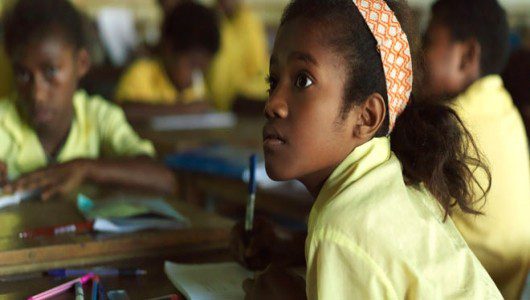
In terms of education, support for training and recruiting teachers has helped to increase the number of girls enrolled in school. In fact, in Mozambique, the development program’s assistance contributed to a nine percent increase in the enrollment of girls in school.

Minister of State for Development Seán Sherlock has pointed out that 2014 was a year of unprecedented levels of humanitarian crises worldwide. He stressed the effectiveness and efficiency of Ireland’s response to such crises, and maintained a confident, yet realistic outlook on the program’s ability to respond similarly in the future.

As just one example, Sherlock claims to have personally witnessed the impact of roughly 18 million Euros in funding provided to Sierra Leone and Liberia during the Ebola crisis. This is the type of crisis that no one could possibly have planned for, and yet Ireland rose to the occasion, paving the way for other contributors during crisis.

Sherlock provided additional evidence for the effectiveness of the Irish Aid program by pointing to the Organization for Economic Cooperation and Development’s, or OECD, review. According to Sherlock, the OECD concluded—through thorough assessment—that the Irish Aid program was one of the most effective of its kind worldwide.

Sherlock echoed Flanagan’s re-commitment to reaching the 0.7 percent target, but he confessed candidly that this goal will not be reached in 2015. To clarify, this does not mean that Ireland is not on the right track, or that it has not carried its weight thus far in terms of the anti-poverty and sustainable development effort.

Both Sherlock and Flanagan have reassured the general public that with time, Ireland will proudly allocate 0.7 percent or more of GNP to overseas development aid. Until that time comes, the Irish Aid program will continue to combat poverty and improve the lives of the world’s most suffering people.

– Sarah Bernard

Sources: Irish Times, Irish Mirror, Irish Examiner
Photo: Flickr

July 30, 2015
https://borgenproject.org/wp-content/uploads/borgen-project-logo.svg 0 0 Borgen Project https://borgenproject.org/wp-content/uploads/borgen-project-logo.svg Borgen Project2015-07-30 09:30:032020-07-06 14:22:50Ireland: Closer to International Development Aid Target
Aid, Global Poverty

Good Books Gives Retail Profit to Oxfam

International Good Books Gives Retail Profit to OxfamThe tangible gift of a book gives the intangible gift of learning. When one gives The Adventures of Huckleberry Finn or To Kill a Mockingbird, a young person learns about race relations in the United States. Or maybe a child’s imagination can expand through classics such as The Chronicles of Narnia. What if you could give that gift to a loved one and at the same time help the education of someone in poverty?
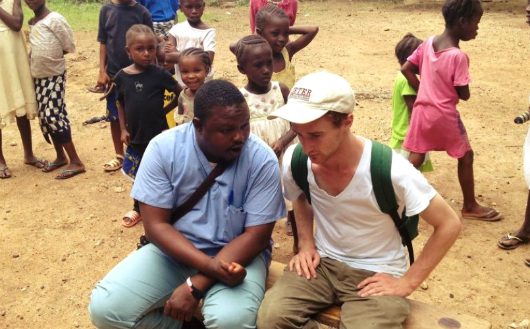
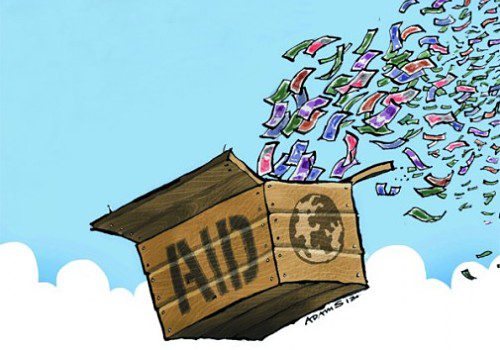
It’s possible through the Auckland, New Zealand based company, Good Books. Just by shopping for books on their website, one can directly help the world’s poor through an automatic donation to Oxfam New Zealand, a partner of the general Oxfam family.

This is possible through a business plan by Good Books, which includes several partners that can donate their time or services to make the operation have zero operating costs.

For example, all the workers directly associated with Good Books are unpaid. The organization’s book distributor, Paperback Shop UK, handles the actual moving of the merchandise and supplies the website and management services. Also, the organization is able to build the company’s brand through media support and customers spreading the word.

But this specific labor is for a great cause since all retail profits are sent to Oxfam, an organization that works on many fronts trying to end global poverty.

Oxfam’s work is varied; the Oxfam America website specifically says the following about their work which is indicative of the organization’s work as a whole:

“No one should go hungry.”

“We all have the right to clean water.”

“All people deserve to live safely.”

“Women and girls are crucial to reducing poverty.”

“We all deserve the opportunity to earn a decent living.”

“People have a right to participate in decisions that affect their lives.”

“We must help poor communities cope with climate change.”

“Poverty is not inevitable.”

“People have the power to end poverty.”

While the purchase/donation cannot be earmarked through the Good Books’ website, purchasing the books matches well with the statements, “women and girls are crucial to reducing poverty,” and “we all deserve the opportunity to earn a decent living.” Both of those ideas hinge on education for the masses to move people out of poverty.

Oxfam New Zealand says that “every extra year a girl spends in school could reduce child mortality by ten percent.” So, much of their good work is built around education initiatives to help the community.

Oxfam and their partners have helped rebuild schools in Pakistan, get clean water for students in Nairobi, teach about women’s rights in Guatemala, and even giving goats to families in Ethiopia where the selling of offspring and goods provides money to send daughters of poor families to school.

By buying books from Good Books, consumers can use their purchasing power to help all the areas listed above. Specifically though, one can use their money to directly aid the fight against poverty while also reading a book that can change the mental attitudes for those in developed countries. Awareness and change concerning poverty can be worked on in two very distinct ways through the purchase of books.

– Megan Ivy

Sources: Good Books, Oxfam America, Oxfam New Zealand
Photo: Oxfaminternation

July 30, 2015
https://borgenproject.org/wp-content/uploads/borgen-project-logo.svg 0 0 Borgen Project https://borgenproject.org/wp-content/uploads/borgen-project-logo.svg Borgen Project2015-07-30 01:30:002024-05-27 09:26:20Good Books Gives Retail Profit to Oxfam
Aid, Global Poverty, Humanitarian Aid

Aid Worker Attacks Decline After Worst Year on Record

aid_worker_attacks
Newly released data for 2014 shows a drop in worldwide aid worker attacks.

The report was published by Humanitarian Outcomes, a research institution that specializes in the international humanitarian system. The team collected the data through public sources and partnerships with the United Nations and major NGOs.

Humanitarian Outcomes has been tracking aid worker attacks and data since 1997. According to the group, more attacks occurred in 2013 than in any other year on record.

There were 190 major aid worker attacks in 2014, 74 less than in 2013. Still, an estimated 328 aid workers were affected last year with kidnappings, shootings and use of improvised explosive devices (IEDs) – all common types of attack.

In an innovative, joint project, Humanitarian Outcomes and Integrated Regional Information Networks (IRIN) created an interactive map that details all major aid worker attacks since 2000. The organizations state that their database is “the sole global open-source of this data.”

Some experts say that last year’s lower attack figures reflect the efforts that aid agencies have taken to improve security. Many agencies have stepped up their efforts to gain community support and use new technologies to keep workers safer.

Other experts believe that fewer aid worker attacks have occurred because international humanitarian groups are choosing to withdraw from volatile regions. As some organizations make the shift to “remote management,” which allows staff to oversee the agency from outside the conflict zone, they rely on local NGOs to deliver assistance. Analysts caution that these local groups are usually even less capable of providing security for their workers.

More than 3,000 aid workers have been attacked in the last 15 years. Of the 27 countries where these aid worker attacks took place, Afghanistan, Syria and South Sudan have the highest rates of violence. Many aid agencies feel pressure to maintain a presence in areas of conflict, even as violence worsens

In early June 2015, armed gunmen stormed an Afghan compound of People in Need, a Czech NGO that has worked in Afghanistan since 2001. The attackers shot aid workers “execution-style,” killing nine. Some were shot dead as they slept.

Afghanistan is the most dangerous country in the world for aid workers; nearly a quarter of all aid worker attacks occur in the conflict-ridden country.

Aid worker attacks have also been startlingly high in many central African countries, including in the Central African Republic (CAR). The United Nations Humanitarian Coordinator in CAR recently denounced the country’s growing trend of violence against aid workers. The July 22, 2015 statement came just days after the driver of a U.N. food convoy was shot dead while traveling on a major supply route.

“Humanitarian access continues to be hampered by various constraints in the country, particularly violence against civilians and humanitarian workers,” stated coordinator Marc Vandenberghe.

Years of civil war and sectarian violence have displaced an estimated 450,000 people in CAR. Many internally displaced persons are in desperate need of the humanitarian assistance aid workers provide.

Vandenberghe called on all conflicting parties in the CAR to cease the attacks on aid workers: “Allow them to do their jobs and save lives safely in the whole country.”

– Caitlin Harrison

Sources: IRIN News 1, IRIN News 2, IRIN News 3, The Guardian, Humanitarian Outcomes, UN News Center, Aid Worker Security Database
Photo: Huffington Post

July 28, 2015
https://borgenproject.org/wp-content/uploads/borgen-project-logo.svg 0 0 Borgen Project https://borgenproject.org/wp-content/uploads/borgen-project-logo.svg Borgen Project2015-07-28 12:38:212024-06-11 02:48:12Aid Worker Attacks Decline After Worst Year on Record
Aid, Development, Foreign Aid, Global Poverty

How Transparency Leads to Sustainable Development

How Transparency Leads to Sustainable Long-Term Development
Ever wondered where that money you donated went? The U.S. government, in partnership with USAID, has made a commitment to track international aid to more closely monitor sources of aid abroad and hold international leaders accountable for development. Up-to-date, truthful data about where international funds are going helps governments, civil service organizations and private sponsors track their money and increase the efficacy of donations.

The government recently signed on to the International Aid Transparency Initiative (IATI), an international organization that encourages NGOs, governments and international aid organizations to report data on foreign aid spending. This group estimates that $4.8 billion of EU-given aid, $2.8 billion U.S.-given aid and $13.8 billion in international donor aid was not visible. The initiative aims to have 80 percent of aid be visible; this amount, it estimates, will make the aid useful. This makes development easier to track and organizations more transparent in how they use their funds. It will encourage further donations and trust in the work of these organizations. Furthermore, IATI has developed a tool to compare spending by different aid groups and the amount of money going to different countries.

Anyone with Internet connection can now track the U.S. government’s aid efforts by country, sector and year on www.foreignassistance.gov.

Through this initiative, USAID has made a commitment to increasing its transparency in regards to foreign aid spending. Through developing a cost management plan, the organization upped its accountability and made it clear to donors where their money goes. As a result of this, USAID’s Aid Transparency Review jumped 20 points in the last year, from the “fair” category to the “good” one. The organization predicts improved donor understanding and confidence in its future projects and improvement in international development through its and other organizations’ efforts at increased accountability.

Progress does not end at transparency, however. USAID hopes to improve the knowledge base of its donors so that they can better understand the organization’s international efforts, understand where funds are going and hold governments, both those donating and accepting aid, accountable.

Through initiatives like these, international aid can become more sustainable, efficient and successful.

– Jenny Wheeler

Sources: USAID, Road To 2015
Photo: The Spectator

July 27, 2015
https://borgenproject.org/wp-content/uploads/borgen-project-logo.svg 0 0 Borgen Project https://borgenproject.org/wp-content/uploads/borgen-project-logo.svg Borgen Project2015-07-27 08:50:312024-05-27 09:25:47How Transparency Leads to Sustainable Development
Aid, Global Poverty

China’s First World Bank Trust Fund

World Bank
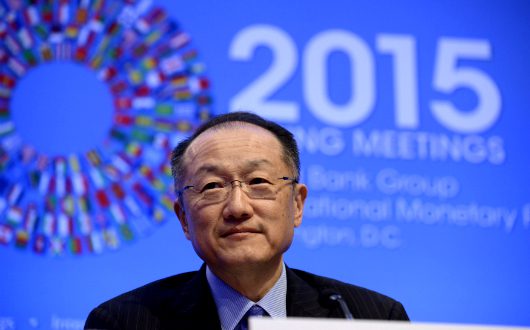
On July 16, 2015, World Bank Group President Jim Yong Kim and Chinese Finance Minister Lou Jiwei signed an agreement creating a $50 million trust fund to help alleviate global poverty. This agreement will set in motion new investments and organizations that will provide immediate assistance to third world countries all over the globe. The fund also serves to reaffirm the World Bank Group’s relationship with China.

According to the WBG itself, “The trust fund, which is expected to start later this year, aims to enhance the cooperation between China and the WBG and leverage financial and knowledge-based resources to help developing countries achieve inclusive and sustainable development. It will finance investment projects, operations, knowledge development and human-resource cooperation at both global and regional levels.” With the financial support of China’s super economy, the Bank is poised to make real changes for people in poverty.

China’s renewed partnership with the WBG represents a major step forward in the fight against global poverty. This new partnership will begin in late 2015 and continue throughout the upcoming years. WBG President Jim Yong Kim was quoted as saying, “China is a strong partner in development and a strong partner for the WBG, and we share the commitment to ending poverty and boosting shared prosperity.” The marriage between China and the World Bank Group is all the more significant considering that the two were part of a controversy earlier this year.

It was reported by Outlook India that the World Bank Group redacted a criticism of the Chinese economy in a report made on July 3 of this year. An excerpt from the Outlook India article reads, “The World Bank today refuted claims that it withdrew a report critical of China’s financial sector under pressure from the Chinese government and said the economic fundamentals of the country are sound despite the recent equity market volatility.” For any meaningful reform to come out of the new $50 million trust fund, China and the World Bank must find themselves on the same page.

– Diego Catala

Sources: World Bank, Outlook India
Photo: Thanhnien Newsk

July 26, 2015
https://borgenproject.org/wp-content/uploads/borgen-project-logo.svg 0 0 Borgen Project https://borgenproject.org/wp-content/uploads/borgen-project-logo.svg Borgen Project2015-07-26 02:07:172024-12-13 17:52:05China’s First World Bank Trust Fund
Aid, Global Poverty

Canada Increases Aid Given to Combat Child Marriages

Child-Marriages
Every minute, 28 girls around the world who are under the age of 18 are forced into marriage. Child marriage is one of the most serious human rights violations of today. An average of 15 million girls are annually forced to marry before they are of legal marriageable age, and the consequences can be severe. Child brides are more likely to face domestic violence, HIV/AIDS and complications during pregnancy. Some brides are able to escape their marriage, but are then forced to return to an abusive home because they are not able to survive on their own.

Although there are laws that prohibit child marriage, these marriages still persist for many reasons, including poverty and cultural traditions. Parents who are poor tend to try to marry their children off at an earlier age in order to have one less mouth to feed. Also, some countries still practice dowry-giving (in which the bride’s family has to give a present to a groom at the time of marriage). Since dowries are lower for younger brides, many families who feel the need to give a dowry try to marry their daughters off at a young age.

Luckily, there are programs in place that work to reduce the amount of child marriages taking place throughout the world. One of the main ways to help is to increase the amount of access to education that girls receive. Girls who are able to complete their education are more likely to be able to support themselves, and therefore less likely to be forced into marriage in order to survive. Educating communities also plays a large part in decreasing the number of child marriages which occur.

Canada has been an important player in the fight against early and forced marriages. As Girls Not Brides states, in 2013, Canada and Zambia co-led a U.N. Resolution to combat child, early and forced marriages. They are working to pass a second resolution by mid-November of 2015. Canada has also give $20 million to UNICEF in order to fight child marriage in Bangladesh, Burkina Faso, Ethiopia, Gambia, Yemen and Zambia.

The Canadian Broadcasting Channel reports that on Wednesday, July 8, 2015, Canada’s Foreign Affairs Minister announced that the government would give $10 million to end child, early and forced marriages worldwide. $2.3 million of that money is to go towards promoting education and skills training for girls in the Commonwealth countries, and the rest of the money is meant for local community groups, governments and NGOs which work to end child marriages.

This increase in funding is part of the Canadian Government’s Muskoka Initiative, a $3.5 billion pledge which focuses on maternal, child and newborn health. Eleven Canadian NGOs are going to share $180 million in the next five years in order to help with projects which address nutrition, sanitation, hygiene and health worker training.
Increasing aid is an important step towards making certain foreign affairs issues a priority. By giving money to fight child marriage, Canada reinforces just how important it is to end the human rights violation of forced marriages once and for all.

– Ashrita Rau

Sources: Yahoo News, Girls Not Brides 1, Girls Not Brides 2, CBC, UNICEF
Photo: Punch

July 24, 2015
https://borgenproject.org/wp-content/uploads/borgen-project-logo.svg 0 0 Borgen Project https://borgenproject.org/wp-content/uploads/borgen-project-logo.svg Borgen Project2015-07-24 19:22:512024-05-27 09:26:05Canada Increases Aid Given to Combat Child Marriages
Aid, Aid Effectiveness & Reform, Global Poverty

Foreign Aid Investments Saved Over 30 Million Children’s Lives

foreign_aid
The Institute of Health Metrics and Evaluation (IHME), the top international agency for global health data collection and analysis, has provided a new report which scores the impact of foreign aid investments made over the past fifteen years.

The study, recently published in the Lancet Medical Journal, determined that between 2000 and 2014, low and middle-income nations invested $133 billion US into child health initiatives. These investments are estimated to have saved the lives of 20 million infants and children.

An additional $73.6 billion US of foreign aid investments provided by donors, both governmental and privatized, accounted for the saving of an additional 14 million infant and child lives, the IHME estimates.

In total, an estimated 34 million children’s lives have been saved in the past 15 years. The report estimates that US foreign aid investments saved the largest number of children under-five, with 3.3 million lives saved. The UK was also noted as a significant factor in this progress and is estimated to have saved 1.7 million lives through their own development funding. The Bill and Melinda Gates Foundation proved to be the largest privatized donor, having saved an estimated 1.5 million lives.

Ray Chambers, the UN Secretary General’s Special Envoy for Financing the Health Millennium Development Goals and Malaria, collaborated with the IHME to produce this report and hopes to use this form of analysis in the future to track the success of the Sustainable Development Goals.

Chambers said in an interview about the new score, “We know that despite the efforts of governments and donors to improve health in low-income and middle-income countries, too many children die before the age of five. Without a way to monitor and publicly share progress regularly, we will miss the opportunity to build on the momentum we have seen since the millennium declaration.”

The IHME estimates that within the most impoverished nations, the cost to save a child’s life is about $4,000 US. The organization stated in its report that within countries such as Tanzania and Haiti, the costs are $4,205. They estimate within nations such as Botswana and Thailand, where economies are more developed, that the costs to save a child’s life are above $10,000 US due to high health care costs.

The Director of the IHME, Dr. Christopher Murray, said in a recent interview, “You can spend $4,000 on many different things, but there are very few places where the money would deliver the kind of impact you get by investing it in child health.” He continued in reasoning, “If you invest in the poorest countries, you will see the biggest impact in child health because the costs of things like nutrition programmes, vaccines and primary care are lower.”

The report analyzed both governmental and privatized donors and included internationally renowned agencies such the Global Fund, World Bank, UNICEF, USAid and Gavi. The study concluded that the efforts and financial support of Gavi, a global non-profit organization focused on vaccination, has saved over 2.2 million lives.

Looking towards future development initiatives such as the Sustainable Development Goals, Dr. Murray said, “We have seen such incredible success in saving children’s lives over the past 15 years. We need to take what we have learned from that experience and push for more progress and more accountability as we enter the era of the Global Goals for Sustainable Development.”

The Sustainable Development Goals were developed at the UN Rio+20 Conference in 2012 and are designed to build upon the progress of the Millennium Development Goals in the coming years.

– James Thornton

Sources: The Guardian, News-Medical
Photo: The Guardian

July 24, 2015
https://borgenproject.org/wp-content/uploads/borgen-project-logo.svg 0 0 Borgen Project https://borgenproject.org/wp-content/uploads/borgen-project-logo.svg Borgen Project2015-07-24 18:23:102020-07-07 13:50:15Foreign Aid Investments Saved Over 30 Million Children’s Lives
Page 62 of 65«‹6061626364›»

Get Smarter

  • Global Poverty 101
  • Global Poverty… The Good News
  • Global Poverty & U.S. Jobs
  • Global Poverty and National Security
  • Innovative Solutions to Poverty
  • Global Poverty & Aid FAQ’s
Search Search

Take Action

  • Call Congress
  • Email Congress
  • Donate
  • 30 Ways to Help
  • Volunteer Ops
  • Internships
  • Courses & Certificates
  • The Podcast
Borgen Project

“The Borgen Project is an incredible nonprofit organization that is addressing poverty and hunger and working towards ending them.”

-The Huffington Post

Inside The Borgen Project

  • Contact
  • About
  • Financials
  • President
  • Board of Directors
  • Board of Advisors

International Links

  • UK Email Parliament
  • UK Donate
  • Canada Email Parliament

Get Smarter

  • Global Poverty 101
  • Global Poverty… The Good News
  • Global Poverty & U.S. Jobs
  • Global Poverty and National Security
  • Innovative Solutions to Poverty
  • Global Poverty & Aid FAQ’s

Ways to Help

  • Call Congress
  • Email Congress
  • Donate
  • 30 Ways to Help
  • Volunteer Ops
  • Internships
  • Courses & Certificates
  • The Podcast
Scroll to top Scroll to top Scroll to top