• Link to X
  • Link to Facebook
  • Link to Instagram
  • Link to TikTok
  • Link to Youtube
  • About
    • About Us
      • President
      • Board of Directors
      • Board of Advisors
      • Financials
      • Our Methodology
      • Success Tracker
      • Contact
  • Act Now
    • 30 Ways to Help
      • Email Congress
      • Call Congress
      • Volunteer
      • Courses & Certificates
      • Be a Donor
    • Internships
      • In-Office Internships
      • Remote Internships
    • Legislation
      • Politics 101
  • The Blog
  • The Podcast
  • Magazine
  • Donate
  • Click to open the search input field Click to open the search input field Search
  • Menu Menu

Archive for category: Aid

Aid, Global Poverty, Humanitarian Aid, United Nations

King Salman Humanitarian Center

humanitarian_aid
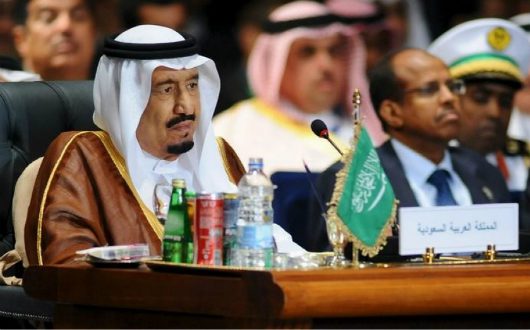
In May 2015, Saudi Arabia launched a new, unified government humanitarian aid organization called the King Salman Humanitarian Center (KSC) — named after the nation’s new monarch.

Saudi Arabia is eighth largest aid donor in the world and spent over 736 million dollars in humanitarian aid in 2014. The new center has the potential to transform how Saudi Arabia donates, organizes and distributes millions of dollars in emergency aid.

This administration transformation was not widely reported, though the scale of this change is immense. A source in the UN reported to IRIN that he believes the King Salman Humanitarian Center will be Saudi Arabia’s version of USAID and that it will establish multiple departments such as monitoring, evaluation and research.

Rafaat Sabbagh, a KSC spokesman, elaborated on the new organization’s goals. “We are very ambitious… We are only one month and a half old. But at the same time we are very keen to learn to learn from the experience of DFID [in the UK] and USAID. Our work is not only for one country. Whenever there are people in need, especially with natural disasters, we will be there.”

Before the creation of KSC, Saudi Arabia’s humanitarian aid was notorious for being “highly unpredictable, hard to navigate, and – some argued – incoherent,” writes IRIN. There were often miscommunication errors between different branches, causing confusion and unnecessary overlap.

The Center plans to take a more direct, hands-on approach to its funding techniques, spending on local organizations rather than large international organizations.

The country is known for its large donations or powerful financial potential. For example, in 2008, it gave 500 million to the World Food Program in one large payment. In 2014, it also gave 500 million to help the Iraq crisis.

Donations like this are expected to be approved and processed by the KSC now, and some worry that Saudi Arabia’s involvement with UN aid programs will decrease.

These worries are not unfounded. Saudi Arabia has become increasingly frustrated with the United Nations in the past few years. “In late 2013, it rejected a seat on the UN Security Council, condemning ‘double standards’ in Syria and wasteful use of resources,” says the IRIN.

KSC spokesperson, Sabbagh, said to IRIN that the KSC will “avoid the bureaucracy that some organizations are suffering from” and will be “more flexible” than other organizations. Some believe this is a subtle critique of the United Nations.

At the same time, Sabbagh maintains that he wants to continue to work with the UN. “We are very keen to build a partnership [with the UN]. At the same time we have our own networks. Our work through the UN partnership can be complimentary,” he tells IRIN.

If the King Salman Humanitarian Center is successful, Saudi Arabia’s donations will become much more impactful, strategic and effective. The Center’s first project is to disburse 250 million dollars in Yemen, where Saudi Arabia is involved actively in the civil war.

– Aaron Andree

Sources: Aawsat, Irin News
Photo: Today Online

July 24, 2015
https://borgenproject.org/wp-content/uploads/borgen-project-logo.svg 0 0 Borgen Project https://borgenproject.org/wp-content/uploads/borgen-project-logo.svg Borgen Project2015-07-24 08:12:152024-05-27 09:26:04King Salman Humanitarian Center
Activism, Aid, Global Poverty, Nonprofit Organizations and NGOs

Man Runs Across the Country to Fight Global Poverty

global_poverty
Remember in “Forrest Gump” when Tom Hanks’ title character ran across the country? Everyone asked him why he did it and he said he just felt like running. So he ran.

Inspired by his favorite film, Barclay Oudersluys is currently on a run across the United States in an event he titled Project Gump. The 23-year-old began his trip in California and plans to end in Maine in less than 100 days, for a total of 3,200 miles.

But Oudersluys isn’t running simply for the sake of a good run; he is on a cross-country run to raise awareness and funds for the Hall Step Foundation, a nonprofit dedicated to ending global poverty. Founded in 2009 by professional runners Ryan and Sara Hall, the organization fights extreme poverty by improving health. During his 100-day run, Oudersluys would like to raise $10,000 for the organization.

The journey quite accurately follows that of Forrest Gump’s. It began at Santa Monica Pier and will end at the famous Marshall Point Lighthouse, just like in the movie. Running about 32 miles everyday in five to seven hours, Oudersluys has covered over 2,000 miles in 68 days.

Fortunately, Oudersluys has some seriously awesome friends that are driving cross-country in a van full of food, water and clothes as he runs. He typically rests in the back of the van or drives to a hotel each night.

Running across the country surely means seeing historical landmarks and meeting interesting people and Oudersluys has definitely seen some cool things, including another runner journeying across the country in the opposite direction.

Documenting his journey on Twitter and Instagram, Oudersluys hasn’t forgotten what his run is all about–lending his voice (or legs) to the fight against global poverty. Check out Project Gump’s mission and fundraising progress at their website, or follow Oudersluys on social media.

– Sarah Sheppard

Sources: Telegraph, 6abc, The Steps Foundation
Photo: Flickr

July 23, 2015
https://borgenproject.org/wp-content/uploads/borgen-project-logo.svg 0 0 Borgen Project https://borgenproject.org/wp-content/uploads/borgen-project-logo.svg Borgen Project2015-07-23 10:44:522020-07-07 14:33:32Man Runs Across the Country to Fight Global Poverty
Aid, Global Poverty

Senators Cardin, Flake, Coons and Isakson Introduce Millennium Compacts for Regional Economic Integration Act

Millenium Compacts for Regional Economic Integration Act

Ranking Member of the Foreign Relations Committee, Senator Cardin (D-MD), Chairman of the Subcommittee on Africa and Global Health Policy, Senator Flake (R-AZ), and members of the Foreign Relations Committee, Senator Coons (D-Del) and Senator Isakson (R-GA), have introduced the Millennium Compacts for Regional Economic Integration Act.

This piece of legislation could potentially allow the Millennium Challenge Corporation (MCC) to partner with countries in order to address regional development challenges and encourage trans-border economic growth in the developing world, especially in Africa. The Millennium Challenge Corporation is an independent U.S. foreign aid agency established by Congress in 2004. This agency aims to combat global poverty through economic growth. The MCC partners with developing countries committed to good governance, economic freedom and investing in their citizens.

Countries have reformed in order to partner with the MCC. For example, Ghana changed its power grid in order to partner with the MCC. In addition, Lesotho allowed women to open bank accounts in order to receive MCC assistance. Given this, it is assumed that countries could improve conditions in their country in order to develop regional economic partnerships. This would yield two benefits simultaneously.

In a world of globalization, many economies are interconnected. Global economies have experienced significant and sustained growth partly because of regional infrastructure and integrated trade agreements. Through greater regional economic collaboration, countries can improve infrastructure deficiencies, unemployment and poverty reduction efforts.

The MCC’s work could be enhanced if it had the authority to encourage regional economic growth. In Central America, road infrastructure could be significantly improved if the roads connected across borders. In Africa, countries could create regional power agreements and connect countries through transportation infrastructure.

Knowing this, the Millennium Challenge Corporation could foster regional economic growth between developing countries. Today, it is important to consider globalization when assisting developing countries. Globalization could help developing countries grow faster than ever.

In conclusion, this bipartisan piece of legislation aims to improve economic interconnectedness between neighboring developing countries. The MCC could foster these relationships between countries. Globalization could exponentially help developing countries grow, given that it increases trade, infrastructure access and energy access.

– Ella Cady

Sources: Senate, Open Congress, The Constituent
Photo: MCC

July 23, 2015
https://borgenproject.org/wp-content/uploads/borgen-project-logo.svg 0 0 Borgen Project https://borgenproject.org/wp-content/uploads/borgen-project-logo.svg Borgen Project2015-07-23 10:23:312024-06-04 01:17:40Senators Cardin, Flake, Coons and Isakson Introduce Millennium Compacts for Regional Economic Integration Act
Aid, Global Poverty, Water

Ryan’s Well Foundation Brings Clean Water to Communities in Uganda

Every day, over 9,000 people living in the Mitoomi-Bushangi districts of Uganda walk many miles to retrieve water that is contaminated with harmful bacteria.

The Ryan’s Well Foundation, a nonprofit dedicated to increasing clean water supply in underdeveloped communities, is working on their project, Protected Springs/Latrines and Handwashing, which will complete a series of projects that are providing clean water, latrines and education to people living in western Uganda. The project is set to establish 25 protected springs, 16 of them for primary schools, build four latrines at a local primary school accompanied with six hand washing stations, and create water committees that will provide training on how to properly wash hands and practice good sanitation. When complete, 8,100 students and teachers will have access to clean water.

In 2014, Ryan’s Well Foundation completed their Uganda: Water and Sanitation project. This project supplied 37 protected springs, prevented diseases by enhancing protection for women and youth through workshops, and increased awareness in schools about washing and hygiene. The project also provided a 25,000 liter rainwater harvesting tank, four latrines and a girls washroom, and training on maintenance and repair for the springs and tank.

With over 500 completed and ongoing projects, Ryan’s Well Foundation has successfully provided over 750,000 people in 16 developing nations. Their projects focus on raising funds to build water and sanitation systems and educating youths about the importance of water conservation and sanitation.

The foundation’s core programs include the Youth in Action Program, Getting Involved Program, and the School Challenge Program, with all three of them narrowing down on educating students in elementary and secondary level schools to practice safe and smart water habits. The organization, located in Kemptville, Ontario, Canada, was started by Ryan Hreljac in 2001.

In 1997, seven-year-old Hreljac recognized the need to provide clean water to children in Africa. With the help of his friends and family, Hreljac fundraised enough money to build a well at the Angolo Primary School in northern Uganda. Since its incarnation, Ryan’s Well Foundation has helped build more than 740 wells and 990 latrines, providing clean water to families who would normally be without.

The Ryan’s Well Foundation has open and completed projects in West Africa, East Africa and Haiti. Their primary targets comprise of Uganda, Kenya, Ghana and Tanzania. Right now they have nine active projects in Northern Togo, Ghana, Western Uganda and Burkina Faso. These projects currently revolve around providing access to clean water in primary and secondary schools.

– Julia N. Hettiger

Sources: Ryan’s Well, Gaiam, My Hero
Photo: Ryan’s Well Foundation

July 22, 2015
https://borgenproject.org/wp-content/uploads/borgen-project-logo.svg 0 0 Borgen Project https://borgenproject.org/wp-content/uploads/borgen-project-logo.svg Borgen Project2015-07-22 16:33:562024-05-30 22:22:57Ryan’s Well Foundation Brings Clean Water to Communities in Uganda
Aid, Global Poverty

US and Brazil Work Together for Food Security in Mozambique

US and Brazil Work Together for Food Security

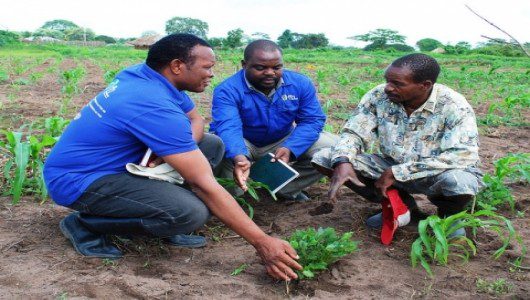
Obama recently announced that $2 million would be dedicated to an expansion of the partnership between USAID, through Feed the Future, and the Brazilian Cooperation Agency. The money will be used to help Mozambique increase food security with creative agricultural production strategies.

Around 54.7% of Mozambique’s population lives below the national poverty line. The country also struggles with high rates of chronic malnutrition.

With these additional American and Brazilian funds and support systems, Mozambique is in a position to reduce poverty. It has one of the highest rates of economic growth in Africa and exports a large amount of food in the region.

Feed the Future and the Brazilian Cooperation Agency have started initiatives to connect school food programs with local agricultural production. Agricultural research and technology to support local farmers can help address the malnutrition in the region and the broader prevalence of poverty by supporting local farmers.

In the fiscal year of 2013, 47,700 hectares of land were sustained with improved technologies, 575,000 people were trained in child health and nutrition, and 63,800 producers have used new agricultural skills developed by Feed the Future projects

There are several key strategies to increase Mozambique’s food security. One is to increase farmers’ access to agricultural inputs, finance services and unique partnerships. In Mozambique, the central focus is support of critical value chains. For example, sesame, soybean and banana are important crops for nutritional and economic reasons.

Moving forward, there is a push to increase equitable growth in agriculture, support the government’s investment plan and promote local agriculture and nutrition efforts.

– Iliana Lang

Sources: Feed the Future, USAID 1, USAID 2
Photo: Feed The Future

July 22, 2015
https://borgenproject.org/wp-content/uploads/borgen-project-logo.svg 0 0 Borgen Project https://borgenproject.org/wp-content/uploads/borgen-project-logo.svg Borgen Project2015-07-22 11:45:272024-05-27 09:25:14US and Brazil Work Together for Food Security in Mozambique
Aid, Global Poverty, Women & Children

CPAP Machine to Save Lives of Newborns

CPAP-Machine-for-Newborns

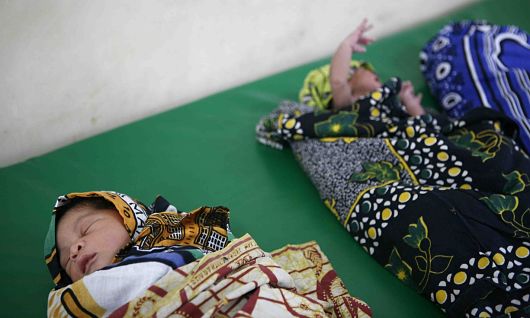
The neonatal continuous positive airway pressure machine, or CPAP, can be used to save the lives of newborns in developing countries who struggle to breathe after birth. PATH named the neonatal bubble CPAP machine a top breakthrough innovation of 2015 that can help save women and children.

The CPAP machine is used for newborns with breathing difficulties, a leading cause of death in premature babies. The machine contains three main parts: the mask that fits over the nose (or nose and mouth) with straps to keep it in place, the tube that connects to the machine’s motor and the motor that blows air into the tube.

It works using a positive pressure system to help a newborn experiencing respiratory distress syndrome (RDS). RDS is more common in newborns because they have not yet produced enough surfactant, a liquid that coats the lungs to help the baby breathe in air. Without enough surfactant, the infant’s lungs collapse.

The problem is that the neonatal CPAP machine costs up to $6,000, a price tag far too high for most developing countries. Because of this, a group of Rice University faculty, students, clinicians and public and private sector partners dedicated to health technology initiatives sprung into action.

Partnering with Queen Elizabeth Central Hospital, Baylor College of Medicine and 3rd Stone Design, this group, called Rice 360°, created the bubble CPAP to treat infants with RDS in the developing world. Using an aquarium pump to deliver air and a water bottle to relieve pressure, the machine costs as low as $800 instead of $6,000.

With this more reasonable price range and help from the Saving Lives at Birth grant, Rice 360° and its partners are looking to implement the device where it is needed, starting in Malawi, Zambia, Tanzania and South Africa. In areas where premature babies have a low chance of survival, the bubble CPAP machine will change the odds and decrease infant mortality.

– Hannah Resnick

Sources: NIH 1, NIH 2, PATH, Rice 360°
Photo: Tracheostomy

July 22, 2015
https://borgenproject.org/wp-content/uploads/borgen-project-logo.svg 0 0 Borgen Project https://borgenproject.org/wp-content/uploads/borgen-project-logo.svg Borgen Project2015-07-22 09:47:502024-05-27 09:25:47CPAP Machine to Save Lives of Newborns
Aid

Tunisia’s State of Emergency and International Aid

state_of_emergency
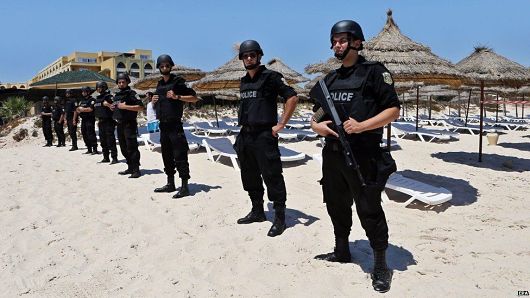
Just over a week after a terrorist attack on a Tunisian beach, Tunisian President Beji Caid Essebsi declared a state of emergency in Tunisia. The declaration is intended to last no more than 30 days, though it is renewable. The state of emergency gives more rights to Tunisian security forces and political officials, allowing them more leeway in dealing with potential international and domestic terrorist threats.

Continuous threats and an unstable Western border have put the Tunisian economy on the brink of collapse, and Tunisian politicians in a state of panic. The most recent terrorist attack at Sousse, coupled with existing structural issues, have made humanitarian and anti-poverty aid in Tunisia particularly crucial and time-sensitive.

In his address to the nation in which he declared a state of emergency, President Beli Caid Essebsi insisted that economic and social challenges in the interior of the country, supported by extremism and instability elsewhere in North Africa, have created unique security challenges that the nation cannot handle alone. He declared that Tunisia was in “desperate” need of international assistance, both financially and with cooperative counterterrorism measures. Support from the international community—not just in policy, but in real humanitarian aid and crisis relief in the heart of Tunisia— is crucial to promoting the economic prosperity that discourages extremism and radicalism in developing nations.

Tunisia was not immune to the upheaval that spread across the Arab world in 2011, but it was one of the few nations that reacted to the events with real, democratic change. Since a revolt in January 2011, Tunisia has formed a constitution and staged two parliamentary elections. It remains one of the most secular nations in the region. While the nation in many ways progresses toward stability, its moderate government and continued poverty make it a target both for outside terrorists and for home-grown extremism.

Italy was one of the first nations to respond to the attack in Tunisia with a pledge of continued financial support to the Tunisian government and people. Paolo Gentiloni, Italy’s Minister for Foreign Affairs and International Cooperation, tweeted: “Italy stands today with Tunisia more than ever. It was forced to declare a state of emergency in order to address the threat of terrorism and will receive more economic cooperation from Italy and greater assistance on the security level.” Meanwhile, the Italian Senate’s Foreign Policy Commission has encouraged multilateral financial support for Tunisia from the European Union.

While international aid in Northern Africa has generally focused on the needs and challenges faced by refugees and asylum-seekers, recent upheavals and violent episodes across the region—including the recent terrorist attack in Tunisia—have prompted many aid organizations to devote more energy and resources to protection and economic security of the citizens of the region. Until economic prosperity can combine with the nation’s real democratic efforts, violence will continue.

– Melissa Pavlik

Sources: BBC, Middle East Monitor, The New York Times, Public Radio International, UNHCR
Photo: BBC

July 22, 2015
https://borgenproject.org/wp-content/uploads/borgen-project-logo.svg 0 0 Borgen Project https://borgenproject.org/wp-content/uploads/borgen-project-logo.svg Borgen Project2015-07-22 08:10:372024-12-13 17:51:54Tunisia’s State of Emergency and International Aid
Aid, Charity, Global Poverty, Health, Philanthropy

David Bowie and Iman’s Philanthropic Activities

 David-Bowie-and-Iman-Philanthropy
Having been married for two decades, supermodel Iman and heavy-rocker David Bowie have walked a consistent pathway in relieving several communities of hardships pertaining to third-world threats such as the harrowing HIV/AIDS threat.

In late 1990, the dynamic pair participated in a fundraising event, 7th on Sale, for the enhanced medical research in treating and curing AIDS. The pair would go on to serve as recurring donors and participants in foundations that conducted deep, thorough studies of the then-unknown sexual catastrophe throughout the remainder of the 90’s.

But even with impactful collaboration in donor work as a married couple, the pair has never ceased in aiding disadvantaging areas on a separate, individual basis.

In 1998, Iman partnered with fellow philanthropist Missy “Misdemeanor” Elliott in a charitable cosmetic line, Misdemeanor Lipstick, where proceeds collected from each item sold were issued to the nonprofit Break the Cycle, an organization that works to minimize domestic hardships and abuse to help young children and teenagers to live safely.

Around this time, other philanthropic measures taken by the supermodel included her support for organizations alleviating the mistreatment against Somali native women, world hunger and HIV/AIDS-related crises. A majority of Iman’s charitable endorsements were further supported through her organization IMAN Cosmetics, which supports the “Raise Hope for Congo Campaign,” an initiative aimed at protecting and empowering Congolese women and girls.

With his spouse generating similar awareness, David Bowie has headlined global concert tours that assist in the betterment of drastic illnesses that take a toll on developing nations. Along with his famous contributions was his feature in the 1985 Live Aid concert, which generated funds to minimize threats of climatic and AIDS-related dangers.

Moreover, Bowie went on to utilize his live performing skills through another charitable opportunity, this time in loose hand-in-hand with wife Iman. In 2006, the groundbreaking rock musician collaborated with Grammy-winning R&B musician Alicia Keys. The two artists sung and performed live at a New York concert as part of Keys’ nonprofit Keep a Child Alive, an organization that works to rid African children of AIDS and poverty-induced restraints.

Iman was also involved in the lively event, as she and comedian Wanda Sykes served as hosts of the event’s black-tie dinner in celebration of the initiative’s planning and success.

It would not be long until Keys and fellow organizers appointed Iman as the initiative’s Global Ambassador for Keep a Child Alive after noting the model’s sincere elements in raising awareness for multiple pandemics across the globe. With a newly designated role, Iman launched not only additional fundraisers to support a variety of causes but also programs like “I am African,” a tool utilized to build awareness of the AIDS pandemic greatly affecting her native Somalian homeland.

As years have progressed, nothing has stopped this power couple’s path to giving back to those in need. With social media tools redefining the nature of networking for a passionate cause, Iman and David Bowie still remain fixated and up-to-date on endorsing as many foundations as they possibly can to improve the world.

– Jeff Varner

Sources: Philly.com, Billboard, CNN, Slice, Iman Cosmetics, Getty Images
Photo: ENCA

July 21, 2015
https://borgenproject.org/wp-content/uploads/borgen-project-logo.svg 0 0 Borgen Project https://borgenproject.org/wp-content/uploads/borgen-project-logo.svg Borgen Project2015-07-21 13:03:252024-12-13 17:52:04David Bowie and Iman’s Philanthropic Activities
Aid, Foreign Aid, Global Poverty

Does the US Have an Obligation to Give Money Abroad?

Does the US Have an Obligation to Give Money Abroad?
Well, do we? This question is commonly debated among politicians, intellectuals and average U.S. citizens. Is it correct to only focus on our own citizens, or should we help other countries through aid, health services and advice? This article will explore common sentiments toward and factual evidence about the effectiveness of foreign aid.

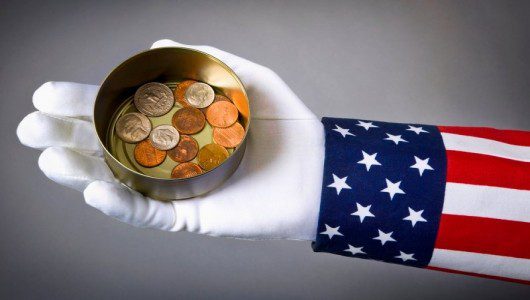
Before considering moral obligations, we should consider how much foreign aid the United States gives to other countries. The United States gives less than 1% of our $4 trillion budget to foreign aid. The Kaiser Family Foundation conducted a poll where Americans were asked to guess how much the United States spends on foreign aid. On average, respondents guessed that 26% of the budget went to foreign aid.

About one-third, or $5.3 billion, of foreign aid goes to health. About $3.1 billion goes to HIV/AIDS projects. About one-sixth, or $2.7 billion, of foreign aid goes to economic development, such as building infrastructure. Another $2.7 billion goes to humanitarian assistance or helping refugees.

Among developed countries, the United States gives one of the lowest percentages of gross national income (GNI) to foreign aid. The United States gives about 0.2% of the GNI to foreign aid. Some developed countries, such as Sweden, Norway and Luxembourg, give about 1% of their respective GNIs to foreign aid.

In sum, most Americans think that we give more money abroad than we do. Additionally, the United States gives a small percentage of its GNI to foreign aid when compared to other developed countries. Does this mean that, according to public opinion and government policy, we do not think we have much of an obligation to give money abroad?

Some people argue that the United States should focus on helping its own citizens before helping people abroad. What they don’t seem to understand is that the two can occur simultaneously. The United States can focus on helping the poor both domestically and internationally.

It is also important to consider that the poorest people in America are significantly better off than most. A person in the bottom 5% of the American income distribution is richer than 68% of people in the world. This may mean that we have more of an obligation to donate abroad than we currently do.

Still, some people may think that the problem is too large to fix; they might think that the United States cannot make a significant difference.

Global poverty is a substantial issue. However, the United States has helped to improve the living conditions of people globally. For example, more than 3 million lives are saved every year through USAID immunization programs. As a result of USAID’s population program, more than 50 million couples use family planning. These are only a few examples of how U.S. foreign aid has helped reduce global poverty and related issues.

Some may argue that foreign aid will not benefit the citizens if it is given to corrupt governments. This implies that we do not have an obligation to give to corrupt countries.

Even if a country is corrupt, this does not negate a moral obligation to help disadvantaged people. Furthermore, the Millennium Challenge Corporation, a U.S. governmental organization, helps identify countries that are committed to good governance, economic freedom and investments in their citizens. This changes the way that the United States gives foreign aid. The United States can strive to give money abroad without supporting corrupt governments.

Intuitively, it seems as though the United States does have an obligation to give money abroad. The U.S. Government has the capability to give money abroad while still helping the impoverished in our country. The United States has already made significant strides in improving global health and alleviating poverty abroad. Presumably, the United States could help even more if we allocated more money to foreign aid.

– Ella Cady

Sources: Forbes, Giving What We Can, Millennium Challenge Corporation, NPR, Organisation for Economic Co-operation and Development, USAID
Photo: The Daily Beast

July 21, 2015
https://borgenproject.org/wp-content/uploads/borgen-project-logo.svg 0 0 Borgen Project https://borgenproject.org/wp-content/uploads/borgen-project-logo.svg Borgen Project2015-07-21 09:31:422024-12-13 17:51:49Does the US Have an Obligation to Give Money Abroad?
Aid, Global Poverty, Humanitarian Aid, United Nations

UN introduces ‘Humanitarian Data Exchange’ Platform

UN introduces 'Humanitarian Data Exchange' Platform
United Nations Office for the Coordination of Humanitarian Affairs, or OCHA, has developed an open digital platform for data sharing, called the Humanitarian Data Exchange, or HDX. In collaboration with Frog Design, the new system combines state of the art data collection with data dispersal to provide current data access to crisis zones.

In rapid response to any humanitarian crisis, whether it is violence or a natural disaster, it is imperative to have instant availability to any relevant data sets. Frog Design created the technology with the intention of universal usage. Optimal viewing capabilities and premium user interface technology are also key components for rapid mass data absorption. Everyone from ordinary public citizens to data scientists to relief workers in the field are able to gather and analyze the HDX’s information.

The HDX provides easy access to a profile breakdown of almost every country in the world. Important information such as population density, total land area and GDP is provided. There are three key components that enable this data platform, data standardization, analytics and repository.

Revolutionizing data access provides an invaluable resource for relief and aid efforts to handle any disaster or crisis. Relief workers are able to make informed decisions instantly thanks to the new platform. The new technology also helps NGOs and governments to adapt to any evolving requirements or necessities that may occur.

The HDX was first utilized during the apex of the West African Ebola epidemic. The World Health Organization was able to share crucial information. Data sets, such as the total number of West African cases, cumulative deaths, treatment centers and countries experiencing outbreaks were quickly made available. The World Food Programme was able to share its data of food market prices in West African countries as well. This data helped the people properly predict their rations and assess their finances to cope during the crisis.

“It is of paramount importance that food security and food assistance information is regularly collected and widely disseminated..this partnership with OCHA on HDX is an important aspect of WFP’s broader initiative on Open Data and transparency,” says Arif Husain the Chief Economist of the WFP and the Head of Food Security Analysis Service.

Husain goes on to say, “We believe that our partnership with OCHA HDX is a major milestone in improving peoples’ access to credible and timely information for the design and implementation of national food security programs, policies and projects.”

Such a monumental breakthrough in technological usability and exchange has already proven effective through the health crisis in West Africa. It appears HDX is set to revolutionize data sharing and humanitarian relief efforts worldwide.

– The Borgen Project

Sources: World Food Programme, Frog Design

July 21, 2015
https://borgenproject.org/wp-content/uploads/borgen-project-logo.svg 0 0 Borgen Project https://borgenproject.org/wp-content/uploads/borgen-project-logo.svg Borgen Project2015-07-21 08:00:482022-01-19 00:41:17UN introduces ‘Humanitarian Data Exchange’ Platform
Page 63 of 65«‹6162636465›»

Get Smarter

  • Global Poverty 101
  • Global Poverty… The Good News
  • Global Poverty & U.S. Jobs
  • Global Poverty and National Security
  • Innovative Solutions to Poverty
  • Global Poverty & Aid FAQ’s
Search Search

Take Action

  • Call Congress
  • Email Congress
  • Donate
  • 30 Ways to Help
  • Volunteer Ops
  • Internships
  • Courses & Certificates
  • The Podcast
Borgen Project

“The Borgen Project is an incredible nonprofit organization that is addressing poverty and hunger and working towards ending them.”

-The Huffington Post

Inside The Borgen Project

  • Contact
  • About
  • Financials
  • President
  • Board of Directors
  • Board of Advisors

International Links

  • UK Email Parliament
  • UK Donate
  • Canada Email Parliament

Get Smarter

  • Global Poverty 101
  • Global Poverty… The Good News
  • Global Poverty & U.S. Jobs
  • Global Poverty and National Security
  • Innovative Solutions to Poverty
  • Global Poverty & Aid FAQ’s

Ways to Help

  • Call Congress
  • Email Congress
  • Donate
  • 30 Ways to Help
  • Volunteer Ops
  • Internships
  • Courses & Certificates
  • The Podcast
Scroll to top Scroll to top Scroll to top