• Link to X
  • Link to Facebook
  • Link to Instagram
  • Link to TikTok
  • Link to Youtube
  • About
    • About Us
      • President
      • Board of Directors
      • Board of Advisors
      • Financials
      • Our Methodology
      • Success Tracker
      • Contact
  • Act Now
    • 30 Ways to Help
      • Email Congress
      • Call Congress
      • Volunteer
      • Courses & Certificates
      • Be a Donor
    • Internships
      • In-Office Internships
      • Remote Internships
    • Legislation
      • Politics 101
  • The Blog
  • The Podcast
  • Magazine
  • Donate
  • Click to open the search input field Click to open the search input field Search
  • Menu Menu
Blog - Latest News
Aid, Global Poverty, Humanitarian Aid

Addressing the Success of Humanitarian Aid to Kiribati
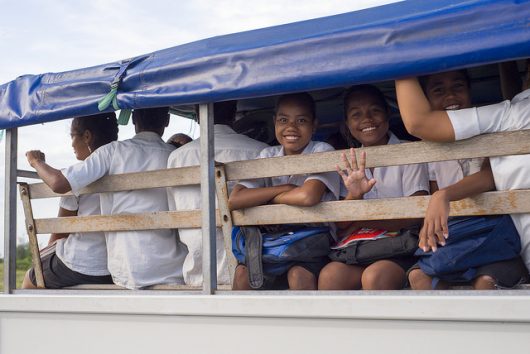
Humanitarian Aid to Kiribati

Although Kiribati’s land mass covers 811 square kilometers, its 33 coral atolls are spread over an area the size of the United States and the vast majority rise no higher than three meters above sea level. Kiribati’s small land mass and high fertility rate mean its main centers are severely overcrowded.

Unemployment rates remain high in the island nation and only 15 percent of children attend secondary school. Only two-thirds of the population has access to an improved drinking water source, and less than 40 percent have access to adequate sanitation facilities. Tuberculosis, dengue fever, leprosy and typhoid are major health concerns for Kiribati.

The United Nations lists Kiribati as an “endangered country” because of the dangers it faces from rising sea levels, contaminated fresh water supplies and poor waste management. There is a need for humanitarian aid to Kiribati because of significant development challenges, such as:

  • Limited revenue
  • High cost of delivering basic services, such as education and healthcare, to remote islands
  • Few employment opportunities
  • Climate change

Kiribati’s economy relies on overseas aid, income from fishing licenses and remittances from merchant seamen. Most of Kiribati’s inhabitants are employed in fishing and subsistence farming, but poor soil fertility limits production. Fortunately, new programs are focusing on humanitarian aid to Kiribati.

Caritas Australia implemented The Disaster Response and Preparedness program, funded by AusAID,  in four Pacific Island countries. The three-year initiative expands Kiribati’s capacity to prepare for and respond to disasters. Caritas Australia partnered with the Diocese of Tarawa and Nauru to train local young people to work with communities and raise awareness about the impacts of climate change.

Saltwater contaminates drinking wells and high tides destroy land crops, threatening the food security of communities dependent on subsistence agriculture in Kiribati. The Disaster Response and Preparedness program pairs young people with elders to identify strategies to mitigate these effects.

This initiative has given young people the opportunity to become strong advocates for their small island at international climate change forums around the world. Humanitarian aid to Kiribati has been handed off to the next generation.

– Paula Gibson

Photo: Flickr

February 14, 2018
Share this entry
  • Share on Facebook
  • Share on X
  • Share on WhatsApp
  • Share on Pinterest
  • Share on LinkedIn
  • Share on Tumblr
  • Share on Vk
  • Share on Reddit
  • Share by Mail
https://borgenproject.org/wp-content/uploads/borgen-project-logo.svg 0 0 Borgen Project https://borgenproject.org/wp-content/uploads/borgen-project-logo.svg Borgen Project2018-02-14 07:30:192024-05-29 22:39:17Addressing the Success of Humanitarian Aid to Kiribati

Get Smarter

  • Global Poverty 101
  • Global Poverty… The Good News
  • Global Poverty & U.S. Jobs
  • Global Poverty and National Security
  • Innovative Solutions to Poverty
  • Global Poverty & Aid FAQ’s
Search Search

Take Action

  • Call Congress
  • Email Congress
  • Donate
  • 30 Ways to Help
  • Volunteer Ops
  • Internships
  • Courses & Certificates
  • The Podcast
Borgen Project

“The Borgen Project is an incredible nonprofit organization that is addressing poverty and hunger and working towards ending them.”

-The Huffington Post

Inside The Borgen Project

  • Contact
  • About
  • Financials
  • President
  • Board of Directors
  • Board of Advisors

International Links

  • UK Email Parliament
  • UK Donate
  • Canada Email Parliament

Get Smarter

  • Global Poverty 101
  • Global Poverty… The Good News
  • Global Poverty & U.S. Jobs
  • Global Poverty and National Security
  • Innovative Solutions to Poverty
  • Global Poverty & Aid FAQ’s

Ways to Help

  • Call Congress
  • Email Congress
  • Donate
  • 30 Ways to Help
  • Volunteer Ops
  • Internships
  • Courses & Certificates
  • The Podcast
Link to: Humanitarian Aid to Guinea Improves Livelihoods of All Guineans Link to: Humanitarian Aid to Guinea Improves Livelihoods of All Guineans Humanitarian Aid to Guinea Improves Livelihoods of All Guineans Link to: The Success of Humanitarian Aid to the Maldives Link to: The Success of Humanitarian Aid to the Maldives The Success of Humanitarian Aid to the Maldives
Scroll to top Scroll to top Scroll to top