• Link to X
  • Link to Facebook
  • Link to Instagram
  • Link to TikTok
  • Link to Youtube
  • About
    • About Us
      • President
      • Board of Directors
      • Board of Advisors
      • Financials
      • Our Methodology
      • Success Tracker
      • Contact
  • Act Now
    • 30 Ways to Help
      • Email Congress
      • Call Congress
      • Volunteer
      • Courses & Certificates
      • Be a Donor
    • Internships
      • In-Office Internships
      • Remote Internships
    • Legislation
      • Politics 101
  • The Blog
  • The Podcast
  • Magazine
  • Donate
  • Click to open the search input field Click to open the search input field Search
  • Menu Menu

Archive for category: Aid

Aid, Global Poverty, Humanitarian Aid

How the US Benefits From Foreign Aid to Belize

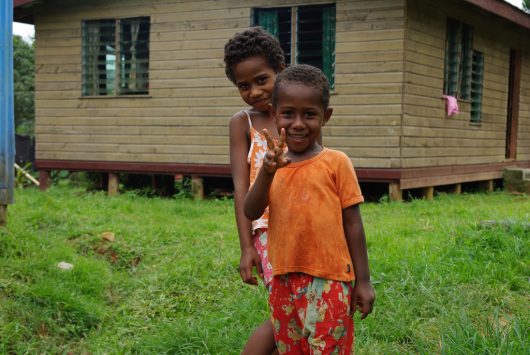
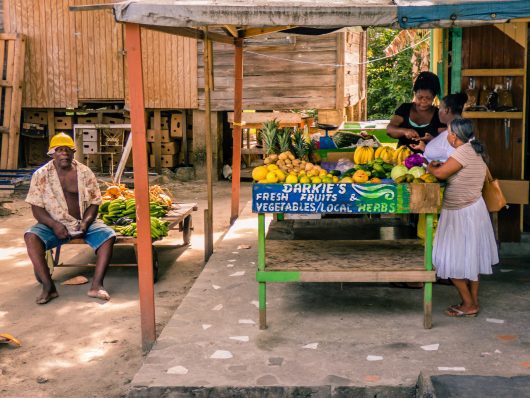
BelizeHistorically, U.S. foreign aid has always been a topic of discussion. The decision to help other countries in times of need incites a lively debate, and that has yet to change. These debates include Belize, a country that greatly benefits from U.S. aid, but the U.S. benefits from foreign aid to Belize as well.


Security

The U.S. government helps Belize fight organized crime and drug trafficking while regulating the number of migrant workers coming into America. The U.S. has helped strengthen the police force in Belize as well as improve the capacity to secure its borders. It has also helped improve citizen security and Belize’s ability to confront and disrupt criminal organizations that run rampant throughout the country. This is all in the effort to strengthen Belize as a country which will be beneficial to the U.S. in the long run.


Immigration and Tourism

The U.S. and Belize have always been very close as the U.S. houses the largest number of Belize nationals outside of the country itself. This is partly because of migrant workers that come to the country from Belize. The U.S. is a major source of investment funds and is the principal trading partner for Belize.  The U.S. also helps to promote tourism in Belize. The tourism often results in Americans retiring and moving to Belize permanently. This helps increase the revenue within the country, promoting economic growth while also exposing Belizean culture to Americans that had never experienced it before.


International Relations

Giving help to Belize depicts U.S. diplomacy and also helps with relations among all Latin American countries. The U.S. has operations in over 100 companies located in Belize which helps the Belizean economy while simultaneously assisting corporations in the U.S. All the while, these efforts increase international relations and positive American diplomacy.

These are just a few ways that the U.S. benefits from foreign aid to Belize, and as the relationship between the two countries continues to grow, more benefits will become apparent.

Belize has benefited substantially from America aid which has allowed an increase in economic status with attempts to end organized crime and illicit drug trafficking. U.S. foreign aid helped Belize improve the inner-workings of the country as well as citizen relations. Foreign aid has had a positive effect on Belize as a whole, and this is a trend that seems to be continuing as long as the U.S. is there to offer foreign aid to the country when it needs it.

– Simone Williams

Photo: Flickr

February 17, 2018
https://borgenproject.org/wp-content/uploads/borgen-project-logo.svg 0 0 Borgen Project https://borgenproject.org/wp-content/uploads/borgen-project-logo.svg Borgen Project2018-02-17 21:46:122019-11-07 03:39:40How the US Benefits From Foreign Aid to Belize
Aid, Global Poverty, Humanitarian Aid

The Success of Humanitarian Aid to St. Vincent and the Grenadines

The Success of Humanitarian Aid to St. Vincent and the Grenadines

Composed of smaller islands in the southern Caribbean, St. Vincent and the Grenadines is known for its major sailing destinations and white-sand beaches. However, on Dec. 24, 2013, a heavy tropical storm plagued the islands. Heavy rains, flooding and landslides caused at least eight deaths and massive damage to the country. Declared a level 2 disaster by the government, regional assistance was requested seeing that local resources were limited. That’s when Britain stepped in.

Providing Humanitarian Aid

Britain was the first to offer humanitarian aid to St. Vincent and the Grenadines. Britain provided about $370,000 in early January 2014. In addition to the funds, London provided essential drugs and medical supplies. Water and sanitation equipment were also supplied in an attempt to curb spreading of water-borne diseases. The Pan American Health Organization (PAHO) supplied the goods on behalf of the U.K.

Also in 2014, the European Commission’s Department of Humanitarian Aid and Civil Protection (ECHO) granted €300,000 to bring relief to locations affected by floods. Humanitarian aid to St. Vincent and the Grenadines was granted due to the severe impact left behind by the low-level trough system. A trough refers to an extended time of relatively low atmospheric pressure that can bring clouds, wind shifts and rain.

St. Vincent and the Grenadines have a history of receiving humanitarian aid. In 2010, the Organization of Eastern Caribbean States (OECS) vowed to provide any and all support to the government of St. Vincent and the Grenadines following the destruction of a previous storm, Hurricane Tomas. This including engaging a team from the U.N. to direct macro socio-economic disaster impact assessments in the islands.

Updating Infrastructure

Still rebuilding from years of previous hurricanes and troughs, the Agence Française de Développement (AFD) offered $33 million to St. Vincent and the Grenadines and nine other islands to finance proper infrastructure projects. The AFD is a chief agency established by the French government. At least 50 percent of the funding will also go toward climate change adaptation and mitigation projects. Other areas to be funded are:

  • Renewable energy
  • Water and sanitation
  • Waste management
  • Updating infrastructure to combat climate change
  • Protection of coasts and rivers

The success of humanitarian aid to St. Vincent and the Grenadines gave the island hope. Every effort counted and the people of these islands knew they weren’t forgotten in their time of need.

– Tara Jackson

Photo: Flickr

February 17, 2018
https://borgenproject.org/wp-content/uploads/borgen-project-logo.svg 0 0 Borgen Project https://borgenproject.org/wp-content/uploads/borgen-project-logo.svg Borgen Project2018-02-17 19:30:272024-12-13 17:58:37The Success of Humanitarian Aid to St. Vincent and the Grenadines
Aid, Global Poverty, Humanitarian Aid

The Success of Humanitarian Aid to Mauritania

humanitarian aid to MauritaniaMauritania is an impoverished country located on the west coast of Sub-Saharan Africa in the Sahel region. Of its 4.1 million people, 42 percent live below the poverty line. The population faces additional challenges of high youth unemployment rates and low levels of formal education. However, a huge decline in the poverty rate during the 2010s and successful projects in humanitarian aid to Mauritania place the country in a position to grow economically.

Mauritania gained independence from France in 1960 but has since seen two coups creating some political instability. The first occurred in 1978 and the second 30 years later in 2008. The second coup coincided with a time of poverty reduction, and the 2000s, in general, brought GDP growth for Mauritania. The mining industry is large in Mauritania and was a big factor in that growth due to an increased global value of minerals.

Humanitarian aid to Mauritania can help further boost the growth of the country and benefit the people. Below are four areas in which humanitarian aid has been a success.

  1. Finance – The World Bank has been involved with humanitarian aid projects in Mauritania since 1963 and is working on financial projects that benefit the people. There are currently eight projects that total over $370 million in aid to Mauritania. The projects align with the goal of creating jobs, as well as provide analytical work and technical assistance. Also, in 2012 the World Bank’s International Finance Corporation (IFC) invested $12 million in commercial banks to provide a $127 million two-year credit line so that Mauritania would have a stable source of energy products.
  2. Education – The World Bank is also involved in two educational projects in Mauritania. Mauritania’s population suffers from a lack of formal education and a 44% youth unemployment rate. These World Bank projects (totaling over $30 million) educate the population and increase the relevance and efficiency of vocational training in Mauritania. The projects are also working with training institutions to modernize them and improve their programs. Seven of these institutions already have performance contracts and three will be internationally certified to best prepare the workforce.
  3. Climate – Located in the Sahel region in Africa, Mauritania has a semi-arid climate. Additionally, as a coastal country, Mauritania faces challenges from sea level rise and erosion. Up to 30 meters of coastline is lost in any given year. To combat this, Mauritania is working with other countries, regional alliances and international partners. Mauritania is developing an investment plan based on environmental analysis that will be part of a foundation for its future sustainable development. Also, Britain’s Oxfam is working to help the population affected by recurrent climate crises.
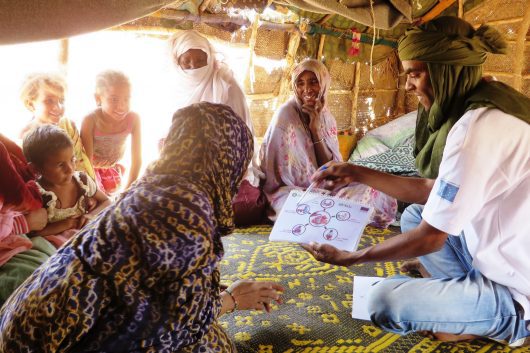
  4. Food – A large portion of humanitarian aid to Mauritania focuses on food security and nutrition. The European Commission is working to prevent malnutrition of those most vulnerable in the population. Additionally, USAID is working with Action Contre la Faim (ACF or Action Against Hunger in English) to prevent malnutrition through cooking demonstrations and nutrition education. Further, they conduct screenings to identify children most at risk of malnutrition so they can be treated. They have contributed over $200 million to ensure food availability in Mauritania.

Despite the improvements in Mauritania in the 2000s, there are still many people living in poverty and the country faces development challenges. Humanitarian aid to Mauritania has been essential to helping the people of the country and will continue to help grow the economy.

– Hayley Herzog

Photo: Flickr

February 17, 2018
https://borgenproject.org/wp-content/uploads/borgen-project-logo.svg 0 0 Borgen Project https://borgenproject.org/wp-content/uploads/borgen-project-logo.svg Borgen Project2018-02-17 18:13:142019-11-07 03:40:15The Success of Humanitarian Aid to Mauritania
Aid, Foreign Aid, Global Poverty

How the US Benefits from Foreign Aid to Madagascar

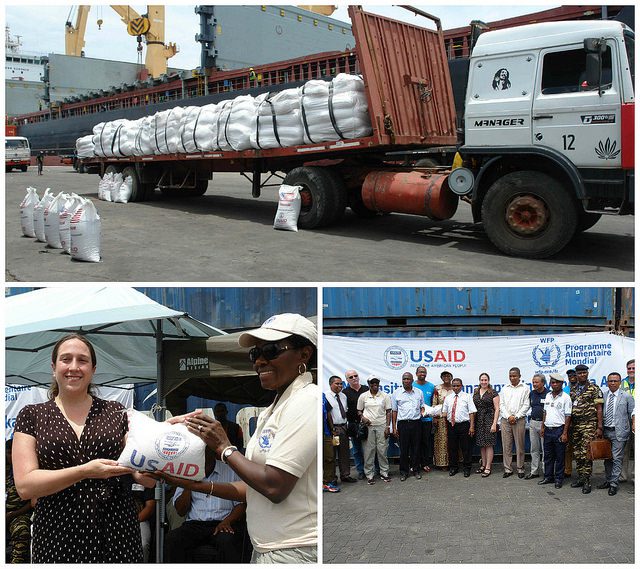
How the U.S. Benefits from Foreign Aid to MadagascarThe U.S. has been helping Madagascar through various forms of aid and agreements for more than 30 years. In 2016, USAID was able to supply $91 million to Madagascar. Madagascar takes part in the President’s Malaria Initiative, water, sanitation and hygiene program and biodiversity conservation. The United States is part of an agreement with the Common Market for Eastern and Southern Africa, which helps frame trading and investments. Madagascar is one of the countries that can benefit massively from the agreement. The country is also eligible for even more trade benefits from the African Growth and Opportunity Act. However, this relationship is not one-sided; the U.S. benefits from foreign aid to Madagascar in several ways.

According to the U.S. Department of State, U.S. imports from Madagascar include apparel, vanilla beans, precious stones and metals, perfumes and cosmetics. The U.S. exports machinery, rice, wheat, vegetable oil, aircraft and vehicles to Madagascar. Each item that the U.S. exports requires workers to make and package them, creating jobs in the U.S. to help Madagascar even more. Trading and exporting higher profit items such as vehicles further shows how the U.S. benefits from foreign aid to Madagascar.

In 2011, Bill Gates explained how the U.S. benefits from foreign aid to Madagascar and other countries as well. “The 1 percent we spend on aid for the poorest not only saves millions of lives, it has an enormous impact on developing economies – which means it has an impact on our economy.” Years later, this statement is still accurate.

In 2016, Madagascar imported $2.79 billion in products, a 1.68 percent increase from 2011. This shows that the economy is growing and foreign aid is helping. However, the U.S. benefits from foreign aid to Madagascar not just through import and exports; foreign aid helps contribute to the security of the United States and can work to keep relations with countries such as Madagascar on reasonable terms.

In Madagascar, the United States focuses on helping with food security, disaster assistance and health. Recently, the United States has been the most significant donor to this country. The U.S. benefits from foreign aid to Madagascar because, with all of this support, all that is left is progress. Progress related to the economy, healthcare systems and the continuation of development after natural disasters are all ongoing.

As Madagascar works to lower the 92 percent of people living on $2 a day, the U.S. will start to see benefits. For example, American businesses will benefit because as people who were once in poverty become wealthier, they will have money to purchase consumer goods. This example is critical to show how the U.S. benefits from foreign aid to Madagascar.

In sum, Madagascar is still struggling daily and needs foreign aid to help, especially with the number of natural disasters that occur every year. However, all of the progress that is being made shows how essential foreign aid is to improving the lives of Madagascar’s citizens and increasing trade opportunities for the U.S.

– Amber Duffus

Photo: Flickr

February 17, 2018
https://borgenproject.org/wp-content/uploads/borgen-project-logo.svg 0 0 Borgen Project https://borgenproject.org/wp-content/uploads/borgen-project-logo.svg Borgen Project2018-02-17 07:30:172019-11-07 03:46:49How the US Benefits from Foreign Aid to Madagascar
Aid, Foreign Aid, Global Poverty

How the US Benefits from Foreign Aid to Haiti

How the U.S. benefits from foreign aid to HaitiFollowing the massive earthquake that shook Haiti in 2010, killing at least 200,000 people and displacing 1.5 million others, the United States contributed $5.1 billion toward relief, recovery and reconstruction. Temporary visas were also granted so that some Haitians could seek better opportunities in the United States. White House officials announced on January 17, 2018, that Haitians would no longer be eligible for U.S. visas given to low-skilled workers. The U.S. benefits from foreign aid to Haiti, including this program, as it helps foster goodwill and acknowledges that the U.S. has taken much from Haiti in the past.

Haiti gained independence from France on January 1, 1804, and became the second oldest independent nation in the Western hemisphere. Before that, Haitians helped America win the Revolutionary War. In 1914, the United States under Woodrow Wilson invaded Port-au-Prince, raided the nation’s reserve and occupied the country. Haiti was ruled by the United States until 1934. Haiti still feels the consequences of imperialism and the U.S.-supported dictatorship that lasted from 1957 until 1986.

Today, the United States and Haiti are trade partners. The U.S. benefits from foreign aid to Haiti because helping the Haitian economy allows for increased trade. Many of the clothes sold at Walmart, JCPenney, Gap, Old Navy and other well-known stores are manufactured in Haiti. The country’s garment manufacturing industry has been stable for decades and is currently employing 60,000 people, according to the Association of Industries of Haiti. The apparel sector makes up at least 90 percent of Haiti’s total exports.

There is clear economic evidence that migrant workers fill important gaps in the U.S. labor market. A 2013 study showed that at the height of the Great Recession in North Carolina, unemployment reached 12 percent. Among half a million unemployed workers in the state, only 250 applied for the 6,500 open agricultural jobs. Haitian immigrants help fill the agricultural labor gap and add value to the U.S. economy.

The U.S. benefits from foreign aid to Haiti and the workers that travel to America on temporary visas. By disallowing visas to Haitian immigrants, the United Staes is cutting off an economically beneficial opportunity for both itself and the Haitian people. The special visas gave Haitians a rare chance to work legally in the United States, contribute to the U.S. economy and help fund the recovery of Haiti after the earthquake.

The United States’ humanitarian assistance to Haiti following the 2010 earthquake fostered goodwill and was a meaningful gesture that helped make amends for the many years of imperialistic rule. When Haiti is productive, safe and firmly rooted in democracy, both Haitians and Americans benefit. U.S. policy focused on aid to Haiti can foster the institutions and infrastructure necessary to achieve meaningful poverty reduction through sustainable development.

– Sam Bramlett

Photo: Flickr

February 16, 2018
https://borgenproject.org/wp-content/uploads/borgen-project-logo.svg 0 0 Borgen Project https://borgenproject.org/wp-content/uploads/borgen-project-logo.svg Borgen Project2018-02-16 07:30:482019-12-09 05:53:51How the US Benefits from Foreign Aid to Haiti
Aid, Global Poverty, Humanitarian Aid

The Success of Humanitarian Aid to Djibouti

Humanitarian Aid to Djibouti

Djibouti is a relatively small country in eastern Africa bordered by Somalia, Ethiopia and Eritrea. The majority of the population lives in urban areas, but this does not mean that the country is immune to problems such as poor nutrition, lack of education and poverty. The success of humanitarian aid to Djibouti has been in addressing these problems and more.

Children and Education

There has been a serious gap in education for females in Djibouti. The literacy rate in 2007 was 81.2 percent for males and only 63.8 percent for females. USAID has been working to specifically address this issue by doing work such as connecting girls with university mentors and revising textbooks using a gender-specific lens. In regard to more general education issues, USAID has also helped to develop a national teacher training plan that has trained more than 1,200 primary school teachers.

The United Nations Girls’ Education Initiative has also addressed these issues within Djibouti. Their Integrated Early Childhood Development program addresses girls’ education as well as childhood health with a focus on preventing HIV/AIDS and polio. They are also working to incorporate the principles of the Convention on the Rights of a Child into common practice in Djibouti.

Health and Medicine

USAID has also addressed health in Djibouti with a focus on problems related to tuberculosis, polio and HIV/AIDS. They have worked with the government of Djibouti to enhance the National Tuberculosis Program to maintain quality assurance and the management of multi-drug resistant cases. The organization has also supported the polio surveillance program to ensure the virus does not reenter through surrounding countries and to ensure childhood vaccination. Lastly, with the help of the government and other organizations, USAID has created a 1,600 square foot community health center which provides healthcare to over 30,000 truckers and other vulnerable persons to specifically address HIV/AIDS.

UNICEF also worked to address severe acute malnutrition within Djibouti. They provided treatment to 3,811 children under five and 29,513 children between six and 59 months in 2017. UNICEF was also pivotal in providing care for refugees in Djibouti.

Refugees and Displaced Persons

The success of humanitarian aid to Djibouti cannot be discussed without mentioning refugees and displaced persons. Djibouti has been known as a transit country for refugees fleeing conflict-stricken countries. As of October 2017, there were more than 27,000 refugees in the country, which is 3 percent of the total population. Some of these refugees have been in Djibouti for over 25 years. There are three refugee camps across the country, all of which depend on humanitarian aid.

More specifically, UNICEF has worked to aid refugee and migrant children. In 2017, they provided 632 children with child protective services and 139 children were involved in risk awareness activities. They also provided 4,396 children with access to schooling. The UNHCR also works to aid refugees in Djibouti with resettlement, ensuring refugee children have access to secondary education and providing food and water to refugee camps.

The success of humanitarian aid to Djibouti is an ongoing process. Drought and a lack of fertile land put pressure on the country as it continues to accept refugees while providing for native citizens. With the help of these international organizations and others, the hope is that Djibouti will continue to be a welcoming and safe country for all who live there.

– Megan Burtis

Photo: Flickr

February 16, 2018
https://borgenproject.org/wp-content/uploads/borgen-project-logo.svg 0 0 Borgen Project https://borgenproject.org/wp-content/uploads/borgen-project-logo.svg Borgen Project2018-02-16 01:30:562024-05-29 22:39:21The Success of Humanitarian Aid to Djibouti
Aid, Foreign Aid, Global Poverty

How the US Benefits from Foreign Aid to Costa Rica

How the US Benefits from Foreign Aid to Costa Rica
Costa Rica is a relatively small country in Central America with around 4.9 million inhabitants. Considered one of the more stable countries of the region, it ranks highly on the Human Development Index, at 69 in 2015. It has a highly educated workforce, which stems from the 6.9 percent of its annual budget it spends on education. Much of its population is bilingual in Spanish and English.

The Success Story of Costa Rican Development

As well, it is known for is environmentally sustainable practices, as it is the only country in the world that meets all five of the U.N. Development Program measures for environmental sustainability. In 2016, 98 percent of its electricity was generated from green sources, and it plans to become carbon-neutral by 2021.

But for all its successes, it was once, like many developing countries, on the list of those receiving foreign aid from the U.S. After receiving more than $2.7 billion in foreign aid, Costa Rica graduated from the program in 1996. This suggests Costa Rica achieved competency and shows the success of foreign aid.

But what are the U.S. benefits from foreign aid to Costa Rica? By funneling billions of dollars into Costa Rica, the U.S. has helped another country, but does that amount to worthwhile U.S. benefits from foreign aid to Costa Rica?

Electrifying Trading Partners for Mutual Growth

For one thing, by increasing economic stability for Costa Rica, the U.S. has also increased the nation’s purchasing power. In 1995, exports of non-traditional products totaled $1.4 billion. At almost 54 percent of total exports, Costa Rica imported more goods than Poland, Hungary and Romania combined. Stable growth of another nation, therefore, electrifies the U.S. economy as well, creating wealth in both countries.

Consider, for example, the concept of bilateral economics that’s been in place since the 1980s. It eliminated tariffs, opened markets and reduced barriers for imports and exports between the two countries. As one of Costa Rica’s largest trading partners, the U.S. has been able to export billions of dollars worth of products to Costa Rica in a way that alleviates the hindrance of taxes for both countries.

Similarly, it helps create allies for the U.S. and secure its global interests. As noted in a Washington Post article, aid to Costa Rica in the 1980s helped it become a nation of stability, democracy and human rights, as well as agreeing to regional trade agreements that give the U.S. a positive position. In this way, the U.S. benefits from foreign aid to Costa Rica are not only economic, but also strategic and political.

– Nick McGuire

Photo: Flickr

February 15, 2018
https://borgenproject.org/wp-content/uploads/borgen-project-logo.svg 0 0 Borgen Project https://borgenproject.org/wp-content/uploads/borgen-project-logo.svg Borgen Project2018-02-15 13:30:012019-12-17 13:21:38How the US Benefits from Foreign Aid to Costa Rica
Aid, Foreign Aid, Global Poverty

How the US Benefits from Foreign Aid to Guyana

How the U.S. benefits from foreign aid to GuyanaLocated on the northern mainland of South America, Guyana is now considered a middle-income country. That is perhaps why U.S. foreign aid to Guyana has been decreasing over the years. However, Guyana faces many issues such as drug trafficking and other regional crimes that require foreign assistance in order to effectively address them. In fact, it is not just Guyana that benefits from foreign aid. U.S. benefits from foreign aid to Guyana as well, since it helps the U.S. in its fight against diseases such as HIV/AIDS.
One major goal for the U.S. is to effectively address the global HIV/AIDS epidemic, which is why the U.S. President’s Emergency Plan for AIDS Relief (PEPFAR) was established in 2003. Through PEPFAR, Guyana has been able to significantly improve its response to HIV. For instance, PEPFAR helped establish the National Public Health Reference Laboratory (NPHRL) and supported the development of a prevention of mother to child transmission (PMTCT) program.

It also helped the Guyanese national blood safety program to reach international standards, established functioning supply chain management and improved strategic information. As a result of these initiatives, Guyana saw significant improvement in its response to HIV/AIDS and has also become more efficient in working on its own to fight this disease.

Recently, however, there have been drastic reductions in PEPFAR’s operations in Guyana. For instance, PEPFAR no longer provides antiretroviral drugs to Guyana, and the country has assumed responsibility for all cervical cancer and PMTCT activities, blood safety in the country and human resources for the NPHRL. Although this makes it a challenge for the country to continue responding strongly to this epidemic, it also makes Guyana self-sufficient as it gathers domestic funds for HIV/AIDS programs.

However, PEPFAR is still crucial in Guyana because there are many ways the country still needs assistance. For instance, there are still “gaps in core strategic information, laboratory and supply chain systems as well as pervasive stigma and discrimination” in the country. By helping to establish a sustainable national HIV program in Guyana, PEPFAR would achieve its goal. In that way, the U.S. benefits from foreign aid to Guyana.

Additionally, the U.S. benefits from foreign aid to Guyana because the U.S. is committed to combatting drug trafficking, and Guyana is one of the most frequently used transit points for this illegal activity. U.S. assistance through the Caribbean Basin Security Initiative (CBSI) helps Guyana effectively tackle drug trafficking. The CBSI-funded programs in Guyana work to improve law enforcement capabilities, “protect borders and ports, strengthen workforce development, and promote anti-money laundering effectiveness,” efforts that address key concerns shared by both Guyana and the U.S.  Additionally, U.S. assistance also helps promote law enforcement professionalization and effective narcotics investigations, thereby improving the anti-drug trafficking strategy in Guyana.

There are other ways the U.S. benefits from foreign aid to Guyana, as it helps the country effectively respond to issues such human trafficking and other crimes that also affect the U.S. Hopefully, with continued collaborated efforts from both the U.S. and Guyana, the country will be able to effectively address all of these issues.

– Mehruba Chowdhury

Photo: Google

February 15, 2018
https://borgenproject.org/wp-content/uploads/borgen-project-logo.svg 0 0 Borgen Project https://borgenproject.org/wp-content/uploads/borgen-project-logo.svg Borgen Project2018-02-15 07:30:342024-05-29 22:39:20How the US Benefits from Foreign Aid to Guyana
Aid, Global Poverty, Humanitarian Aid

The Success of Humanitarian Aid to the Maldives

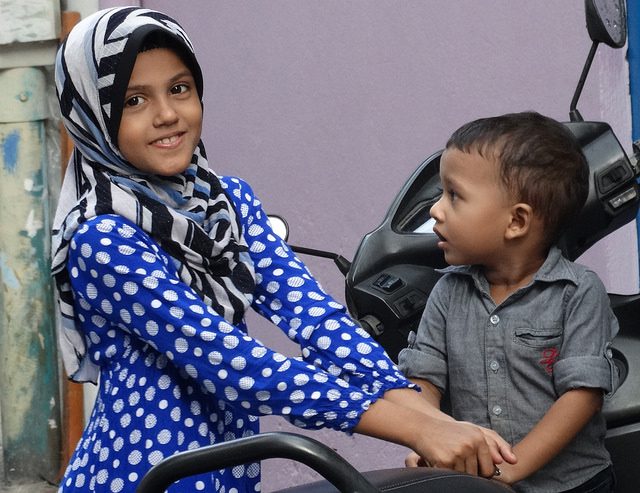
humanitarian aid to the MaldivesThe Maldives is an island country in the Indian Ocean, southwest of India and Sri Lanka. It consists of 1,192 coral islands, of which only 200 are inhabited and the rest are used for farming, industry or just accessible as a private resort.

Since its independence from colonial British rule in 1965, the Maldives gradually improved from least developed country status to upper-middle-income status in 2013. The success of humanitarian aid to the Maldives is notable and contributed greatly to its economic growth.

The country mostly received foreign assistance from Arab countries like Saudi Arabia, Kuwait and the United Arab Emirates before 1980. However, in 1992, it received $11.6 million in foreign aid from the World Bank, the Asian Development Bank and Japan, which was intended for education, health, transport, fisheries and harbor development.

Although the Maldives is known as a great tourist destination, it is facing a unique danger of potentially disappearing into the ocean due to climate change and rising sea levels. In 2004, the country was struck by a tsunami, leading to massive destruction on its various islands.

Following the tsunami, the U.S. among many other countries provided $8.65 million and USAID contributed $1.9 million in foreign aid for the reconstruction of the damaged areas. Libya sent almost $2 million in emergency humanitarian aid to the Maldives. The U.S also contributed $100,000 after a storm in May 2007 for disaster recovery assistance.

In January 2005, UNICEF, with the help of the European Commission Humanitarian Aid Office, provided educational supplies and other basic emergency supplies with a total value of $1 million to children in the Maldives who were affected by the tsunami, with an aim of returning them to school by the end of the month.

In December 2014, when a fire destroyed the generator of the largest water treatment plant in the capital city of Mali, India provided water aid to Maldives residents. Ten planeloads of drinking water and two warships with the capacity of purifying water through reverse osmosis systems were dispatched from India, helping almost 150,000 Mali residents.

The European Union contributed €4 million in humanitarian aid in 2007 and another €4 million in 2013 towards environmental sustainability and poverty reduction. This helped in the improvement of safe water, waste disposal, renewable and efficient energy development and coral reef protection.

Australia contributed almost A$1.3 million through the United Nations Development Program for Integrated Government from 2012 to 2018. This includes strengthening civil society organizations and the transparency of the justice department, as well as improving respect for human rights in the country.

The success of humanitarian aid to the Maldives is evident from the birth of the country up to recent times. It has aided in the development of the country’s infrastructure, increased its economic activity and helped with restoration after natural disasters. These examples demonstrate the short-term and long-term effects that humanitarian aid can have on developing countries.

– Mahua Mitra

Photo: Flickr

February 14, 2018
https://borgenproject.org/wp-content/uploads/borgen-project-logo.svg 0 0 Borgen Project https://borgenproject.org/wp-content/uploads/borgen-project-logo.svg Borgen Project2018-02-14 07:30:242024-05-29 22:39:19The Success of Humanitarian Aid to the Maldives
Aid, Global Poverty, Humanitarian Aid

Addressing the Success of Humanitarian Aid to Kiribati

Humanitarian Aid to Kiribati

Although Kiribati’s land mass covers 811 square kilometers, its 33 coral atolls are spread over an area the size of the United States and the vast majority rise no higher than three meters above sea level. Kiribati’s small land mass and high fertility rate mean its main centers are severely overcrowded.

Unemployment rates remain high in the island nation and only 15 percent of children attend secondary school. Only two-thirds of the population has access to an improved drinking water source, and less than 40 percent have access to adequate sanitation facilities. Tuberculosis, dengue fever, leprosy and typhoid are major health concerns for Kiribati.

The United Nations lists Kiribati as an “endangered country” because of the dangers it faces from rising sea levels, contaminated fresh water supplies and poor waste management. There is a need for humanitarian aid to Kiribati because of significant development challenges, such as:

  • Limited revenue
  • High cost of delivering basic services, such as education and healthcare, to remote islands
  • Few employment opportunities
  • Climate change

Kiribati’s economy relies on overseas aid, income from fishing licenses and remittances from merchant seamen. Most of Kiribati’s inhabitants are employed in fishing and subsistence farming, but poor soil fertility limits production. Fortunately, new programs are focusing on humanitarian aid to Kiribati.

Caritas Australia implemented The Disaster Response and Preparedness program, funded by AusAID,  in four Pacific Island countries. The three-year initiative expands Kiribati’s capacity to prepare for and respond to disasters. Caritas Australia partnered with the Diocese of Tarawa and Nauru to train local young people to work with communities and raise awareness about the impacts of climate change.

Saltwater contaminates drinking wells and high tides destroy land crops, threatening the food security of communities dependent on subsistence agriculture in Kiribati. The Disaster Response and Preparedness program pairs young people with elders to identify strategies to mitigate these effects.

This initiative has given young people the opportunity to become strong advocates for their small island at international climate change forums around the world. Humanitarian aid to Kiribati has been handed off to the next generation.

– Paula Gibson

Photo: Flickr

February 14, 2018
https://borgenproject.org/wp-content/uploads/borgen-project-logo.svg 0 0 Borgen Project https://borgenproject.org/wp-content/uploads/borgen-project-logo.svg Borgen Project2018-02-14 07:30:192024-05-29 22:39:17Addressing the Success of Humanitarian Aid to Kiribati
Page 36 of 65«‹3435363738›»

Get Smarter

  • Global Poverty 101
  • Global Poverty… The Good News
  • Global Poverty & U.S. Jobs
  • Global Poverty and National Security
  • Innovative Solutions to Poverty
  • Global Poverty & Aid FAQ’s
Search Search

Take Action

  • Call Congress
  • Email Congress
  • Donate
  • 30 Ways to Help
  • Volunteer Ops
  • Internships
  • Courses & Certificates
  • The Podcast
Borgen Project

“The Borgen Project is an incredible nonprofit organization that is addressing poverty and hunger and working towards ending them.”

-The Huffington Post

Inside The Borgen Project

  • Contact
  • About
  • Financials
  • President
  • Board of Directors
  • Board of Advisors

International Links

  • UK Email Parliament
  • UK Donate
  • Canada Email Parliament

Get Smarter

  • Global Poverty 101
  • Global Poverty… The Good News
  • Global Poverty & U.S. Jobs
  • Global Poverty and National Security
  • Innovative Solutions to Poverty
  • Global Poverty & Aid FAQ’s

Ways to Help

  • Call Congress
  • Email Congress
  • Donate
  • 30 Ways to Help
  • Volunteer Ops
  • Internships
  • Courses & Certificates
  • The Podcast
Scroll to top Scroll to top Scroll to top