• Link to X
  • Link to Facebook
  • Link to Instagram
  • Link to TikTok
  • Link to Youtube
  • About
    • About Us
      • President
      • Board of Directors
      • Board of Advisors
      • Financials
      • Our Methodology
      • Success Tracker
      • Contact
  • Act Now
    • 30 Ways to Help
      • Email Congress
      • Call Congress
      • Volunteer
      • Courses & Certificates
      • Be a Donor
    • Internships
      • In-Office Internships
      • Remote Internships
    • Legislation
      • Politics 101
  • The Blog
  • The Podcast
  • Magazine
  • Donate
  • Click to open the search input field Click to open the search input field Search
  • Menu Menu

Archive for category: Aid

Aid, Foreign Aid, Global Poverty

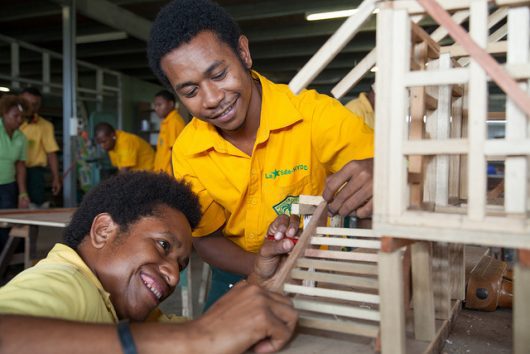
How the US Benefits from Foreign Aid to Papua New Guinea

U.S. benefits from foreign aid to Papua New Guinea
Papua New Guinea is a country rich in mineral, agricultural, forestry and fishery resources. The country suffers from weak governance, corruption, limited capacity to deliver basic services, a deterioration of its health system and a concentrated HIV/AIDS epidemic among key populations. 

With the help of U.S. bilateral and multilateral assistance, Papua New Guinea has experienced recent economic progress based around its abundant energy, agricultural and mineral resources. As a result, the U.S. benefits from foreign aid to Papua New Guinea as well.

For the 2017 fiscal year, U.S. aid to Papua New Guinea totaled $9.1 million. The largest areas of focus included strengthening HIV/AIDS services for more at-risk populations ($3.5 million), disaster readiness ($3.5 million) and general climate protection through the Pacific-American Climate Fund ($1.6 million).

Providing the opportunity for stability in impoverished countries strengthens their stability and benefits the U.S. through contributing to trade and foreign relations. 

Trade a Key Way the U.S. Benefits from Foreign Aid to Papua New Guinea

The U.S. benefits from foreign aid to Papua New Guinea through trade relations. In 2016, the U.S. had a trade surplus with Papua New Guinea of $35 million. U.S. goods exports to Papua New Guinea totaled $127 million in 2016, while U.S. goods imports totaled $92 million. Key U.S. exports included machinery and mechanical appliances, cereals and aircraft.

The major U.S. exports to Papua New Guinea are petroleum and mining machinery and aircraft. Imports to the U.S. from Papua New Guinea include gold, copper ore, cocoa, coffee and other agricultural products. 

Additionally, through the U.S.-Pacific Islands Multilateral Tuna Fisheries Treaty, Papua New Guinea is able to access U.S. fishing vessels in exchange for a license fee from the U.S. industry.

Asia Pacific Economic Cooperation

The U.S. benefits from foreign aid to Papua New Guinea through foreign relations. The United States and Papua New Guinea meet through a mutual membership in the Asia Pacific Economic Cooperation (APEC). APEC facilitates trade and investment, economic growth and regional cooperation. It serves as the leading forum in the Asia Pacific community and focuses on developing and strengthening the multilateral trading system, increasing the interdependence of member economies and promoting sustainable economic growth in the region. 

APEC’s work is non-binding, meaning that decisions are made based on consensus and commitments are taken voluntarily. APEC has contributed to the reduction of barriers to trade, such as tariffs, which has led to the expansion of economic growth and international trade in the region.

U.S. Promote Good Governance in Papua New Guinea

In addition to APEC, the United States and Papua New Guinea have a history of close partnership. The two countries work together to combat issues such as improving transparency and good governance, fighting human trafficking, restraining the effects of climate change, protecting fisheries, improving public health and promoting gender equality. The militaries of both the U.S. and Papua New Guinea have a cooperative security assistance relationship that focuses on joint humanitarian exercises and the training of Papua New Guinean military personnel.

Papua New Guinea and the U.S. belong to several of the same international organizations, including the United Nations, the International Monetary Fund, the World Bank, the World Trade Organization, the ASEAN Regional Forum, the Pacific Community and the Secretariat of the Pacific Regional Environment Program.

The U.S. aims to improve countries around the world by supporting them with foreign aid. Countries such as Papua New Guinea have shown that the money provided to them has strengthened their economic conditions, and in turn, the U.S. benefits from foreign aid to Papua New Guinea through trade and foreign relations. 

– Anne-Marie Maher
Photo: Flickr

June 9, 2018
https://borgenproject.org/wp-content/uploads/borgen-project-logo.svg 0 0 Borgen Project https://borgenproject.org/wp-content/uploads/borgen-project-logo.svg Borgen Project2018-06-09 01:30:312024-06-06 00:08:00How the US Benefits from Foreign Aid to Papua New Guinea
Aid, Children, Global Poverty, United Nations

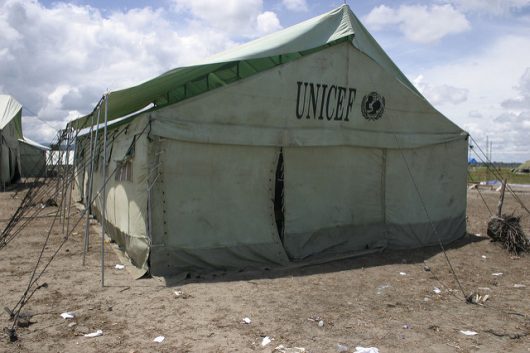
Understanding What UNICEF Stands for and Why

What UNICEF Stands For
The United Nations International Children’s Emergency Fund (UNICEF) is a program dedicated to providing developmental assistance to children and mothers in developing countries as well as supporting humanitarian efforts globally. UNICEF operates in over 190 countries in an effort to protect and save children’s lives.

How UNICEF Works

UNICEF receives its funding through donations from government entities around the globe as well as private donors. Of these funds, government entities are responsible for two-thirds of the organization’s resources. UNICEF stands for transparency. It reports that of the donations it receives, nearly 92 percent is distributed to relief programs.

UNICEF was founded in 1946 in an effort to help war-torn children in the many countries affected by World War II. In 1953, UNICEF dropped the words International and Emergency from its title in an effort to extend its reach to children in need in developing countries.

What UNICEF Stands For

Today, in cooperation with governments and NGOs, UNICEF stands for providing health care to children, promoting children’s rights and providing immunizations, adequate nutrition, safe food and water as well as basic education. UNICEF’s ultimate goal is to ensure that no child ever goes hungry, thirsty, dies prematurely or is bought, sold or otherwise victimized. In order to achieve this, UNICEF works with families in need and helps ensure adoption policies are in accordance with the best and most ethical practices today.

UNICEF stands for transparency in the nonprofit sector. It receives high praises from many watchdogs for its monetary transparency policies. Of every dollar spent, 90 cents go to children’s efforts, seven cents go toward fundraising efforts and three cents go toward overhead and administrative costs. As well as being transparent, UNICEF excels at working with other agencies and private businesses to fight for children’s rights.

UNICEF’s Partnership with Google

UNICEF works with companies like Google to respond to emergencies such as earthquakes, hurricanes and other natural disasters. Most recently, UNICEF has worked with Google to help aid children and families affected by hurricanes in Puerto Rico and the Caribbean.

As well as emergency aid, UNICEF and Google collaborate to support the annual flu shot campaign provided by UNICEF. This collaboration has raised over $600,000 toward UNICEF’s immunization program.

In 2016, Google helped UNICEF by donating $1 million to help fight the spread of the Zika virus. Google worked with UNICEF to build a program which tracked the anticipated outbreak of the virus and developed technology that is applicable to not only the Zika virus but other virus outbreaks in the future. With Google’s help, UNICEF helped prevent the spread of the Zika virus and saved the lives of many children and families around the world.

UNICEF is a program with the noble intentions of promoting children’s health and happiness around the globe. Many of the programs provided by UNICEF have helped greatly in reducing the abuse of children in over 190 countries. With its clear mission of transparency, UNICEF succeeds in providing aid to children and families in need. With the help of NGOs and companies like Google, UNICEF is set to continue its story of success in the future.

– Dalton Westfall

Photo: Flickr

May 29, 2018
https://borgenproject.org/wp-content/uploads/borgen-project-logo.svg 0 0 Borgen Project https://borgenproject.org/wp-content/uploads/borgen-project-logo.svg Borgen Project2018-05-29 11:06:492024-05-29 22:42:33Understanding What UNICEF Stands for and Why
Aid, Education

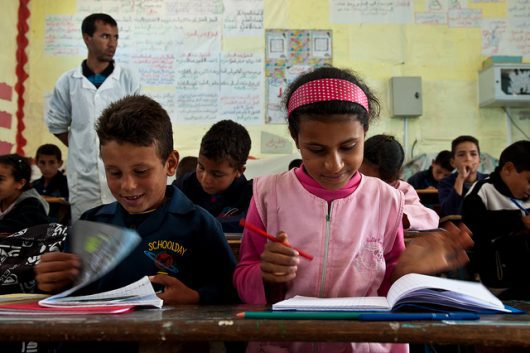
U.S. Investments Are Strengthening Education In Tunisia

US Investments Strengthening Education in Tunisia
The United States has invested $100 million in strengthening education in Tunisia, Africa. The project, known as Strengthening Foundations for Learning, is designed to support the government in addressing major challenges in primary education.

What Will the Project Do?

The main goal is to direct resources toward key areas for a transformative impact on student learning. The project will focus on expanding access to quality early childhood education, strengthening literacy and numeracy in the early grades, improving teacher skills and improving school management, accountability and student assessment.

Investment in high-quality early childhood education is one of the most cost-efficient investments in human capital. These investments have been linked to significant improvement in primary education grade promotion, reduction in repetition and dropout rates.

“By investing in education, Tunisia is investing in the future,” says Marie Francoise Marie-Nelly, World Bank Country Director for the Maghreb. “Quality basic education is a way of giving children the opportunity to become active participants in the transformation of the societies in which they live, and to contribute to future growth and prosperity.”

Who Will the Project Benefit?

The Strengthening Foundations for Learning Project will improve learning conditions in public preschools and primary schools. Increasing access to public preschool education in selected districts will be a main focus as well as strengthening management practices in education. The project aims to empower school leaders and instructional staff to work collaboratively to raise student achievement by strengthening education in Tunisia.

The direct project beneficiaries include an estimated 1,144,000 students attending public preschools and primary schools. Another 64,000 primary school teachers will benefit from improved opportunities for professional development. Furthermore, 5,360 primary school directors and deputy directors, 615 pedagogical inspectors and 850 pedagogical counselors will benefit from this project.

“Tunisia has successfully addressed issues of access to schooling, having achieved universal primary education and gender parity more than two decades ago, but the quality of education has suffered and students need to be supported in developing strong foundational skills,” says Michael Drabble, World Bank Senior Education Specialist and co-Task Team Leader.

What Does Strengthening Education in Tunisia Mean?

There are four core components attached to this project investment for strengthening education in Tunisia:

  1. Improving quality and increasing supply of public preschool education at an estimated total cost of $19.6 million.
  2. Improving learning conditions in public primary schools at an estimated total cost of $46.6 million.
  3. Strengthening management practices in the education sector at an estimated total cost of $32.5 million.
  4. Project Management Support at an estimated total cost of $1.3 million.

“Teachers need access to relevant and well-designed professional development programs to help them adapt new instructional methods to boost learning in the classroom. Well-prepared and committed school leaders are needed to turn around poor performing schools,” says Samira Halabi, World Bank Senior Education Specialist and co-Task Team Leader of the project.

This type of investment will provide unprecedented strengthening of education in Tunisia benefiting thousands of primary education students. Tunisia has a total of 2,199,000 students enrolled in primary and secondary education. Of these students, about 1,047,000, or 48 percent, are enrolled in primary education.

In Tunisia, the primary net enrollment rate is 99 percent and the primary completion rate is 102 percent. Both of these indicators provide a sense of the progress the country is making toward universal primary education.

The United States investment in Strengthening Foundations for Learning is a generous one with only beneficial outcomes. Continuously strengthening education in Tunisia is only going to provide better education and more access so that the country can grow and improve.

– Richard Zarrilli
Photo: Flickr

May 29, 2018
https://borgenproject.org/wp-content/uploads/borgen-project-logo.svg 0 0 Borgen Project https://borgenproject.org/wp-content/uploads/borgen-project-logo.svg Borgen Project2018-05-29 07:30:422024-05-29 22:42:35U.S. Investments Are Strengthening Education In Tunisia
Aid, Foreign Aid

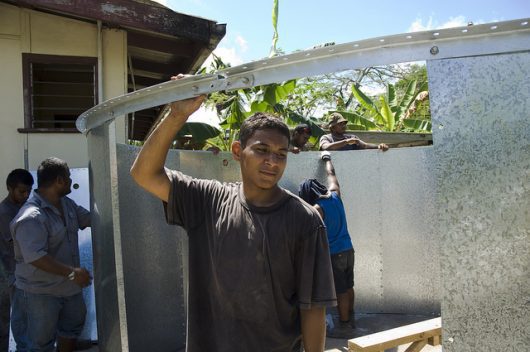
How the US Benefits from Foreign Aid to Nauru

U.S. Benefits from Foreign Aid to Nauru

Nauru is a small island nation that, on a map, seems like a speck in the ocean. However, there are 10,000 people that live here, and a dire situation faces the population. As the world faces rising temperatures, island nations like Nauru are in grave danger. According to the Inter-Governmental Panel on Climate Change, sea levels are scheduled to rise between 2 and 3 feet this century. If greenhouse gas emissions are not slowed, sea levels could rise even faster, which would lead to a devastating situation in Nauru producing thousands of refugees and the loss of a homeland.

The current U.S. administration has been slashing budgets for foreign aid, and many have condemned this nationalistic approach to global poverty. The International Rescue Committee has called the proposed cuts “counterproductive and ill-timed,” especially in the face of global instability due to climate change. Considering the ways in which the U.S. benefits from foreign aid to Nauru, these cuts seem counterproductive.

President Trump banned the provision of U.S. funds to countries supportive of Georgia’s “Russian Occupied Territories” in 2017. Since Nauru recognized these territories as independent, it is losing U.S. funding in a time of dire need. The U.S. has historically provided direct assistance to Nauru in the form of water-tanker trucks and aid for Nauru’s law enforcement. Many are urging the U.S. government to reconsider, as countries like Nauru are in extreme need of aid.

The fact of the matter is that when the U.S. provides foreign aid, it boosts national security and helps the global economy. The U.S. benefits from foreign aid to Nauru, as, according to the Bill and Melinda Gates Foundation, everyone is better off when there are more middle-income countries in the world.

Shared prosperity prevents global epidemics and war, and promotes U.S. exports because more countries can afford them. In addition, it promotes global stability and improves the mindset of Americans in a humanitarian manner. Another way that the U.S. benefits from foreign aid to Nauru is that it will prevent a refugee humanitarian crisis, as is happening in Syria.

More specifically to this country, the U.S. benefits from foreign aid to Nauru by the provision of seafood stocks to U.S. fisherman. Nauru is home to the world’s largest sustainable tuna fishery. The fishery is a global leader in tuna conservation, and it provides a product that many U.S. consumers enjoy. If Nauru is not provided aid, world tuna stocks will greatly deplete, which would be destructive to this industry.

The World Bank strongly champions the benefits of foreign aid to Nauru in relation to fish stocks, and addressed this topic in conjunction with increasing economic returns and sustainable management. If there is targeted investment, an extra $300 million could be netted without depleting fish stocks. This aid would greatly improve Nauru’s economy, creating benefits for U.S. exporters and fishermen.

The facts are clear: Nauru needs help, and it needs it now. Experts are condemning current U.S. policy that prohibits aid. The good news is, by providing funds to Nauru, the U.S. is also benefitting itself.

– Jillian Fox
Photo: Flickr

May 28, 2018
https://borgenproject.org/wp-content/uploads/borgen-project-logo.svg 0 0 Borgen Project https://borgenproject.org/wp-content/uploads/borgen-project-logo.svg Borgen Project2018-05-28 13:15:082024-05-29 22:42:33How the US Benefits from Foreign Aid to Nauru
Aid, Foreign Aid, USAID

How the US Benefits from Foreign Aid to Armenia

How the U.S. Benefits from Foreign Aid to Armenia
Ever since Armenia gained independence from the Soviet Union in 1991, it has shared a mutually beneficial relationship with the U.S. As a country attempting to recover from widespread poverty and corruption, the benefits Armenia receives from organizations like the United States Agency for International Development (USAID) are clear. Yet, the U.S. benefits from foreign aid to Armenia are significant in their own right.

Some of these benefits include increased stability and independence so that Armenia can resist Russian pressure and have closer ties with the Euro-Atlantic community. Both politically and economically, the U.S. has much to gain from cultivating greater stability and economic growth in Armenia.

Achieving Government Stability

Since Armenian independence in 1991, the government has struggled to maintain a stable democracy the Armenian people can trust. Fortunately, USAID is working with both the government and citizens to build trustworthy institutions that work for the people. By creating stability in the region, the U.S. benefits directly from Armenian foreign aid by gaining a trustworthy political ally in the region that champions U.S. ideals and supports U.S. goals. These are a few ways USAID is helping to achieve this goal:

  1. Media for Engaged Civil Public Project
    One of the backbones of a strong democracy is a trustworthy media that properly informs its public. This program plans to set up a healthy media as well as media watchdogs to prevent excessive bias.
  2. Engaged Citizenry for a Responsible Government Project
    USAID is helping to increase activity in local government and create an engaged public. Many Armenians are uninformed about their government or do not believe they can make a difference. This program aims to change that.
  3. Local Government Reform Activity
    By helping to decentralize the Armenian government, USAID is helping to create natural checks and balances in the system and give power back to local areas.

These are just a few of the ways USAID is helping Armenia achieve a sustainable government. The U.S. plans to give just over $3 million for “Democracy, Human Rights, and Governance” as well as “Peace and Security” in 2019. In return, the U.S. benefits from foreign aid to Armenia through gaining a strong ally in the region that is trustworthy and stable.

The U.S. Benefits from Foreign Aid to Armenia by Developing a Trade Partner

With greater economic stability in Armenia, the country becomes a reliable trade partner for the U.S. While GDP growth in the country has steadily been on the rise in recent years, there is still progress to be made. In 2019, more than $3 million will be allocated through USAID for the express purpose of economic development. Some of the ways USAID plans to use this money to help Armenia are:

  1. The Partnership for Rural Prosperity Program
    Despite consistent GDP growth, Armenia still struggles in the disparity between urban centers and rural areas. This project aims to alleviate this gap by providing economic opportunities to rural regions, improving access to markets and reinforcing infrastructure.
  2. Agribusiness Teaching Center
    This program aims to educate the Armenian public on agriculture and agribusiness while conducting research to help local farmers. As a hub for agricultural knowledge, this center will provide a strong foundation upon which to build an agricultural community.
  3. Tax Reform Project
    This program hopes to create a more accessible dialogue between the lawmakers deciding tax rates and the citizens paying them. It also hopes to reform the tax code in a way that makes it easier for citizens to start small businesses.

Through these programs and others, foreign aid to Armenia is helping to develop a powerful ally that can work with the U.S. as a mutually beneficial trading partner. Programs such as these contribute to a strong trade relationship between the two countries, with the U.S.-Armenia Economic Task Force being an indicator of how well the relationship has developed.

Overall, the U.S. benefits from foreign aid to Armenia are numerous and significant. By investing in the people of this developing country, the U.S. gains a political and economic partner while helping alleviate poverty and corruption.

– Jonathon Ayers
Photo: Flickr

May 28, 2018
https://borgenproject.org/wp-content/uploads/borgen-project-logo.svg 0 0 Borgen Project https://borgenproject.org/wp-content/uploads/borgen-project-logo.svg Borgen Project2018-05-28 01:30:192024-05-29 22:42:32How the US Benefits from Foreign Aid to Armenia
Aid, Foreign Aid, Global Poverty

Danida: The World-Leading Agency of Denmark’s Foreign Aid

Danida Denmark's Foreign Aid
Denmark is one of the world’s leading providers of foreign aid. Not necessarily by dollars, but by Gross National Income (GNI). The U.N. set a target for 0.7 percent of a well-developed nation’s GNI be set aside for foreign aid. Denmark’s foreign aid meets that goal and its funds are distributed by Danida.

Denmark passed its first law regarding foreign assistance in 1962. Nine years later, the name Danida appeared to distribute Denmark’s foreign aid. Since its inception, it has gained its own logo and place within the Danish Ministry of Foreign Affairs.

Denmark’s Foreign Aid Through Danida

Denmark is one of the few nations that consistently meets and exceeds the U.N.’s goal. In 2015, Denmark allocated 0.85 percent of its GNI toward international development. Only six other nations met or exceeded the goal that year. Since 1978, Denmark has allocated at least 0.7 percent of its GNI toward Danida. This year will be no different. 

Danida operates in countries from Belarus to South Africa and from China to Chile. In recent years, Danida has centered its focus on Africa through various programs. Danida also supports non-governmental organizations already working in these countries. Like other nations, Danida also provides research grants to organizations and individuals through its Danish Development Center. In 2018, Danida will focus Denmark’s foreign aid to four main areas:

  1. Streamlining development cooperation projects and humanitarian aid projects in countries with conflict
  2. Focusing on immigration and the proper readmission of migrants not legally able to stay in Denmark
  3. Increasing employment of migrants and people in countries where there are Danish businesses
  4. Educating young people and providing more funding to women’s health and rights 

The Goal: Eradicating Poverty

Danida’s goal is to eradicate poverty in order to stabilize societies and governments. To achieve its goal, Danida funds programs that encourage the following:

  • Social and economic development
  • Human rights
  • Democratization
  • Security and counterterrorism
  • Humanitarian assistance including disaster relief
  • Environmental protection
  • Eliminate HIV/AIDS

Spending Foreign Aid Domestically

In 2016, Denmark began to roll-out a new strategy. According to the CPH Post, 30 percent of the money from Denmark’s foreign aid allocated to combat the refugee crisis abroad will be used to help migrants who have already reached Denmark. This system received mixed reviews. It was praised due to the benefits it would provide migrants in Denmark, including food vouchers, housing and healthcare.

However, critics say that by using this funding at home there is less money to help stabilize the nations the refugees are fleeing. There would be no need to spend this money domestically if these nations were stabilized in the first place.

Denmark is following the lead of other Scandinavian countries such as Sweden and Norway, who also spend 20 to 30 percent of the same allocated funds domestically. Both Sweden and Norway also consistently spend 0.7 percent or more of their GNI on foreign aid.

The 2018 budget outlines foreign aid plans and funding for Danida through 2021, staying at 0.7 percent of its GNI. The plan also hints that Denmark wants to keep this going until 2030. Hopefully, Danida will continue to operate well into the future and well past 2030.

– Nick DeMarco
Photo: Flickr

May 25, 2018
https://borgenproject.org/wp-content/uploads/borgen-project-logo.svg 0 0 Borgen Project https://borgenproject.org/wp-content/uploads/borgen-project-logo.svg Borgen Project2018-05-25 01:30:052024-12-13 17:58:46Danida: The World-Leading Agency of Denmark’s Foreign Aid
Aid, Foreign Aid, Global Poverty

United Kingdom Affirms How Aid Creates Markets

aid creates markets
As public sector debt in developed countries continues to rise, foreign aid has become a target for activists and policymakers seeking to cut spending. The aid budget of the United Kingdom is no exception, with critics claiming that spending on foreigners is wasteful and contrary to national interest.

The country’s Department for International Development (DFID), responsible for administering overseas aid, has rejected calls for cuts in spending by emphasizing that aid creates markets that will ultimately consume British goods and provide higher returns for British investment.

National Debate Over Aid Spending

As one of six countries to reach the United Nations target for international aid spending of 0.7 percent of gross national income, the U.K. is a major contributor to worldwide aid spending. The leadership role the country plays in international aid was bolstered by the passing of a 2015 bill that enshrined the spending target into law, committing the country to sustaining current levels of spending as a share of the economy’s size.

However, in a political environment where nationalist sentiment is rising, exemplified by the 2016 Brexit referendum, prominent U.K. politicians have called for a reduction in foreign aid spending. Jacob Rees-Mogg, a Member of Parliament of the Conservative Party and potential future party leader, has said that with the government budget running a deficit, aid levels are an insane and a costly mistake.

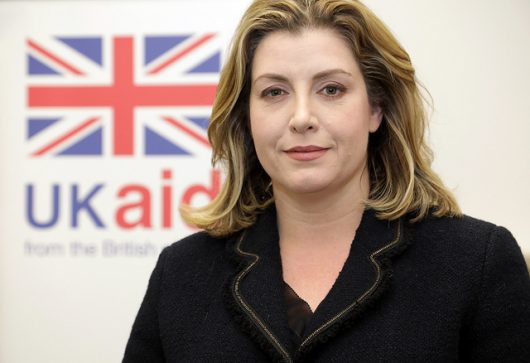
Facing this criticism, Penny Mordaunt, the recently appointed head of DFID, has pushed back, contending that the aid is a moral obligation that also serves British interests. In an April 12 speech laying out her vision for U.K. aid, Mordaunt said that improving global health, security and income is linked to British prosperity and that promoting these goals abroad provides lasting benefits for the U.K.

Notably, Mordaunt emphasized that aid creates markets through the development of economies and human capital, citing DFID’s work in sub-Saharan Africa as having created jobs and growth, benefiting recipient countries but also benefiting British companies by creating new consumers.

Private Sector Partnerships a Key Way That Aid Creates Markets

Mordaunt’s speech also explained how aid creates markets in conjunction with the private sector. Aid will be directed to help African companies to acquire loans through British financial markets, encouraging British investors to direct more capital to the region and spurring economic development. By proposing an aid plan in which British investors could achieve higher returns, DFID is hoping to illustrate another channel through which an aid budget is mutually beneficial to both the donor and recipient countries.

Critics have cautioned of the dangers of conflating national and foreign interests in aid work. In response to Mordaunt’s speech, Tamsyn Barton, chief executive of an international development network representing NGOs called Bond, told Devex that aid programs focused on serving national interests are inherently less effective than those focused on the primary goal of improving conditions in affected countries.

Mordaunt does clarify that aid will not be conditional, stating in her speech that tied aid is bad for U.K. competitiveness and for the recipient nations, but observers such as Barton have warned that this distinction should be made explicit.

Even a country such as the United Kingdom, which has enshrined its commitment to foreign aid in law, faces pressure from domestic critics to redirect this funding home. In highlighting how aid creates markets that benefit the home country, Mordaunt and the DFID are seeking to show that the decision between spending at home and spending abroad is a false dilemma.

– Mark Fitzpatrick

Photo: Flickr

May 18, 2018
https://borgenproject.org/wp-content/uploads/borgen-project-logo.svg 0 0 Borgen Project https://borgenproject.org/wp-content/uploads/borgen-project-logo.svg Borgen Project2018-05-18 01:30:062019-12-03 10:25:45United Kingdom Affirms How Aid Creates Markets
Aid, Food & Hunger, Food Aid, Global Poverty

Partnership Delivers Feed the Future Plan in Kenya

Feed the Future
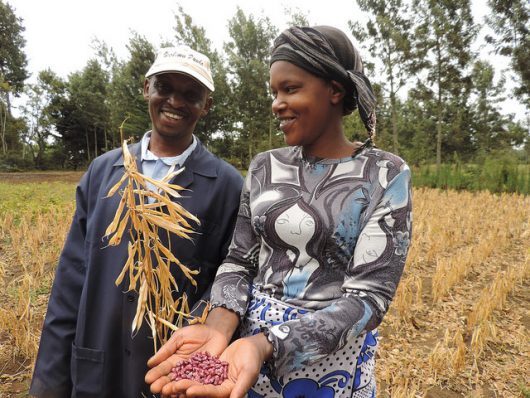
April 2018 marked the official start of the Feed the Future Kenya Country Plan, a USAID initiative to reduce poverty and food insecurity in Kenya. 
The plan was put into action by U.S. Ambassador Robert F. Godec at the Accelerating Value Chain Development (AVCD) National Conference, which took place in Nairobi during April 26-27.

Feed the Future

Feed the Future is a program developed by the Obama administration as part of the U.S. Global Food Security Strategy. It aims to promote agricultural production and help communities better cope with drought and climate change by introducing new technologies and innovative strategies to local farmers.

The Country Plan is actually the beginning of the second phase of Feed the Future in Kenya; the first phase was originally implemented five years ago. The hope for the second phase is to bolster the areas of the program which were successful and make improvements to the components that need work.

Progress in Combatting Poverty

So far, Feed the Future has been a huge success. Between 2011 and 2016, the program lifted an approximated 9 million people out from under the poverty line. Feed the Future farmers produce maize and groundnut crop yields that are 23 percent and 64 percent higher than the national average, respectively, which has resulted in an additional revenue of 2.6 billion dollars in agricultural sales.

Because of the progress made in the agrarian sector, an estimated 1.7 million households are no longer experiencing frequent hunger and malnutrition. In addition, there has been a 26 percent drop in stunted growth among children since the program began.

Agriculture and Economy Partner Up

The incredible numbers that have been achieved by Feed the Future are the result of partnerships between leading minds in the agricultural and economic fields. The program brings in speculation from scientists, successful businesses, nonprofits, food production companies and government agencies to create well thought out approaches to food insecurity.

Despite all of its accomplishments, there are still some issues that need to be worked out with Feed the Future. The most major of these is the focus of the program, which until now has been primarily on increasing crop yield.

While this is undeniably important, there should be more emphasis on education so that farmers understand what’s behind the positive trends and can continue them on their own for years to come — it’s called Feed the Future for a reason, after all.  

Dual Success

But overall, Feed the Future is a promising initiative that has already delivered spectacular results to food insecure nations. It is important that projects like this one continue to receive attention and funding, not only for the sake of those in need but for the taxpayers who finance them as well.

A recent study by the U.K. Department for International Development in Ethiopia and Kenya found that over the next two decades, every dollar invested in strengthening the ability of communities to cope with drought and climate change could result in about $3 saved in short-term humanitarian aid. This means that funding the right programs today will save American taxpayer dollars tomorrow.

– Maddi Roy
Photo: Flickr

May 16, 2018
https://borgenproject.org/wp-content/uploads/borgen-project-logo.svg 0 0 Borgen Project https://borgenproject.org/wp-content/uploads/borgen-project-logo.svg Borgen Project2018-05-16 01:30:322024-05-29 22:42:21Partnership Delivers Feed the Future Plan in Kenya
Aid, Foreign Aid, Global Poverty

How the US Benefits From Foreign Aid to Niger

How the US Benefits From Foreign Aid to NigerIn a January 2018 report, Reuters writes of Niger’s increasing issues with terrorist activity. The report states that Nigerien military personnel were attacked by suspected Boko Haram militants “in an area plagued by attacks by the Islamist militant group during its eight-year-old bid to create a caliphate in and around its Nigerian base.”

In recent years, attacks such as these have plagued Niger and lead to growing extremist activity. In the case of Niger, Boko Haram has been the largest opponent of the Nigerien government’s forces. 

How Does the U.S. Benefits From Foreign Aid to Niger?

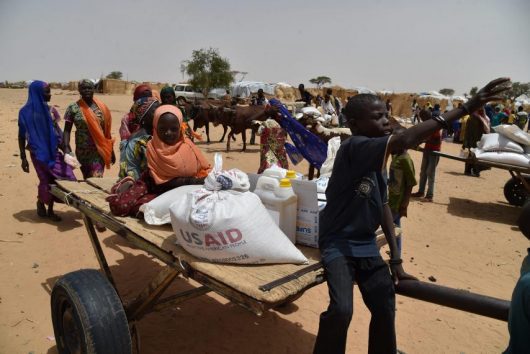
The United States provides foreign aid to troubled African countries such as Niger, and in addition to significantly aiding their foreign partners, the U.S. also benefits from foreign aid to Niger. The United States has invested heavily in curtailing extremist activity across the globe. According to the State Department, “U.S. foreign assistance to Niger plays a critical role in preserving stability in a country vulnerable to political volatility, and food insecurity and regional instability.”

As the United States ratchets up counter-terrorism activity, countries like Niger become major partners who promote U.S. initiatives. The State Department goes further to mention that Niger’s agricultural sources are at risk due to continued droughts and conflict. Currently, the country faces a food crisis as crops continue to disappear. U.S. policy aims to strengthen African nations against extremist groups, and with their continued support, this is how the U.S. benefits from foreign aid to Niger. 

What Does Funding for Niger Do?

Niger is projected to receive $34 million in foreign assistance from the U.S. for Fiscal Year (FY) 2019. Forty-four percent of that total sum is being invested in Nigerien health. One hundred percent of the health investment is geared towards fighting malaria, which has affected a significant portion of the population.

An additional 5 percent of the funds are being earmarked for peace and security. However, economic development and promoting democratic values are also being largely focused on.

Alleviating Poverty in Niger

Describing the poverty crisis in Niger, the World Bank’s statistics show that roughly 44 percent of the population lives in poverty. In fact, from 1960 to 2016, Niger’s population exploded from roughly 3 million people to 20 million! As the population continues to grow, the current food crisis deepens. During the drought of 2010, the U.N. wrote that 17 percent of children were actually malnourished.

While the situation may seem dire, U.S. assistance to Nigeria has yielded positive results. Prior to 2014, close to 50 percent of Niger’s population was living on less than a dollar a day. Niger has also entered into an assistance program — the Security Governance Initiative (SGI). 

By joining the SGI, Niger has become an important target for U.S. foreign assistance programs. Adding another strong partner in Africa is how the U.S. benefits from foreign aid to Niger. If the Nigerien government successfully addresses the food crisis and adopts democratic values, Niger’s poverty crisis could possibly be addressed for good.

For now, the U.S. continues to inject aid assistance into the Nigerien treasury in an effort to promote stability — stability which the United States desperately needs. These are just a few of the reasons how the U.S. benefits from foreign aid to Niger. 

– Colby McCoy
Photo: Google

May 12, 2018
https://borgenproject.org/wp-content/uploads/borgen-project-logo.svg 0 0 Borgen Project https://borgenproject.org/wp-content/uploads/borgen-project-logo.svg Borgen Project2018-05-12 01:30:182024-05-29 22:42:20How the US Benefits From Foreign Aid to Niger
Aid, Foreign Aid, Global Poverty

How the US Benefits From Foreign Aid to Morocco

U.S. benefits from foreign aid to Morocco
Morocco is an African country full of vibrant colors and vast potential. The U.S. has a planned budget of $15.9 million for Moroccan foreign aid in 2019. This money is spent advancing the U.S.’s development goals in Morocco, which include: maintaining peace and security, democracy, human rights and governance, economic development, education and social services within the country. So what are the U.S. benefits from foreign aid to Morocco?

U.S. Benefits from Foreign Aid to Morocco: Security

First, and arguably the most important of the U.S. benefits from foreign aid to Morocco, comes from the increase of security. By sending foreign aid to Morocco, the U.S. minimizes terrorist threats in the country. More than $8 million will be spent on counter-terrorism efforts, combating weapons of mass destruction, stabilization operations and security sector reform. While Morocco might seem distant, its security is of importance to the U.S.

The U.S. actively works to fight terrorism and combat extremist groups throughout the globe. Sending foreign aid to Morocco is one way to continue fighting terrorism. Foreign aid in Morocco is also sent to benefit democracy, human rights and governance. The Department of State breaks this into two spending categories: Rule of Law and Human Rights and Good Governance.

U.S. Benefits from Foreign Aid to Morocco: Economy

The aid that is sent in an effort to support good governance works to increase public participation and enforcement of the separation of powers through a checks and balances system. Keeping Morocco (and any country for that matter) politically stable and transparent benefits the U.S. ethically, economically and politically.

Economically, the Department of State has allocated $2.5 million in 2019 for economic development in Morocco. This aid aims to improve policies, laws and regulations within the private sector in an effort to give Morocco the ability to compete nationally and internationally. This improves trade and international policies for all states involved, including the U.S.

U.S. Benefits from Foreign Aid to Morocco: Education

Lastly, the U.S. benefits from foreign aid to Morocco by improving Moroccan education and social services. Education, as a universal human right, should be ensured in every nation and benefits the entire world. Education is crucial in improving economic stability and increasing annual gross domestic product within a country. Within the U.S., education has been an important part of the country’s foreign assistance strategy for decades.

The U.S. benefits from foreign aid to Morocco by supporting peace and stability within their security efforts, advocating for good governance ethically, advancing trade and international policies economically and by improving education and social service strategies.

– Haley Hine

Photo: Pxhere

May 4, 2018
https://borgenproject.org/wp-content/uploads/borgen-project-logo.svg 0 0 Borgen Project https://borgenproject.org/wp-content/uploads/borgen-project-logo.svg Borgen Project2018-05-04 19:30:472024-12-13 17:58:43How the US Benefits From Foreign Aid to Morocco
Page 30 of 65«‹2829303132›»

Get Smarter

  • Global Poverty 101
  • Global Poverty… The Good News
  • Global Poverty & U.S. Jobs
  • Global Poverty and National Security
  • Innovative Solutions to Poverty
  • Global Poverty & Aid FAQ’s
Search Search

Take Action

  • Call Congress
  • Email Congress
  • Donate
  • 30 Ways to Help
  • Volunteer Ops
  • Internships
  • Courses & Certificates
  • The Podcast
Borgen Project

“The Borgen Project is an incredible nonprofit organization that is addressing poverty and hunger and working towards ending them.”

-The Huffington Post

Inside The Borgen Project

  • Contact
  • About
  • Financials
  • President
  • Board of Directors
  • Board of Advisors

International Links

  • UK Email Parliament
  • UK Donate
  • Canada Email Parliament

Get Smarter

  • Global Poverty 101
  • Global Poverty… The Good News
  • Global Poverty & U.S. Jobs
  • Global Poverty and National Security
  • Innovative Solutions to Poverty
  • Global Poverty & Aid FAQ’s

Ways to Help

  • Call Congress
  • Email Congress
  • Donate
  • 30 Ways to Help
  • Volunteer Ops
  • Internships
  • Courses & Certificates
  • The Podcast
Scroll to top Scroll to top Scroll to top