Understanding Why Providing Foreign Aid Helps the U.S.
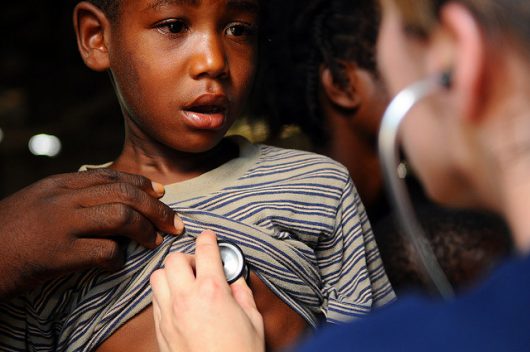
Giving, especially in the form of foreign aid, has shown to cultivate meaningful relationships among people and countries, some that lead to rewarding trading agreements amid other benefits. Recent history has particularly exhibited how foreign aid helps the U.S., which is a crucial consideration in the political dialogue surrounding the current foreign aid budget.
Foreign Aid Helps the U.S. with Trade
One valuable return the U.S. has received in its giving of foreign aid to other developing countries has been the increase in American jobs as well as trade. Foreign aid is much like an investment; it helps to forge the foundation needed for low-income countries to build up and become middle-income, sustainable states. Here are some examples:
- After World War II, U.S. foreign aid to Japan helped recover Japan’s infrastructure and highly contributed to the success of American companies like Microsoft.
- The U.S. now trades and does business with former recipients of foreign aid, such as South Korea, Brazil, Mexico, Vietnam and Thailand.
- The President’s Emergency Plan For AIDS Relief (PEPFAR) successfully slowed down the AIDS epidemic and countries that received such aid have, in turn, consumed more American goods. Exports rose 77 percent in Tanzania, 189 percent in Zambia and 241 percent in Ethiopia.
- PEPFAR is one of the strong determinants of increases in the trade of pharmaceuticals.
- Foreign aid has attributed $46 billion more in U.S. exports and 920,000 more jobs in the U.S.
- In 2011, 44.6 percent of U.S. exports went to developing countries.
- In Tennessee alone, more than $33 billion in goods and services were exported to foreign countries in 2014 and this trade, in turn, supports over 22 percent of jobs, 830,000 local jobs to be specific.
Foreign Aid Helps with Health
Foreign aid helps the U.S. in preventing global epidemics that could otherwise be much worse. While assisting developing countries with their challenges in health, the U.S. also does its duty to minimize any possible health issues and diseases from traveling overseas or across borders to the U.S. There has been a great number of such instances, such as:
- The U.S. was the largest funder of a number of health workers stationed in Nigeria with the original goal of polio eradication. The workers were later reassigned and succeeded in countering the infamous Ebola epidemic.
- The PEPFAR program has helped stop the spread of AIDS by supplying life-saving medicines to over 14 million people.
Foreign Aid Helps with National Security
One of the non-negotiable benefits the U.S. reaps from its giving of foreign aid to developing countries is an improvement in national security. To prevent a third world war, the U.S. created what is now the modern development assistance program to avoid further instability in Europe.
Stability in developing countries is key in preventing future political issues from unfolding. The U.S. has defense agreements with 131 out of the 135 countries that it provides foreign aid to.
The importance of international aid lies in economic benefits, such as trading proliferations, as much as health and national security. As evidenced above, it is clear that there is truth in the fact that foreign aid helps the U.S. just as much as it helps other nations.
– Roberto Carlos Ventura
Photo: Flickr
