• Link to X
  • Link to Facebook
  • Link to Instagram
  • Link to TikTok
  • Link to Youtube
  • About
    • About Us
      • President
      • Board of Directors
      • Board of Advisors
      • Financials
      • Our Methodology
      • Success Tracker
      • Contact
  • Act Now
    • 30 Ways to Help
      • Email Congress
      • Call Congress
      • Volunteer
      • Courses & Certificates
      • Be a Donor
    • Internships
      • In-Office Internships
      • Remote Internships
    • Legislation
      • Politics 101
  • The Blog
  • The Podcast
  • Magazine
  • Donate
  • Click to open the search input field Click to open the search input field Search
  • Menu Menu

Archive for category: Aid

Aid, Foreign Aid, Global Poverty, Refugees and Displaced Persons

US Aid Benefits Refugees from Venezuela

Aid that Benefits Refugees VenezuelaLatin America is experiencing one of its worst ever migration crises. This region has experienced multiple population movements in its history. Venezuela has seen a mass exodus of people due to four years of economic downfall and the subsequent impoverishment of the citizens.
The Reasons Behind Venezuela Crisis

The problem has been further exacerbated by the re-election of the dictatorial President Nicolas Maduro. The economic policies of President Maduro and former President Hugo Chavez have mismanaged the country’s vast oil reserves and sent the country spiraling into depression. The government has cut imports by over 75 percent, choosing to use its own currency to balance the $140 billion debt. This is an extremely bad decision in a country that produces almost exclusively oil.

The result has been an enormous lack of services within the country and the decrease in GDP. These policies have remained unchanged or challenged because of Maduro’s stranglehold on the country’s media and legal system, in addition to his brutal responses to protests. Accusations of corruption and conspiracies surrounding drug trafficking have plagued Maduro’s career but haven’t challenged his rule in any meaningful way. The United States has responded to these allegations by sanctioning Maduro but this had relatively no effect on Maduro’s behavior. Realizing this fact, the U.S. turned their attention towards aid that benefits Venezuela refugees.

Refugee Crisis in Venezuela

Hopes for change internally seem bleak and have pushed over two million refugees into surrounding countries. At first, refugees are going to neighboring Ecuador, Peru and Columbia, countries that have been very welcoming in the past. Recently, however, the sheer number of migrants leaving Venezuela has forced its neighbors to take more aggressive policies.

Ecuador began blocking entry to refugees fleeing Venezuela with no passports. This policy came after the country declared a state of emergency due to the crisis. Peru and Columbia also announced their plan to adopt a similar policy and to deport migrants that are already within the country but without proper documentation. The policies of both the Government of Venezuela and its neighbors have trapped Venezuelan migrants in makeshift towns along the border, with limited resources. Most Venezuelan migrants sold their possessions in order to leave their country and have little to nothing in these towns.

The Aid of United States to Venezuela

Fortunately, the United States has played an instrumental role in providing aid that benefits refugees from Venezuela. The U.S had already provided $16 million in aid for the refugees through the United Nations Refugee Agency and another $6 million to help Columbia deal with their influx of refugees.

This money helped establish the infrastructure that is maintaining abovementioned makeshift towns and providing necessary health care for millions of people. Recently, the United States sent a life-saving resource to the shores of Columbia. Secretary of Defence, Jim Mattis, is sending a U.S. Navy Hospital Ship to help treat refugees in Colombia and surrounding Latin American countries. Hospital ships provide surgical care from some of the top military physicians in the world. They are protected by international law and help ease the burden on domestic medical institutions, which could influence many of these Latin American countries to take more beneficial positions towards refugees.

U.S. aid for refugees has a ripple effect on the countries that are hosting them because they have more resources at their disposal. This could change their policies in a meaningful way and end this migration process in the most positive way positive.

– Anand Tayal

Photo: Flickr

October 12, 2018
https://borgenproject.org/wp-content/uploads/borgen-project-logo.svg 0 0 Borgen Project https://borgenproject.org/wp-content/uploads/borgen-project-logo.svg Borgen Project2018-10-12 13:30:182019-07-09 16:39:35US Aid Benefits Refugees from Venezuela
Aid, Hunger

Top 10 Facts about Hunger in Indonesia

Top 10 Facts about Hunger in Indonesia
Indonesia is a country that has made great strides in combating hunger. This Southeast Asian country consists of hundreds of volcanic islands, making it prone to natural disasters such as hurricanes and earthquakes. Government programs have given resources to those who need help, and there are many positives in the list of top 10 facts about hunger in Indonesia.

Top 10 Facts about Hunger in Indonesia

  1. Although the percentage of people enrolled in primary schools has increased to nearly 100 percent in urban areas, this number remained below 60 percent in rural areas of Indonesia. Food programs are offered in some primary schools, and in 2017, Indonesia established the Indonesia School Meals Programme (Pro-GAS) to provide healthy breakfasts to 100,000 children in 11 districts in the country.
  2. The rate of poverty in Indonesia has been steadily decreasing, from 24 percent of the population experiencing poverty, down to 11.3 percent in 2014. However, 43.5 percent of the population still lives on less than $2 per day.
  3. The rate of proper nutrition has somewhat stagnated since 2007, with stunting rates of 37 percent nationally, according to UNICEF. Stunting is the impaired development and growth of children resulting from malnutrition. The Government of Indonesia is well aware of the health concerns associated with stunting, as the vice president of the country enacted a National Strategy to Accelerate Stunting Prevention in 2017. The strategy will pledge $14.6 billion to converge priority nutrition interventions that include food insecurity measurements, dietary diversity and basic immunization.
  4. Despite this, the availability of fruits and vegetables almost doubled from 1990 to 2013. This jump in production can partly be accredited by the government program known as Good Agricultural Practices or Indo-GAP. The program gives farmers better education on safe and effective agricultural methods, while also providing resources like land and fertilizer.
  5. Stunting caused by malnutrition also has an impact on Indonesia’s GDP, resulting in a 2-3 percent loss on the economy. Children who grow up with stunting are less likely to be properly educated, less likely to work in skilled labor, as well as having lower income attainment. These factors of undernutrition affect the economy because of the overall loss in productivity.
  6. Fluctuating food prices have also contributed to hunger in Indonesia. It is estimated that the food inflation rate increased by 12.77 percent from 1997 to 2018. This can be attributed to rising energy costs, with energy prices rising 28 percent between 2008 and 2011. Agriculture commodity prices rose 17 percent from 2008 to 2011 as well. While higher food prices allow farmers to make more profits, it negatively affects people living in poverty who rely on low food prices.
  7. Indonesia’s Millenium Development Goals (MDGs), pledged at the United Nations summit in 2000, were a committed global partnership in fighting global poverty and hunger with a deadline of 2015. Indonesia achieved its number one goal of halving the number of people living in hunger between 1990-2015. The prevalence of undernourishment decreased from 19.7 percent in 1990-1992, to 7.6 percent in 2014-2016.
  8. Indonesia is prone to natural disasters as it is located on the Pacific Ring of Fire. Earthquakes are common due to a high degree of tectonic activity. Volcanic eruptions, tsunamis and floods also affect the country. A 6.9 magnitude earthquake in the city of Lombok in August 2018 resulted in 565 casualties. Calamities like this lead to hunger as food security and land are destroyed in the process.
  9. Indonesia’s government National Medium-Term Development Plan was established in 2015, with the goal of improving nutrition and the quality of food, as well as reducing the negative effects natural disasters have on food security. The long-term goal of the program is to help 9 million people achieve food security by 2020.
  10. One of the government subsidy programs that has been beneficial in addressing hunger is Raskin, a program established in 1998 that allows low-income families to purchase 15kg of rice at 20 percent of the market price. In 2012, the budget for Raskin was $1.5 billion with a targeted population of 17.5 million households.

While there is still room for improvement, Indonesia has taken the necessary steps to address and take action in reducing county in the country. The Government of Indonesia has been a great supporter of the country’s efforts.

– Casey Geier
Photo: Flickr

October 1, 2018
https://borgenproject.org/wp-content/uploads/borgen-project-logo.svg 0 0 Kim Thelwell https://borgenproject.org/wp-content/uploads/borgen-project-logo.svg Kim Thelwell2018-10-01 07:59:022024-05-29 22:57:27Top 10 Facts about Hunger in Indonesia
Aid, Nonprofit Organizations and NGOs, War and Violence

Preemptive Love Coalition Provides Relief to War-Torn Countries

Preemptive Love
Founded in 2007 by Jeremy and Jessica Courtney, The Preemptive Love Coalition is a nonprofit that offers relief and job creation to the war-torn countries of Syria and Iraq. Unlike many of its peer organizations, Preemptive Love offers aid as close to the front lines as possible – sometimes just blocks away from active warring.

In 2016, The Coalition made $9.98 million. Of that revenue, $9.75 million was raised through contributions, grants and gifts. Preemptive Love uses that revenue to fund its aid projects.

In contrast to many similar aid organizations in Syria and Iraq, Preemptive Love works to ensure that the services they provide offer local solutions to local problems. As a result, people in an area are not stranded if The Coalition leaves; they will continue to have local sources of aid set up by The Coalition.

Background and Focus

Preemptive Love began by offering medical aid to those affected by the Iraq war, providing families with desperately needed surgeries and therapies for their children. However, while witnessing surgeries performed by doctors from around the world, The Coalition saw that none of the doctors were training the local people to perform these life-saving medical procedures.

In response, Preemptive Love began to bring doctors into Iraq to teach medicine to refugees. The Coalition soon expanded the practice to Syria. Now, there are many clinics run entirely by Iraqi and Syrian doctors and nurses who are capable of performing procedures for which war-torn families previously waited for months.

This led to a new focus for Preemptive Love. First and foremost, The Coalition seeks to provide immediate relief to pressing issues that refugees face. But after providing immediate aid, Preemptive Love stays in those areas and helps the refugees gain the education and tools they need to create a better future for themselves.

When ISIS fully formed in 2013, Preemptive Love saw a unique opportunity to help those affected. The Coalition was already a trusted relief organization thanks to six years of relationships built with the people of Iraq. Beginning in 2014, Preemptive Love began offering relief to people affected by ISIS in both Iraq and Syria.

Current Aid Efforts

Today, The Coalition offers various types of aid in five different categories: food and water, hygiene, medical care, emergency shelter, and various essentials.

For food and water aid, Preemptive Love offers long-lasting food packs, emergency kitchens and clean water. In this effort alone, Preemptive Love has provided 29,292,350 liters of water to families in conflict zones and given 411,690 people a month’s worth of food. The Coalition also offers hygiene kits that include sanitary pads, refugee-made soap, shampoo, detergent and other essentials. Medical care is provided by mobile clinics on the front lines of war in Syria and Iraq, supplying immunizations and training for refugee doctors to serve other refugees. Emergency shelters, as well as supplies to rebuild homes destroyed by war, are provided for families on the run from violence. The Coalition also offers various essentials to help families survive displacement due to war, enabling them to eventually return home.

Empowerment Through Business and Livestock

In addition to aid, Preemptive Love strives to meet and connect with the people of Syria and Iraq to help them lift themselves out of poverty. Preemptive Love creates jobs on a case-by-case basis by identifying skills each refugee already has, then empowering them to create their own income and fuel the economy of their local city.

Preemptive Love has also helped Syrian and Iraqi refugees start many businesses with empowerment grants, tools and business coaching. Sisterhood Soap and Kinsman Soap, organizations run by Iraqi refugees, provide a variety of hand-sewn products created and sold by women who fled from the Syrian civil war. Sales from hand-poured candles benefit widowed women in Baghdad. In addition to businesses, the livestock farming of chickens and sheep has provided nutrition and income for families, who benefit from the consumption and sale of the animals. Thanks to efforts like these, the return of bakeries, ice cream shops, restaurants and salons to cities across Iraq marks a shift to post-war normalcy.

Preemptive Love seeks to help those affected by war in Syria and Iraq regardless of location, socioeconomic factors or religion. Guided by their goal to “Love Anyway,” the nonprofit continues to make significant headway toward their goal of lessening the effects of war in Syria and Iraq.

– Savannah Hawley
Photo: Flickr

July 18, 2018
https://borgenproject.org/wp-content/uploads/borgen-project-logo.svg 0 0 Borgen Project https://borgenproject.org/wp-content/uploads/borgen-project-logo.svg Borgen Project2018-07-18 01:30:182019-09-13 20:05:50Preemptive Love Coalition Provides Relief to War-Torn Countries
Aid

US Aid Impacts Prosperity in the Northern Triangle

Northern Triangle
On June 14, 2017, the Inter-American Development Bank (IDB) arranged $2.5 billion in infrastructure projects for the nations of El Salvador, Guatemala and Honduras. IDB invested $750 million, plus additional funding for another $1.75 billion from public and private sectors within the Northern Triangle. One year later, with levels of violence and regional emigration still growing, it begs the question, what is the U.S. doing to help?

U.S. Aid To The Northern Triangle

This funding was proposed to compliment the Plan of the Alliance for the Prosperity of the Northern Triangle, which has made progress in addressing security issues and strengthening local institutions.

The initiative intends to improve the region’s infrastructure and, above all else, to slow the path of northern migration by providing economic opportunities in the region. However, it is estimated that the Alliance For Prosperity, in place since 2014, directs 60 percent of the budget towards security measures.

With the additional $2.5 billion in regional and IDB backing, far more development progress should be achieved. IDB President Luis Alberto Moreno stated in 2017 that “the key over the next five years will be to tap the private sector to help build critical infrastructure that will generate jobs, improve competitiveness, and create the conditions that encourage people to build prosperous lives in their homelands.” Only one year into a five year plan, numerous of the project’s goals need time to produce results.

Northern Triangle Migration

In 2017, 54 percent of migrants detained at the border arrived from the Northern Triangle, in comparison to only 13 percent back in 2010. The Brookings institute reports that migration to countries like the U.S. has much to do with unprecedented levels of violence, including kidnapping, sex crimes and extortion in home countries.

Former Secretary of State, Rex Tillerson, suggested that United States’ demand for drugs is what drives “violence” and “lawlessness” in the Northern Triangle nations. The majority of those arriving in the U.S. are not a part of the violent gang crime themselves, but rather are fleeing this crime seeking asylum and safety.

Regional Efforts

Surges of gang violence coupled by weak institutional support, corruption and a general lack of economic opportunity have undermined regional efforts to address the crisis. With 95 percent of crimes going unpunished, refugees have little choice but to flee. Eric Olsen at the Wilson Center argues, “There has been so much penetration of the state and so much criminal involvement in security forces, it makes it difficult to think about how they would [reform] without some outside intervention.”

It’s understandable that so much funding is needed to address organized crime, but this allocation leaves the Northern Triangle to struggle with a multitude of other concerns. IDB’s development pledge in coordination with the existing Alliance for Prosperity projects addressing security is a great step towards addressing the larger institutional infrastructure problems of the Northern Triangle.

U.S. Response and the Alliance for Prosperity

In recent years, the U.S. has responded in various ways to help El Salvador, Guatemala and Honduras. Under President George W. Bush, the U.S. allocated hundreds of millions to the Northern Triangle and focused on increasing growth, trade and stability. President Barack Obama established the Central America Regional Security Initiative (CARSI) that provided over $1 billion to help law enforcement, counternarcotics and justice systems in the region.

This initiative was designed to coincide with the Alliance for Prosperity to promote commerce and security. Under President Donald J. Trump, Alliance for Prosperity has continued, but his administration has established a much harsher line on immigration policies affecting Northern Triangle refugees.

After one year, the anticipated effects of IDB’s pledge have yet to be realized. Recent media coverage of separated migrant families has raised more awareness of the realities faced in the Northern Triangle, and presents a new opportunity to direct new projects to restore the prosperity of these three nations.

With Central Americans still dealing with forced emigration, it is clear additional measures must be taken by the U.S. government to prevent atrocities in the Northern Triangle and that the congressional IDB pledge is just one step of many needed in the right direction.

– Joseph Ventura
Photo: Flickr

July 14, 2018
https://borgenproject.org/wp-content/uploads/borgen-project-logo.svg 0 0 Borgen Project https://borgenproject.org/wp-content/uploads/borgen-project-logo.svg Borgen Project2018-07-14 01:30:272024-05-29 22:43:06US Aid Impacts Prosperity in the Northern Triangle
Aid, Human Rights

The Criminalization of Human Rights Work

Criminalization of Human Rights Work
In June, the Hungarian government passed a series of laws titled “Stop Soros.” The laws advocate for the criminalization of human rights work as they make the act of aiding undocumented immigrants illegal. Breaking this new law will result in up to a year imprisonment.

Hungarians have been made to fear immigrants overwhelming the country and changing its culture. Hungary’s action is in response to a new European Union (EU) migrant relocation plan. This plan would see the spread of more than 150,000 asylum seekers throughout EU member states, thus easing the strain on countries such as Italy and Greece.

Hungary is not the first country to legislate the criminalization of human rights work, however, it demonstrates the struggles NGOs face and the challenges that are being met across Europe in the face of the immigration crisis. It also substantiates the growing tensions between governments and the negative sentiment that groups have toward immigrants.

The Impact of the Criminalization of Human Rights Work

The act of aiding the victims of human rights violations is being delegitimized. By criminalizing aid to migrants, it deters people in need of assistance and those seeking to assist. The fear of prosecution is imminent. This further alienates the two populations, natives and refugees, and encourages the close-minded views of natives.

Violence against human rights workers has been on the rise. In 2016, 288 aid workers were targeted for violence, resulting in the death of 101 human rights defenders. In 2017, more than 300 human right workers were killed in 27 countries. The rise in targeted attacks against those speaking up against human right violations must not go unnoticed, yet many of the perpetrators go unpunished.  

A Message of Intolerance

The criminalization of human rights work also sends a message to society of intolerance and creates an environment for xenophobic sentiments to fester. Hungary passed the law that largely targets immigrants from Muslim countries, such as Iraq and Syria. In 2017, Hungary rejected 2,417 asylum seeker applicants while granting protection to only 321 people.

Hungary fears the dilution of its Christian values. A fenced border was constructed to ensure no illegal entry into the country. There seems to be no regard for the safety of the migrants and refugees who are fleeing their homes not out of choice, but out of necessity. Hungary is not ready to become a multi-faith and multi-cultural country.

European Response

EU countries and NGOs have implored Hungary to not pass laws in contradiction to European law. In regards to Hungary, the European director of Amnesty International, Gauri Van Gulik, stated, “It is a new low point in an intensifying crackdown on civil society, and it is something we will resist every step of the way.” Others have voiced similar concerns. The primary solution to laws such as these being passed is to push back against institutional intolerance, which has been steadily on the rise among European countries toward refugees and migrants.

One of the major challenges to human rights is the lack of value and recognition given to it. There must be a promotion of a culture that publicly acknowledges the role of human right activists. The great increase in immigrants to Europe has tested the humane response to conflict and suffering. This may not be the last example of the criminalization of human rights work.

– Trelawny Robinson
Photo: Flickr

July 6, 2018
https://borgenproject.org/wp-content/uploads/borgen-project-logo.svg 0 0 Borgen Project https://borgenproject.org/wp-content/uploads/borgen-project-logo.svg Borgen Project2018-07-06 19:05:382024-12-13 17:58:51The Criminalization of Human Rights Work
Aid, Foreign Aid

The Ways How the US Benefits From Foreign Aid to Kyrgyzstan

How the US Benefits From Foreign Aid to Kyrgyzstan
Kyrgyzstan, once part of the Soviet bloc, transformed from a one-party communist state into a republican democracy in 1991. Despite its reforms, though, the country is beset by both extreme poverty and government incompetence. With a significant portion of the population destitute, a thriving illegal narcotics market and ethnic tensions between native Kyrgyz and migrant Uzbeks, American investment in its government and people would see substantive U.S. benefits from foreign aid to Kyrgyzstan in terms of security.

State of Kyrgyzstan

Kyrgyzstan’s location in geographically-isolated Central Asia and its lack of natural energy resources, such as oil and gas, prevent it from emulating the industrial rise of neighboring economic goliaths, Russia and China.

The inherent difficulty of encouraging economic growth, coupled with institutional problems and social disorder, has resulted in high poverty rates in Kyrgyzstan. As of 2010, more than 40 percent of Kyrgyzstan residents live below the poverty line. High rates of homelessness and unemployment have turned many to narcotics.

Factors Leading to Revolution

Trafficking drugs across a long, unguarded border with other Central Asian countries linked to Afghanistan is a profitable enterprise, making it lucrative to those who do not have sustainable incomes. The second-largest city in Kyrgyzstan, Osh, is often referred to as the “drug capital” due to the volume of illegal narcotics that passes through the city near Kyrgyzstan’s southern border.

In 2012, authorities seized at least six tons of various substances ranging from cannabis to heroin. The rampant nature of the drug problem, and the government’s inability to resolve it, was one factor that led to revolution.

In June of 2010, more than 350 people were killed in southern Kyrgyzstan during the Second Kyrgyz Revolution over a variety of issues —  rape, wealth inequality between rural Kyrgyzstan migrants and urban Uzbeks and gang turf wars over the aforementioned drugs were a few. About 66 percent of Kyrgyzstan’s population is Kyrgyz, with some 14 percent identifying as Uzbeks. The violence between the two ethnic groups in the larger frame of regime change displaced hundreds of thousands of citizens and left the region in turmoil.

Ethnic Tension and Cultural Conflict

Poverty is a breeding ground for radicalism. Its perpetuation is often a vicious cycle, wherein poverty causes political instability, resulting in civil wars and terrorism at home and abroad. These conflicts then wipe out much-needed crops and necessary social institutions like hospitals and schools. In Kyrgyzstan’s case, ethnic tension resulted from lopsided poverty and unaffordable utility prices.

It would be a mistake to assume, however, that the conflict between Uzbeks and Kyrgyz is limited to only Kyrgyzstan or Central Asia. In April 2017, an Uzbek born in Kyrgyzstan killed 14 in St. Petersburg, Russia by rail attack. In October 2017, an Uzbek immigrant killed eight in New York by driving a truck through pedestrians. More than 1,500 Uzbeks have joined the Islamic State, ostracized by many of the countries — especially Kyrgyzstan — they once lived in.

This global violence, spawned in part by the ineptitude of a corrupt and autocratic government in preventing the continuance of radicalization, is not in the interest of either the Kyrgyzstan people or the United States. Just as Kyrgyzstan benefits from foreign aid to Kyrgyzstan, the U.S. benefits from foreign aid to Kyrgyzstan.

In the decades since the Soviet Union’s dissolution, subsequent American administrations have supplied aid intended mostly for the Kyrgyz Republic’s agricultural economy and on-the-ground humanitarian efforts. But it can do more — more for its government and more for its people.

U.S. Benefits From Foreign aid to Kyrgyzstan

Earmarking additional funds could support anti-corruption initiatives to dampen the prevalence of drug transport and abuse among the population. Increased investment in Kyrgyzstan’s energy sector could also diminish dependence on foreign energy and stabilize utility prices. A reduction in poverty and boost in living standards would increase income equality and alleviate some of the tension between Uzbeks and Kyrgyz that currently plagues the country, and by extension of terrorist activity, the world.

As terrorism is such a buzzword in American politics today, preventing it would surely be high on most elected officials’ to-do lists. Helping the Kyrgyz Republic overcome its multidimensional poverty — which can prevent terrorist activity and save lives both in the United States and abroad — would increase national security at a fraction of the cost of not doing so.

To reiterate: the U.S. benefits from foreign aid to Kyrgyzstan. The current administration’s plan to drastically cut its designated aid funds would render most, if not all, of these benefits void.

– Alex Qi
Photo: Flickr

June 22, 2018
https://borgenproject.org/wp-content/uploads/borgen-project-logo.svg 0 0 Borgen Project https://borgenproject.org/wp-content/uploads/borgen-project-logo.svg Borgen Project2018-06-22 01:30:452019-11-14 13:17:45The Ways How the US Benefits From Foreign Aid to Kyrgyzstan
Aid, Foreign Aid, USAID

How the US Benefits from Foreign Aid to Dominica

How the U.S. Benefits From Foreign Aid to Dominica
Natural disasters occur globally, and many countries overcome these disasters with the help of foreign aid. Hurricane Maria, a Category 5 storm, hit Dominica on September 18, 2017. USAID has sent assistance to Dominica, which becomes beneficial to the U.S. by building good relations and maintaining a positive reputation by working with other countries in providing foreign assistance to Dominica.

The U.S. Benefits from Foreign Aid to Dominica by Fostering Good Relations

All countries, especially impoverished ones, need help to recover from a natural disaster of Hurricane Maria’s magnitude. The U.S. benefits from foreign aid to Dominica by stepping in and using its power to help, which strengthens relations between the countries. After Hurricane Maria, Samaritan’s Purse, the Pan American Health Organization and the International Federation of the Red Cross, all under USAID, were able to contribute $3.25 million in foreign aid to Dominica.

The U.S. Department of Defense’s Southern Command worked with USAID’s Caribbean Hurricanes Disaster Assistance Response Team (DART) to help repair roofs in Dominica that were damaged by the hurricane. USAID provided plastic sheeting and DART taught a group of local builders how to use the tools provided to fix the damaged roofs properly. Through donations and direct assistance to individuals, the U.S. is building good relations with other countries.

International Collaborations Build a Positive Reputation

The U.S. has worked with other countries to provide water, food and tools to rebuild Dominica immediately after Hurricane Maria hit the island. The U.N. World Food Programme (WFP) contributed about 10 metric tons of food, which fed around 25,000 people in Dominica over three months. By assisting with the WFP’s food distribution, the U.S. benefits from foreign aid to Dominica by using its resources to help impoverished countries, which grows a positive international reputation.

Collaborations with other countries to help provide foreign aid to developing countries do make a difference and help the U.S. maintain a positive reputation. According to Diálogo Digital Military Magazine, the prime minister of Dominica, Roosevelt Skerrit, commented positively on the progress the U.S. and other countries have made. He stated, “We have many allies. Thanks for helping my people, without you, our partner nations, it would not have been possible to get past the first phase of this emergency.”

Countries dealing with poverty and disasters benefit from other countries stepping in to help via foreign aid, and that help allows the affected country to get back on its feet. The U.S. benefits from foreign aid to Dominica through maintaining its positive reputation by doing good for poor countries.

While natural disasters can do great damage to countries dealing with poverty, those countries can also recover promptly with the foreign aid provided by other countries. The U.S. benefits from foreign aid to Dominica by connecting with its people to encourage good relations, as well as ensuring a positive reputation by reaching out to less developed countries in times of need. The U.S. can retain in its positive relationship with the government of Dominica by continuing to support the country, especially when natural disasters hit.

– Kelly Kipfer
Photo: Flickr

June 20, 2018
https://borgenproject.org/wp-content/uploads/borgen-project-logo.svg 0 0 Borgen Project https://borgenproject.org/wp-content/uploads/borgen-project-logo.svg Borgen Project2018-06-20 07:30:242024-05-29 22:42:49How the US Benefits from Foreign Aid to Dominica
Aid, Foreign Aid

Ukraine Bounces Back After Revolution of Dignity

Revolution of DignityIn November 2013, student protests in Ukraine turned into a full-fledged revolution against government corruption that has since been dubbed the Revolution of Dignity. Now, with a new government in place, the country is attempting to align itself with its European neighbors and become a stable democracy. With multiple roadblocks in the way, such as the annexation of Crimea by Russia, Ukraine will need to rely on its allies in order to achieve its goals.  
How the Revolution of Dignity Began

Ukraine’s Revolution of Dignity started out as a series of student protests to pressure the prime minister to sign an association agreement with the European Union. However, as the protests raged on, they became a catalyst for the rest of the country to express its discontent with larger issues with the government like the regime’s power grabs and rampant corruption.  

Despite these issues, protests only became a revolution when violence broke out between the government and protesters on Nov. 29, 2013. After this point, the goal became to overthrow the government and establish a more democratic state, one free of corruption and acting in the people’s best interests. In 2014, the people in overthrowing the government, reinstating the previous constitution and holding new elections in May.

While the revolution was successful, it was not without consequence. The destabilization in the country helped lead to the annexation of the southeastern Crimea region by the Russian Federation. On top of that, while the previous regime was friendly to the Russian government, the new one looked for a more independent governance supported by the E.U. and other western allies. With tough challenges ahead, Ukraine needed to look to allies for help.

What Allies Are Doing to Help

Since the protests initially started to pressure the Ukrainian president to sign an agreement with the E.U., it comes as no surprise that the E.U. is a key ally in helping Ukraine handle its political turmoil. One of the first things the newly elected government did was pass the Ukraine-European Union Associated Agreement and join the Deep and Comprehensive Free Trade Area. These moves strengthen the nation’s economic, political and cultural ties with Europe through mutually beneficial relationships.  

While the U.S. is not as geographically close to Ukraine as the E.U., it has a vested interest in keeping the region stable and independent. Currently, over $204 million is planned in foreign aid for Ukraine. Among this, 33 percent is for peace and security, 32 percent goes toward human rights, democracy and governance, 29 percent is for economic development, and six percent goes toward health. With this aid, the U.S. hopes to keep Ukraine free of Russian influence and welcome them into the western world.

Through USAID, foreign aid is being used to help out local communities of Ukrainians.  In 2017, the organization helped 50 communities effectively manage resources and become sustainable without the central government. This not only fights corruption but also helps improve the everyday lives of Ukrainians who face instability in the face of recent changes.   

Continuing Progress in Ukraine

The aftermath of the Revolution of Dignity and the struggle with Russia has left many Ukrainians in a state of upheaval. With an uncertain future and violence a real possibility, it is key that allies help the country through this traumatic point in its history. The humanitarian impact of political uncertainty is often understated in the media, but it is real. While there are larger political reasons for Ukraine’s allies to help it, the aid these allies give to the Ukrainian people has an impact on the ground that can help save many lives.

– Jonathon Ayers
Photo: Flickr

June 17, 2018
https://borgenproject.org/wp-content/uploads/borgen-project-logo.svg 0 0 Borgen Project https://borgenproject.org/wp-content/uploads/borgen-project-logo.svg Borgen Project2018-06-17 01:30:512024-05-29 22:42:44Ukraine Bounces Back After Revolution of Dignity
Aid, Developing Countries, Food & Hunger, Food Aid, Global Poverty, Hunger

Food Delivery in Developing Countries Promotes Food Security

Food Delivery in Developing Countries
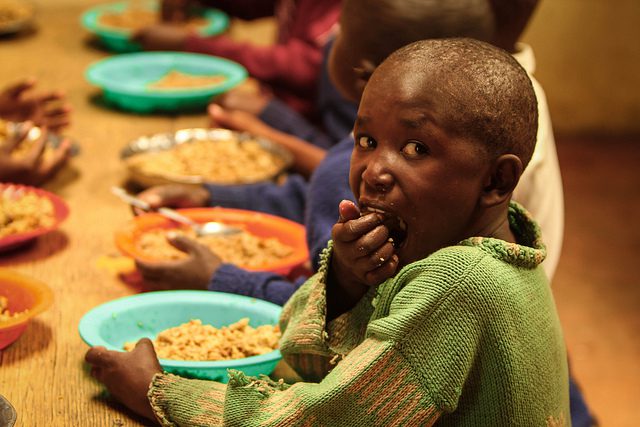
In distressed communities, the poor often find themselves in situations where there is very little food, caused by issues such as war zones, natural disasters or a lack of healthy, sanitary markets. There are many different organizations that continue to aid in food delivery in developing countries in some of the most oppressed areas. Although these only offer temporary solutions and the main goal is to help the vulnerable learn how to grow their own sustainable, healthy foods, these organizations are there to help in the most urgent times of need.

Action Against Hunger a Pioneer of Food Delivery in Developing Countries

Action Against Hunger is possibly one of the most well-known and longest running food delivery programs working abroad. Founded in 1979, Action Against Hunger has been distributing food to countries such as Liberia, Guatemala, Bangladesh and Lebanon. Its efforts began with a French group responding to crises in Afghanistan.  

Action Against Hunger has many different programs to ensure the safe delivery of food. Its most notable programs include the Nutrition and Health Program, which treats malnourished children and boosts child survival. Through research and special screenings, Action Against Hunger can easily pinpoint the most extreme cases and the children who are most at risk of being harmed by starvation.

The Food Security and Livelihoods Program addresses the lack of nutritious foods that plague areas of poverty. The program enables vulnerable societies by improving their access to food, income and the economy. The Food Security and Livelihood Program educates small-scale farmers on how to increase food production and how to store and market their crops. Action Against Hunger considers each area’s specific needs and includes activities that help boost the local market.

In addition to responding to emergencies, this program also helps establish long-term solutions to continue fighting hunger. In times of violence or drought, Action Against Hunger helps communities replenish their food sources. Through the Food Security and Livelihood Program, Action Against Hunger also creates strategies such as small business assistance and veterinary services.

In 2016, Action Against Hunger improved food security, income and livelihoods for 2.6 million people in some of the most vulnerable situations around the world in countries such as South Sudan, Malawi and Iraq.

World Food Program USA Brings Food to Schools and War Zones

World Food Program USA tackles the issue of hunger by asking the question, “Why are people hungry?” and discovering the root causes behind hunger, such as poverty, conflict, natural disasters, climate change, lack of food access and lack of proper education. To help combat these specific situations, World Food Program USA has many different programs for food delivery in developing countries.

WFP’s School Meals Program provides food assistance to school-aged children in areas where school is often their only source of nutritious food. It provides school food assistance in countries such as Sudan, Tanzania, Bolivia and Mali. In 2016, WFP helped feed 16,404,640 children through school meals. More than 76,500 schools received assistance through WFP and 60 countries participated in the program.

WFP’s Emergency Response Program delivers food to war zones in countries such as Syria, Yemen and Iraq, along with natural disaster food delivery. Through these programs, it works with national governments, private sectors and civil society partners. WFP utilizes telecommunications systems to correlate relief and recovery on the ground.

Although many programs only provide temporary solutions to ending hunger, the most pressing issue is to ensure that those who have no other means are provided with their most basic needs: food, water, hygiene and a safe place to live. Through food delivery in developing countries, Action Against Hunger and World Food Program USA have not only helped combat starvation and malnutrition, but their programs have helped people in impoverished areas learn how to make, handle and market food, which will have a lasting effect on their livelihoods and generate a sustainable way of life for the future.   

– Rebecca Lee
Photo: Flickr

June 16, 2018
https://borgenproject.org/wp-content/uploads/borgen-project-logo.svg 0 0 Borgen Project https://borgenproject.org/wp-content/uploads/borgen-project-logo.svg Borgen Project2018-06-16 01:30:042024-05-29 22:42:45Food Delivery in Developing Countries Promotes Food Security
Aid, Foreign Aid, Global Poverty

Understanding Why Providing Foreign Aid Helps the U.S.

foreign aid helps the U.S.
Giving, especially in the form of foreign aid, has shown to cultivate meaningful relationships among people and countries, some that lead to rewarding trading agreements amid other benefits. Recent history has particularly exhibited how foreign aid helps the U.S., which is a crucial consideration in the political dialogue surrounding the current foreign aid budget.

Foreign Aid Helps the U.S. with Trade

One valuable return the U.S. has received in its giving of foreign aid to other developing countries has been the increase in American jobs as well as trade. Foreign aid is much like an investment; it helps to forge the foundation needed for low-income countries to build up and become middle-income, sustainable states. Here are some examples:

  1. After World War II, U.S. foreign aid to Japan helped recover Japan’s infrastructure and highly contributed to the success of American companies like Microsoft.
  2. The U.S. now trades and does business with former recipients of foreign aid, such as South Korea, Brazil, Mexico, Vietnam and Thailand.
  3. The President’s Emergency Plan For AIDS Relief (PEPFAR) successfully slowed down the AIDS epidemic and countries that received such aid have, in turn, consumed more American goods. Exports rose 77 percent in Tanzania, 189 percent in Zambia and 241 percent in Ethiopia.
  4. PEPFAR is one of the strong determinants of increases in the trade of pharmaceuticals.
  5. Foreign aid has attributed $46 billion more in U.S. exports and 920,000 more jobs in the U.S.
  6. In 2011, 44.6 percent of U.S. exports went to developing countries.
  7. In Tennessee alone, more than $33 billion in goods and services were exported to foreign countries in 2014 and this trade, in turn, supports over 22 percent of jobs, 830,000 local jobs to be specific.

Foreign Aid Helps with Health

Foreign aid helps the U.S. in preventing global epidemics that could otherwise be much worse. While assisting developing countries with their challenges in health, the U.S. also does its duty to minimize any possible health issues and diseases from traveling overseas or across borders to the U.S. There has been a great number of such instances, such as:

  • The U.S. was the largest funder of a number of health workers stationed in Nigeria with the original goal of polio eradication. The workers were later reassigned and succeeded in countering the infamous Ebola epidemic.
  • The PEPFAR program has helped stop the spread of AIDS by supplying life-saving medicines to over 14 million people.

Foreign Aid Helps with National Security

One of the non-negotiable benefits the U.S. reaps from its giving of foreign aid to developing countries is an improvement in national security. To prevent a third world war, the U.S. created what is now the modern development assistance program to avoid further instability in Europe.

Stability in developing countries is key in preventing future political issues from unfolding. The U.S. has defense agreements with 131 out of the 135 countries that it provides foreign aid to.

The importance of international aid lies in economic benefits, such as trading proliferations, as much as health and national security. As evidenced above, it is clear that there is truth in the fact that foreign aid helps the U.S. just as much as it helps other nations.

– Roberto Carlos Ventura
Photo: Flickr

June 12, 2018
https://borgenproject.org/wp-content/uploads/borgen-project-logo.svg 0 0 Borgen Project https://borgenproject.org/wp-content/uploads/borgen-project-logo.svg Borgen Project2018-06-12 01:30:172024-06-06 00:08:00Understanding Why Providing Foreign Aid Helps the U.S.
Page 29 of 65«‹2728293031›»

Get Smarter

  • Global Poverty 101
  • Global Poverty… The Good News
  • Global Poverty & U.S. Jobs
  • Global Poverty and National Security
  • Innovative Solutions to Poverty
  • Global Poverty & Aid FAQ’s
Search Search

Take Action

  • Call Congress
  • Email Congress
  • Donate
  • 30 Ways to Help
  • Volunteer Ops
  • Internships
  • Courses & Certificates
  • The Podcast
Borgen Project

“The Borgen Project is an incredible nonprofit organization that is addressing poverty and hunger and working towards ending them.”

-The Huffington Post

Inside The Borgen Project

  • Contact
  • About
  • Financials
  • President
  • Board of Directors
  • Board of Advisors

International Links

  • UK Email Parliament
  • UK Donate
  • Canada Email Parliament

Get Smarter

  • Global Poverty 101
  • Global Poverty… The Good News
  • Global Poverty & U.S. Jobs
  • Global Poverty and National Security
  • Innovative Solutions to Poverty
  • Global Poverty & Aid FAQ’s

Ways to Help

  • Call Congress
  • Email Congress
  • Donate
  • 30 Ways to Help
  • Volunteer Ops
  • Internships
  • Courses & Certificates
  • The Podcast
Scroll to top Scroll to top Scroll to top