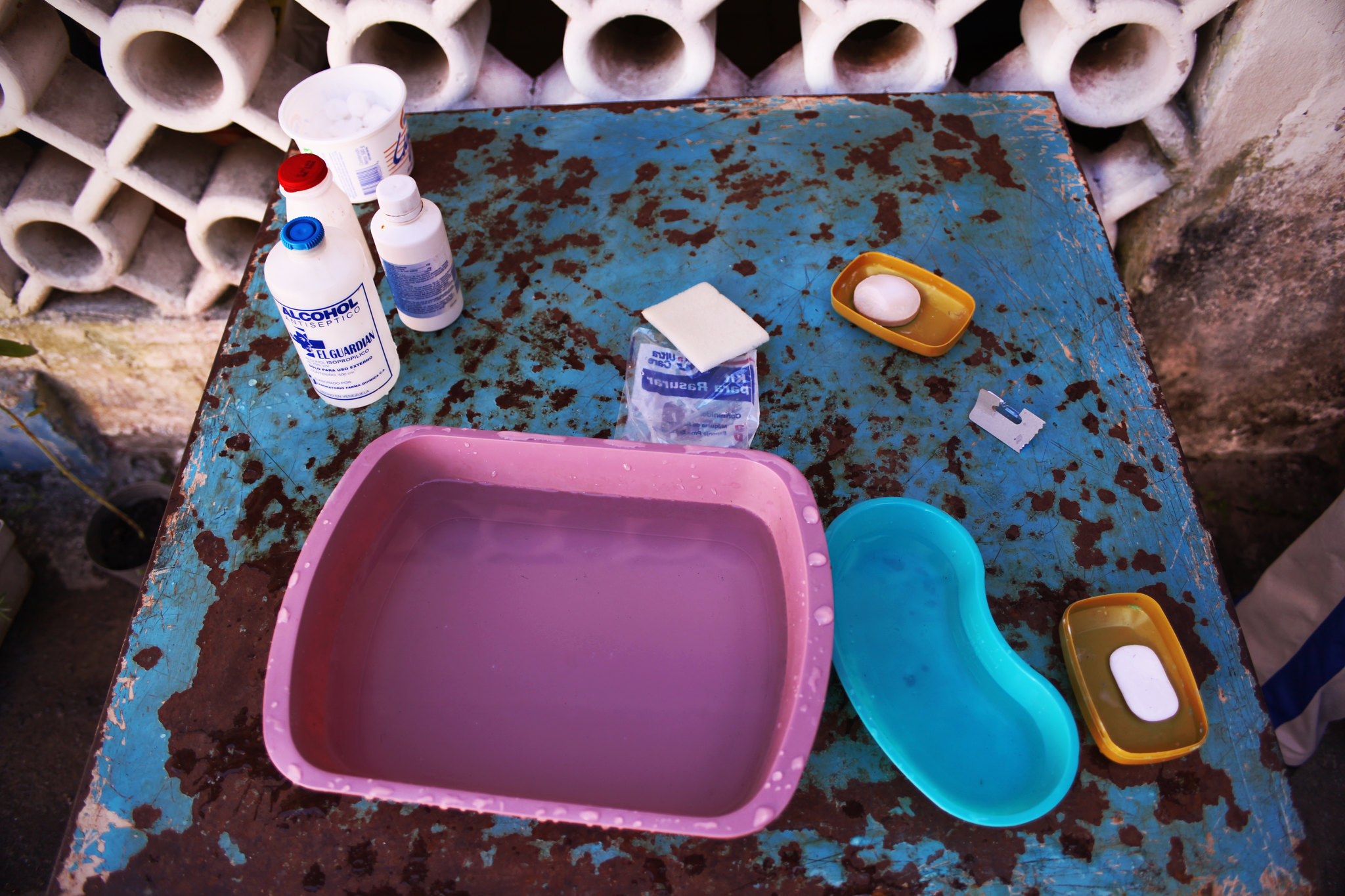
Once a beacon for malaria eradication, Venezuela has experienced an economic crisis producing rising malaria rates and shortages of medicine.
In 1961, Venezuela claimed a mere 1,754 cases of malaria. Later that decade, after a government-led initiative of widespread DDT spraying, improved sewage systems and housing as well as educational campaigns, Venezuela declared itself malaria-free, eradicating the disease before most other nations, including the U.S.
As inflation rose and economic crisis ensued, 2011 saw 45,824 malaria cases. By 2014, malaria had begun to spread from remote jungle communities to urban centers. For the first time in 50 years, malaria became a real threat to Venezuelan public health.
The spread of malaria in Venezuela has been widely attributed to the boom in illegal gold mining. After Hugo Chavez took power in 1999, gold mines were reacquired by the state but left largely unused and unmonitored. Today, the gold mines, controlled by armed groups, attract impoverished miners from all over the continent.
High wages bring urban workers to the rural gold mines. One day’s work earns miners the national average one-month salary. Faced with low wages and inflation elsewhere, many workers feel they have no choice but to work in the illegal gold mining industry.
Sixty percent of 2013’s malaria cases were recorded in Sifontes, a small gold-mining community where health care is scarce. The process of mining in communities like Sifontes results in rain forest erosion, deforestation and pools of free-standing water, ideal breeding grounds for mosquitoes. This environment has allowed malaria-carrying mosquitoes to thrive and spread at unprecedented rates.
In gold mining communities, workers live near green, swampy waters, surrounded by mosquitoes and lack proper housing to keep the disease-spreading insects out. Overcrowding exacerbates the dire living conditions of miners, exponentially increasing malaria’s reach.
After earning a few months’ wages in the mines, workers return home, bringing the disease back with them. As a result, malaria has crossed Venezuela’s borders into Colombia and has reached Venezuela’s urban centers.
So far in 2016, doctors have diagnosed 125,158 cases. Venezuela’s economic crisis forced the government to cut health spending, resulting in malaria treatment shortages. However, the Venezuelan government does what it can to combat the disease, providing quick diagnosis and treatment programs and giving out insecticide-treated bed nets.
With treatment widely available globally and only costing $2.50 at the most, the spread of malaria in Venezuela could be curbed through improved public health policies. Organizations such as the World Health Organization (WHO) and UNICEF have been doing what they can to combat malaria globally and spread awareness, but economic crisis has prevented progress in Venezuela.
The 2015 World Malaria Report, conducted by WHO, shows that Venezuela spent less than $1 per at-risk person on malaria-fighting measures. According to Doctor Gustavo Villasmil of Venezuela, “Blaming the mosquito is short-sighted. Malaria has returned because the state failed to provide decent housing to the poorest, because it ceased to think of health planning in the long-term.”
Despite the high rates of malaria in Venezuela today, the country was once a symbol of malaria eradication for the Americas. Through a strategic, effective economic recovery program, gold mining regulation and improved healthcare provision, Venezuela can again defeat malaria.
– Anna O’Toole
Photo: Flickr

Rural Poverty in Cambodia: Promoting Development
Agrarian farmers, women, internally displaced persons and those in poor fishing communities account for 4.8 million impoverished Cambodian individuals, while 90 percent of this demographic live in rural areas. Poverty in Cambodia is severe in rural regions.
Those living in rural poverty in Cambodia are isolated and live in villages far from health services and roads, contributing to their limited access to education, health care and employment.
The Khmer Rouge, a radical communist group, took power in Cambodia during 1975 and practices instilled by their reign began to facilitate rural poverty in Cambodia. After forcing citizens out of cities and into the countryside, they dismantled financial institutions, education infrastructures and foreign cultural influences.
Rural Poverty in Cambodia
They aimed to reform Cambodia into a rural nation until 1979 after Vietnamese troops invaded the country to capture Khmer Rouge leader, Phnom Penh. However, their representation of Cambodia was continued through 1990 when the United Nations recognized them as the only authentic representation of Cambodians in the General Assembly.
Urban areas experienced a decline in poverty of around 10 percent in one decade. However, resolving rural poverty in Cambodia is vital to further development as agricultural employment accounts for 59 percent of the total labor force nationwide.
The Asian Development Bank’s analysis of rural poverty in Cambodia cites five main foundations for economic growth in remote areas: Growth in land under production, growth in the rural labor force, modest gains in agricultural productivity main in non-rice crops, public and private investment in agriculture in rural infrastructure and substantial investments in social infrastructure such as health, education and sanitation.
According to the Oxford Poverty and Human Development Initiative, 85 percent of people living in poverty reside in rural locations. The prevalence of rural poverty among the world’s poor is so critical that the Global Donor Platform for Rural Development asserts that alleviating poverty in these areas should be the United Nation’s number one Millennium Development Goal.
The International Fund for Agriculture is currently conducting five programs to alleviate rural poverty in Cambodia focusing on developing more efficient agrarian productivity that directly benefits 425,300 households.
Programs support investments in agriculture and development in remote villages, while also accounting for sensitivities for women to ease gendered inequalities.
USAID is also conducting programs to develop governing stability, improving healthcare, increasing accessibility to education for individuals in remote areas and improving food security.
– Amber Bailey
Photo: Flickr
Pollinate Energy Provides Sustainable Energy, Jobs in India
In fact, as of 2014, 24 percent of the urban population of India resided in slum housing. Slum housing is any housing that may lack structural integrity or space, access to clean water or sanitation or where residents do not have the security of tenure.
With such a large population living in slums, there is a serious need for affordable energy. Yet electricity from the power sector in India is very unreliable and power outages of 20 hours or more occur often. As a result, many people who reside in India’s slums rely on kerosene as fuel. While kerosene is an effective substitute for an unreliable power sector, it is not cost-efficient and can cause household and environmental air pollution.
To improve access to sustainable energy in India’s slums, one organization called Pollinate Energy has implemented a unique business strategy. In what Pollinate Energy calls “social business,” a salesman or “pollinator” builds connections with locals in Indian slums.
The pollinator may teach the locals about the benefits of using renewable energy and the potential negative effects of using kerosene for light or cooking. If the community members want to purchase sustainable energy products from the pollinator they can buy them at an affordable price.
Plus, if the customers are satisfied with the products, they may act as “worker bees” that refer other community members to the pollinator in return for products or commission.
This business model encourages the adoption of reliable, sustainable energy products in India’s slums and allows consumers to become entrepreneurs in their own communities.
According to their annual report, in 2014-15 Pollinate Energy sold over 9,000 products to nearly 43,000 individuals in India. These products helped save 43.7 million Rupees and eliminated 2,000 tons of potential CO2 emissions for consumers who would have bought and used kerosene for light and cooking.
For at-risk individuals like those who live in slums, any money that can be saved could be used for other essential goods like food, water or medicine. Though systematic change is necessary to fully help those who reside in slums around the world, Pollinate Energy is making a positive difference by providing clean energy products and job opportunities to those in need.
– Weston Northrop
Photo: Flickr
An Insight Into Why Child Poverty in Germany is Increasing
Germany has been a relatively wealthy country for years, performing well above average on the economic and social fronts. However, child poverty in Germany is a surprising new trend sweeping the nation.
Several reasons underlie this trend, but perhaps the most important of them is insufficient unemployment benefits. These benefits are called Hartz IV welfare benefits and are often used to help unemployed people afford basic necessities such as food and shelter.
An increasing dependence on welfare payments has rendered approximately 2 million children in Germany impoverished. Annette Stein, a professional from the Bertelsmann Foundation in Germany states, “The longer that a child lives on welfare, the worse the consequences are.”
This can be particularly true for children who have spent a substantial period of their life in penurious conditions, which can take a serious toll on their mental and physical development, their self-esteem and overall health.
According to a report published by the UNICEF, in 2001, 10.2 percent of all German children suffered from poverty. Poverty is determined with respect to half of the median income level, and anything below this level is deemed to be inadequate to support a healthy lifestyle.
A UNICEF report also noted that single parent households showed disproportionately greater rates of child poverty. This suggests that measures should be implemented in Germany to connect single parents with potential job opportunities that match their qualifications and skills. This is likely to improve household income and thus decrease child poverty.
Recently, Wolfgang Schäuble, the finance minister of Germany, declared an increase of two pounds in benefits offered to children. Opponents of this change argue that this increase is unlikely to significantly impact rates of child poverty in Germany.
Poverty among children in Germany is not usually due to an inability to afford necessities, but rather an incapacity to further develop themselves as well-rounded individuals through education and healthy eating.
While the situation appears bleak on the exterior, a lot can be done to change the financial predicament of children in Germany. A reduction in child poverty in Germany can be achieved through subsidies to farms and food industries to lower the price of healthy products, distribution of grants or scholarships to students for school; a thorough re-assessment of the adequate amount of benefit required to allow children to sustain and develop themselves as holistic individuals.
– Tanvi Ambulkar
Photo: Flickr
Feed the Future: Prioritizing Global Food Security
In July 2016, President Obama signed the Global Food Security Act of 2016. This shows that increasing growth in the developing world and eradicating poverty are national security interests for the U.S.
The Obama Administration has shown dedication to improving global food security by implementing government organizations to address the various problems of global food security. One of those government organizations is Feed the Future.
Feed the Future began in 2009 and has focused on improving the agriculture industry of partner countries and nutrition to combat poverty and hunger. Their approach is as follows:
Nineteen countries have been selected based on five criteria:
The selected countries and the U.S. work together to make plans to create a more sustainable society through policy reform and domestic and foreign investments.
The U.S. makes core investments in the countries’ agricultural sectors, as well as women, nutrition and agricultural infrastructure.
Progress reports of Feed the Future programming are published annually and reviewed so that programs can be improved upon for the future.
In 2015, Feed the Future helped over 9 million farmers gain access to improved technologies and management practices. This increased agricultural productivity and boosted the agricultural economy by more than $800 million. The organization also improved the nutrition of over 17 million children under the age of five.
In September 2015, many countries — including the U.S. — adopted a set of 17 goals to ensure a sustainable planet in the future. These goals, which are expected to be achieved by the year 2030 include, but are not limited to, no poverty, no hunger, good health and well-being, quality education and gender equality. Feed the Future is a vital part of the U.S. government’s role in achieving these goals.
As the Obama administration comes to a close, one can only hope that government initiatives like Feed the Future will continue to prosper and take significant steps towards ending poverty and hunger.
– Ugochi Ihenatu
Photo: Flickr
Taking a Look at Poverty in Nauru
Located 4,000 km from Sydney, Australia is the smallest island in the world, expanding out 21 square kilometers — this is Nauru. What was once the wealthiest nation on the planet is now in shambles. The country thrived on agriculture and phosphate mining; however, now that all of the phosphate resources were stripped from the island, what remains is a wasteland.
Because of the staggering descent into poverty in Nauru, which is desperate for money, the nation has traded in the phosphate business for migrants. In 2001, Nauru entered into an agreement with Australia in which Nauru would hold refugees trying to enter Australia in return for foreign aid.
How did the wealthiest nation become desperate for foreign aid? After seizing independence from Britain in 1968, the nation’s inhabitants grew extremely wealthy from exporting phosphate. On top of that, the government revoked taxes and gave its inhabitants monthly stipends.
This way of governing provided the people with no incentive to find jobs, start businesses or provide for the economy. The money that was propagated eroded in corruption and poorly executed distribution of investments. By 1980, all the phosphate was basically depleted from the island. Poverty in Nauru increased from there. Now, 80 percent of the island is covered in limestone pinnacles, making it uninhabitable and utterly useless.
Mining in Nauru not only destroyed the land, but also the coastal waters as it has been contaminated due to phosphate runoff. Not only is there poverty in Nauru, but also a serious health crisis. A nation that had once cultivated the land for fresh crops and fished, is now home to some of the most obese and sick people.
In 2007, the World Health Organization Report recounted 94.5 percent of Nauru’s inhabitants as being overweight and 71.7 as being obese. The life expectancy in Nauru is around 50, and Type II diabetes is more prevalent there than in any other place in the world. Most of the population now lives off of prefabricated food shipped from Australia.
Nauru has become dependent on foreign aid mainly from Australia, New Zealand and Japan. A Sydney University geosciences professor by the name of John Connell expressed his belief that the only long-run solution to this crisis is a complete relocation of Nauru’s inhabitants.
However, as of now, the nation is getting some of its income from selling passports to foreign nationals and taking in refugees other countries refuse. In hopes to help with the poverty in Nauru, in 2001, Australia set up the Nauru detention center and provided many of the nation’s inhabitants with jobs. In 2012, Australia set up a second facility, which sparked hope in hearts of the inhabitants — a hope for a better future.
Now that asylums are in high demand due to the excessive numbers of refugees, Nauru’s facilities have been in full swing; however, poverty in Nauru is still very much prevalent. Although it may seem like a dead end, it appears that Australia still insists on using Nauru’s detention center because it is refusing to admit more refugees. This nation’s unusual and destructive past has steered Nauru into an impasse, but the future of the small island still remains unclear.
– Kayla Mehl
Photo: Flickr
What’s Causing the Spread of Malaria in Venezuela?
Once a beacon for malaria eradication, Venezuela has experienced an economic crisis producing rising malaria rates and shortages of medicine.
In 1961, Venezuela claimed a mere 1,754 cases of malaria. Later that decade, after a government-led initiative of widespread DDT spraying, improved sewage systems and housing as well as educational campaigns, Venezuela declared itself malaria-free, eradicating the disease before most other nations, including the U.S.
As inflation rose and economic crisis ensued, 2011 saw 45,824 malaria cases. By 2014, malaria had begun to spread from remote jungle communities to urban centers. For the first time in 50 years, malaria became a real threat to Venezuelan public health.
The spread of malaria in Venezuela has been widely attributed to the boom in illegal gold mining. After Hugo Chavez took power in 1999, gold mines were reacquired by the state but left largely unused and unmonitored. Today, the gold mines, controlled by armed groups, attract impoverished miners from all over the continent.
High wages bring urban workers to the rural gold mines. One day’s work earns miners the national average one-month salary. Faced with low wages and inflation elsewhere, many workers feel they have no choice but to work in the illegal gold mining industry.
Sixty percent of 2013’s malaria cases were recorded in Sifontes, a small gold-mining community where health care is scarce. The process of mining in communities like Sifontes results in rain forest erosion, deforestation and pools of free-standing water, ideal breeding grounds for mosquitoes. This environment has allowed malaria-carrying mosquitoes to thrive and spread at unprecedented rates.
In gold mining communities, workers live near green, swampy waters, surrounded by mosquitoes and lack proper housing to keep the disease-spreading insects out. Overcrowding exacerbates the dire living conditions of miners, exponentially increasing malaria’s reach.
After earning a few months’ wages in the mines, workers return home, bringing the disease back with them. As a result, malaria has crossed Venezuela’s borders into Colombia and has reached Venezuela’s urban centers.
So far in 2016, doctors have diagnosed 125,158 cases. Venezuela’s economic crisis forced the government to cut health spending, resulting in malaria treatment shortages. However, the Venezuelan government does what it can to combat the disease, providing quick diagnosis and treatment programs and giving out insecticide-treated bed nets.
With treatment widely available globally and only costing $2.50 at the most, the spread of malaria in Venezuela could be curbed through improved public health policies. Organizations such as the World Health Organization (WHO) and UNICEF have been doing what they can to combat malaria globally and spread awareness, but economic crisis has prevented progress in Venezuela.
The 2015 World Malaria Report, conducted by WHO, shows that Venezuela spent less than $1 per at-risk person on malaria-fighting measures. According to Doctor Gustavo Villasmil of Venezuela, “Blaming the mosquito is short-sighted. Malaria has returned because the state failed to provide decent housing to the poorest, because it ceased to think of health planning in the long-term.”
Despite the high rates of malaria in Venezuela today, the country was once a symbol of malaria eradication for the Americas. Through a strategic, effective economic recovery program, gold mining regulation and improved healthcare provision, Venezuela can again defeat malaria.
– Anna O’Toole
Photo: Flickr
Canada’s Global Health Initiatives and Commitments
Canadian Coalition for Global Health Research
Founded in 2001, the Canadian Coalition for Global Health Research describes itself as a “not-for-profit organization promoting better and more equitable health worldwide through the production and use of knowledge.” The coalition started as an informal network and has since transformed into an important tool in Canada’s health research.
The coalition’s main purpose is to bring together groups of people to communicate and take action regarding global health issues. Members of the coalition include global health researchers, organizations that have an interest in funding global health research, and members of the general public who share the passion of fighting to improve health worldwide. Research challenges are then analyzed within low and middle-income countries.
University of British Columbia
Located in Vancouver, the University of British Columbia has focused on a neglected global diseases initiative. Neglected global diseases are illnesses that are disproportionately present in the world’s poorest areas, including malaria, HIV/AIDS, conditions affecting maternal and child health and various tropical diseases. These illnesses can be classified under this category because they are able to thrive in places that generally have unreliable water supplies, poor sanitation and inadequate access to healthcare facilities.
The university’s initiative is to build a network between the fields of biology, pharmacology, business, social policy, economics and law. These fields are important because together, they are able to examine the underlying causes and social climates that generate poverty and furthermore trigger neglected global diseases. With these social factors in mind, Canada’s global health initiatives and research can become more targeted and efficient. This interdisciplinary approach is highly innovative at a time when social determinants are becoming increasingly intertwined with global health.
G7 Health Commitments
This September, representatives attended the G7 Health Minister’s Meeting in Kobe, Japan. The purpose of this meeting was to bring together health leaders of G7 nations and organizations to discuss how to advance progress regarding global health, particularly regarding the subjects of combating antimicrobial resistance and achieving universal health care coverage.
Leaders were able to reiterate elements of Canada’s health research actions, namely strengthening emergency responses to health crises and addressing the challenge of antimicrobial resistance. The meeting also provided Canadian leaders with the chance to hold additional meetings with health leaders from Japan, France, Germany and the United Kingdom in order to exchange experiences and organize future collaboration in the fight against global health issues.
Overall, one can see that Canada’s health research and commitments are both diverse and robust. The nation has focused itself on working to improve established health concerns as well as creating new strategies to combat them. All of the examples above involve cooperation between different organizations and nations, which is certainly a key factor for being successful in the fight against global health concerns.
– Nathaniel Siegel
Photo: Flickr
Hurricane Matthew’s Impact on Living Conditions in Haiti
Hurricane Matthew was a devastating category four hurricane sustaining winds of upwards of 140 mph when it first swept through into the Southern peninsula of Haiti on October 3-4, 2016.
Hurricane Matthew was the strongest natural disaster to hit the country in a decade, completely destroying towns and villages. Food reserves and roughly 300 schools have been damaged.
Haiti Liberte, a local news source of Haiti, estimates nearly two feet of rain impacted the area during Hurricane Matthew.
Reuters estimates that the death toll in Haiti is currently at 1,000 and rising, causing the community to create mass graves for their deceased. The death toll is continuing to rise due to the cholera outbreak in the wake of the devastation caused by Hurricane Matthew. Thousands are also displaced in the wreckage.
Cholera Rises in Aftermath of Hurricane Matthew
According to CNN, Haiti has the highest rates of Cholera worldwide. An estimated 10,000 people have died from the epidemic since 2010 when soldiers from the U.N. accidentally brought the disease to the area in the aftermath of an earthquake. The World Health Organization (WHO) reported in 2016 that 880 new cases each week arise out of Haiti.
With cholera projected to increase in the aftermath of Matthew, WHO is sending one million cholera vaccines to the area in hopes of preventing an outbreak of the waterborne disease.
Developmental Struggles to Haitian Economy
Haiti is the poorest country in the Americas and the Western hemisphere. The New York Times reported that, prior to the devastation left by Hurricane Matthew, Haiti was on the path of developing into a more prosperous country. Cell phone services were widely enabled in the community, and farmers and businesses were improving.
Forests, swamps and other forms of vegetation are now ruined. Roadways are blocked and destroyed and homes are no longer standing as they once were. Only the mounds of stones that were used as the foundation for homes still stand in Jérémie, Haiti.
Minister of commerce and industry in the Grand Anse department Marie Roselore Auborg of Jérémie stated, “Instead of going forward, we have to restart…This storm leveled all of the potentials we had to grow and reboot our economy.”
Widespread Famine
BBC reported from U.N. officials and the Haiti government that widespread famine will impact Haiti in the three to four months to come if the situation is not addressed properly and promptly. Haiti Interim president Jocelerme Privert states that “real famine” following the “apocalyptic destruction” made by Hurricane Matthew could prevail.
U.N. Secretary-General Ban Ki-moon is proactively responding to the crisis by investing $120 million in the three months following the hurricane to aid in the restoration of Haitian infrastructure and provide medical and famine relief.
France and the U.S. have pledged to send aid to Haiti. The American Red Cross is providing $6.9 million to aid in relief efforts as well.
– Haylee M. Gardner
Photo: Flickr
Crisis Despite Peace Treaty: 10 Facts About Malian Refugees
Mali is a landlocked country located in western Africa and is one of the major cotton producers on the continent. Though self-sufficient when it comes to food production, Mali depends on aid from other nations and is currently facing a refugee crisis. Ahead are 10 facts about Malian refugees.
Although the turmoil in Mali has resulted in thousands of people fleeing the country, small steps are being initiated to reduce the number of refugees and internally displaced people. Humanitarian organizations are making slow but steady progress to better the lives of Malian refugees.
– Shannon Warren
Photo: Flickr
Law Passed in Italy to Help Reduce Food Waste
Each year, about one-third of the food produced worldwide, 1.3 billion tons, is lost or wasted — enough to feed the one billion people who are malnourished and two billion more. Including food waste in Italy and France, the food wasted in Europe alone could provide for 200 million people.
“The problem is simple — we have food going to waste and poor people who are going hungry,” French politician Arash Derambarsh said to the Independent.
France became the first country in the world to ban supermarkets from disposing of unsold foods and require them to instead donate the products to charities and food banks. The Italian Parliament has become the second to introduce food waste reform.
In contrast to its French counterparts, however, Italy’s bill rewards supermarkets for helping reduce food waste instead of punishing them for not doing their part.
Current law requires stores to declare each donation five days in advance, preventing supermarkets from giving away excess. Once the new bill becomes law, markets will only need to submit a document detailing what was given at the end of the month. The donations will go to public authorities and non-profit organizations.
The new legislation also allows markets to donate mislabeled food products if the expiration date and allergy information are properly indicated. A food education program for schools, a national awareness campaign and a take-out system for restaurants will follow within the next three years.
According to La Reppublica, 43 percent of food waste in Italy happens at the consumer’s home. Each person wastes an average of 76 kilograms per year, costing the country $18 million. Maruzio Martina, the Italian agriculture minister, said he hopes to increase Italy’s food recovery from 550 million tons to 1 billion.
Many hope the bill will not only reduce food waste in Italy but also benefit the 6 million Italians living in poverty who rely on donations to survive.
The waste-bill, brainchild of Italian member of parliament Maria Chiara Gadda, has received bipartisan support, and was passed in the Senate on August 2.
– Ashley Leon
Photo: Flickr