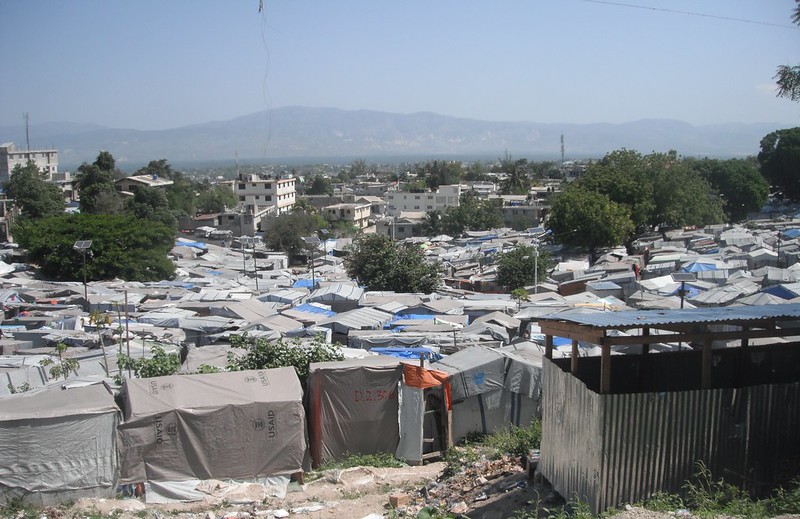
The Haitian cholera outbreak in 2010 became endemic, after at least a century of the disease not posing a threat.
Spread through contaminated water, the infectious disease causes dehydration and severe diarrhea. It can even lead to death if left untreated, sometimes in just a few hours. The outbreak transpired just after a fatal earthquake occurred in the country.
The United Nations (U.N.) sent peacekeepers to Haiti to help with the damage but failed to screen them for cholera or build them sufficient toilet facilities. As a result, cholera-infected wastewater flowed into Haiti’s main river — a main source for washing, cooking, cleaning and drinking. By 2011, over 470,000 cases of cholera were reported, with 6,631 connected deaths.
Immediate Response
Within days of the Haitian cholera outbreak, the Ministry of Public Health and Population (MSPP), along with the Centers for Disease Control and Prevention (CDC) and its partners, established a national surveillance system to track cases of the disease.
Treatment and prevention materials were also quickly developed, and thousands of healthcare workers were trained. Together, the organizations reduced the initial mortality rate of four percent to less than one percent, saving an estimated 7,000 lives.
However, thousands of people continue to become sickened each year by cholera. Haiti’s water and sanitation infrastructure require major improvement for any significant, long-term progress to be made.
The U.N.’s Reaction
After denying any responsibility for over five years, the U.N. has now officially admitted to a role in the Haitian cholera outbreak.
The deputy spokesman for the Secretary-General, Farhan Haq, recently sent out an email saying, “over the past year, the U.N. has become convinced that it needs to do much more regarding its own involvement in the initial outbreak and the suffering of those affected by cholera.” He wrote that a “new response will be presented publicly within the next two months, once it has been fully elaborated, agreed with the Haitian authorities and discussed with member states.”
Although this statement fails to put blame on the U.N. or to indicate a change in its legal position — that it is absolutely immune from legal actions — it does represent a significant step forward for the U.N.
Looking Forward
Haiti launched a National Plan to eliminate cholera from the country in 2013. The 10-year-long plan focuses on water and sanitation, health and preventing further infections.
However, the plan is terribly underfunded. The U.N. Office for the Coordination of Humanitarian Affairs (OCHA) pledged over $125 million toward this program, $19 million of which was received; the plan is anticipated to top a total of $2.2 billion in investments.
Nigel Fisher, Special Representative of the U.N. Secretary-General in Haiti said, “It’s a big challenge. We have to raise literally billions of dollars. And this requires sustained support and commitment. That’s what we are here for. We, all of us partners, have a moral obligation to stay the course with cholera. Not just to lower the incidence of cholera, but to eliminate it from Haiti.”
– Alice Gottesman
Photo: Flickr

Highlighting Celebrity Advocates in the Fight Against Poverty
Celebrities, whether they earn their status through talent, wealth or other characteristics, have many opportunities to use their power for the greater good. The following five celebrities frequently impress with both their commitment to and passion for serving the world’s poor in the fight against poverty.
While celebrity news often seems irrelevant to serious matters such as the fight against poverty, many celebrities use their position as a public figure to raise awareness and funds for vulnerable populations.
These five celebrities have set an example for the ways in which other influential members of society can use their talents, fame or funds to contribute to their global community.
– Jordan Little
Photo: Flickr
EU Takes a Swat at Yellow Fever in the DRC Using Mobile Labs
While mosquito bites are rarely more than a summer nuisance for the average American, they can be carriers of dangerous illnesses. This year, the Democratic Republic of Congo (DRC) is facing an outbreak of yellow fever.
By August, there were 5,000 suspected cases and 400 reported deaths across the DRC and Angola. Yellow fever is difficult to diagnose because symptoms closely resemble other illnesses and vary from patient to patient.
Fortunately, World Health Organization (WHO) and the European Union announced that they have created a mobile lab to quickly diagnose and vaccinate people to stop the disease in the DRC.
The mobile lab was dispatched in mid-July with five technicians from Italy and Germany. Quick, accurate blood tests are crucial.
This mosquito-transmitted disease can become so prolific because most infected people never show symptoms, and risk exporting the illness or continuing to allow mosquitoes to spread it in crowded subtropical areas. Now tests can be done on site, which reduces the time wasted for transporting samples.
Those who develop symptoms after the incubation period experience fever, chills, aches, nausea and weakness. Unfortunately, 15 percent of people develop a serious form of the disease that leads to bleeding, jaundice, organ failure and death in 20 to 50 percent of cases. There is no cure, only prevention and palliative treatment.
The technicians have a tough job because of the sheer number of people affected by yellow fever in the DRC. Unfortunately, preventative measures like bug repellent and protective clothing only go so far against the persistent parasite.
The good news is a vaccine that provides lifelong immunity exists. To keep the disease out of the DRC, visitors are required to get the vaccine before entering the country.
The bad news is that the vaccine is expensive and the epidemic is straining the supply. Currently, there are only 6 million doses of the vaccine and it will take a year to make more. Reuters ominously reports that time and resources are not on the EU’s side in the face of this epidemic.
WHO and the EU remain positive. The mobile labs can get results to 50 to 100 people in a day. WHO is training lab technicians in DRC and Angola to continue accurate testing after the EU’s program ends.
Dr. Formerly explains, “Aside from getting patients on the right treatment, faster diagnosis helps to plan the response better, such as identifying where to conduct mass vaccination campaigns in the affected countries.”
Mass vaccinations have been effective in slowing the spread and tests will help. Without a cure, prevention is the only way to stop the disease.
The EU and WHO have been splitting each dose into fifths. While this does not provide lifelong immunity to yellow fever that the full vaccine provides, it does protect recipients for a year. The mobile lab program is a great step towards ending this epidemic.
– Jeanette I. Burke
Photo: Flickr
Sudan Launches New Meningitis Vaccine
Meningitis is an infection, either viral or bacterial, that occurs around the brain and spinal cord. The bacterial form of this disease can have very severe consequences. According to PATH, 10% of victims die even with antibiotic treatment — 80% without any treatment — and survivors can still suffer from hearing loss or paralysis. Thankfully, a new meningitis vaccine offers hope despite these daunting statistics.
Sudan is one of 26 countries in Africa located in the “meningitis belt,” an area with a total population of about 450 million that has been deeply affected by meningitis over the past century. Epidemics arose about once every eight to 12 years according to PATH, and in 1996 25,000 people were killed in the largest meningitis epidemic.
Addressing meningitis in Africa is difficult because although meningitis A is one of the main causes of epidemics in Africa, most industrialized countries have meningitis C posing the largest problem. As a result, vaccine manufacturers focus on designing vaccines for industrialized countries to net more profit, and unfortunately, African countries then fail to receive the types of vaccines they need to combat meningitis A.
MVP to the Rescue
The creation of the Meningitis Vaccine Project (MVP) via a collaboration between the WHO and PATH in 2001 did much to help the situation. MVP was able to create a meningitis A vaccine, trademarked as MenAfriVac, that could also be cheaply administered for less than 50 cents for one dose.
MVP then introduced the vaccine in mass vaccination campaigns, and as a result, 235 million people gained immunity. Amazingly, only 80 cases of meningitis A were recorded in 2015 — a huge improvement compared to the 250,000 reported cases from the 1996 epidemic.
Continuing the Success
So why then is Sudan incorporating the vaccine into its routine immunization program important if so much progress has been made in reducing meningitis outbreaks? Despite the success of the current round of immunizations, if the vaccines are not continually administered in the future, epidemics could begin again in as early as 15 years.
The fact that the meningitis A vaccine is now part of Sudan’s routine immunization program means that at birth children will automatically receive the vaccine. As long as this program remains in effect, Sudan will likely not have to worry about meningitis. This year, 720,000 Sudanese children less than one year of age are expected to receive the vaccine.
Additionally, another vaccination campaign targeting children between one and five years old will go into effect this September. These children might have missed out on the Sudanese vaccination campaign that took place in 2012 and 2013, so the additional vaccinations provide another precaution against an outbreak.
Other countries should follow Sudan in adopting the meningitis vaccine into routine immunization programs. That way, these countries will be able to suppress meningitis on their own even without vaccination campaigns and help hundreds to combat the deadly infection.
– Edmond Kim
Photo: Flickr
Female Activists Protest for Free Education in Zimbabwe
Upon gaining independence in 1980, Zimbabwe mandated free education. Today, however, fees for education in Zimbabwe are at an all time high.
On August 18, nearly 2,000 women activists protested for free education in Zimbabwe in the country’s second largest city, Bulawayo. Only one day later, the protests moved to the Ministry of Education in Harare, the country’s capital. These protests come at a time when citizens are struggling to find jobs and children are being forced to drop out of school because their families cannot afford it.
Organized by Women of Zimbabwe Arise (WOZA), the protests follow a string of public demonstrations that have occurred within the last two months. In Bulawayo, the protesters presented a petition to the resident minister, declaring the right to free education in Zimbabwe. A similar petition was given to Sylvia Masango, a permanent secretary in the Ministry of Primary and Secondary Education.
Only 12 percent of the Zimbabwean government’s national budget is allocated to primary and secondary education, according to UNICEF. Of that 12 percent, most of the money only covers administration and teacher salaries. In August, the government reported it would not be taking new hires as it scrambles to pay the salaries of its current public workers.
According to UNICEF, over one million Zimbabwean secondary-school-aged children are not attending school. The number of school dropouts is increasing as the disparity in education grows. Children whose families rank in the top five percent of wealthiest people nationally are three times as likely to attend secondary school as children whose families rank in the bottom five percent.
Fifteen percent of children in Zimbabwe are not attending school due to the high cost of school fees, according to the Zimbabwe Vulnerability Committee. Many impoverished people in Zimbabwe live in rural areas, and Zimbabwe’s rural population makes up 67 percent of the country’s total.
The international community is working to fight school dropout rates. In 2010, through the Education Transition Fund (ETF), UNICEF provided 23 million textbooks to students in Zimbabwe, helping the country reach a one-to-one student-textbook ratio. The fund also helped Zimbabwe create national school grants to help students overcome financial barriers. Through the Second Chance Education Program, the fund supported alternative education opportunities for at least 50,000 children.
In 2015, the U.K. announced it would give $37 million from its Department for International Development to support Zimbabwe’s education sector. Part of the funds goes toward providing quality education for children in rural areas through the School Improvement Grants program.
There are high hopes that support from the international community and pressure from its population will allow Zimbabwe to provide free education once again.
– Erica Rawles
Photo: Flickr
The UN’s Role in the Haitian Cholera Outbreak of 2010
The Haitian cholera outbreak in 2010 became endemic, after at least a century of the disease not posing a threat.
Spread through contaminated water, the infectious disease causes dehydration and severe diarrhea. It can even lead to death if left untreated, sometimes in just a few hours. The outbreak transpired just after a fatal earthquake occurred in the country.
The United Nations (U.N.) sent peacekeepers to Haiti to help with the damage but failed to screen them for cholera or build them sufficient toilet facilities. As a result, cholera-infected wastewater flowed into Haiti’s main river — a main source for washing, cooking, cleaning and drinking. By 2011, over 470,000 cases of cholera were reported, with 6,631 connected deaths.
Immediate Response
Within days of the Haitian cholera outbreak, the Ministry of Public Health and Population (MSPP), along with the Centers for Disease Control and Prevention (CDC) and its partners, established a national surveillance system to track cases of the disease.
Treatment and prevention materials were also quickly developed, and thousands of healthcare workers were trained. Together, the organizations reduced the initial mortality rate of four percent to less than one percent, saving an estimated 7,000 lives.
However, thousands of people continue to become sickened each year by cholera. Haiti’s water and sanitation infrastructure require major improvement for any significant, long-term progress to be made.
The U.N.’s Reaction
After denying any responsibility for over five years, the U.N. has now officially admitted to a role in the Haitian cholera outbreak.
The deputy spokesman for the Secretary-General, Farhan Haq, recently sent out an email saying, “over the past year, the U.N. has become convinced that it needs to do much more regarding its own involvement in the initial outbreak and the suffering of those affected by cholera.” He wrote that a “new response will be presented publicly within the next two months, once it has been fully elaborated, agreed with the Haitian authorities and discussed with member states.”
Although this statement fails to put blame on the U.N. or to indicate a change in its legal position — that it is absolutely immune from legal actions — it does represent a significant step forward for the U.N.
Looking Forward
Haiti launched a National Plan to eliminate cholera from the country in 2013. The 10-year-long plan focuses on water and sanitation, health and preventing further infections.
However, the plan is terribly underfunded. The U.N. Office for the Coordination of Humanitarian Affairs (OCHA) pledged over $125 million toward this program, $19 million of which was received; the plan is anticipated to top a total of $2.2 billion in investments.
Nigel Fisher, Special Representative of the U.N. Secretary-General in Haiti said, “It’s a big challenge. We have to raise literally billions of dollars. And this requires sustained support and commitment. That’s what we are here for. We, all of us partners, have a moral obligation to stay the course with cholera. Not just to lower the incidence of cholera, but to eliminate it from Haiti.”
– Alice Gottesman
Photo: Flickr
Conflict and Displacement in Yemen: A History of Struggle
Unfortunately, this is not the first armed struggle the nation has seen. Yemen has ancient roots as the crossroads of Africa, the Middle East and Asia but the modern Republic of Yemen is a relatively new state.
It was formed when the communist South Yemen and traditional North Yemen merged in 1990 after years of struggle. There has been plenty of conflict and displacement in Yemen’s 26 years as a nation.
The merger did not ease tensions between the two different groups of people cohabitating the land. A southern separatist movement called for secession in a short-lived 1994 civil war.
Violence erupted once more in 2009 when government troops and rebel forces began fighting in the north in an armed conflict that killed hundreds and displaced over a quarter million people.
Arab Spring uprisings in 2011 inspired a wave of protests that forced then-President Ali Abdallah Saleh to resign. Yemen’s history of unrest and turmoil made it an easily exploited place for militant groups like Al-Qaeda and Islamic State, further destabilizing the already conflicted nation. Yemen lapsed into another civil war in 2014 that rages on despite peace initiatives.
With the rebel Houthis overthrowing the Yemeni government prompting a Saudi-led counteroffensive, the fighting in Yemen has had grave humanitarian consequences. The U.N. designated the humanitarian emergency as severe and complex as those in Iraq, South Sudan and Syria.
“The crisis is forcing more and more people to leave their homes in search of safety,” said Ita Schuette, UNHCR’s Deputy Representative in Yemen. The report also added that displacement in Yemen increased by seven percent since April as a result of escalating conflict and worsening humanitarian conditions.
According to the figures displayed in the report, as the conflict continues, the average length of time that people are spending displaced from their homes has increased.
Some 89 percent of refugees have been displaced for ten months or longer. Cumulatively, due to conflict and natural disaster, 8 percent of Yemen’s population remains displaced.
Although the situation looks bleak, conflict and displacement in Yemen should improve. Thankfully, the international community is stepping up to provide assistance. The U.N.’s World Food Program is providing food assistance to some 3 million people through monthly distributions.
The organization is also progressively implementing commodity voucher programs through local suppliers. Wherever there is suffering and conflict, the international community will be there to do what they can to provide food to the hungry and shelter to those who cannot go home.
– Aaron Parr
Photo: Flickr
Improving Water Quality in Egypt Through Regulation
The Nile River, also known as the longest river in the world, passes through Egypt. Water quality in Egypt is of paramount importance. Many Egyptians rely on the Nile for drinking and bathing water because of the river’s size and location.
Unfortunately, many cases of water pollution in the Nile River have been reported, resulting in mass poisonings. The Egyptian Government blames the low water levels of the Nile, the presence of fish farms on the Rosetta Branch and the dumping of waste directly into agricultural banks.
Because of Egypt’s rapidly growing population, the abundance of clean water is more important than ever. Egypt is an arid country and therefore relies on rain from surrounding countries to aid in supplying them.
These factors alone are not enough. In response, Egypt’s Government has recently declared a state of extreme emergency in an attempt to find a solution for this crisis. Authorities have made this issue a priority in order to save and improve the lives of millions.
Regulations have been created to preserve and improve water quality. As a result, there have been conflicts between farmers and public officials relating to regulations on the amount of rice that can and should be grown. Farmers already have problems feeding their families and do not want to feel restricted with what they can grow.
Egypt also looks to develop awareness campaigns that will call for water-saving measures. The government hopes to team up with farmers in order to make Egypt a more water-conservative country.
USAID has been working with Egypt to address environmental issues leading to scarcity and pollution of water. USAID hopes to educate Egyptian residents on the dangers of water pollution as well as how to avoid it.
With the help of developing countries and cooperation between the government and farmers, the country hopes to improve the water quality in Egypt and avoid a deadly water crisis.
– Casey Marx
Photo: Flickr
Five Things You Need to Know About Water Quality in Malawi
With poor water quality in Malawi having such a heavy impact on the lives of locals, organizations like UNICEF, WaterAid and USAID are applauded for their generous contributions.
Making the issue a priority and taking direct action has saved thousands of lives and is hopefully a mindset that will carry on to further improve conditions in Malawi.
– Mikaela Frigillana
Photo: Flickr
New Nano Bandage in Egypt Heals Wounds in Days
A research team from Zewail City of Science and Technology in Egypt, led by Director of the Center for Material Science Ibrahim M. El-Sherbiny, has created a nano bandage capable of wound healing within days using the anti-epilepsy phenytoin.
This new phenomenon due to its high skin healing potency may be the band-aid solution for repercussions of the 1063/2014 Constitution guaranteeing free healthcare to patients in Egypt.
What is the Nano Bandage?
The curative nano bandage boosts the rehabilitation of cells forming the epithelial tissue that borders the internal organs, skin and body bursa. This bandage has proven to accelerate the healing phase of wounds for up to 10 days upon treatment.
Cairo researchers believe that the bandage may be most useful for treating wounds in situations where there is a shortage of medical supplies or staff.
The Health Insurance Organization in Egypt Plays a Key Role
In the past, the Health Insurance Organization (HIO) and the Ministry of Health (MoH) were responsible for the health care system in Egypt and creating a platform for insurance and care to all Egyptians. Now, only government workers and juvenescence remain as beneficiaries of their health programs.
The emergency response and humanitarian crisis in Egypt have received much support from the European Commission, USAID, the World Bank, African Development Bank and the Japanese Development Bank between 2012-2016.
New Policy Change Means the First 48 Hours are Free
In 2014, former prime minister of Egypt Ibrahim Mehleb issued decision 1063/2014, based on the 2014 Constitution, which guarantees free medical care during the first 48 hours for emergency concerns. Due to this dramatic change in policy, delays in wound healing cost health institutions a lot because of extended hospitalization periods.
In addition, the cost of extended medical assistance during official working hours is overpriced. Poor conditions and management have left a meager 33 beds for every 10,000 citizens in Egypt’s hospitals.
Denying any form of medical treatment to any human in emergency or life-threatening situations is a crime. As a result, doctors, physicians and nurses are susceptible to assault and exploitation.
The new nano bandage will prove useful in treating patients efficiently who require to burn treatments without requiring overnight comprehensive care or constant supervision.
How do Health Facilities Affect the Poor?
With 43% of the population living in urban areas, the free medical treatments offered in Egypt has endured much scrutiny by the media due to the dilapidated conditions of public hospital facilities.
Based on the 2014 constitution, Egypt committed to allocating no less than three percent of gross domestic product (GDP) towards health. The percentage is expected to increase progressively based on global rates.
However, the efforts of the health sector budget in tackling the existing expenses and ongoing challenges has proven more inadequate than substantial. Only 1.5% of the state GNP was allocated towards improving healthcare during the 2014-2015 fiscal year.
The poor in Egypt are not able to afford extensive health care and with this new development, both health care personnel and patients will be positively impacted.
– Shanique Wright
Photo: Flickr
USAID Offers $127 Million to Southern Africa After El Nino
El Nino is the warming of the Equatorial Pacific that leads to increased rainfall in some areas and drought in others. USAID reports indicate that the funding will address the many needs of those harmed by the long-lasting effects of the phenomenon. These needs include health support, food assistance and treatment for people with HIV.
USAID also aims to provide Southern Africa with improved health, food and agricultural aid. However, Southern African countries still appealed for $2.8 billion to feed the millions of people affected by the drought.
The gap between what the region needs and what other nations have promised is not enough, especially since the number of those in need will increase as food becomes more scarce.
South African countries are not the only ones facing harm from El Nino. According to The Guardian, many countries in five continents are in states of emergency and are dealing with food insecurity. For example, Central America is suffering from the worst drought in decades.
El Nino will only become more difficult to predict, and could even double in its frequency over the next few decades due to human-induced climate change. An international effort to aid nations dealing with the consequences of the weather cycle is necessary, especially from those nations that have contributed the most to carbon emissions.
Communities impacted by El Nino need more resilience to help them combat the ever-evolving phenomenon. Increased humanitarian aid from USAID and international programs will help those struggling through El Nino deal with the unpredictable future.
– Addie Pazzynski
Photo: Flickr