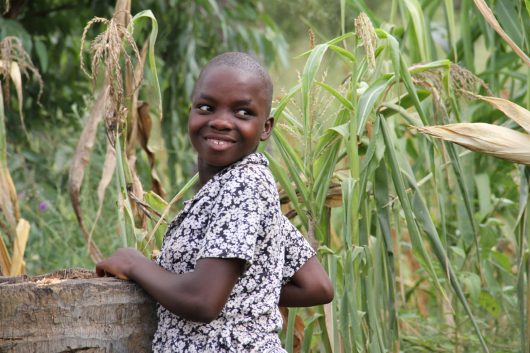
According to Girls Not Brides, Malawi has the highest rate of child marriages worldwide, with roughly one in two girls getting married by the age of 18. In rural areas stricken with poverty, parents choose husbands for young girls to improve their financial status. Families sometimes give their daughters in marriage in an exchange called kupimbira in order to repay their debts.
Theresa Kachindamoto, chief of a Malawian district of 900,000 people, is taking a stand to eradicate child marriage in Malawi. She has prevented more than 850 marriages and enlisted 50 sub-chiefs to enforce the ban in her district. “Whether you like it or not, I want these marriages to be terminated,” Kachindamoto said. “I tell them: if you educate your girls you will have everything in the future.”
Tamara Mhango of Girls Not Brides spoke about Kachindamoto’s mission. “She goes around her community even through the different platforms to raise awareness on the importance of girl education and also directly supports and sponsors girls who are vulnerable to stay in school, thereby delaying marriages,” Mhango said.
Between 2010 and 2013, 27,612 girls in primary schools and 4,053 girls in secondary schools in Malawi dropped out because of forced marriage. In addition to this, 14,051 primary school students and 5,597 secondary school students dropped out after becoming pregnant.
According to a Human Rights Watch report titled, “‘I’ve Never Experienced Happiness’: Child Marriage in Malawi,” marriage interrupts girls’ education and dreams. Many of Malawi’s child brides reported that they weren’t able to return to school because they couldn’t afford school fees, child care services, school programs or adult classes. Household chores also contended for their time.
The report found that child marriage in Malawi often forced girls into relationships wrought with sexual and domestic abuse and gender-based violence. Some girls said their families used manipulative tactics to coerce them into forced marriage, threatening and verbally abusing them or throwing them out on the street if they refused to comply.
“The lack of dissemination and popularization of policies and laws that protect girls [in] the communities is one of the challenges faced in the efforts to eradicate the practice,” Mhango told The Borgen Project. “Inconsistencies in the new marriage law and the constitution [regarding] the legal age of marriage is one deterrent factor.”
According to health workers in Malawi, problems related to reproductive health and pregnancy, such as maternal death, obstetric fistula, premature delivery and anemia, occur most frequently among young girls. Malawi’s maternal mortality rate has reached 675 deaths per 100,000 live births. Malawian health workers suggested that early pregnancy complications could be avoided with better funding.
“If allowed to stay in school, properly supported through their education, and make sure that policies are in place, enforced and implemented to protect the girls at all levels, then we would prevent child marriages,” Mhango said.
– Rachel Williams
Photo: Flickr

10 Facts You May Not Know About Uganda Refugees
A landlocked country located between Kenya, South Sudan, Rwanda, Tanzania and the Democratic Republic of the Congo, Uganda is an East African Nation that has been constantly plagued by violence. Since gaining its independence from Great Britain in 1962, the Ugandan people have been forced to deal with dictatorships, military coups, wars and a 20-year insurgency from the Lord’s Resistance Army.
The nations that border the country of Uganda are additionally tormented with instability and violence which have pushed many people into the country.
Here are 10 interesting facts that you may not know about Uganda refugees:
Though many refugees have experienced tremendous hardships and trials while fleeing from their homes to Uganda, many positive efforts are underway in order to improve their quality of life. The Uganda government and humanitarian organizations, such as the U.N. Refugee Agency, are continuously providing aid and support for the many Uganda refugees.
– Shannon Warren
China’s New Charity Law
The law will also prospectively support the country’s sustainability in disaster relief, environmental protection, public health and anti-poverty efforts to lift rural residents out of poverty by 2020. As of 2015, 55.75 million of China’s rural residents were still considered impoverished.
What Will China’s New Charity Law Assist?
While China’s annual donations to charities have soared from 10 billion to 100 billion yuan in the last ten years, growth has remained stagnant within the last five years paradoxically alongside economic prosperity.
According to the Boston Globe, the China Philanthropy Project at the Harvard Kennedy School’s Ash Center identified three reasons.
First, giving in China remains localized and focused on a single cause — six out of 10 renminbi was donated to the same province where the donor’s corporate headquarters was situated, leaving the poorest rural areas without financial support.
Second, three-quarters of the donors gave to a single cause: education, leaving out other realms needing support.
Third, the majority of donors gave through their corporations, a pattern “reflecting the range of legal, regulatory, and political challenges facing the development of a vibrant giving environment on a national level.”
China’s new Charity Law will encourage a more sturdy model of contemporary giving, allowing for more charities to raise funds from the public without a complex registration system or a need for approval from the supervisory board and China’s Ministry of Civil Affairs.
The law will also allow for tax incentives for charities and make it easier for the wealthy to establish charitable trusts on their own. Moreover, with a track record of scandals in the past which have deterred success in charitable giving, transparency, as well as tighter management, will be incorporated. “From the philanthropy side and public policy side, it’s very well written,” Edward Cunningham, a scholar at Harvard University said.
The global community looks forward to the results from the Charity Law, not just in better services and poverty alleviation for Chinese citizens but a transparent and confident government charity program.
– Priscilla Son
Photo: Gauthier DELECROIX
Problem of Child Marriage in Malawi Linked to Poverty
According to Girls Not Brides, Malawi has the highest rate of child marriages worldwide, with roughly one in two girls getting married by the age of 18. In rural areas stricken with poverty, parents choose husbands for young girls to improve their financial status. Families sometimes give their daughters in marriage in an exchange called kupimbira in order to repay their debts.
Theresa Kachindamoto, chief of a Malawian district of 900,000 people, is taking a stand to eradicate child marriage in Malawi. She has prevented more than 850 marriages and enlisted 50 sub-chiefs to enforce the ban in her district. “Whether you like it or not, I want these marriages to be terminated,” Kachindamoto said. “I tell them: if you educate your girls you will have everything in the future.”
Tamara Mhango of Girls Not Brides spoke about Kachindamoto’s mission. “She goes around her community even through the different platforms to raise awareness on the importance of girl education and also directly supports and sponsors girls who are vulnerable to stay in school, thereby delaying marriages,” Mhango said.
Between 2010 and 2013, 27,612 girls in primary schools and 4,053 girls in secondary schools in Malawi dropped out because of forced marriage. In addition to this, 14,051 primary school students and 5,597 secondary school students dropped out after becoming pregnant.
According to a Human Rights Watch report titled, “‘I’ve Never Experienced Happiness’: Child Marriage in Malawi,” marriage interrupts girls’ education and dreams. Many of Malawi’s child brides reported that they weren’t able to return to school because they couldn’t afford school fees, child care services, school programs or adult classes. Household chores also contended for their time.
The report found that child marriage in Malawi often forced girls into relationships wrought with sexual and domestic abuse and gender-based violence. Some girls said their families used manipulative tactics to coerce them into forced marriage, threatening and verbally abusing them or throwing them out on the street if they refused to comply.
“The lack of dissemination and popularization of policies and laws that protect girls [in] the communities is one of the challenges faced in the efforts to eradicate the practice,” Mhango told The Borgen Project. “Inconsistencies in the new marriage law and the constitution [regarding] the legal age of marriage is one deterrent factor.”
According to health workers in Malawi, problems related to reproductive health and pregnancy, such as maternal death, obstetric fistula, premature delivery and anemia, occur most frequently among young girls. Malawi’s maternal mortality rate has reached 675 deaths per 100,000 live births. Malawian health workers suggested that early pregnancy complications could be avoided with better funding.
“If allowed to stay in school, properly supported through their education, and make sure that policies are in place, enforced and implemented to protect the girls at all levels, then we would prevent child marriages,” Mhango said.
– Rachel Williams
Photo: Flickr
How Augmented Reality Can Revolutionize Poverty Awareness
No other app has taken the world by storm like Pokemon Go and for good reason. The popular mobile game uses a system called augmented reality (AR), which combines the virtual world with the real world to create an immersive and interactive experience. Users of Pokemon Go have been seen wandering the streets with their phones out, trying to catch creatures as they pop up all over town as a result. The phone camera activates when a Pokemon is found, displaying the creature in the user’s immediate surroundings.
Augmented reality has been a lumbering force in technology since the 1970s. Sports channels used an early form of augmented reality, overlaying analysis and information on top of real-time matches. App developers have been utilizing augmented reality to deliver information more frequently since the arrival of Pokemon Go. Nonprofits could easily tap into augmented reality’s potential by using it to spread awareness for their causes in interactive and accessible ways. Four years ago, an organization called Save the Children tried exactly that.
Save the Children teamed up with Aurasma, an augmented reality developer, to create a rudimentary app that opened a video when users pointed their phones at Save the Children newsletters. Users had the option to click through to a donation page after opening the video.
Save the Children Senior Digital Fundraising Executive Alexandra Bono commented on the campaign. “At Save the Children, we are always looking for new ways to engage people with the human stories behind our life-saving appeals,” said Bono. “This campaign, facilitated by Aurasma, brings together these two channels in a compelling new way which we hope will support donations to our East Africa appeal.”
Crisis, a charity to help the homeless, also used Aurasma’s augmented reality app in an art exhibit dedicated to homelessness in the United Kingdom. Viewers could point their phones at the artwork on display to open interviews with the artists.
Now that advanced technology allows apps to display changing landscapes as users walk, the possibility for new charity-related apps is endless. For example, an app could superimpose a real-time image of Rwandan streets onto a New York intersection, giving users a glimpse into Rwandan conditions.
Quit, an anti-smoking foundation, created a similar app that displayed a pair of lungs through webcam. The lungs’ condition accurately reflected the damage done by smoking. If users said they were young and smoke-free, the lungs displayed would appear perfectly healthy. If users said they were lifetime smokers, the lungs appeared blacker and shriveled.
Charities can effectively grab the attention of Generation Y by continuously innovating and finding new ways to manipulate technology.
– Regina Park
Photo: Flickr
The Human Cost of Puerto Rico’s Debt
A humanitarian crisis is marked, among other things, by massive emigration and the failure of public services. These are two criteria already met by the increasingly perilous solvency issues mainly caused by Puerto Rico’s debt. If the U.S. does not respond quickly to this situation, its own citizens may require humanitarian aid.
Recently, Puerto Rico defaulted on a $58 billion debt owed by its Public Finance Corporation. Only $628,000 was attached in payment for what Governor Alejandro Garcia Padilla has called an unpayable debt. Meanwhile, conditions are deteriorating for those who remain on the island. Over 45% of Puerto Ricans live below the poverty line, and with the new Puerto Rico Oversight, Management, and Economic Stability Act (PROMESA), things are unlikely to improve in the near future.
One of PROMESA’s provisions will reduce the minimum wage in Puerto Rico to $4.25 for anyone under age 24. Residents paid up to 33% in local taxes even before the crisis and are now looking to the informal economy to supplement their incomes.
“It’s more lucrative to sell drugs than to work in Burger King,” said Ataveyra Hernandez, a former advisor to the governor. “Burger King wages won’t pay for a home.”
However, homes can certainly pay wages. In Puerto Rico’s public housing projects, residents working in the informal sector report zero income in order to gain preferential rents of only $25 per month. Factor in utility allowances from the federal government, $65 per month on average, and one can actually earn $40 per month by living in one of the island’s 54,000 public units.
Nevertheless, PROMESA does have its benefits. The first is a protection clause that stays any legal action by creditors that could disrupt Puerto Rico’s essential services. In August the U.S. District Court for Puerto Rico stayed three different lawsuits from creditors. These cases as well as others will remain frozen until Feb. 15, 2017.
PROMESA also caused the business community in San Juan to think critically about the island’s future. Puerto Rico is the fifth largest manufacturer of pharmaceuticals in the world, representing 12 of the top 20 firms.
This strong source of revenue has motivated airlines such as DHL and United to expand refrigerated transport services to Puerto Rico’s more than 45 pharmaceutical plants. United announced that there will be a six-fold increase in the number of flights from New York to San Juan as of December.
It is this sort of business development that could drive the island’s recovery. Colonial policies such as the 1920 Jones Act — which strictly limits maritime trade to American firms and shipping — may be re-thought after PROMESA.
For now, the U.S. will need to stem the human cost of Puerto Rico’s debt. That may mean loosening business controls on the island or perhaps even a referendum on statehood.
– Alfredo Cumerma
Photo: Flickr
How Can Impossible Foods Inc. Reduce Poverty in India?
The goal of Impossible Foods Inc. is not only to protect animals but also to create more sustainable sources of food by creating replicas of meats, eggs, cheese and other animal-based foods with plant derivatives. Patrick Brown, a biochemistry professor at Stanford University, founded the company, based in Redwood City, California. The company raised an impressive $108 million in funding from many wealthy donors including Microsoft co-founder Bill Gates and Hong Kong billionaire Li Ka-Shing who support the business and its cause.
Brown started the company while he was on sabbatical when he realized his science background could impact the animal industry and reduce its carbon footprint. He creates beef substitutes with plant-based molecules, which taste, smell and feel like beef. Brown and his team of scientists are working to improve the taste and the cost-efficiency of the product.
With the global population expected to rise to almost 9.5 billion humans by 2050, Impossible Foods hopes to provide food for everyone, especially those who are in poverty. Moreover, Impossible Foods strives to be environmentally friendly. It argues that a quarter-pound burger patty will save as much water as a 10-minute shower, reduce 18 miles of greenhouse emission gas and free up 75 square feet of farmland.
Impossible Foods’ model is not only environmentally friendly but also has the potential to contribute to poverty reduction in religiously vegetarian countries like India. India’s population growth is concerning despite the fact that the nation’s economy is growing at a fast pace. The Gross Domestic Product increased 4.5 times and the country itself is producing enough food to feed everyone; however, many women and children are still starving in India.
Almost 40% of the fruits and vegetables and 20% of the food grains produced in India are lost due to an inefficient supply chain and do not reach consumers. Hunger and poverty in India could be reduced by Impossible Foods invention of the plant-based burger.
When you get the same amount of protein that you need daily and it is produced using 95% less land, 74% less water and 87% less greenhouse gas emissions, there is no reason to oppose Impossible Foods’ idea.
Currently, Impossible Foods is working on how to be cost-effective and make the taste more similar to real meat. As the company grows and develops further it will make a huge impact on the global food chain supply and further reduce poverty around the world.
– Gulyn Kim
Photo: Flickr
Which Children Are Most Affected by Malnutrition?
The leading causes of death among children around the world include preterm birth complications, pneumonia, birth asphyxia, diarrhea and malaria. Malnutrition has been reported to be the underlying contributing factor to these health complications. Although progress is being made in limiting the extent of malnutrition, many starving children from disadvantaged groups are being overlooked in this mission.
Malnutrition makes children more vulnerable to common infections, increases the severity of these infections and also extends the recovery process. If the severity of malnutrition persists, by 2030, there will be an estimated 129 million children under the age of 5 whose growth will be stunted due to malnutrition.
Children can experience wasting if malnutrition is severe enough. In 2015, about 50 million children under the age of 5 were wasted and 17 million children were severely wasted.
Despite the magnitude of malnutrition, some children continue to go unnoticed because of where they live or the circumstances in which they were born. The odds of a child surviving depend on factors such as whether the child is living in a rural area or if the child belongs to a disadvantaged ethnic group.
Children who are disabled or affected by war are disadvantaged when it comes to the aid they receive. Save the Children published a report in 2015 titled “The Lottery of Birth” that revealed in more than 75% of low and middle-income countries, inequalities in child survival rates are worsening.
The Save the Children report explains that although overall progress is being made in reducing the number of under-5 childhood deaths, this change is mostly attributed to the progress being made in more privileged groups of children. The report calls this disparity an “unfair lottery of birth” given that factors that are simply a matter of chance are determining whether children live to celebrate their fifth birthday. The report also notes that if the world were to pursue an equitable means of reducing child mortality, progress would ensue 6% faster over the course of 10 years.
In order to tackle the inequality that underlies the distribution of aid to malnourished children, countries need to follow in the footsteps of countries, like Rwanda, Malawi, Mexico and Bangladesh, that have combined rapid and inclusive reductions in child mortality, thus ensuring that no groups of children are excluded.
The U.N. also adopted the 2030 Agenda for Sustainable Development in 2015, which is replacing the Millennium Development Goals. This new framework is even more ambitious in its goals for child and maternal survival rates and in its commitment to work toward a more comprehensive solution for global malnutrition. The purpose of the Agenda for Sustainable Development is to ensure that all people can “fulfill their potential in dignity and equality and in a healthy environment.”
Although progress has been made, in order to more effectively and efficiently tackle the issue of malnutrition, poor and marginalized groups need to have access to the same quality services as any other group suffering the same conditions.
– Kayla Mehl
Photo: Flickr
10 Technological Innovations for Developing Countries
The use of technology in developing countries is becoming more widespread and has the potential to improve basic conditions of daily life in struggling regions. Technological innovations for developing countries can also promote intellectual growth by providing unique educational services.
– Mikaela Frigillana
Photo: Flickr
Education in Sierra Leone: Gender Inequality After Ebola
Schools in Sierra Leone reopened in April 2015 after the world’s worst recorded Ebola outbreak. The country’s government, with assistance from the Global Partnership for Education (GPE), made efforts to improve education in Sierra Leone since then. However, the issue of gender inequality and its effects on educational opportunities still needs to be addressed.
When Ebola struck Sierra Leone in 2012 and schools were closed for nine months, approximately $1.45 million from GPE was utilized for Ebola-related efforts. These funds helped provide emergency television and radio school programs for children to watch and listen to while out of school. Approximately 600 hours of radio programs were broadcast. GPE funds were also allocated to ensure the availability of safe learning environments when schools reopened. 900,000 students benefited when 2,700 schools were disinfected and 5,970 schools received hand-washing stations and supplies.
To mitigate the loss of educational opportunities due to the nine-month hiatus, the government of Sierra Leone, assisted by the International Rescue Committee (IRC), also implemented two shortened academic years with accelerated syllabi. Despite this progress toward recreating a stable education system in Sierra Leone and improving learning opportunities, gender inequality persists, creating educational discrimination and barring opportunities from pregnant women.
According to the U.N. Population Fund (UNFPA), approximately 18,000 teenage girls became pregnant during the Ebola outbreak. Researchers have identified rape, abusive relationships and prostitution as factors contributing to the spike.
Sierra Leone’s education ministry has decidedly barred pregnant girls from attending school, suggesting that they would be unable to perform well in class. The ministry believed that exposing pregnant girls to classmates would both humiliate them and encourage others to become pregnant.
According to Business Insider, only 15% of girls reach secondary school in Sierra Leone, and only six out of 10 girls aged 15 to 24 are literate, compared to three out of four boys in that age range. The ministry’s band will only worsen the gender disparity prevalent in Sierra Leone’s education system. The United Nations and UNICEF have both launched classes for pregnant students, hoping to relieve gender inequality. In addition to this, UNICEF has initiated programs to educate the community about teenage pregnancy through awareness and training.
The Ebola crisis has been a testament to the resilience of Sierra Leone’s citizens and has given the government an opportunity to reorganize and strengthen the country’s educational programs.
However, this crisis also highlighted the system’s gender inequality and weaknesses. Providing women with educational opportunities has been proven to raise countries’ GDPs. Narrowing the gender gap in education in Sierra Leone, therefore, should be a priority.
– Priscilla Son
Photo: Flickr
Five Countries with the Strongest Education Systems
Over the last few years, major changes have occurred in the world ranking of nations’ education systems. Five countries that claim the strongest education systems have successfully implemented methods that may help countries with high poverty rates and weak education systems.
In descending order, South Korea, Japan, Singapore, Hong Kong and Finland claimed the top five rankings for strongest education systems in 2015. Four of the top five are Asian countries or territories.
According to MBC Times, these countries outperform others because they value engagement and accountability culturally and their education systems emphasize effort over “inherent smartness.”
Each of the top five initiated unique tactics that have increased the quality and accessibility of education:
South Korea emerged as the number one ranked education system in 2015. With a yearly budget of just over $11 billion, South Korea spends more money on education than many countries.
Children attend school seven days a week and are expected to work very hard from a young age. As a result, South Korea has made impressive strides in literacy rates. According to Fair Reporters, nearly 100% of the population — 99.2% of males and 96.6% of females — is literate.
Japan experienced great success in recent years by incorporating technology into its education system, providing its students with tremendous resources. In addition to demanding hard work from students, Japanese educators value extracurricular activities highly. According to Fair Reporter, students in Japan are generally expected to participate in extracurricular activities.
Impressively, Singapore ranks third with a school system that the Singaporean government made up from scratch. Singapore’s school system values deeper education through conceptual learning over traditional schooling methods, which often encourage simple memorization and repetition. Singaporean educators focus on training students to be problem solvers and thorough thinkers.
With a 94.6% literacy rate, Hong Kong has an education system similar to the United Kingdom’s. The Social Welfare Department oversees education, ensuring that each level of schooling works together to produce a fluid education experience. According to the South China Morning Post, Hong Kong has more top-200-rated universities than any other Asian country or territory.
Finland, who lead in the ranking for years, has dropped below Asian countries since 2012 but is still notable for its holistic, free education system. The Finnish education system values education outside of the classroom; school days are kept short and followed by school-sponsored educational activities. Finland’s teachers are some of the finest, most educated in the world.
Although major educational improvements have been made worldwide, many poor countries still have weak education systems that need systematic reform. Education systems like those of South Korea, Japan, Singapore, Hong Kong and Finland are guiding the way forward.
Their methods, such as incorporating out-of-classroom education, requiring extracurricular activities, increasing education budgets, valuing conceptual learning, using technology and hiring well-educated teachers, could contribute to educational growth in poor countries worldwide.
– Alex Fidler
Photo: Flickr