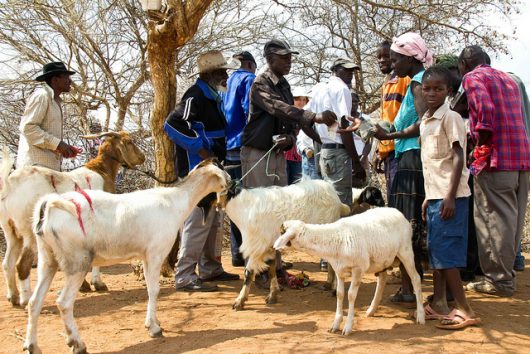
In Burkina Faso, over 29% of children under five years old suffer from stunting, which is a form of malnutrition and a direct result of hunger. This occurs due to a lack of nutritious foods in the womb and throughout their first few years of life. These children are more susceptible to disease, poor school performance and difficulties as they grow older.
Statistics on Hunger in Burkina Faso
- Two-thirds of children suffering from undernutrition do not receive medical attention.
- About 40% of infant deaths in Burkina Faso are linked to undernutrition.
- Stunted children with a height deficiency, relevant to age, completes an average of 0.3 years less of education, than children who are not stunted.
- Burkina Faso’s workforce has decreased by 13.6%. Infant mortality rates are associated with undernutrition.
- On a national scale, only 11.4% of children under two-years-old receive the recommended number of daily meals.
- Roughly 499,000 children, under five years old, suffer from acute malnutrition.
- Even though food is accessible in local markets, chronic poverty and disasters reduce food availability. Over 1.5 million children are at risk of food insecurity, while 350,000 need emergency assistance.
Catholic Relief Services (CRS) is a prominent organization helping the country increase farming and food production techniques. Their program, called FASO, supplies a women’s group with locally fortified flour, specifically for infants, and helps them establish a distribution and marketing network. These local sources of nutrition improve the availability of food and expand the local economy.
In order to end malnutrition and hunger in Burkina Faso, increasing the supply and affordability isn’t sufficient. Burkina Faso’s communities will need to be taught proper health, nutrition and hygiene. CRS has helped establish care group leaders in villages to aid pregnant women and new mothers. These women encourage conventional breastfeeding, sustainable nutrition for infants and accessible health care for pregnant mothers and children roughly two-years-old, or younger.
To hold each other accountable for health improvement, community members tend to a scoreboard, which tracks the village’s progression of health achievements. The physical scoreboard captures the public’s health efforts and visually invokes competition for more successful results.
“Having the scoreboard reminds us there is still a problem to address. We’re still facing challenges. The scoreboard is our motivator and reminder. There are still women who don’t practice exclusive breastfeeding during the first six months. We need to work. Even if we can’t get rid of all the red [on the scoreboard], we can reduce it,” Tiga Ouedraogo, a health promoter, told CRS.
On top of improved access to safe drinking water and community sanitation, construction of facilities is important in reducing diarrhea and infections. Open defecation is common in many villages, where latrines, or toilets, are not present. People lack privacy, but they are also susceptible to snake bites, or other animals attacking them while using the bathroom. Rainy weather spreads this human waste, which heightens the susceptibility to disease.
Each year, hunger in Burkina Faso costs roughly $409 billion, which equates to 7.7% of the country’s Gross Domestic Product (GDP). These costs riddle healthcare and education, which affects worker productivity. In 2014, roughly a quarter of Burkina Faso was deemed undernourished. However, the construction of at least 600 toilets has impacted 36 villages, and more than 16,500 people in 55 villages have potable water now. Progress is slowly being made with organizations, such as CRS, improving the health and hunger of Burkina Faso.
– Rachel Williams
Photo: Flickr

Strides Made Toward Defeating Hunger in Pakistan
Almost a quarter of the population in Pakistan goes to sleep hungry every night according to the latest Global Hunger Index released on Oct. 12, 2016.
While many Pakistani economists and commentators are pleased that the levels of hunger in Pakistan have been downgraded from “alarmist” to “serious,” conditions remain concerning.
The World Food Program estimates that six out of 10 Pakistanis are food insecure and almost half of women and children under 5 years of age are malnourished. The sad part is that food insecurity persists although food production is sufficient to feed all Pakistanis.
The problem stems from wrong priorities in terms of food crops throwing the nutritional balance completely out of kilter. Hunger in Pakistan isn’t as much a result of lack of food as it is of deficiencies in diet ranging from protein to iodine, along with other health problems due to insufficient intake of essential nutrients.
These have serious implications for economic growth and development. Thus, just three types of malnutrition are responsible for a loss of three to four percent of GDP in Pakistan in any given year, according to the United Nations Standing Committee on Nutrition (SCN) fifth report on the world nutrition situation.
In human terms, the impact of malnutrition is even more serious and gut-wrenching. Figures obtained from multiple governmental and non-governmental organizations by Pakistan’s newspaper The Express Tribune reveal that around 352,000 children who are under the age of five die every year in the country.
In addition, the country has the highest rate of first-day deaths and stillbirths at 40.7 per 1,000 births. What’s worse, 28,000 mothers die every year during childbirth, show reports prepared by the PDH Survey, the World Health Organization, Save the Children and United Nations’ Children Fund. More than 204,542 children died within the first 28 days, the figures show.
The PDH Survey 2006-07 says that Pakistani children are more likely to die young in rural areas. That’s because one of the major causes for poor nourishment is that women have little access to health services and education and consequently little nutritional knowledge while feeding their children. Of course, large family sizes are another reason for food shortages.
Agriculture is vital to the Pakistani economy since it employs almost half the workforce and contributes over a fifth of GDP. The answer to the chronic hunger in Pakistan then lies in finding a way to modernize the sector and increase productivity as well as improve the choice of crops.
– Mallika Khanna
Photo: Flickr
Education in Italy: A Progressive Step Forward
Today, the value of education in Italy is written in its constitution: it mandates that each individual must access freedom of art, science and teaching. The Italian government also requires that children between the ages of 6 and 16 attend school.
While the fundamental principles of the system of education in Italy reflect a majority of its Western counterparts, Italy has been focusing on major reform in recent years to make education more inclusive.
Since the 1970s, most students with disabilities have been integrated into general education classrooms. The Italian government made history with this reform, but there has been skepticism regarding its success. However, research has shown that a majority view the reform favorably. Many advocates in the United States have even looked to Italy’s inclusionary education as a model of accomplishment.
More recently, some schools have taken inclusionary education a step further and are challenging gender stereotypes in the curriculum. Game of Respect, a memory game intended for children ages 3 to 6, was created in 2013 in order to teach young children about gender stereotypes. Students are expected to match cards that show men and women in nontraditional roles.
Creative director Benedetta Gargiulo began this program in order to address gender inequality, which is a significant social and cultural issue in Italy. According to the European Gender Equality Index, Italy has one of the lowest rankings for gender equality in the European Union. Italian women earn an average of 20 percent less than men for performing the same job.
Game of Respect has been met with some backlash from right-wing politicians. In responding to the criticism, Gargiulo commented, “Probably, the adults need it more than the kids.”
Garguilo and other supporters of inclusionary education continue to stress the importance of getting to the structural root of the problem in order to inspire societal change — in Italy’s case, it’s the classroom.
– Laura Cassin
Photo: Flickr
WHO Targets Efforts to Reduce Neonatal Deaths
The United Nations World Health Organization (WHO) has recently released three new publications that will help strengthen knowledge on how to prevent stillbirth and neonatal deaths. These publications are aimed to assist countries as they develop their classification, analysis and investigation processes on unreported deaths.
Over 2.7 million babies die within the first month of life, according to the U.N. health agency. Another 2.6 million are stillborn, and over 300,000 women die during childbirth. Most of these deaths are preventable if paired with the appropriate health care. “By reviewing the causes of maternal and infant deaths, countries can improve quality of health care, take corrective actions and prevent millions of families from enduring the pain of losing their infants or mothers,” stated the Director of Health and Research at WHO, Ian Askew.
When a baby is stillborn, they are not recorded in either a death or birth certificate. Therefore, many of the above numbers are an underestimate of the true amount of stillborn and newborn deaths. Countries are unable to truly investigate these deaths and find out appropriate prevention methods for future cases. This is why WHO decided to improve education efforts for countries by releasing these three new publications:
To strengthen other countries’ health information systems, WHO is partnering with more than 30 other global health organizations in hope of developing a more easily understood package of guidance and tools for countries to prevent neonatal deaths.
– Katie Grovatt
Photo: Flickr
Addressing Hunger in Burkina Faso is a Community Affair
In Burkina Faso, over 29% of children under five years old suffer from stunting, which is a form of malnutrition and a direct result of hunger. This occurs due to a lack of nutritious foods in the womb and throughout their first few years of life. These children are more susceptible to disease, poor school performance and difficulties as they grow older.
Statistics on Hunger in Burkina Faso
Catholic Relief Services (CRS) is a prominent organization helping the country increase farming and food production techniques. Their program, called FASO, supplies a women’s group with locally fortified flour, specifically for infants, and helps them establish a distribution and marketing network. These local sources of nutrition improve the availability of food and expand the local economy.
In order to end malnutrition and hunger in Burkina Faso, increasing the supply and affordability isn’t sufficient. Burkina Faso’s communities will need to be taught proper health, nutrition and hygiene. CRS has helped establish care group leaders in villages to aid pregnant women and new mothers. These women encourage conventional breastfeeding, sustainable nutrition for infants and accessible health care for pregnant mothers and children roughly two-years-old, or younger.
To hold each other accountable for health improvement, community members tend to a scoreboard, which tracks the village’s progression of health achievements. The physical scoreboard captures the public’s health efforts and visually invokes competition for more successful results.
“Having the scoreboard reminds us there is still a problem to address. We’re still facing challenges. The scoreboard is our motivator and reminder. There are still women who don’t practice exclusive breastfeeding during the first six months. We need to work. Even if we can’t get rid of all the red [on the scoreboard], we can reduce it,” Tiga Ouedraogo, a health promoter, told CRS.
On top of improved access to safe drinking water and community sanitation, construction of facilities is important in reducing diarrhea and infections. Open defecation is common in many villages, where latrines, or toilets, are not present. People lack privacy, but they are also susceptible to snake bites, or other animals attacking them while using the bathroom. Rainy weather spreads this human waste, which heightens the susceptibility to disease.
Each year, hunger in Burkina Faso costs roughly $409 billion, which equates to 7.7% of the country’s Gross Domestic Product (GDP). These costs riddle healthcare and education, which affects worker productivity. In 2014, roughly a quarter of Burkina Faso was deemed undernourished. However, the construction of at least 600 toilets has impacted 36 villages, and more than 16,500 people in 55 villages have potable water now. Progress is slowly being made with organizations, such as CRS, improving the health and hunger of Burkina Faso.
– Rachel Williams
Photo: Flickr
10 Facts About Cuban Refugees
Following Fidel Castro’s disposal of the Batista regime, Cuba became known as a refugee state. Thereafter the United States began receiving the majority of Cuban refugees.
Since 2012, the Cuban government began easing its restrictive immigration policies. A visa is no longer required to leave the country. Because of this, there has been an influx of Cuban refugees entering the United States and more are expected this year.
– Marcelo Guadiana
Photo: Flickr
New Farming Technology Boosts Rice Production in Tanzania
The use of an innovative technology to increase rice production in Tanzania has recently been approved. The new fertilizer method known as Urea Deep Placement, or UDP, boosts rice production by more than 20 percent per acre.
The cost of fertilizer is increasing, and nitrogen application lacks efficiency. UDP is a modern, crop-boosting fertilizer alternative that is better for the environment. Shortly after rice paddies are planted, farmers strategically bury urea supergranules close to their crops’ root zones. The urea absorbs more effectively into plant roots, cutting fertilizer costs and increasing nitrogen efficiency.
Over 33 percent of Tanzania’s rural population lives in poverty. Agriculture is the country’s industry staple, especially in rural areas. Farming in Tanzania accounted for over 67 percent of employment in 2015, and agricultural production contributes to nearly 30 percent of the country’s GDP.
Rice is Tanzania’s seventh most important crop, and rice production has steadily increased over the past decade. In 2010, Tanzania became a net exporter of rice, producing over 2.6 million tons. Tanzania’s rice production levels are the second highest in Africa, directly behind Madagascar.
UDP was first introduced to the African continent in 2009 after the world witnessed its results in Asian countries like Bangladesh, Vietnam and Cambodia, all of which are big rice producers.
Nitrogen is rice’s most vital nutrient. Using UDP decreases nitrogen losses by up to 40 percent. By enhancing nitrogen efficiency, UDP benefits both global food security and farmer livelihoods while also diminishing widespread pollution. Nitrogen pollution can contribute to climate change and damage water quality, increasing the likelihood of attracting waterborne diseases.
Tanzania Fertilizer Regulatory Authority senior official Allan Mariki expressed the authority’s support of UDP.
“We are encouraging farmers to venture into the system [of UDP utilization], which increases rice production per acreage,” Mariki said.
Tanzania’s newly unveiled five-year Expanding Rice Production Project focuses on improving irrigation and utilizing new agronomic practices such as UDP in order to double the country’s rice production. The implementation of UDP is increasing yields, reducing nitrogen pollution and benefiting Tanzania’s rice industry.
– Kristyn Rohrer
Photo: Flickr
10 Facts About Poverty in North Korea
North Korea is constantly in the news due to its nuclear tests programs. The majority of state funds are spent on its nuclear program while social institutions are overlooked. Millions suffer from extreme poverty in North Korea as a result.
10 Leading Facts on Poverty in North Korea
Kim Jong Un’s rise to power is seen as a threat to western political leaders. However, the international community has begun to focus on North Korea’s human rights violations and poverty in the country.
– Marcelo Guadiana
Photo: Flickr
Clean Coal Technology in Indonesia
Indonesia is one of many countries around the world wanting to do their part in reversing climate change and protecting the planet for years to come. Working with the World Coal Association (WCA), Indonesia hopes to implement clean coal technology in plants across the country. Clean coal technology in Indonesia works in a number of ways to burn coal more efficiently and with less adverse effects on the environment.
One method of making the coal burning process cleaner is known as coal washing. In this method, Indonesian facilities would remove unwanted mineral deposits by crushing the coal down and mixing it with a liquid that clears away the undesirables minerals.
Another tactic for cleaning coal involves the use of wet scrubbers to target sulfur dioxide, which causes acid rain, and remove it before burning. In order to avoid burning coal altogether, gasification could be implemented to separate carbon molecules. This process creates what is known as syngas, which is an amalgam of carbon monoxide and hydrogen used in gas turbines to convert heat energy into electricity.
While use of this technology may be more expensive than the less efficient alternative, Indonesia wants to make good on the Paris Agreement, enacted earlier in 2016. Indonesia committed to reducing greenhouse gas emissions by 29% alone by 2030 or up to 41% with help from foreign aid.
As the fourth-largest coal producer in the world, it is essential that Indonesia take the necessary steps to ensure the country becomes a positive example for coal burning nations around the world. Clean coal technology in Indonesia has more to offer its citizens than merely reducing the output of greenhouse gases. Switching to these technologies will require skilled Indonesian workers, therefore creating jobs and stimulating economic growth.
The American Coalition for Clean Coal Electricity conducted a study that supported a growth of 150,000 jobs by building 124 new clean coal power plants. Strategies like these could be implemented to achieve similarly positive results in Indonesia’s coal industry.
Initiatives like these bring the world together in order to achieve a common goal. Indonesia is working to support this global mission for job growth, cleaner energy, and a better planet for future generations.
– Aaron Walsh
Photo: Flickr
Bahamas National Feeding Network: Eradicating Hunger
The Bahamas National Feeding Network (BNFN) and AML Foods Limited have collaborated to award 60 single mothers with $100 gift vouchers for the purchase of staples, ground produce and other food items. This initiative is one of their many attempts to expunge hunger among local Bahamians.
Selection Process and Statistics
In 2013, the Commonwealth Government of the Bahamas, with the support of the Inter-American Development Bank and the Department of Statistics conducted a household outlay revealing 12.5% of the population in the Bahamas lives in poverty conditions. The poverty rate is significantly higher in the Family Islands at 17.2% and New Providence at 12.4%.
The women were selected by community leaders who believed that they would be suitable beneficiaries of the Bahamas National Feeding Network Initiative. These women are faced with the economic hardship of single parenthood.
AML Foods Limited recognizes this concern and drives the impetus to help eradicate hunger. “We at AML Foods Limited feel strongly about hunger prevention and healthy living,” said Renea Bastian, Vice President of Marketing & Communications of AML.
What is the BNFN?
The Bahamas National Feeding Network is a non-profit group that consists of 13 individual organizations who have decided to tackle the hunger crisis evident among the archipelago of islands. The Feeding Network started in 2013 and has been in operation for the past three years. The main function of the organization is to collect and distribute food items to the indigent living among the Bahamian enclave.
AML foods have committed to donating 100,000 over the next three years towards eradicating hunger in Grand Bahamas. The company has contributed over $30,000 in food coupons through the BNFN. The BNFN has donated more than $350,000 to its web of 110 partners in its three years of operation.
The Bahamas National Feeding Network also provides the foundation for self-empowerment and independence in a sustainable way for poor families. “While we are giving, we are also teaching people to grow,” said diplomat, businessman and philanthropist Frank Crothers, Bahamas Feeding Network Chairman.
More on the Ground
The BFN has also played an integral role in the funding of the Bahamas Children’s Emergency Hostel presenting a $1,000 donation. The temporary childcare facility relies primarily on donations for maintenance and daily functioning such as providing food, supplements, clothes and healthcare for children who have been abandoned or neglected.
– Shanique Wright
Photo: Flickr
Elections in Jordan Set Precedent for a More Democratic Future
Historically, Jordan has encountered years of political corruption, extremism and the effects of war. Today, the country faces terrorist attacks from the Islamic State and social and economic issues regarding a huge number of Syrian refugees. The country also has an unemployment rate of about 15%, with the youth unemployment rate estimated to be as high as 30%.
While the country faces severe international and domestic issues, the Jordanian government has made a commitment to implementing an inclusive and democratic electoral process. This past September, the elections in Jordan set a positive precedent for the future of the country.
Although the process was fair, the results of the election remain fragmented. Voter turnout hovered at a low 37% and many regions of the country remain underrepresented. It is believed that the low turnout is a result of a lack of faith in the abilities of parliament to implement positive change. The elections this year have the potential to stimulate further change in consideration of future elections.
Jordan passed an election law earlier this year that abolished the previous one-person one-vote electoral system. The law also reduced the number of seats in parliament from 150 to 130. The old system was hugely unpopular among citizens and had been in place since 1933. The system was replaced with an open list proportional representative system.
Candidates run for election at the district level and citizens are allowed to vote as many times as there are seats in Parliament allocated to their district. Procedural improvements to Jordan’s electoral system open new doors for progressive change in future elections, especially at a time when the country faces problems regarding the global migrant crisis and terrorist actions from the Islamic State.
The Islamic Action Front, previously known as the Muslim Brotherhood, is a large political party in Jordan. After boycotting the 2010 and 2013 elections due to frustrations with the electoral process, they participated in the 2016 elections and secured 15 seats in the Lower House.
Election law during elections in Jordan reserves at least 15 seats for women. The 2016 election produced 20 women representatives, several of whom faced competitive races with male opponents. This means that 20 out of 130 of the new parliament members are women, which will provide better representation for Jordan’s female population than ever before.
With 70% of its population under the age of 30, Jordan has been working to incite younger generations to exercise their rights when it comes to getting involved in politics. Several domestic and international leadership organizations are involved in Jordan and work to educate young Jordanians on advocacy and political activism.
The political system has a long way to go before everyone in the country is accurately represented; however, the new adaptions to the electoral process and the continuous growth of women representatives in the elections in Jordan indicate the dedication of the government to push for positive change.
– Peyton Jacobsen
Photo: Flickr