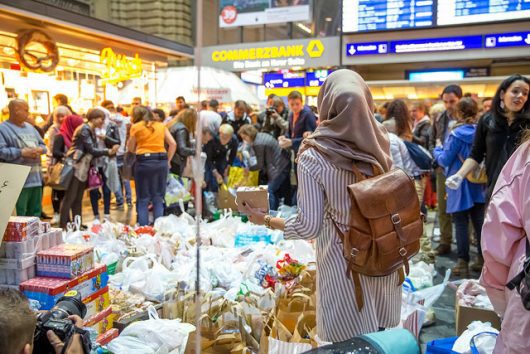
Between 2015 and 2016, Germany accepted over one million refugees, many of whom came from Syria. Some Syrian refugees in Germany, however, have found themselves unsatisfied with their lives in the European nation. The main reasons for this are:
- Social isolation and discrimination
- Lack of education and employment opportunities
- Policies in regard to how long asylum seekers are approved to stay and where they can live
- Germany’s Family Reunification Policy, which has left many Syrian families unable to reunite.
These conditions have prompted some refugees to risk the illegal and dangerous journey back to Turkey in the hopes of reuniting with their loved ones.
In the text below four above mentioned reasons for the dissatisfaction of refugees will be discussed.
Social Isolation and Discrimination
Syrian refugees sometimes arrive in Germany after an arduous journey only to find that the opportunities for them are severely limited by discrimination. Germany’s decision to allow such a large number of refugees enter the nation has been met with disapproval and resistance, as some Germans do not want refugees in the nation. One German volunteer who worked with refugee families stated that many people were not nice to the refugees she worked with and that they treated her with contempt for helping them.
This discrimination causes a lack of social connections, which exacerbates the poor mental health of refugees, many of whom suffer from posttraumatic stress disorder (PTSD). Suicides among refugee youth in Germany have increased due to their failure to create new social ties.
Lack of Opportunities
Syrian refugees in Germany often have difficulties to find employment and to access educational opportunities, as a result of prejudices. In the Atlantic Council article, Yassir, a Syrian refugee who arrived in Germany in 2015, explained that he has been unable to find work for over two years. He learned to speak German quickly after his arrival, but, according to him temp agencies, restaurants, cafes, workshops, all “shut their doors in his face”. According to the Federal Labor Agency, only 17 percent of refugees in Germany are employed.
Education is also an issue, with only 45 percent of Syrian refugees in Germany possessing a school certificate. Shortly after coming to Germany, 20-year-old Mahmoud realized that his educational endeavors could not be achieved in the European nation due to “systematic hurdles imposed by the authorities”, according to The Atlantic Council. He made the decision to resettle in Turkey, where he was able to receive an academic scholarship from the engineering department of Aydin University in Istanbul.
Policies on Refugee Status and the Integration Law
German practices in regards to who is granted full refugee status have also been stressful for many refugees. Initially, almost all Syrian refugees taken in by Germany were granted full refugee status, however, beginning in March 2016, Germany began granting more and more Syrian refugees subsidiary protection instead, which needs to be renewed annually. In 2016, 41 percent of Syrian refugees were given subsidiary protection, and in 2017 this number increased to 55 percent. Syrians with subsidiary protection, many of whom may be happy living in Germany, live in fear of not being accepted when they apply for renewal.
Additionally, German policies on choosing where refugees are placed in the nation cause instability and uncertainty for many refugee families. Germany’s 2016 Integration Law forces refugees to live in states assigned by the government, often without consideration of where the rest of their family is located.
According to U.N. Discussion paper, Zein lived in Germany from 2014, and though her husband arrived in the country in 2015, it was six months before he was granted permission to settle in the same location as her. Similarly, Siwar came to Germany a year and a half after her husband and was sent to a shelter located 100 kilometers away from where he lived, rather than with him.
Germany’s Family Reunification Policy
Arguably the most significant problem for Syrian refugees in Germany, as well as the main reason some have made the decision to illegally return to Turkey, is Germany’s Family Reunification Policy. In March 2016, Germany stopped allowing refugees with subsidiary protection to apply for family reunification. Originally they stated that this would be in effect until March 2018, but then further extended it to July 2018.
According to the Federal Office for Migration and Refugees, as of April 2018, approximately 4,000 Syrian refugees had been reported missing, many of whom could have traveled to Turkey. It is likely that this number is significantly higher. Many Syrians in Germany have family members stuck in Turkey and are willing to risk the dangerous and illegal journey back to Turkey in order to be reunited with them. According to Deutsche Welle, refugees have stated that they would “rather die together than live apart”.
Although family reunification applications are being accepted as of July 2018, a 1,000 person limit on entries per month has been added to prevent an extreme influx of refugees. As of early August, 34,000 family reunification requests had already been submitted, with hundreds of thousands expected.
The future of Syrian refugees in Germany, as well as in other parts of the world, is still undetermined. Countries, including Germany, have made an incredible impact by accepting such a large number of refugees over the past few years. Germany’s reinstatement of family reunification, even with the monthly limit, will begin to bring Syrian families back together and hopefully improve the status of refugees in the nation.
– Sara Olk
Photo: Flickr

Cautious Hope: Top 10 Facts about Poverty in Kazakhstan
Kazakhstan, a country of 18 million inhabitants located between Russia and China, has been battling poverty since gaining independence from the Soviet Union in 1991. The following top 10 facts about poverty in Kazakhstan show that despite the country’s independent economy being so young, there is a lot to be hopeful for about the future of the Kazakh economy.
This hope, in turn, leads to more programs and opportunities that help to alleviate poverty; however, Kazakhstan’s economic infrastructure still remains a somewhat volatile environment — despite booming energy and agricultural industries — due to corruption and over-dependence on global energy markets.
Top 10 Facts About Poverty in Kazakhstan
A Young, But Mighty Nation
These top 10 facts about poverty in Kazakhstan prove that poverty is not an insurmountable problem for the Central Asian state. The country’s GDP is steadily climbing while the nation works to be a major player in the oil and raw materials markets.
Kazakhstan also works to diversify their trading portfolio, enacting state programs to bolster secondary industries in the country and improve working and living conditions for their residents.
Economic sustainability is a slow and steady process, and Kazakhstan is heading in the right direction. At just 27 years old, these top 10 facts about poverty in Kazakhstan are indicative of a young country that has the potential to be at the forefront of world oil and agriculture markets and, someday, a significant participant in the global economy.
– Nicholas Hodges
Photo: Flickr
Equal Humanitarian Assistance for Elderly Refugees
Despite UNHCR regulations that call for adequate humanitarian assistance for elderly refugees, older people are often not the focus of aid programs. Organizations such as HelpAge International, however, along with UNHCR, are working to improve services and care for elderly refugees by developing a more comprehensive understanding of their struggles and needs.
Lack of Humanitarian Assistance for Elderly Refugees
Older persons, defined by the UN as people over 60 years of age, are particularly vulnerable when displaced from their homes. Lack of mobility, chronic illness or weakened vision can hinder their ability to flee. They may also be reluctant to leave, concerned about becoming socially isolated or physically separated from their families. A study of eastern Ukraine found that approximately half of all the older people remained home when the conflict began and that many were left behind due to their reduced mobility.
Even after older people manage to leave, humanitarian assistance to elderly refugees may not fully address their needs. An Overseas Development Institute report explains that “while humanitarian principles require that aid is delivered in an impartial manner, based on needs alone, in emergencies humanitarian organizations tend to implement blanket, one-size-fits-all programmes that fail to adequately address the specific vulnerabilities of older people.”
One of the primary reasons for this is that elderly refugees make up a small percentage of refugee populations, approximately 8.5 percent. This leads them being deprioritized in favor of larger demographic groups, including women and children. It is estimated, however, that by 2050 there will be more people over the age of 60 than under the age of 12.
Needs of Older Refugees Neglected
Areas in which the needs of elderly refugees are not always properly addressed include safety, protection, nutrition, medical services and mental health. Elderly refugees have a greater risk of experiencing violence, including sexual and domestic abuse. They are also likely to be exploited by family members. These risks are greater for women, those with disabilities and LGBT individuals.
Additionally, older people need food that is easy to eat and digest, and may become malnourished due to their inability to consume regular food. UNHCR reported in 2016 that humanitarian assistance for elderly refugees generally does not meet the food requirements of older people.
Two-thirds of elderly refugees have been found to suffer from poor physical health. In a study about older Syrian refugees in Lebanon, it was found that most of them had at least one non-communicable disease: 60 percent had hypertension, 47 percent had diabetes and 30 percent had some form of heart disease, indicating a need for more comprehensive health services.
Mental health is also a significant area of concern. Older people, who often have a great deal of prestige and important societal roles, find that they lose much of their influence, power and resources when they become refugees. This is partly due to the fact that one of their main resources, life experience, is less relevant in new, unknown settings. Western values and education serve to give more prominent roles to younger people.
The loss of their traditional roles in addition to the trauma resulting from conflict and fleeing was found to have caused depression and mental illness among older South Sudanese refugees in a study published by the Overseas Development Institute. Respondents indicated that they felt isolated from their community and families, sensing that younger generations no longer respected them. They were also concerned that their families would grow tired of having to care for them.
Uncertainty about being able to return to their homes can also cause psychological stress in elderly refugees. The family of Dagha, a 101-year-old Syrian refugee, stated that she often cries in her sleep and that her greatest fear is that she will die in Lebanon. Dagha reportedly asked her family to promise that they will bury her in Syria.
Providing Humanitarian Assistance
Improving humanitarian assistance for elderly refugees is an attainable goal. Aid organizations have the funding needed to make older refugees a greater priority, and an article in The Guardian explains that “mindset is the main barrier to inclusive humanitarian assistance, not money.”
UNHCR has a renewed commitment to focusing on elderly refugees and has outlined several practices ensuring aid is used to meet their needs. First, it is important to communicate with older people, both about their specific needs and concerns, and the services available to them. Important messages need to be in a format that elderly refugees can access. Working with older people to determine what works best for them is vital.
Older people should also be prioritized in reunification efforts and moving forward they should not be separated from family members. Additionally, the needs of elderly refugees should be considered when designing shelters and settlements.
In response to mental health concerns, aid workers need to improve their understanding of what elderly refugees want out of their lives in new and unfamiliar locations. Many South Sudanese informants stated that they wished to regain the societal and familial roles they had held before leaving.
With the help of organizations such as HelpAge International and UNHCR, humanitarian assistance for elderly refugees will hopefully begin to improve, moving toward fully addressing their needs and concerns. Life for elderly refugees will likely continue to be difficult, but better aid can lessen their struggles and improve their general livelihoods.
– Sara Olk
Photo: Flickr
Top 10 Facts About Living Conditions in the UK
While enjoying one of the most advanced economies in the world today, The United Kingdom (England, Scotland, Wales and Northern Ireland) is not without its problems. This list examines the top 10 facts about living conditions in the U.K.
Top 10 Facts About Living Conditions in the UK
Despite a high cost of living, the U.K. has a thriving and diverse country. While it could certainly do better in terms of racial and gender equality it certainly represents one of the best places to live in the world. Although not entirely positive, the top 10 facts about living conditions in the United Kingdom show a thriving, healthy country.
– Sarah Stanley
Photo: Flickr
Top 10 Facts about Living Conditions In Mexico
The Pew Research Center reported that the number of unauthorized immigrants coming into the U.S. has stabilized at the number around 11 million, with 55 percent of immigrants coming from Mexico. In recent months, several news outlets have reported on numerous deportations and cases of illegal immigration throughout the U.S. What kind of living conditions do the Mexican people endure in Mexico if they feel that their only chance for a better life is to flee to the U.S.? More than 400,000 people were deported back to Mexico in 2016 alone. These top 10 facts about living conditions in Mexico shed light on the conditions that those returning encounter.
Top 10 Facts about Living Conditions in Mexico
While there is still more to accomplish, Mexico has set forth legislation and policies that have greatly improved the quality of life for many of its citizens.
In July 2018, the Mexican people elected Andrés Manuel López Obrador as their next president. In addressing the problem of poverty in Mexico, Obrador has promised to cut the salaries of higher paid government workers to support education for the children of Mexico and pensions for the elderly. With new leadership and fresh ideas comes promised change, and stable living conditions for all of Mexico might be on the horizon.
– Catherine Wilson
Photo: Flickr
5 Facts About the Global Alliance Against Traffic in Women
People often think of slavery as a thing of the past. They think of cotton plantations and the transatlantic slave trade, the Abolitionist movement and the Civil War. Yet, slavery remains present all over the world today in the form of human trafficking. In 2016, more than 40 million people were victims of human trafficking. Of this number, 25 percent were children and 75 percent were women or girls. These people are subjected to inhumane conditions, forced labor and sexual exploitation. Many organizations and movements are fighting to end this modern slavery. The Global Alliance Against Traffic in Women (GAATW) is one of those organizations.
5 Things to Know about the Global Alliance Against Traffic in Women
Human trafficking is modern slavery and represents a severe violation of people’s rights. The Global Alliance Against Traffic in Women is an incredible network that is raising awareness of this problem and pushing governments and other parties to do more to end it. As history has taught us, eliminating any form of slavery is a long and difficult process, but with the GAATW and many other important organizations working tirelessly, ending human trafficking is achievable.
– Laura Turner
Photo: Flickr
Sustaining Graduation: Impoverished Women in India
The impoverished women in India can receive a new lease of life through the CGAP-Ford Foundation Program — an opportunity that gives women with little means the chance to become self-sustainable. This program was conducted in 2009 to elevate impoverished women in India to a standard livelihood.
Graduating to Sustainable and Sustained Living
Ultra-poor women are identified by the village community and are often given an asset such as running a grocery store or being in charge of a tailoring machine to live a sustained life. The Graduation Program aims to graduate impoverished women out of poverty into a sustained living.
The program was called ‘Targeting the Hard Core Poor’ (THP) which was piloted by Bandhan-Konnagar for 300 women in the districts of West Bengal, India. The program provided sustainable entrepreneurship opportunities through a sequenced support — a productive asset such as livestock or supplies for trade, technical skills training, savings support, temporary cash or in-kind support to tide over immediate consumption needs, and regular mentoring and coaching over 18-24 months.
These resources helped elevate the impoverished women in India to be engaged in sustainable livelihoods and ultimately graduate out of extreme poverty.
This program was initially used by BRAC in Bangladesh. Ten pilots were implemented in eight countries from 2006 to 2009 to capture lessons of best practice in the fields of social protection and microfinance. The graduation program is designed to understand how livelihoods, microfinance and safety nets can be linked to elevating poor women out of poverty.
Models for Elevation Out of Poverty
In the standard model of elevating people from below poverty line, the state provides a poor woman with employment for 58 days a year, under the 100-day job guarantee scheme at a daily wage of Rs169. The cost of this model is about Rs 20,00o over two years.
The alternative model is when the state provides a woman with an asset and monitors her progress while simultaneously giving her a daily stipend for her consumption needs and ensuring basic health care for the family. Such alternative programs help women come out of poverty much more equipped than rural job schemes suggests.
The researchers assessed the effectiveness of the graduation program for 21,000 impoverished women in India, Pakistan, Ghana and Peru, and compared it to the impacts of standard livelihood schemes.
Standard vs. Alternative
“Unlike the standard approach of handing the benefits, credit or cash, the attempt to set up entrepreneurial abilities among impoverished women in India leads to welfare,” stated Chandra Shekhar Ghosh, chairman of Bandhan, to a publication. Beneficiaries of the standard program tend to get government assistance whereas the alternative approach’s beneficiaries are not required to repay the cost of the asset.
The program report suggested that after five and a half years from the program’s end in West Bengal, beneficiaries who participated in the program saw a 46 percent increase in consumption as compared with households that did not receive the program.
“Indicators like total savings, the perception of economic security, and time spent productively for program beneficiaries also increased relative to the households that did not receive the programme. They also had improved food security, accumulated more assets, and had better access to credit,” states the report.
A Four-Fold Improvement
THP also demonstrated that for every rupee spent on the program, impoverished households saw Rs 4.33 in benefits — a four-fold improvement. The program is in its tenth year of implementation in India, and has been scaled up by Bandhan-Konnagar to nine states in India. Now, the program reaches over 61,000 beneficiaries with funding support from state governments, multilateral and CSR foundations.
Tangible Results
Bandhan distributed livestock worth Rs 4500 to 300 families below the poverty line and paid a daily stipend of Rs 21 a day so that they did not sell off their capital asset. At the end of the program, 94 percent of families could generate enough income to be eligible for credit through the microfinance wing.
The impoverished women in India have benefitted from the “Graduation Program” where these women monitor their progress through their entrepreneurial capabilities. This program has helped the impoverished women of India move up the ladder and become more independent.
– Preethi Ravi
Photo: Flickr
Difficulties Faced by Syrian Refugees in Germany
Between 2015 and 2016, Germany accepted over one million refugees, many of whom came from Syria. Some Syrian refugees in Germany, however, have found themselves unsatisfied with their lives in the European nation. The main reasons for this are:
These conditions have prompted some refugees to risk the illegal and dangerous journey back to Turkey in the hopes of reuniting with their loved ones.
In the text below four above mentioned reasons for the dissatisfaction of refugees will be discussed.
Social Isolation and Discrimination
Syrian refugees sometimes arrive in Germany after an arduous journey only to find that the opportunities for them are severely limited by discrimination. Germany’s decision to allow such a large number of refugees enter the nation has been met with disapproval and resistance, as some Germans do not want refugees in the nation. One German volunteer who worked with refugee families stated that many people were not nice to the refugees she worked with and that they treated her with contempt for helping them.
This discrimination causes a lack of social connections, which exacerbates the poor mental health of refugees, many of whom suffer from posttraumatic stress disorder (PTSD). Suicides among refugee youth in Germany have increased due to their failure to create new social ties.
Lack of Opportunities
Syrian refugees in Germany often have difficulties to find employment and to access educational opportunities, as a result of prejudices. In the Atlantic Council article, Yassir, a Syrian refugee who arrived in Germany in 2015, explained that he has been unable to find work for over two years. He learned to speak German quickly after his arrival, but, according to him temp agencies, restaurants, cafes, workshops, all “shut their doors in his face”. According to the Federal Labor Agency, only 17 percent of refugees in Germany are employed.
Education is also an issue, with only 45 percent of Syrian refugees in Germany possessing a school certificate. Shortly after coming to Germany, 20-year-old Mahmoud realized that his educational endeavors could not be achieved in the European nation due to “systematic hurdles imposed by the authorities”, according to The Atlantic Council. He made the decision to resettle in Turkey, where he was able to receive an academic scholarship from the engineering department of Aydin University in Istanbul.
Policies on Refugee Status and the Integration Law
German practices in regards to who is granted full refugee status have also been stressful for many refugees. Initially, almost all Syrian refugees taken in by Germany were granted full refugee status, however, beginning in March 2016, Germany began granting more and more Syrian refugees subsidiary protection instead, which needs to be renewed annually. In 2016, 41 percent of Syrian refugees were given subsidiary protection, and in 2017 this number increased to 55 percent. Syrians with subsidiary protection, many of whom may be happy living in Germany, live in fear of not being accepted when they apply for renewal.
Additionally, German policies on choosing where refugees are placed in the nation cause instability and uncertainty for many refugee families. Germany’s 2016 Integration Law forces refugees to live in states assigned by the government, often without consideration of where the rest of their family is located.
According to U.N. Discussion paper, Zein lived in Germany from 2014, and though her husband arrived in the country in 2015, it was six months before he was granted permission to settle in the same location as her. Similarly, Siwar came to Germany a year and a half after her husband and was sent to a shelter located 100 kilometers away from where he lived, rather than with him.
Germany’s Family Reunification Policy
Arguably the most significant problem for Syrian refugees in Germany, as well as the main reason some have made the decision to illegally return to Turkey, is Germany’s Family Reunification Policy. In March 2016, Germany stopped allowing refugees with subsidiary protection to apply for family reunification. Originally they stated that this would be in effect until March 2018, but then further extended it to July 2018.
According to the Federal Office for Migration and Refugees, as of April 2018, approximately 4,000 Syrian refugees had been reported missing, many of whom could have traveled to Turkey. It is likely that this number is significantly higher. Many Syrians in Germany have family members stuck in Turkey and are willing to risk the dangerous and illegal journey back to Turkey in order to be reunited with them. According to Deutsche Welle, refugees have stated that they would “rather die together than live apart”.
Although family reunification applications are being accepted as of July 2018, a 1,000 person limit on entries per month has been added to prevent an extreme influx of refugees. As of early August, 34,000 family reunification requests had already been submitted, with hundreds of thousands expected.
The future of Syrian refugees in Germany, as well as in other parts of the world, is still undetermined. Countries, including Germany, have made an incredible impact by accepting such a large number of refugees over the past few years. Germany’s reinstatement of family reunification, even with the monthly limit, will begin to bring Syrian families back together and hopefully improve the status of refugees in the nation.
– Sara Olk
Photo: Flickr
Top 10 Facts about Hunger in Indonesia
Indonesia is a country that has made great strides in combating hunger. This Southeast Asian country consists of hundreds of volcanic islands, making it prone to natural disasters such as hurricanes and earthquakes. Government programs have given resources to those who need help, and there are many positives in the list of top 10 facts about hunger in Indonesia.
Top 10 Facts about Hunger in Indonesia
While there is still room for improvement, Indonesia has taken the necessary steps to address and take action in reducing county in the country. The Government of Indonesia has been a great supporter of the country’s efforts.
– Casey Geier
Photo: Flickr
Religious Freedom Boosts Economic Growth
The Universal Declaration of Human Rights, adopted by the United Nations General Assembly in 1948, specifically mentions religious freedom in Articles 2, 16 and 18. Article 18 states that “Everyone has the right to freedom of thought, conscience and religion,” explicitly establishing religious freedom as a basic human right.
When working in developing nations, aid organizations often focus their aid toward expanding human rights and freedoms, such as ensuring healthy living conditions or equal education for girls. Since religious freedom is a human right, it is important that aid organizations work against religious persecution and intolerance. There is also a significant link to show that religious freedom boosts economic growth, suggesting that assuring religious freedom will help developing nations prosper overall.
4 Ways Religious Freedom Boosts Economic Growth
U.S. Aid and Religious Freedom
Initially passed 20 years ago, the bipartisan International Religious Freedom Act officially made religious freedom a priority in U.S. foreign policy. According to The U.S. Department of State, “Protecting religious freedom and religious minorities is an American ideal” and supporting victims of persecution and repression remains a priority.
Putting policy into practice, The U.S. Agency for International Development (USAID) is assembling new metrics to measure religious intolerance in developing nations. USAID also works extensively with local faith-based organizations to actually deliver assistance and relief. Working with local faith-based organizations helps USAID maintain cultural sensitivity and reach community members, who often uniquely trust their faith-based organizations.
At The Ministerial to Advance Religious Freedom conference, USAID Administrator Mark Greene said, “We believe that religious pluralism, which is part of a cultural mosaic, we believe it is worth preserving as a matter of development.” Religious freedom boosts economic growth and is essential for development, which is ultimately the goal of any foreign aid.
– Kathryn Quelle
Photo: Flickr
HIV/AIDS in Eastern Europe and Central Asia
“We all deserve a quality life with HIV and without it,” declared Russian activist Maria Godlevskaya at the International AIDS Conference. Godlevskaya is a loving mother and dedicated peer counselor who has been living with HIV for 18 years. Advances in the prevention and treatment of HIV mean that the number of new HIV infections is decreasing globally. Only two regions lag behind; in Eastern Europe and Central Asia, new cases of HIV are on the rise.
The State of the AIDS Crisis
To combat the global epidemic, UNAIDS has issued “90-90-90 targets” to be reached globally by 2020. The goal is that of all of the people living with HIV, 90 percent should be aware of their status. Of these people, 90 percent should receive treatment. And of those receiving treatment, 90 percent should achieve viral suppression.
Eastern Europe and Central Asia are currently the furthest from reaching this goal. In these regions, 73 percent of people infected with HIV are aware of their status, 36 percent of those people are receiving treatment and 26 percent have achieved viral suppression.
There is no indication that the epidemic of HIV/AIDS in Eastern Europe and Central Asia has even reached its peak. There is, however, hope. By understanding the key populations affected by the epidemic and funding prevention, testing and treatment methods, transmission can be slowed and even stopped altogether.
Advances Against AIDS in Eastern Europe and Central Asia
Currently, only about three percent of HIV/AIDS funding in the region is targeted toward key vulnerable populations, including men who have sex with men, transgender people, sex workers, and people who use intravenous drugs. The stigma against these populations often makes them invisible to the government and to the healthcare system.
About one-third of new HIV infections in Eastern Europe and Central Asia are in people who use intravenous drugs. Fortunately, strategies to reduce the risk of spreading the disease have been helping. Needle-syringe programs are an example of effective harm reduction strategies. They distribute free, sterile needles to drug users.
Additionally, opioid substitution therapy allows drug users to stay away from needle use. The therapy provides methadone, which is taken orally and eases drug withdrawal symptoms. Belarus, Kazakhstan, the Republic of Moldova, and Ukraine have significantly ramped up such harm-reduction programs; as a result, they have seen a decrease in HIV infections among people using intravenous drugs.
Mother-to-child transmission of HIV has accounted for only one percent of all incidences in 2017. In 2016, the World Health Organization (WHO) declared that mother-to-child transmission was stopped altogether in Armenia and Belarus.
In the fight against AIDS in Eastern Europe and Central Asia, Saint Petersburg has become a model city. As a result of increased funding for prevention initiatives and harm-reduction programs for drug users, the number of new HIV infections has decreased. On a national level, however, the Russian Federation has neglected to fund effective prevention and treatment services.
Grassroots Nonprofits Helping Their Communities
When the government turns a blind eye, ordinary people step up. Maria Godlevskaya founded E.V.A, a nonprofit that advocates for women affected by HIV. From providing peer counseling to helping women communicate with medical officials, E.V.A gives marginalized women hope. The organization is about building bridges from woman to woman and from this network of women to their government.
The fight against HIV/AIDS knows no gender, no race and no age. Adolescents are coming together to fight HIV/AIDS in Eastern Europe and Central Asia. Across the region, 80 adolescents are part of a nonprofit called Teenergizer. They visit local HIV clinics and record any roadblocks to testing they experience. The teenagers then use this information to create an interactive map of testing and treatment facilities for other youth in their region. Teenergizer reduces stigma and empowers youth to take their health into their own hands: as a result of the initiative, nearly two thousand adolescents from Eastern Europe and Central Asia have been tested for HIV.
The crisis of AIDS in Eastern Europe and Central Asia has been bleak, and the future is uncertain. But, the leadership of several countries, nonprofit organizations and dedicated citizens has the potential to crush social stigmas and the associated legislative obstacles to funding prevention and treatment. Armen Agadjanov of Teenergizer affirms that a brighter future is on the horizon. “I’m convinced that the future is in the hands of adolescents—they are the people who will change and build a new world.”
– Ivana Bozic
Photo: Flickr