Limited access to clean water and sanitation lies at the center of a litany of poverty-related issues. Without adequate access to clean water and sanitation, low-income communities are at a severe disadvantage in the fight against poverty. Everyone, but especially their young and elderly fall prey to waterborne diseases, and countless school days are lost due to children being sick or having to fetch water.
In many low-income communities, this issue is only compounded by aging or inadequate water and sanitation infrastructure. Replacing or updating these intricate water systems requires both government initiative and an enormous amount of funding, which creates a difficult hurdle to overcome in the fight for adequate global access to clean water and sanitation.
The Gates Foundation Challenge
In response to this crisis, in 2011, The Bill and Melinda Gates Foundation issued the “reinvent the toilet challenge”, a competition where a variety of research groups vied to propose a new, self-contained wastewater treatment system design. A small team of chemists from Caltech was awarded first place, and, like the rest of the finalists, was awarded a $400,000 grant to continue their work in solar-powered sanitation solutions.
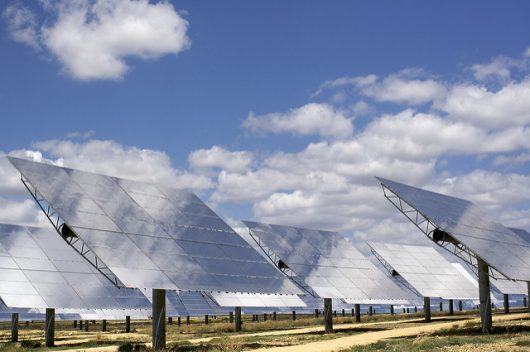
This new toilet design relies on a series of electrochemical reactions to both sterilize and break down the waste, and in turn, produce hydrogen, which is released into the air. The entire system can effectively sterilize and recycle water so that it can be re-used for toilet flushing or hand washing while being powered only by solar energy. Overall, the solution combines both sustainability and reliability in one compact package.
“So it’s a closed loop system, and it can be powered by solar panel, so the whole thing can be off the grid. (…) because it can be off the grid, it’s really well suited for the developing world”, said Cody Finke, a Ph.D. candidate in electrochemistry working with the team.
The Future of Sanitation
This emphasis on independence bypasses the necessity of infrastructural support, meaning with the use of the technologies present in these futuristic toilets, the government of low-income nations could potentially provide sanitary bathrooms to its citizens without investing billions of dollars in a clean water infrastructure updates.
Although side-stepping billion dollar infrastructure investments is important, it’s not the only challenge at play when it comes to solar powered sanitation solutions. “One of the other things that’s a challenge is if you put a complex technology in the field, often the infrastructure and access to education and to skilled labor isn’t there to repair it when it breaks”, Finke said, in discussing the challenges that complex water treatment technologies face.
So, alongside the toilet’s self-sustaining construction, Finke and the rest of the team are committed to making the toilet modular easy to repair. In conjunction with developing improved electrochemical catalysts that aid in low-impact water sanitation, the team has been building an app “Seva” that works alongside the toilet systems. The app, which can be installed on low-cost smartphones, provides its users with easy-to-understand updates on the inner workings of the system, and step-by-step, pictorial repair instructions should the system malfunction.
Cost Concerns Are Causing Minor Setbacks
Today, somewhere between 30 and 40 prototypes are operational or being installed in low-income countries, which will have an impact on the lives of about 1,000 people, give or take. Despite growing interest in solar-powered sanitation solutions, the market is still small; therefore, production costs remain high.
Regardless of some of the setbacks, this technology is a valuable contribution to the world of clean water technologies. “You can make the argument that there are different wastewater treatment technologies for different purposes, so I imagine that there’s definitely going to be a blend between our technology and other technologies [in the future]”, said Finke, in consideration of the future of his team’s technology.
With the support of a growing number of business partners and The Gates Foundation, this treatment could still be the next big thing in renewable toilet technologies. With innovative people working together, we are coming up with ways to alleviate poverty by providing clean water and sanitation to developing countries. Hopefully, financial solutions will be made available to start implementing some of these projects on a larger scale.
– Ian Lloyd Greenwood
Photo: Flickr

Top 10 Facts About Living Conditions in the Democratic Republic of Congo
Despite its abundance of valuable natural resources, including copper and oil, as well as a picturesque landscape that once drew wealthy tourists from around the world, The Democratic Republic of Congo (DRC) has been plagued by political instability, leaving the Congolese people struggling to survive. Here are the top 10 facts about living conditions in the Democratic Republic of Congo.
Top 10 Facts About Living Conditions in The Democratic Republic of Congo
Despite these top 10 facts about living conditions in the Democratic Republic of Congo revealing a history plagued by political corruption, disease and a lack of accessibility to basic resources, the DRC currently finds itself in a transitional period that could begin to reverse much of the damage that has been done.
Kabila announced in August 2018 that he will no longer seek reelection and will relinquish his presidency at the close of his term. This opens the door for a leader whose intentions lie not in personal gain, but rather in rebuilding the DRC’s economy, providing health care, access to basic resources to the people and restoring the country to a position of growth and stability.
– Rob Lee
Photo: Pixabay
Top 10 Facts about Hunger in Pakistan
Pakistan may have South Asia’s second-largest economy but it fares considerably worse than its neighbors when it comes to tackling hunger. Here are the top 10 facts about hunger in Pakistan.
Top 10 Facts about Hunger in Pakistan
Pakistan does have a long way to go before fully addressing the extent of the problem but it certainly has the impetus and ability to change the way it prioritizes food insecurity and hunger.
– Maneesha Khalae
Photo: Flickr
Which Countries Give the Most Foreign Aid?
In 2005, 15 countries agreed to dedicate 0.7 percent of their Gross National Income (GNI) to Official Development Assistance (ODA). ODA, according to the Organisation for Economic Cooperation and Development (OCED) stands for “the promotion of the economic development and welfare of developing countries”. The hope was to reach this goal by 2015, however, only seven countries reached this goal. Of these seven, five reached higher than the target percentage.
Wondering which countries give the most foreign aid? Here are the top five countries by the above-mentioned criteria.
Countries That Give the Most Foreign Aid
Although many countries out of 15 that have promised to spend their GNI od ODA haven’t done that, the countries that did reach a goal showed that several developed countries view foreign assistance as an important piece of their economy. The top five countries presented in this text are the good examples of how can developed countries provide help to other, less developed countries.
– Drew Garbe
Photo: Flickr
Top 10 Facts about Living Conditions in Haiti
Misconceptions about life in Haiti reach all around the world. After the devastation of the island in 2010 due to a magnitude seven earthquake, many citizens were killed or left homeless and scared. The image of Haiti in the eyes of the world has become that of a poor country stuck in a cycle of poverty. But, what are the living conditions in Haiti actually like? Here are the top 10 facts about living conditions in Haiti.
Top 10 Facts about Living Conditions in Haiti
Haitians have a long history of surviving repeated setbacks. In spite of some of the negative facts about living conditions in Haiti, many charitable organizations are working on the ground to change the status quo. Haiti is seeing improvement and has a real chance of overcoming some of the adversity it has seen and growing into a strong nation.
– Grace Gay
Photo: Flickr
The Global Findex: Financial Inclusion for Developing Countries
The importance of financial inclusion for developing countries has become much more evident in recent years. Financial inclusion, the process of making financial services accessible and affordable, connects people to a formal financial system. This allows them to make better investment decisions, build assets and savings and make general daily living easier.
Often times, poor people around the world rely on cash to facilitate transactions, which can be unsafe and difficult to manage. Financial services, such as bank accounts and digital payments, can help people escape poverty by helping them to make investments in education, business and healthcare.
In fact, financial inclusion for developing countries is part of seven of the seventeen U.N. Sustainable Development Goals, including zero poverty, reduced inequality, and decent work and economic growth. Studies by the World Bank show that mobile money services that allow users to store and transfer funds on their phones lead to higher income earning potential, thereby reducing poverty.
Providing Financial Inclusion for Developing Countries
In 2011, The World Bank Group launched the Global Findex Database, funded by The Bill and Melinda Gates Foundation. The Global Findex increases financial inclusion by tracing financial inclusion efforts globally. By putting a quantitative measure to global financial inclusion efforts, The World Bank Group and other large organizations are able to track and record progress as it relates to increasing financial inclusion and its role in reducing poverty.
The World Bank recently published a report called The Global Findex Database 2017: Measuring Financial Inclusion and the Fintech Revolution. The report demonstrated that the 69 percent of adults owned a bank account in 2017, which is an 18 percent increase from the 2011 report. This translates to over 1.2 billion adults receiving access to financial tools.
Overall, the rise of financial technology (fintech for short) alongside the greater use of mobile phones and the internet have bolstered financial inclusion efforts over the past decade. Additionally, the data underscores the idea that not only are financial services expanding to more adults across the world but also the increase in financial technology is promoting greater services for those who already have bank accounts.
Financial Inclusion at Work Around the World
A recent study in Kenya found that access to mobile money reduced extreme poverty by 22 percent in households headed by women. Because mobile money allowed users to increase their savings by over 20 percent, 185,000 women in Kenya were able to leave the farming industry and move on to business development and retail, increasing their incomes and overall development.
These women were able to save at higher rates and, therefore, invested an average of 60 percent more in their businesses. Similarly, in Nepal, women who received free savings accounts spent 15 percent more on nutritious food and 20 percent more on education.
The intersection of information and technology is changing how we perceive poverty and financial access around the world. The Global Findex increases financial inclusion by allowing researchers, scholars, technology founders, development practitioners and banks across the globe to have access to data that can help navigate where financial inclusion needs to be more accessible.
The Global Findex increases financial inclusion for developing countries by creating accountability. With The Global Findex, The World Bank will be much closer to its goal of achieving Universal Financial Access by 2020. Furthermore, more people living in poverty will have the means to better allocate, save and eventually invest money in their futures.
– Shefali Kumar
Photo: Flickr
Ending Sexual Violence in the Democratic Republic of the Congo
Despite the Second Congo War officially ending in 2003, the Democratic Republic of the Congo (DRC) remains a nexus of civil unrest. The country’s decades-long cycle of armed conflict has fuelled impunity, lawlessness, brutality and an epidemic of sexual violence against Congolese women. A study in the American Journal of Public Health found that 48 women in the DRC are raped every hour. In a 2013 nationwide survey of 18,000 households, more than 57 percent of women reported experiencing physical or sexual violence at some point in their lives.
Personal Testimonies
These numbers are alarming, especially when paired with personal testimonies of trauma. One young woman, Sandra, recounts being infected with HIV after her neighbor raped her at the age of 16. Jeanne, another survivor, was tied to a tree and gang-raped for several weeks. She had surgery to repair the damage, then returned home only to be raped again.
Their experiences are not unusual within the country’s current climate. Sexual violence against Congolese women is, in the words of activist Eve Ensler, “the cheapest and most effective way to instill fear in and humiliate a community. It doesn’t even cost a bullet.”
The Fight Against Sexual Violence
Individuals like Ensler are working to combat this systemic violation. Ensler is the founder of City of Joy, a leadership program for survivors of rape. Geared towards survivors that have healed physically, City of Joy supports 90 women aged 18 to 30 at a time, giving them an interim place to emotionally heal, gain valuable life skills and build a community of empowerment among themselves. Since opening its doors in 2011, City of Joy has served and celebrated more than one thousand women survivors in the DRC.
For those in need of physical treatment, pioneering gynecologist Denis Mukwege founded Panzi Hospital. The hospital specializes in complex gynecological injuries, with 60 percent of its collective 85,000 patients coming from a background of sexual violence. In addition to repairing physical trauma, Panzi Hospital offers counseling, reintegration and the accruement of legal evidence in the hope that, one day, the evidence can be presented to secure justice for its victims.
Organizations Stepping in to Help
There are many other beacons that exist to empower, mend and prevent further sexual violence against Congolese women. The World Bank recently committed $100 million to The Gender-Based Violence Prevention and Response Project. The project’s intent is to promote social parity while directly aiding 400,000 women and girls over the next four years. In 2017, United Nations agencies provided medical assistance to approximately 5,200 survivors of sexual violence and referred hundreds more to MONUSCO-supported legal clinics. Hope and Health Vision strives to provide a safe environment for women and children traumatized by civil conflict. Women for Women International offers a year-long training program for women, as well as engagement programmes for male allies.
Something is slowly being dug to the root, reaffixed. Mukwege says, “Africa’s future begins when girls know that they are equal to boys. We share the same humanity and we cannot continue to allow economic wars to be fought on women’s bodies.”
– Yumi Wilson
Photo: Flickr
Solar-Powered Sanitation Solutions: The Way of the Future?
Limited access to clean water and sanitation lies at the center of a litany of poverty-related issues. Without adequate access to clean water and sanitation, low-income communities are at a severe disadvantage in the fight against poverty. Everyone, but especially their young and elderly fall prey to waterborne diseases, and countless school days are lost due to children being sick or having to fetch water.
In many low-income communities, this issue is only compounded by aging or inadequate water and sanitation infrastructure. Replacing or updating these intricate water systems requires both government initiative and an enormous amount of funding, which creates a difficult hurdle to overcome in the fight for adequate global access to clean water and sanitation.
The Gates Foundation Challenge
In response to this crisis, in 2011, The Bill and Melinda Gates Foundation issued the “reinvent the toilet challenge”, a competition where a variety of research groups vied to propose a new, self-contained wastewater treatment system design. A small team of chemists from Caltech was awarded first place, and, like the rest of the finalists, was awarded a $400,000 grant to continue their work in solar-powered sanitation solutions.
This new toilet design relies on a series of electrochemical reactions to both sterilize and break down the waste, and in turn, produce hydrogen, which is released into the air. The entire system can effectively sterilize and recycle water so that it can be re-used for toilet flushing or hand washing while being powered only by solar energy. Overall, the solution combines both sustainability and reliability in one compact package.
“So it’s a closed loop system, and it can be powered by solar panel, so the whole thing can be off the grid. (…) because it can be off the grid, it’s really well suited for the developing world”, said Cody Finke, a Ph.D. candidate in electrochemistry working with the team.
The Future of Sanitation
This emphasis on independence bypasses the necessity of infrastructural support, meaning with the use of the technologies present in these futuristic toilets, the government of low-income nations could potentially provide sanitary bathrooms to its citizens without investing billions of dollars in a clean water infrastructure updates.
Although side-stepping billion dollar infrastructure investments is important, it’s not the only challenge at play when it comes to solar powered sanitation solutions. “One of the other things that’s a challenge is if you put a complex technology in the field, often the infrastructure and access to education and to skilled labor isn’t there to repair it when it breaks”, Finke said, in discussing the challenges that complex water treatment technologies face.
So, alongside the toilet’s self-sustaining construction, Finke and the rest of the team are committed to making the toilet modular easy to repair. In conjunction with developing improved electrochemical catalysts that aid in low-impact water sanitation, the team has been building an app “Seva” that works alongside the toilet systems. The app, which can be installed on low-cost smartphones, provides its users with easy-to-understand updates on the inner workings of the system, and step-by-step, pictorial repair instructions should the system malfunction.
Cost Concerns Are Causing Minor Setbacks
Today, somewhere between 30 and 40 prototypes are operational or being installed in low-income countries, which will have an impact on the lives of about 1,000 people, give or take. Despite growing interest in solar-powered sanitation solutions, the market is still small; therefore, production costs remain high.
Regardless of some of the setbacks, this technology is a valuable contribution to the world of clean water technologies. “You can make the argument that there are different wastewater treatment technologies for different purposes, so I imagine that there’s definitely going to be a blend between our technology and other technologies [in the future]”, said Finke, in consideration of the future of his team’s technology.
With the support of a growing number of business partners and The Gates Foundation, this treatment could still be the next big thing in renewable toilet technologies. With innovative people working together, we are coming up with ways to alleviate poverty by providing clean water and sanitation to developing countries. Hopefully, financial solutions will be made available to start implementing some of these projects on a larger scale.
– Ian Lloyd Greenwood
Photo: Flickr
Top 10 Facts About Living Conditions in Suriname
Suriname, a former Dutch colony, is one of the most diverse (ethnically, culturally and linguistically) countries on earth.
Top 10 Facts About Living Conditions in Suriname
In conclusion, the top 10 facts about living conditions in Suriname shows that while there is a considerable way to achieving a developed nation status, the relatively good access to education and healthcare will contribute to a burgeoning economy.
– Maneesha Khalae
Photo: Flickr
History of Ebola in Senegal
The outbreak of Ebola in Senegal became official at the end of August in 2014. A young man who had traveled from Guinea—a country already inflicted with Ebola—to Dakar (the capital city of Senegal) was confirmed to have the virus. The WHO immediately jumped into action and sent three of the world’s best Ebola epidemiologists to contain the disease and prevent spreading.
Symptoms of Ebola
The first symptoms of Ebola are like the typical signs of flu such as a headache, fever and chills. It spreads through contact of bodily fluids resulting in internal bleeding and organ failure. A person with a late stage of the virus often shows symptoms such as coughing up blood.
The disease has a fatality rate of up to 90 percent. Ebola can be contracted from the bodies of those who died from it, particularly when relatives bury them without protective gear.
About the History of Ebola in Senegal
Senegal was in a relatively advantageous position when Ebola struck their country because they had time to prepare as they watched it spread in neighboring countries. A National Crisis Committee was established quickly, to which funds were allocated in order to suppress the virus. To be safe, the government of Senegal expanded the eradication plan nationwide in response to the single case found in Dakar.
The fight against Ebola started with locating every person that came in contact with the first infected man in the country. After 74 people were identified, they were monitored intently to watch for signs of symptoms. The few that showed any symptoms similar to that of Ebola were tested, and all tests came back negative.
The infected man was treated in a hospital and recovered fully. He was allowed to re-enter the society once it was decided he was not carrying any contagion.
Around the time that Ebola broke out in Senegal, the country closed its borders to travelers from Liberia, Guinea and Sierra Leone. This safety measure was taken in response to the massive epidemic of Ebola in those countries. The president of Senegal stated publicly that it should not just be an African emergency, but a global priority.
Senegal was lucky in comparison to its neighbors. The case of Ebola in Senegal is a perfect example of the positive effects proactive measures can have. Because Senegal took precautions before Ebola was found in their country, they were prepared for the disease when it was discovered.
Ebola-Free Senegal
A major factor in the success of Senegal’s fight against Ebola is the awareness they had about Ebola’s advances in their surrounding countries. Some of the measures Senegal took could be seen as excessive, but their “better safe than sorry” attitude contributed significantly to their Ebola-free status.
After the standard 42-day waiting period for Ebola cases, Senegal was declared Ebola-free by WHO on October 17, 2014. The country has not had another case since.
When the government of a country prioritizes the safety and health of its people, innumerable lives are saved. The diligence of Senegal ensured there was no more than one case found and no deaths from Ebola.
Even a disease as fatal and severe as Ebola can be prevented when fought effectively. Other nations can use Senegal’s response to Ebola as a role model for how to fight the disease.
– Amelia Merchant
Photo: Flickr
Top 10 Facts About Hunger in Kenya
Kenya is a country in North East Africa (also known as the Horn of Africa) located on the Indian Ocean coastline. The countries in the Horn of Africa have been frequently hit by droughts that lasted for decades. As a result of this, Kenya suffered and still suffers from extreme food shortages that lead to illnesses and in many cases to death. To understand Kenya’s struggles and progress, below are the top 10 facts about hunger in Kenya.
Top 10 Facts about Hunger in Kenya
Food is a necessity to live but in Kenya food almost seems like a privilege since so many obstacles need to be faced in order to feed a family. Besides food shortages, Kenyans have to deal with a horrendous climate and an unstable government which creates a cycle of unfortunate events.
These top 10 facts about hunger in Kenya give an idea of the struggles these people have to face. Fortunately, Kenya continues to lift itself up out of poverty with the help from surrounding countries.
– Kristen Uedoi
Photo: Flickr