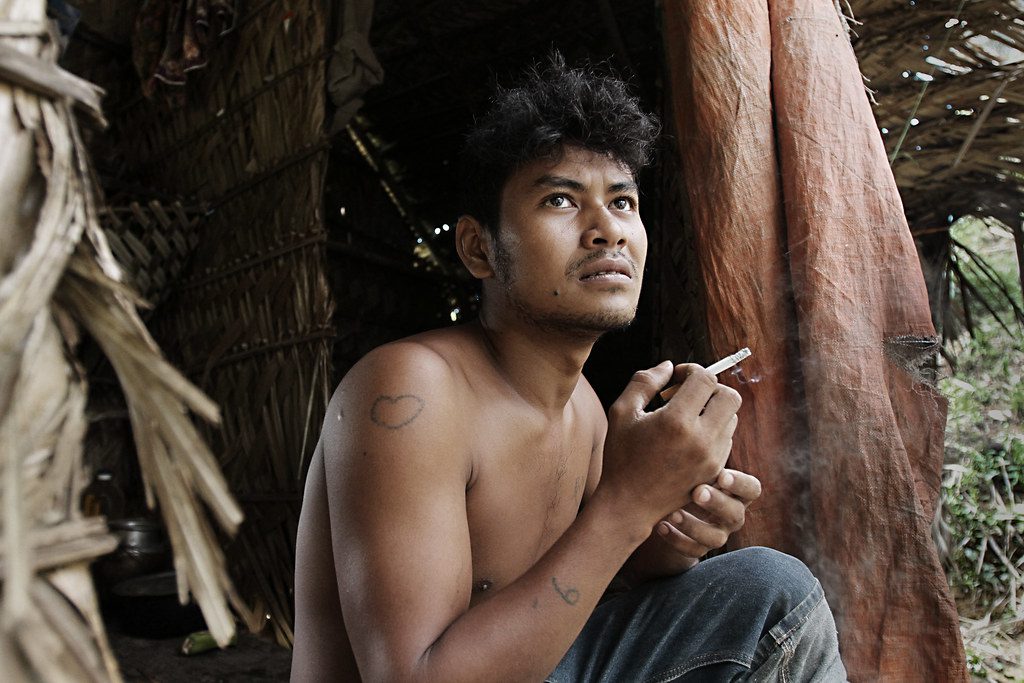
As of 2012, life expectancy for Indigenous Australians was 10 years lower than that projected for non-Indigenous Australians. Between 2008 and 2012, two-thirds of Indigenous deaths occurred before age 65 whereas less than a quarter of non-Indigenous deaths occurred before age 65 during the same time period. In an effort to improve conditions surrounding Indigenous health in Australia, the Australian government launched Closing the Gap in 2008. The goal of Closing the Gap is to improve the lives of indigenous peoples through better healthcare, education and employment opportunities.
Closing the Gap
In 2008, Closing the Gap set six targets for success for pursuing Indigenous health in Australia: 1) close the gap in life expectancy within one generation (by 2031) 2) cut the mortality rate in half for Indigenous children under 5 3) ensured within five years that all Indigenous children had access to early childhood education 4) cut by 50 percent the gap in reading, writing, and numeracy achievements within a decade 5) narrow the gap in dropout rates between Indigenous and non-Indigenous students and 6) reduced the gap in employment outcomes between Indigenous and non-Indigenous populations by 50 percent in 10 years.
Examination of health gaps between Indigenous and non-Indigenous Australians requires a holistic approach. To understand health, socioeconomic factors such as homeownership and education, behavioral drivers like rates of smoking and diet, along with environmental triggers like overcrowding and history of institutionalized discrimination all contribute to the relatively poor health of Indigenous Australians.
According to the Australian Bureau of Statistics, ischemic heart disease was the leading cause of death, accounting for 11.5 percent of total deaths, among Aboriginal and Torres Strait Islander people in 2017. Data show that Indigenous people in Australia die from cardiovascular disease at 1.5 times the rate of non-Indigenous people. As of 2017, Diabetes mellitus was the second leading cause of death among Indigenous populations in Australia; in fact, Indigenous Australians were four times more likely to have type 2 diabetes as non-Indigenous Australians.
Major Factors of Indigenous Health in Australia
Indigenous Australians struggle significantly more with poverty than non-Indigenous Australians. Less than 50 percent of Indigenous Australians are employed as compared to 75 percent of non-Indigenous Australians. Furthermore, the median equivalized gross weekly household income is $550 for Indigenous and $850 for non-Indigenous peoples. Factors like income affect the quality of food and housing which has direct ramifications on the health of those involved.
Diseases eliminated in the non-Indigenous population such as trachoma, a bacterial eye infection, and rheumatic heart disease persists with “high occurrence” in Indigenous populations. Nearly one-third of Indigenous Australians reported struggling with a chronic respiratory condition in 2012-2013. Compared to non-Indigenous Australians, Aboriginal and Torres Strait Islander people are hospitalized for respiratory complaints at 2.4 times the rate.
Upon arrival in Australia in the late 1700s, European colonization introduced diseases like smallpox to the Indigenous population. Additionally, the assumption of European superiority over Indigenous Australian has impacted Indigenous health in Australia for hundreds of years. Indigenous peoples in Australia did not get the right to vote until 1962 and were not counted in the national census until 1967. Up to 1992, when the High Court of Australia denied the correctness of the term terra nullius (land belonging to no-one), Australia effectively had denied the presence of an Indigenous population pre-European arrival.
Like the USA, Australia pursued aggressive assimilation policies such as the Australian Aborigines Act of 1905 which established the position of Chief Protector to be the legal guardian of each and “‘every aboriginal and half-caste child’ to the age of 16”. This well-established history of separating families has had deleterious effects on Indigenous mental and physical health across generations.
In the 1970s, Indigenous people began to fight back as they established their own councils of leadership, health clinics, and advocacy bodies such as the National Aboriginal Community Controlled Health Organization (NACCHO) in 1975.
The Good News
The 2019 Closing the Gap report issued by the Australian government celebrates the emerging partnerships between states and territories with Indigenous Australians and the Australian government but acknowledges that many of the target goals are not on track. However, steps are being taken. The implementation of the National Indigenous Australians Agency on July 1, 2019, suggests the Australian government is beginning to get serious about improving Indigenous health in Australia.
As Closing the Gap moves into its next phase, it promises to provide increased accountability on both the state and national levels for including Indigenous people in the process and implementation of initiatives. Prime Minister Scott Morrison argues, “The Australian Government is committed to working in genuine partnership with Aboriginal and Torres Strait Islander peoples, a partnership which is critical to progress towards Closing the Gap.”
– Sarah Boyer
Photo: Flickr

Indigenous Health in Australia: Closing the Gap
As of 2012, life expectancy for Indigenous Australians was 10 years lower than that projected for non-Indigenous Australians. Between 2008 and 2012, two-thirds of Indigenous deaths occurred before age 65 whereas less than a quarter of non-Indigenous deaths occurred before age 65 during the same time period. In an effort to improve conditions surrounding Indigenous health in Australia, the Australian government launched Closing the Gap in 2008. The goal of Closing the Gap is to improve the lives of indigenous peoples through better healthcare, education and employment opportunities.
Closing the Gap
In 2008, Closing the Gap set six targets for success for pursuing Indigenous health in Australia: 1) close the gap in life expectancy within one generation (by 2031) 2) cut the mortality rate in half for Indigenous children under 5 3) ensured within five years that all Indigenous children had access to early childhood education 4) cut by 50 percent the gap in reading, writing, and numeracy achievements within a decade 5) narrow the gap in dropout rates between Indigenous and non-Indigenous students and 6) reduced the gap in employment outcomes between Indigenous and non-Indigenous populations by 50 percent in 10 years.
Examination of health gaps between Indigenous and non-Indigenous Australians requires a holistic approach. To understand health, socioeconomic factors such as homeownership and education, behavioral drivers like rates of smoking and diet, along with environmental triggers like overcrowding and history of institutionalized discrimination all contribute to the relatively poor health of Indigenous Australians.
According to the Australian Bureau of Statistics, ischemic heart disease was the leading cause of death, accounting for 11.5 percent of total deaths, among Aboriginal and Torres Strait Islander people in 2017. Data show that Indigenous people in Australia die from cardiovascular disease at 1.5 times the rate of non-Indigenous people. As of 2017, Diabetes mellitus was the second leading cause of death among Indigenous populations in Australia; in fact, Indigenous Australians were four times more likely to have type 2 diabetes as non-Indigenous Australians.
Major Factors of Indigenous Health in Australia
Indigenous Australians struggle significantly more with poverty than non-Indigenous Australians. Less than 50 percent of Indigenous Australians are employed as compared to 75 percent of non-Indigenous Australians. Furthermore, the median equivalized gross weekly household income is $550 for Indigenous and $850 for non-Indigenous peoples. Factors like income affect the quality of food and housing which has direct ramifications on the health of those involved.
Diseases eliminated in the non-Indigenous population such as trachoma, a bacterial eye infection, and rheumatic heart disease persists with “high occurrence” in Indigenous populations. Nearly one-third of Indigenous Australians reported struggling with a chronic respiratory condition in 2012-2013. Compared to non-Indigenous Australians, Aboriginal and Torres Strait Islander people are hospitalized for respiratory complaints at 2.4 times the rate.
Upon arrival in Australia in the late 1700s, European colonization introduced diseases like smallpox to the Indigenous population. Additionally, the assumption of European superiority over Indigenous Australian has impacted Indigenous health in Australia for hundreds of years. Indigenous peoples in Australia did not get the right to vote until 1962 and were not counted in the national census until 1967. Up to 1992, when the High Court of Australia denied the correctness of the term terra nullius (land belonging to no-one), Australia effectively had denied the presence of an Indigenous population pre-European arrival.
Like the USA, Australia pursued aggressive assimilation policies such as the Australian Aborigines Act of 1905 which established the position of Chief Protector to be the legal guardian of each and “‘every aboriginal and half-caste child’ to the age of 16”. This well-established history of separating families has had deleterious effects on Indigenous mental and physical health across generations.
In the 1970s, Indigenous people began to fight back as they established their own councils of leadership, health clinics, and advocacy bodies such as the National Aboriginal Community Controlled Health Organization (NACCHO) in 1975.
The Good News
The 2019 Closing the Gap report issued by the Australian government celebrates the emerging partnerships between states and territories with Indigenous Australians and the Australian government but acknowledges that many of the target goals are not on track. However, steps are being taken. The implementation of the National Indigenous Australians Agency on July 1, 2019, suggests the Australian government is beginning to get serious about improving Indigenous health in Australia.
As Closing the Gap moves into its next phase, it promises to provide increased accountability on both the state and national levels for including Indigenous people in the process and implementation of initiatives. Prime Minister Scott Morrison argues, “The Australian Government is committed to working in genuine partnership with Aboriginal and Torres Strait Islander peoples, a partnership which is critical to progress towards Closing the Gap.”
– Sarah Boyer
Photo: Flickr
Industrialization in Bolivia Paves the Way for Growth
Although Bolivia’s poverty rate declined significantly from 63 percent in 2004 to 36 percent in 2017, the industrial production growth rate has been slow at about 2 percent. One major challenge to continually reducing the poverty rate is industrialization in Bolivia. The country’s state-oriented policies discourage investment, especially in the underutilized mining sector. Further economic developments that include incentives to spur investment, as well as policies to improve income equality, are needed to continually reduce the high poverty rate.
Improving the Business Environment
Bolivia’s state-oriented policies is a barrier to development. According to Joe Lowry, head of Global Lithium and a former employee of FMC, FMC wished to develop Uyuni in the late 1980s and early 1990s, but “governmental chaos and poor infrastructure were too much to deal with.” President Morales is preventing external corporations from exploiting natural resources, such as lithium. FMC Corp, a major lithium producer, and South Korean steelmaker POSCO tried to make deals with Morales’ government, yet no agreement was made due to strict government control.
To induce foreign companies to form operations in Bolivia, reducing government control on the private sector is an essential requirement. This laissez-faire style of welcoming outside companies to build relationships with Bolivians would not only create jobs but also improve the poor roadways leading to its neighboring countries. A lack of infrastructure also creates difficulty for external corporations who wish to start operations within the country. Inefficient roadways slow transportation vehicles and create major obstructions to traveling throughout Bolivia.
About 12 percent of roadways are paved. The Inter-American Development Bank approved a $178 million loan to Bolivia in an effort to improve or add roads, traffic flow and increase security. The loan also increases job opportunities for women in non-traditional sectors through training in truck-weighing procedures, toll-collection and heavy machinery operation. The regions with paved roads earn the majority of the gross domestic product. In these areas, the travel time and cost of operating vehicles is less than areas with crude and poorly maintained roads. Additional infrastructure development is needed to create jobs and increase the probability of future investment prospects.
Key Sectors for Bolivia’s Growth
Lithium mining is one key sector to increase industrialization in Bolivia. With demand for lithium expected to double by 2025, President Evo Morales is set to invest $250 million into lithium operations after signing an agreement with ACI Group. Morales vowed to “industrialize with dignity and sovereignty.” Bolivia has nine million tons of untapped lithium, the second-largest amount in the world. Construction begins in 2021 and already companies are showing interest.
While Morales envisions Bolivia as a major lithium producer, Bolivia’s economy and finance minister, Luis Arce, perceives a future in the tourism industry. Arce agreed with Morales on its need for industrialization, especially in mining, natural gas and tourism sectors. Lake Titicaca, Salar de Uyuni and La Paz are three popular destination sites that receive tourists from across the world. Arce also plans to target income inequality by redistributing wealth. This would give compensation to families whose children complete a school year and a program guaranteeing a minimum retirement payment. Arce also stated salary increases outpacing inflation would help Bolivians, especially those in extreme poverty.
Present Infrastructure Status
Industrialization in Bolivia, especially in road construction, is already underway. Reducing state-oriented policies could offer an incentive to investors interested in lithium. It is an important component in batteries that power electric vehicles and an important resource for the future of vehicles. With a decrease in strict government control, Bolivia could rise out from its slow development, create jobs and reduce its high poverty rate.
– Lucas Schmidt
Photo: Flickr
10 Facts About Slums in Manila
Since as early as the mid-1900s, impoverished citizens of Manila, Philippines have resided in informal settlements known as slums. The metro Manila area has several of these slums which houses much of the poor population of the city. Below are 10 facts about slums in Manila.
10 Facts about slums in Manila
An estimated 35 percent of the metro Manila population live in unstable, poorly constructed shelters in slums. Eleven percent of slum residents live near unsafe areas like railroads and garbage dumps. According to the World Bank, living conditions in slums are worse than in the poorest rural areas. The Mega-Cities Project’s research found that tuberculosis rates were nine times higher than in non-slum areas and that rates of diarrheal disease were two times higher.
It is extremely difficult to collect adequate demographic data on slum populations, as most constituents lack a proper address. Even if surveyors reach slum occupants, most are timid to answer questions due to the fear that surveyors will use the information to demolish their shelters or resettle them. Most slum residents have very little or no tenant security. However, in 2000 the Asian Development Bank estimated a total slum population of around 3.4 million in Manila.
The rate of childhood malnutrition is three times higher in the slums than in non-slum areas. According to USAID, children sometimes have to sort through garbage for scraps of food. A study of the Smoky Mountain slum found that 80 percent of children aged eight months to 15 years who scavenged for food had at least two species of intestinal parasites. An Asian Development Bank study found that 50 percent of children were anemic. This is despite the fact that many of these children have access to medical facilities.
Residents in Manila slums lack access to proper sanitation and a clean environment. USAID states that 66 percent of slum residents lack an adequate way to dispose of human waste and often resort to open pits or rivers. A UNICEF study found that only 16 percent of children in the slums have access to clean drinking water. As a result, residents often turn to vendors or contaminated groundwater. The child mortality rate in slums is three times higher than in non-slum areas according to the Philippines Health Department.
Project PEARLS is providing children in Manila slums with food and health care. The organization has three different food programs for the children of Manila slums. PEARLS launched The Soup Kitchen program in July 2015, which feeds at least 300 children per day on a budget of $160. The organization also provides free medicine to children for illnesses like dehydration, flu, pneumonia and infections, as well as various wounds.
Slum settlements in Manila are extremely vulnerable to natural disasters. The Philippines ranks fourth in the global climate risk index and is often prone to typhoons, flooding, earthquakes and other natural disasters. The instability of the often homemade shelters provides little to no protection from these calamities. The Asian Development Bank states that this and the fact that most slums are in dangerous locations make slum settlements vulnerable to natural hazards. Heavy rains in July 2000 caused a landslide of garbage that killed 218 people in a slum settled on top of a garbage dump.
Habitat for Humanity is building stable shelters for slum residents in Manila. With the help of volunteers, the organization builds around 5,000 homes every year. The team works with the local government to rebuild homes and also construct new homes that can withstand the natural elements. From digging the foundation to pouring the concrete and laying the roof, the organization and volunteers create sustainable homes from the ground up for thousands of impoverished slum residents.
The moderate economic growth in recent years did not help to mitigate poverty or slums. The Asian Development Bank reported an average 5.3 percent increase in GDP from 2003 to 2006. Poverty rates increased from 24 percent to 27 percent during that time and continued to increase in 2007 when the GDP growth was 7.1 percent. Chronic poverty, driven by factors like severe inequality and corruption, hinders the reduction of slum residents and settlements. The Philippines ranked 141 out of 180 countries in the 2008 Transparency International corruption perceptions index. According to the Asian Development Bank, local political dynasties manipulate markets to deter the poor from accessing private goods and capital. In 2006, the richest 20 percent owned 53 percent of the wealth in the country.
Poverty is fuelling online child sex abuse in the slums. The live streaming of child pornography in these locations has led UNICEF to name the Philippines the global epicenter of the online child sex abuse trade. Despite the new cybercrime unit at the Philippines National Police Headquarters and the passage of an Anti-Child Pornography Law, convictions remain low and case reports high. This is partially due to the fact that the age of consent in the Philippines is only 12 years old. UNICEF reports that parents have even brought their children to these shows to earn money.
Police and government corruption have engendered the unlawful killings of thousands of slum citizens at the hands of officers since the start of President Rodrigo Duterte’s war on drugs. These corrupt and violent raids target slum residents the most. A Human Rights Watch report found that these raids have unlawfully killed over 7,000 people. The report states that police often falsify evidence and falsely claim self-defense to get away with these extra-judicial killings. Although Duterte has not called for extra-judicial killings, his repeated calls for the killing of drug offenders and an absence of any investigations into the killings prompted the Human Rights Watch to label this campaign as a possible progenitor of crimes against humanity.
The Manila government has struggled to find ways to reduce poverty and the population of slum residents, but poverty is a drain on Manila’s economy. According to the Asian Development Bank, for every one percent increase in poverty, there is a 0.7 percent decrease in overall per capita income. Along with this economic algorithm, a lack of investment, access to capital and financial markets throughout slum communities hinders economic growth. Different non-governmental organizations like Habitat for Humanity and Project PEARLS are providing basic essentials and helpful assistance for the different struggles of slum life. However, the Philippines requires more research and both domestic and international assistance to mitigate and eventually solve the aforementioned 10 facts about slums in Manila.
– Zach Brown
Photo: Flickr
How PortaPure Provides Clean Water in Haiti
The company PortaPure began research on water filtration systems after a massive hurricane hit Haiti in 2010. Millions of people were left without clean water. By Christmas of that year, PortaPure began donating their PocketPure devices. Today in Haiti, where the company PortaPure still does most of their work, 60 percent of the population are still living in poverty. They do not have easy access to clean water. Although there are other solutions to clean water, those solutions can be expensive. To continue its mission to provide access to clean water all around the world, PortaPure has created multiple solutions that can help in their goal.
Efforts to Aid Haiti
After the earthquake hit Haiti in 2010, PortaPure was not the only organization to invest in providing access to clean water. The U.N. came to help as well. Unfortunately, their sewage leaked into a clean source of water that contaminated it. Consequently, the leak exposed the Haitians to cholera. About 800,000 Haitians became sick from drinking and using water from the contaminated source.
The need to solve this problem was even more apparent after 10,000 people had died from cholera, so PortaPure knew their filtration system needed to be able to filter this out.
Their filtration system has the water pass through a series of filters that, in the end, filters down to .02 microns. This level allows for diseases, like cholera, to be filtered out and safe to use.
PocketPure Offers Clean Water to Drink
PortaPure’s first innovation, PocketPure, was meant to be a cheap solution to provide developing countries access to clean drinking water. It is meant to be very portable, pocket-size, as it weighs less than a pound. Even though it is portable, it still allows the user to drink one liter of water.
This is one of the cheapest innovations on the market as it costs less than $20. PocketPure’s affordability allows for more people to be able to donate these systems to developing countries. Although this price might still seem like a lot, other filtration systems can be as much as 100 dollars.
PureLives in Africa
African families compared to families in first-world countries use much less water. Families in developed countries can use up to 550 gallons of water per day while African families use about five gallons per day. One of PortaPure’s most recent products, PureLives, addresses the need for a large amount of water.
PureLives is a water treatment system that can hold up to five gallons of water. This is just the right amount for families in developing countries. This water treatment system is also portable as it acts like a backpack, making it easier to carry water home if the water source is far away. Additionally, it is efficient as it can filter water into the system at a gallon per minute. The PureLives system also has a long filtration life as it can last up to three years or 5,000 gallons.
Although PortaPure’s mission was to provide access to clean water for Haiti, it has evolved into a global mission. There are 785 million people in the world without access to water service. Furthermore, two billion people use a water source that has been contaminated by feces. These contaminated water sources contain diseases, like cholera, and many others that contribute to 485,000 deaths per year.
Luckily, with inventions such as the PureLives system, PortaPure provides some cost-effective solutions that allow Haiti to have access to clean water.
– Ian Scott
Photo: Flickr
Shelters Aid Venezuelan Refugees in Peru
At first, many governments were willing to cooperate, but as more Venezuelans left, many countries established specific immigration requirements, such as having a valid passport. Even though this sounded fair for many, it closed the door to many of these refugees, as the cost of processing one visa is around 7,200 bolívars ($115); that is four times the local minimum wage.
Peru is one of the few nations that kept an open border policy for many years. However, that changed when President Martin Viscarra established that as of June 15, Venezuelans would need a passport and visa to enter Peru. That day, 5,849 people arrived at the border Peruvian border, and while some arrived just in time, others were left behind. These grim situations may make it seem that all hope is lost, but there are still many Peruvians who receive these migrants with open arms. These three shelters have given shelter and hope to Venezuelan refugees in Peru.
Casa Don Bosco
This Lima home directed by Salesian Missionaries takes part in integration projects that help newly arrived Venezuelans adapt to an entirely different culture. While it used to be an old vocational training facility, it now accommodates the needs of the refugees, by providing necessary guidance on finding housing and educating them on their fundamental workers’ rights. Casa Don Bosco also has ties with The Food Bank of Peru, allowing them to feed all the migrants that knock on their doors.
A Power Couple and Their Shelter
In June 2018, Raquel Vásquez and Ernesto Reyes, a married couple, bought an old house in the middle of the Comas district. Their mission was to provide refuge to any Venezuelan refugees that arrived in Lima. Once installed, Venezuelans are allowed to stay for up to one month for free, giving them time to find a job and better housing. Vásquez and Reyes said that opening the shelter was a necessity, especially after seeing all the refugees sleeping on the streets, penniless after spending all their money just to get to Lima. The shelter operates thanks to the couple’s own money and local donations.
Rene Cobeña’s Shelter and Business
The owner of this shelter is textile businessman Rene Cobeña, who bought an old hotel and transformed it into a safe haven. The house not only offers Venezuelans breakfast, lunch and dinner but also operates as a small business, employing the same refugees. Using his money and some donations, Cobeña buys ingredients to make arepas and donuts that the refugees sell. He has also sold some of his textile machines to fund better ingredients and transportation. Thanks to these efforts, the refugees were able to start building their savings, helping themselves and their families, and eventually leave the shelter to begin anew.
These shelters are not on alone in their efforts; despite the lack of legal assistance, the owners and many other Peruvians are giving what they can to help. Venezuelans are escaping one of the most brutal dictatorships of the last century, and all they need is a helping hand through this difficult time as Venezuelan refugees in Peru.
– Adriana Ruiz
Photo: Wikimedia
Voucher Systems Improve Maternal Health in Zimbabwe
Each year, millions of pregnant women give birth without access to proper health care services. Countries such as Ethiopia, Laos and Yemen are just a few parts of the world where this is a major problem. For example, in Ethiopia, 59 percent of women do not receive care by a medical professional during pregnancy. In Zimbabwe, however, access to prenatal care has drastically improved since the 2014 implementation of the Urban and Rural Voucher Systems (UVS and RVS, respectively). These systems allow for low-income pregnant women to receive the healthcare that they need. They have already had incredible benefits on thousands of pregnant women. Additionally, they set a great precedent for governments and NGOs to come together to find solutions to pressing maternal health issues.
Qualifications
The UVS and RVS service pregnant women whose incomes place them in the bottom 40 percent of households in Zimbabwe. Consequently, women who cannot afford the required $25 co-pay at many clinics can still receive care. Providing women with this essential health care helps to ensure that these women and their babies stay healthy and safe both during and after pregnancy.
Funding
The government of Zimbabwe, the World Bank and Codaid are the main sources of funding for the UVS and RVS. Cordaid is a local NGO that has assisted with much of the program’s implementation. Clinics are subsidized based on their performance. They measure performance on overall range and quality of coverage. This supply-side solution works to help promote jobs and economic growth in local communities, which contributes to the program’s long-term sustainability.
Impact on the Poor
Access to proper care during pregnancy is essential to ensure the health of expectant mothers and their child. In many countries around the world, women do not have access to this care. As a result, the consequences have been horrific.
For instance, there are roughly 3.3 million neonatal deaths recorded per year. Neonatal refers to the first four weeks of a baby’s life. Proper prenatal care can prevent these fatalities. A woman who receives such care is far less likely to give birth to a child with fatal health issues. Proper prenatal care can help identify and fix possible health issues before they become too serious. In addition, receiving prenatal care can offer educational resources. The care can educate a woman about the ways in which they should go about raising a healthy child.
Conclusion
Zimbabwe’s Urban and Rural Voucher Systems have had immense benefits since their implementation. The thousands of women that they have helped to serve reflect such benefits. The programs provide an affordable and accessible option for pregnant mothers to receive the care that they need to ensure both their health and the health of their babies. Also, the UVP and RVP supply-side design ensure that the programs are helping to stimulate local economies and bring communities together. All in all, while much progress must still be made towards increasing access to prenatal care for pregnant women around the world, Zimbabwe has taken an important first step with its Urban and Rural Voucher Systems.
– Kiran Matthias
Photo: Flickr
100 percent Renewable Energy in Djibouti by 2035
Djibouti, located in East Africa and bordered by Eritrea, Ethiopia and Somalia, has a population of nearly one million people. In 2013, Djibouti announced Vision 2035, a comprehensive plan to use exclusively renewable energy and achieve universal access to reliable electricity. If successful, Djibouti would become the seventh country in the world and the first African country to achieve 100 percent renewable energy.
Djibouti’s Energy Infrastructure Today
Right now, Djibouti faces several roadblocks in its path toward renewable energy. For example, much of Djibouti’s energy comes from volatile imports. Around 65 percent of Djibouti’s electricity comes from Ethiopia. According to the International Renewable Energy Agency (IRENA), this reliance on imported energy leads to price volatility that can hamstring economic development plans. Much of Djibouti’s remaining energy comes from its own geothermal, solar, wind and biomass sources. However, much of this electricity is unreliable. According to USAID, 100 megawatts of electricity that Djibouti consumes, only 57 megawatts are available to serve the population because of underdeveloped energy infrastructure. In addition, only 60 percent of Djiboutians have access to electricity. There is a large disparity in access between urban and rural areas, with far more city dwellers connected to the grid than those in rural areas. In total, 110,000 households in Djibouti without electricity.
Potential and Progress
Despite these hurdles, Djibouti has a remarkable potential to increase domestic renewable energy production. Djibouti has the natural capacity to produce 300 megawatts of renewable energy annually—triple what it produces today. The country has abundant solar radiation for the creation of solar farms and many opportunities to harvest geothermal energy, such as the rifts of its two largest lakes, Abbe and Assal.
Since the 2013 commencement of Vision 2035, much of this potential has been actualized. The creation of the Djibouti Geothermal Power Generation Project, a power plant in Lake Assal, was announced in 2013. In 2018, construction began after $50 million in funding was secured by the World Bank and other financiers. Moreover, a $390 million solar farm is under construction in southern Djibouti as a result of a public-private partnership between Djibouti’s Ministry of Energy and Natural Resources and Green Enesys, a German renewable energy firm. Djibouti is already beginning to reap the benefits of renewable energy investment projects. The World Bank reports a four percent increase in access to electricity from 2013 to 2017—the largest sustained increase in over two decades.
The Importance of Renewable Energy
There are many important benefits to Vision 2035 if it succeeds. Access to energy is essential to economic growth. The World Bank reports that reliable energy is critical for several aspects of development such as “health, education, food security, gender equality, livelihoods and poverty reduction.” Better electricity is vital for sustained progress in Djibouti.
Additionally, Vision 2035 offers a framework of sustainable development that maintains the integrity of Djibouti’s natural ecosystems. By harnessing energy from renewable sources, Djibouti can reduce poverty without depleting its forests or relying on imported coal or oil. By becoming the first African country to use 100 percent renewable energy, Djibouti has the opportunity to become a leading international voice in sustainable development.
– Abraham Rohrig
Photo: Flickr
Chlorhexidine and Infant Mortality in Nepal
How Chlorhexidine Helps Nepal
Chlorhexidine is an antiseptic used in hospitals to disinfect the skin before surgery and to sanitize surgical tools. In countries like Nepal, it is used to prevent deadly infections by protecting the umbilical stumps of newborns. It is safe and affordable. Chlorhexidine comes as either a gel or a liquid. It is easy to manufacture and simple to use. Mothers, birth attendants and others with little training in low-resource settings benefit the most from this antiseptic.
Research and Trials
Between November 2002 and March 2005, Nepal Nutrition Intervention Project, Sarlahi (NNIPS) started a community-based trial. The trial hoped to determine the effects of chlorhexidine on newborns. Nepal Health Research Council and the Committee on Human Research of the Johns Hopkins Bloomberg School of Public Health approved the trial. A local female researcher approached women who were six months into pregnancy for enrollment, to explain the procedures and obtain their oral consent.
Education also became a part of the research testing for those in the chlorhexidine trials. Parents in this group received educational messages about clean cord care.
Results
The NNIPS enrolled 15,123 infants into the trials. Of these infants, 268 resulted in neonatal death. Of the surviving infants, researchers found that there is a 24 percent lower risk of mortality among the chlorhexidine group than those who use dry cord-care (no soap and water, chlorhexidine or any other liquid). Also, infant mortality in Nepal was reduced by 34 percent in those enrolled in the trial within the first 24 hours of their birth.
The trial data also provides evidence that cleansing the umbilical cord with chlorhexidine can lessen the risk of omphalitis and other infections. Omphalitis, a cord infection, was reduced by 75 percent when treated with chlorhexidine. The antiseptic was determined to have an overall positive and significant effect on the public health of the country.
Impact in Nepal
In 2009, after results of the trials released, the USAID supported the Government of Nepal to pilot a chlorhexidine program. Saving Lives at Birth: a Grand Challenge for Development, an NGO, included chlorhexidine into routine care nationwide two years later. The Government of Nepal has advocated and promoted the usage of chlorhexidine by packaging the products as a maternal health product. They are now even educating health care workers on the application of the product.
The country received a USAID Pioneers Prize for lowering the neonatal death rate significantly. In 2007 the mortality rate was 43.4 per 1,000. In 2018, it lowered to 27.32 per 1,000.
Global Impact
What chlorhexidine does for Nepal goes beyond its borders. Nepal has also impacted countries such as Nigeria, Pakistan, the Democratic Republic of the Congo and Bangladesh. These countries are now using chlorhexidine to lower the infant mortality rate and create healthier societies.
In 2013, Nigeria started chlorhexidine pilot programs to also lower its neonatal death rate. The infant mortality rate is determined by newborn deaths per 1,000 people born. Nigeria once had the third-highest number of infant deaths (75.3 per 1,000). However, the infant mortality rate now is ranked as the eighth-highest at about 64.6 deaths per 1,000.
Chlorhexidine is reducing infant mortality in Nepal and other countries.
– Francisco Benitez
Photo: Flickr
Maternal and Child Health Care in Ethiopia
Ethiopia is a fascinating case study relating to the mission of downsizing poverty. Although many Ethiopians do struggle, the country has made significant improvements in recent years. For example, 30 percent have fallen below the poverty line as of 2011. The poverty rate decreased from 44 percent in 2000 to 30 percent in 2011. During that time, the percentage of Ethiopians who are uneducated decreased from 70 to 50 percent. Additionally, the average life expectancy rose by 10 years. Maternal and child health care in Ethiopia has been on a similar trend of improvement.
Maternal Care
In 2000, only 22 percent of mothers saw a doctor for an antenatal check-up before having their baby. This rate reportedly increased to 37 percent in 2011. Although this progress is promising, one in 52 women in Ethiopia die due to childbirth-related causes every year. Furthermore, 257,000 children in this country will die before reaching age 5. Fortunately, many organizations remain committed to improving maternal and child health care in Ethiopia through a variety of methods.
Organizations Dedicated to Improving Ethiopia’s Maternal and Child Care
USAID has worked alongside the Bill and Melinda Gates Foundation to bring change to Ethiopia. They have been working to improve coverage of universal family health care plans across the country. These plans include accessible prenatal care for
mothers. They also include increased immunizations and community-based management plans for childhood illnesses.
These two organizations focus on policy and advocacy to achieve their goals. Their success is shown in how poverty has decreased by 45 percent since the Bill and Melinda Gates Foundation first established a grant in Ethiopia in 2002. They cannot take all the credit for this improvement, however, as other organizations have joined them in the fight for better maternal and child health care in Ethiopia.
The World Health Organization (WHO), with the support of the Children’s Investment Fund Foundation and the Ethiopian Federal Ministry of Health, has approached this issue from a different direction. In 2015, the WHO launched a program to monitor and improve the quality of health care in Ethiopian hospitals. In 2015, WHO collected baseline data. This was in addition to training and suggestions for improvement of labor and care in the hospitals.
Improving the Safety of Deliveries
One change implemented by many hospitals was the adaptation of the Safe Childbirth Checklist. The checklist presented 29 essential activities for doctors to perform during childbirth to ensure the safety of the mother and the newborn. The follow-up data collected in 2016 found significant change had been made after the initial visits. This resulted in an improvement in the quality of maternal and child health care in Ethiopia.
This is, as the Gates Foundation puts it, a story of “progress, not victory.” Many Ethiopians continue to struggle, particularly in the realm of maternal and child health. However, the past twenty years of Ethiopia’s history remains hopeful and inspirational, not only for the country’s future but also as an example of the change that is possible. The impact of these organizations on the situation in Ethiopia should serve as a reminder of the potential for positive change.
– Madeline Lyons
Photo: Flickr
A Look at Credit Access in Gabon
Gabon, located in West Africa, has a population of two million. Gabon is bordered by Equatorial Guinea, Cameroon, the Republic of the Congo and the Atlantic Ocean. As the fifth-largest exporter of oil in Africa, much of Gabon’s government revenue and economic growth are dependent on oil. Oil makes up 80 percent of the country’s exports and 45 percent of the country’s GDP. One factor in the future of Gabon’s economy is credit access. Improvement in credit access in Gabon can stimulate the country’s economy.
Economy and Credit Access
Credit access is the ability of individuals to borrow money and pay back debts later. Borrowing is valuable because it encourages capital accumulation. Investment promotes entrepreneurialism and makes savings more secure. As such, credit access is an essential part of financial inclusion, or an individual’s ability to access financial services. Although there has been some recent progress, more is needed to ensure that credit services are available to all Gabonese.
Similar to most developing countries, many Gabonese are reliant on remittances for their borrowing needs. Remittances are money sent back to a country from a friend or family member abroad. In 2015, remittances constituted 13 percent of Gabon’s GDP. Even with this help, however, many Gabonese are forced to spend their incomes on their immediate needs. As a result, they do not have the ability to save.
Only 16 percent of Gabonese men over the age of 60 have money saved for old age. What is more, many Gabonese lost credit access in 2015 when the government decreased its spending on financial inclusion. This was mainly due to a fall in oil prices, which decreased government revenues from oil exports. The price of oil halved from 2014 to 2015. The government responded by cutting back on state loans to businesses and slowing measures to increase credit access. Consequently, overall bank lending went down by five percent in 2015.
Improvements in Credit Access
Since then, however, credit access in Gabon has achieved major progress. A greater proportion of Gabonese has bank accounts than the average sub-Saharan Africa country. A couple of key changes allowed for this advancement.
First, the proliferation of mobile phones expanded the geographic reach of bank access. In 2017, 82 percent of Gabonese had mobile phones. Roger Owono Mba, a manager at the Gabonese Development Bank, explained that “Mobile money services do not require individuals to have a formal relationship with banks. Users can add credit, pay for products or transfer funds through mobile accounts.” Many other countries in Africa are experiencing a similar upsurge in mobile phone usage and a subsequent decline in their un-banked populations.
Next, the government began requiring civil servants to open bank accounts in 2014. As a result, all public sector employees in Gabon have access to greater financial services. A similar initiative in 2015 made bank accounts mandatory for all Gabonese receiving student grants. Such initiatives give people the option of going to banks for their financial and borrowing needs. Additionally, they show that the government is interested in making bank access available to more of the population.
Continued Improvements to Credit Access
Overall, these improvements provide hope that all Gabonese will have access to credit to increase their investment, consumption and entrepreneurialism. The World Bank finds that 55 percent of Gabonese have an active bank account, compared with just 28 percent in 2014. Continuing this trend of improved credit access in Gabon will be critical for its long-term economic stability.
– Abraham Rohrig
Photo: Flickr