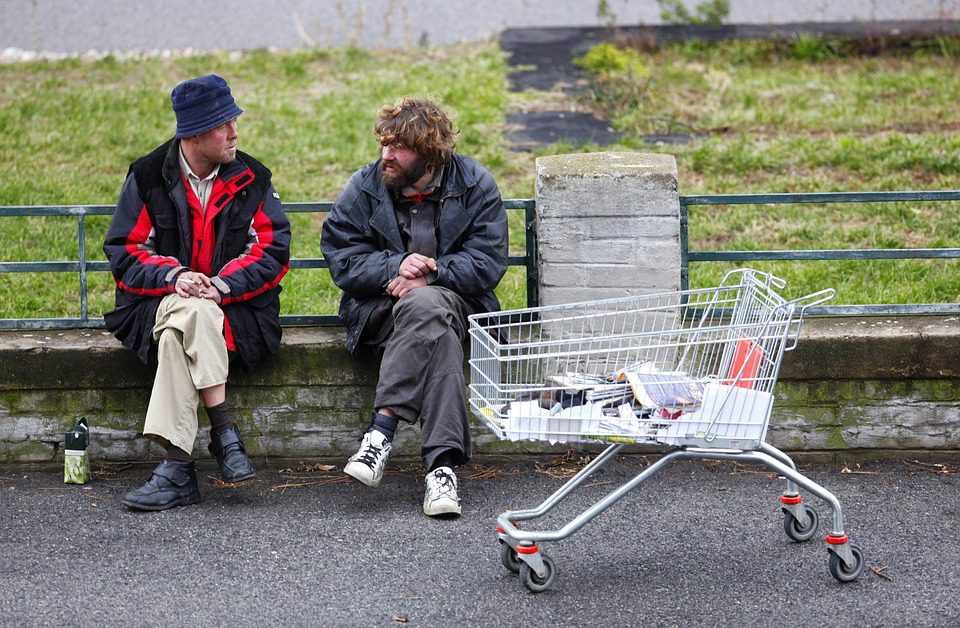
Bettering the world seems like a broad concept to discuss or even think about, and that’s because it is. There are many ways to improve the way people live, whether it’s picking up trash or volunteering at a local food kitchen. The opportunities appear limitless, but narrowing them down is a great place to start the journey. Specifically, fighting poverty can be one goal to set in mind which has plenty of jumping-off points. Below are just a few ideas, organizations and nonprofits anyone can participate in if they want to lend a hand to the greater good.
Donating
When imagining charity or volunteer work, the very first thought is often donation. It can be a simple and easy way of fighting poverty. The best part is the donor gets to pick the charity, and thus, the effect they wish to make. For instance, if someone wants to improve access to water in underdeveloped nations, they could donate to The Thirst Project. This nonprofit is an organization that aims to provide water to impoverished nations.
While this is one example of providing aid, there are plenty of other companies with different focuses that could always use the aid. Additionally, the donation doesn’t necessarily have to be monetary; other companies accept food, clothes, toys, household items—anything that might be useful to a family or person in need.
Volunteering Locally
Donating is easy, but volunteering is fun. Volunteer work is available in nearly every part of the globe in some shape or form. As a result, these opportunities can vary depending on the season, location and amount of time one would like to spend. For instance, local foods banks, food pantries, soup kitchens and other meal programs pop up all over the world. They allow the volunteer to get involved directly by providing food to those who can’t afford it otherwise. These projects can provide nourishment in various ways, from full and hot meals to canned goods or groceries.
Volunteers usually find work as laborers within the location, often in the form of food servers. The most popular name associated with food banks is Feeding America, a nationwide nonprofit which is a direct purveyor to these food banks. The company also helps to organize the volunteers by guiding them toward local locations through the Feeding America website. The work is a well-appreciated way of fighting poverty, as one full belly is a step closer to improving an underprivileged life.
Volunteering Globally
While volunteering locally is wonderful, it’s often more rewarding if it’s taken out of the locale and put into the global frame of work. It might require more time and effort, but it can have an even greater impact. By sending volunteers to countries in need, nonprofit organizations improve community development through infrastructure construction, meal programs and health centers. Common names of the industry include UNICEF, the Red Cross and Doctors Without Borders—just to name a few. These organizations run on donations and governmental funding, which allows them to have a larger global stance and allows volunteers to have the bigger role of direct involvement and assistance. This is seen with Doctors Without Borders, which sends medical professionals to areas in need.
From a single dollar to a single brick, every ounce of effort helps a cause. While these are just a few ideas to launch a career of good deeds, there are plenty more out there. Searching the internet, local communities and simply listening to the concerns of others can lead anyone to a great opportunity. Anyone and everyone can—and should—take a moment to explore their place in bettering the world and find a way to fight poverty.
– Eleanora Kamerow
Photo: Pixabay

10 Facts about Poverty in Mongolia
Mongolia experienced a relatively democratic revolution in the early 1990s. As a result, the country formed a multi-party system, wrote a new constitution and even created new means of economic growth. Mongolia is abundant in resources and its economy has received support from the country’s established mining and agricultural sector. The country also boasts some successes as it has worked to pass a variety of new legislation. For example, legislation that strengthens inclusive governance and reduces gender disparities. Despite engagement in its future, there are still challenges of continuing poverty in Mongolia. Furthermore, Mongolia faces a lack of access to equal opportunities that would improve livelihoods. Here are 10 facts about poverty in Mongolia which present some of those challenges in more detail.
10 Facts About Poverty in Mongolia
Looking to the Future
These 10 facts about poverty in Mongolia show that the country’s transition has come with many struggles in its fight to better people’s livelihoods. However, as the country gains more income, there is a chance for more diverse opportunities in job placement which will raise economic growth. As long as poverty-reduction measures are included in the development of the country, poverty rates can decrease in the future.
– Melina Benjamin
Photo: Pixabay
Ethiopian Power Plant Burns Garbage for Electricity
Addis Ababa, the rapidly growing capital of Ethiopia, has had only one dump site for garbage. The Koshe dump site developed into a giant landfill over many years of unregulated dumping. A very literal mountain of garbage built up, filling roughly 36 football fields worth of land with waste. This problem came to a head when a garbage “landslide” wound up killing 114 people, many of them scavengers who had come to the dump in the hopes of finding something useful.
The dump was more than an eyesore. It was also a health hazard due to its creeping into populated areas, limiting living space where rapid expansion was a constant. The landfill also polluted nearby rivers, as well as the air with methane gasses from rot and decay.
The Reppie Power Plant
To solve this problem, Samuel Alemayehu put forth an idea for a way to transform the dump into a useful energy source. He proposed a plan to create a garbage incineration plant specifically for the purpose of creating electricity by burning the offending garbage. The Reppie Power Plant is meant to be the first of its kind, with others to follow as similar solutions in other cities.
“We believe these plants will create for African megacities a modern, multipurpose infrastructure… which will enable them simultaneously to dispose of waste, generate sustainable energy, clean, and reuse water, recycle valuable resources, generate industrial grade steam for use by other businesses, and, most importantly do all this in one facility located safely within city limits,” Alemayehu said.
A coalition of Ethiopia’s government and several international companies funded the Reppie Power Plant. It was modeled off similar plants from Europe and France, and the project was officially launched in 2017. The plant officially went operational the following year. The Reppie Power Plant is designed to process 1,400 tons of waste every day, which comes to roughly 80 percent of the city’s waste, all while producing 30 percent of the city’s electricity. It does this by burning the garbage to boil water, and the resultant steam turns massive turbines to produce the electricity.
The Reppie Power Plant is still operating, despite being shut down for three months in 2019 due to a dispute between contractors and Ethiopian Electric Power (EEP). It has also succeeded in inspiring other nations to adopt the same model. In Kenya, an incineration plant has been greenlit which is modeled directly off the Reppie Power Plant, with the equivalent of 197 million USD dedicated to the project. It is no surprise, since such plants simultaneously clear living space, eliminate sources of pollution and disease, eliminate eyesores and produce electricity. So long as it continues to operate properly, the Reppie Power Plant is likely to have a lasting positive effect in its own city and, as others follow its example, in other countries and cities around the world.
– Mason Sansonia
Photo: Flickr
Four Celebrities Who Were Refugees
Four Celebrities Who Were Refugees
World-famous singer, Gloria Estefan, was born in Havana, Cuba. She and her family fled the country in 1960, after the Cuban Revolution. After landing in Florida, Estefan’s father joined the American army and took part in the Bay of Pigs invasion. Estefan was granted citizenship in 1974 and joined the band Miami Sound Machine, which was the beginning of her legendary career. Currently, Estefan has seven Grammys.
Kunis, well-known for her role on That ‘70s Show and as the voice of Meg on Family Guy, was born and raised for the first seven years of her life in Ukraine. After facing years of anti-Semitism in the former Soviet Union, the family was granted a religious-refugee visa and fled to the United States in 1991, settling in Los Angeles, California.
In an interview with the Los Angeles Times, Kunis reflected on her experience: “It was right at the fall [of the Soviet Union]. It was very communist, and my parents wanted my brother and me to have a future, and so they just dropped everything. They came with $250.” She describes her initial experience of living in the U.S. as “like being blind and deaf at age 7” because of the extreme culture shock she faced. Kunis, like other celebrities with similar experiences, is now a staunch advocate for refugees and has criticized the Trump administration’s actions surrounding the Syrian refugee crisis.
Rapper M.I.A. was born in London but moved to Sri Lanka with her family as an infant. After her father organized an independence movement for ethnic Tamils, civil war broke out and the family was forced to flee. Initially, M.I.A. and her family settled in India but eventually landed in London.
Discussing her experiences with NME, she stated: “If you’re coming from the war zone, you definitely got an issue. You have to adapt to a new place, you have to start new schools—every kid is going to go through all the things I went through. They’re gonna be in a council flay, they have to fill out the forms, sit in the waiting rooms, get housed, wait for your voucher for your school uniform. And you had to come up with how to make luncheon vouchers look cool because you’re the only kid that’s got ‘em!”
Ora was born in what was once Pristina, Yugoslavia, now known as Kosovo. Once Yugoslavia dissolved, ethnic Albanians, including 1-year-old Ora and her family, began to be persecuted by Slobodan Milosevic’s regime. The family, like those of many of the other celebrities who were refugees, fled to London, where they faced prejudice as refugees. The family was determined to have a better life, though, despite the discrimination.
In an interview with the Evening Standard, Ora encouraged other refugees and their families to do the same, while reminding others about the toll that fleeing can take on people: “That word [refugee] carries a lot of prejudice but it also made us determined to survive. When you put anyone into an alien environment, where other people aren’t completely comfortable with them being there, they are automatically going to be defensive. It’s the rule of the jungle, right?”
At a time when open-door policies and actions regarding the refugee crisis are often controversial, these four celebrities who were refugees are challenging the stigma around being a refugee and whom it is we think of when discussing refugees.
– Shania Kennedy
Photo: Google Images
10 Facts About Labor Unions in Mexico
10 Facts About Labor Unions in Mexico
Stronger worker protections in Mexico promise to strengthen its middle-class and help the poor. By reducing the degree of poverty, Mexico can also expect to enjoy greater stability. Labor unions in Mexico present an opportunity for economic expansion, foreign investment and an entirely new market for consumer goods.
– Kyle Linder
Photo: Google Images
The Best Ways of Fighting Poverty
Bettering the world seems like a broad concept to discuss or even think about, and that’s because it is. There are many ways to improve the way people live, whether it’s picking up trash or volunteering at a local food kitchen. The opportunities appear limitless, but narrowing them down is a great place to start the journey. Specifically, fighting poverty can be one goal to set in mind which has plenty of jumping-off points. Below are just a few ideas, organizations and nonprofits anyone can participate in if they want to lend a hand to the greater good.
Donating
When imagining charity or volunteer work, the very first thought is often donation. It can be a simple and easy way of fighting poverty. The best part is the donor gets to pick the charity, and thus, the effect they wish to make. For instance, if someone wants to improve access to water in underdeveloped nations, they could donate to The Thirst Project. This nonprofit is an organization that aims to provide water to impoverished nations.
While this is one example of providing aid, there are plenty of other companies with different focuses that could always use the aid. Additionally, the donation doesn’t necessarily have to be monetary; other companies accept food, clothes, toys, household items—anything that might be useful to a family or person in need.
Volunteering Locally
Donating is easy, but volunteering is fun. Volunteer work is available in nearly every part of the globe in some shape or form. As a result, these opportunities can vary depending on the season, location and amount of time one would like to spend. For instance, local foods banks, food pantries, soup kitchens and other meal programs pop up all over the world. They allow the volunteer to get involved directly by providing food to those who can’t afford it otherwise. These projects can provide nourishment in various ways, from full and hot meals to canned goods or groceries.
Volunteers usually find work as laborers within the location, often in the form of food servers. The most popular name associated with food banks is Feeding America, a nationwide nonprofit which is a direct purveyor to these food banks. The company also helps to organize the volunteers by guiding them toward local locations through the Feeding America website. The work is a well-appreciated way of fighting poverty, as one full belly is a step closer to improving an underprivileged life.
Volunteering Globally
While volunteering locally is wonderful, it’s often more rewarding if it’s taken out of the locale and put into the global frame of work. It might require more time and effort, but it can have an even greater impact. By sending volunteers to countries in need, nonprofit organizations improve community development through infrastructure construction, meal programs and health centers. Common names of the industry include UNICEF, the Red Cross and Doctors Without Borders—just to name a few. These organizations run on donations and governmental funding, which allows them to have a larger global stance and allows volunteers to have the bigger role of direct involvement and assistance. This is seen with Doctors Without Borders, which sends medical professionals to areas in need.
From a single dollar to a single brick, every ounce of effort helps a cause. While these are just a few ideas to launch a career of good deeds, there are plenty more out there. Searching the internet, local communities and simply listening to the concerns of others can lead anyone to a great opportunity. Anyone and everyone can—and should—take a moment to explore their place in bettering the world and find a way to fight poverty.
– Eleanora Kamerow
Photo: Pixabay
10 Reasons Why People Should Shop Fair Trade
Having shopped at Ten Thousand Villages in the past, Marks said she was “intrigued as a customer” from the positive impact Ten Thousand Villages makes in preventing global poverty. It didn’t take long before she applied for the position. Since then, Marks is enjoying her job in the fair trade industry. She says her favorite part is telling stories about the artists to customers because the stories allow customers to make connections between specific artisans and their culture with their products.
Marks believes fair trade is necessary because it helps people in developing countries have higher standards for their communities, their homes and their educational systems. Here are 10 reasons why people should shop fair trade.
10 Reasons Why People Should Shop Fair Trade
Like Marks encourages her customers, these 10 reasons show why people should shop fair trade. By shopping fair trade, workers’ rights are protected. They are treated equally and paid fairly. They are able to attend school and live in a comfortable, healthy environment. Their cultures are kept alive. When someone shops fair trade, they are helping keep the industry alive. Through a simple Google search, people can find a fair trade store near them to shop at and join the fight.
– Emily Turner
Photo: Fair Trade Product by Emily Turner
Diplomacy in the Middle East
In a time clouded by violent Middle Eastern conflicts, the spotlight is focusing on how quickly the U.S. can militarize these regions. However, it is important to take note of diplomacy in the Middle East. The following is a list of the U.S.’s current diplomatic efforts in the Middle East and the ones it could potentially make in the future.
The Iraq-U.S. Alliance
Iraq is proving itself to be a key alliance for the U.S., as America seeks to put an end to the Islamic State of Iraq. The importance of preserving this alliance is more vital now than ever. To nurture this alliance, U.S. aid goes to the government of Iraq in the hopes of helping the country attain its domestic goals. This aid will hopefully allow Iraq to respond to pressing matters such as finding living quarters for the displaced and putting reforms in place to meet the needs of its people. As Iraq continues to stabilize domestically, it will help both the U.S. and Iraq militarily by giving them the ability to build up their security forces.
Natural Disasters in Iran
In 2019, a flood struck Iran which resulted in over 60 deaths and only succeeded to add on to the country’s existing troubles. The country was already in an economic crisis as a result of President Trump’s decision to impose secondary sanctions. While the Trump administration has been harsh in its stance toward Iran, there are steps the U.S. can take to aid Iran in its recovery.
Many developing countries, like Iran, constantly face under-preparedness for natural disasters which then adds to its existing financial pains. If the U.S. were to aid Iran in preparedness by providing access to better weather monitoring technologies, the country would be better equipped to handle natural disasters. To help Iran accomplish this and save lives, the U.S. government could consider creating a new general license to allow for access to this technology.
Military and Economic Aid to Israel
Israel has been a longstanding ally of the U.S. In fact, America sends Israel over $3 billion in military and economic aid each year. Through strong diplomatic relations with Israel, the U.S. prevented radicalism movements in the Middle East. Israel also provided the U.S. with valuable military intelligence. The U.S. remains committed to this alliance, and as of August 21, 2019, the U.S. Agency for International Development released a statement indicating that it would be increasing efforts to create employment opportunities and stable communities in Israel. The U.S. also committed to continuing to provide “water, education, technology, science, agriculture, cyber-security and humanitarian assistance.”
Humanitarian Efforts in Syria
After President Trump’s targeted airstrike, humanitarian efforts in Syria have begun to garner interests again. The airstrike was in response to Bashar Al-Assad’s usage of chemical weapons on his people. Since the airstrike, the U.S. discussed different ways to aid Syria through helping displaced refugees, coordinating with other countries and giving more aid. People consider the crisis in Syria to be one of the worst humanitarian crises in modern times.
If America wishes to aid Syrians in this humanitarian crisis, the U.S. could make it easier for Syrian refugees to enter the country. Since the beginning of the Syrian refugee crisis, the U.S. has only accepted 20,000 refugees. There are still millions of Syrians in need of resettlement. The U.S. could also provide insight and intelligence to countries that are dealing with refugees on the frontlines. Countries like Turkey, Lebanon and Jordan need help learning how to deal with a mass influx of refugees.
While the world has shown more interest in U.S. militarization, the U.S. government demonstrated its interest in facilitating diplomacy in the Middle East, indicating that diplomacy in the region is never off the table.
– Gabriella Gonzalez
Photo: Flickr
Five American Presidents Who Experienced Poverty
Here are five American presidents who experienced poverty:
These American presidents who experienced poverty shed light on the fact that even the brightest or the most capable among us who can lead a nation like the United States can be living in poverty. Economic empowerment and education opportunities can be presented to all talented potentials, thus eradicating global poverty and reducing global inequality in all spheres.
– Nergis Sefer
Photo: Google Images
10 Facts About the Recession in Iran
Iran, a southwest Asian nation of over 81 million people, currently struggles with a dire recession. Iranians face a combination of inflationary pressures and economic stagnation, known as stagflation. Listed below are 10 facts about the recession in Iran:
10 Facts About the Recession in Iran
The above 10 facts about the recession in Iran show that many hurdles still block the country’s growth. However, the steady increase in access to amenities displays economic progress within the recession and the IMF’s recommendations provide viable solutions to stagflation. Continued improvements will service the poor and provide a path to Iran’s economic stability.
– Sean Galli
Photo: Flickr
Five Facts About China’s Poverty Alleviation Program
Five Facts About China’s Poverty Alleviation Program
As a result of China’s poverty alleviation program, people countrywide are overcoming the challenges of poverty. Not only is the percentage of poverty globally declining because of China’s efforts but people are also thriving. China is the only country worldwide to have improved its citizens’ living conditions to such an extent in such a short period of time.
– Laura Rogers
Photo: Flickr