• Link to X
  • Link to Facebook
  • Link to Instagram
  • Link to TikTok
  • Link to Youtube
  • About
    • About Us
      • President
      • Board of Directors
      • Board of Advisors
      • Financials
      • Our Methodology
      • Success Tracker
      • Contact
  • Act Now
    • 30 Ways to Help
      • Email Congress
      • Call Congress
      • Volunteer
      • Courses & Certificates
      • Be a Donor
    • Internships
      • In-Office Internships
      • Remote Internships
    • Legislation
      • Politics 101
  • The Blog
  • The Podcast
  • Magazine
  • Donate
  • Click to open the search input field Click to open the search input field Search
  • Menu Menu

Tag Archive for: Education

Posts

Activism, Education, United Nations, Women and Female Empowerment

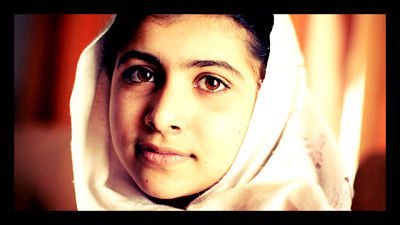
Malala Proves Education is Key to Empowerment

malala_opt-1
Malala Yousafzai is a young education rights campaigner from Pakistan. Malala will soon be celebrating her 16th birthday, a miracle after she was shot by extremists for her outspoken beliefs on education. Malala will celebrate her birthday by traveling to the United Nations where students from more than 80 countries will join her.

Malala and the other young activists will be assembled to call for global education for everyone in the world. She and the other young diplomats believe that education is a right for all – one of the Millennium Development Goals, and a vital component of the path to global citizenship. This belief is well founded in the fact that universal compulsory education represents a future that the world wants. Malala was the first person to sign on to a new worldwide petition calling for urgent action to ensure the right of every child to safely attend school. The petition serves as an initial step in focusing the UN agenda on education.

UN Secretary General Ban Ki-moon supports Malala’s mission to bring education to the world. He states that education is an essential step in a world without poverty, violence, discrimination, and disease. He also recognizes that in order to achieve these objectives, the global society needs to continue pushing forward. The secretary general recognizes that we, as a global society, have made progress on this issue, however, there is much more work to be done. Ban expresses that no child or woman should have to consider going to school as an act of bravery.

Ban states that too many girls around the world are subjected to extremist threats for trying to obtain an education. The benefits of educating women in developing countries have been proven time and time again. Ban explains that when women and girls are educated, a society develops at a more rapid pace than without their education. Additionally, education increases future earnings for women, allowing them to provide their families with additional resources, over time, lifting them out of poverty.

If education is key to empowerment as the path to economic stability and development, why is it so widely contested in many developing countries? The answer lies in fear. If we as a global community continue to fear education for all, we will fail to grow as a global economy. More steps must be taken to ensure each child has access to education.

-Caitlin Zusy
Source: Huffington Post, UN News Center
Photo: Stanford Bookhaven
July 15, 2013
https://borgenproject.org/wp-content/uploads/borgen-project-logo.svg 0 0 Borgen Project https://borgenproject.org/wp-content/uploads/borgen-project-logo.svg Borgen Project2013-07-15 15:21:182024-06-11 01:39:24Malala Proves Education is Key to Empowerment
Nonprofit Organizations and NGOs

Plan International USA

Plan_International_U.S.A_Education
Plan International USA is a nonprofit organization that got started in 1937 by caring for refugee children of the Spanish Civil War. The organization posits that education is a fundamental right, and they direct their energies toward improving access to a quality education and the proper management and governance of education. Donations go toward schools, furniture, supplies, and the proper training of teachers and parent-teacher associations.

Improving access to education for all is a challenging task, especially in those cultures where one group or gender is held in a higher esteem than another. Some societies are very patriarchal and don’t allow for girls and women to receive the education that males do. Plan International U.S.A. has a very visible link on their website to their campaign “Because I Am A Girl”. One story on this webpage deals with the much publicized international case involving Malala, a young girl who pursued her schooling and was attacked by the Taliban for doing so. ”Because I Am A Girl” highlights Malala Day on July 12 as an occasion to demand that all children, especially girls, get the education they deserve. Malala has become a symbol of oppressed children everywhere who are denied their right to an education.

How important is the education of girls to ending global poverty? Plan International U.S.A. reports that 70% of those 1 billion people living in extreme poverty are female. Schooling raises the standard of living of women and gives girls in the developing world the capacity to fight back against injustice. Denying girls this right is costing the developing world $92 billion in potential income.

Plan International U.S.A. is a dedicated organization that champions what is arguably the cure-all for global poverty, education. With projects aimed at getting girls in the classroom and stories of brave children like Malala, the movement is gaining ground. To make a direct donation to helping women and children, please “Protect A Girl” and visit www.planusa.org.

– David Smith

Sources: Plan International U.S.A, Malala Day, Plan U.S.A.
Photo: 

July 14, 2013
https://borgenproject.org/wp-content/uploads/borgen-project-logo.svg 0 0 Borgen Project https://borgenproject.org/wp-content/uploads/borgen-project-logo.svg Borgen Project2013-07-14 13:23:342024-05-24 23:49:42Plan International USA
Education, Food Security, Poverty Reduction

Poverty in Chad

poverty in chad
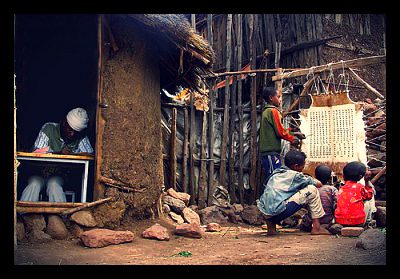
Poverty in Chad? Surprisingly for an oil-producing nation, Chad is one of the poorest countries in the world. After gaining its independence from France, Chad struggled to find its footing. Mismanagement, corruption, conflict and a harsh climate did the country no favors, and Chad has consistently remained one of the poorest countries in Africa.

Over half of Chad’s population lives in poverty; this is partly a result of the harsh geographical conditions. The majority of Chad is covered by desert and for a developing country that depends largely on subsistence farming, this presents a significant challenge. The most successful practice is migratory farming, where herds can move and adapt to changing climate conditions, but even these are severely limited by resources. As well, droughts in the 1970s and 80s aggravated already sub-optimal conditions. Recently, changes in climate have brought lower rainfalls and consistent overuse has led to soil erosion and land degradation. Farmers lack infrastructure, support and resources needed to grow sufficient food.

Geographic isolation, a lack of cultural cohesion and lack of education are all contributors to the problem. Spread out among a huge amount of land, Chad’s citizens are separated by large swaths of land, making it difficult to distribute necessary resources. Most people do not speak either of the country’s official languages (Arabic and French) and 90% of the country is illiterate.

Gender discrimination is also rife in Chad, though women are an essential part of a family’s survival. They are given work outside the home as well as the responsibility of raising a family, tending farms, gathering water, raising children and cooking. Yet they are culturally limited from access to education or training, and marginalized by society. These women are especially vulnerable to the psychological as well as physical effects of poverty.

Chad’s reality is brutal; a large percentage of the population is undernourished and lacks access to education, as well as high levels of food insecurity and infant mortality. Chad is not set to meet the MDGs as a result of poor management and weak planning and implementation.

Chad’s story is not a pretty one, but an important one. It is a reminder of the harsh reality that is daily life in Sub-Saharan Africa, and the amount of work that remains to be done in the region.

– Farahnaz Mohammed

Source: Rural Poverty Portal, World Bank
Photo: Charity in Chad

July 14, 2013
https://borgenproject.org/wp-content/uploads/borgen-project-logo.svg 0 0 Borgen Project https://borgenproject.org/wp-content/uploads/borgen-project-logo.svg Borgen Project2013-07-14 05:00:102024-05-24 23:58:15Poverty in Chad
Advocacy, Aid Effectiveness & Reform, Children, Education, Foreign Aid

Child Sponsorship Works

 child-sponsorship-works-borgen-project-compassion-international_opt
When people ask how to help the poor, child sponsorship often is suggested. Indeed, for a small amount of money each month, organizations allow individuals to sponsor a child and help to provide education, food, and clothing for them. In return, the sponsors get a picture of the child and quarterly or annual updates from the organization regarding their child.  It has long seemed like an easy way to make an impact. The question many people ask, however, is does it really work? One development economist decided he was going to find out.

It seemed no one had ever been interested in finding the answer despite the fact that 9 million children are sponsored worldwide and more than $5 billion dollars per year is invested in child sponsorship programs. For organizations, obviously the stakes were high. If they allowed researchers to study the effectiveness of their programs, what would they do if they came back ineffective? After several years, one organization decided to allow themselves to be studied under one condition: anonymity.

The study initially looked at individuals in Uganda, studying 809 individuals including 188 who were sponsored as children. The results from the first study were any economist’s dream. The data clearly showed large and statistically significant impacts on the educational outcomes of sponsored children. It appeared the program was actually working! To solidify the results, the study was conducted in six other countries: Uganda, Guatemala, the Philippines, India, Kenya and Bolivia. Data was obtained on 10,144 individuals and the results were consistent with the first study. 27 to 40% more sponsored children complete secondary school and 50 to 80% more complete a college education. In addition to effects on education, the study found that sponsored children were also more likely to gain meaningful employment.

As a result of the study, the sponsorship organization removed the anonymity clause. Compassion International was the organization that allowed its program to be scrutinized; the results were clear that child sponsorship works. It helps lift kids and families out of poverty and provides them with hope. For more information about child sponsorship, visit Compassion International at www.compassion.com.

– Amanda Kloeppel
Sources: Christianity Today, Compassion International

July 13, 2013
https://borgenproject.org/wp-content/uploads/borgen-project-logo.svg 0 0 Borgen Project https://borgenproject.org/wp-content/uploads/borgen-project-logo.svg Borgen Project2013-07-13 06:00:172020-05-14 11:01:29Child Sponsorship Works
Advocacy, Developing Countries, Extreme Poverty, Human Rights

Mercy Corps

Mercy Corps
Mercy Corps works to save and improve lives in some of the most impoverished places on earth. Since it was founded in 1979, the NGO has worked in war-torn and poverty-ridden countries to turn crises into opportunities. 95% of their staff are local residents working in nations like Somalia, Afghanistan, the Congo and Iraq.

The countries in which Mercy Corps works have several things in common. Usually children’s lives are at risk, women’s education is ignored, and there is little chance for economic growth. The organization helps to provide and build food security and create educational and economic opportunities. Their method is to listen to the locals and prioritize urgent needs first. They look at long-term and innovative solutions that bring systemic change.  Through taking responsible risks and thinking big, the organization is able to help large numbers of individuals.

Mercy Corps believes communities work best when they work for their own growth and change. They believe local markets provide sustainable recovery and good governance is the foundation to success. They focus their work on places in transition either from conflict, natural disasters, or political upheaval. They start with emergency relief and move to long-term goals to create communities that can withstand future shocks.

To get involved with Mercy Corps, check out their website at www.mercycorps.org.  They have lots of opportunities from donating money to fundraising to attending events or visiting their office in Portland. They also have a list of open positions and offer internships for those interested in a longer or more permanent position.

It is evident that the organization is making a difference in some of the toughest places on earth. Lives are being saved and communities are being changed through the work Mercy Corps does.

– Amanda Kloeppel
Source: Mercy Corps

July 13, 2013
https://borgenproject.org/wp-content/uploads/borgen-project-logo.svg 0 0 Borgen Project https://borgenproject.org/wp-content/uploads/borgen-project-logo.svg Borgen Project2013-07-13 04:00:412021-12-13 09:56:56Mercy Corps
Activism, Education, Food & Hunger, Food Security, Health, Sanitation, Water

Bruno Mars Sings for Poverty Relief

bruno mars sings for poverty relief
Bruno Mars isn’t just another handsome face singing catchy love songs. He — along with over 70 artists — is partnering with the Global Poverty Project to address poverty worldwide by using a fanbase to raise awareness and funds.

Global Citizen is a website managed by the Global Poverty Project that centralizes information about global poverty and opportunities to help. Its ultimate goal is to increase the number of citizens actively advocating for change. The site is comprised of actions related to education and advocacy campaigning, all of which address 13 key issues:

  • Food and Hunger
  • Primary Education
  • Gender Equality
  • Child Mortality
  • Maternal Health
  • Fighting Diseases
  • Water and Sanitation
  • Environmental Sustainability
  • Global Partnerships
  • Fighting Corruption
  • Effective Governance
  • Polio Eradication
  • Fair Trade

Participation in Global Citizen actions such as watching a video about extreme poverty, signing petitions, contacting representatives or volunteering time or money earn points for users, which can be redeemed for prizes.

14-time Grammy Award nominee Bruno Mars is one of over 70 artists who realize the importance of ending global poverty. As touring recording artists, they are exposed to areas of the world that suffer the effects of extreme poverty in outrageous percentages. Recognizing the power of their celebrity, they have stood up to support the movement. Mars joins a group of industry power-players like Jay-Z, Beyoncé, Bruce Springsteen, Pearl Jam, Kings of Leon, Kesha, Kanye West, John Mayer and more who have donated at least 2 tickets from each show scheduled in their current tour, resulting in over 20,000 tickets donated to Global Citizen. Once users reach enough points, they can enter a drawing for a chance to win concert tickets. Another option is simply redeeming a higher number of points for tickets, similar to the ‘Buy It Now’ feature on eBay.

Extreme poverty has been cut in half in the last 30 years, and the knowledge and resources necessary to end the crisis completely within a generation are available. It won’t happen overnight, but Global Citizen is breeding an army: an army with the power to end extreme poverty by making informed consumer decisions and advocating for change. Global Citizen and artists like Bruno Mars are helping people to see that every voice counts and every person is capable of changing lives around the world.

– Dana Johnson

Source: Global Citizen, New York Times
Photo: Smash Vault

July 10, 2013
https://borgenproject.org/wp-content/uploads/borgen-project-logo.svg 0 0 Borgen Project https://borgenproject.org/wp-content/uploads/borgen-project-logo.svg Borgen Project2013-07-10 07:00:312016-04-07 18:48:02Bruno Mars Sings for Poverty Relief
Education

Sterilization or Education in India?

education-in-india_global_poverty_international_aid_borgen_project_opt

A common thought among sociologists dealing with poverty is that “wealthier is healthier”; however, a study of subjects in India by sociologists  at Cambridge University in the UK indicates that literacy, rather than money, may be more crucially linked to health and wellbeing.

This correlation suggests that health may be one important result of the opportunities and understanding that literacy opens to the literate. Illiterate citizens in India may have trouble understanding medical labeling, accessing healthcare, or engaging in public health programs.  Literate citizens, by contrast, are able to access information more easily, and make more informed decisions.

This study comes on the heels of a recent increase in coerced sterilization of women in India, a increase which appears to be the result of policies targeted at the uneducated and illiterate. Government employees are hired to convince women in impoverished communities to received sterilizations, sometimes without full knowledge of the procedure’s consequences.  Oftentimes the women agree to be sterilized for a payment of $10, the equivalent of one week’s pay. This money comes directly from the government, which has also given doctors monetary incentives and mandatory quotas for sterilizations.  India currently performs 37% of the world’s female sterilizations (4.6 million last year alone). These are often carried out on illiterate women.

Despite this drastic measure to decrease the population, the Indian government has missed every one of its goals to curb India’s increase in population. India’s population is set to eclipse China’s by 2021.

While sterilization seems a coldly practical solution to the problem of overpopulation in India, education and literacy could empower women to make responsible preventative decisions. This knowledge could then passed down from generation to generation, creating a lasting effect on the populace.

As this recent study suggests, by educating the poor rather than sterilizing them, the Indian government could increase the wellbeing of its populace and decrease population at the same time.

– Pete Grapentien

Source: Business Standard, Bloomberg
Photo: Entrance Exams

July 10, 2013
https://borgenproject.org/wp-content/uploads/borgen-project-logo.svg 0 0 Borgen Project https://borgenproject.org/wp-content/uploads/borgen-project-logo.svg Borgen Project2013-07-10 04:00:012024-12-13 17:49:26Sterilization or Education in India?
Education, Global Poverty

What is the Global Education First Initiative?

education_opt-1
The necessity for global education has always been present, but what many may not know is that worldwide, 61 million primary-aged children are out of school, of which more than half are girls. United Nations Secretary-General Ban Ki-moon seeks to remedy this with the Global Education First Initiative – a program that works to raise awareness of the necessity of education as well as to provide better access to education, as well as to improve the quality of learning for every child the program puts into school.

In order to put every child in school, some major goals for development include eliminating cost barriers to attending school, identifying and aiding those that need nutrition and health support, eliminating the gender disparity, and building millions of new classrooms around the world, especially in rural and crisis-affected areas. The second focus of the initiative, to improve quality of learning, is going to be met by training of teachers and improving learning materials. These measures will insure that children are more ready for further education as well as for life outside of school – with proper education come far more opportunities for success in life.

The last major focus of the initiative is to foster global citizenship, or in other words, promote peace, community, and innovation throughout the world through education. In the words of Ban Ki-moon, “The world faces global challenges that require global solutions. Education must cultivate an active care for the world and for those with whom we share it”. Ki-moon sees education as a driving force for human development that will drive down inequalities and improve health while fostering solidarity around the globe.

This push for education has been heartily embraced by education rights activist Malala Yousafzai, who has volunteered with the UN to speak on July 12 in favor of the right to education for girls, and for all those who may desire it. As a survivor of extreme violence because of her advocacy, Malala’s message is clear: “…that all students should be given the chance to attend school with adequate safety. Obtaining education is every man and woman’s birth right and no one is allowed to take away this right from them”.

In honor of Malala’s efforts, and in part encouraged and inspired by the Global Education First Initiative, the UN will be launching a global petition called A World at School – Stand With Malala as an effort to establish universal primary education by December 2015. It is the hope of the United Nations that someday universal education will be achieved and that because of this the world will become a more stable, healthier, and happier place.

– Sarah Rybak

Sources: Global Education First, Women News Network
Photo: Global Education First

July 7, 2013
https://borgenproject.org/wp-content/uploads/borgen-project-logo.svg 0 0 Borgen Project https://borgenproject.org/wp-content/uploads/borgen-project-logo.svg Borgen Project2013-07-07 04:19:042024-05-24 23:59:18What is the Global Education First Initiative?
Education, Nonprofit Organizations and NGOs

A Small NGO on a Big Mission in Bangladesh

Bangladesh-volunteers-association-literacy
Founded in New York in 1998, the Volunteers Association for Bangladesh is a small NGO on a big mission: to change public education for the poor in Bangladesh. The organization, whose members are mostly expatriate Bangladeshis living in the U.S. and Canada, has devoted itself to providing the funds, technical resources, and training necessary to improve Bangladeshi public schools, particularly those in rural areas where most of the country’s poor people live.

Their task could be seen as a daunting one. Statistics from 2009 put the literacy rate among Bangladeshi males at 54%, and among females at only 32%. According to more recent studies, the literacy rate for people in Bangladesh over age 15 is just under 60%. Dropout rates for high school students are estimated at 42%. Figures like these speak to the great educational need that the Volunteers Association for Bangladesh seeks to address.

The VAB has taken a comprehensive approach to meeting these educational needs and tackling the problem of inadequate schooling. Programs in 60 schools across the country are designed to help students from preschool through university. They provide free preschool with a nutritious meal, tutoring for 6th-grade students to help them pass entrance exams for high schools, and scholarships to help high school students pay for tuition and other necessary materials.

The group has also donated supplies like computers and science equipment in order to help 15 public schools better serve their students. In 2005, VAB started a college scholarship program, which has since helped 201 students pay for tuition and textbooks. In addition, they train local university students to work as tutors in the public schools.

All of these efforts are making headway in helping to open up doors to real opportunity for the poor in Bangladesh. The VAB is working to keep expanding its programs, and most recently they have partnered with Microsoft Southeast Asia to start a computer literacy and training program. To learn more about VAB and all of its efforts, visit www.vabonline.org.

– Délice Williams

Sources: Volunteer Association for Bangladesh, The Financial Express
Photo: Voice of America

July 5, 2013
https://borgenproject.org/wp-content/uploads/borgen-project-logo.svg 0 0 Borgen Project https://borgenproject.org/wp-content/uploads/borgen-project-logo.svg Borgen Project2013-07-05 05:27:362017-11-30 11:09:43A Small NGO on a Big Mission in Bangladesh
Advocacy, Children, Education, Women and Female Empowerment

Varkey GEMS Fights for Global Education

varkey_opt
Despite the importance of global education, donor agencies and major developed countries have decreased their federal budgets and funding. Developing countries like India are working hard to get children into school and are increasing enrollment rates, but the fact remains that attendance rates and general accessibility to education in developing countries are lower than they should be.

Vikas Pota, CEO of Varkey GEMS Foundation, interprets this as “a major setback for children all over the world”, and states that “we need innovative solutions to make sure children have the opportunity to attend school”.  The Varkey GEMS Foundation attempts to imrove the standards of education for underprivileged children, with one of their major goals being to impact 100 underprivileged children for every child enrolled in a GEMS school. In order to ensure that “every child has a chance to prosper”, the foundation provides scholarships and leadership development, as well as builds schools throughout the developing world. Another core goal of the foundation is to promote gender equality and provide for girl’s and women’s education as well.

At the launch of the foundation in December 2010, Bill Clinton had this to say, “There will rarely be people who launch something with so much potential to lift the hopes and spirits and dreams of children as this Foundation has done tonight. The benefits from an educated child will affect not only the child itself, but his or her family and the wider community… the world is depending on it”. By focusing on education of underprivileged children, it is the hope of Pota and of the foundation that those children will be able to lift themselves from poverty into a life of better opportunities and independence.

Pota believes that the biggest crisis we face in education “is that of not investing enough in our teachers”. Over the next ten years, the foundation hopes to train over 250,000 teachers globally, with the help of government aid. Another problem is that the majority of aid to basic education is not allocated to the lowest income countries where the most aid is needed. Pota calls for collective responsibility and action, which starts with the citizens. Calls to congress people and legislators are the most effective way to show support, and will increase the likelihood that budgets for education-based aid will increase.

– Sarah Rybak
Source: Huffington Post, Gems Education
Photo: A Celebration of Women

July 4, 2013
https://borgenproject.org/wp-content/uploads/borgen-project-logo.svg 0 0 Borgen Project https://borgenproject.org/wp-content/uploads/borgen-project-logo.svg Borgen Project2013-07-04 04:10:582020-05-14 10:45:39Varkey GEMS Fights for Global Education
Page 63 of 67«‹6162636465›»

Get Smarter

  • Global Poverty 101
  • Global Poverty… The Good News
  • Global Poverty & U.S. Jobs
  • Global Poverty and National Security
  • Innovative Solutions to Poverty
  • Global Poverty & Aid FAQ’s
Search Search

Take Action

  • Call Congress
  • Email Congress
  • Donate
  • 30 Ways to Help
  • Volunteer Ops
  • Internships
  • Courses & Certificates
  • The Podcast
Borgen Project

“The Borgen Project is an incredible nonprofit organization that is addressing poverty and hunger and working towards ending them.”

-The Huffington Post

Inside The Borgen Project

  • Contact
  • About
  • Financials
  • President
  • Board of Directors
  • Board of Advisors

International Links

  • UK Email Parliament
  • UK Donate
  • Canada Email Parliament

Get Smarter

  • Global Poverty 101
  • Global Poverty… The Good News
  • Global Poverty & U.S. Jobs
  • Global Poverty and National Security
  • Innovative Solutions to Poverty
  • Global Poverty & Aid FAQ’s

Ways to Help

  • Call Congress
  • Email Congress
  • Donate
  • 30 Ways to Help
  • Volunteer Ops
  • Internships
  • Courses & Certificates
  • The Podcast
Scroll to top Scroll to top Scroll to top