• Link to X
  • Link to Facebook
  • Link to Instagram
  • Link to TikTok
  • Link to Youtube
  • About
    • About Us
      • President
      • Board of Directors
      • Board of Advisors
      • Financials
      • Our Methodology
      • Success Tracker
      • Contact
  • Act Now
    • 30 Ways to Help
      • Email Congress
      • Call Congress
      • Volunteer
      • Courses & Certificates
      • Be a Donor
    • Internships
      • In-Office Internships
      • Remote Internships
    • Legislation
      • Politics 101
  • The Blog
  • The Podcast
  • Magazine
  • Donate
  • Click to open the search input field Click to open the search input field Search
  • Menu Menu

Tag Archive for: Education

Posts

Global Poverty

History of the World Bank: Successes

History of the World Bank: Successes
Despite the depressing news of the last part in this three-part history of the World Bank, the global lending institution has had a great number of successes that improved the livelihoods and well being of millions of people.

Immediately after establishment in 1944, the World Bank set up offices around Europe and started work. The first recipient was France. $250 million was used for reconstruction of factories, roads, and other essential economic and social infrastructure. Europe was not the only focus of the new institution. India received assistance and expertise from the World Bank in harnessing the “River of Sorrows.” Once a source of major floods, the River of Sorrows was transformed by power generator, sanitation, and irrigation projects.

In 1971, the World Bank built a worldwide network of agriculture research centers resulting in the creation of a scientific partnership and massive increases in agricultural production via technology adoption. This initiative allowed countries to better fulfill their growing populations’ nutritional needs. This decade also saw investments in renewable energy (1973, El Salvador) and the establishment of national programs for water pollution controls.

With projects like the long-standing water deal signed by India and Pakistan and the establishment of the International Development Association, the World Bank started focusing on a ‘basic-needs’ approach to development. Pursuant projects included helping subsistence farmers (1973) and eradicating River Blindness in 1974 allowing more people to participate in the development of their communities and nations.

Milestone projects include the 1984 donations for food-for-drought victims through the World Food Program for sub-Saharan African countries. Other note-worthy initiatives include stopping ozone damage (1989) and protecting forests (1991) through which the World Bank implemented the Montreal Protocols on the environment and halted all financing to commercial logging in primary tropical forests such as the Amazon. The World Bank also played a role in developing job-creating projects under Nelson Mandela in South Africa in 1991. The World Bank joined the post-conflict reconstruction team after the war in Yugoslavia in 1995. In 2000 and 2001, the World Bank declared war on HIV/AIDS and the next year started delivering vaccines through the Global Alliance for Vaccines and Immunization. 1997 marked the beginning of the Heavily Indebted Poor Countries initiative, which eventually led to the Jubilee Drop the Debt campaign to relieve poor countries of crippling debts. The next year the Freud and Corruption hotline was set up to help combat corruption associated with World Bank projects.

The World Bank took the opportunity of the turn of the century to embark on a project of groundbreaking proportions: a war on HIV/AIDS. Over these 13 years that the World Bank has been engaged in this project, AIDS drugs have dropped in cost from $10,000 per person annually to less than $100. Additionally, 1.5 million women were provided with drugs to prevent them from transferring the disease to their child. On a global scale, 50,000 grass-roots organizations in 50 countries have received funding to combat AIDS. Some of these projects resulted in huge decreases such as those in India (preventing 3 million cases), West Africa (22% decrease in 4 years) and Rwanda’s 76% increase in use of health systems.

Between 2000 and today, the World Bank has successfully undertaken projects in health, education, and financial sectors. Health projects include fighting TB, food crises responses, and recovering from natural disasters. Education projects approach it as not only a necessity for economic growth and development, but also a moral imperative and human right. 2010 marked a record high of financing education projects at $5 billion. $5 billion accomplished training for 3 million teachers and renovating/building 2 million classrooms all affecting an improved education for 105 million children.

The moral of the story: raising the living standards of the world’s poor is a multifaceted and difficult task. The World Bank has had a mixed record of getting successful results. However, their institutional framework is extremely valuable and their experience of both successes and failures is invaluable.

– Katherine Zobre
Source: World Bank
Photo: UNESCO Bangkok

June 4, 2013
https://borgenproject.org/wp-content/uploads/borgen-project-logo.svg 0 0 Borgen Project https://borgenproject.org/wp-content/uploads/borgen-project-logo.svg Borgen Project2013-06-04 04:00:332020-06-27 03:12:28History of the World Bank: Successes
Education

More than a Tourist: O’Sullivan’s Travels

O'Sullivan's Travels
Chris O’Sullivan may not be a celebrity, but he definitely is not your average wait-for-the-employer-to-call college graduate. O’Sullivan’s Travels is much closer to Gulliver than Sullivan. Unlike Gulliver, however, he not only reaches out to the world but lets the world reach back—the world of South African students struggling with disadvantages and the world of donors given the opportunity to really make an impact and watch their money make a huge difference.

After graduating with a degree in Education from Shippensburg University, O’Sullivan traveled to the Stellenbosch region of South Africa to aid a school of 1,800 students divided amongst only 40 teachers with few supplies at their disposal. Despite the creativity, passion, perseverance, and best intentions, one teacher can only do so much with 50 students and limited resources.

O’Sullivan taught English and math to 6th grade students and experienced first hand the disadvantages these students and their teachers faced. In a world numbered one to three, first world students have pencils, pens, markers, crayons, posters, desks, charts, graphs, computers, iPhones, and 20 peers. In the second world students have pencils, pens, maps, graphs, paper, a few posters, a computer, mobile phones, and 35 peers. In the third world students have a pencil, some paper, their creativity, ambition, determination, and their teacher’s knowledge to rely on.

Two years later, 2 months from now, O’Sullivan is returning to Kayamandi to again lend his skills and experience. O’Sullivan is not returning empty-handed. He is bringing his network of support. His goals for this trip are twofold: First, he wants to give South Africa to the South Africans. Having a slim-to-none chance of ever going on vacation to a domestic or foreign destination, O’Sullivan wants to bring the beauty and wonder of South Africa to the students of Kayamandi. “Imagine living on the doorstep of Disney World and never being able to step inside.” So many of the students have never ridden in a van, slept in their own bed, eaten in a restaurant, or even seen the ocean (South Africa has 2,798 km of coastline!). His second goal is to stock the school with supplies. Pencils, paper, posters, books and magazines will go a long way towards improving the education the students receive.

The count down has begun. Two months to go. O’Sullivan has spent the last year working numerous part time jobs to pay for his trip and received support from friends, family, and a larger network.

Chris O’Sullivan is not a celebrity. Not by television standards anyway. But, ask any student in Kayamandi, South Africa, and you can bet they’ll know who he is.

– Katherine Zobre

Sources: O’Sullivan’s Travels, CIA World Factbook
Photo: O’Sullivan’s Travels

June 3, 2013
https://borgenproject.org/wp-content/uploads/borgen-project-logo.svg 0 0 Borgen Project https://borgenproject.org/wp-content/uploads/borgen-project-logo.svg Borgen Project2013-06-03 06:30:092024-06-04 02:43:52More than a Tourist: O’Sullivan’s Travels
Global Poverty

Duflo Talks Social Experiments to Fight Poverty


Esther Duflo is the founder and director of the Jameel Poverty Action Lab (J-PAL), a research network that evaluates social experiments to fight poverty. It’s concerned less with wide-ranging policy than with specific questions. Esther Duflo takes economics out of the lab and into the field to discover the causes of poverty and means to eradicate it.

In Esther Duflo’s TED Talk, she brought up three specific questions people care about:

  1. The “last mile problem” of immunization.
  2. Should we donate lots of bed nets to solve malaria?
  3. What do we do about education?

When you ask the general question of whether millions dollars of aid are good or bad for Africa’s development, no one seems to be able to produce an exact answer. No one knows and no one can do the control experiment to prove his or her point, because Africa is a singularly unique continent whose development cannot be so easily compared to other regions of the world. But when you specify that big idea into small questions, social experiments, in some areas, may answer these questions. This may not answer people’s big questions like whether or not donating to African charities is a good or bad thing, but they definitely can tell us what we should do to help make Africa a more stable and prosperous continent.

– Caiqing Jin (Kelly)

Source: TED Talk

June 3, 2013
https://borgenproject.org/wp-content/uploads/borgen-project-logo.svg 0 0 Borgen Project https://borgenproject.org/wp-content/uploads/borgen-project-logo.svg Borgen Project2013-06-03 04:41:322024-05-24 23:50:21Duflo Talks Social Experiments to Fight Poverty
Developing Countries

ACDI/VOCA Eradicates Economic Endangerment

ACDI/VOCA Eradicates Economic Endangerment

ACDI/ VOCA is an organization dedicated to making financial stability accessible to individuals across the globe, regardless of their socio-economic status. One look at its name doesn’t tell a reader much, but the name of this organization is just as peculiar in appearance as it is rich in meaning.

The name dates back to 1977, referring to the merger of the Agricultural Cooperative Development International (ACDI) and the Volunteers in Overseas Cooperative Assistance (VOCA).

ACDI, as its own entity, sought to develop joint ventures around the world that indicate the values present in sustainable dual ownership, democratic leadership, and economic sustainability. Some of ACDI’s most notable accomplishments include the founding of the Indian Farmers Fertilizer Cooperative (IFFCO), re-institutionalizing collective banking in Poland, contributing to food aid monetization in several countries, and creating business-oriented farming practices in Ethiopia and Malawi.

Migrating from an exclusively “co-op” focus, ACDI began to pay greater attention to economic developments in agriculture, food security, enterprise development, poverty alleviation, and inside-out community development.

In VOCA’s circles, before the two organizations merged, the implementation of the USAID-funded Farmer-to-Farmer program was at the cornerstone of their advocacy. Over 11,00 assignments were carried out in 130 countries under this program, providing a short-term experience as building blocks for long-term development.

Once 1977 rolled around, these two international economic organizations saw it fit to join forces.

This new partnership allowed for a unique mix of ACDI’s long-term development initiatives and VOCA’s close attention to individual experience. Together, they cultivated healthy economic communities that valued each citizen—and created a system to last. For the sake of ease (and thankfully), the two organizations decided to shorten their name to an acronym and became ACDI/VOCA (pronounced A-C-D-I- Vōca.)

ACDI/VOCA describes themselves as follows:

“[We blend] business and technical acumen with humanitarian concern. Having worked in 145 countries, [we have] established a reputation for implementing successful, large-scale projects addressing the most pressing and intractable development challenges. [Our] approach does not rely on short-term interventions or supply-driven technology transfer directed at single problems in isolation. Rather it looks at problems holistically and taps an array of resources to provide lasting results.”

Funding for ACDI/VOCA comes mostly from the U.S. Agency for International Development, the U.S. Department of Agriculture, the Bill & Melinda Gates Foundation, and private sector firms, among others.

– Kali Faulwetter

Source: ACDI/VOCA
Photo: ACDI/VOCA

May 30, 2013
https://borgenproject.org/wp-content/uploads/borgen-project-logo.svg 0 0 Borgen Project https://borgenproject.org/wp-content/uploads/borgen-project-logo.svg Borgen Project2013-05-30 05:30:552020-06-27 02:42:20ACDI/VOCA Eradicates Economic Endangerment
Education, Philanthropy

Steve Jobs’ Widow & Philanthropy

Steve Jobs Widow
Laurene Powell Jobs, Steve Jobs’ widow, has begun to publicly focus more on philanthropy. She is normally a very private person who would rather stay out of the spotlight, but she has recently become more public about the issues she cares about the most. One of her greatest passions is education, and she helped found College Track, an organization that helps low-income students in underprivileged communities prepare for college by providing rigorous academic training to help them succeed. The organization has coached over 1,400 students, and as a result 90% of them were able to attend college afterwards.

Although Laurene’s public philanthropic work is minimal, that doesn’t mean this is the first time she’s committed herself to a good cause. Laura Arrillaga-Andreessen, a philanthropist and close friend of Laurene’s, says that “if you total up in your mind all of the philanthropic investments that Laurene has made that the public knows about…that is probably a fraction of 1 percent of what she actually does.”

Laurene is also committed to other charities outside of the United States, supporting many organizations that help the poor in Africa, including Ben Affleck’s Eastern Congo Initiative charity.

– Katie Brockman

Source New York Times

May 25, 2013
https://borgenproject.org/wp-content/uploads/borgen-project-logo.svg 0 0 Borgen Project https://borgenproject.org/wp-content/uploads/borgen-project-logo.svg Borgen Project2013-05-25 08:26:452020-06-16 13:33:02Steve Jobs’ Widow & Philanthropy
Education

Oprah Winfrey Leadership Academy for Girls

Oprah Winfrey Leadership Academy for Girls
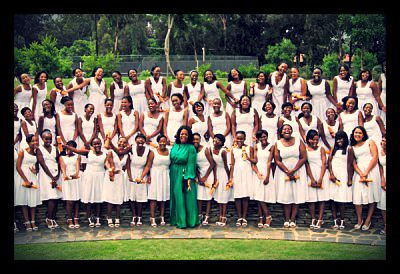
Oprah Winfrey opened a school in South Africa for girls. The school is called the Oprah Winfrey Leadership Academy for Girls. The school’s mission is to provide a nurturing educational background for academically gifted girls who come from disadvantaged backgrounds. The school is for girls in Grades 8-12. The school strives to give their girls the skills to assume positions of leadership in South Africa, as well as internationally. The school would like to see their graduates lead the transformation of their communities and country.

The school is centered on the Ubunti and Botho belief system. They teach the ideals of humanity, compassion, and service to others. Additionally, the school’s core values include respect, honor, service, and compassion.

The school was born in 2000 when Oprah visited Nelson Mandela where she promised to build a world-class school for girls. The school was later opened in 2007 with 7th and 8th-grade girls. Ms. Winfrey donated more than $40 million toward the academy’s creation.

The leadership academy integrates academic, leadership, and pedagogy curriculums. The academic curriculum includes courses in languages, mathematics, science, arts, physical education, and individuals and societies.

As a part of the school’s philosophy, each student also has an individual advisor. The advisor is responsible for monitoring the girl’s growth and progress in all aspects of school life. Each advisor has three main roles including knowing and being personally available to the student, sharing in her problems and successes, keeping in touch with the student’s teachers and residential staff, and finally acting as a contact and resource person for parents, guardians, or caregivers.

The leadership academy is a competitive entrance school. Ms. Winfrey believes that education is the right of every girl but her academy is to be seen as a privilege. Students are invited to attend the academy, and these girls have proven that they have the ability to excel and move beyond challenging circumstances. The Oprah Winfrey Leadership Academy for Girls has provided and will continue to provide many African Women an incredible opportunity to succeed.

– Caitlin Zusy
Source Oprah Winfrey Leadership Academy
Photo Oprah

May 14, 2013
https://borgenproject.org/wp-content/uploads/borgen-project-logo.svg 0 0 Borgen Project https://borgenproject.org/wp-content/uploads/borgen-project-logo.svg Borgen Project2013-05-14 04:00:482020-06-19 04:09:02Oprah Winfrey Leadership Academy for Girls
Women and Female Empowerment

Women and Youth Empowerment Matter

Women Empowerment
With women projected to comprise a majority of the world’s urban dwellers and head increasing numbers of households, gender equality in employment, housing, health and education is vital to ensure the prosperity of the cities of the future, according to a new United Nations study. Female and women empowerment is more crucial than ever.


Economic Impacts of Women Empowerment


“Women are key drivers of economic growth and that wealth in the hands of women leads to much more equitable outcomes in terms of the quality of life of families and communities,” the study, entitled State of Women in Cities Report 2012/13, said. “Addressing the barriers to women’s participation in cities creates a situation where women’s potential is more fully realized and households, communities and governments also reap rewards.

“It is imperative that women and men should enjoy equal rights and opportunities in cities on moral/ethical, economic, and political grounds. This will not only engender women’s well-being but it will increase their individual and collective prosperity as well as the prosperity of the cities in which they reside.”

Produced by the Nairobi-based UN Human Settlements Programme, known as UN-HABITAT, which is mandated to promote socially and environmentally sustainable towns and cities with the goal of providing adequate shelter for all, the report also stressed the need to address unemployment and other disadvantages that hobble urban youth.

The report called for policies to enhance gender equality, equity and prosperity of women in cities, noting that cities of the future will comprise a majority female component, especially among people older than 60 and even more so among those older than 80 years.

While underscoring the unpaid caring and social activities that women undertake, such as childcare, caring for the sick, disabled and elderly, washing, cleaning and other community services that allow the urban economy to function and prosper, even if this labour is seldom recognised or valued, the report stressed the “crucially important” economic contributions they make through their paid work

“The ‘feminization’ of the global labour force tends to be associated with urbanisation, with the related concentration of women in export-manufacturing, the service sector and Information, Communication and Technology (ICT),” it said, adding that women, especially the urban poor, are disadvantaged in terms of equal access to employment, housing, health and education, asset ownership, experiences of urban violence, and ability to exercise their rights.

UN-HABITAT’s State of Urban Youth Report 2012/2013 stressed that while the young are “society’s most important and dynamic human resource” – with 1.3 billion between ages 12 and 24, most of them living in urban areas – nearly 45 per cent of them, some 515 million, live on less than $2 a day.

It called for better aligning educational and training systems with the current and future needs of young people, so that they cannot only discern developmental issues but may even be capable of suggesting innovative solutions to deep problems of development and growth.

“Of paramount importance is access to education and opportunities for acquiring skills,” the study added, stressing that youth inequality in urban life is closely related to unequal opportunities in later life and calling for policies that include investment in economic infrastructure, tax incentives, vocational training schemes, and regulations that aim at a more equitable labor market for urban youth.

– Essee Oruma

Source: UN News Centre
Photo: Edumenical Women at the UN

May 9, 2013
https://borgenproject.org/wp-content/uploads/borgen-project-logo.svg 0 0 Borgen Project https://borgenproject.org/wp-content/uploads/borgen-project-logo.svg Borgen Project2013-05-09 09:00:032024-06-10 03:07:32Women and Youth Empowerment Matter
Aid Effectiveness & Reform, Development

Countries Starting to Reach Development Goals

Data from the World Bank released last week reports twenty fragile countries who are starting to reach development goals.  As the Millennium Development Goals near the end, news of progress is exciting and hopeful. Progress in fragile countries ranges from efforts in reducing poverty, improving the education of girls, and cutting down on deaths during child birth.

The Millennium Development Goals are set to expire in 2015 and these 20 countries were not on track just a few years ago. The progress that has been made since 2010 is remarkable. In addition, six more fragile countries are on target to hit the goals by 2015. Countries like Afghanistan, Nepal, and Timor-Leste have seen a 50% reduction in people in extreme poverty and increased the number of girls in school.  These are strong accomplishments for any nation, but for these nations who are coming out of war and devastation, the results are even more extraordinary.

The data serves as a call for the global community to not strike countries off as hopeless or lost causes, but to seek the development of all nations.  While these twenty have seen remarkable progress, many war-torn nations are still lagging far behind the benchmarks set up by the Millennium Development Goals. These nations are also very prone to relapse as is the case of Yemen who was on target to meet the goal of reducing death during childbirth until the violence during the Arab Spring in 2011.

World Bank leaders are calling for a bridge between long-term development and humanitarian assistance to help countries in the middle of crisis.  When the international spotlight leaves a country in distress, often so does the humanitarian aid, leaving the country devastated and struggling to rebuild itself. To rebuild requires support that focuses on clear actions, steps, and transparent and accountable goals. As nations tighten their spending in the midst of the economic downturn, effective aid is even more important. The World Bank is committed to working more closely with the United Nations to see that long-term development happens in fragile countries.

Community involvement is also key in addressing and meeting needs and designing appropriate projects.  As aid organizations work together with communities, they can address the causes of conflict and also create programs and plans that emerge as long-term solutions.  In the final push to accomplish the Millennium Development goals, this type of aid is going to be increasingly important.

– Amanda Kloeppel
Source: Reuters
Photo: World Hunger

May 8, 2013
https://borgenproject.org/wp-content/uploads/borgen-project-logo.svg 0 0 Borgen Project https://borgenproject.org/wp-content/uploads/borgen-project-logo.svg Borgen Project2013-05-08 09:00:252020-05-26 08:39:44Countries Starting to Reach Development Goals
Education, Nonprofit Organizations and NGOs

Room to Read: Helping Educate Children

Room-to-Read
Room to Read is a non-profit organization started by John J. Wood in 1999. He got the idea for the organization when he visited a school in Nepal one year during a vacation. There were 450 students at the school, yet there were no children’s books. The library only a had a few books that were inaccessible to the students. The following year, Wood quit his job at Microsoft and returned to Nepal with 3,000 books to build a functioning library for the children. This was how Room to Read began.

Wood believes that simply coming into a country, building a library or school, and then leaving does not completely fix the problem. Instead, he says that prolonged community involvement is key. Finding local librarians and teachers to encourage students to read and learn will create a ripple effect. It creates jobs for native citizens and gives kids an education. Everyone is more invested in the outcome that way because they are actively involved in the solution, and results will last longer than if they simply received a gift from someone in a foreign country.

He also encourages more affluent students and families to participate in raising money for Room to Read through ‘sponsored silence’ programs and Read-a-thons. So far, Room to Read is established in 10 countries and will have helped 10 million kids by 2015. Other accomplishments include building 15,000 libraries and 1,600 schools, publishing 850 original children’s books, and enrolling 20,000 girls in a special girl’s education program.

– Katie Brockman
Source New York Times
Photo: Room to Read

May 6, 2013
https://borgenproject.org/wp-content/uploads/borgen-project-logo.svg 0 0 Borgen Project https://borgenproject.org/wp-content/uploads/borgen-project-logo.svg Borgen Project2013-05-06 10:00:182020-05-26 08:29:51Room to Read: Helping Educate Children
Developing Countries, Development

Urbanization to Curb Poverty

urbanization-in-developing-countries
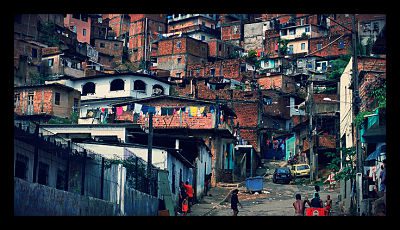
According to a study done by the World Bank, urbanization has proven to be a key factor in eradicating poverty. The bank’s Global Monitoring Report 2013 offers statics that positively reflect urbanization in developing countries and in countries that have made the most progress in reaching the 2013 Millennium Development Goals.

The Global Monitoring Report says that countries with large population centers such as Southeast Asia or China have made large strides in reducing poverty in comparison to sub-Saharan Africa, where 70% of the population lives in rural areas. Infant mortality rates are also up to nine percentage points lower in urbanized areas than in rural cities and villages.

Urbanized areas create jobs and are generally better at service delivery such as access to sanitation, health care, education and electricity. Access to sanitation varies as much as thirty percent, 80 percent in urban areas to 50 percent in rural areas. Poverty is also significantly lower in urban areas at 11.5 percent versus the 29.5 percent in rural areas. In Africa, poverty in urban areas stands at 33 percent in urban areas to 47 percent in rural areas.

The next step to urbanizing is to ensure resources are available and to move forward at a steady pace to avoid slum areas. Some people favor state support and the finance of health and education systems while others support a combination of public and private financing. The World Bank encourages countries with oil and mineral resources to use the revenues to finance urbanization and health care systems. However, countries such as Uganda, that do not have an abundance of natural resources, prefer to use those revenues to improve the infrastructure in rural areas. According to Maria Kiwanuka, Uganda’s Minister of Finance, there are trade-offs. When the government uses the oil revenue to strengthen the infrastructure in rural areas, it allows the people living there to make more money to eventually contribute to the health care system.

While there are many different ways to fund health and social services and contribute to urbanization and the ultimate end of poverty, the assurance of resources to create the change is most important, says Joe Verbeek, the lead economist for the Global Monitoring Report. By improving the health and education services for people living in rural areas, it will make the transition easier and improve their job skills if they choose to migrate to a city.

– Kira Maixner

Source Voice of America
Photo World Bank

May 5, 2013
https://borgenproject.org/wp-content/uploads/borgen-project-logo.svg 0 0 Borgen Project https://borgenproject.org/wp-content/uploads/borgen-project-logo.svg Borgen Project2013-05-05 02:55:352020-05-26 08:09:20Urbanization to Curb Poverty
Page 65 of 67«‹6364656667›»

Get Smarter

  • Global Poverty 101
  • Global Poverty… The Good News
  • Global Poverty & U.S. Jobs
  • Global Poverty and National Security
  • Innovative Solutions to Poverty
  • Global Poverty & Aid FAQ’s
Search Search

Take Action

  • Call Congress
  • Email Congress
  • Donate
  • 30 Ways to Help
  • Volunteer Ops
  • Internships
  • Courses & Certificates
  • The Podcast
Borgen Project

“The Borgen Project is an incredible nonprofit organization that is addressing poverty and hunger and working towards ending them.”

-The Huffington Post

Inside The Borgen Project

  • Contact
  • About
  • Financials
  • President
  • Board of Directors
  • Board of Advisors

International Links

  • UK Email Parliament
  • UK Donate
  • Canada Email Parliament

Get Smarter

  • Global Poverty 101
  • Global Poverty… The Good News
  • Global Poverty & U.S. Jobs
  • Global Poverty and National Security
  • Innovative Solutions to Poverty
  • Global Poverty & Aid FAQ’s

Ways to Help

  • Call Congress
  • Email Congress
  • Donate
  • 30 Ways to Help
  • Volunteer Ops
  • Internships
  • Courses & Certificates
  • The Podcast
Scroll to top Scroll to top Scroll to top