• Link to X
  • Link to Facebook
  • Link to Instagram
  • Link to TikTok
  • Link to Youtube
  • About
    • About Us
      • President
      • Board of Directors
      • Board of Advisors
      • Financials
      • Our Methodology
      • Success Tracker
      • Contact
  • Act Now
    • 30 Ways to Help
      • Email Congress
      • Call Congress
      • Volunteer
      • Courses & Certificates
      • Be a Donor
    • Internships
      • In-Office Internships
      • Remote Internships
    • Legislation
      • Politics 101
  • The Blog
  • The Podcast
  • Magazine
  • Donate
  • Click to open the search input field Click to open the search input field Search
  • Menu Menu

Tag Archive for: Education

Posts

Activism, Education, Global Poverty

3 Things That Will Help End Poverty

technology_global_poverty
When on the search for a solution to global poverty, activists and politicians come up with various elaborate plans, incentives and government legislations. Often these solutions are built with three very simple ideas that create substantial change to those living in poverty:

1. Education

Constant and good education can change lives. While those in the developing world take it for granted, there are people who live in poverty due to their lack of education. This lack of education is normally a result of the lack of the opportunity or circumstances that require them to work rather than study. The cycle of poverty is such that living in poverty requires the next generation to work to help support the family. The younger children are rarely given a chance to complete their education. The connection between education and poverty, or rather the ability to rise out of poverty, is extremely evident. An education guarantees a job that is better paying, allowing the next generation to continue to be educated instead of working. This breaks the cycle of poverty that rears its ugly head in so many parts of the world.

2. Small Local Businesses

Opportunities for jobs increase with the support and growth of small local businesses. Local businesses don’t only create opportunities; they also bring supplies and resources into a community that would greatly benefit from it. These small businesses range from medical supplies or care facilities to agricultural and technological support. Additionally, such businesses continue to beget more businesses, making the economy flourish and the citizens of the community thrive and follow by example.

3. Technology

Technology can substantially help improve the conditions of the poor. For those working in agrarian communities, advanced technology can yield better crops; technology can help improve education. Internet access can change the face of communications, and mobile phones greatly reduce the damages of natural disasters due to the immediate news they can provide. Access to electricity or any kind of power, would also help bring amenities to those living in poverty that many people take for granted. Finally, technology will significantly improve health care standards in places where it is scarce. The Posner Center for International Development does just this: various organizations come together, come up with ideas that will benefit developing areas in the world, and help bring about these additions that will significantly improve living conditions.

– Aalekhya Malladi

Sources: NY Times, Denver Post
Photo: Foreign Policy

October 24, 2013
https://borgenproject.org/wp-content/uploads/borgen-project-logo.svg 0 0 Borgen Project https://borgenproject.org/wp-content/uploads/borgen-project-logo.svg Borgen Project2013-10-24 17:47:512024-05-25 00:30:283 Things That Will Help End Poverty
Education, Global Poverty

Shidhulai Brings Education by Boat

Five months of monsoon season in Bangladesh brings with it at least two floods a year. In riverside areas, these floods make many roads impassable, preventing travel, school attendance and access to resources for long periods of time every year. To overcome this ecological obstacle, a local nonprofit organization, Shidhulai Swanirvar Sangstha, is implementing an innovative solution.

Shidhulai runs a fleet of boats that bring education, libraries, waste management, computer education, internet access and information on sustainable agriculture and healthcare to the Chalanbeel region of northwest Bangladesh.

Shidhulai operates by building and converting boats, equipping them with books and technology, powering the boats using solar energy and bringing these resources to communities through waterways.

Shidhulai has 88 boats, with 42 currently operating as boat schools, mobile internet-education units and healthcare clinics. The remaining 46 boats are being converted into housing options for climate refugees and flood victims called “Climate Shelters.”

Each boat is equipped with solar panels on its roof, which generate the electricity needed for the boat’s operations. Surplus energy is distributed between local families through solar lamps. The boats are fitted with multi-layered waterproof roofs, windows for ventilation and flat plank floors, all made in the region using locally available materials.

In addition to their fleet of boats, the organization has developed a Central Library, Technology Center and Regional Headquarters in their Shidhulai complex, which is easily accessible by waterways. All of its services are free of cost, with the exception of its mobile phone calls and bicycle pumps.

Since its inception in 1998, Shidhulai has served 70,000 students, and hopes to reach 100,000 more in the next five years. By turning the region’s waterways into pathways for education, information and technology, this grassroots organization has brought new life to northwestern Bangladesh.

– Tara Young

Sources: Shidhulai, Jolkona, Washington Post
Photo: Architcture as Auesthetics

October 24, 2013
https://borgenproject.org/wp-content/uploads/borgen-project-logo.svg 0 0 Borgen Project https://borgenproject.org/wp-content/uploads/borgen-project-logo.svg Borgen Project2013-10-24 05:03:352024-12-13 17:49:45Shidhulai Brings Education by Boat
Global Poverty

Socks that Solve Social Problems

Inspired by the United Nations Millennium Development Goals (MDGs) of meeting the needs of the world’s poorest through international collaboration, Conscious Step sells fashionable dress socks to create a positive impact on the world. Each sock the organization sells is connected to a different cause, allowing customers the freedom to choose the cause most important to them.

So far, Conscious Step has created three socks that are associated with three different causes. The first sock is inspired by the first MDG of eradicating extreme poverty and hunger. In partnership with the global humanitarian organization Action Against Hunger, Conscious Step supports nutrition programs in Kenya, South Sudan and the Democratic Republic of Congo. Purchasing this sock provides three therapeutic food packets to malnourished children in Sub-Saharan Africa.

The second MDG of achieving universal primary education inspires Conscious Step’s second sock. This sock partners with Engineers Without Borders to provide clean water sources and increase the number of children in primary schools in Nepal.

Conscious Step’s final sock addresses the seventh MDG of ensuring environmental sustainability. Purchasing this sock allows Trees for the Future to plant 30 trees in rural Ghana and teach agroforestry techniques to women and children, which then generates income, provides material for food and fuel and protects the environment.

Buying Conscious Step socks not only helps solve poverty, but also provides a big bang for the buyer’s buck. These socks are made from 200-needle count, organic, fair trade cotton and are sweat resistant. Each of the three styles of socks is embroidered with a distinguishable symbol, allowing supporters to wear their cause with pride and stimulate discussion about poverty alleviation.

Conscious Step helps “give an ordinary purchase an extraordinary purpose.” Supporters can purchase ethically made, high-quality socks that give them the power to consume for a cause. You can help launch the organization into gear and get your pair from Conscious Step’s Indiegogo campaign here.

– Tara Young

Sources: Indiegogo, Good Magazine
Photo: Indiegogo

October 23, 2013
https://borgenproject.org/wp-content/uploads/borgen-project-logo.svg 0 0 Borgen Project https://borgenproject.org/wp-content/uploads/borgen-project-logo.svg Borgen Project2013-10-23 04:00:092024-05-25 00:29:11Socks that Solve Social Problems
Education, Global Poverty

Graphite Offers Way-Markers to Teachers and Students

Graphite_Gates_Foundation_Common_Sense_Media
Anyone with Internet access knows there can be temptation to misuse its power. What has the potential to bring understanding across social and geographic divides and make accessible information from every discipline and denomination is often instead used to watch cats behaving quirkily or play video games. Lamentable as that misuse is, it is unlikely to change. Knowing this, Common Sense Media created Graphite.

Graphite is a website that rates games, apps, websites from the Internet, gaming consoles and more, on a tripartite rubric to help teachers and students sort the games with educational content from those which are purely time-wasters. Some games are small and virtually unknown; others are as universally recognized as SimCity.

The idea has earned support ranging from philanthropic dignitaries such as Bill Gates, teachers across the country, and students themselves, who can rate the games on a separate tier from the teachers’ ratings.

Graphite is not alone in this new take on learning. Khan Academy, which has been an unequivocal success, has incorporated game-like elements into its curriculum as well, such as awards and points, which can be used to buy avatars. The old doctrine of repetition and memorization from a black and white textbook is on the way out.

However, there are concerns that making education more about fun is fool’s gold. Numerous studies have linked playing video games and heavy computer usage to temporarily reduced cognitive ability, suggesting that there are benefits to learning by rote. Furthermore, there are social consequences to consider: public school systems are, in part, dedicated to instructing children on the way to be effective workers.

Children learn more than facts in school – they learn a new milieu which home life does not typically comprise. By buckling the complaints of children who find school boring or difficult, parents and teachers may be creating a lenient mentality that could cause issues in the future.

Of course, traditional schooling has its own achilles heel, which leads back to the anecdote that opened this article: the Internet. It is an all too common practice for children to escape from the stresses of school and immediately deluge themselves with cartoons, videos, and games, possibly negating the benefits from earlier in the day. Slumping test scores and the declining ability of Americans to compete globally for top-tier jobs in science, medicine, and technology can be seen as testament to this.

It is in this respect that Graphite and its ilk must be viewed not as the solution to a learning problem, but as a complementary tool which can, if not cultivate further learning, at least lend a hand in retaining what traditional methods are able to instill. Like public school, Graphite’s secondary, and possibly more important function, is social.

It has the power to teach children to recognize and acknowledge the difference between games with value, and those without. Hopefully, what Graphite will one day accomplish is to create a lifestyle among an entire generation in which free time is not spent watching strange cats.

– Alex Pusateri

Sources: Graphite, Forbes, Pulse 2, Pravad.Ru
Photo: Memphis Flyer

October 21, 2013
https://borgenproject.org/wp-content/uploads/borgen-project-logo.svg 0 0 Borgen Project https://borgenproject.org/wp-content/uploads/borgen-project-logo.svg Borgen Project2013-10-21 06:59:382024-05-25 00:26:30Graphite Offers Way-Markers to Teachers and Students
Education, Global Poverty, Women & Children

Malala’s Weapon of Choice Revealed on The Daily Show

malala_daily_show
With a comprehension of human nature typically not seen in someone of only 16 years of age, Malala Yousafzai explained the motivation for literally risking her life for everyone’s right to education by saying: “We are human beings…we don’t learn the importance of anything until it’s snatched from our hands.”

In an interview with Jon Stewart of Comedy Central’s The Daily Show, well-known educational activist Malala Yousafzai once again stunned the world through the embodiment of such pure compassion and altruism that left her usually quick-witted host speechless.

She described her home of Swat Valley, located in Pakistan, as a peaceful paradise of natural beauty with flowing rivers and lush green hills. It was not until 2007 that the Taliban in her hometown had begun attacking schools and anyone they deemed anti-Taliban. Malala recounted how she realized how crucial education was after recognizing the Taliban feared the power of an educated woman.

The empowerment and liberation these young girls felt in school was too great for their community to surrender to the Taliban. Schools went underground, removed school signs and tried to continue educating children even under the possibility of being attacked by the Taliban.

When asked what motivated her to stand up for education, she spoke of the inspiration her father gave her who was also an activist for women’s rights and education. His example gave her the courage to take the fight for her rights into her own hands rather than wait for the government to intervene.

By raising her voice on multiple platforms from her blog with BBC Urdu, to appearing on media channels, Malala generated enough awareness of Swat Valley’s situation and advocacy for women’s education, that the Taliban labeled this 14-year-old girl as a threat. She explained that the Taliban attempted to rule Swat Valley through fear and the misuse of Islam. Malala refused to back down and instead used her intelligence to articulate her experience and subvert the Taliban’s tyranny, but in turn risked her life.

After a friend told her that the Taliban were targeting her, she described what she planned to do if a member of the Taliban was about to kill her. With her steel resolve, she stated to Jon Stewart and everyone around the world watching that she would never retaliate against the Taliban, because doing so would make her no different than a terrorist.

Dialogue and compassion would be her weapons of choice, and she would tell the Taliban she fights not for her education, but for the education of all – including the Taliban’s children. Such blunt advocacy for peace and pacifism momentarily left Jon Stewart in silence until he comically asked if Malala’s father would be mad if he adopted her.

Other great leaders in history have came to similar conclusions when faced with the idea of violent suppression. Martin Luther King Jr., Mahatma Gandhi, Mother Theresa, and now Malala Yousafzai have displayed a similar capacity for compassion and peace that great change often necessitates.

It requires a certain level of vision and passion to make people gravitate towards the leaders of grand social movements and it is evident in the actions and resolve of Malala Yousafzai that she poses such qualities. It is now up to the people across the world to pick up their pens and raise their voices as Malala has done and join the fight for equality she has risked her life for.

– Jacob Ruiz

Sources: The Daily Show, USA Today
Photo: Jezebel


Malala Yousafzai Facts


October 20, 2013
https://borgenproject.org/wp-content/uploads/borgen-project-logo.svg 0 0 Borgen Project https://borgenproject.org/wp-content/uploads/borgen-project-logo.svg Borgen Project2013-10-20 17:16:042024-12-13 17:49:44Malala’s Weapon of Choice Revealed on The Daily Show
Charity, Education, Global Poverty, Nonprofit Organizations and NGOs

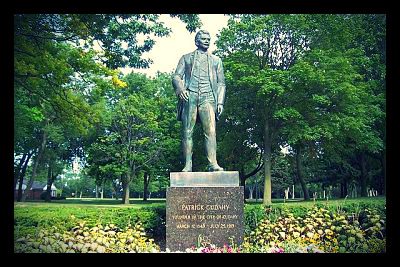
Patrick and Anna M. Cudahy Fund: What You Should Know

Patrick_Anna_Cudahy_Fund
The Patrick and Anna M. Cudahy Fund is a foundation that grants money to nonprofit organizations involved in social and youth services, education, art and culture.

The premise of the fund dates back to the early 1920s, when Articles of Association were drawn to break ground on the Alice Dickson Cudahy Clinic. This clinic was created to provide free services to dependent family members of employees at the Cudahy Brothers Company. Some of these free services included medical attention, and education on matters such as child welfare, domestic science and social hygiene. The clinic was able to open on August 1, 1923, thanks to a $19,270.77 donation made by Michael F. Cudahy.

On August 22, 1935, the name of the organization was changed to the Michael F. Cudahy Fund. Upon this change, the association broadened its spectrum of philanthropy efforts to include the severely poverty-stricken and ill. On September 29, 1943, the name of the organization was once again changed, this time to the Patrick and Anna M. Cudahy Fund, in honor of Michael’s parents.

Today, the Fund primarily assists youth organizations located in Wisconsin and Chicago, though some money is granted to charities involving public interest and environmental conflicts. The Fund also accepts international requests affiliated with U.S. nonprofits.

– Meagan Hurley

Sources: Business Journal, Cudahy Fund

October 17, 2013
https://borgenproject.org/wp-content/uploads/borgen-project-logo.svg 0 0 Borgen Project https://borgenproject.org/wp-content/uploads/borgen-project-logo.svg Borgen Project2013-10-17 13:53:402017-03-20 13:09:27Patrick and Anna M. Cudahy Fund: What You Should Know
Developing Countries, Technology

China Funds Five Research Centers in the Global South

China_funds_research_centers_in_the_Africa
For a variety of reasons, China has become known for its “interactiveness” with the global south. This “interactiveness” has included construction projects, student scholarships, and sending  doctors.

Recently, China began to fund five research centers in Africa and the global south in order to increase collaboration between Chinese and African scientists. The topics of focus for the scientists will include the climate, water, environmentally friendly technology, biotechnology, and space technology.

Using the Chinese Academy of Sciences (CAS), $6.5 million will be distributed to the research centers over the course of the next three years. These funds will work to improve China’s soft power in the global south by conducting joint research projects between the CAS and the research centers.

Currently, there is a CAS network known as The World Academy of Sciences (TWAS) that will also benefit from this Chinese outreach to the global south. Along with the research projects, the funding will also provide for an increase in workshops, training, and PhD programs.

According to Salim Abdool Karim, director of the Centre for the AIDS Programme of Research in South Africa and a TWAS member, “The five centers will play an important role in global scientific collaboration by increasing South-South training opportunities.”

This collaboration is expected to increase climate change research. Yongqiang Liu, a research meteorologist at the USDA Forest Service’s Center for Forest Disturbance Science sees it as a good way to “prepare future leaders to lead climate change research for developing countries.”

Action through research investment should improve China’s image in the world. Currently, China stands at 50% favorable and 36% unfavorable among populaces from around the world. Comparably, the US was seen as favorable by 63%, and unfavorable by 30%. More specifically, when people were asked if they thought China considered their country’s interests, 27% thought a great deal with 63% saying either not too much or not at all.

There is still a great deal of room for China to improve its international appeal. By working with developing nations to improve research in sustainable technology and other important sciences, China can build off the work of TWAS and foster support from citizens in these countries.

Once the three years comes to an end, the education and collaboration should improve the environmental technology sector, as well as build the capacity for a future scientific community with various projects and goals. If successful, this move may be beneficial in regards to China’s popularity as well.

– Michael Carney
Sources: SciDev.Net, Pew Global

August 28, 2013
https://borgenproject.org/wp-content/uploads/borgen-project-logo.svg 0 0 Borgen Project https://borgenproject.org/wp-content/uploads/borgen-project-logo.svg Borgen Project2013-08-28 10:47:052020-07-09 21:11:20China Funds Five Research Centers in the Global South
Education

Higher Education in China for African Students

africans_in_china
Schooling in the United States and Europe was a source of great fascination to Africans in the 1970s, 80s and early 90s. Over 80 percent of Africans seeking to further their education abroad ended up in these two regions.

Today the West continues to be the first choice for African students, with nearly 55 percent of those studying abroad choosing Western countries, especially France. More and more Africans, however, are now being drawn to Asian universities.

China, a country at the center of this new development, is continuing to improve and advance its educational ideals. In the last five years, Beijing has spent more than $1.26 trillion on education, a target of 4 percent of China’s GDP. The country has an unswerving teacher development scheme. Historically, teaching has been a highly respected profession.

Once teachers are employed in China they must experience a vigorous system of continuous professional development. Groups of teachers work together with master teachers on lesson plans and general improvement.

According to China’s university and college admission system, the number of international students studying in China has significantly increased. In particular, African students are pouring into more than 660 higher education institutions in the country.

Besides the thriving educational culture, the increased enrollment is imperative for Africa’s future because the country can learn from China how best to utilize and manage its many natural resources.

Africa has a dream of reproducing China’s success in manufacturing, construction, technology and healthcare. The economic powerhouse’s sustained growth has primarily been anchored on continuous technological innovation and industrial diversification. The industrial dynamics caused the shift from an agrarian society, where nearly 90 percent of the labor force worked, to non-agriculture and manufacturing sectors. The change was gradual, but continuous and unstoppable.

Today, manufacturing is the economic backbone of China. Its emergence as a manufacturing powerhouse has been shocking. In seventh place in 1980, China overtook the US two years ago to become the world’s largest producer of manufactured goods.

China also used its large manufacturing engine to increase living standards by doubling the country’s GDP per capita over the last decade — the kind of achievement that took the industrializing United Kingdom 150 years. Now, Africans seek to imitate China’s economic accomplishments through knowledge transferred from Chinese classrooms and lecture halls.

The process started a decade ago when African nations began to sponsor their most academically gifted students to attend schools in China. Meanwhile, China also sponsored students majoring in medicine, engineering, economics and journalism. In 1983, China sponsored 400 students. In 2005, the number increased to 2,000. Last year, it funded university education for 5,500 students.

As Africa seeks to learn the best from the best, it is important that the country also cultivates the culture of working hard. China’s forward-looking system has put it on the right path to success. There is no mystery to its methods. China succeeded because it knew what it wanted. This should be the culture that African students studying in China bring back home.

– Scarlet Shelton

Sources: Global Times, UNESCO, Novexcn.com

Photo: Moment

August 23, 2013
https://borgenproject.org/wp-content/uploads/borgen-project-logo.svg 0 0 Borgen Project https://borgenproject.org/wp-content/uploads/borgen-project-logo.svg Borgen Project2013-08-23 21:09:292024-06-04 02:43:58Higher Education in China for African Students
Education, Global Poverty, Health, Water

5 Global Poverty Solutions

Global poverty solutions
You’ve heard about the problems, but what are global poverty solutions? In fact, there are many:

1. Clean Water and Sanitation

A lot of people in the developed world take clean water and sanitation for granted. We do not realize at times how lucky we are that we don’t have to travel miles to get access to clean water, or drink seemingly safe water only to later find out it was contaminated. Improving water quality and overall sanitation are steps already being taken by non-profit and non-governmental organizations like UNICEF, etc. In fact, UNICEF’s Clean Water Campaign is attempting to do just this: help bring clean and safe tap water to people in developing and third world nations. The potential for a high impact is definitely present: just 5 U.S. dollars can provide clean tap water for one child for 200 days. Cleaner water and safer sanitation lead to healthy and fit children who are able to learn and go to school.

2. Healthcare and the Elimination and Prevention of Diseases

Similar to clean water and sanitation, proper healthcare can also help children and adults be vigorous enough to better take care of their families and work, or pursue education. Many potentially deadly diseases can be averted very simply: for example, one can greatly increase one’s chances of avoiding malaria simply by sleeping inside a mosquito net. Many charities are actively trying to save lives simply by sending nets to poverty stricken families in Africa. Vaccinations and inoculations prevent children from getting easily treatable diseases. Some very treatable diseases go unnoticed and/or untreated in families living in extreme poverty because they are often ignored, not recognized as illnesses, or treatments can’t be afforded. By eliminating and preventing easily treatable diseases, we give a chance to millions of children who otherwise might die of easily treatable maladies.

3. Education

Again, access to basic education is also perhaps something those in developed nations take for granted. Young children living in extreme poverty often have no choice but to seek employment when they reach a certain age in order to help the family financially. They often forgo an education for many reasons: for some, it’s a lack of nearby schools, for others, it’s simple economic necessity, and then there are some who cannot attend school because a lack of proper sanitation and clean water has left them with health problems; these children are unable to learn and perform well in school. Education is a positive feedback cycle in which children who receive an education are able to bring more money home for their families, thereby allowing other children to go to school rather than work. Education empowers people not only economically, but also spiritually and intellectually, potentially leading to a cyclical liberation of the poor.

4. Encouraging Local Innovation

Encouraging local innovation is a great solution to poverty because it stimulates the economy of poverty struck areas as well as supporting self-sufficiency. Some great inventions are currently coming out of Africa; some of them are simple solutions to problems only those living in extreme poverty face. Regardless, this is an eventual result of education, and if encouraged and fostered, it will result in a brighter future for those actively fighting poverty. Organizations like the African Innovation Foundation take it upon themselves to release the potential of individuals in poor African nations who would otherwise go unnoticed.

5. Eliminate Corruption

Eliminating corruption is an extremely significant move in the fight against global poverty. If it’s the higher up officials who hoard money, and prevent aid from going where it is most needed, it will hold back individual countries from eliminating diseases, educating the young, and making clean water accessible to the general population. Additionally, corruption can often result in lax law enforcement, which allows poor nations to become breeding grounds for extremist, sometimes terrorist groups. Eliminating corruption, therefore, would be taking a very big step towards eliminating poverty in general.

– Aalekhya Malladi

Sources: Clean Water Campaign, Netting Nations, Nets for Life Africa, Nothing But Nets, African Innovation Foundation
Photo: The Guardian

August 19, 2013
https://borgenproject.org/wp-content/uploads/borgen-project-logo.svg 0 0 Borgen Project https://borgenproject.org/wp-content/uploads/borgen-project-logo.svg Borgen Project2013-08-19 05:30:022024-06-05 01:53:365 Global Poverty Solutions
Health, Nonprofit Organizations and NGOs

Deafness in Sub-Saharan Africa

deafness_sub-saharan_africa
The Deaf in sub-Saharan Africa face a unique set of challenges. They tend to be isolated from society in ways that people with hearing struggle to understand, and they are often seen as burdensome or even as a bad omen for their families. Education for the Deaf in sub-Saharan Africa is severely lacking, and they are often denied the opportunity to live independent and fulfilling lives. The concept of Deaf culture, in which deafness can be seen as a neutral or even positive trait, has yet to take root in most African societies. However, in some countries, exciting progress is being made.

Andrew Foster (1927-1987) is often considered the father of deaf education in Africa. After becoming the first African American to graduate from Gallaudet College, the preeminent school for the deaf, Foster founded the Christian Mission for Deaf Africans in the United States in 1956. A visit to Accra, Ghana the following year inspired him to found a school for the deaf in Ghana. Foster highly emphasized the importance of sign language, rather than forcing deaf children to communicate using only oral speech, as theory known as Foster’s Total Communication philosophy.

Throughout his adult life he founded 31 schools in 17 African countries where deaf children could be educated and empowered. Many of these students returned to their home villages and educated other deaf children, spreading the message that deaf children can and should be educated.

Today, education for the Deaf in most sub-Saharan African countries is sub-par at best. In societies where primary education is not yet universal, priority is given to general education that benefits more children. Programs are usually run by non-governmental organizations, often resulting in a lack of oversight and regulation. Teachers are usually not deaf and often lack the skills necessary to teach deaf children. Funds are often low, so textbooks and other school supplies are often in short supply. Perhaps most problematically, there is generally no expectation that deaf children will continue past primary school.

No sub-Saharan African country has reliable data concerning its deaf population. Instead, they often end up disappearing from school systems, workplaces, and society in general simply because they cannot hear.

Lack of skilled medical care exacerbates the problem, resulting in a lack of early identification and investigation. It is also generally assumed that deafness rates in developing countries are higher due to limited treatment options, malnutrition, and chronic illnesses that affect hearing. It should also be noted that in more affluent societies there are many hard of hearing children who can function as fairly easily. These children are usually provided with hearing aids, but most families in the developing world cannot afford them.

Cultural attitudes also contribute to the lack of urgency when it comes to deaf children’s education. While sub-Saharan Africa is incredibly diverse and there are clearly exceptions for every trend, there are some harmful stereotypes about the Deaf that are common in many countries. Some see deafness as an act of fate or a sign of God’s punishment. Deaf children are often hidden because they are considered a source of familial shame. They may also be pitied and seen as burdensome and helpless, which can result in abuse such as sexual violence towards deaf women.

These negative attitudes generally increase the isolation of deaf children and feed into the stigmatization of deafness. Governmental policies that fail to protect the Deaf from discrimination, as well as derogatory language similar to the English phrase “deaf and dumb”, are manifestations of this stigmatization.

In the face of the clear inequity suffered by the Deaf in sub-Saharan Africa, it is encouraging to recognize the progress being made. Four sub-Saharan African countries (Zimbabwe, Botswana, South Africa, and Uganda) have prohibited discrimination against people with disabilities. Additionally, Deaf culture is gaining headway. Uganda is one of just a few countries worldwide to have officially recognized a sign language in its constitution and there are currently two journals focusing on Africans with disabilities. Deaf Link Uganda, a non-profit founded in 2007, is currently working to empower deaf individuals in Uganda by creating Deaf communities and providing education and job training, as well as work opportunities. Educational opportunities for the Deaf, including primary schools and beyond, are increasing, especially in Nigeria.

These positive developments reflect a changing culture. Deafness in sub-Saharan Africa is becoming more accepted and supported. Such progress is sorely and urgently needed, making it all the more exciting to witness.

– Katie Fullerton

Sources: Project Muse, Deaf Link Uganda
Photo: Commission Stories

August 6, 2013
https://borgenproject.org/wp-content/uploads/borgen-project-logo.svg 0 0 Borgen Project https://borgenproject.org/wp-content/uploads/borgen-project-logo.svg Borgen Project2013-08-06 06:11:142017-03-20 13:03:59Deafness in Sub-Saharan Africa
Page 61 of 67«‹5960616263›»

Get Smarter

  • Global Poverty 101
  • Global Poverty… The Good News
  • Global Poverty & U.S. Jobs
  • Global Poverty and National Security
  • Innovative Solutions to Poverty
  • Global Poverty & Aid FAQ’s
Search Search

Take Action

  • Call Congress
  • Email Congress
  • Donate
  • 30 Ways to Help
  • Volunteer Ops
  • Internships
  • Courses & Certificates
  • The Podcast
Borgen Project

“The Borgen Project is an incredible nonprofit organization that is addressing poverty and hunger and working towards ending them.”

-The Huffington Post

Inside The Borgen Project

  • Contact
  • About
  • Financials
  • President
  • Board of Directors
  • Board of Advisors

International Links

  • UK Email Parliament
  • UK Donate
  • Canada Email Parliament

Get Smarter

  • Global Poverty 101
  • Global Poverty… The Good News
  • Global Poverty & U.S. Jobs
  • Global Poverty and National Security
  • Innovative Solutions to Poverty
  • Global Poverty & Aid FAQ’s

Ways to Help

  • Call Congress
  • Email Congress
  • Donate
  • 30 Ways to Help
  • Volunteer Ops
  • Internships
  • Courses & Certificates
  • The Podcast
Scroll to top Scroll to top Scroll to top